
Reviewed · VIENNA SIGHTSEEING PASSES
Vienna PASS Including Hop On Hop Off Bus Ticket
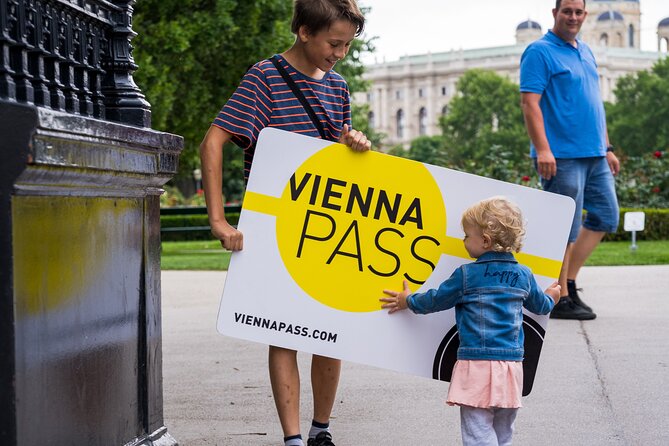
Vienna’s grandest sights are spread across a wide city, and this pass bundles them into one sightseeing plan. The real prize is free admission to more than 90 attractions, from Schönbrunn Palace and the Belvedere to Mozart’s apartment, the Spanish Riding School, and the Natural History Museum.
I like the freedom to change plans midstream, and I like having the hop-on hop-off buses for a first look at Vienna’s far-flung districts. The main caution is price: at $134.56 per person, a one-day pass is hard to justify unless you move quickly, and the buses can be slower and less dependable than Vienna’s excellent public transport.
In This Review
- Key points to know before you buy
- What the Vienna PASS actually gives you
- The imperial core: Hofburg, Albertina, and the Spanish Riding School
- Vienna’s major art museums and the Klimt question
- Schönbrunn Palace needs a full day
- Music, composers, and Vienna’s personal stories
- Freud, Jewish Vienna, and the city beyond the palaces
- The bus routes, where they help, and where they do not
- The less expected inclusions
- Price, timing, and how to make the pass pay
- Who should book the Vienna PASS?
- FAQ
- How many days is the Vienna PASS valid?
- Does the Vienna PASS include public transportation?
- Is the hop-on hop-off bus included?
- How many attractions are included?
- Where do I collect the physical Vienna PASS?
- What do I need to collect the pass?
- Can I cancel for a refund?
Key points to know before you buy
- Schönbrunn can fill half a day: Palace rooms, gardens, the Gloriette, zoo, maze, and children’s museum are all part of the larger visit.
- The best value comes from museums: Belvedere, the Hofburg, Albertina, Leopold Museum, and Kunsthistorisches Museum can quickly add up as individual admissions.
- The bus is useful for orientation, not always speed: Three routes cover major sights, but stops may be poorly marked and buses can pass by or arrive slowly.
- Public transport is not included: You need separate tickets for the U-Bahn, trams, and ordinary city buses.
- The pass must be collected in person: Exchange your voucher at the Vienna Sightseeing and Vienna PASS Service Center opposite the State Opera, with official photo ID.
- Plan for at least two days: The pass is much easier to make worthwhile over two or three days than in a rushed single day.
What the Vienna PASS actually gives you
You choose a pass valid for one, two, three, or six days. The clock begins when you first use it, so you should not activate a multi-day pass late in the afternoon unless you are ready to accept a short first day.
Admission is included at more than 90 sights. The list covers imperial palaces, art museums, music museums, historic houses, family attractions, and several unusual stops that are easy to miss when planning a first visit.
The pass also includes hop-on hop-off bus access, with routes operating for 24, 48, or 72 hours depending on the product arrangement. Audio commentary is available in 16 languages, and a guidebook helps you decide which route fits your day.
One important limit: this is not a public transport pass. The sightseeing buses do not replace Vienna’s U-Bahn, tram, or ordinary bus network. That distinction matters because the city is walkable in the center, but places such as Schönbrunn, the Danube Tower, the United Nations, Klosterneuburg, and the Central Cemetery can take time to reach by sightseeing bus.
More Vienna sightseeing passes:
- Vienna PASS: All incl. Sightseeing Pass for 85+ Attractions
★ 4.3 · 3,067 reviews - Vienna FLEXI Pass: Choose from 70+ Top Sights in one Ticket
★ 4.3 · 548 reviews - Vienna Sightseeing FLEXI Pass
★ 3.5 · 47 reviews
The imperial core: Hofburg, Albertina, and the Spanish Riding School
Start in central Vienna, where several of the strongest inclusions sit close together.
The Hofburg was the Habsburg residence until 1918 and now houses several museums and collections. The Imperial Apartments, Sisi Museum, and Imperial Silver Collection offer the most direct look at court life. Allow about three hours if you want more than a quick walk-through.
Nearby, the Imperial Crypt is a more solemn stop. It holds the tombs of Habsburg emperors, empresses, and family members. The crypt is compact, so the one-hour estimate is reasonable.
The Austrian National Library State Hall is one of Vienna’s most beautiful interiors. Emperor Charles VI commissioned it as a court library, and its baroque design makes it worthwhile even if you are not a serious book lover. The Papyrus Museum and Literature Museum provide a different look at the library’s collections, with Egyptian documents, Austrian writers, letters, and manuscripts.
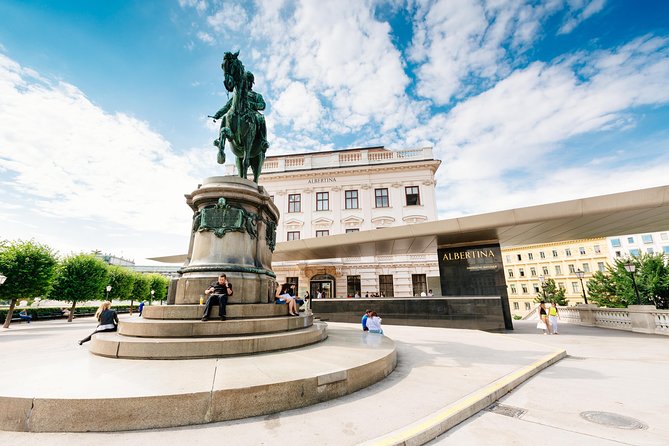
The Albertina occupies one of the former private Habsburg residences. You get imperial rooms along with major works of art, making it a particularly efficient stop when you want architecture and painting in one visit.
The Spanish Riding School is included, but check exactly what your admission covers. The listed experience is the Morning Exercise, where Lipizzaner horses and riders work through training exercises with classical Viennese music. It is not automatically the same as a full evening performance. Some visitors have also found the bus map and announcements unclear around this sight, so use the guidebook and confirm the nearest stop before setting out.
Vienna’s major art museums and the Klimt question
Art lovers can make the pass pay for itself quickly, especially over two or three days.
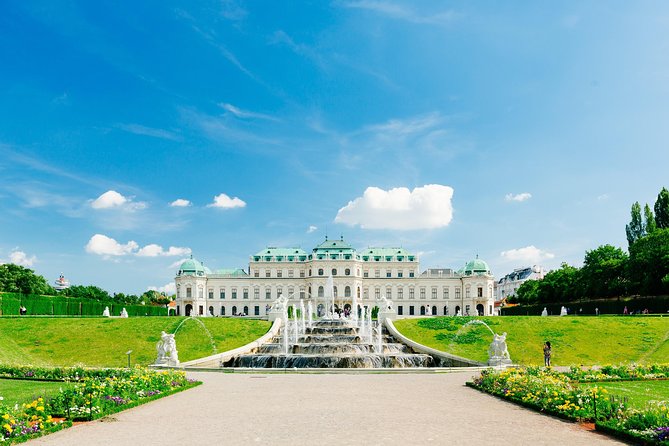
The Upper Belvedere holds the world’s largest collection of Gustav Klimt paintings, including The Kiss, along with works by Egon Schiele, Oskar Kokoschka, Waldmüller, Renoir, Monet, and Van Gogh. The palace itself was built for Prince Eugene of Savoy, and the gardens linking the Upper and Lower Belvedere are part of the experience.
The Belvedere listing also covers the Lower Belvedere and Belvedere 21, a contemporary art museum focused on Austrian art of the 20th and 21st centuries. Do not treat the three buildings as one quick museum visit. They serve different purposes and can occupy a large part of your day.
At the Leopold Museum, you will find the world’s largest Egon Schiele collection, along with Gustav Klimt and works connected to Viennese Art Nouveau and the Wiener Werkstätte. It is in the MuseumsQuartier, close to MUMOK and the Kunsthalle Wien.
MUMOK is the largest museum of modern and contemporary art in Central Europe, covering Cubism, Futurism, Surrealism, Pop Art, Fluxus, Nouveau Réalisme, and Vienna Actionism. Kunsthalle Wien focuses on international contemporary art and changing exhibitions. These are good choices if you want to move beyond imperial Vienna.
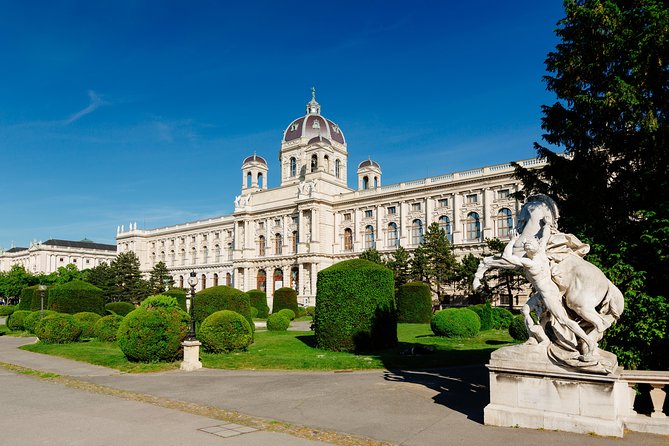
The Kunsthistorisches Museum is the big historical art stop. Built by Emperor Franz Joseph for the imperial collections, it covers 5,000 years of objects gathered by Habsburg rulers. The nearby Museum of Natural History offers a different kind of grandeur, with more than 30 million specimens and artifacts. Its Venus of Willendorf is a highlight.
The Bank Austria Kunstforum is smaller and more specialized, with classic modernism and postwar avant-garde painting. The MAK, or Austrian Museum of Applied Arts and Contemporary Art, combines design, architecture, decorative arts, and modern work, including pieces linked to Klimt, Koloman Moser, and Joseph Hoffmann.
The practical lesson is simple: do not try to see all these museums in one day. Pick two or three that match your interests. The pass gives you choice, but it cannot give you extra hours.
Schönbrunn Palace needs a full day
Schönbrunn is the pass’s biggest time commitment and one of its best inclusions.
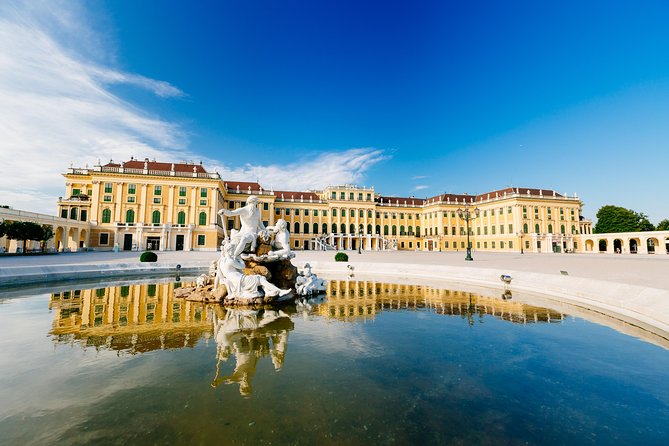
The palace began as a hunting lodge commissioned by Emperor Leopold I, then became Maria Theresa’s summer residence and a center of court life. The palace rooms tell the imperial story, but the grounds are just as important. The Gloriette gives you a view across the gardens and much of Vienna.
The pass includes the palace and several related attractions, including the Children’s Museum, where families can learn about the daily lives of the imperial children during Maria Theresa’s time. The Schönbrunn Gardens include the Privy Garden, the maze, the labyrinth, the Labyrinthikon playground, and the large baroque Orangery.
The Schönbrunn Zoo is another major inclusion. It houses more than 700 animal species, including giant pandas, and is described as the oldest zoo in the world. The nearby Desert House adds plants and animals from arid regions in a 2,000-square-meter habitat.
Give Schönbrunn four hours at the very least, and more if you want the zoo and gardens without rushing. One practical warning is that the pass may not include every palace tour option. A longer Grand Tour upgrade has required an extra payment, so confirm the exact palace route before joining the line.
A few more Vienna tours worth weighing up
- Vienna: Classic Ensemble Vienna in St. Peter’s Church Ticket
★ 4.7 · 4,819 reviews - Vienna Kunsthistorisches Museum Day Admission Ticket
★ 4.6 · 3,690 reviews - Vienna: Tickets for Mozarthaus Vienna with Audio Guide
★ 4.2 · 2,344 reviews - Vienna: Skip-the-Line Entrance Ticket to the Danube Tower
★ 4.5 · 2,303 reviews
Music, composers, and Vienna’s personal stories
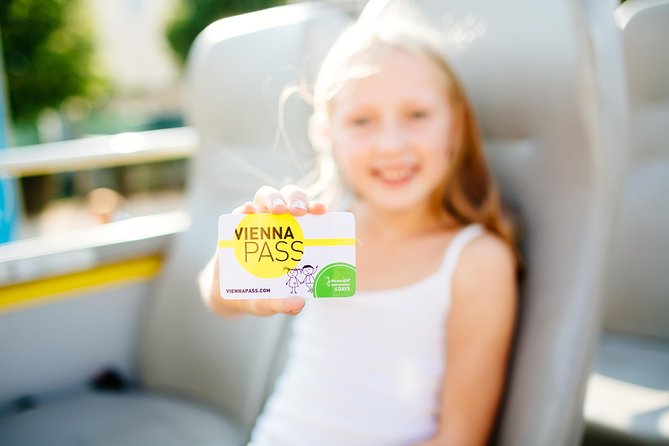
Vienna’s music stops are more intimate than the palaces and museums.
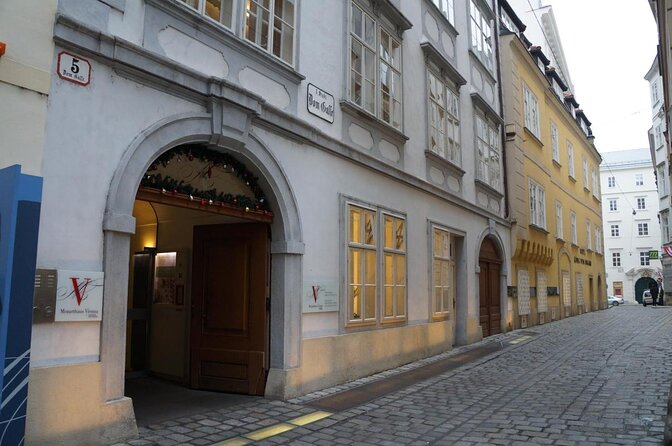
At Mozarthaus Vienna, you can see Mozart’s only preserved Vienna apartment. The exhibition concentrates on his Vienna years, when his creative work reached its height. Allow about two hours.
The Haus der Musik is more hands-on. Its four floors explore sound and music through interactive displays, making it a good choice for families and for anyone who prefers participation to quiet galleries.
The Beethoven Museum is in Heiligenstadt, once a village of vineyards and healing baths. Beethoven came there hoping to improve his worsening deafness. The Beethoven Pasqualatihaus focuses on a residence connected with his patron and includes a famous Beethoven portrait and personal objects.
The Haydnhaus is where Joseph Haydn lived from 1797 until his death in 1809. Its exhibition links his final years to the political and social setting of the period.
At Schubert’s death house, you can see his last drafted compositions, his final letter, and documents relating to his family’s care during his final weeks. The Johann Strauss monument in Stadtpark is free and makes a quick outdoor stop, particularly if you are already walking through the park.
The Vienna State Opera offers a 40-minute guided tour of the building. The Otto Wagner Pavilion at Karlsplatz takes less time and shows the elegant design of Vienna’s early mass-transit system.
Freud, Jewish Vienna, and the city beyond the palaces
The Sigmund Freud Museum occupies Freud’s former home and practice at Berggasse 13. Original furniture, objects, and photographs explain his life and the beginnings of psychoanalysis.
The Jewish Museum Vienna at Palais Eskeles examines Jewish religion, tradition, and Austrian Jewish history. It provides needed context for a city often presented only through imperial ceremony and classical music.
The Dom Museum Wien, near St. Stephen’s Cathedral, combines historic treasures from the cathedral with modern and contemporary art. The Imperial Furniture Collection shows furniture associated with Maria Theresa, Franz Joseph, and Sisi in a Biedermeier setting.
For something different, visit the Remise Transport Museum, which traces 150 years of public transport in Vienna. It is a useful stop for understanding how the city expanded and how trams and other systems changed daily life.
The Prater is more than its famous Giant Ferris Wheel. It includes 60 hectares of woods and meadows, plus the Prater Museum, which explains Vienna’s entertainment culture. The amusement park’s rides are not all covered in the same way, so treat the pass as an admission tool for the listed attraction, not an unlimited ride ticket.
The bus routes, where they help, and where they do not
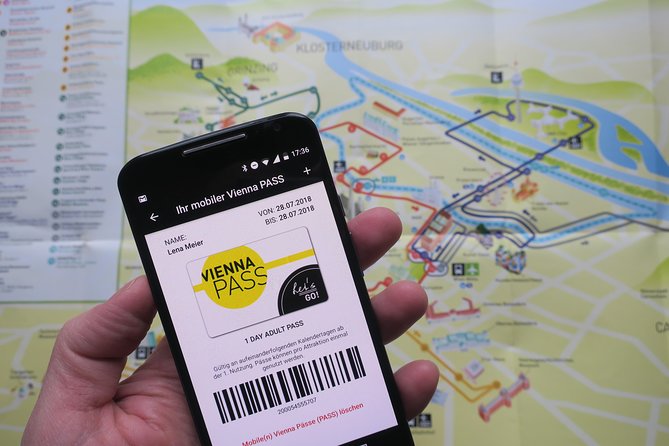
The hop-on hop-off buses are most useful on your first day, when you want a broad view before choosing museums. The audio commentary can help you identify neighborhoods and landmarks, and the three routes let you reach places that are not clustered around the Ringstrasse.
That said, I would not use the buses as Vienna’s main transport system. Several routes can take a long time between stops, and buses have occasionally failed to stop at places shown on the route map. Naschmarkt is one location where finding the right stop has caused confusion.
Stops are not always clearly marked, and the next stop may not be announced clearly. Commentary has also failed on some rides. On hot days, the upper deck may be uncomfortable, and buses may not always offer the open-air experience you expect.
Use the sightseeing bus for orientation and scenic rides, not for tight appointments. If you must reach a museum at a set time, use Vienna’s ordinary public transport, which is not included in the pass and must be purchased separately.
The less expected inclusions
The pass reaches well beyond the standard first-time sights.
At Schlumberger Kellerwelten, you learn how sparkling wine is produced in 300-year-old cellar vaults. The visit covers riddling, disgorging, dosage, and cellar markings.
The Porcelain Manufactory Augarten displays more than 150 pieces showing the development of Viennese porcelain since the manufactory was founded in 1923.
Klosterneuburg Monastery, founded more than 900 years ago, connects religious history, Babenberg and Habsburg residences, and Austria’s oldest winery. It is outside central Vienna, so allow time for the journey.
The United Nations in Vienna offers a general guided tour through the Vienna International Centre, built in 1979. You may see permanent and temporary exhibitions, works of art, a Hundertwasser tapestry, and a moon rock donated by NASA.
The Danube Tower gives a panoramic view from a platform 150 meters above the ground. It is a good contrast to the enclosed museums, though reaching it by sightseeing bus can take patience.
Other included or free stops include the Naschmarkt, Hundertwasserhaus, Vienna Central Cemetery, Votive Church, and the Heidi Horten Collection. The Central Cemetery is especially distinctive, with Catholic, Protestant, Jewish, Islamic, Orthodox, Buddhist, and Mormon sections. Beethoven, Strauss, Brahms, Schubert, and Falco are among those associated with the cemetery, while Mozart has a memorial rather than a grave there.
Price, timing, and how to make the pass pay
At $134.56 per person, this pass is not a casual purchase. The value depends on your pace and your choice of sights.
A one-day pass requires a packed schedule. You might visit Schönbrunn in the morning, one major museum in the afternoon, and a smaller central sight before closing, but the buses can make that plan difficult. If you prefer long museum visits, cafés, or unhurried walks, choose two or three days instead.
The pass becomes more attractive when you visit expensive sights such as Belvedere, Schönbrunn, the Hofburg, the Kunsthistorisches Museum, and the Leopold Museum. Add the Spanish Riding School, the Danube Tower, or the zoo and the arithmetic improves.
I would plan by neighborhood:
- Central Vienna: Hofburg, Imperial Crypt, National Library, Albertina, Opera, Mozarthaus, and Haus der Musik.
- MuseumsQuartier: Leopold Museum, MUMOK, and Kunsthalle Wien.
- Schönbrunn: Palace, gardens, zoo, maze, and children’s museum.
- Outer Vienna: Danube Tower, United Nations, Klosterneuburg, Schlumberger, and Central Cemetery.
The pass must be exchanged for the physical card at the Vienna Sightseeing and Vienna PASS Service Center at Operngasse 3 to 5, opposite the Vienna State Opera. The center is open daily from 9 a.m. to 6 p.m. The person collecting it must be the named pass holder and must show official photo ID. That in-person step is easy to miss when booking online.
Free cancellation is available up to 24 hours before the start time. Inside that window, refunds are not provided and changes are not accepted.
Who should book the Vienna PASS?
You should book it if you plan to visit several major museums and palaces over two or more days, especially if you enjoy setting your own schedule. It is also a good fit for families, since Schönbrunn’s children’s museum, zoo, Prater, and Haus der Musik provide breaks from formal galleries.
I would skip it for a relaxed one-day visit focused on walking around the historic center. I would also hesitate if you mainly want fast transport, since the sightseeing buses are not a substitute for the U-Bahn and trams.
My best use of the pass would be a two-day plan: central imperial sights and one or two museums on day one, then Schönbrunn and either Belvedere or the zoo on day two. Add a third day if you want music museums, Freud, Klosterneuburg, or the Danube Tower without racing the clock.
FAQ
How many days is the Vienna PASS valid?
You can choose a pass valid for 1, 2, 3, or 6 days.
Does the Vienna PASS include public transportation?
No. Public transport is not included. The pass includes hop-on hop-off sightseeing buses, but ordinary city buses, trams, and the U-Bahn require separate tickets.
Is the hop-on hop-off bus included?
Yes. The pass includes hop-on hop-off bus access, with 24-hour, 48-hour, and 72-hour ticket options listed for the sightseeing service.
How many attractions are included?
Admission is included to more than 90 attractions in Vienna, including Schönbrunn Palace, Belvedere Museum, the Hofburg, Albertina, the Spanish Riding School, and the Natural History Museum.
Where do I collect the physical Vienna PASS?
Exchange your voucher at the Vienna Sightseeing and Vienna PASS Service Center at Operngasse 3 to 5, opposite the Vienna State Opera.
What do I need to collect the pass?
The named pass holder must collect it in person and bring official photo ID.
Can I cancel for a refund?
Yes, if you cancel at least 24 hours before the experience start time. Cancellations or changes made less than 24 hours before the start time are not refunded or accepted.
Just added around Vienna
- Private Tour from Vienna to Melk and Dürnstein★ 4.5 · 3 reviews
- Vienna: Johann Strauss 200th birthday anniversary exhibition★ 4.7 · 3 reviews
- Vienna Private Full Day Tour – Tickets to Schönbrunn & Lunch★ 5.0 · 3 reviews
- Private Salzburg Day Trip from Vienna★ 4.0 · 3 reviews
- Vienna: Entry Ticket Belvedere 21 & Contemporary Art★ 4.3 · 3 reviews
- Full-Day Private Trip from Vienna to Budapest★ 4.5 · 3 reviews
- Vienna by Night: Private Evening Food and Drink Tour★ 5.0 · 3 reviews
- 1.5 Hour Cinematic Style Portrait Photoshoot and Tour in Vienna★ 4.5 · 3 reviews