
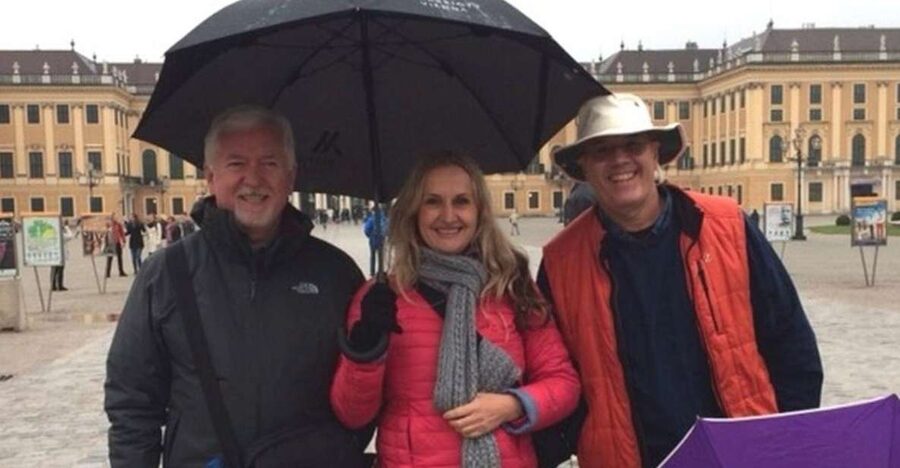
Reviewed · SCHöNBRUNN PALACE TOURS
Schönbrunn Palace & Gardens Tour
Schönbrunn is more than a pretty palace. It was the Habsburg family’s summer stage, political headquarters, and family home, all rolled into one. I like the hilltop Gloriette views and the chance to see unusual rooms such as the Porcelain Room and Millions Room. The gardens also give you a useful sense of how power was displayed in the 18th century.
I especially like the use of historian guides, including guides named Katarina and Katharina, who are described as professors, doctoral students, journalists, art critics, and published authors. The main drawback is cost: $176 per person, with palace and park admission extra, makes this a serious splurge rather than a simple sightseeing walk.
In This Review
- Key points to know before booking
- Why Schönbrunn deserves a full afternoon
- The gardens and the long view toward the Gloriette
- Maria Theresa’s palace and a family of sixteen children
- The Millions Room and its unusual decoration
- Franz Joseph, Elisabeth, and the private side of court life
- The Jewish Quarter connection
- What the guide adds to the experience
- Is $176 a fair price?
- Who will get the most from this tour?
- Practical details that affect your day
- Should you book the Schönbrunn Palace and Gardens Tour?
- FAQ
- How long does the Schönbrunn Palace and Gardens Tour last?
- What is included in the tour?
- Is the Schönbrunn Palace and Park entrance fee included?
- Where does the tour meet?
- Is hotel pickup available?
- What language is the tour conducted in?
- Is this a private tour or a group tour?
- Does the tour include the Schönbrunn gardens?
- Can I cancel the tour for a refund?
Key points to know before booking
- Maria Theresa’s private world: See the Porcelain Room, once used as the empress’s office, rather than only the grand public rooms.
- A rare Rococo treasure: The Millions Room combines Indo-Persian miniatures, carved rosewood, and ornate European frames.
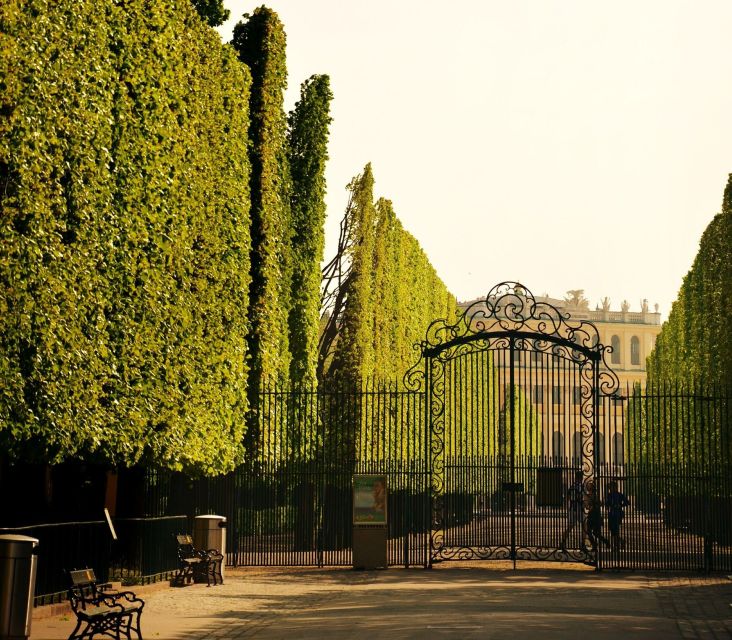
- Gardens with a purpose: The formal grounds were designed to make nature and imperial architecture work as one grand picture.
- A guide who adds context: The tour is led in English by a historian, professor, journalist, art critic, or published author.
- A useful small-group option: Private and small-group formats make it easier to ask questions and keep up inside crowded rooms.
- Extra ticket cost: Your guide helps you buy admission, but the palace and park entrance fee is not included in the tour price.
Why Schönbrunn deserves a full afternoon
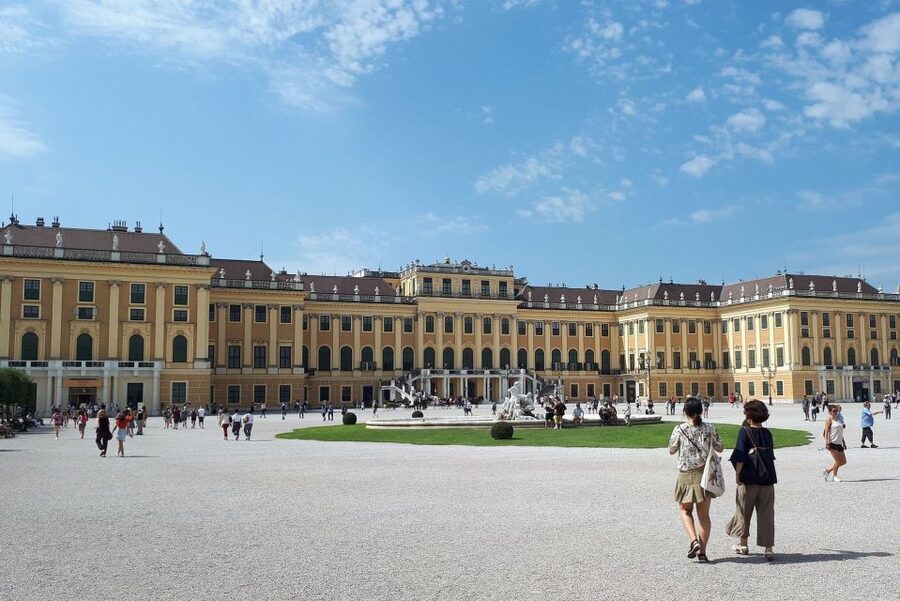
Schönbrunn was built as Austria’s answer to Versailles. That comparison is useful, but the palace has its own character. Versailles is tied closely to French royal spectacle. Schönbrunn shows how the Habsburgs used family life, ceremony, military success, art, and architecture to hold together a sprawling European empire.
You begin outside the palace at the Schönbrunn Arrival Centre, Schönbrunner Schloßstrasse 50. The guide waits in front of the Group Centre Building, across from the palace entrance. If you choose the private pickup option, the guide meets you at a central hotel, holiday flat, or another agreed meeting point, then travels with you to Schönbrunn by Vienna’s metro.
That pickup option is useful if you are new to Vienna or prefer not to sort out the route yourself. It does not turn the tour into a private car transfer. You follow the guide on the city’s excellent underground system, which can make the arrival feel more like part of the local experience.
The visit lasts 150 minutes, or two and a half hours. About 30 minutes are devoted to the gardens, followed by roughly two hours inside the palace. That balance is sensible. Schönbrunn’s exterior and grounds explain the palace’s public face, while the rooms reveal how the imperial household actually lived and worked.
More ways to see Schönbrunn:
- Vienna: Schönbrunn Palace & Gardens Skip-the-Line Tour
★ 4.7 · 7,739 reviews - Vienna: Skip-the-Line Schönbrunn Palace & Gardens Tour
★ 4.8 · 5,411 reviews - Vienna: Bus & Schönbrunn Palace Skip-the-Line Guided Tour
★ 4.3 · 2,802 reviews
The gardens and the long view toward the Gloriette
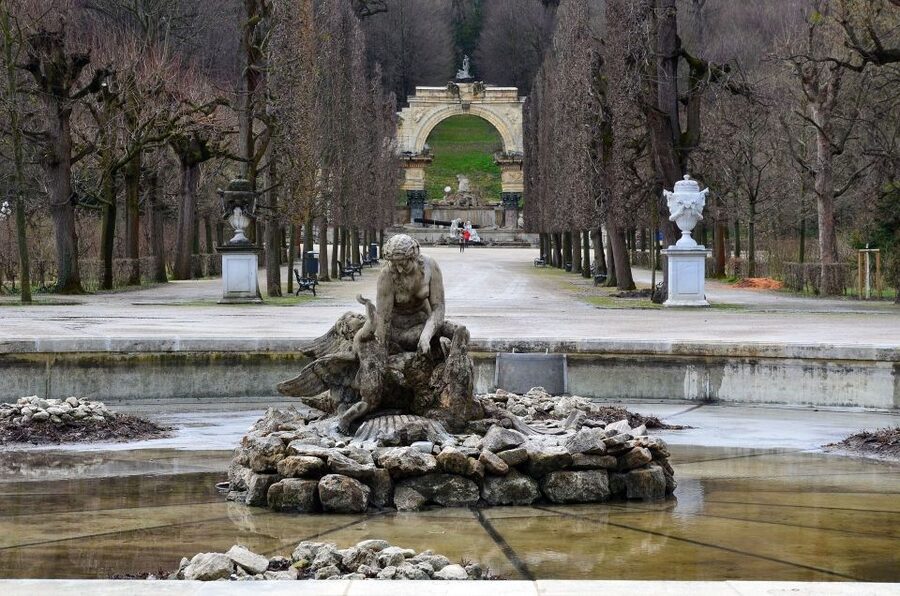
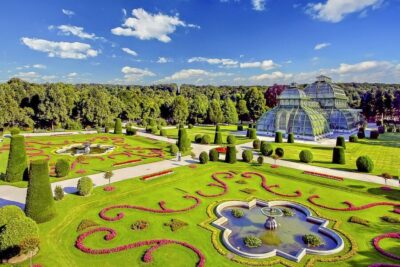
The garden walk begins with the formal grounds. Baroque design treated gardens as a meeting point between nature and architecture. Straight paths, controlled plantings, broad views, and carefully placed buildings all helped create an impression of order.
Your guide uses the walk to explain why Schönbrunn mattered during Maria Theresa’s reign. Her military victories helped make her era a high point in Habsburg political and cultural power. The gardens were not just pleasant scenery. They helped present that power to anyone approaching the palace.
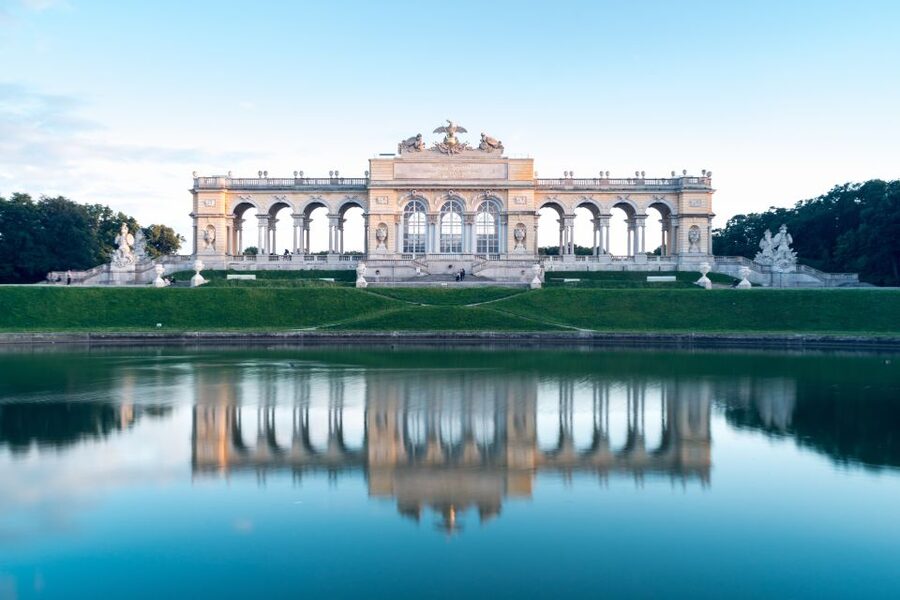
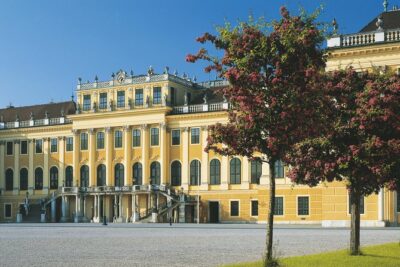
The walk toward the Gloriette is the most memorable part of the outdoor section. This huge triumphal arch sits on a hill above the palace and offers wide views toward Vienna’s woods. You get a better sense of the palace’s scale from here than you do while standing close to its yellow facade.
Maria Theresa also understood public image. The park opened to the public in 1779, a clever gesture that allowed ordinary people to see part of the imperial setting. That decision gave the monarchy a more approachable face without giving up its grandeur.
The gardens are a place where pace matters. Thirty minutes is enough for a focused explanation and the walk toward the Gloriette, but not enough for a slow, complete exploration of every path and feature. If you want extended time outdoors, plan to return after the guided visit. The tour gives you the framework; your own later walk gives you more room to linger.
Maria Theresa’s palace and a family of sixteen children
Inside, Schönbrunn becomes less like a single grand residence and more like a record of changing Habsburg personalities. Maria Theresa made the palace a center of court life and imperial policy. It also served as the summer home of a reigning family with 16 children, so the building carried both public duties and intense domestic activity.
The Porcelain Room is one of the most appealing stops for anyone who wants something beyond the usual parade of gilt furniture and ceremonial portraits. It was Maria Theresa’s office, giving the room a direct link to her working life.
The name can make you expect a display of porcelain objects. The more interesting point is the room’s function. This was a place connected with administration and decision-making, not merely a decorative retreat. Your guide can help you see Maria Theresa as a ruler at work, rather than only as a grand figure in dynastic history.
That distinction matters at Schönbrunn. The palace contains lavish rooms, but the best visit keeps asking what each room was for. Was it used for receiving diplomats, carrying out state business, relaxing with family, or displaying wealth? A strong guide turns decoration into evidence.
The Millions Room and its unusual decoration
The Millions Room is the palace’s great surprise. Its name refers to its enormous price, and the decoration explains why. Antique Indo-Persian miniatures sit in Rococo frames, while carved rosewood wall hangings from the Antilles cover the room with an intricate finish.
This combination brings together materials and artistic ideas from far beyond Vienna. European Rococo ornament frames images from Asia, and imported wood gives the room another layer of status. The result is not merely expensive. It shows how imperial courts collected, reordered, and displayed objects from across the world.
Take time to look at the relationship between the small miniatures and their elaborate frames. The frames are not quiet borders. They are part of the room’s visual drama, turning individual images into a unified decorative scheme.
The Millions Room is also a good example of why a guide can be worth paying for inside Schönbrunn. Without context, you may notice the carved wood and unusual pictures but miss the connection between cost, trade, imperial taste, and Rococo design. With an art-focused explanation, the room becomes one of the palace’s clearest lessons in status and display.
A different side of Vienna on the same trip:
- Vienna: Vivaldi’s Four Seasons Concert in Karlskirche
★ 4.7 · 14,951 reviews - Vienna: Spanish Riding School Training
★ 3.9 · 9,281 reviews - Vienna: Skip-the-cashier-desk-line Giant Ferris Wheel Ride
★ 4.5 · 7,859 reviews - Vienna: Light of Creation Votive Church Immersive Light Show
★ 4.8 · 6,779 reviews
Franz Joseph, Elisabeth, and the private side of court life
The Franz Joseph and Elisabeth Apartments shift the story into the 19th century. Emperor Franz Joseph married the Bavarian princess Elisabeth in 1854. She became widely known by the affectionate nickname Sisi, a figure remembered for her beauty, restless nature, and dislike of court ritual.
The rooms help show a marriage shaped by public duty. Franz Joseph carried the weight of governing, while Elisabeth disliked the rigid ceremonies and ornate surroundings expected of an imperial consort. The palace was a home, but it was also a machine of etiquette.
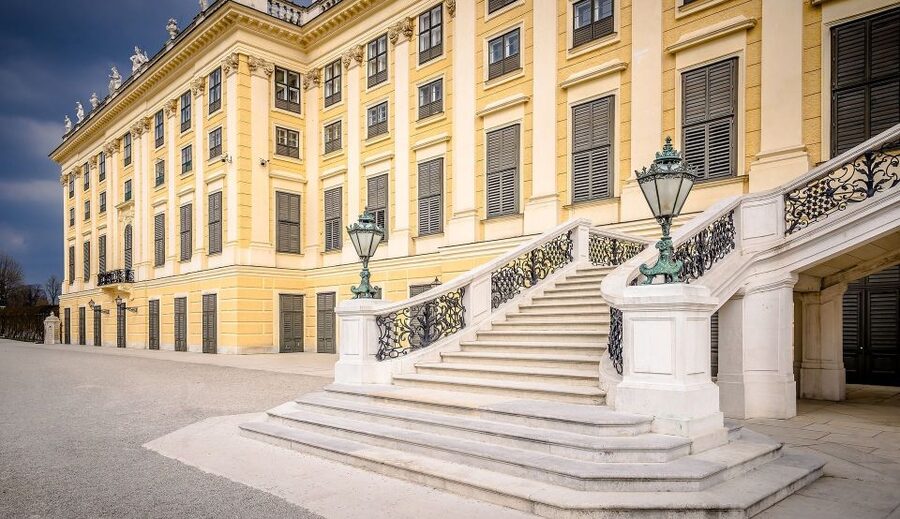
One detail makes Sisi’s discomfort especially vivid. She commissioned a spiral staircase connecting her official rooms with a private entry to the gardens. It gave her a way to leave the formal palace world with less fuss.
That small architectural choice is more revealing than another ceremonial room. It shows how an imperial residence could feel confining to the people who lived there. You see the luxury, but you also see the lack of freedom behind it.
The succession of lavish rooms can become visually tiring, especially if you already have several Vienna palaces on your schedule. This is where the guide’s storytelling matters. A good explanation of Sisi’s escape route, marriage, and dislike of ceremony gives the rooms a human thread.
The Jewish Quarter connection
The experience also includes an exploration of Vienna’s Jewish Quarter and stories from the period of the Jewish ghetto. This portion adds a different voice to a tour otherwise centered on the imperial court.
The contrast is important. Schönbrunn presents power from the viewpoint of rulers, ceremonies, and dynastic ambition. Stories from the Jewish Quarter bring attention to the people and communities affected by the political and religious systems of the city.
The supplied timing gives 30 minutes to the gardens and two hours to the palace, so you should confirm how the Jewish Quarter material fits your chosen departure and route. The central meeting point and listed itinerary focus on Schönbrunn, while the Jewish Quarter is presented as one of the experience’s highlights. That does not necessarily mean a long separate walking tour there.
If this subject is a main reason for booking, ask for clarification before paying. If you are mainly interested in Schönbrunn, treat the Jewish Quarter stories as an added historical thread rather than the central focus.
What the guide adds to the experience
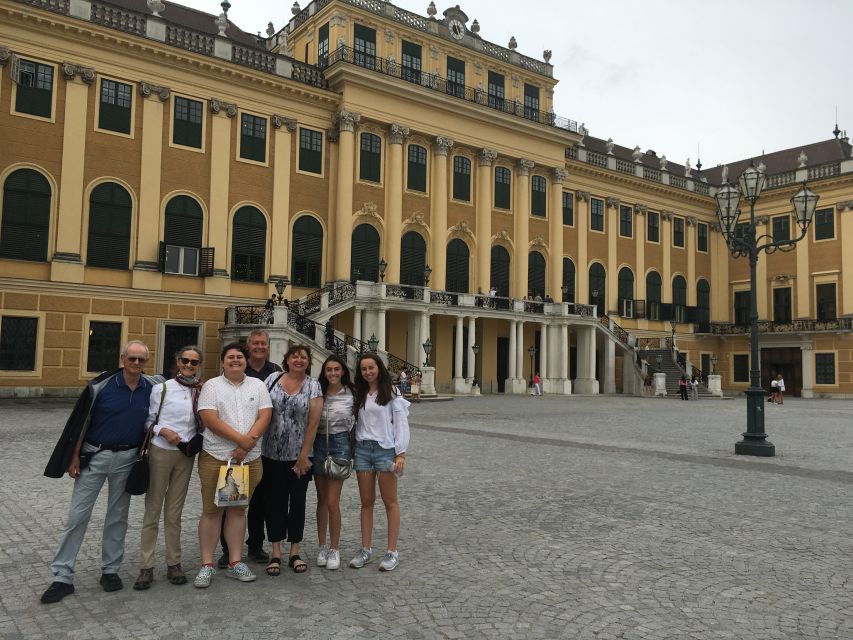
The tour’s strongest feature is its guide-led format. You are not simply handed an audio device and sent through a sequence of rooms. The guide helps you purchase the required tickets, leads you through the visit, and provides context as you move from garden to palace.
The guides are described as historians, professors, doctoral students, journalists, art critics, and published authors. That range suggests an emphasis on interpretation rather than memorized dates alone. You should expect discussion of the Habsburg family, Vienna, Maria Theresa, Franz Joseph, Elisabeth, art, and court life.
Katarina appears as a particularly useful name to know when arranging the experience. She is also written as Katharina in the supplied information, and another account spells the name Katrina. If you are hoping for a particular guide, check the booking details rather than assuming the same person will lead every departure.
Private and small-group options are available. That matters inside Schönbrunn, where crowds can make it hard to hear or gather around one painting. A small group also gives you more freedom to ask why a room matters, how a family relationship worked, or what a decorative detail means.
The tour does not promise an empty palace. You will still be visiting a major Vienna sight. The advantage is that the guide can keep the group moving and look for quieter corners in which to explain the rooms. That practical help can make a busy palace feel less confusing.
Is $176 a fair price?
At $176 per person, this experience costs much more than simply visiting Schönbrunn on your own. You also pay the palace and park entrance fee separately, so calculate the total before booking.
The price makes more sense if you choose a private or small-group format and want serious historical guidance. It may be worthwhile for first-time visitors who want Schönbrunn tied to the wider story of Vienna, or for anyone who dislikes reading room labels and managing a large palace visit alone.
The value is weaker if you only want quick access to the gardens and a look at the famous rooms. In that case, the separate admission and a self-guided visit may leave more money for another Vienna experience.
The tour does include two useful forms of flexibility. You can reserve now and pay later, and you can cancel up to 24 hours before the start for a full refund. Those policies do not change the high price, but they reduce the risk of committing too early to a fixed schedule.
Who will get the most from this tour?
I would recommend it most strongly to people who enjoy architecture, monarchy, decorative arts, and political history. The Millions Room alone will appeal to anyone who wants to understand how objects, materials, and design were used to signal status.
It is also a good match for first-time visitors to Vienna. You get the palace, gardens, Habsburg background, and stories about the city’s Jewish past in one structured visit. The guide-led route helps you use your limited time well.
Families may appreciate the stories about Maria Theresa’s 16 children and Sisi’s private staircase, though the palace rooms themselves require attention and patience. The private option can help if you want to ask questions at your own pace.
I would hesitate if you prefer unhurried garden walks, photography time, or independent exploration. The 30-minute garden section is focused, and the two-hour palace visit has a clear guide-led rhythm. You can return to the grounds afterward, but that requires extra time beyond the scheduled tour.
Practical details that affect your day
Meet at the Schönbrunn Arrival Centre at Schönbrunner Schloßstrasse 50. The guide waits in front of the Group Centre Building, directly across from the palace’s main entrance. This is worth noting because the meeting point is not described as being inside the palace itself.
The tour is conducted in English. Starting times vary, so check availability for your date. Pickup is optional and applies to private tours, with the guide meeting you at a central hotel, holiday flat, or another meeting point before taking the metro to Schönbrunn.
Wear comfortable shoes for the gardens and the walk toward the Gloriette. The visit lasts two and a half hours, and you will spend much of that time moving between outdoor paths and palace rooms.
Because the entrance fee is not included, allow time for the guide to help you purchase tickets. The benefit is that you do not need to work out the ticket process alone, and skip-the-ticket-line access is included in the activity description.
Should you book the Schönbrunn Palace and Gardens Tour?
Book it if you want Schönbrunn explained rather than simply seen. The gardens, Gloriette, Porcelain Room, Millions Room, and Franz Joseph and Elisabeth Apartments form a strong route, and the guide’s historical and art background can connect them into one story.
The tour is especially appealing in a private or small group, where you can hear clearly and ask questions. Katarina or Katharina may be a memorable guide choice if available, but confirm names and the exact route when booking.
Skip it if $176 plus admission feels too steep, or if you want a slow, independent day in the park. The experience offers real value for focused interpretation, not for the basic act of entering Schönbrunn. For a visitor who wants the palace’s politics, personalities, and decorative details brought together in one visit, it is a strong, though costly, choice.
FAQ
How long does the Schönbrunn Palace and Gardens Tour last?
The tour lasts 150 minutes, or two and a half hours.
What is included in the tour?
A guided tour and an English-speaking historian guide are included.
Is the Schönbrunn Palace and Park entrance fee included?
No. The palace and park entrance fee is not included. Your guide helps you purchase the required tickets.
Where does the tour meet?
Meet at the Schönbrunn Arrival Centre at Schönbrunner Schloßstrasse 50. The guide waits in front of the Group Centre Building across from the palace’s main entrance.
Is hotel pickup available?
Pickup is optional for private tours. Your guide can meet you at a central hotel, holiday flat, or another meeting point, then accompany you to the palace by Vienna’s metro.
What language is the tour conducted in?
The tour is conducted in English.
Is this a private tour or a group tour?
Private and small-group options are available. The exact format depends on the option you select.
Does the tour include the Schönbrunn gardens?
Yes. The schedule includes about 30 minutes in the Schönbrunn Gardens, including the walk toward the Gloriette.
Can I cancel the tour for a refund?
Yes. You can cancel up to 24 hours in advance for a full refund. You can also reserve now and pay later.
Just added around Vienna
- Private Tour from Vienna to Melk and Dürnstein★ 4.5 · 3 reviews
- Vienna: Johann Strauss 200th birthday anniversary exhibition★ 4.7 · 3 reviews
- Vienna Private Full Day Tour – Tickets to Schönbrunn & Lunch★ 5.0 · 3 reviews
- Private Salzburg Day Trip from Vienna★ 4.0 · 3 reviews
- Vienna: Entry Ticket Belvedere 21 & Contemporary Art★ 4.3 · 3 reviews
- Full-Day Private Trip from Vienna to Budapest★ 4.5 · 3 reviews
- Vienna by Night: Private Evening Food and Drink Tour★ 5.0 · 3 reviews
- 1.5 Hour Cinematic Style Portrait Photoshoot and Tour in Vienna★ 4.5 · 3 reviews
Schönbrunn Palace Tours, compared.
Schönbrunn Palace & Gardens Skip-the-Line Tour
Read our review →
Skip-the-Line Schönbrunn Palace & Gardens Tour
Read our review →
Bus & Schönbrunn Palace Skip-the-Line Guided Tour
Read our review →
Skip the Line Schönbrunn Palace and Gardens Guided Tour
Read our review →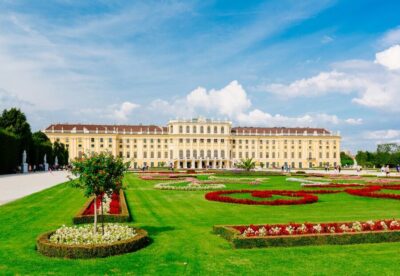
Schönbrunn Palace & Garden Skip-the-Line Guided Tour
Read our review →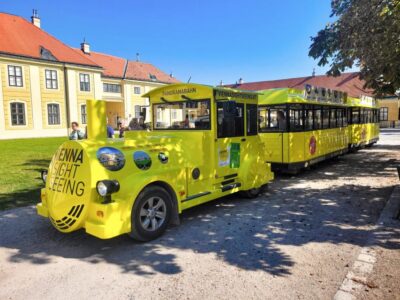
Panorama Train Tickets to explore Schönbrunn Palace
Read our review →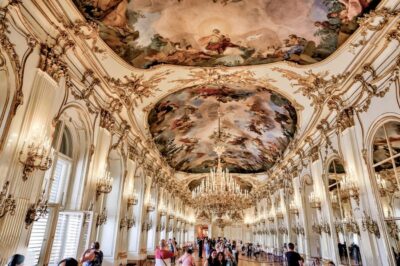
Skip-the-Line Schönbrunn Palace and Gardens Tour
Read our review →Browse the lists this tour appears in