
Reviewed · SPANISH RIDING SCHOOL TOURS
Vienna: Spanish Riding School Training
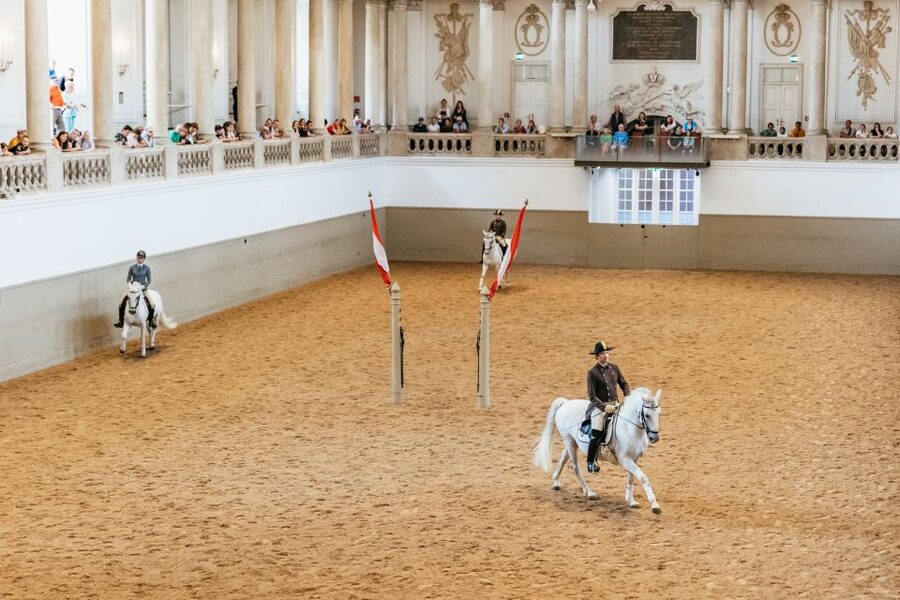
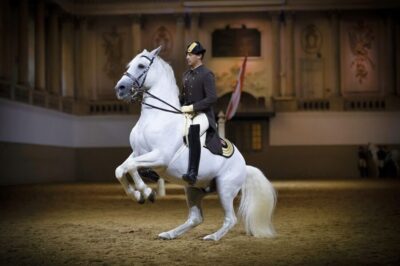
The most memorable part of this hour is not a grand leap or dramatic rear. It is seeing the Lipizzaner stallions and their riders repeat small movements with great care inside Vienna’s chandelier-lit Winter Riding Academy. This is the working side of the Spanish Riding School, not the full theatrical show.
I like the remarkable baroque setting and the chance to watch horses at different stages of training. I also like the price: at $20, morning exercise is a sensible way to see the school when performance tickets are sold out. The main thing to consider is that the famous levade, courbette, and capriole are not practiced every day, so you may see steady trotting and dressage rather than spectacular leaps.
In This Review
- Key points to know before you book
- Why morning exercise is worth your Vienna hour
- Inside the Winter Riding Academy
- What the horses actually practice
- Two groups, one hour, and a changing rhythm
- The value of a $20 ticket
- Standing or seated: choose with care
- Access, stairs, and practical limits
- Who will enjoy this most
- Ways to get more from the hour
- Should you book the Spanish Riding School training?
- FAQ
- How long does the Spanish Riding School training last?
- How much does the training cost?
- Where does the activity take place?
- What will I see during the training?
- Are the levade, courbette, and capriole included?
- Is music included?
- Can I take photographs or record video?
- How do I use my voucher?
- Is the building accessible for wheelchair users?
Key points to know before you book
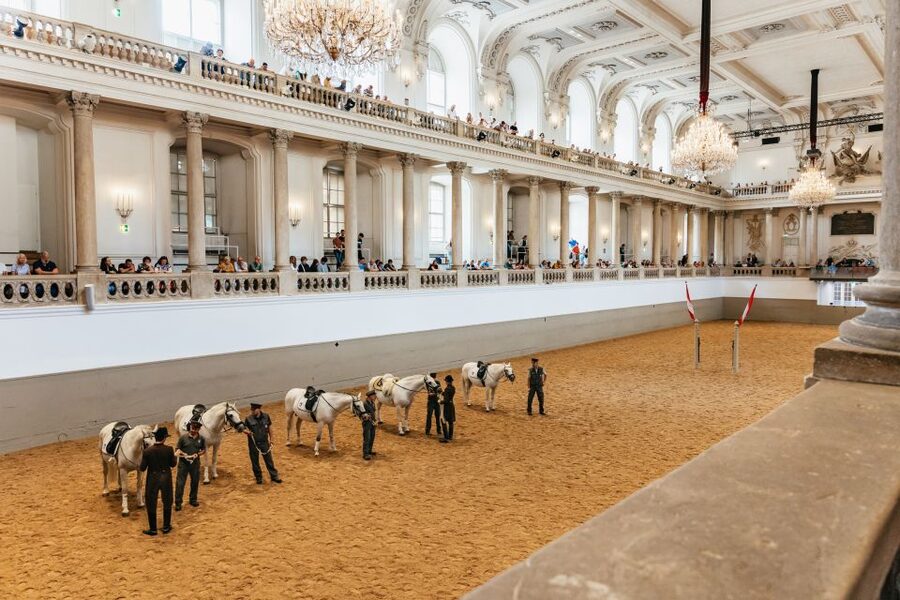
- Five horses may work in the arena at once, giving you a useful look at different training levels but making it harder to follow one horse.
- Two groups can appear during the one-hour session, and the program may include both ridden work and groundwork.
- Classical Viennese music accompanies the exercise, while commentary explains the horses, riders, and training methods.
- Standing tickets are the budget choice, but you may spend the full hour standing or leaning over a rail.
- Top-tier seats can have awkward sightlines and limited legroom, so ask carefully about the section before paying more.
- Photography and video are forbidden inside, and tickets must be exchanged at the entrance no earlier than one hour before the activity.
Why morning exercise is worth your Vienna hour
The Spanish Riding School is best known for polished evening performances, but morning exercise lets you see how that polish is built. The horses are not simply parading for an audience. Their work is designed to maintain health, strengthen particular muscle groups, refine movement, and keep both horse and rider fit for the more demanding haute école exercises.
That distinction matters. If you expect a nonstop equestrian show, you may leave disappointed. If you want to understand how a trained horse learns balance, rhythm, changes of lead, side steps, and controlled transitions, the session has much more to offer.
I especially like the contrast between the formal setting and ordinary training work. Chandeliers hang above the sand arena, yet the lesson can look quite practical: a rider repeats a movement, an instructor watches, and a younger horse works at a simpler level than an experienced stallion.
The setting adds real value even during quieter moments. This is the Winter Riding Academy, a grand baroque hall in central Vienna, and the architecture is part of the experience. You get a glimpse of the traditional world of the school while watching the daily exercise that keeps its horses ready for public performances.
More Spanish Riding School visits:
- Vienna Spanish Riding School Guided Tour
★ 4.7 · 6,765 reviews - Performance Of The Lipizzans At Spanish Riding School
4,190 reviews - Vienna: Spanish Riding School 45-Minute Performance Show
★ 3.9 · 731 reviews
Inside the Winter Riding Academy
After presenting your voucher at the entrance, you exchange it for an admission ticket. Ticket pickup begins at the earliest one hour before the activity, so do not assume that arriving far earlier will let you complete the exchange. Give yourself time to find the correct entrance and collect the paper ticket before joining the queue.
Inside, you enter a hall built for ceremony as much as for riding. The white Lipizzaners work beneath chandeliers and around the historic arena, creating one of those distinctly Viennese scenes that photographs can never quite capture, especially since photography is not allowed during the exercise.
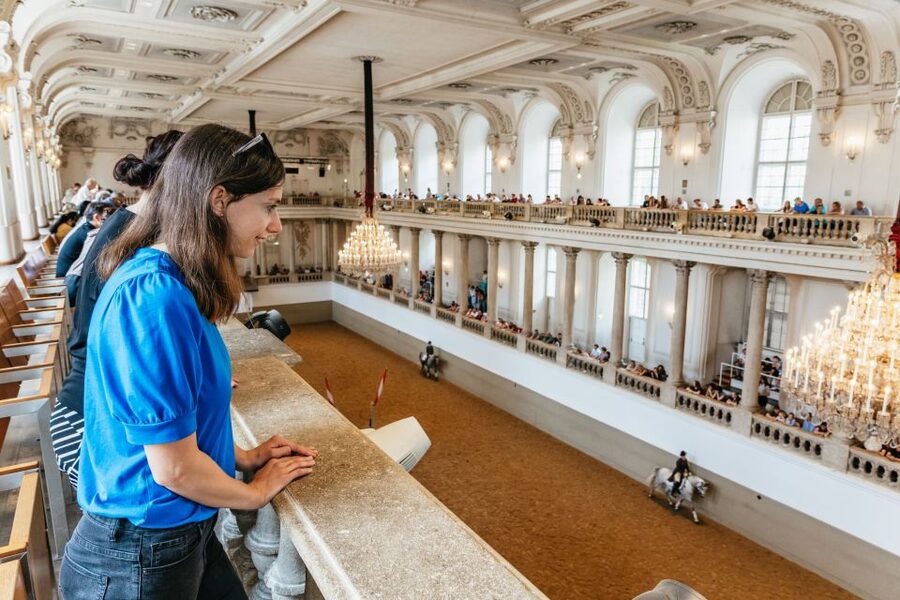
The hall can feel crowded, particularly at popular times. Standing-ticket holders usually position themselves along the arena, while seated visitors use the surrounding tiers. Your view depends heavily on location. A side position may give you a close look at one part of the arena while hiding activity on the opposite side.
Upper seating deserves special care. Some people find the high wall forces them to lean forward or stand to see properly. Others enjoy a broad view from the upper tier. If you have a choice, ask exactly which section you are buying rather than assuming that a higher price guarantees the best sightline.
What the horses actually practice
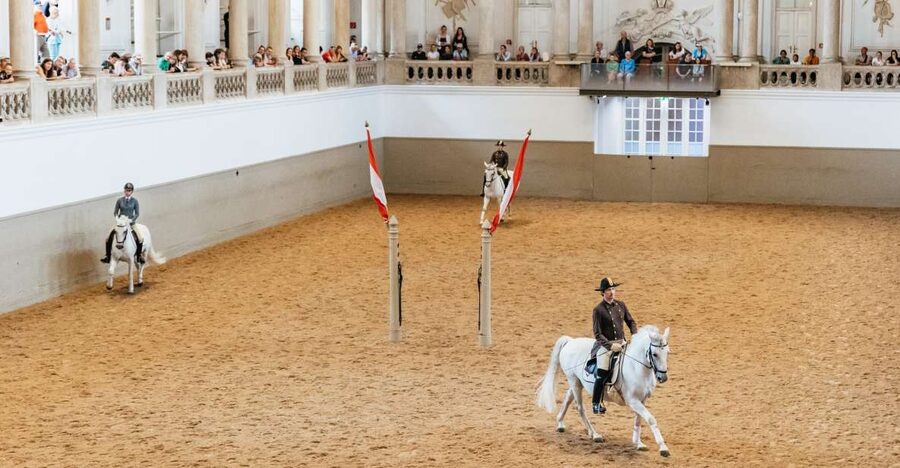
The morning exercise begins with simpler work. Relaxation exercises help the horses loosen up and settle into the session. You may see them walking, trotting, changing leads, and working through basic dressage movements.
The purpose is not to entertain every second. Repetition builds strength and control. A horse at an earlier stage may receive more direct guidance from its rider, while an experienced horse may perform a movement with little visible effort. The difference between the teams is one of the most interesting parts of the hour.
The exercises can include:
- Walking and trotting work
- Changes of lead
- Side steps and lateral movements
- Groundwork
- Exercises that refine balance and precision
- Muscle-building work for higher-level movements
You might see several horses in the arena at once. This gives you a sense of the school’s range, from younger horses and newer riders to more polished combinations. The drawback is that the action can become visually busy. If five horse and rider teams work at the same time, you may need to choose one and follow it rather than trying to watch everything.
The famous school jumps are a different matter. Levade involves a controlled raised position, courbette uses a series of jumps from the front legs, and capriole is the dramatic leap associated with the highest levels of classical riding. These movements are reserved for suitable training sessions and are not part of every morning exercise.
That is why the session should be booked as training, not a cut-price performance. You might see an advanced movement, but you should not count on it. The value is in observing the process, including the less flashy work that makes the spectacular work possible.
Two groups, one hour, and a changing rhythm
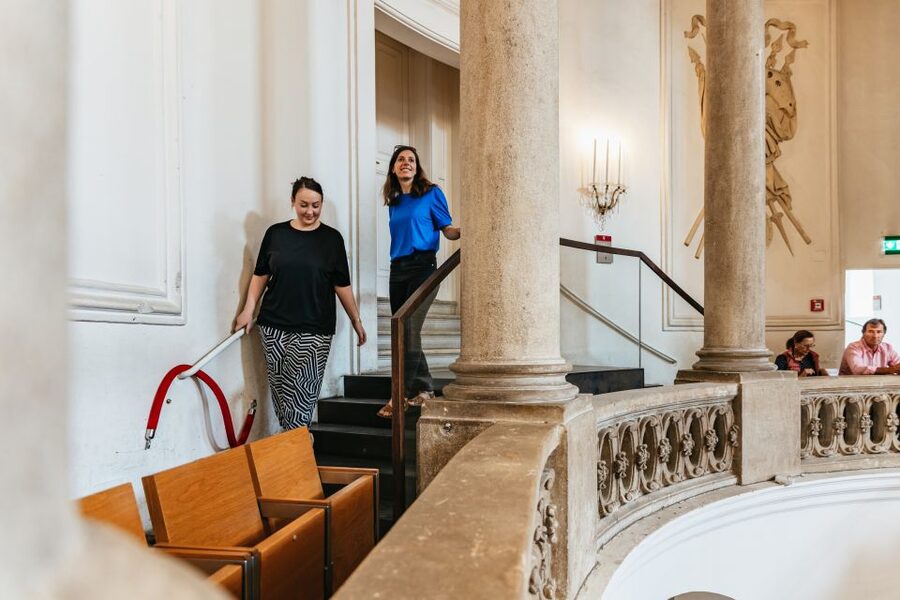
The full session lasts one hour. During that time, you may see two groups of horses enter the arena. The exact number and type of exercises can change, so the pace is not fixed in the way a stage show is.
One group may focus on steady ridden work. Another may include a young rider or a horse receiving more detailed instruction. Some sessions also include groundwork, which can be fascinating if you want to see how communication begins before advanced riding.
The changing levels help explain why the Lipizzaners do not all move alike. One horse may appear calm and finished, while another is still learning a basic response. The riders also develop through stages. A rider in training can be identified by different clothing and a riding hat, according to the information given during the exercise.
Commentary adds context about the school, the horses, and the methods. Sound quality can vary from one part of the hall to another. From the upper areas, the narration may sound muffled or difficult to follow, and a fast-speaking presenter can make it harder to catch every detail. If the explanation matters to you, choose a middle section when possible.
The music is easier to appreciate. Classical Viennese pieces accompany the work and give the routine a calm, formal rhythm. It can feel slightly strange at first to hear elegant music behind basic training, but that contrast helps you see the exercise as a long-established ritual rather than a casual stable demonstration.
A different side of Vienna on the same trip:
- Vienna: Vivaldi’s Four Seasons Concert in Karlskirche
★ 4.7 · 14,951 reviews - Vienna: Skip-the-cashier-desk-line Giant Ferris Wheel Ride
★ 4.5 · 7,859 reviews - Vienna: Schönbrunn Palace & Gardens Skip-the-Line Tour
★ 4.7 · 7,739 reviews - Vienna: Light of Creation Votive Church Immersive Light Show
★ 4.8 · 6,779 reviews
The value of a $20 ticket
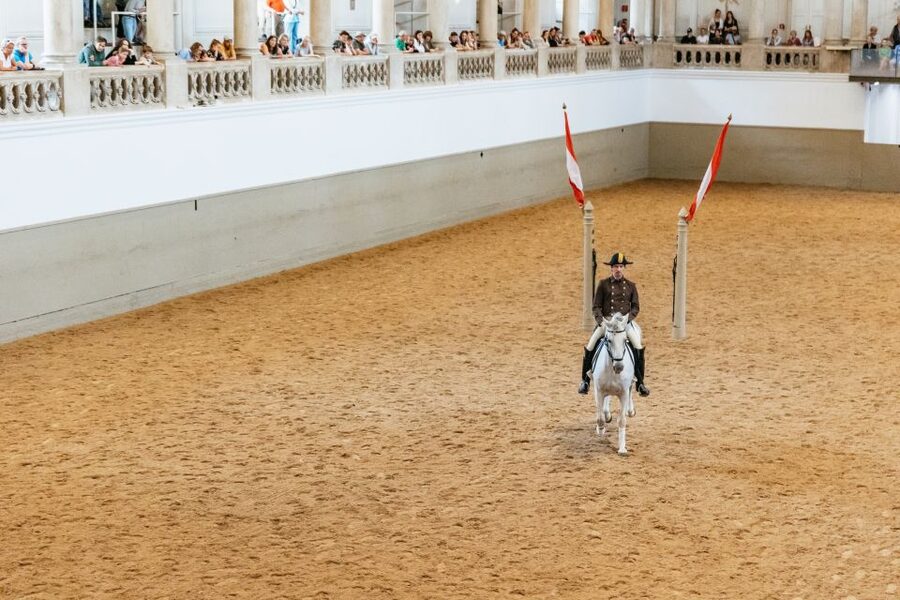
At $20 per person, this is one of the more affordable ways to enter the Spanish Riding School. A full performance costs more, and tickets can be difficult to obtain at convenient times. Morning exercise gives you access to the same historic arena and the same Lipizzaner tradition without requiring the full price of the polished show.
I consider it strong value for three kinds of visitors. First, horse lovers get an hour of close study. Second, anyone unable to secure performance tickets still gets to see the horses and riders at work. Third, people interested in Vienna’s imperial architecture gain entry to a remarkable interior while watching an activity that still serves a practical purpose.
The price is less compelling if you want a large-scale spectacle. Much of the session may consist of trotting, basic schooling, and repeated movements. The program can change, and the school does not promise a set sequence of advanced tricks.
That uncertainty is part of the bargain. You pay for access to a real exercise session, not a guaranteed highlight reel. I would rather know that before booking than arrive expecting every horse to perform the capriole.
Standing or seated: choose with care
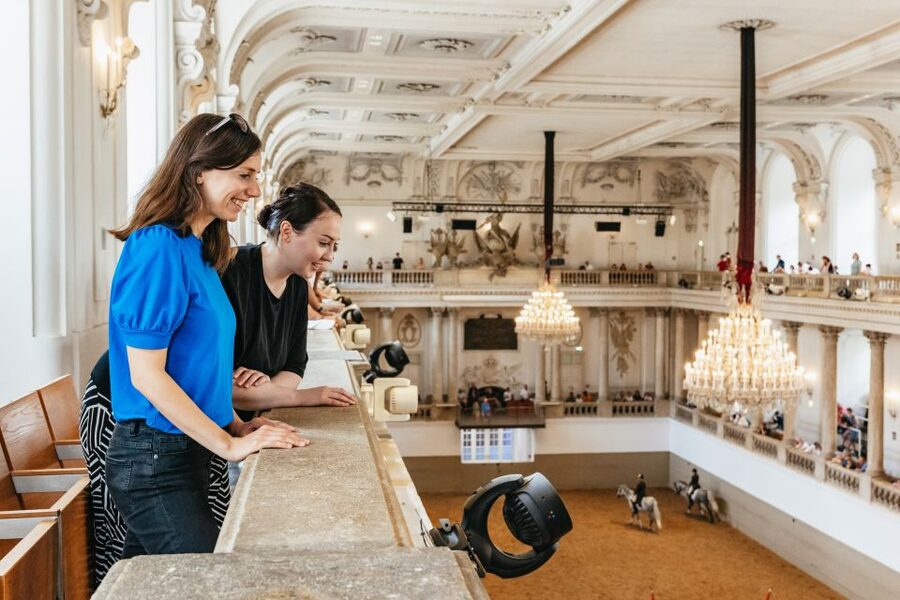
Standing tickets are usually the least expensive option, and they can provide a good view if you arrive early and find a useful position. You may also discover unoccupied stone seating, but you should not rely on that. An hour on your feet can be tiring, especially if you have back, knee, or balance problems.
Standing along the rail has another drawback. You may need to lean forward to see over the edge, and the position can become uncomfortable during a full session. The advantage is flexibility: you can often see the arena more broadly than from a cramped upper seat.
Seated tickets do not automatically solve every viewing problem. Some upper-tier seats have a high wall in front, narrow legroom, or a side angle that hides part of the arena. A higher section can offer a wide view, but it may also make the commentary harder to hear.
Families should think about this before booking. Children aged 3 to 5 enter free but must sit on an adult’s lap. Children aged 6 to 18 receive discounted admission. Children under 3 are not admitted. For young children, the one-hour practice format may be easier than a longer formal performance, but standing-room arrangements can still be difficult.
Access, stairs, and practical limits
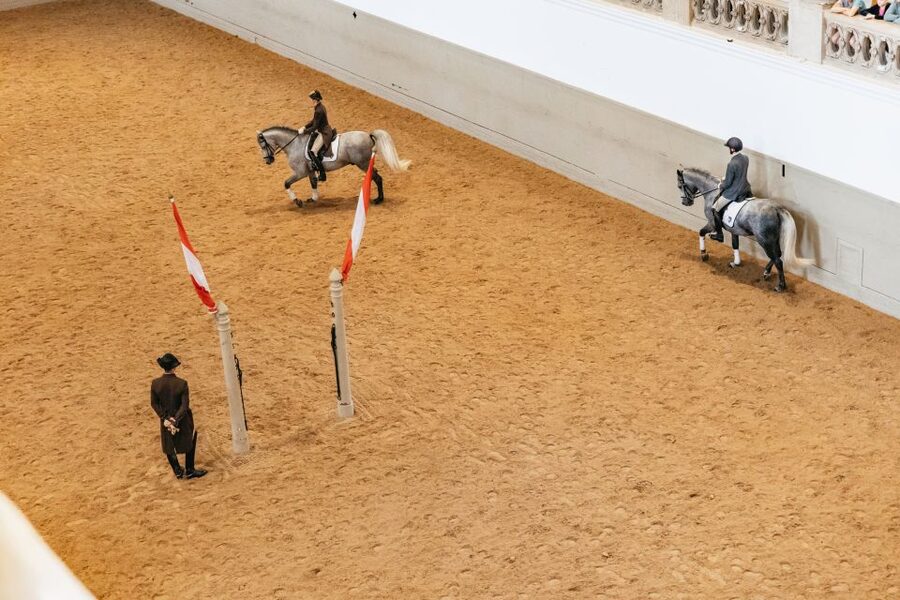
The building is protected as a historic monument and has no elevator. Expect stairs, particularly if your ticket places you in an upper area. This is important for older visitors, anyone with limited stamina, and families carrying small children.
Wheelchair users and people with walking difficulties should send a request in advance. Do not assume that a general request at the door will produce suitable seating. Accessible arrangements need to be clarified before the visit, and the building’s stair layout can make last-minute changes hard.
There is no hotel pickup or drop-off. You make your own way to the Spanish Riding School entrance and present the voucher there. Since the ticket exchange is available only from one hour before the activity, plan your arrival around that window.
The rules inside are firm. Pets are not allowed, and photography and video recording are forbidden. Staff may remind the audience several times, so keep your phone put away. This can be frustrating if you want a souvenir, but it also keeps the horses from being distracted and preserves the quiet working atmosphere.
Who will enjoy this most
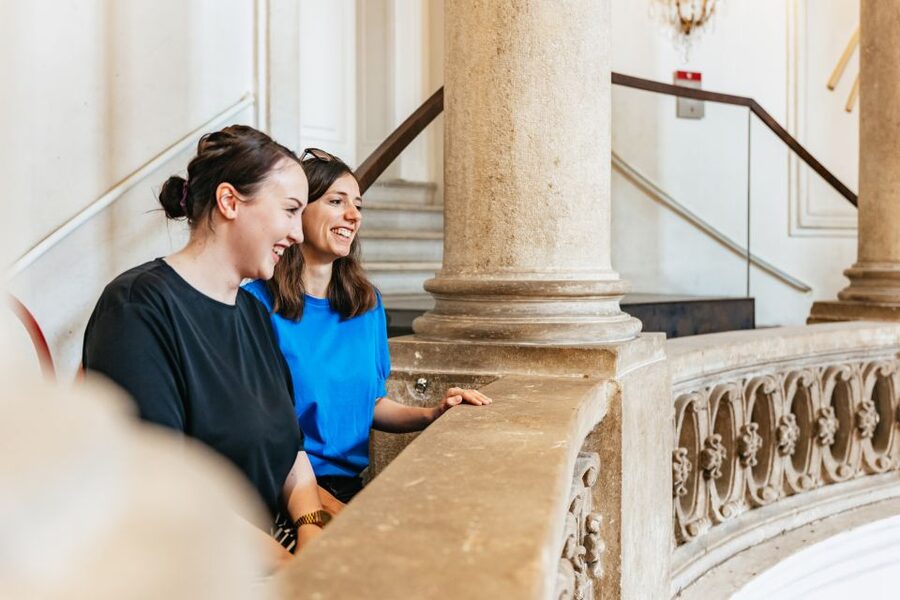
You do not need to ride horses to appreciate the session. Even a first-time observer can see the patience, balance, and coordination involved. The horses are striking, the riders are disciplined, and the hall is memorable on its own.
Still, experienced riders and committed equestrian fans will get the most from the details. You can watch how a rider gives small aids, how an instructor corrects a movement, and how different horses respond at different stages. The quiet repetition becomes meaningful once you understand that it builds toward advanced work.
This is also a good choice for a Vienna visitor with limited time. One hour is long enough to feel substantial but short enough to fit into a day of museums, palaces, and cafés. It can work particularly well when the main performance is sold out.
I would be more cautious about booking it for someone who wants constant action, clear narration from every seat, or guaranteed high-level movements. The experience depends on the day’s training program. You may see groundwork and a striking exercise, or you may see mostly controlled schooling.
Ways to get more from the hour
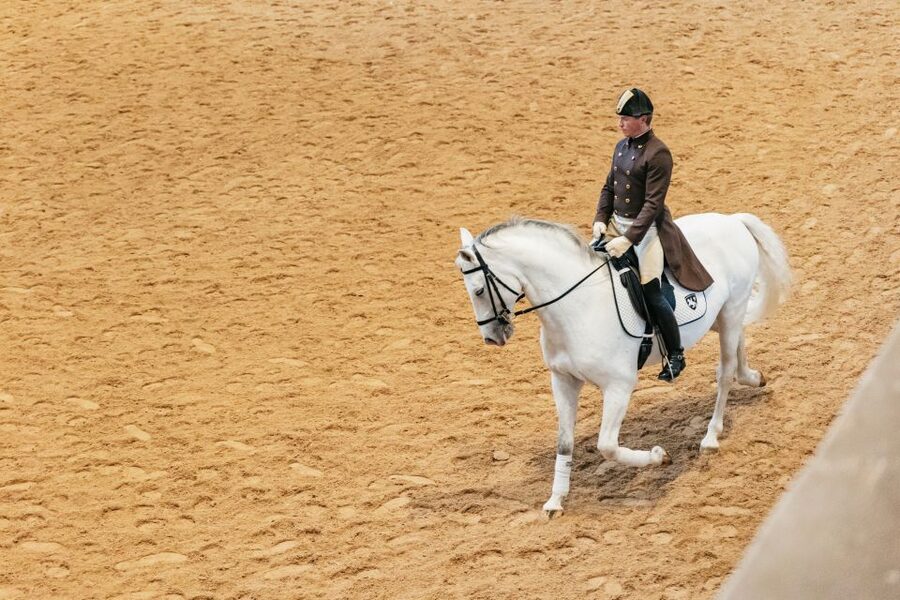
Arrive early within the ticket collection window so you can exchange the voucher without rushing. If you have standing admission, arriving with time to spare may help you find a better viewing position.
Look for the differences among the horses and riders. Notice who appears to be learning, who receives more correction, and which movements look effortless. The point is not to pick a winner. It is to see how the school develops both partners over time.
If you can hear commentary from your chosen spot, listen for explanations of the riders’ uniforms, training stages, and exercises. If you are more interested in the horses than the narration, a side or upper position may still work, but understand that the acoustics are not equally good throughout the hall.
Keep your expectations modest and your attention sharp. The most rewarding moments may be small: a cleaner transition, a straighter line, a controlled side step, or a rider quietly correcting a horse before moving on.
Should you book the Spanish Riding School training?
Book it if you love horses, care about classical riding, or want an affordable way to see one of Vienna’s most famous institutions. At $20, the session offers strong value, especially when performance tickets are unavailable. The beautiful Winter Riding Academy and the sight of white Lipizzaners working beneath chandeliers make the hour feel special even when the exercises are basic.
Skip it if you want guaranteed leaps, rearing, or a polished show from start to finish. For everyone else, treat it as a working lesson in a grand historic room. Choose your seating carefully, prepare for stairs, put your phone away, and you’ll have a thoughtful glimpse of how the Spanish Riding School’s famous displays are built.
FAQ
How long does the Spanish Riding School training last?
The training session lasts one hour.
How much does the training cost?
The listed price is $20 per person.
Where does the activity take place?
The training takes place at the Spanish Riding School in Vienna, inside the baroque Winter Riding Academy.
What will I see during the training?
You may see relaxation exercises, dressage work, groundwork, movement refinement, muscle-building exercises, and riders working with horses at different training levels.
Are the levade, courbette, and capriole included?
These famous school jumps are not practiced every day. You may see one during the morning exercise, but they are not guaranteed.
Is music included?
Yes. The morning exercise is accompanied by classical Viennese music.
Can I take photographs or record video?
No. Photography and video recording are not allowed inside.
How do I use my voucher?
Present your voucher at the Spanish Riding School entrance and exchange it for an admission ticket. Ticket pickup begins no earlier than one hour before the activity.
Is the building accessible for wheelchair users?
The building has no elevator because of monument protection. Wheelchair users and people with walking difficulties should send a request in advance.
Just added around Vienna
- Vienna: Johann Strauss 200th birthday anniversary exhibition★ 4.7 · 3 reviews
- Vienna Private Full Day Tour – Tickets to Schönbrunn & Lunch★ 5.0 · 3 reviews
- Private Tour from Vienna to Melk and Dürnstein★ 4.5 · 3 reviews
- Private Salzburg Day Trip from Vienna★ 4.0 · 3 reviews
- Vienna: Entry Ticket Belvedere 21 & Contemporary Art★ 4.3 · 3 reviews
- Full-Day Private Trip from Vienna to Budapest★ 4.5 · 3 reviews
- Vienna by Night: Private Evening Food and Drink Tour★ 5.0 · 3 reviews
- 1.5 Hour Cinematic Style Portrait Photoshoot and Tour in Vienna★ 4.5 · 3 reviews
Spanish Riding School Tours, compared.
Spanish Riding School 45-Minute Performance Show
Read our review →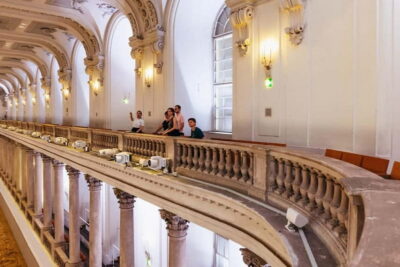
Spanish Riding School Guided Architectural Tour
Read our review →Browse the lists this tour appears in