
Reviewed · SKIP THE LINE
Skip the Line: Weltmuseum Wien Ticket
The most striking thing about the Weltmuseum Wien is its setting. You enter a major world-culture museum inside the Hofburg Palace, right on Vienna’s Ringstrasse, then move through objects gathered by Habsburg emperors, explorers, and collectors. The collection reaches from Emperor Rudolf II’s Cabinet of Curiosities to a famous Mexican feather headdress and objects linked to James Cook.
I like the freedom to set your own pace, since there is no fixed route or guide to follow. I also like the mobile ticket, which can save time at the ticket desk and gives you a guaranteed entry plan before you arrive. The main consideration is that the museum is broad rather than quick to absorb, and the included ticket does not cover an audioguide. Some captions can also be hard to read in the darker galleries.
In This Review
- Key points to know before you go
- Inside the Hofburg, where imperial power meets world culture
- What you see in the 14 galleries
- The Mexican feather headdress and Habsburg treasures
- The Hall of Columns and two extra collections
- Is the two-hour visit enough?
- What the skip-the-line ticket is really worth
- Timing, transport, and a simple plan
- Who will enjoy this museum most?
- Cancellation and practical details
- Should you book the Weltmuseum Wien ticket?
- FAQ
- Where is the Weltmuseum Wien?
- How long does the visit take?
- Is the ticket mobile?
- Does the ticket include admission?
- Is an audioguide included?
- Can I explore at my own pace?
- How many exhibition galleries does the museum have?
- What major objects can I see?
- Can I visit the Imperial Armoury?
- What are the Tuesday opening hours?
- Can I cancel for a refund?
Key points to know before you go
- Fourteen galleries cover cultures from around the world, with collections shaped by more than 500 years of Habsburg collecting.
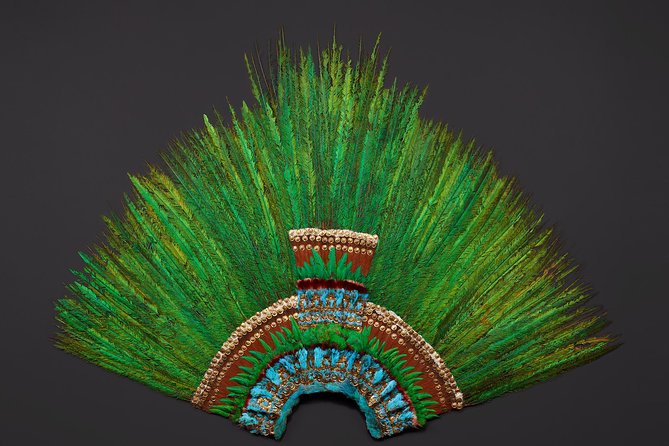
- The famous Mexican feather headdress is one of the museum’s major draws, especially if Mexican history interests you.
- A two-hour visit works well for seeing the main areas without turning the museum into an all-day project.
- The mobile ticket is useful when lines are long, though one ticket had trouble scanning and still allowed entry.
- The Hall of Columns connects to two more collections, including the Imperial Armoury and historic musical instruments.
- The cafe offers a small but high-quality selection, making it a practical pause before or after the galleries.
Inside the Hofburg, where imperial power meets world culture
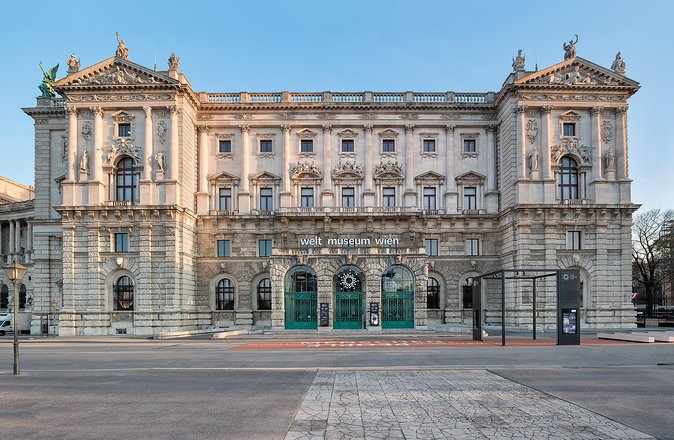
The Weltmuseum Wien occupies part of the Hofburg Palace, a useful reminder that this is not a stand-alone museum built only for modern exhibitions. Its collections grew through the Habsburg court, royal collecting, voyages of discovery, and 19th-century research.
That background gives the museum a particular character. You are not simply walking through a modern survey of world cultures. You are also seeing how a European imperial court gathered, classified, and displayed objects from far beyond Austria.
I find that context important. It can make the collection fascinating, but it also calls for a thoughtful eye. The objects are valuable cultural works, yet their route to Vienna was often tied to power, trade, royal ambition, or colonial-era collecting. The museum’s purpose is to present cultural diversity, stories, and ways of life in an accessible way, but the imperial setting remains part of the experience.
The building itself helps shape your visit. The Hofburg location puts you in central Vienna, near public transportation and many of the city’s main sights. You can fit the museum into a day focused on the palace, the Ringstrasse, or central Vienna without making a separate trip across town.
A few more Vienna tours worth weighing up
- Vienna: Schönbrunn Palace & Gardens Skip-the-Line Tour
★ 4.7 · 7,739 reviews - Vienna: Skip-the-Line Sisi Museum, Hofburg and Gardens Tour
★ 4.8 · 5,918 reviews - Vienna: Skip-the-Line Schönbrunn Palace & Gardens Tour
★ 4.8 · 5,411 reviews
What you see in the 14 galleries
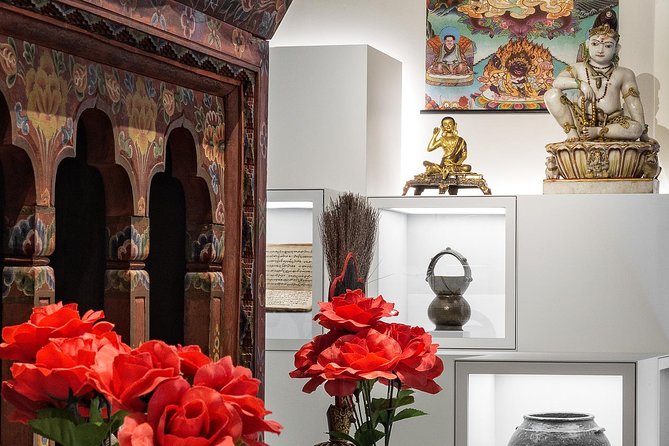
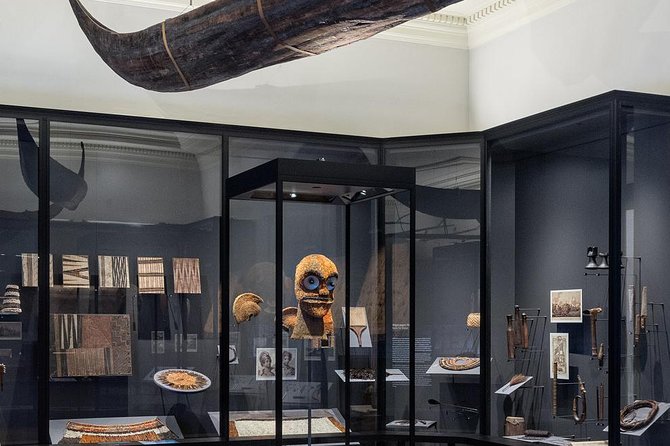
The museum has 14 distinct exhibition galleries, so you should expect variety rather than one long chronological story. Each room focuses on cultural material from different parts of the world, with objects chosen to show traditions, daily life, artistic skill, and contact between societies.
The collection spans more than 500 years of Habsburg collecting. That reach is one of its strengths. You might move from courtly curiosities to objects from voyages of exploration, then on to material connected with specific cultures and regions.
The museum is best approached with selective attention. You will not absorb every label and object in two hours, and you do not need to try. Start with the sections that interest you most, then allow time for the larger highlights and the Hall of Columns.
Maps are provided, which makes it easier to get your bearings and choose a route. That is especially helpful for families or anyone who prefers to avoid wandering through a large museum without a plan.
The presentation has a family-friendly side. The range of objects gives younger visitors plenty of visual variety, although the amount of text may be tiring for children. If you are visiting with a family, I would pick a few galleries and major objects rather than attempting to read everything.
The Mexican feather headdress and Habsburg treasures
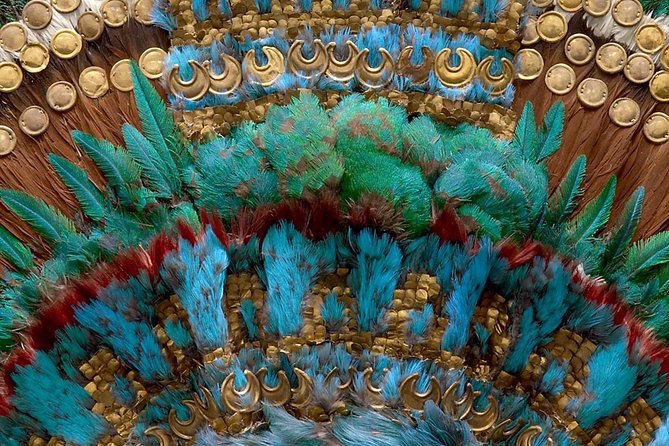
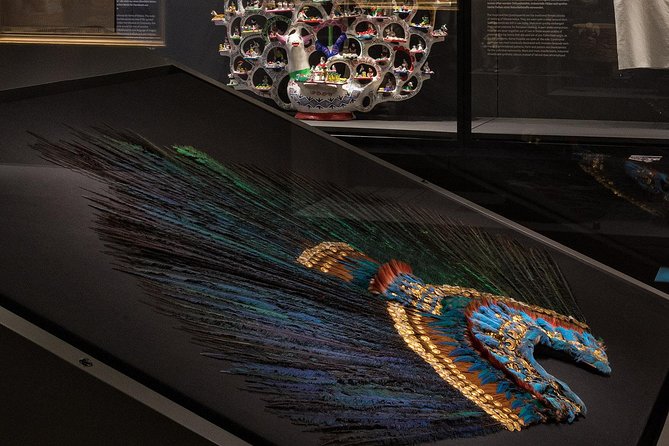
The Mexican feather headdress, known as the Penacho, is one of the collection’s most memorable objects. It gives the visit a clear focal point, particularly if you have an interest in Mexican history or Indigenous artistic traditions.
The Penacho is also a good example of how the museum differs from a standard art museum. You are not only looking at beauty or craftsmanship. You are considering the object’s cultural meaning, its journey to Europe, and the power relationships behind its collection and display.
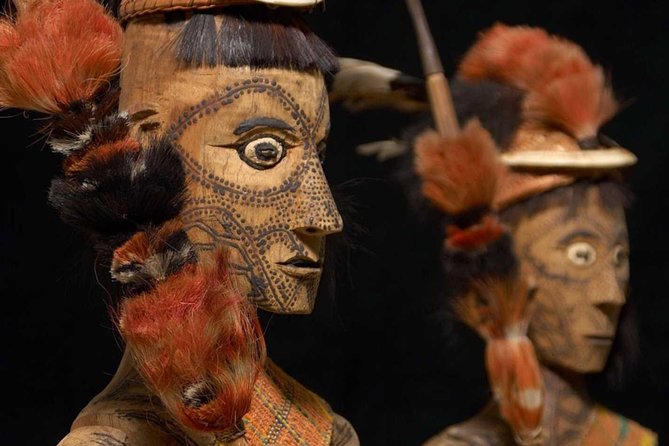
Another major highlight comes from Emperor Rudolf II’s Cabinet of Curiosities. Cabinets of curiosities mixed unusual natural specimens, artistic objects, scientific items, and works from distant places. They reveal how an early modern ruler tried to organize a world that seemed increasingly large and strange.
Objects connected with James Cook’s collection add another layer. Cook’s voyages helped shape European knowledge of the Pacific, and items linked to those expeditions carry both historical interest and difficult questions about collecting, ownership, and representation.
The 19th-century voyages of discovery and research continue that theme. These collections can be rewarding if you enjoy the story behind an object as much as the object itself. They also deserve time and attention, since a quick glance may miss the larger story.
The Hall of Columns and two extra collections
The Hall of Columns is more than a grand architectural passage. It also gives access to two collections belonging to the Kunsthistorisches Museum Vienna.
The first is the Imperial Armoury, filled with suits of armor and decorative weapons. This section shifts the focus from world cultures to European court life, warfare, ceremony, and chivalric ideals. The armor is visually strong, even for visitors who do not usually choose military museums.
You can also see how weapons and armor functioned as symbols. They were not only tools for combat. Their decoration and presentation could mark rank, honor, court occasions, and the values expected of nobles.
The Collection of Historic Musical Instruments adds a different mood. It includes original instruments associated with major composers such as Mozart, Haydn, and Beethoven. For music lovers, this can be one of the most personal parts of the visit. Seeing the actual instruments linked with familiar names gives a physical sense of Vienna’s musical past.
Because these collections sit alongside the Weltmuseum, they can make your two hours feel full. You are getting world cultures, imperial collections, armor, weapons, and musical instruments in one palace setting. The tradeoff is that you may need to choose what to see carefully if you want time to read labels.
A different side of Vienna on the same trip:
- Vienna: Vivaldi’s Four Seasons Concert in Karlskirche
★ 4.7 · 14,951 reviews - Vienna: Spanish Riding School Training
★ 3.9 · 9,281 reviews - Vienna: Skip-the-cashier-desk-line Giant Ferris Wheel Ride
★ 4.5 · 7,859 reviews - Vienna: Light of Creation Votive Church Immersive Light Show
★ 4.8 · 6,779 reviews
Is the two-hour visit enough?
Yes, two hours is a sensible target for most people. It gives you enough time to see many of the main sections without requiring a long museum day.
You can spend more time if a particular gallery catches your attention, but the experience does not force you into a fixed itinerary. That flexibility matters. You can linger over the Mexican collection, move quickly through sections that interest you less, and leave when your attention begins to fade.
If you are a serious museum visitor, two hours may feel short. There are many objects from different historical periods, and it is possible to see most of the museum without seeing everything. If you want to read every caption, study the collecting history, and visit the Armoury and musical instruments, allow more time if your schedule permits.
The museum’s darker presentation is worth noting. Some captions can be difficult to read, so visitors who rely heavily on written information may need patience. An audioguide is not part of the ticket, which makes the map and your own preparation more important.
What the skip-the-line ticket is really worth
The ticket costs $19.25 per person. That is a reasonable price if you value a planned entry and want to avoid a possible wait at the ticket counter. It is less clearly a bargain if you are visiting at a quiet time and could buy admission easily on arrival.
The main value is convenience rather than a special tour. You receive entrance to the museum, but no guide, fixed route, or audioguide. You are paying for access and a smoother start, not for personal interpretation.
Booking in advance also gives you a guarantee of admission. That can matter during a busy Vienna sightseeing day, when you want to fit the museum between other Hofburg visits and do not want to risk wasting time in a line.
There is a small practical warning: one mobile ticket did not scan correctly, although entry was still allowed. Keep the ticket available on your phone and be ready to show the confirmation if the scanner has trouble. The mobile format remains useful, but it is wise not to rely on the first scan working perfectly.
The experience is generally suitable for most people, and the group limit is listed as a maximum of 99. Since you explore independently, that number does not mean you will be placed into a guided group. It simply sets the maximum booking size for the activity.
Timing, transport, and a simple plan
The museum is near public transportation, which makes it easy to reach as part of a central Vienna day. The listed opening information gives Tuesday hours of 10 a.m. to 9 p.m. for both 2025 and 2026. Check your selected date carefully, since the supplied schedule specifically identifies Tuesday rather than giving a full weekly timetable.
A simple plan works best:
- Arrive with your mobile ticket ready.
- Pick up or use the provided map to get your bearings.
- Begin with the galleries that matter most to you.
- Set aside time for the Penacho and major Habsburg collections.
- Continue through the Hall of Columns to the Armoury and musical instruments.
- Use the cafe for a short pause if you need one.
The cafe has a limited menu, but the quality is described as excellent. That makes it more useful for a quick coffee or small break than for a full meal.
Who will enjoy this museum most?
This ticket suits you if you enjoy cultural collections, royal history, travel, anthropology, or museums with objects from many regions. It is also a good choice if you want an independent visit rather than a guided tour.
Families can manage it well, thanks to the maps and the freedom to keep moving. The broad range of objects helps, though younger children may not have the patience for every caption.
The museum is a particularly good match for anyone already visiting the Hofburg. Its location lets you connect several Vienna sights without spending extra time crossing the city.
You may want a different plan if you strongly prefer guided storytelling. No audioguide is included, and there are no named guides or scheduled explanations in this ticket. You will need to create your own route and decide how much background you want before arrival.
It may also disappoint if you expect a small, quick collection. The museum contains a large number of objects from many cultures and historical periods. Two hours will give you a solid look, but not total coverage.
Cancellation and practical details
You can cancel for a full refund up to 24 hours before the experience start time. Cancellations or changes made less than 24 hours before the start are not accepted for a refund, and the cut-off follows local Vienna time.
Confirmation is provided at booking. The activity includes entrance fees only. Public transportation is nearby, and most people can participate.
Should you book the Weltmuseum Wien ticket?
Book it if you want a flexible museum visit in a central Vienna location and like the idea of seeing Habsburg collections alongside objects from around the world. The Penacho, Rudolf II’s Cabinet of Curiosities, the James Cook material, the Imperial Armoury, and historic musical instruments give the visit plenty of range.
The $19.25 price is most useful when avoiding a ticket line or securing admission matters to your schedule. If you expect a quiet day and do not mind buying at the door, the advance ticket may offer less savings in time.
My practical choice would be to book ahead when visiting during a busy period or when the museum is part of a tightly planned Hofburg day. Allow two hours, use the map, do not expect an audioguide, and pick your priority galleries before you enter.
FAQ
Where is the Weltmuseum Wien?
The museum is in the Hofburg Palace on Vienna’s Ringstrasse.
How long does the visit take?
The experience is designed for approximately two hours.
Is the ticket mobile?
Yes. A mobile ticket is provided.
Does the ticket include admission?
Yes. Entrance fees are included.
Is an audioguide included?
No. The audioguide is not included.
Can I explore at my own pace?
Yes. There is no fixed itinerary, so you can choose your own route through the museum.
How many exhibition galleries does the museum have?
The Weltmuseum Wien has 14 distinct exhibition galleries.
What major objects can I see?
The collections include Emperor Rudolf II’s Cabinet of Curiosities, the Mexican feather headdress called the Penacho, objects connected with James Cook, and items from 19th-century voyages of discovery and research.
Can I visit the Imperial Armoury?
Yes. The Hall of Columns provides access to the Imperial Armoury and the Collection of Historic Musical Instruments.
What are the Tuesday opening hours?
The listed Tuesday hours are 10 a.m. to 9 p.m. for both 2025 and 2026.
Can I cancel for a refund?
Yes. You can cancel at least 24 hours before the experience start time for a full refund. Later cancellations and changes are not accepted for a refund.
Just added around Vienna
- Private Tour from Vienna to Melk and Dürnstein★ 4.5 · 3 reviews
- Vienna: Johann Strauss 200th birthday anniversary exhibition★ 4.7 · 3 reviews
- Vienna Private Full Day Tour – Tickets to Schönbrunn & Lunch★ 5.0 · 3 reviews
- Private Salzburg Day Trip from Vienna★ 4.0 · 3 reviews
- Vienna: Entry Ticket Belvedere 21 & Contemporary Art★ 4.3 · 3 reviews
- Full-Day Private Trip from Vienna to Budapest★ 4.5 · 3 reviews
- Vienna by Night: Private Evening Food and Drink Tour★ 5.0 · 3 reviews
- 1.5 Hour Cinematic Style Portrait Photoshoot and Tour in Vienna★ 4.5 · 3 reviews
Skip the Line, compared.

Schönbrunn Palace & Gardens Skip-the-Line Tour
Read our review →
Skip-the-Line Sisi Museum, Hofburg and Gardens Tour
Read our review →
Skip-the-Line Schönbrunn Palace & Gardens Tour
Read our review →
Bus & Schönbrunn Palace Skip-the-Line Guided Tour
Read our review →
Skip-the-Line Entrance Ticket to the Danube Tower
Read our review →
Skip the Line Schönbrunn Palace and Gardens Guided Tour
Read our review →
Schönbrunn Palace & Garden Skip-the-Line Guided Tour
Read our review →
Skip-the-Line Schönbrunn Palace and Gardens Tour
Read our review →Browse the lists this tour appears in