
Reviewed · COOKING CLASSES
Vienna; Cooking Class: Make Schnitzel & Apple Strudel
The best part of this Vienna class is that you cook in Lena’s own apartment, not in a polished school kitchen. Her family recipes guide you through chicken schnitzel, potato soup, salads, and apple strudel, with the meal served at the end. I like the home setting and the chance to make dishes you can repeat. I also like that no cooking skill is needed.
The main thing to consider is space. Groups can reach 12 people, and one recent booking found that hands-on time was limited when the class was full. The setting is cozy rather than roomy, and Lena’s kitchen may feel hot in summer.
In This Review
- Key points to know before booking
- Cooking Austrian food in Lena’s Vienna apartment
- A short introduction to Austria’s mixed food traditions
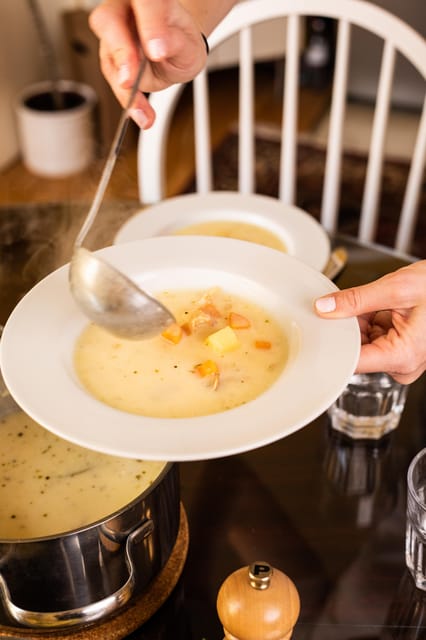
- Making the potato soup and choosing two or three courses
- Preparing chicken schnitzel from scratch
- Pulling apple strudel and finishing with dessert
- Sitting down to eat what you cooked
- How much hands-on time will you get?
- Is $153 a fair price?
- Timing, clothing, and practical details
- The strongest reasons to choose this class
- Who should book it?
- Should you book the Schnitzel and Apple Strudel class?
- FAQ
- Where does the cooking class take place?
- How long does the class last?
- What dishes will I make?
- Is previous cooking experience required?
- Are ingredients and dinner included?
- Can I attend with dietary restrictions?
Key points to know before booking
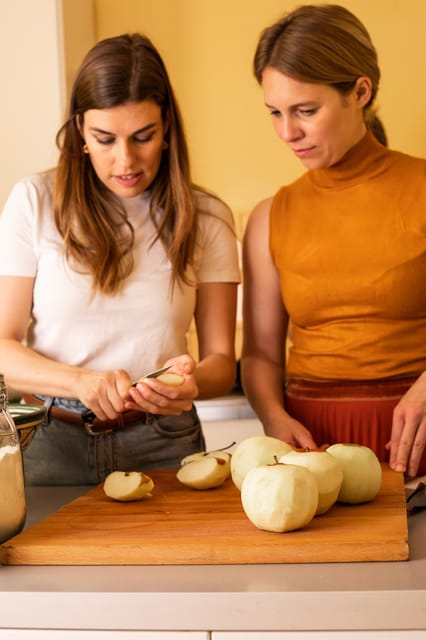
- Cook several Austrian dishes: Depending on the group size, you prepare two or three courses, including chicken schnitzel and fresh apple strudel.
- Meet Lena in her home: The class takes place in her central Vienna apartment, inside a traditional Biedermeier building from the 1800s.
- Family recipes are the focus: Lena teaches dishes cooked in her family for generations, along with the Austrian influences behind them.
- Eat what you make: The three-hour session ends with a shared meal of the food prepared during class.
- Good for beginners and families: No previous cooking experience is expected, and children have been kept engaged during the class.
- Plan for a warm kitchen: Viennese apartments generally do not have air conditioning, so comfortable clothing matters in summer.
Cooking Austrian food in Lena’s Vienna apartment
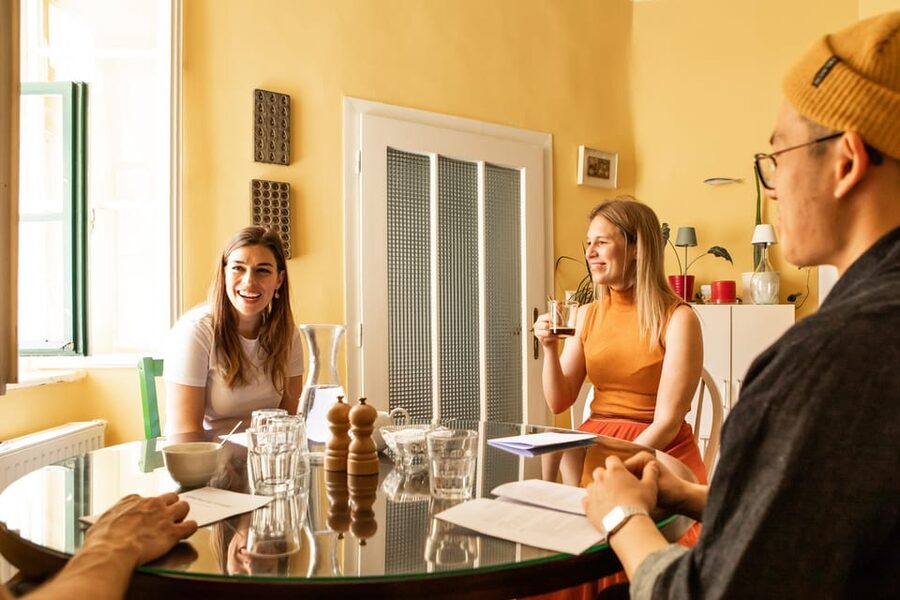
This is a cooking lesson with a strong personal touch. Lena was born and raised in Vienna, and she teaches in her own city-center apartment. You ring the bell for Top 20, then go up to the second floor, where her apartment is on the left.
The building is a typical Viennese Biedermeier-style house dating from the 1800s. Inside, the setting mixes antiquities with modern art. That detail matters because the class feels tied to Vienna itself, rather than placed in a generic rented kitchen.
I like this kind of setting for a first visit to the city. You are not just learning how to fry meat or stretch pastry. You are seeing how a local cook lives, cooks, and thinks about food. The apartment also gives the class a relaxed, social tone, though you should not expect the room and work surfaces of a professional culinary school.
Lena teaches in English and German. The English option makes the class practical for international visitors, while the bilingual format may suit mixed-language groups.
A few more Vienna tours worth weighing up
- Nabiel’s Vienna Cooking Class
★ 5.0 · 234 reviews - Vienna: Traditional Kaiserschmarrn Cooking Class & Tasting
★ 4.5 · 179 reviews - Vienna: Wiener Schnitzel and Strudel Cooking Class
★ 4.9 · 126 reviews
A short introduction to Austria’s mixed food traditions
The class begins with a talk about Austrian cuisine and the dishes you will prepare. Lena connects Austrian cooking to the old Austro-Hungarian Empire, with influences from Bohemia, Hungary, and Italy.
That background gives the meal useful context. Viennese food is often treated as a short list of famous dishes, but its character comes from movement across Central Europe. Schnitzel, soups, salads, and pastry all fit into a wider food culture shaped by home kitchens, imperial cities, and neighboring regions.
I appreciate that this introduction comes before the cooking. You know what each dish means and where it fits before you start handling ingredients. It is not a long history lecture. The focus stays on food you will actually prepare and eat.
Making the potato soup and choosing two or three courses
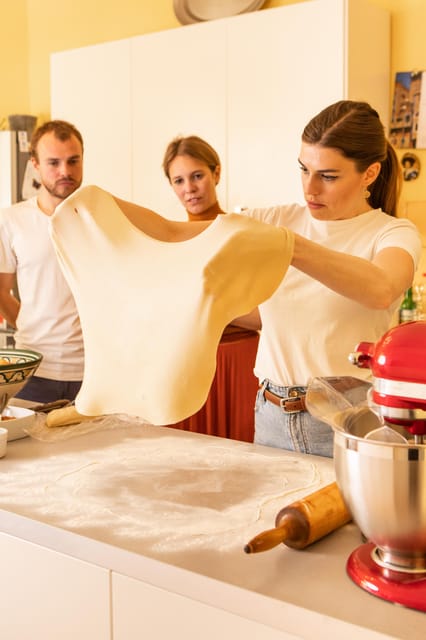
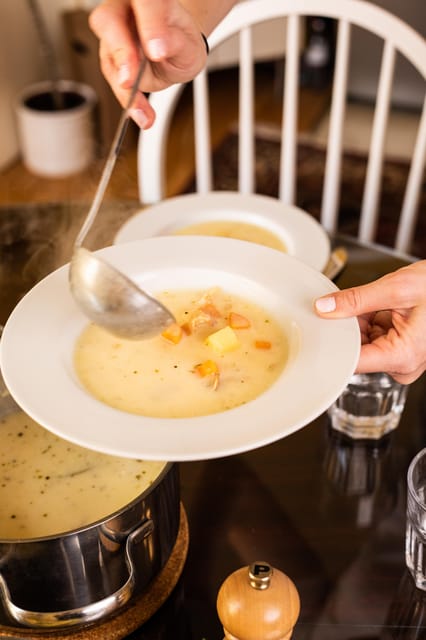
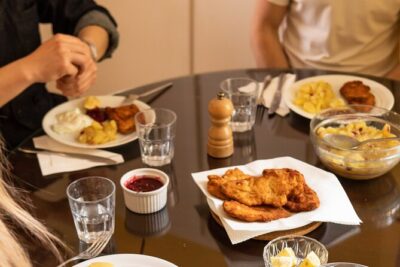
Depending on the number of participants, the class prepares two or three courses. The full menu includes Lena’s grandmother’s Viennese potato soup, chicken schnitzel with cucumber salad and potato salad, and apple strudel.
The potato soup adds a useful first course to the session. It shows that Austrian cooking is not only about its famous fried cutlet. A soup also gives you a chance to learn how a simple dish can become part of a complete home meal.
The exact number of dishes depends on the group. That means you should ask about the planned menu if you have your heart set on every item. The class description specifically lists all four preparations, but the session may be adjusted when the participant count changes.
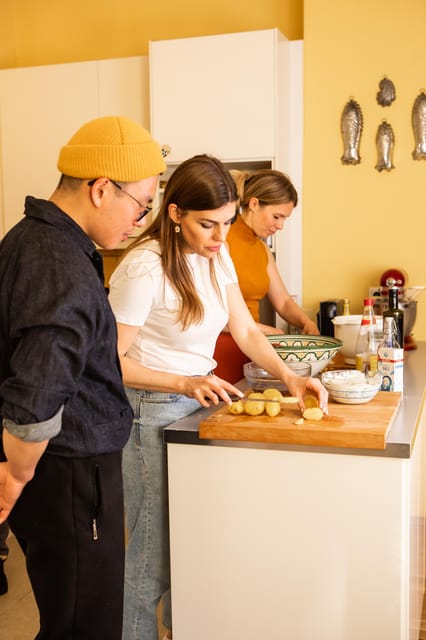
This flexible format makes sense in a private apartment. It helps Lena keep the class manageable, but it also means the amount of hands-on work can vary. A smaller group should give you more direct time at the counter. With a full group of up to 12, you may watch part of the process or share tasks.
Preparing chicken schnitzel from scratch
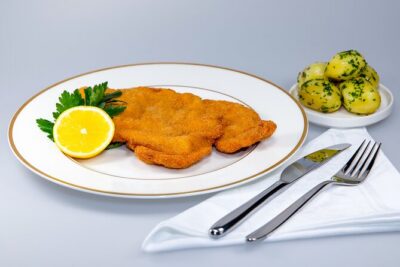
The main savory dish is chicken schnitzel, served with cucumber salad and potato salad. You do as much of the work as possible yourself, which is important if you want to cook the meal again at home.
Schnitzel is an ideal class dish because the result is familiar, but the details matter. The coating, the handling of the meat, and the frying all affect the final texture. Cooking it under Lena’s direction gives you a better chance of learning the small steps that a recipe card alone may not explain.
The chicken version also makes the dish accessible to people who do not want pork or veal. You still get the classic Viennese preparation style in a form that works for a broad range of diners.
The two salads keep the meal balanced. Potato salad brings a soft, filling side, while cucumber salad adds a cooler, sharper element. You prepare the food as part of one shared meal rather than as isolated cooking exercises, so you can see how the dishes work together on the plate.
One practical point: this is not a vegan class. Dietary restrictions are described as manageable if you tell Lena in advance, but vegan cooking is specifically excluded. Contact the host before booking if your needs go beyond ordinary substitutions.
A different side of Vienna on the same trip:
- Vienna: Vivaldi’s Four Seasons Concert in Karlskirche
★ 4.7 · 14,951 reviews - Vienna: Spanish Riding School Training
★ 3.9 · 9,281 reviews - Vienna: Skip-the-cashier-desk-line Giant Ferris Wheel Ride
★ 4.5 · 7,859 reviews - Vienna: Schönbrunn Palace & Gardens Skip-the-Line Tour
★ 4.7 · 7,739 reviews
Pulling apple strudel and finishing with dessert
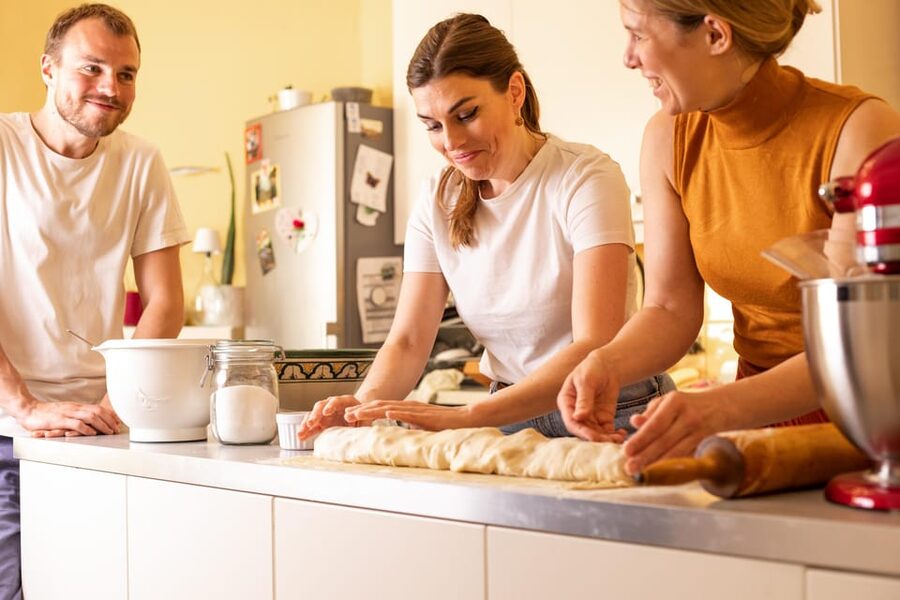
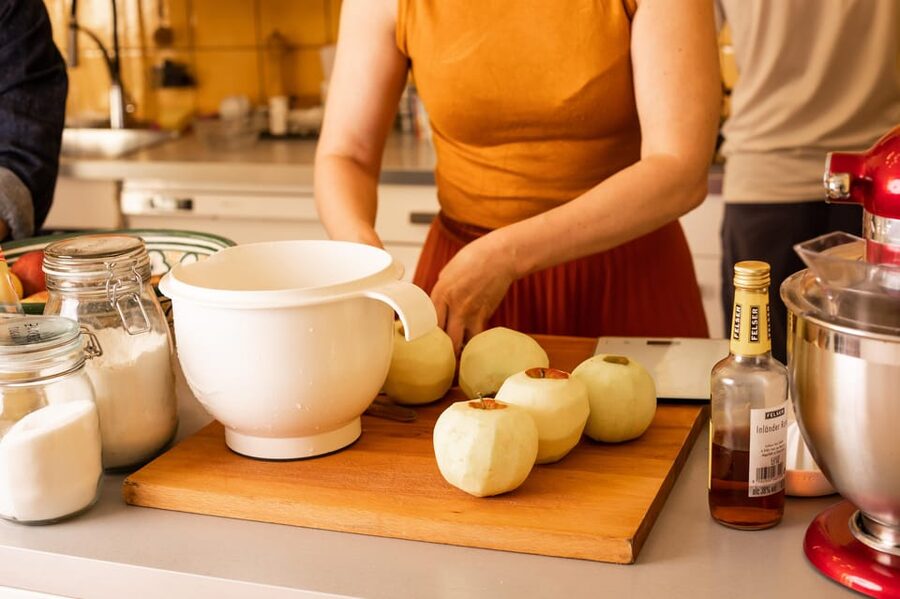
The apple strudel is likely to be the most memorable part for many people. You make it fresh and eat it after the savory courses, rather than simply watching a pastry demonstration.
Apple strudel is a useful dish to learn in Vienna because it has a clear connection to the city’s café and home-cooking traditions. The class lets you see how the dessert is assembled and baked, then gives you the best possible lesson in portion, texture, and flavor: you eat it while it is fresh.
The recipe is also practical for home use. Lena shares the recipes for the dishes you prepare, so the class does not end when you leave the apartment. You can try the strudel again in your own kitchen, where the first attempt may be less hurried and more experimental.
Bring a container for leftovers if you have one. Containers are not included, but you may be able to take some food away. One participant managed to leave with extra strudel, which is a strong argument for packing a small reusable box if you have room.
Sitting down to eat what you cooked
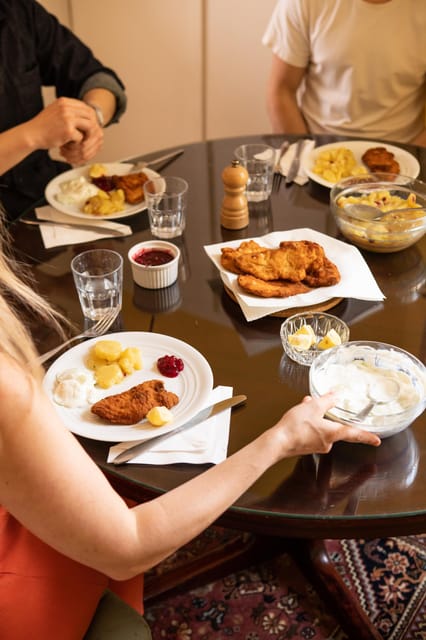
After the kitchen work, you sit down and eat the meal with the other participants. Dinner is included in the price, along with the ingredients and recipes.
This shared table is a major part of the experience. A cooking class can feel like a practical lesson, but eating together gives it the rhythm of a social evening. It also lets you compare the finished dishes and ask final questions while the techniques are still fresh.
The meal is substantial for a three-hour activity. You may prepare soup, schnitzel, two salads, and strudel when the full menu is offered. Recent feedback also described the food as simple and delicious, with some people going back for extra portions of the dishes and multiple servings of strudel.
Alcohol is not included. You should not book this expecting a wine-pairing class or a drinks-focused evening. One participant specifically wished a glass of wine had been offered, so bring that expectation down and focus on the food and conversation.
How much hands-on time will you get?
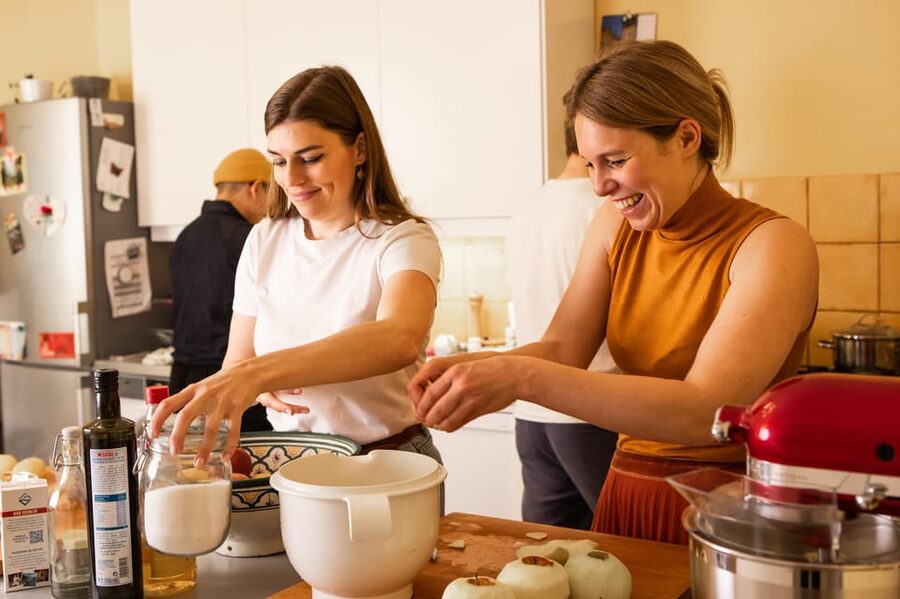
The group size is between two and 12 people. This range can change the character of the class quite a bit.
With two people or a small group, you are more likely to handle a larger share of the preparation. You can ask more questions, repeat a technique, and get direct help when something feels unfamiliar. A larger group can be more social, but individual cooking time may be divided among more hands.
A December booking with a large group found that hands-on work lasted only about half the session. That is the clearest drawback in the available information. You should not assume that every participant will have a separate station or spend the entire three hours actively chopping, mixing, frying, and baking.
Families may still find the class a good fit. Children have been able to stay engaged, and the instructor has been praised for making the lesson educational and fun for a family group. If your children need constant activity, ask about the expected group size before you reserve.
The class is also suitable for solo visitors. You do not need to arrive with a partner or a group of friends. The shared meal creates a natural way to meet other people, though the amount of personal interaction will depend on the group.
Is $153 a fair price?
At $153 per person, this is not a cheap meal. You are paying for a three-hour activity, all cooking ingredients, instruction, dinner, and the recipes. Transportation and alcohol are not included.
The value depends on what you want from your time in Vienna. If you are only looking for a plate of schnitzel, a restaurant will cost less. If you want a meal plus practical instruction, a local host, a private home setting, and recipes to use later, the price is easier to justify.
The class can also replace part of an evening’s entertainment. You spend three hours cooking, eating, and talking instead of simply sitting at a restaurant for a shorter meal. The recipes add lasting value, especially if you enjoy cooking at home.
I would consider the price reasonable for someone who places a high value on food culture and personal instruction. I would be more cautious if you are mainly seeking sightseeing, a formal culinary school experience, or a drinks-centered evening.
Timing, clothing, and practical details
The class lasts three hours, with starting times based on availability. Check the schedule carefully against your Vienna plans because the activity takes place entirely at the apartment and does not include transport to or from the meeting point.
Wear comfortable clothes suitable for cooking. You do not need to bring cooking equipment or ingredients. A camera is suggested, and a food container is useful if you want to carry leftovers.
Summer visitors should prepare for heat. Viennese apartments generally do not have air conditioning, and the kitchen can become hot. Light, comfortable clothing is the sensible choice, but avoid anything you would not want near cooking oil or food preparation.
Dietary restrictions are not automatically a problem, provided you advise Lena in advance. Vegans should not book this class, since the experience is not designed for a vegan diet.
Cancellation is flexible up to 24 hours before the activity for a full refund. You can also reserve now and pay later, which helps if your Vienna schedule is still taking shape.
The strongest reasons to choose this class
I would pick this experience for its personal setting. Lena teaches family recipes in the apartment where she hosts the class, surrounded by Viennese antiques and modern art. That gives the lesson a sense of place that a hotel demonstration cannot easily match.
I also like the range of food. You are not making only schnitzel and calling it an Austrian meal. The possible menu includes soup, meat, two salads, and pastry, giving you a better picture of an everyday Viennese table.
The teaching style appears friendly and clear. The host has been described as personable and informative, and the class has worked well for solo participants, couples, older people, younger people, and families. No prior cooking experience is expected.
The food itself receives the strongest praise. The dishes are described as delicious, and the apple strudel has inspired extra helpings. That is exactly what you want from a class built around eating the finished result.
The main caution remains the group size. If the class reaches 12 people, you may not get constant access to the work area. Ask about the number booked for your date if personal instruction matters more to you than the social atmosphere.
Who should book it?
This class suits you if you like learning through food rather than watching a demonstration. It is a good match for first-time visitors who want a local evening, families looking for an activity with a meal built in, and solo visitors who enjoy meeting people around a table.
It also works for experienced home cooks who want Austrian recipes and cultural context. You may not learn advanced professional techniques, but you will leave with dishes that are realistic to make at home.
I would skip it if you are vegan, dislike shared cooking, need a highly spacious kitchen, or want a private lesson guaranteed for your own party. I would also skip it if your schedule is tight and you cannot comfortably give three hours to an indoor activity.
Should you book the Schnitzel and Apple Strudel class?
Book this class if you want to understand Vienna through its home cooking. Lena’s family recipes, central apartment, shared dinner, and take-home instructions give you more than a standard restaurant meal.
Before paying $153, check the expected group size and confirm which two or three courses will be prepared. A small group should give you the best hands-on value. A full group may still offer a warm social evening and plenty of food, but you should expect to share the work.
For food-focused visitors, families, and curious beginners, this is a strong choice. Its appeal is not luxury or technical training. It is the chance to cook familiar Austrian dishes in a real Viennese home, then eat them fresh with the person who knows them best.
FAQ
Where does the cooking class take place?
The class takes place in Lena’s apartment in central Vienna, inside a typical Biedermeier-style building from the 1800s. Ring at Top 20 when you arrive. The apartment is on the second floor, on the left.
How long does the class last?
The cooking class lasts three hours. Starting times depend on availability.
What dishes will I make?
The possible menu includes Viennese potato soup, chicken schnitzel, cucumber salad, potato salad, and freshly baked apple strudel. Depending on the number of participants, the class prepares two or three courses.
Is previous cooking experience required?
No. The class is designed for beginners, and no prior cooking experience is expected.
Are ingredients and dinner included?
Yes. Cooking ingredients, recipes, and the meal you prepare are included. Alcoholic drinks and transport to and from the apartment are not included.
Can I attend with dietary restrictions?
Dietary restrictions can be accommodated if you advise Lena in advance. The class is not suitable for vegans.
Just added around Vienna
- Private Tour from Vienna to Melk and Dürnstein★ 4.5 · 3 reviews
- Vienna: Johann Strauss 200th birthday anniversary exhibition★ 4.7 · 3 reviews
- Vienna Private Full Day Tour – Tickets to Schönbrunn & Lunch★ 5.0 · 3 reviews
- Private Salzburg Day Trip from Vienna★ 4.0 · 3 reviews
- Vienna: Entry Ticket Belvedere 21 & Contemporary Art★ 4.3 · 3 reviews
- Full-Day Private Trip from Vienna to Budapest★ 4.5 · 3 reviews
- Vienna by Night: Private Evening Food and Drink Tour★ 5.0 · 3 reviews
- 1.5 Hour Cinematic Style Portrait Photoshoot and Tour in Vienna★ 4.5 · 3 reviews
Cooking Classes, compared.
Traditional Kaiserschmarrn Cooking Class & Tasting
Read our review →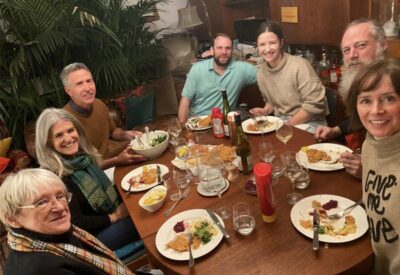
Browse the lists this tour appears in