
Reviewed · HOFBURG & IMPERIAL VIENNA TOURS
Vienna: Imperial Treasury & New Hofburg Palace Combo Ticket
The glittering heart of this visit is the Imperial Treasury, where you come close to the Austrian Imperial Crown, the Holy Roman Empire’s Reichskrone, the Holy Lance, and a huge emerald. I like the rare chance to see objects tied to Europe’s rulers, and I like that one ticket also opens the New Hofburg’s armory and musical-instrument collections. The main catch is practical: the online voucher may still need to be exchanged for a paper ticket, and finding the correct entrance can take some patience.
The New Hofburg portion is the better-organized half, thanks to its self-guided audio tour in 10 languages. The Treasury has no matching audio guide, so you may spend more time admiring the objects than understanding their stories. At $40, this is a fair buy if you plan to explore several collections, but it is less attractive if you only want the crowns.
In This Review
- Key points to know before you go
- Two Hofburg collections, one flexible ticket
- The Imperial Treasury in the Swiss Wing
- The New Hofburg and the House of Habsburg tour
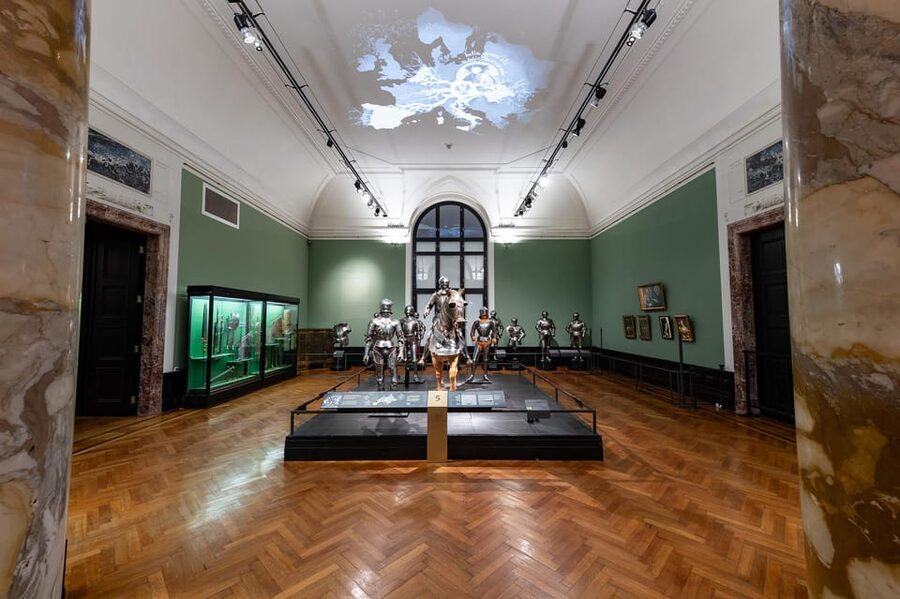
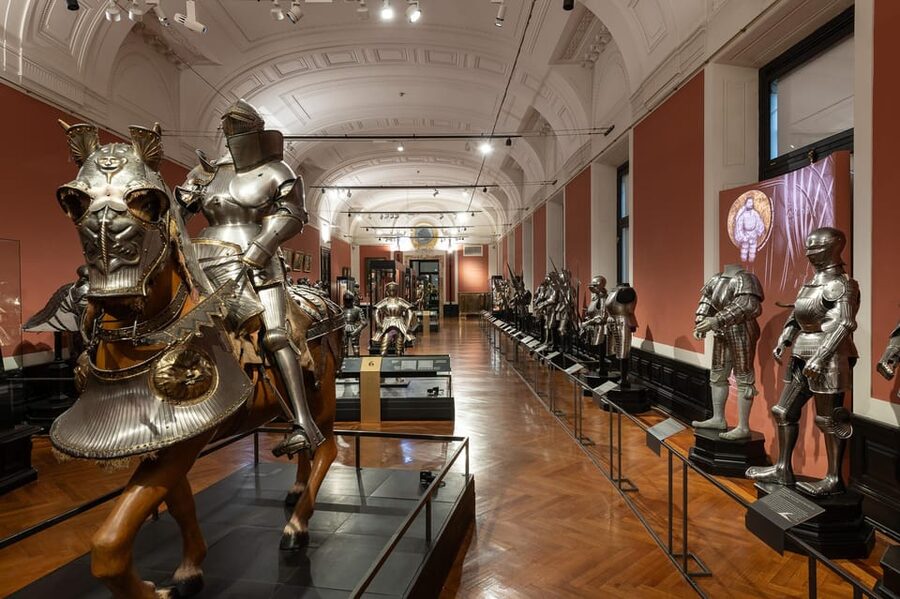
- Imperial Armoury: armor on horseback and close-up detail
- Historic Musical Instruments and Mozart’s fortepiano
- What the $40 price really buys you
- Planning your visit without losing time
- The main strengths and limits
- Who should book this combo ticket
- Should you book it?
- FAQ
- How much does the Imperial Treasury and New Hofburg Palace combo ticket cost?
- How long is the ticket valid?
- Can I start at either museum?
- Is a live tour guide included?
- Which languages are available for the audio guide?
- Is the Imperial Treasury audio-guided?
- What collections are included at the New Hofburg?
- Can children under 14 join the experience?
- Can I cancel the booking?
Key points to know before you go
- Two separate Hofburg locations: Start at the New Hofburg on Heldenplatz or at the Imperial Treasury in the Swiss Wing.
- The crown collection is the star: See the Austrian Imperial Crown, the Reichskrone, the Holy Lance, and major Habsburg jewels.
- The New Hofburg takes time: The armory and musical-instrument collections can fill three hours if you read and listen carefully.
- Mozart’s fortepiano is here: The musical-instrument collection includes a fortepiano once played by Mozart.
- Audio guide only at the palace: The House of Habsburg tour has German, English, Czech, Hungarian, Spanish, French, Korean, Chinese, and Japanese options.
- Best for visitors aged 14 and older: Children under 14 are not permitted, and there is no live guide.
Two Hofburg collections, one flexible ticket
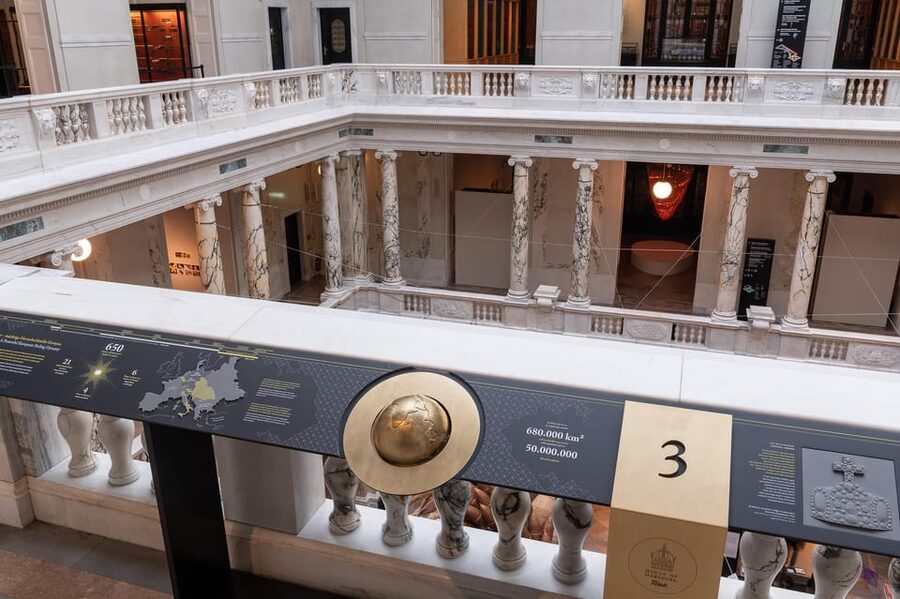
This combo ticket gives you access to several collections within Vienna’s Hofburg complex, but it is not a single guided walk from room to room. You visit the Imperial Treasury and New Hofburg Palace on your own schedule, using the ticket within 10 days of first activation.
That long validity is useful. You do not need to crowd every room into one packed afternoon. You can visit the Treasury when you are already near the oldest part of the palace, then return to Heldenplatz on another day for the New Hofburg collections.
You can begin at either entrance:
- The Imperial Treasury is in the Swiss Wing, known as Schweizerhof.
- The New Hofburg entrance is at Weltmuseum Wien on Heldenplatz.
That flexibility helps, but it can also create confusion. The Hofburg is a large complex with several museums and entrances. Keep the names Swiss Wing, New Hofburg, Weltmuseum Wien, and Heldenplatz in mind before you arrive. A voucher does not always mean you walk straight into the galleries, since a paper ticket exchange may still be required.
More Hofburg and imperial Vienna:
- Vienna: Skip-the-Line Sisi Museum, Hofburg and Gardens Tour
★ 4.8 · 5,918 reviews - Vienna: Imperial Treasury in the Hofburg Palace
★ 4.4 · 1,791 reviews - Vienna: Hofburg and Empress Sisi Museum Guided Tour
★ 4.7 · 1,460 reviews
The Imperial Treasury in the Swiss Wing
The Treasury occupies the oldest part of the Hofburg, the Swiss Wing. Its setting matters. You are not seeing royal objects in a modern exhibition hall detached from their past. You are entering a section of the palace connected to the Habsburg court itself.
The collection follows the power of the dynasty through religious objects, imperial regalia, jewels, clothing, and ceremonial pieces. The display is not a quick crown-and-scepter stop. You will find objects tied to the Holy Roman Empire as well as the later Austrian Empire.
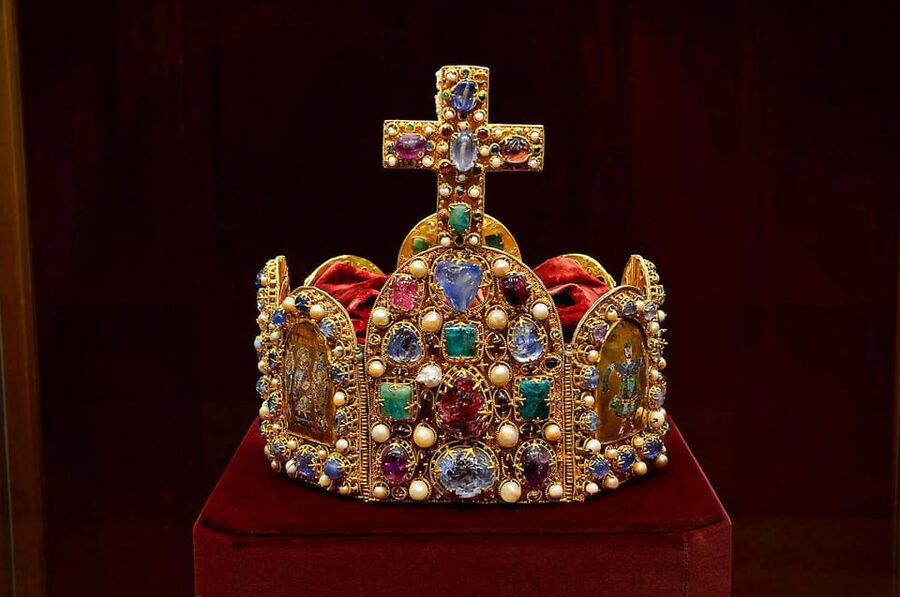
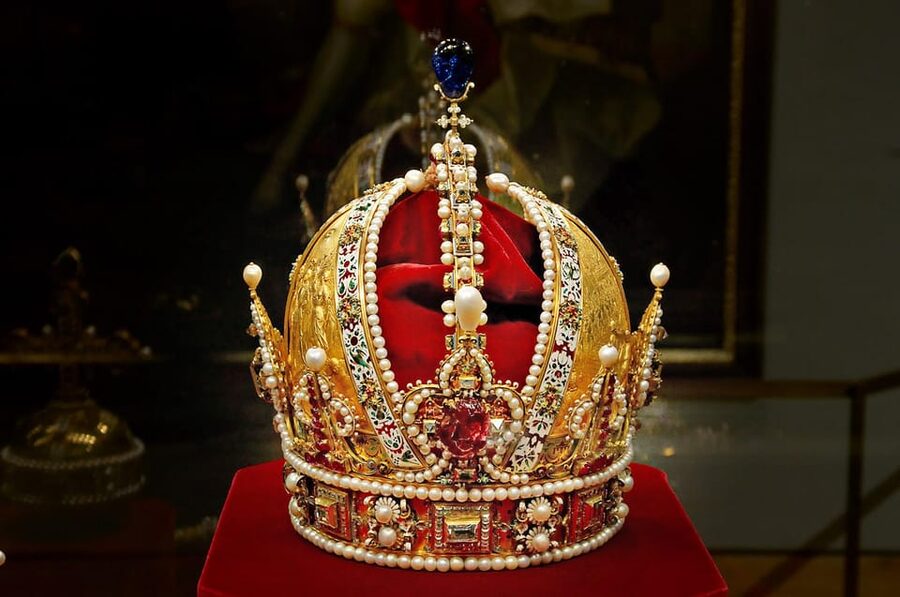
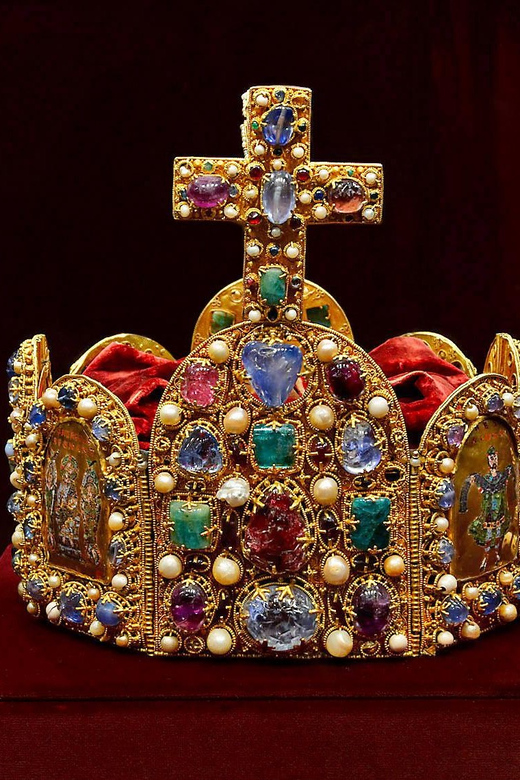
The Austrian Imperial Crown is the main draw for many people. Its shape and decoration show how monarchy used ceremony to make political power visible. It is one thing to see a crown in a picture. It is another to stand close enough to study the workmanship and the formal design.
The imperial treasures of the Holy Roman Empire add a larger European story. The Reichskrone, or Holy Roman Crown, is one of the most important objects in the collection. The Holy Lance brings another layer of medieval belief and imperial symbolism. These objects were not simply costly possessions. They helped rulers present themselves as rightful leaders of a vast Christian empire.
Jewelry and precious stones provide the visual shock. Among the displays is one of the largest emeralds in the world. You can also see jewels and other objects that point to the immense wealth available to the Habsburg court.
I would allow at least an hour here, and longer if you like close inspection. The Treasury is compact compared with the New Hofburg museums, but its objects deserve slow looking. Some displays include illustrated historical material, which helps explain who used the objects and why they mattered.
There is one limitation: no audio guide is included for the Treasury. If you want detailed background, read the labels carefully and consider taking your time with the written explanations. The palace audio guide does not carry over to this section.
The New Hofburg and the House of Habsburg tour
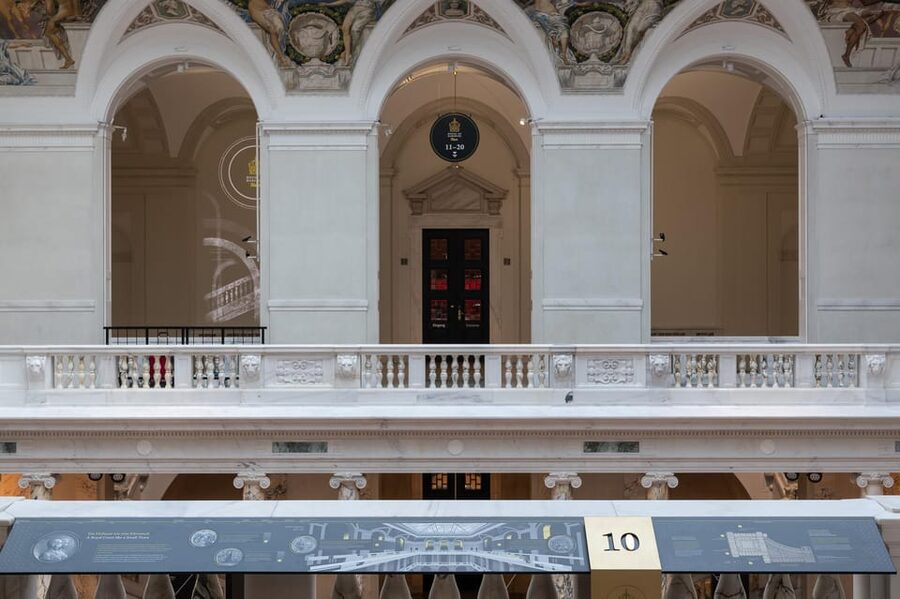
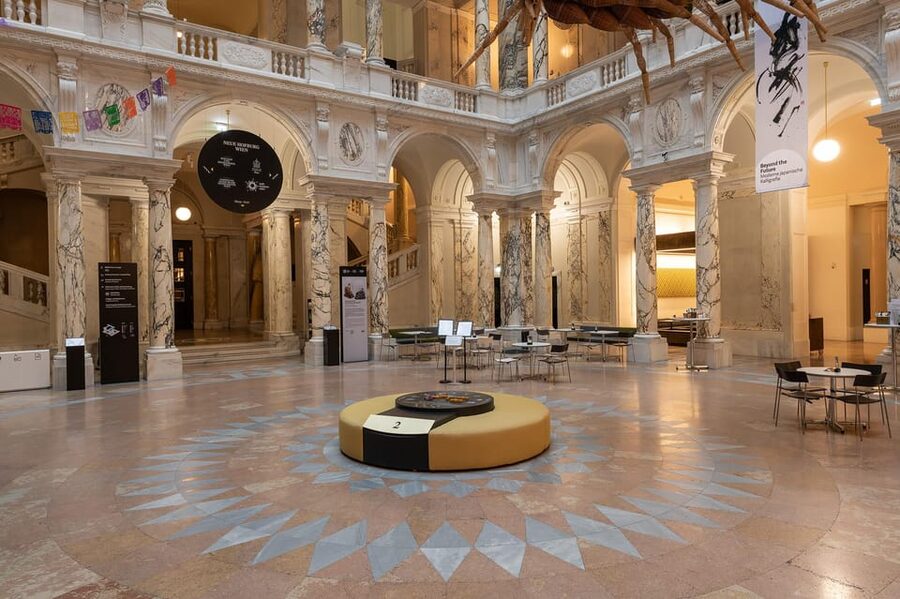
The New Hofburg curves around Heldenplatz and forms one of Vienna’s most recognizable palace settings. Inside, the ticket includes the House of Habsburg tour, with an audio guide available in 10 languages.
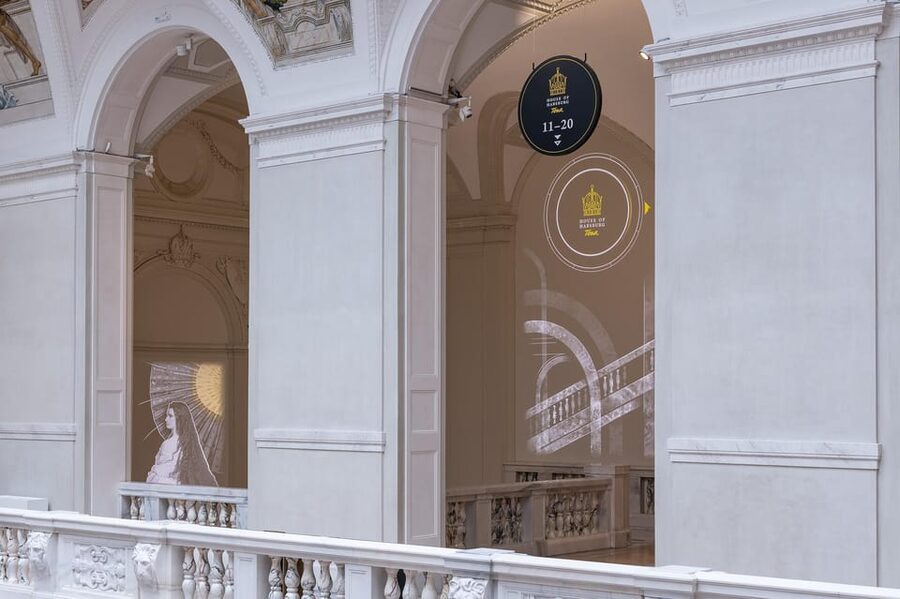
This part gives you the family story, from the dynasty’s rise in the late Middle Ages through the era of Empress Sisi and into the modern period. The audio guide helps connect names, rooms, objects, and political changes. You will hear about the dynasty’s founding figures and the rulers who built Habsburg power across Europe.
The self-guided format is a good fit if you dislike being tied to a group. You can move at your own pace, pause when an object catches your eye, and spend less time on sections that do not interest you. The tradeoff is that you must manage your own attention and timing. There is no live guide to answer a question or point out a detail you might miss.
The New Hofburg can feel enormous. If you want to see the armory, musical instruments, and the House of Habsburg material properly, set aside three hours. You can move faster, but rushing will reduce the value of the ticket.
The collections are also quite different from the Treasury. The Treasury is about regalia, jewels, and sacred or imperial objects. The New Hofburg is more about military display, court culture, instruments, and the machinery of dynastic power. If the crowns do not hold your attention for long, the armory may be the section that wins you over.
Imperial Armoury: armor on horseback and close-up detail
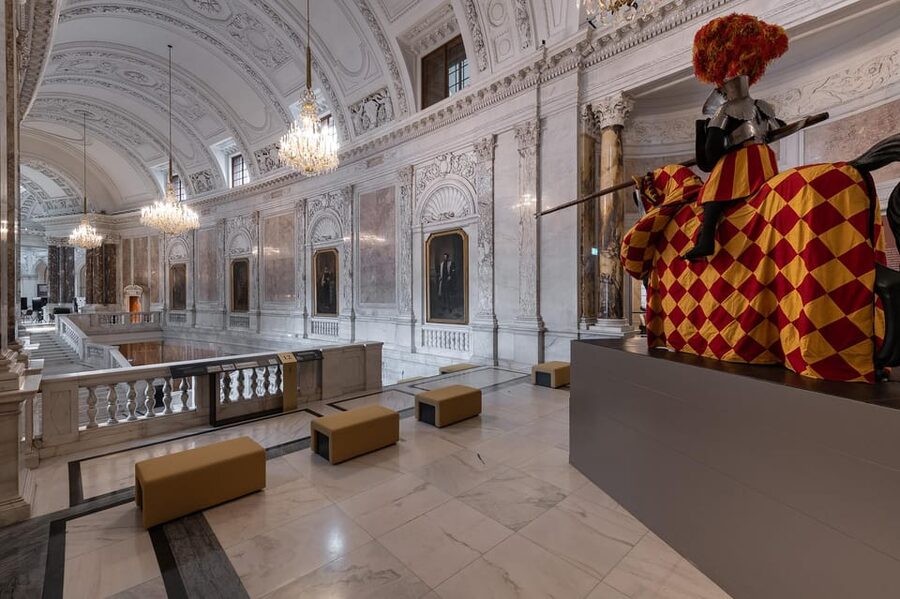
The Imperial Armoury is one of the strongest reasons to choose the combo ticket. It includes suits of armor, weapons, and mounted armor displays. The scale is easy to underestimate. You are not looking at one or two polished suits placed in a case. The collection includes many examples, including armor shown on horseback.
That presentation helps you picture armor as equipment made for real court ceremonies and military display. A suit of armor can look impressive in isolation, but a mounted figure shows how much metal, decoration, and visual theater surrounded a noble rider.
The collection also gives the Habsburg story a harder edge. Crowns and jewels show authority at court. Armor shows the dynasty’s military identity and the culture of aristocratic warfare. Together, the two collections create a fuller picture of how rulers presented power.
If you are visiting with a teenager aged 14 or older, this may be the most immediately engaging section. The objects have a strong visual quality, and the displays connect well with popular images of knights and court life. One practical note: the experience is not suitable for children under 14, according to the admission rules.
A few more Vienna tours worth weighing up
- Vienna: Classic Ensemble Vienna in St. Peter’s Church Ticket
★ 4.7 · 4,819 reviews - Vienna Kunsthistorisches Museum Day Admission Ticket
★ 4.6 · 3,690 reviews - Vienna: Tickets for Mozarthaus Vienna with Audio Guide
★ 4.2 · 2,344 reviews - Vienna: Skip-the-Line Entrance Ticket to the Danube Tower
★ 4.5 · 2,303 reviews
Historic Musical Instruments and Mozart’s fortepiano
The Collection of Historic Musical Instruments offers a welcome change of pace after the armor. Here you can see instruments linked to court music and European musical culture, including a fortepiano that Mozart once played.
That single object gives the collection a personal connection. You are no longer looking only at an anonymous antique. You are looking at an instrument associated with a composer whose music remains part of Vienna’s identity.
The collection also includes the only wax bust showing Joseph Haydn as he appeared in life. That makes the display especially interesting for anyone who wants a more direct connection to the people behind the music.
The musical-instrument rooms are included with the New Hofburg admission, so you do not have to buy a separate ticket for this collection. The audio guide helps give the instruments context, though the supplied information does not specify a separate audio tour dedicated only to the musical collection.
I would visit the instruments after the armory, not before. The change from battle gear to court music makes the whole New Hofburg visit feel less repetitive. You get a look at both the public power and private culture of the Habsburg world.
What the $40 price really buys you
At $40 per person, this is not a cheap single-entry museum ticket. The value depends on how much of the New Hofburg you use.
If you visit only the Imperial Treasury, the price will feel high. The Treasury is a focused collection, and its most famous objects can be seen in a relatively short visit. The lack of an audio guide there also means you are paying mainly for access to the objects and the setting.
The calculation changes if you explore the New Hofburg carefully. You receive entry to the House of Habsburg tour, Weltmuseum Wien, the Collection of Old Musical Instruments, and the Imperial Armoury. The audio guide adds useful structure, and the armory alone can take serious time.
I see the best value for a visitor who likes museums and has at least half a day to give the Hofburg. The ticket is also useful if you are spreading your sightseeing over several days, since it remains valid for 10 days after first activation.
The pass is less suitable for a tightly scheduled city break. If you have only an hour between other appointments, you may not see enough to justify the cost. In that case, choose the single collection that best matches your interests, if that option is available for your plans.
Planning your visit without losing time
You can start at either the New Hofburg or the Imperial Treasury. I would choose the entrance closest to your other plans rather than insisting on a particular order.
Start at the Treasury if you are already near Schweizerhof and want to see the crowns before the palace crowds and galleries take your energy. Start at the New Hofburg if you want the audio guide first and prefer to begin with the broader Habsburg story.
Allow extra time for ticket collection. The voucher may need to be exchanged for a paper ticket, and the process has not always been clear to every visitor. Staff confusion about which areas are covered can also make the first few minutes frustrating.
The New Hofburg entrance is at Weltmuseum Wien on Heldenplatz. The Imperial Treasury entrance is at Schweizerhof. Look for the exact museum names rather than assuming every Hofburg doorway leads to the same place. The complex is large, and the Treasury can be hard to spot because signs are not always obvious.
The ticket is wheelchair accessible. There is no live tour guide, so the experience is independent from beginning to end. The audio guide at the New Hofburg is available in German, English, Czech, Hungarian, Spanish, French, Korean, Chinese, and Japanese.
Free cancellation is available up to 24 hours before the visit, and you can reserve now and pay later. Those terms are useful if your Vienna schedule is still shifting.
The main strengths and limits
The strongest feature is the mix of objects. You get the royal jewels and crowns of the Treasury, then the armor and instruments of the New Hofburg. This prevents the visit from becoming a single-theme museum stop.
The second strength is the audio-guided palace visit. The House of Habsburg story covers a long period, and the guide makes it easier to follow the dynasty from its early rulers to Empress Sisi and the later era.
The biggest weakness is uneven interpretation. The New Hofburg has the audio guide, while the Treasury does not. If you want a guided explanation of every major object, this combo ticket will not provide it.
The second weakness is wayfinding. You may need to exchange the voucher, locate the correct counter, and confirm which collections are included. Give yourself extra time and keep the ticket details handy.
The Treasury may also divide opinions. Some visitors will find the crowns, jewels, and illustrated material thrilling. Others may find the textiles, old cloth, and ceremonial objects less exciting than the armor and instruments. Your interests matter more here than the ticket’s headline attractions.
Who should book this combo ticket
I recommend it for adults and older teenagers who enjoy royal collections, military history, music, or palace culture. It is especially good for you if you want to understand the Habsburgs through objects rather than through a single palace room.
It also suits anyone who likes flexible sightseeing. You can activate the ticket and return within 10 days, rather than forcing every collection into one visit.
I would be more cautious if you are mainly interested in Empress Sisi or the residential rooms of the Hofburg. This ticket includes the House of Habsburg audio tour, but the supplied details do not promise a full Sisi Apartments visit. Do not buy it assuming that every popular Hofburg attraction is included.
Should you book it?
Book this combo if you want the full museum picture: imperial crowns, Habsburg jewels, the Reichskrone, armor on horseback, Mozart’s fortepiano, and Haydn’s wax bust. The New Hofburg is the stronger half for many people, and the audio guide makes its long story easier to follow.
Skip it if you only want a quick look at the Treasury or if your Vienna schedule is too short for several hours of museum time. At $40, the ticket earns its price through the armory, musical instruments, and palace audio tour, not through the Treasury alone.
FAQ
How much does the Imperial Treasury and New Hofburg Palace combo ticket cost?
The ticket costs $40 per person.
How long is the ticket valid?
It is valid for 10 days from first activation.
Can I start at either museum?
Yes. You can begin at the New Hofburg Palace entrance at Weltmuseum Wien on Heldenplatz, or at the Imperial Treasury in Schweizerhof.
Is a live tour guide included?
No. The experience is self-guided. The New Hofburg Palace admission includes an audio guide.
Which languages are available for the audio guide?
The audio guide is available in German, English, Czech, Hungarian, Spanish, French, Korean, Chinese, and Japanese.
Is the Imperial Treasury audio-guided?
The included audio guide is for the House of Habsburg tour at the New Hofburg Palace. No audio guide is listed for the Imperial Treasury.
What collections are included at the New Hofburg?
Admission includes Weltmuseum Wien, the Collection of Old Musical Instruments, and the Imperial Armoury, along with the House of Habsburg audio tour.
Can children under 14 join the experience?
No. The activity is not suitable for children under 14.
Can I cancel the booking?
Yes. You can cancel up to 24 hours in advance for a full refund. You can also reserve now and pay later.
Just added around Vienna
- Private Tour from Vienna to Melk and Dürnstein★ 4.5 · 3 reviews
- Vienna: Johann Strauss 200th birthday anniversary exhibition★ 4.7 · 3 reviews
- Vienna Private Full Day Tour – Tickets to Schönbrunn & Lunch★ 5.0 · 3 reviews
- Private Salzburg Day Trip from Vienna★ 4.0 · 3 reviews
- Vienna: Entry Ticket Belvedere 21 & Contemporary Art★ 4.3 · 3 reviews
- Full-Day Private Trip from Vienna to Budapest★ 4.5 · 3 reviews
- Vienna by Night: Private Evening Food and Drink Tour★ 5.0 · 3 reviews
- Private Tour of Viennese Art in the Leopold Museum: Klimt, Schiele, Kokoschka★ 5.0 · 3 reviews
Hofburg & Imperial Vienna Tours, compared.

Skip-the-Line Sisi Museum, Hofburg and Gardens Tour
Read our review →
Skip-the-Line Hofburg and Empress Sisi Museum Tour
Read our review →
Combo Ticket: Kunsthistorisches Museum & Imperial Treasury
Read our review →
New Hofburg Palace Audio-Guided Tour & Entry Ticket
Read our review →
Skip-the-Line Sisi Museum, Hofburg and Gardens Tour Vienna
Read our review →
Browse the lists this tour appears in