
Reviewed · MOZART & STRAUSS CONCERTS
Vienna: Mythos Mozart Experience
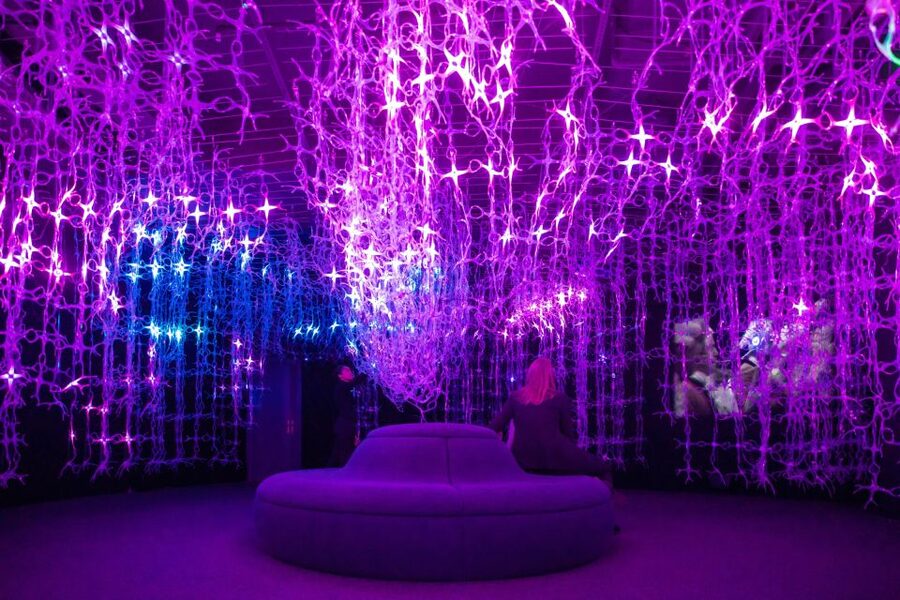
Mozart’s final Vienna home becomes a theatrical journey through music, light, and images at Mythos Mozart. You begin among 1,500 candles, wander through a digital version of 1791 Vienna, and finish with music and technology that connect Mozart’s ideas to the present day. It is less a traditional museum than a compact audio-visual performance.
I like the candlelit Requiem room, which gives the visit a quiet, almost dreamlike opening. I also like the hands-on Little Night Music room, where you can play instruments from around the world rather than simply look at display cases. The main limitation is its length: one hour is enough for a taste, but not enough for a detailed account of Mozart’s life and music.
In This Review
- Key points to know before booking
- Starting in the house where Mozart died
- The Requiem room and its 1,500 candles
- Vienna in 1791, seen from the rooftops
- Music you can touch in Little Night Music
- The final visual rooms and modern Mozart
- The Sky and Roofgarden view
- Is $27 a fair price for one hour?
- Who will enjoy Mythos Mozart most?
- Practical advice for a smooth visit
- Final verdict: should you book it?
- FAQ
- Where is Mythos Mozart located?
- How long does the experience last?
- What is included in the ticket?
- Are food and drinks included?
- Is the experience available in English?
- Do I need to reserve a time slot?
- Is Mythos Mozart wheelchair accessible?
- What should I bring, and are pets allowed?
Key points to know before booking
- Mozart’s final address: The experience is located in the building where Mozart spent the last year of his life and composed The Magic Flute and The Requiem.
- A strong rainy-day choice: The entire one-hour visit takes place indoors, with free lockers and toilets available in the building.
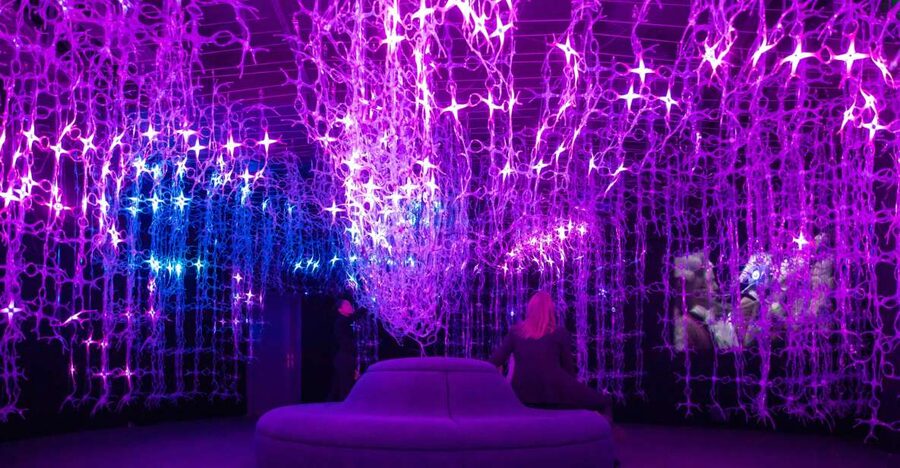
- The candle room sets the mood: Moritz Waldemeyer’s lighting design uses 1,500 candles to frame the story of Mozart’s death.
- You participate in the exhibition: The Little Night Music room lets you try instruments from different parts of the world.
- The city appears from above: The Sky and Roofgarden offers views toward the First District, Karlskirche, the Ferris wheel, and St. Stephen’s Cathedral.
- Best for mixed interests: You do not need a strong music background, though classical music fans will get the most from the sound and setting.
Starting in the house where Mozart died
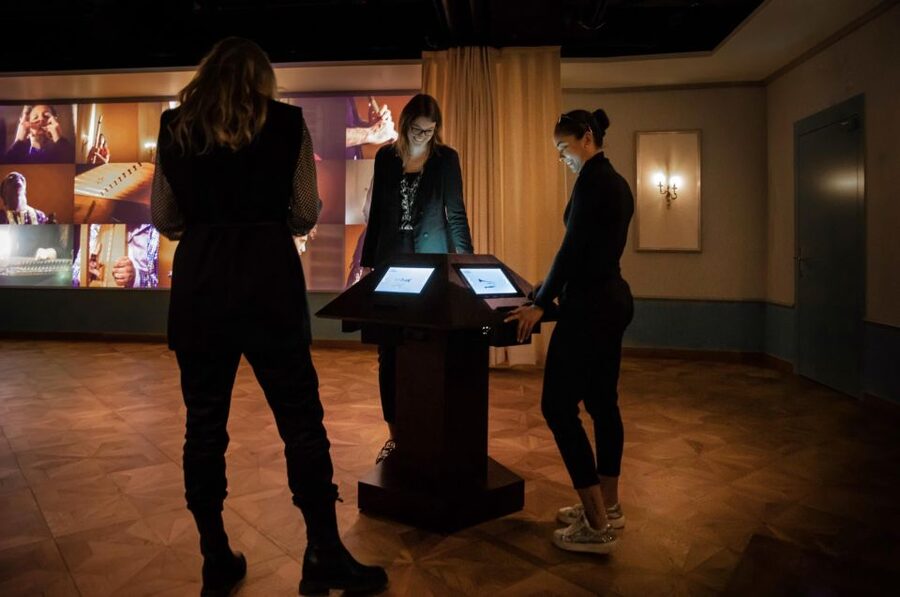
Mythos Mozart takes place in the building where Mozart spent the final year of his life. This gives the experience a useful anchor. You are not entering a random hall filled with projections. You are starting in the place connected with his final months, including the composition of The Magic Flute and The Requiem.
The exhibition uses the building as a doorway into Mozart’s Vienna, but it is not a conventional house museum. You should not expect room after room of original furniture, handwritten scores, or long rows of labels. Instead, the visit uses sound, lighting, moving images, and interactive features to create a broad impression of Mozart’s world.
At the Welcome Desk, an English-speaking host or greeter checks your ticket and directs you to the timed entry. Arrive up to 15 minutes before your chosen start time. This matters because the rooms work best when people enter in an orderly flow, and a late arrival can make the first section feel rushed. Staff have been notably helpful with timing problems, but you should not count on special treatment if you miss your slot.
The venue is wheelchair accessible. Pets are not allowed. Bring your passport or ID card, and bring a student card if you are using student eligibility.
More Mozart and Strauss evenings:
- Vienna: Mozart Concert at the Golden Hall
★ 4.6 · 3,986 reviews - Vienna: Classical Concert at Mozart’s First House
2,423 reviews - Vienna: Mozart and Strauss Concert at Schönbrunn
★ 4.5 · 2,364 reviews
The Requiem room and its 1,500 candles
The first major room is REQUIEM, MOZART’S DEATH. It is a bold choice. Rather than beginning with Mozart’s childhood or his early success, the experience opens at the end of his life.
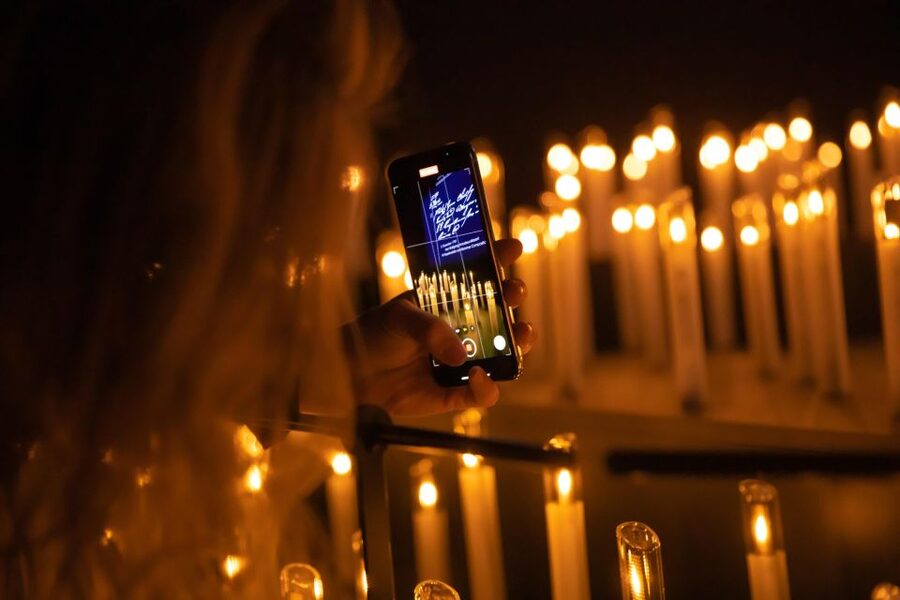
The room contains 1,500 candles, arranged as a large lighting installation by British-German designer Moritz Waldemeyer. The effect is atmospheric without needing much explanation. Candlelight, shadows, and Mozart’s music create a still and serious beginning.
I found this room to be one of the strongest parts of the visit because it does not try to explain every detail. It gives you time to listen and take in the setting. The mood can be eerie, especially at first, so this is not a bright, playful opening for young children. Still, the visit later shifts into more active and colorful spaces.
The room also reminds you that Mozart’s music can carry emotional weight without a lecture attached. If you already know the Requiem, you may find the setting especially affecting. If you do not know it, the visual design still gives the music a clear sense of occasion.
Vienna in 1791, seen from the rooftops
The next section, VIENNA 1791, MOZART’S CITY, changes the pace. Here, you walk through a multimedia version of Vienna at the end of the 18th century.
The room presents crowded streets, old buildings, rooftops, and panoramic views. You can climb over the roofs in a balloon-like sequence, look toward the house where Mozart died, and see the city in 360-degree historical views. It is not a substitute for walking Vienna’s streets, but it gives you a quick sense of the city Mozart knew.
This section works best if you have already spent time in central Vienna. After seeing St. Stephen’s Cathedral, the First District, or Karlskirche in person, the digital city scenes help connect Mozart to a real urban setting rather than treating him as a figure floating outside history.
The presentation is visual first. If you want a detailed account of politics, patrons, family life, and musical competition in 1791, you may find the information too brief. One useful audio guide or a few more subtitles would make the historical material easier to follow, especially for visitors who do not speak German. The English-speaking staff are welcoming, but the main show is not a traditional guided tour.
Music you can touch in Little Night Music
The Little Night Music room is the exhibition’s most playful stop. Here, you can interact with instruments from around the world.
This makes a real difference for families and for people who would normally move quickly through a music museum. You are not expected to know how the instruments work. The point is to experiment, listen, and take part in the room’s soundscape.
I would give this section extra time if you are visiting with children or teenagers. It breaks up the more passive sections and gives the visit a physical element. It also makes a simple point about music: Mozart’s compositions came from a wider world of sounds, instruments, performers, and audiences.
The room is not a full music lesson, and you should not expect a specialist explanation of every instrument. It is a short interactive interlude within a larger presentation. For some adults, it may feel light compared with the Requiem room. That contrast is intentional and keeps the hour from becoming one long projection show.
A different side of Vienna on the same trip:
- Vienna: Vivaldi’s Four Seasons Concert in Karlskirche
★ 4.7 · 14,951 reviews - Vienna: Spanish Riding School Training
★ 3.9 · 9,281 reviews - Vienna: Skip-the-cashier-desk-line Giant Ferris Wheel Ride
★ 4.5 · 7,859 reviews - Vienna: Schönbrunn Palace & Gardens Skip-the-Line Tour
★ 4.7 · 7,739 reviews
The final visual rooms and modern Mozart
The later rooms return to large-scale images, music, and visual effects. LED screens, animation, and projected scenes create a sense of movement around you. The best moments are the ones where the images support the music rather than compete with it.
The final section brings in artificial intelligence and modern digital tools. This is a clear departure from the historical rooms. Some people may find it exciting to consider what Mozart might have done with 21st-century technology. Others may prefer more music, more biography, or a closer look at the original period.
That difference is important when deciding if this is right for you. Mythos Mozart is not designed as a scholarly study of composition. It presents Mozart through a blend of art, sound, and technology. If you want dates, documents, and detailed musical analysis, choose a more traditional Mozart museum or concert experience as well. If you want to feel the energy of his music through modern presentation, the last room may be the highlight.
The visit generally allows enough time in each space to look around without feeling pushed. Still, the one-hour format means the sections are compact. You can enjoy the show at a relaxed pace, but you cannot linger over every image or return repeatedly to a favorite room during the same timed visit.
The Sky and Roofgarden view
After the indoor rooms, make time for the Sky and Roofgarden if it is open as part of your visit. The terrace looks across the First District and toward several familiar Vienna sights, including Karlskirche, the Ferris wheel, and St. Stephen’s Cathedral.
The view gives the exhibition a useful finish. You have just seen a digital version of Mozart’s city, and now you can look at modern Vienna from above. It is a small but worthwhile change from the dark exhibition rooms.
The site also has the Sky Café and Restaurant, with food, drinks, and a large roof terrace. These purchases are not included in the admission price, so treat the café as an optional stop rather than part of the ticket. If you are planning a full meal, check the café’s current opening arrangements when you book.
Is $27 a fair price for one hour?
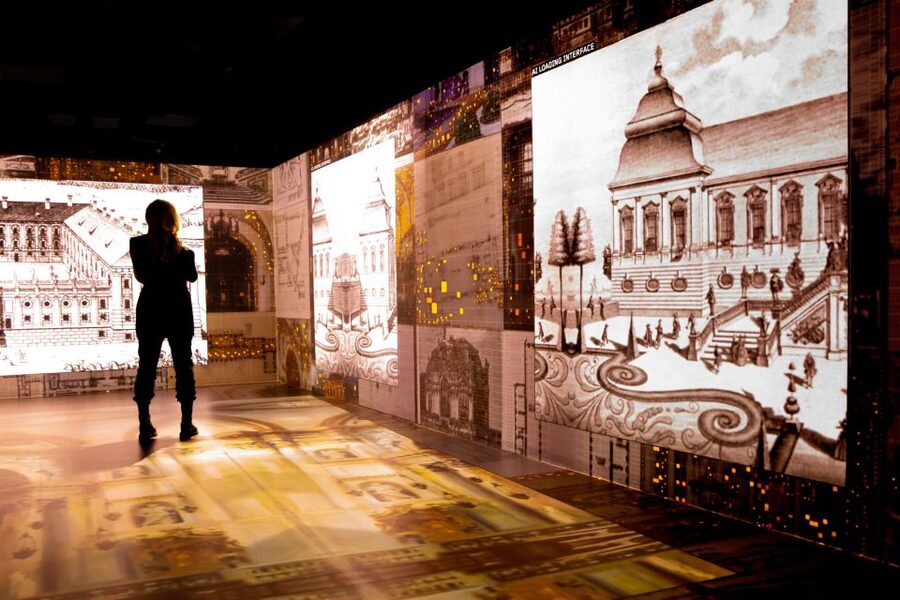
At about $27 per person, Mythos Mozart is not the cheapest short stop in Vienna. The visit lasts one hour, so the price can feel high if you judge it only by minutes inside the building.
I think the value improves if you treat it as a compact multimedia performance rather than a standard museum. You get several distinct rooms, a carefully designed lighting installation, historical city scenes, interactive instruments, music, and access to a rooftop view. The building’s link to Mozart also gives the visit more weight than a standalone digital show.
The value is strongest for three types of visitors:
- You want a cultural activity that does not require prior knowledge.
- You enjoy music presented through light, images, and technology.
- You need an indoor attraction for a rainy afternoon or evening.
The value is weaker if you are looking for a long museum visit. You will not spend half a day here, and the amount of detailed biography is limited. One visitor found the experience a little short, and that is a fair criticism. The price is easier to justify when you have an open hour in your schedule, rather than when you are choosing between this and a much longer museum visit.
The ticket becomes more attractive if you can use the reserve-now, pay-later option and free cancellation up to 24 hours before the visit. Those policies help if your Vienna plans are still changing, though you should still reserve a time slot in advance.
Who will enjoy Mythos Mozart most?
You do not need to be a classical music expert. The presentation gives you enough sound and visual context to follow the basic journey, and the interactive rooms keep the experience from feeling like a lecture.
I would recommend it to families, couples, solo visitors, and anyone curious about Mozart but unsure about traditional museums. It also works well for a mixed group where one person loves classical music and another prefers art or technology.
Children can take part in the instrument room, while adults may prefer the candle installation, city views, or final digital presentation. The emotional shift from the dark opening to the playful middle and energetic final section gives the visit several moods.
Classical music fans should keep their expectations realistic. You will hear Mozart and encounter places linked to his work, but this is not a concert and not a detailed examination of his scores. You are buying a visual and musical presentation, not a specialist seminar.
Practical advice for a smooth visit
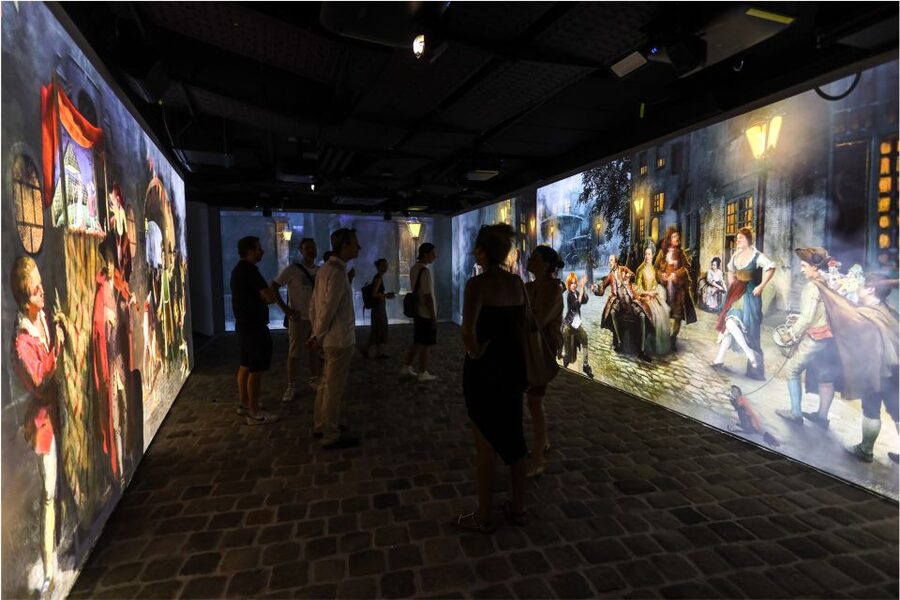
Book your time slot before arriving. Spontaneous entry may be possible if the building is not full, but advance booking is the safer choice, especially if you have a tight sightseeing schedule.
Reach the Welcome Desk up to 15 minutes before your start time. This gives you time to exchange your ticket, store belongings in a free locker, and use the toilets before the presentation begins.
The English-speaking staff are there to help you get oriented, but do not assume you will have a personal guide explaining every room. The experience is largely self-guided through its sound, screens, lighting, and interactive features. If commentary matters to you, check the current language and subtitle arrangements before paying.
Plan around the mood of the first room. The candlelit Requiem section is dark and serious, while later areas can be bright, loud, and visually busy. Anyone sensitive to strong visual effects may want to ask the staff for a brief explanation of the route before entering.
Allow a little extra time for the roof terrace and café. The official experience lasts one hour, but the rooftop view is worth more than a quick glance, particularly if this is your first day in Vienna and you are still learning the city’s layout.
Final verdict: should you book it?
Book Mythos Mozart if you want a short, polished cultural stop that makes Mozart accessible through music, light, and technology. The candle room, interactive instruments, and Vienna panoramas give the hour a clear rhythm, and you can enjoy it without knowing much about classical music.
Skip it if you want original objects, long labels, or a detailed account of Mozart’s personal and musical life. For $27, the visit is best understood as an audio-visual art experience in a significant Mozart location.
I would choose it for a rainy day, an early evening, or the first part of a Vienna stay when you want an appealing introduction to the composer. It is also a good pick for families and mixed-interest groups. Just reserve your time, arrive early, and expect a memorable one-hour presentation rather than a full museum tour.
FAQ
Where is Mythos Mozart located?
Mythos Mozart is in Vienna, in the building where Mozart spent the final year of his life and where he died in 1791.
How long does the experience last?
The scheduled duration is one hour.
What is included in the ticket?
The ticket includes entry to the Mythos Mozart multimedia experience.
Are food and drinks included?
No. Food and drinks are not included, but they can be purchased at the Sky Café and Restaurant, which has a large roof terrace and panoramic views.
Is the experience available in English?
An English-speaking host or greeter is available, and the activity information lists English as the language.
Do I need to reserve a time slot?
Yes. All visitors should book a time slot in advance and report to the Welcome Desk up to 15 minutes before the visit. Spontaneous entry may be possible if occupancy allows.
Is Mythos Mozart wheelchair accessible?
Yes. The experience is wheelchair accessible.
What should I bring, and are pets allowed?
Bring a passport or ID card, and bring a student card if applicable. Pets are not allowed.
Just added around Vienna
- Private Tour from Vienna to Melk and Dürnstein★ 4.5 · 3 reviews
- Vienna: Johann Strauss 200th birthday anniversary exhibition★ 4.7 · 3 reviews
- Vienna Private Full Day Tour – Tickets to Schönbrunn & Lunch★ 5.0 · 3 reviews
- Private Salzburg Day Trip from Vienna★ 4.0 · 3 reviews
- Vienna: Entry Ticket Belvedere 21 & Contemporary Art★ 4.3 · 3 reviews
- Full-Day Private Trip from Vienna to Budapest★ 4.5 · 3 reviews
- Vienna by Night: Private Evening Food and Drink Tour★ 5.0 · 3 reviews
- Private Tour of Viennese Art in the Leopold Museum: Klimt, Schiele, Kokoschka★ 5.0 · 3 reviews
Mozart & Strauss Concerts, compared.
Vienna Mozart Concert in Historical Costumes at the Musikverein
Read our review →
Mozart & Strauss Classical Concert at Börse Palace
Read our review →
Browse the lists this tour appears in