
Reviewed · SPANISH RIDING SCHOOL TOURS
Vienna Spanish Riding School Guided Tour
The horses are the stars here, but the buildings make a strong second impression. In 55 minutes, you enter the Baroque Winter Riding School, see the Summer School’s huge oval horse walker, and walk into the Stallburg stables where Lipizzaner stallions live and train. I especially like the close look at the stable routine and the explanation of how horses and riders reach the Haute Ecole, or high school of classical riding.
I also like the guides’ mix of history, horse care, and humor. Guides including Sisi, Natasha, Lorelei, and Inga have made this tour memorable with clear answers and lively storytelling. The main drawback is that photos, video, and touching the horses are not allowed, and this tour does not include the morning exercise session or a performance.
In This Review
- Key points worth knowing
- What this 55-minute tour actually gives you
- Meeting the guide at Michaelerplatz
- The Winter Riding School and its Baroque setting
- The Summer Riding School and the enormous horse walker
- Entering the Stallburg and seeing the Lipizzaners
- The tack room and the practical side of performance
- What you will not see on this tour
- Group size, hearing the guide, and tour pace
- Photography rules and respectful behavior
- Who will enjoy the Spanish Riding School most
- Is $28 a good value?
- Should you book it?
- FAQ
- How long does the guided tour last?
- How much does the tour cost?
- What buildings are included?
- Can I see the Lipizzaner stallions?
- Can I touch the horses?
- Can I take photos or record video?
- Is a performance included?
- Is the morning exercise session included?
- What languages are available?
- Is the tour wheelchair accessible?
Key points worth knowing
- See three important spaces: The tour includes the Winter Riding School, Summer Riding School, and Stallburg stables.
- Get close to the Lipizzaners: You can see the stallions in their stalls, but you cannot touch or photograph them.
- Learn how the school works: Guides explain breeding, naming, training, rider preparation, and daily care.
- Hear the story inside the arena: The Winter School provides the setting for the school’s long equestrian tradition.
- Expect a short, focused visit: The tour lasts 55 minutes and suits a busy day in central Vienna.
- Bring questions, not a camera: English and German tours include time for questions, but photography is prohibited.
What this 55-minute tour actually gives you
This is not a riding lesson, a performance, or a chance to pet a horse. It is a guided look at the institution behind Vienna’s famous Lipizzaner shows.
For $28 per person, I find the price fair if you care about horses, historic buildings, or both. You are paying for access to working areas that are normally more interesting than a quick look at the public entrance. The tour also fills in the gaps left by a performance. You learn what the horses do before and after they appear in the arena, how riders train, and why the school takes classical equitation so seriously.
The visit is brisk. You will not spend a long time in each room, and the group may be large enough that hearing the guide becomes difficult at times. Still, the route packs a lot into less than an hour. It works especially well between other central Vienna sights.
The school has operated for more than 450 years and continues the Renaissance tradition of Haute Ecole. That long continuity matters here, not as a dusty date on a plaque, but as a living system of training, care, and performance that still shapes the horses’ daily lives.
More Spanish Riding School visits:
- Vienna: Spanish Riding School Training
★ 3.9 · 9,281 reviews - Performance Of The Lipizzans At Spanish Riding School
4,190 reviews - Vienna: Spanish Riding School 45-Minute Performance Show
★ 3.9 · 731 reviews
Meeting the guide at Michaelerplatz
You meet at Michaelerplatz 1, at the main entrance of the Spanish Riding School. Your mobile voucher must be exchanged for a ticket at the cashier’s desk, so do not walk straight into the tour with only your phone ready.
You can collect the ticket no earlier than one hour before the activity. That rule is easy to overlook, especially if you arrive well ahead of time. Plan to pick it up within that window, then wait near the entrance until your starting time.
Tours are offered in English or German. The quality depends partly on the individual guide, but the best guides bring more than memorized dates. Sisi has been praised for mixing useful facts with funny remarks. Natasha has explained both the school’s past and its daily routine. Lorelei has handled detailed horse questions with ease, while Inga has brought clear enthusiasm for the institution and its work.
You may receive a different guide, of course. The important point is that the tour depends heavily on the person leading it. A strong guide turns a walk through stables and halls into a clear story about horses, riders, architecture, and discipline.
The Winter Riding School and its Baroque setting
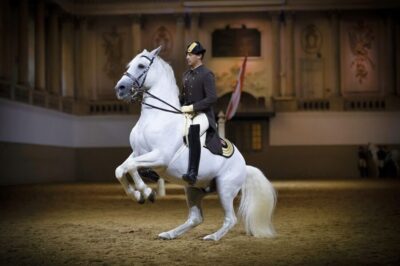
The tour usually begins with the formal heart of the school, the Winter Riding School. This is the grand indoor arena, built in the Baroque style and designed for classical riding.
Take a moment to look around before focusing on the horses. The space gives you a sense of ceremony and order. It was made for displays of skill, and the architecture helps explain why a performance here feels more like court theater than a casual riding demonstration.
The guide explains the school’s role and the principles behind Haute Ecole. You will hear about the demands placed on both horse and rider, and about the long preparation required before a pair is ready for public work.
Even if you know little about equestrian sport, the arena section works well. One visitor who booked mainly to see the building ended up finding the history and present-day practices just as interesting as the architecture. That is a useful measure of the tour’s reach. You do not need to arrive as a horse expert.
If you have seen a performance before, this stop gives you more context. You begin to recognize that the polished movements are the result of years of careful training, not a few tricks taught for show.
The Summer Riding School and the enormous horse walker
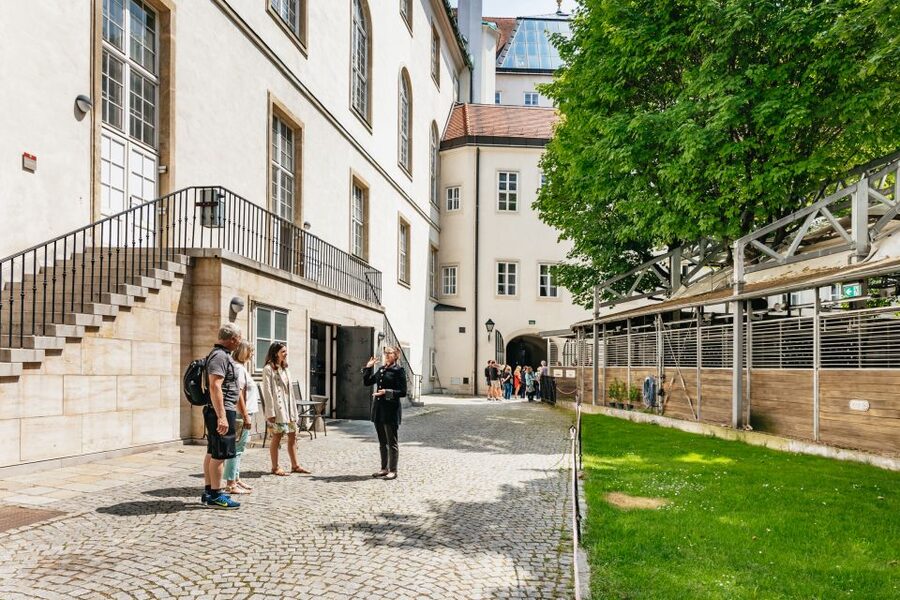
Next comes the Summer Riding School, which houses the world’s largest oval horse walker. This is one of the tour’s more unusual details, since it reveals the practical side of the school.
The grand Winter School is built for presentation. The Summer School helps you picture exercise and routine. The contrast between the two spaces is useful: one expresses ceremony, while the other points to the daily work required to keep the horses fit.
The guide explains how the horses exercise and how the school organizes its work. You may also hear about the horses’ time outside Vienna. Several visitors appreciated learning that the stallions do not remain at the city site all year and spend time in the countryside during breaks.
That detail changes the way you view the stable visit. The horses are not simply decorative residents in a palace complex. They follow a schedule that includes training, exercise, rest, and time away from the city.
The Summer School may not hold the same visual drama as the Baroque arena, but I consider it an important stop. It keeps the tour from becoming only an architectural walk.
A few more Vienna tours worth weighing up
- Vienna: Guided Walking Tour of City Center Highlights
★ 4.7 · 4,989 reviews - Vienna: Vienna Central Cemetery Guided Walking Tour
★ 4.8 · 3,307 reviews - Vienna: Bus & Schönbrunn Palace Skip-the-Line Guided Tour
★ 4.3 · 2,802 reviews - Vienna: Tickets for Mozarthaus Vienna with Audio Guide
★ 4.2 · 2,344 reviews
Entering the Stallburg and seeing the Lipizzaners
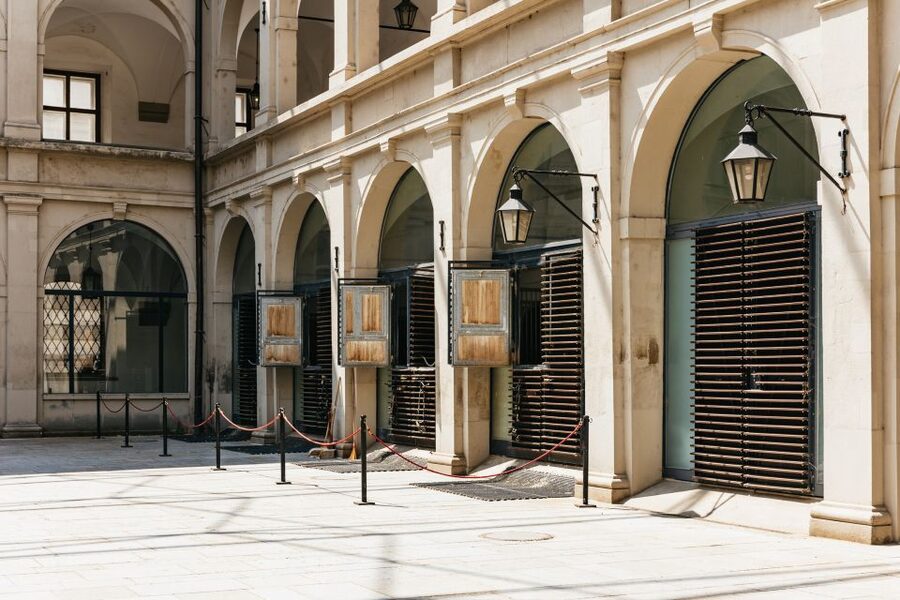
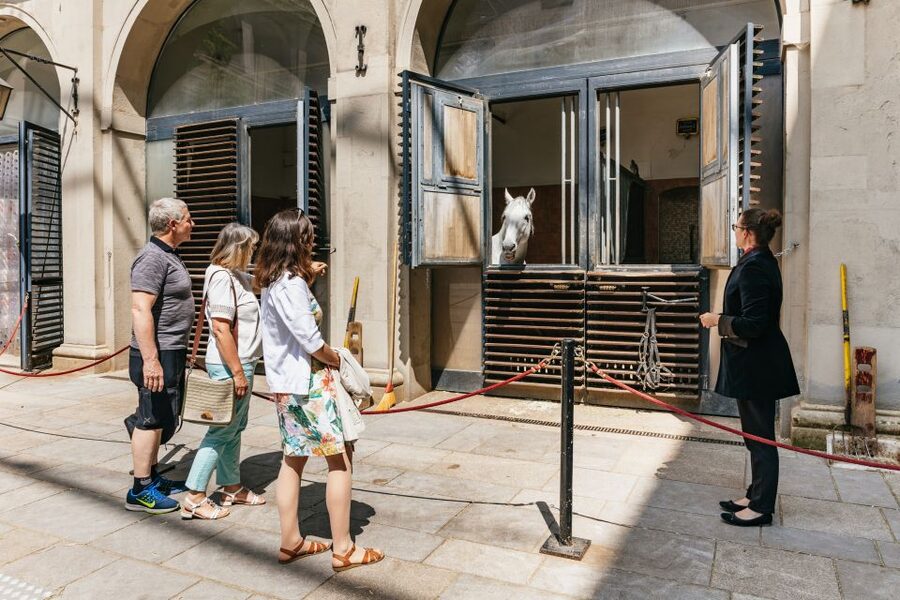
The Stallburg is Vienna’s most significant Renaissance building. Its arcade courtyard and historical stables give the tour its closest connection with the horses.
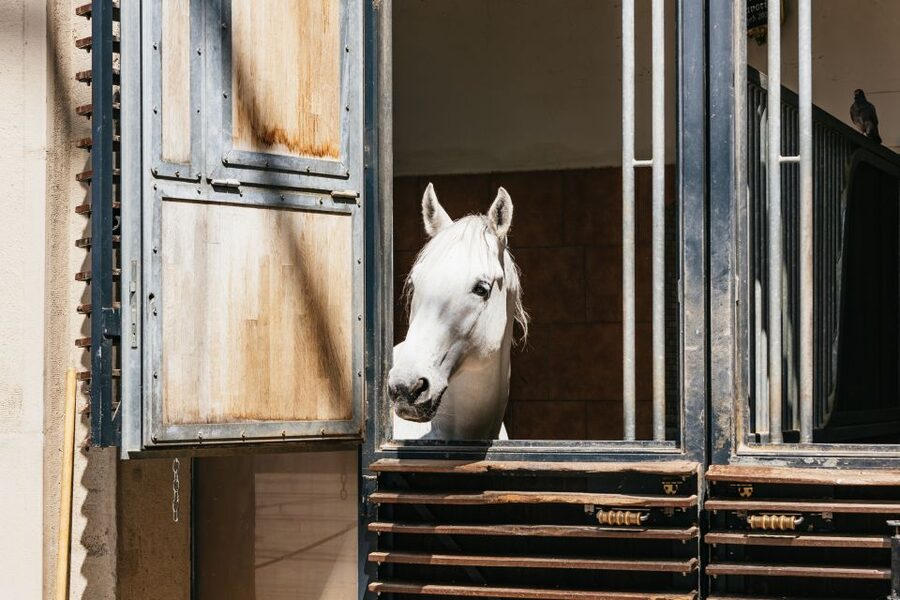
Here you can see Lipizzaner stallions in their stalls, often at close range. You cannot touch them, and you cannot take photos or video. That can disappoint anyone hoping for a horse selfie, but the restrictions protect the animals and keep the working area calm.
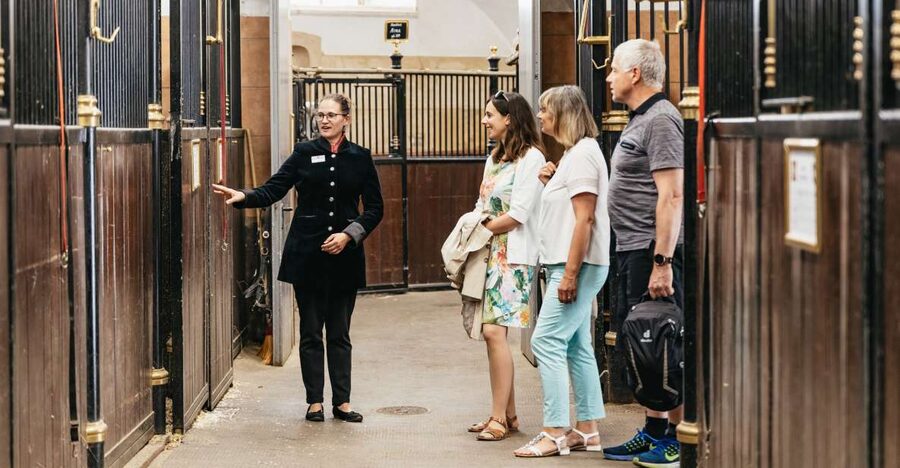
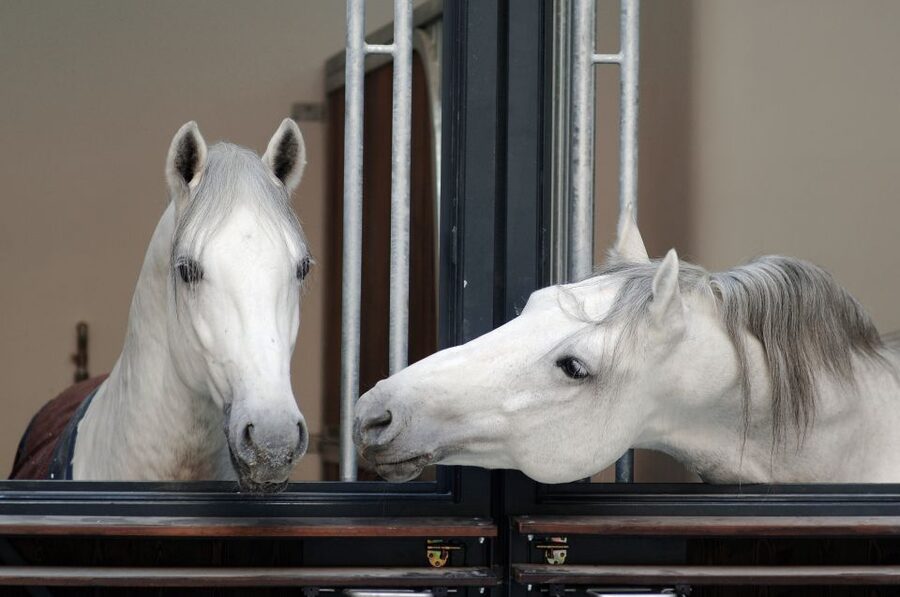
The closeness is still impressive. You see the horses as individuals rather than distant figures moving across an arena. Their size, posture, and calm presence are much easier to appreciate from the stable passage.
The guide explains the horses’ breeding, lineage, names, and care. You may hear about how they are selected and how their training develops over many years. The distinctive white coats are part of the school’s image, but the visit can also reveal exceptions, including the rare bay horse that never turned white.
That small detail is worth listening for. It reminds you that these are living horses with individual traits, not identical performers produced by a display machine.
The stables are also where the tour feels most personal. A guide who clearly loves horses can make ordinary details memorable, from feeding and grooming routines to the standards expected of the animals and the people who work with them.
The tack room and the practical side of performance
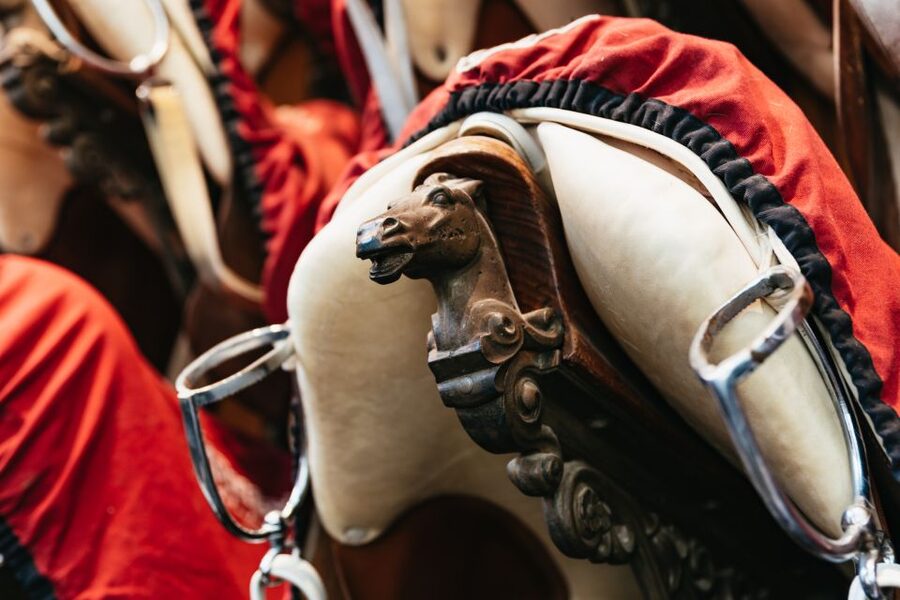
The tack room adds another useful layer. Here you see training and performance equipment and hear how the gear supports the riders’ work.
This part may appeal most to people who already ride or follow equestrian sport, but it remains understandable for beginners. The guide connects the equipment to the school’s methods instead of treating it as a collection of objects.
You may also encounter one of the stable cats, which have a practical role as mousers. A cat calmly ignoring a large tour group can provide a welcome bit of humor after the formal history of the arena and the careful explanation of horse training.
The tack room is not a major stop by size, but it helps answer a basic question: what happens behind the polished performance? The answer includes preparation, equipment, routine, and a great deal of repetition.
What you will not see on this tour
The guided visit does not include the morning exercise session. It also does not include a performance.
That distinction matters when you book. The tour shows you the spaces and explains the work, but it does not let you watch the famous movements in a full presentation. If your main goal is to see the horses perform, you need a separate ticket.
Some visitors have taken the tour first and then wanted to find a performance afterward. That makes sense. Once you understand the training and the long process behind the horses, the show has more meaning.
On the other hand, a performance ticket alone may suit you better if your schedule is tight and your priority is spectacle. The guided tour is the better choice if you want the setting, stable access, and explanation of how the school operates.
In some seasons, many horses may be away on holiday. You can still see horses of different ages in the stables, but the number present may vary. If meeting a large number of stallions is your main reason for going, keep that seasonal difference in mind.
Group size, hearing the guide, and tour pace
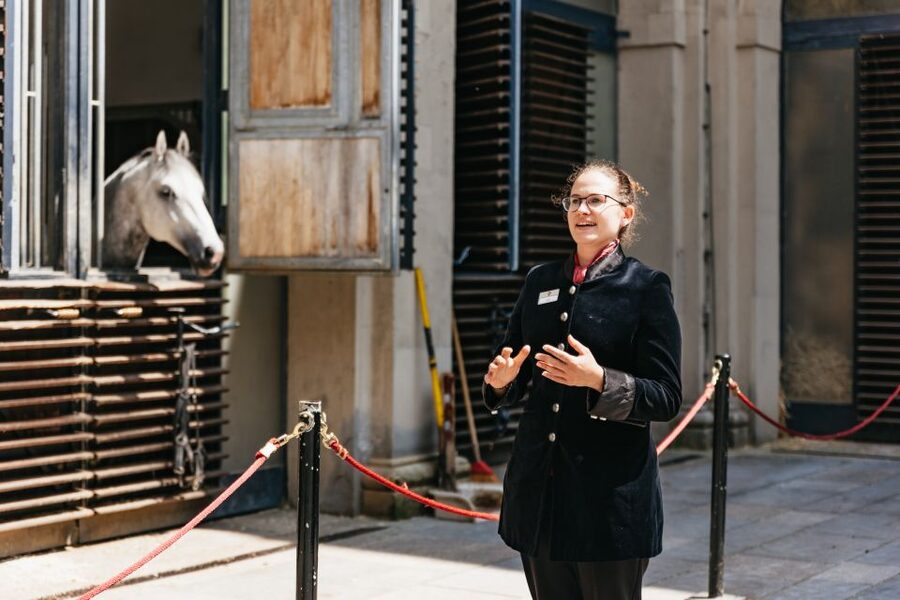
The tour lasts 55 minutes, a useful length for a central Vienna stop. It is long enough to visit several spaces but short enough to fit before lunch, after a museum, or between other appointments.
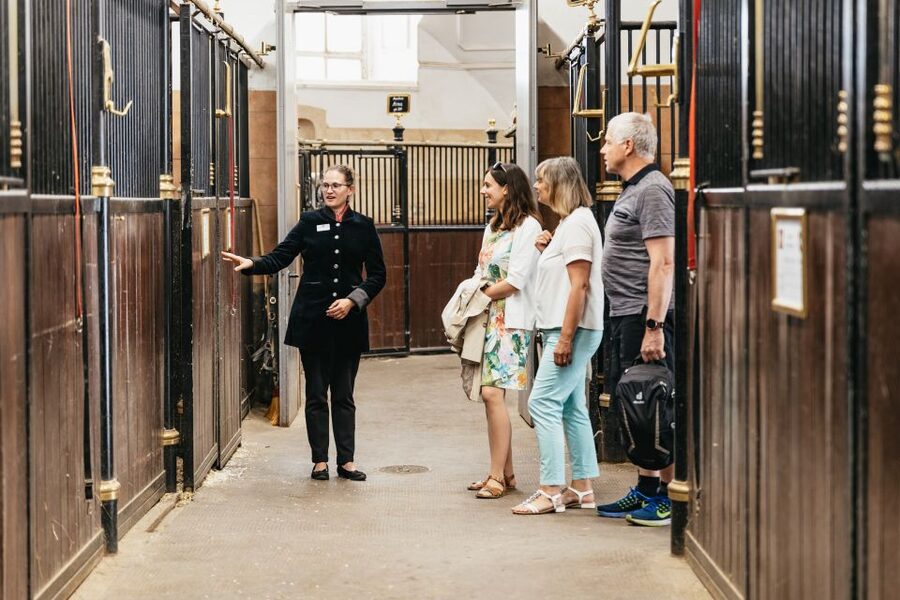
The pace is steady. You move from the arena through the school’s working areas and finish at the stables or tack room. There is time for questions, and guides generally welcome them.
The tradeoff is group size. When the group is large, you may have trouble hearing every word, particularly if people gather behind the guide or the setting becomes noisy. Try to stay near the guide without blocking others.
This is not a private tour. You should expect other people around you and occasional waiting while the group moves through a narrow area. The reward is access to a place that is still used for real work, not a display arranged solely for sightseeing.
Wear shoes suited to walking and standing. Wheelchair users should know that the guided tour is not wheelchair accessible, and children under three are not permitted.
Photography rules and respectful behavior
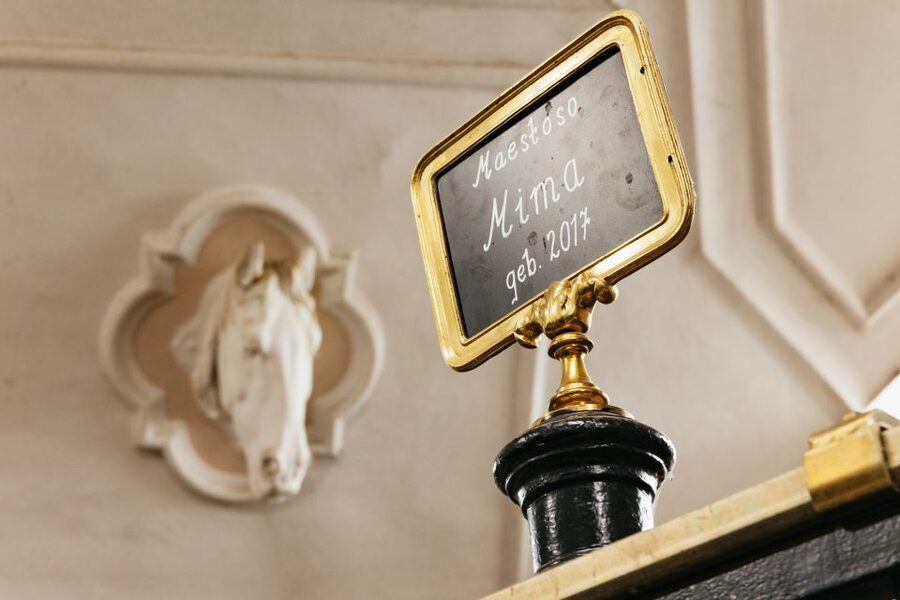
The no-camera rule is strict. You may not take photographs or record video during the tour.
That includes the horses and the interiors. Even if you see an appealing angle in the courtyard or a beautiful stallion standing quietly in its stall, put the phone away unless staff clearly allow otherwise. The official rule provided for this activity is that cameras and video recording are not permitted.
You also cannot touch the horses. This is not a petting visit. The horses are working animals, and keeping hands away protects both the animals and the people in the group.
I recommend treating the tour as a chance to look closely and listen well. The guides provide the details you might otherwise try to capture in a photograph, including the school’s training methods, the horses’ background, and the way the stables function.
Who will enjoy the Spanish Riding School most
You should book this if you love horses and want more than a performance. The stable visit is the strongest reason to go, especially if you want to see Lipizzaners up close and learn how they are cared for.
It also suits people who enjoy architecture and history. The Winter Riding School provides Baroque grandeur, while the Stallburg gives you a rare look at Renaissance Vienna in a working setting.
You do not need prior horse knowledge. The tour can be rewarding even if you book it mainly to see the building. Guides explain unfamiliar terms and give you room to ask basic questions.
It is less suitable if you need wheelchair access, want to photograph everything, or expect to touch the horses. It may also feel incomplete if you want to see a full riding display. In that case, consider pairing it with a separate performance when schedules and tickets allow.
Is $28 a good value?
At $28, I consider this a good-value one-hour visit in central Vienna, especially for anyone who would otherwise pay to see only the building or only the horses.
You visit three distinct parts of the school, hear the institution’s story, and see equipment, stalls, and working areas. The guide adds the value. A well-prepared leader can answer questions about breeding, training, rider selection, and everyday care, making the tour far more useful than wandering through a historic building without context.
The price is less compelling if you want entertainment alone. There is no performance and no morning exercise session included. You are paying for access and explanation, not a show.
Free cancellation up to 24 hours before the activity and the option to reserve now and pay later make it easier to fit into a changing Vienna schedule. Still, check the start time carefully and allow time to exchange your voucher at the cashier.
Should you book it?
Book this Spanish Riding School tour if you want to see the Lipizzaner stallions, understand the work behind the performances, and admire two of Vienna’s grand historic riding spaces.
I would especially recommend it to horse lovers, first-time visitors who want a focused central Vienna activity, and anyone who could not secure a performance ticket. The guides, including Sisi, Natasha, Lorelei, and Inga on various tours, bring the history to life with practical detail and humor.
Skip it if your only goal is a live riding display, if photography is essential, or if you need wheelchair access. For most other visitors, $28 buys a compact and unusually close look at one of Vienna’s most traditional working institutions.
FAQ
How long does the guided tour last?
The tour lasts 55 minutes.
How much does the tour cost?
The listed price is $28 per person.
What buildings are included?
The tour includes the Winter Riding School, the Summer Riding School, and the Stallburg stables.
Can I see the Lipizzaner stallions?
Yes. The tour includes a visit to the historical stables where you can see the Lipizzaner stallions in their stalls.
Can I touch the horses?
No. Touching the horses is not permitted.
Can I take photos or record video?
No. Cameras, photography, and video recording are not permitted during the tour.
Is a performance included?
No. A performance is not included.
Is the morning exercise session included?
No. Morning exercise tickets are separate from this guided tour.
What languages are available?
The live tour guide speaks English or German, depending on the tour selected.
Is the tour wheelchair accessible?
No. The guided tour is not accessible by wheelchair.
Just added around Vienna
- Private Tour from Vienna to Melk and Dürnstein★ 4.5 · 3 reviews
- Vienna: Johann Strauss 200th birthday anniversary exhibition★ 4.7 · 3 reviews
- Vienna Private Full Day Tour – Tickets to Schönbrunn & Lunch★ 5.0 · 3 reviews
- Private Salzburg Day Trip from Vienna★ 4.0 · 3 reviews
- Vienna: Entry Ticket Belvedere 21 & Contemporary Art★ 4.3 · 3 reviews
- Full-Day Private Trip from Vienna to Budapest★ 4.5 · 3 reviews
- Vienna by Night: Private Evening Food and Drink Tour★ 5.0 · 3 reviews
- 1.5 Hour Cinematic Style Portrait Photoshoot and Tour in Vienna★ 4.5 · 3 reviews
Spanish Riding School Tours, compared.
Spanish Riding School 45-Minute Performance Show
Read our review →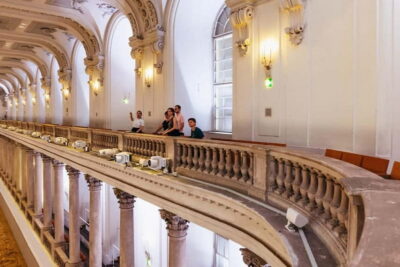
Spanish Riding School Guided Architectural Tour
Read our review →Browse the lists this tour appears in