
Reviewed · VIENNA
‘Armenia In The Heart Of Vienna
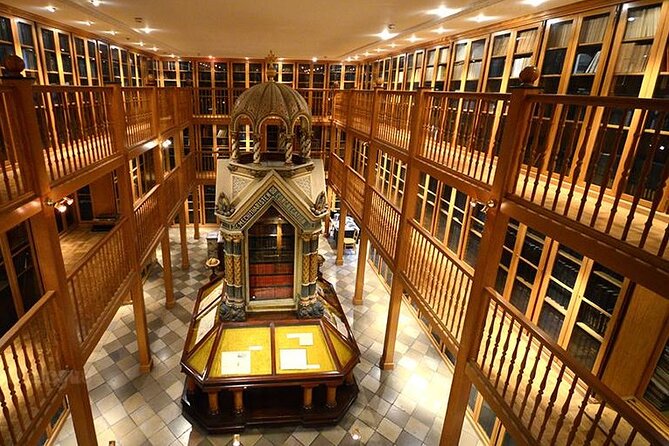
Vienna’s Mekhitarist Congregation gives you a very different kind of city experience: a compact visit to an Armenian monastery, museum, and cultural center tucked into the Neubau district. Inside, you’ll encounter manuscripts, coins, rugs, costumes, books, and art while learning how the Mekhitarist Order helped preserve and renew Armenian culture.
I like the tour’s small maximum of 15 people, which should make a short, focused visit easier to follow. I also like the Chatherine liquor element, since its taste is tied to a family story rather than treated as a random drink at the end. The main consideration is length: at about 90 minutes, this is an introduction, not a full study of Armenian history or Vienna’s Armenian community.
In This Review
- Key points to know before you book
- Why this monastery matters in the middle of Vienna
- Entering the Mekhitarist Congregation
- Manuscripts, coins, costumes, rugs, and books
- The Mekhitarist Order’s place in Armenian culture
- Chatherine liquor and the family story
- What the 90-minute format means
- Value at $89.36 per person
- Who should book this experience
- Practical details before you go
- Final booking advice
- FAQ
- Where does the Armenia in the Heart of Vienna tour begin?
- Where does the tour end?
- How long does the tour last?
- What language is offered?
- What is the price per person?
- Is admission included?
- What can I see during the visit?
- Is Chatherine liquor part of the experience?
- How large can the group be?
- Can I cancel for a full refund?
Key points to know before you book
- A 17th-century Armenian foundation in Vienna: Visit the Mekhitarist Congregation on Mechitaristengasse and learn about its long cultural role.
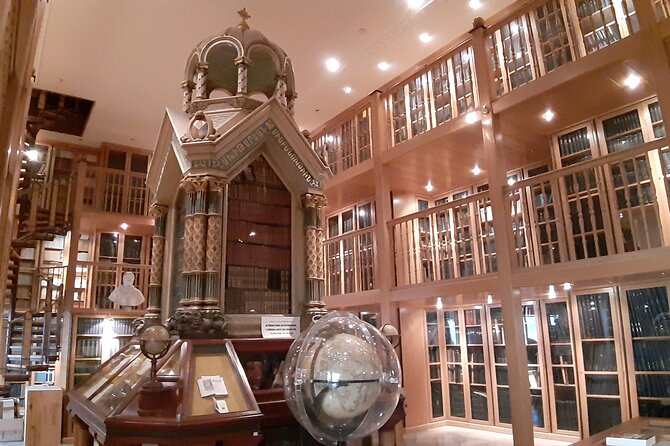
- Museum objects with real variety: See ancient and medieval coins, manuscripts, folk costumes, rugs, books, periodicals, and other historic pieces.
- A strong focus on Armenian scholarship: The visit explains how the Mekhitarist Order helped preserve Armenian language, learning, and cultural memory.
- Chatherine liquor with a family story: The tasting adds a personal and sensory element to an otherwise museum-focused experience.
- A short, small-group format: The experience lasts about 1 hour 30 minutes and accepts no more than 15 participants.
- Simple booking terms: Mobile tickets are accepted, English is offered, and cancellation is free up to 24 hours before the start time.
Why this monastery matters in the middle of Vienna
Vienna is famous for imperial palaces, grand churches, coffeehouses, and classical music. This visit shifts your attention to a smaller community with an international story. The Armenian Mekhitarist Order has been part of Vienna’s cultural life for nearly three centuries, and its work reached well beyond religious worship.
The order became known for scholarship, publishing, education, and the preservation of Armenian culture. That makes the visit useful for anyone who wants to understand how a relatively small religious community could shape intellectual life across borders.
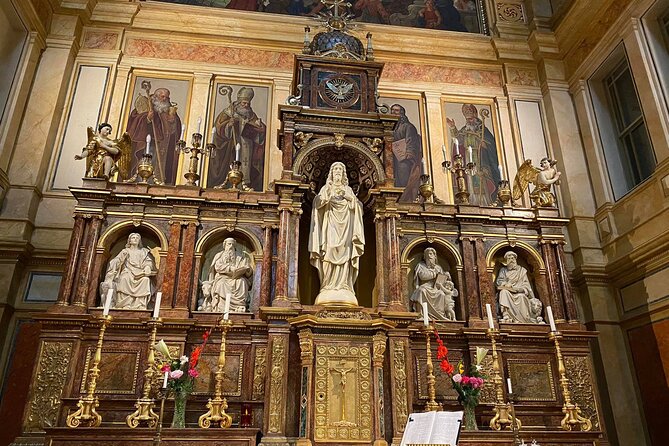
The setting also gives the story extra force. You are not learning about an Armenian institution from a distant display in a large national museum. You are entering the congregation connected to that story, at Mechitaristengasse 4 in Vienna’s 1070 district.
I would not expect a grand palace-scale attraction. The value here comes from the subject and the objects, not from sheer size. In 90 minutes, you get a concentrated look at a place that links Armenia, Austria, religion, publishing, and cultural preservation.
Other Vienna tours people book alongside this one:
- Vienna: Vivaldi’s Four Seasons Concert in Karlskirche
★ 4.7 · 14,951 reviews - Vienna: Spanish Riding School Training
★ 3.9 · 9,281 reviews - Vienna: Skip-the-cashier-desk-line Giant Ferris Wheel Ride
★ 4.5 · 7,859 reviews
Entering the Mekhitarist Congregation
The visit begins and ends at Mechitaristengasse 4, 1070 Vienna. Since the meeting point is near public transportation, it should be manageable to reach from other parts of the city, though you will want to allow enough time to find the exact entrance.
The congregation is the central stop, and admission is included. Once inside, the tour focuses on the role of the Mekhitarist Order and the material it gathered, protected, studied, and passed on.
The order was founded in the 17th century. Over the centuries, its work helped maintain Armenian language and culture at a time when books, manuscripts, and trained scholars were especially important to cultural survival.
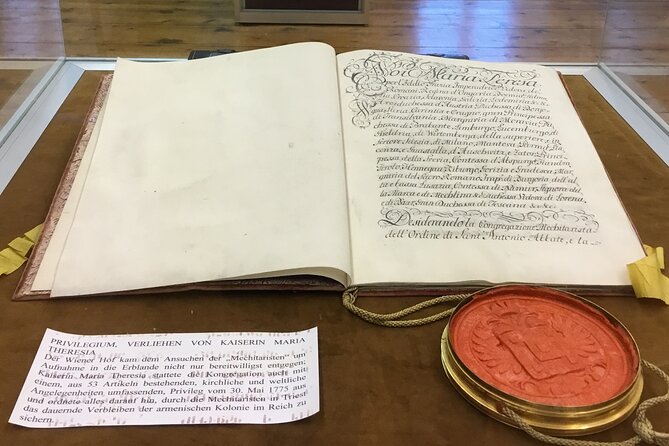
That point is worth keeping in mind as you look at the collection. A manuscript is not simply an old book. A coin is not just a piece of metal. A folk costume or rug can show how identity was carried through daily life, while a periodical or scholarly book can reveal how ideas moved between communities.
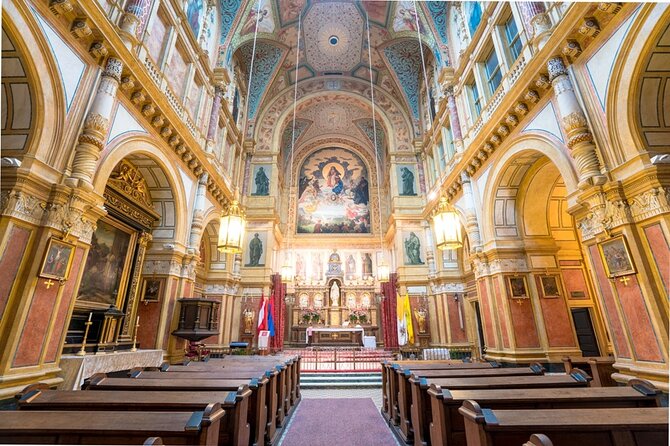
The tour asks you to think about the congregation as more than a religious site. It functioned as a center of learning and cultural renewal. The Mekhitarists also became early carriers of Austrian cultural influence toward the Orient, giving the institution a role in both Armenian and Austrian stories.
Manuscripts, coins, costumes, rugs, and books
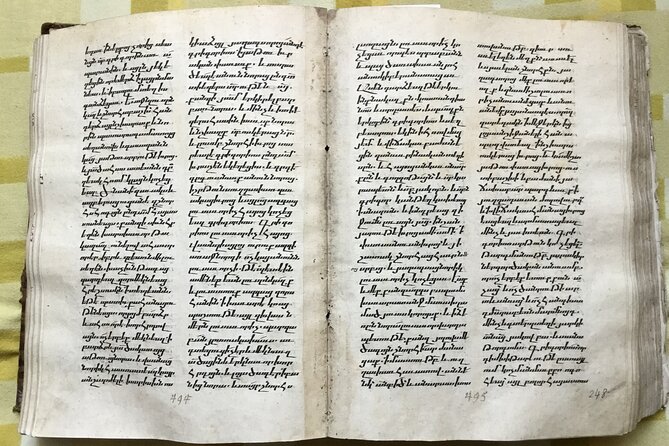
The collection’s greatest strength is its range. You may see ancient and medieval coins beside manuscripts, folk costumes, rugs, books, and periodicals. That variety helps prevent the visit from feeling like a single-subject display.
Coins can make large historical periods feel more concrete. They carry rulers, symbols, and trade routes in a very small space. Manuscripts bring another layer, showing how language, religion, and scholarship were recorded before modern printing and digital storage.
The folk costumes and rugs bring daily life into the picture. They help you think beyond monks and scholars and toward the communities whose traditions the order worked to preserve. Books and periodicals then show how that culture continued to develop through publication and education.
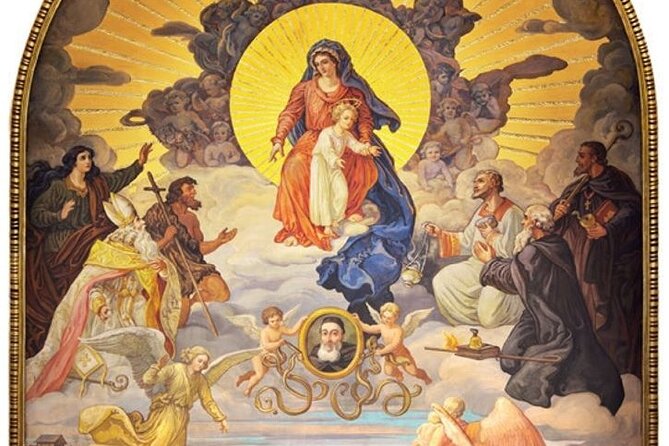
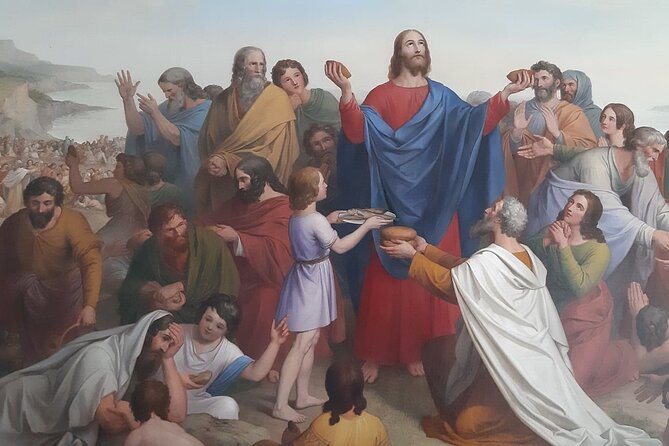
Art exhibitions add another visual dimension. The experience includes displays in the Militarist Museum, as described for the tour, so you should expect the visit to combine fine art with historical and cultural objects.
The material is likely to appeal most to people who enjoy close looking. This is not a place where every object needs to be spectacular to be meaningful. A modest manuscript, an unfamiliar coin, or a patterned textile can matter because of the story attached to it.
The Mekhitarist Order’s place in Armenian culture
The order’s importance is tied to its intellectual work. For nearly three centuries, the Mekhitarists have been associated with scholarship and the renewal of Armenian culture, especially during the 19th century.
You will hear how the order helped keep Armenian learning active across political and geographic boundaries. That is one of the strongest reasons to book this experience. It supplies context that you might not get from simply walking past the building or viewing isolated Armenian objects in a general museum.
The visit also connects Armenian culture to Austria. The Mekhitarists were described as early pioneers of Austrian culture in the Orient, a phrase that points to their role as cultural intermediaries. Their work was not limited to preserving one tradition in isolation. It also helped ideas, books, and cultural knowledge move between regions.
I find this cross-border angle especially useful in Vienna. The city has always been shaped by people and ideas arriving from elsewhere. This congregation offers a quieter example of that process, one rooted in scholarship and community rather than court ceremony.
Do not expect the tour to cover every period of Armenian history. The time is limited, and the focus remains on the congregation, its collection, and its cultural role. That narrow scope is a benefit if you want a clear theme, but a limitation if you are seeking a broad survey of Armenia.
A different side of Vienna on the same trip:
- Vienna: Schönbrunn Palace & Gardens Skip-the-Line Tour
★ 4.7 · 7,739 reviews - Vienna: Light of Creation Votive Church Immersive Light Show
★ 4.8 · 6,779 reviews - Vienna Spanish Riding School Guided Tour
★ 4.7 · 6,765 reviews - Vienna: Classical Concert in the World-Famous Musikverein
★ 4.6 · 6,673 reviews
Chatherine liquor and the family story
The Chatherine liquor portion gives the experience a more personal ending. Instead of leaving the subject at manuscripts and institutional history, the tour introduces a liquor tradition through its taste, background, and family connection.
A complimentary taste is included, making this one of the more memorable features for many people. The liquor has been described as among the best in the world, though you should treat that as a matter of personal taste rather than a formal judgment.
What matters more is the connection between the drink and the people behind it. Family stories can make cultural history easier to remember. You may leave with a clearer sense that Armenian heritage is not only found in ancient objects or religious buildings. It also lives in food, drink, craft, and shared traditions.
The tasting should not be the sole reason to book. This remains a museum and cultural visit first, with the liquor as an added feature. If you do not drink alcohol, the broader collection and historical discussion still provide the main substance of the experience.
What the 90-minute format means
Ninety minutes is a sensible length for this subject. It is long enough to explain the congregation’s background and view a selection of objects, but short enough to fit into a busy day in Vienna.
I like this format for an afternoon between larger attractions. You could pair it with other activities in the city, but you should avoid scheduling it so tightly that a small delay creates stress. The tour has one main stop, yet the material deserves time for explanation and questions.
The group limit of 15 is another practical advantage. A small group can make it easier to hear the guide and examine objects without being pushed along in a large crowd. It also suits a place where the experience depends on interpretation rather than spectacle.
The tour is offered in English and uses a mobile ticket. Most people can participate, according to the supplied activity details, and the location is near public transportation. No separate ending transfer is provided because the experience finishes back at the meeting point.
Value at $89.36 per person
At $89.36 per person, this is not a bargain-priced museum entry. The price makes the most sense if you value a guided cultural visit with a specific subject, included admission, a small group, and the Chatherine liquor tasting.
You are paying for access to a focused institution and for the explanation that ties its objects together. Without that context, coins, books, costumes, and manuscripts could feel like a disconnected group of old things. The guide’s interpretation is central to the experience.
The price is harder to justify if you only want a quick look at Armenian artifacts or if the liquor tasting is your main interest. A 90-minute visit gives you a clear introduction, but not an extended museum day or a broad Armenian cultural program.
For the right audience, the cost can be reasonable. I would particularly consider it if you have already seen Vienna’s major imperial sights and want a smaller, more unusual experience. It is also a good choice if Armenian culture, religious history, publishing, or historic collections already interests you.
Who should book this experience
I would recommend this tour to several kinds of visitors:
- You enjoy museums but prefer focused collections to huge institutions.
- You want to understand Vienna’s international cultural connections.
- You have an interest in Armenia, Armenian Christianity, manuscripts, or historical publishing.
- You appreciate small-group visits with a clear theme.
- You like pairing historical objects with a food or drink tradition.
- You have limited time but still want something more distinctive than a standard city sight.
Families may find the varied objects easier to engage with than a long lecture, though the amount of historical explanation may suit older children and adults best. People who need a highly active experience should choose something else. This is mainly a looking, listening, and learning visit.
The experience may also appeal to repeat visitors. On a first trip, Vienna’s major sights deserve priority. On a second or third visit, the Mekhitarist Congregation offers a way to see another side of the city without committing half a day.
Practical details before you go
The meeting point is Mechitaristengasse 4, 1070 Wien, Austria. The tour returns to that same location, so you do not need to arrange transport from a separate endpoint.
Confirmation is provided at booking, and you can use a mobile ticket. English is the available language listed for the experience.
The maximum group size is 15 people. That limit matters because the collection is best appreciated when you can stay near the guide and see smaller objects clearly.
The activity requires a minimum number of participants. If that minimum is not reached and the experience is canceled, you are offered another date or activity, or a full refund.
You can cancel for a full refund up to 24 hours before the start time. Changes or cancellations made less than 24 hours before the start are not accepted for a refund, and the cut-off follows local Vienna time.
Final booking advice
Book Armenia in the Heart of Vienna if you want a concise, culturally focused visit with real objects, a strong Armenian-Austrian connection, and a distinctive liquor tasting. Its best feature is the way a small Vienna institution opens onto a much wider story of language, scholarship, faith, and cultural survival.
Skip it if you want a large museum, a broad tour of Armenia, or a full-day attraction. At $89.36, the experience needs to match your interests. For anyone drawn to overlooked chapters of Vienna’s past, the Mekhitarist Congregation offers an engaging 90-minute stop with more substance than its short duration suggests.
FAQ
Where does the Armenia in the Heart of Vienna tour begin?
It begins at Mechitaristengasse 4, 1070 Wien, Austria.
Where does the tour end?
The experience ends back at the meeting point.
How long does the tour last?
The tour lasts approximately 1 hour 30 minutes.
What language is offered?
The tour is offered in English.
What is the price per person?
The listed price is $89.36 per person.
Is admission included?
Yes, the admission ticket is included.
What can I see during the visit?
You can see art exhibitions, ancient and medieval coins, manuscripts, folk costumes, rugs, books, periodicals, and other historic items.
Is Chatherine liquor part of the experience?
Yes. The tour includes an introduction to Chatherine liquor, including its taste, history, and family story. A complimentary liquor taste is also associated with the experience.
How large can the group be?
The activity has a maximum of 15 participants.
Can I cancel for a full refund?
Yes. You can cancel for a full refund at least 24 hours before the experience start time. Cancellations or changes made less than 24 hours before the start are not accepted for a refund.
Just added around Vienna
- Private Tour from Vienna to Melk and Dürnstein★ 4.5 · 3 reviews
- Vienna: Johann Strauss 200th birthday anniversary exhibition★ 4.7 · 3 reviews
- Vienna Private Full Day Tour – Tickets to Schönbrunn & Lunch★ 5.0 · 3 reviews
- Private Salzburg Day Trip from Vienna★ 4.0 · 3 reviews
- Vienna: Entry Ticket Belvedere 21 & Contemporary Art★ 4.3 · 3 reviews
- Full-Day Private Trip from Vienna to Budapest★ 4.5 · 3 reviews
- Vienna by Night: Private Evening Food and Drink Tour★ 5.0 · 3 reviews
- 1.5 Hour Cinematic Style Portrait Photoshoot and Tour in Vienna★ 4.5 · 3 reviews