
Reviewed · WINE TOURS
Austrian Wine Tasting
Austrian wine gets far less attention than Austrian music, palaces, and coffeehouse culture. That makes this two-hour tasting with sommelier Stylianos Stavridis a smart way to get oriented. You’ll work through six Austrian wines, learn how the country labels and makes them, and see why grapes such as Grüner Veltliner, Sankt Laurent, and Blaufränkisch deserve a place on your table.
I like the small maximum group of eight, which gives you room to ask questions without shouting across a crowded bar. I also like the teaching style: each glass comes with a clear explanation of aroma, acidity, body, and food pairing, so you learn how to taste rather than simply being told which bottle is good.
The main consideration is food. Cheese, cured meat, and bread are included, but this is a tasting plate, not dinner. The price is also fairly high for two hours, so the value depends on how much you want the instruction and personal attention.
In This Review
- Key points to know before booking
- Why Austrian wine deserves two hours of your Vienna trip
- Arriving at Hollandstraße 10 in Vienna’s 2nd district
- The first glass sets up the lesson
- Six wines, with whites and reds in the mix
- Cheese, cured meat, and bread show the wines in context
- The guide makes the small group format count
- Is $145.18 a fair price?
- Who will enjoy this tasting most?
- Practical details that affect your day
- My booking advice
- FAQ
- Where does the Austrian wine tasting take place?
- How long does the tasting last?
- How many wines are included?
- Is the tasting held in English?
- What food is included?
- How large is the group?
- Does the tasting end at the starting point?
- Can I cancel for a full refund?
Key points to know before booking
- Six Austrian wines: Expect a mix of white and red styles from important local grapes and regions.
- Sommelier-led instruction: Stylianos Stavridis, also called Stelios, explains each wine and answers questions in English.
- Small group setting: The activity accepts no more than eight people, and solo bookings may still go ahead.
- Viennese tasting room: The session takes place at Hollandstraße 10/1-3 in Vienna’s 2nd district, in a restored Wilhelminian-era building.
- Cheese and charcuterie pairing: Local cheese, cured meat, and bread help show how food changes a wine.
- Easy commitment: The tasting lasts about two hours, ends where it starts, and offers free cancellation up to 24 hours before the start time.
Why Austrian wine deserves two hours of your Vienna trip
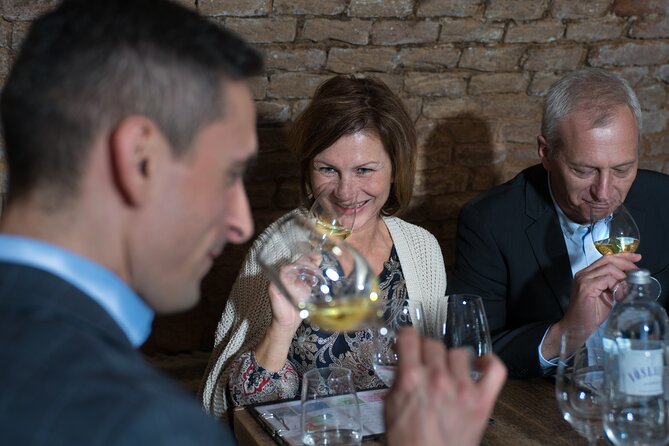
Austria is not a one-grape wine country. Grüner Veltliner may be the name you hear most often, but the tasting gives you a chance to compare several parts of the national wine story.
The whites can include Grüner Veltliner, Sauvignon Blanc, and Riesling. These wines help you notice differences in freshness, acidity, fruit, and weight. The reds may bring a surprise, especially Sankt Laurent and Blaufränkisch, two grapes that can offer far more character than many first-time visitors expect.
That range is one of the best reasons to book this experience rather than order a random Austrian bottle at a restaurant. You taste several styles side by side, with someone guiding your attention. A wine that seems sharp at first may become more appealing with food. A red you would have skipped on a menu may turn out to be the most memorable glass of the afternoon.
You also get useful national context. Austria has its own wine regions, labeling system, grape traditions, and production methods. Those details matter when you stand in a wine shop later and try to choose a bottle without a sommelier beside you.
More Vienna wine tastings:
- Wachau Valley Wine Tasting Bike Tour from Vienna
★ 5.0 · 829 reviews - Vienna: Swarovski House Tour with Champagne and Gift
★ 4.7 · 787 reviews - Countryside Half Day Wine Tour near Vienna
★ 5.0 · 545 reviews
Arriving at Hollandstraße 10 in Vienna’s 2nd district
The meeting point is Wine Tasting Vienna, at Hollandstraße 10/1-3, 1020 Vienna. The address is in the city’s 2nd district and is near public transportation, so you do not need to plan a full day around reaching the tasting room.
The activity begins and ends at the same address. That is useful if you want to continue with dinner, return to your hotel, or visit another part of Vienna afterward. Since the tasting includes six alcoholic drinks, keeping the rest of your schedule simple is sensible.
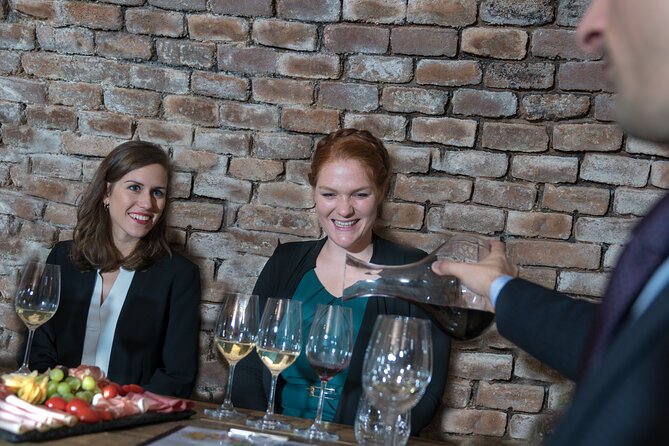
The setting is part of the appeal. The experience is held in a dedicated wine space in a restored traditional building from Vienna’s Wilhelminian era. Do not book it expecting a theatrical underground cellar with rough stone and candlelight, though. The room can feel more modern than some promotional images suggest, while still offering a polished atmosphere, proper stemware, and a space designed for tasting.
That distinction matters if the room itself is a major reason you are booking. The real strength here is the instruction and conversation, not a dramatic architectural set.
The first glass sets up the lesson
Stylianos does not simply pour six wines and leave you to guess what you are tasting. The session is structured around looking, smelling, tasting, and discussing each glass.
You may be asked to consider the wine’s aroma before taking a sip, then notice its acidity, fullness, fruit, and finish. This is useful even if you are new to wine because it replaces vague reactions with simple observations. You do not need a trained palate or a large vocabulary. You need only to pay attention and say what you notice.
The atmosphere is relaxed rather than intimidating. That matters because wine classes can sometimes make beginners feel they are being tested. Here, the format allows you to ask basic questions, challenge an opinion, or admit that you do not like a particular style.
For more experienced drinkers, the value comes from comparison and local context. You can ask about grape growing, Austrian classifications, production choices, and how the wines fit into wider European wine culture. The discussion can also move beyond Austria, since Stylianos has broad experience with wine from other countries.
An educational booklet is provided, giving you something to consult during the tasting and take away afterward. You can also take notes and photographs during the session.
Six wines, with whites and reds in the mix
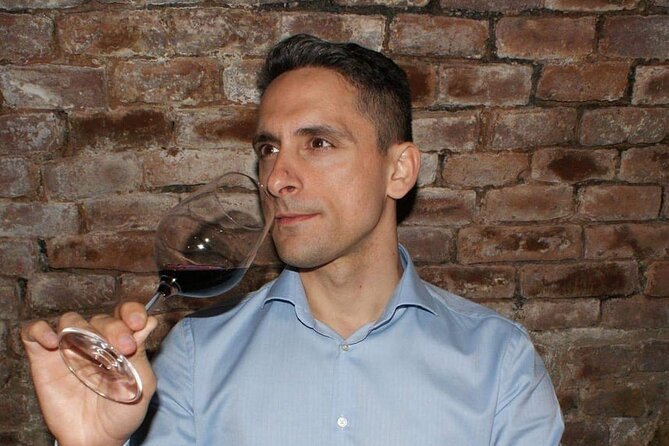
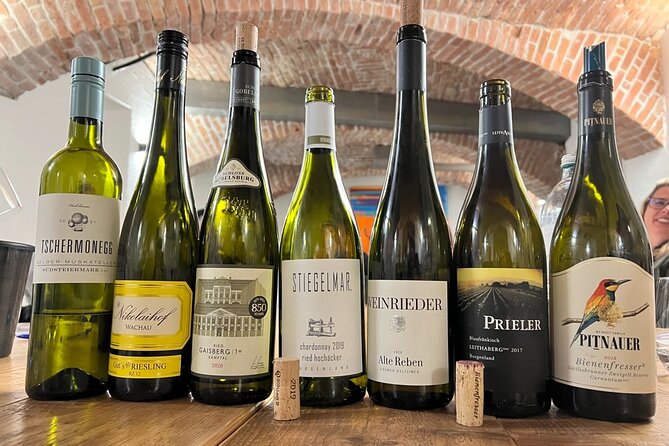
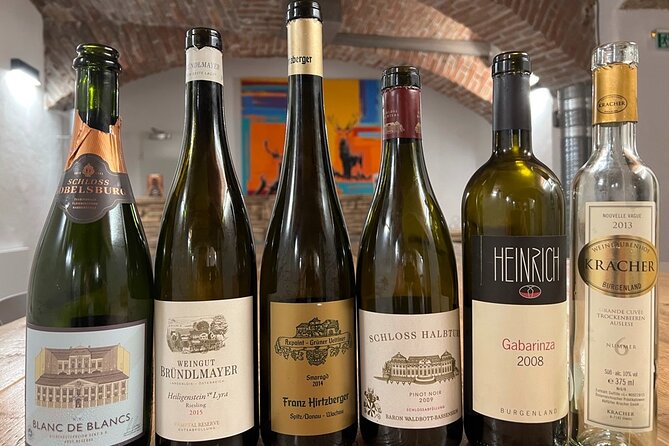
The exact lineup can change, which is a positive feature for repeat visitors. Stylianos changes the wines to keep the session fresh, so you should treat the published examples as a guide rather than a promise.
A typical selection may include:
- Grüner Veltliner, Austria’s best-known white grape
- Sauvignon Blanc
- Riesling
- Sankt Laurent
- Blaufränkisch
- Another Austrian wine chosen to complete the comparison
The point is not to race through six glasses. Each wine receives an introduction and a group discussion. You learn where it comes from, how it was made, what the grape contributes, and what to look for in the glass.
The white wines provide an easy way to study acidity and freshness. Riesling can show a different balance from Grüner Veltliner, while Sauvignon Blanc may bring another set of aromas and a different feel on the palate. The reds broaden the lesson and help correct the idea that Austria is mainly a white-wine country.
Sankt Laurent and Blaufränkisch are especially useful discoveries for anyone who has not tasted much Austrian red wine. They give the session a sense of progression. You begin with familiar reference points, then reach styles that may be harder to identify from a standard international wine list.
Because the tasting is guided, you can focus on how each wine differs instead of judging every bottle in isolation. That is where much of the learning happens.
More food tours in Vienna:
- Vienna: Chocolate Workshop in Chocolate Museum w/ Tasting
★ 4.5 · 1,802 reviews - Vienna for Food Lovers: Cafés, Markets & Austrian Cuisine
★ 5.0 · 1,063 reviews - Vienna: Gerstner KuK Hofzuckerbäcker Baking Show & Tasting
★ 4.8 · 823 reviews - Authentic Vienna Food Tour inc. lunch, street food, 3 drinks
★ 5.0 · 749 reviews
Cheese, cured meat, and bread show the wines in context
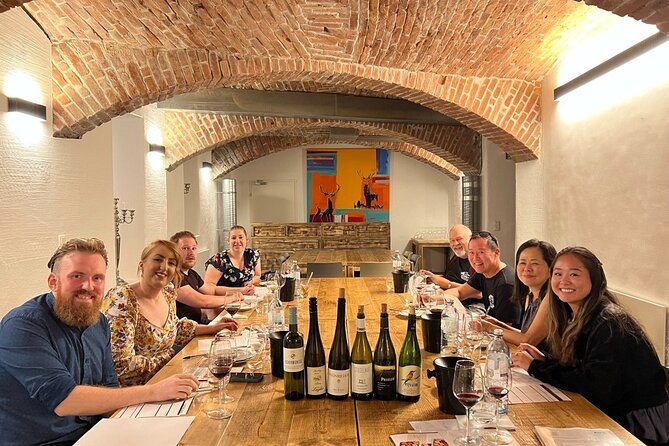
The food is a cold plate of locally sourced cheese, cured meat, and bread. It is not intended as a full meal, but it plays an important role in the tasting.
Wine changes when you eat. A sharp white can feel softer with cheese. A fuller red may make more sense beside cured meat. Bread clears the palate and gives you a neutral bite between samples. Stylianos suggests pairings for the different wines, helping you notice which combinations work and why.
The portions should be treated as snacks. The plate may include several pieces of cheese and meat rather than a generous spread. If you are hungry, eat beforehand or plan a meal afterward. That small bit of planning will keep you from expecting the tasting to replace lunch or dinner.
The pairing element still adds real value. You are not only learning how wine tastes by itself. You are learning how Austrians might enjoy it with food, which is often the most practical lesson to carry into the rest of your trip.
The guide makes the small group format count
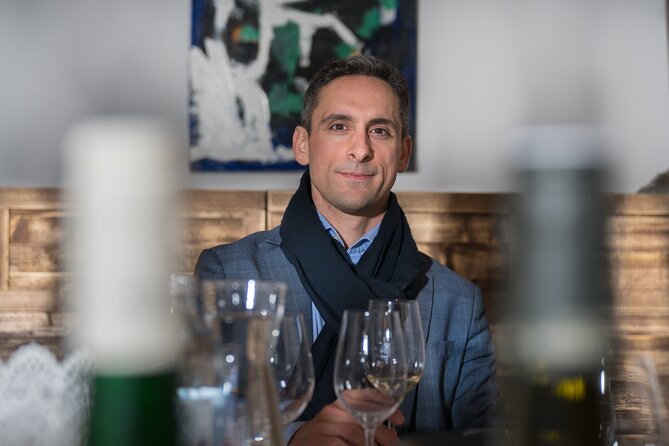
Stylianos is the owner and host, and his role shapes the experience. His teaching combines technical information with an easy personal manner. You can ask a long string of questions without turning the session into a formal lecture.
A group of eight or fewer is large enough for conversation but small enough for direct attention. If you book alone, the session may still take place with only you, or with a very small group. That creates a more private lesson, though some people may prefer the energy of a fuller table.
One useful option is joining a larger scheduled group if a time slot allows it. A mixed group can add conversation and make the tasting feel more social. On the other hand, a very small group gives you more control over the questions and pace.
The English instruction is clear and practical. You are not expected to know German wine terms. The session explains the basic vocabulary as it goes, so you can follow even if this is your first formal tasting.
Is $145.18 a fair price?
At $145.18 per person, this is not a cheap way to drink six glasses of wine. You can spend less at a Viennese wine bar, especially if your only goal is to sample local bottles.
The comparison changes when you include the instruction. You are paying for six selected wines, a professional host, a small group, food pairings, bottled still water, an educational booklet, and two hours of focused attention. You also avoid the guesswork of ordering unfamiliar grapes one glass at a time.
I see the value most clearly for three kinds of people. First, a beginner can gain a working understanding of Austrian wine in one sitting. Second, an experienced wine drinker can ask detailed questions and taste beyond the usual international grapes. Third, a couple or small group can use it as a social activity that has more substance than a standard bar stop.
The price is harder to justify if you want a substantial meal, a tour through vineyards, or a cellar visit outside Vienna. This is an urban tasting lesson, not a day trip to the countryside. You are buying access to expertise and a focused selection, not transportation or a long list of attractions.
Who will enjoy this tasting most?
I would choose this for anyone who wants to understand Austrian wine before buying bottles or ordering it with meals. It suits beginners because the language is welcoming and the tasting method is explained step by step.
It also works well for serious wine drinkers. The discussion can cover Austrian wine production, regional differences, grape varieties, and wine culture around the world. People who live in major wine regions themselves can still find something new here, particularly in the Austrian reds and classification system.
Couples should find the format easy, and solo visitors can book without needing to assemble a group. The maximum of eight keeps the session personal. You should be comfortable spending two hours seated, tasting alcohol, and taking part in conversation.
This is less suitable if you want a fast stop between major sights. It is also not the right choice if you expect a full dinner, a large cellar tour, or a theatrical old-world room.
Practical details that affect your day
The tasting is offered in English and includes a mobile ticket. Confirmation arrives at booking, and the location is near public transportation. Most people can participate.
Plan for about two hours, with the possibility that the experience runs slightly over. One description calls it a two-hour session, while several accounts refer to two or more hours. Do not schedule a museum entry or train departure immediately afterward.
The activity ends back at Hollandstraße 10/1-3. Since all six wines are alcoholic, avoid pairing it with a demanding walking itinerary in the immediate aftermath. A relaxed dinner or short ride back to your accommodation makes more sense.
Free cancellation is available if you cancel at least 24 hours before the local start time. Changes or cancellations inside that window are not accepted for a refund.
My booking advice
I would book this if you want an informed introduction to Austrian wine and value a host who can explain what is in your glass. The strongest features are the personal teaching, the range of white and red wines, the chance to ask questions, and the small group size.
I would skip it if you are mainly hunting for a cheap drink, a full meal, or a countryside vineyard outing. Also keep your expectations realistic about the food and room: the snacks are light, and the tasting space may look more contemporary than a classic brick cellar.
For most wine-curious visitors, though, the session offers a useful shortcut into Austria’s wine culture. You leave with more than six samples. You have a better sense of what to order in Vienna, which grapes to seek out, and how to taste the next bottle on your own.
FAQ
Where does the Austrian wine tasting take place?
It takes place at Wine Tasting Vienna, Hollandstraße 10/1-3, 1020 Vienna, Austria, in Vienna’s 2nd district.
How long does the tasting last?
The experience lasts approximately two hours, though it may run a little longer.
How many wines are included?
Six Austrian wines are included in the tasting.
Is the tasting held in English?
Yes. The session is offered in English and led by a wine professional.
What food is included?
You receive a cold plate with locally sourced cheese, cured meat, and bread. Bottled still water is also included.
How large is the group?
The activity has a maximum of eight participants.
Does the tasting end at the starting point?
Yes. The activity ends back at the Hollandstraße meeting point.
Can I cancel for a full refund?
Yes, if you cancel at least 24 hours before the experience’s local start time. Cancellations or changes made less than 24 hours in advance are not accepted for a refund.
Just added around Vienna
- Private Tour from Vienna to Melk and Dürnstein★ 4.5 · 3 reviews
- Vienna: Johann Strauss 200th birthday anniversary exhibition★ 4.7 · 3 reviews
- Vienna Private Full Day Tour – Tickets to Schönbrunn & Lunch★ 5.0 · 3 reviews
- Private Salzburg Day Trip from Vienna★ 4.0 · 3 reviews
- Vienna: Entry Ticket Belvedere 21 & Contemporary Art★ 4.3 · 3 reviews
- Full-Day Private Trip from Vienna to Budapest★ 4.5 · 3 reviews
- Vienna by Night: Private Evening Food and Drink Tour★ 5.0 · 3 reviews
- 1.5 Hour Cinematic Style Portrait Photoshoot and Tour in Vienna★ 4.5 · 3 reviews
Wine Tours, compared.
Wachau Valley Wine Tasting Bike Tour from Vienna
Read our review →
Wachau Valley Small-Group Tour and Wine Tasting from Vienna
Read our review →
Grape Grazing: Wachau Valley Winery Biking Tour
Read our review →
Wine Tasting Experience in a Private Wine Cellar
Read our review →
Browse the lists this tour appears in