
Reviewed · CONCERTS
Concerts at the Mozarthaus Vienna
The best part of this experience is the setting: you hear chamber music inside Mozart’s former Vienna home, then descend to a small concert room for a close-up performance. It connects the composer’s daily life with the music that made Vienna famous.
I like the included museum admission and the short, entertaining introductions before the pieces. I also like the intimate size, usually around 50 to 75 people, which lets you see the piano, violin, and cello at close range. The main caution is that the lower-level room can feel cramped, and an absent musician has occasionally caused a delayed or changed performance.
In This Review
- Key points to know before booking
- Why this Mozart concert feels different
- Visiting Mozarthaus before the music
- A small room with a close view of the musicians
- What you may hear during the 70-minute program
- The presentation adds more than background facts
- What the price means at $71.38
- A few practical points about timing and access
- What happens if the lineup changes
- Who will enjoy this evening most
- Cancellation and booking flexibility
- Should you book Concerts at the Mozarthaus Vienna?
- FAQ
- Where does the concert begin?
- What time does the experience start?
- How long does the concert last?
- Is museum admission included?
- What can I see at Mozarthaus Vienna?
- Which composers are included in the concert program?
- What type of ensemble performs?
- Is food or drink included?
- How many people can attend?
- Can I cancel for a refund?
Key points to know before booking
- Museum and concert in one ticket: Visit Mozarthaus Vienna before the performance, with admission included.
- A roughly 70-minute chamber concert: Expect a compact evening program rather than a long symphony concert.
- Small underground recital room: The close seating and good acoustics suit listeners who enjoy chamber music, though the room may feel tight.
- Music beyond Mozart: Programs can include Haydn, Beethoven, Schubert, Strauss, and other familiar composers.
- Helpful introductions: The presenter explains each piece and adds short stories about the music and its composer.
- Central 6:30 pm meeting point: The experience begins at Domgasse 5 in Vienna’s first district, close to public transportation and many evening activities.
Why this Mozart concert feels different
Vienna has no shortage of classical music. You can hear a grand orchestra in a concert hall, attend a polished palace performance, or sit in a church under high ceilings. This experience takes a smaller, more personal route.
The evening begins at Mozarthaus Vienna, the building on Domgasse where Mozart lived during the last year of his life. The museum gives you a physical link to the composer before you hear the music. You are not simply walking into a concert with a Mozart label attached. You first see the rooms and displays connected with his life, then move into a recital setting built for a small ensemble.
That order matters. After viewing original manuscripts, letters, and personal belongings, a piano trio performance feels less abstract. Mozart becomes a person who lived and worked in the same city you are exploring, rather than only a name printed on a program.
The concert itself lasts about one hour and 10 minutes. That is a useful length for an evening in Vienna. You get a proper musical experience, but you still have time afterward for dinner, a drink, or a walk through the central district.
More concerts in Vienna:
- Vienna: Vivaldi’s Four Seasons Concert in Karlskirche
★ 4.7 · 14,951 reviews - Vienna: Classical Concert in the World-Famous Musikverein
★ 4.6 · 6,673 reviews - Vienna: Classical Concert at St. Stephen’s Cathedral
★ 4.1 · 4,177 reviews
Visiting Mozarthaus before the music
Your meeting and ticket redemption point is Mozarthaus Vienna at Domgasse 5, 1010 Vienna. The scheduled start time is 6:30 pm. The ticket includes free admission to the museum, so plan to use that benefit rather than treating the concert as a separate event.
The museum focuses on Mozart’s life and work. You can see original manuscripts, letters, and personal items, along with the rooms and halls where he lived. The setting is the main attraction, but the displays add useful background to the music you will hear later.
One practical detail matters here: allow time to exchange your voucher for the admission ticket and then redeem it for the concert ticket. A typical visit described for this experience involves collecting the museum admission, using the audio guide information available through the museum, and later exchanging the voucher for the concert ticket before heading downstairs.
The museum and concert are linked, but they are not one continuous room-to-room show. You first explore the apartment and exhibits, then make your way through the building to the concert area. The layout includes elevator access and lower levels. Follow the staff instructions so you do not miss the seating call.
The museum visit can also be made before the concert or, according to the supplied information, on the following day. That flexibility is useful if you want to spend more time with the exhibits or prefer to keep your concert evening focused on music. Confirm the exact redemption instructions when booking, since the timing of entry is important.
A small room with a close view of the musicians
The concert takes place in a renovated basement room below the museum. This is not a grand Viennese hall with rows of balconies. It is an intimate recital space, generally accommodating no more than 70 people and often described as holding about 50 to 75 people.
I see that as the experience’s biggest strength. With a piano, violin, and cello only a few steps away, you can watch the musicians work. You notice the exchange between the players, the movement of the bow, and the way the pianist supports or leads the ensemble. Chamber music makes more sense when you can see those small details.
The room is also praised for its acoustics. A basement venue might sound like a compromise, but the recital space has been arranged for a focused performance. The result is more direct than a large concert hall. Soft passages can feel especially personal, while faster pieces bring energy without needing a full orchestra.
There is one trade-off. One person found the room claustrophobic. If you dislike underground spaces or prefer generous personal space, this may not be your ideal concert venue. The limited size is part of the charm, but it also means the room will not feel airy.
What you may hear during the 70-minute program
The advertised musical focus includes Mozart, Strauss, Haydn, and Beethoven. Actual programs can also include Schubert and other composers, with a mix of ensemble works and solo pieces.
A string trio with piano is the usual shape described for the performance: piano, violin, and cello. The exact musicians can vary. One program featured Julian Yoh Hedenbork on piano, Gergely Kolozsvari on cello, and Jovana Raljic on violin. Other performances have featured musicians named Rodrigo, Manon, and Eunju.
This is worth noting because the concert is not simply a fixed recording brought to the stage each night. The personnel and program may change. One evening included a performance of Eine kleine Nachtmusik, selections connected with The Blue Danube, and the Radetzky March as an encore. Another program moved from Mozart and Schubert to newer composers, with solo numbers for each musician.
The selection is designed to be approachable. You do not need formal musical training to follow it. The presenter introduces the pieces with short explanations and bits of composer history, often with humor. These talks help you listen for the mood and structure without turning the evening into a lecture.
I especially like this format for someone attending a classical concert for the first time. You get recognizable melodies, short explanations, and enough variety to keep the hour moving. The program may shift from graceful and gentle to fierce and passionate, so it does not feel like one long, unbroken style.
Do not book this expecting a full symphony orchestra or a lengthy scholarly recital. The appeal is the small ensemble, the familiar works, and the close view of the performers.
A different side of Vienna on the same trip:
- Vienna: Spanish Riding School Training
★ 3.9 · 9,281 reviews - Vienna: Skip-the-cashier-desk-line Giant Ferris Wheel Ride
★ 4.5 · 7,859 reviews - Vienna: Schönbrunn Palace & Gardens Skip-the-Line Tour
★ 4.7 · 7,739 reviews - Vienna: Light of Creation Votive Church Immersive Light Show
★ 4.8 · 6,779 reviews
The presentation adds more than background facts
The introductions are a key part of the evening. The presenter explains the composer and the piece before the music begins, giving you a few details to listen for. The talks are brief and entertaining rather than heavy.
That balance helps. Classical music can feel intimidating if you do not know the names, forms, or musical periods. Here, you receive enough orientation to recognize what makes a piece different without needing to study it in advance.
The spoken introductions also make the performance feel more connected to Vienna. Mozart, Haydn, Beethoven, Schubert, and Strauss are not presented as distant textbook figures. Their music is placed within the city’s long concert tradition, and the museum setting gives that context a physical anchor.
If you already attend classical concerts regularly, you may find the explanations basic. I would still value them for the local setting and the chance to hear a program selected for a broad audience.
What the price means at $71.38
At $71.38 per person, this is not a bargain basement concert. You are paying more than the cost of a casual musical performance, but the ticket covers two connected parts: museum admission and a live chamber concert in a historic Mozart location.
The value depends on how you would use the evening. If you already plan to visit Mozarthaus Vienna, adding the concert creates a convenient package. If you only want a quick classical performance, the price may feel high compared with a basic recital elsewhere.
I think the strongest value comes from the combination of place, program, and scale. You see Mozart’s former apartment, hear music associated with Vienna, and sit close to a small professional ensemble. That is a more specific experience than simply buying a seat at a general classical concert.
The one-hour-plus format also helps justify the cost for a busy Vienna itinerary. You are not giving up an entire night. Begin at 6:30 pm, enjoy the museum and performance, then continue into the city center afterward. The location is surrounded by other activities, restaurants, and transport connections.
The ticket does not include catering. Plan to eat before or after the concert. Since the experience ends back at the meeting point, the central location makes it easy to arrange the rest of your evening.
A few practical points about timing and access
The experience is confirmed when you book. It is near public transportation, and most people can participate. Service animals are allowed.
The maximum group size is 70 people, which keeps the concert far more personal than a large public performance. The audience size can vary, so do not assume every show will have exactly the same atmosphere.
Arrive with enough time to handle ticket redemption and see the museum without rushing. The start point is not a separate hotel pickup area. You go directly to Mozarthaus Vienna at Domgasse 5.
The building includes elevator access, but the concert room is on a lower level. If enclosed or basement spaces bother you, keep that in mind before booking. The available information does not specify detailed seating arrangements, so contact the provider if you need a particular accessibility arrangement.
Coat handling has caused some frustration on at least one evening. Since the concert room is compact, follow the staff’s instructions about where to leave coats and personal items. This is a small point, but it can affect an otherwise pleasant night.
What happens if the lineup changes
Live music carries one unavoidable risk: a musician can become ill or be delayed. On one occasion, the cellist did not arrive, and the performance started about 20 minutes late with piano and violin only. The audience was offered a full refund before the concert began, and everyone chose to stay.
That situation produced a different performance, not the planned piano trio. The piano and violin were still described as excellent, but anyone booking specifically for the full trio should understand that live programs can change.
This is not a reason to avoid the experience, but it is a reason to keep your evening flexible. Do not schedule a tight dinner reservation immediately after the concert. The stated duration is about 70 minutes, though an unexpected delay can extend the night.
Who will enjoy this evening most
I would recommend this concert to you if you want a manageable introduction to classical music, especially if you are curious but not highly trained. The familiar composers and short explanations make the program easy to follow.
It also suits couples, families, and solo visitors who prefer a quiet cultural evening over a large staged show. The cozy scale lets you see the musicians clearly, and the museum visit gives the night more substance than a concert alone.
History-minded visitors will appreciate the connection to Mozart’s final Vienna residence. Music lovers who enjoy chamber performance will likely value the acoustic and close seating. The program has enough variety for someone who wants Mozart but would also like to hear Beethoven, Haydn, Schubert, or Strauss.
You may want to choose another concert if you need a large hall, expansive seating, or a full orchestra. You should also think twice if underground rooms make you uncomfortable. And if you want complete certainty about a particular musician or piece, ask about the program before booking, since the ensemble and selections can vary.
Cancellation and booking flexibility
Free cancellation is available if you cancel at least 24 hours before the local start time. Cancellations made less than 24 hours in advance are not refunded, and changes inside that period are not accepted.
This is useful because the experience is often booked well ahead of time, on average about 32 days in advance. I would reserve early if the date matters to you, then keep the cancellation deadline visible in your plans.
Should you book Concerts at the Mozarthaus Vienna?
I would book it if you want an intimate Vienna music evening with a genuine Mozart connection, rather than a large formal concert. The museum admission, central location, approachable program, and skilled small ensemble make the price reasonable for a combined cultural experience.
Book with realistic expectations. This is a basement recital room, not a grand concert hall. Programs and musicians may change, catering is not included, and the compact space may feel close. For many people, those limits are exactly what makes the evening personal.
If your Vienna schedule allows a museum visit before a 6:30 pm performance, this is a strong choice. You leave with more than a set of familiar melodies. You have seen the rooms where Mozart lived and heard chamber music in the same city that shaped it.
FAQ
Where does the concert begin?
The experience begins at Mozarthaus Vienna, Wien Museum Mozart apartment, Domgasse 5, 1010 Vienna, Austria.
What time does the experience start?
The stated start time is 6:30 pm.
How long does the concert last?
The complete experience lasts approximately one hour and 10 minutes.
Is museum admission included?
Yes. The ticket includes free admission to Mozarthaus Vienna.
What can I see at Mozarthaus Vienna?
The museum presents exhibits about Mozart’s life, including original manuscripts, letters, personal belongings, and the rooms where he lived during the last year of his life.
Which composers are included in the concert program?
The advertised composers include Mozart, Strauss, Haydn, and Beethoven. Programs may also include Schubert and other composers.
What type of ensemble performs?
The performance is presented by the Wiener Ensemble. Programs described for the experience include a piano, violin, and cello, though the lineup can change.
Is food or drink included?
No. Catering is not included.
How many people can attend?
The activity has a maximum capacity of 70 people.
Can I cancel for a refund?
Yes, if you cancel at least 24 hours before the local start time. Cancellations made less than 24 hours before the start are not refunded.
Just added around Vienna
- Private Tour from Vienna to Melk and Dürnstein★ 4.5 · 3 reviews
- Vienna: Johann Strauss 200th birthday anniversary exhibition★ 4.7 · 3 reviews
- Vienna Private Full Day Tour – Tickets to Schönbrunn & Lunch★ 5.0 · 3 reviews
- Private Salzburg Day Trip from Vienna★ 4.0 · 3 reviews
- Vienna: Entry Ticket Belvedere 21 & Contemporary Art★ 4.3 · 3 reviews
- Vienna by Night: Private Evening Food and Drink Tour★ 5.0 · 3 reviews
- Full-Day Private Trip from Vienna to Budapest★ 4.5 · 3 reviews
- 1.5 Hour Cinematic Style Portrait Photoshoot and Tour in Vienna★ 4.5 · 3 reviews
Concerts, compared.
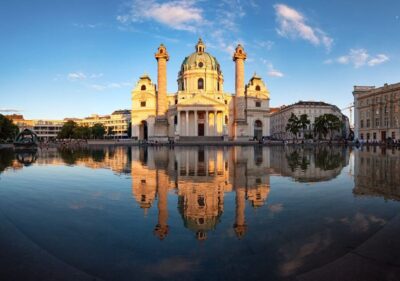
Vivaldi’s Four Seasons Concert in Karlskirche
Read our review →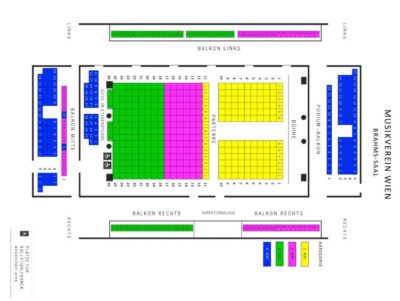
Classical Concert in the World-Famous Musikverein
Read our review →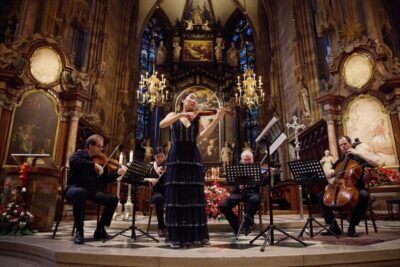
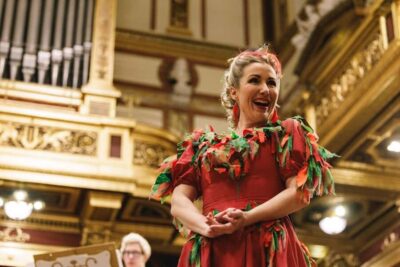
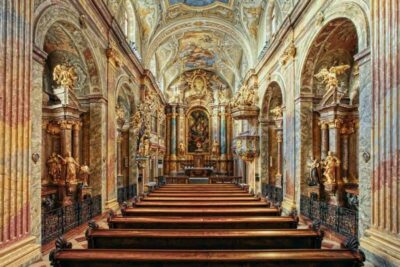
Classical Concert in St. Anne’s Church (Annakirche)
Read our review →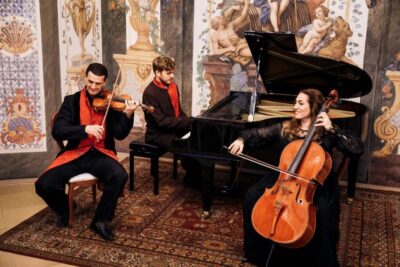
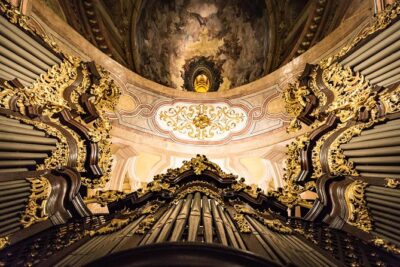
Vienna Classical Concert at St. Peter’s Church
Read our review →Browse the lists this tour appears in