
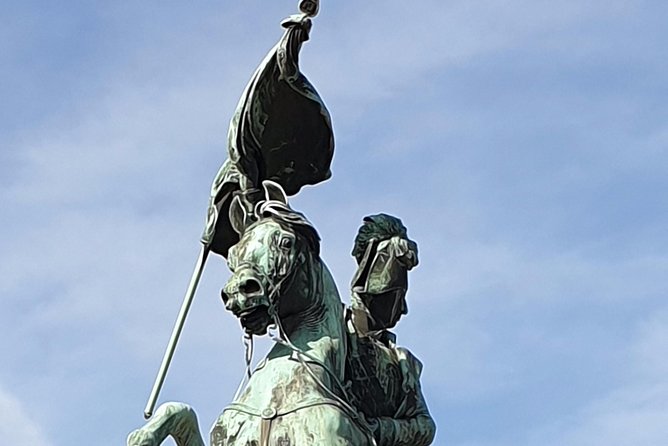
Reviewed · VIENNA
Italian VIENNA
Vienna’s Italian side is easy to miss. This walking tour brings it forward through artists, architects, composers, preachers, adventurers, and military leaders who helped shape the city. I like the fresh angle: you see familiar central Vienna with a new question in mind, where did Italy leave its mark?
I also like the guide-led format. Mario Casalone mixes historical facts with anecdotes and everyday observations, and his style is described as friendly, patient, and lively. The main consideration is weather: this is an outdoor walking experience, and poor conditions can lead to a date change or cancellation.
In This Review
- Key points about Italian Vienna
- Why Vienna’s Italian side is worth seeing
- Beginning at Minoritenkirche on Minoritenplatz
- Reading the Hofburg through Italian eyes
- From palace stories to Stephansplatz
- Mario Casalone’s way of telling the story
- How the $33.20 price works for you
- What to bring and how to prepare
- Who will get the most from this walk
- Booking, cancellation, and group details
- Should you book Italian Vienna?
- FAQ
- How long does Italian Vienna last?
- How much does the tour cost?
- Where does the tour begin?
- Where does the tour end?
- Which places are included in the itinerary?
- Is admission to the stops included?
- Can I cancel for a full refund?
Key points about Italian Vienna
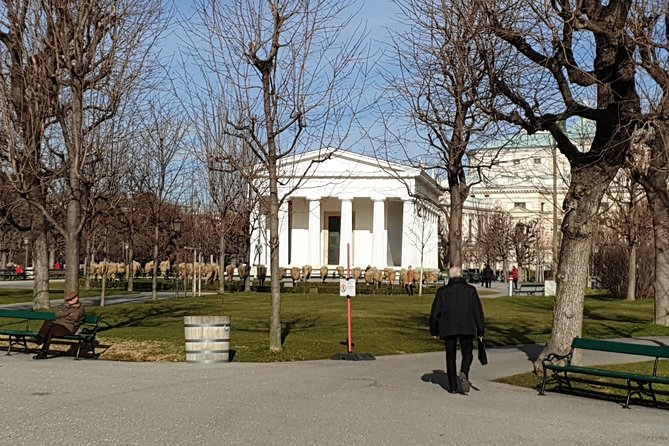
- Italian roots at Minoritenkirche: Begin at the church connected with Vienna’s Italian community.
- A new view of the Hofburg: Learn about the imperial palace and its links to Italian art and architecture.
- Mario Casalone’s storytelling: Expect history, curious details, and answers to questions rather than a dry lecture.
- A 2.5-hour central walk: Start at Minoritenplatz and finish at Stephansplatz, in the heart of Vienna.
- Good value at $33.20: The price pays for a focused, specialist walking tour rather than admission to major sights.
- A small-to-medium group: The maximum is 30 people, so the experience remains a guided group walk, not a private tour.
Why Vienna’s Italian side is worth seeing
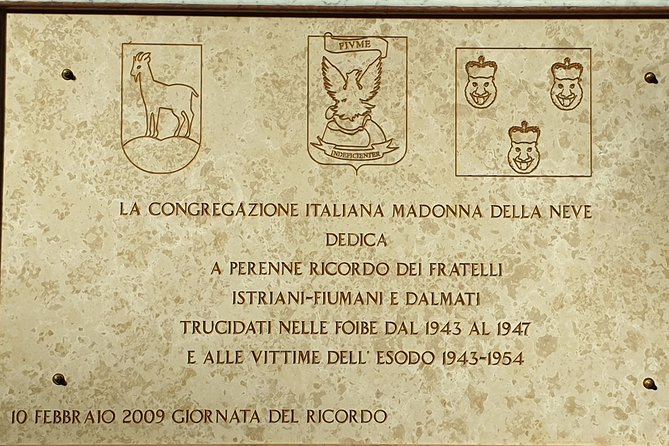
Most first-time visits to Vienna focus on the Habsburgs, grand palaces, music, coffeehouses, and imperial ceremony. Those themes matter, but they can make the city feel sealed inside its own Austrian identity. Italian Vienna offers a different frame.
The tour explains how Italian artists, architects, builders, and cultural figures helped give Vienna its Baroque appearance. That idea is useful because it turns a sightseeing walk into a lesson in exchange. Vienna was not shaped by one country or one style alone.
I like tours built around a question rather than a list of monuments. Here, the question is how much of Vienna’s central image owes something to Italy. You may pass buildings you have already seen, but the guide gives you another reason to stop and look.
The experience also reaches beyond architecture. Its themes include composers, preachers, adventurers, and military leaders. That wider range keeps the walk from becoming a narrow survey of façades. You get social stories and personalities along with art and buildings.
Mario Casalone is the guide named for this experience. His approach is especially suited to this subject because the theme depends on connections. You need someone who can move from a building to an artist, from an artist to a political setting, and then to a small anecdote that makes the point memorable.
Other Vienna tours people book alongside this one:
- Vienna: Vivaldi’s Four Seasons Concert in Karlskirche
★ 4.7 · 14,951 reviews - Vienna: Spanish Riding School Training
★ 3.9 · 9,281 reviews - Vienna: Skip-the-cashier-desk-line Giant Ferris Wheel Ride
★ 4.5 · 7,859 reviews
Beginning at Minoritenkirche on Minoritenplatz
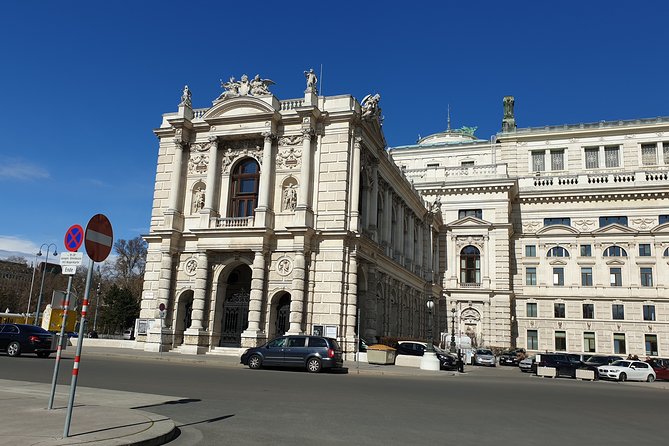
The meeting point is Wiener Minoritenkirche, at Minoritenplatz 2A in Vienna’s first district. This is not just a convenient starting marker. The church is identified as the church of Vienna’s Italian community, making it a fitting place to begin a tour about Italian influence.
The opening stop lasts about 15 minutes, with admission listed as free. That short time tells you how to approach the experience. You are not signing up for a long interior visit or a quiet period of private study. You are there to hear why this place matters and to use it as the first link in a larger story.
Minoritenkirche gives the theme a human side. Italian influence in Vienna was not only a matter of imported artistic fashion. It was also tied to people, communities, faith, work, and movement between cities. A church connected with an Italian community makes that connection easier to understand.
You should arrive ready to listen outside and move on when the guide does. The available information does not promise a detailed interior tour, so I would not book this expecting extended access to every part of the church. The value is in the explanation and the place’s role in the route.
This is also a helpful meeting point for a central Vienna walk. The activity is near public transportation, and the route remains within the historic center. Even so, allow enough time to reach Minoritenplatz without rushing. A walking tour starts best when you are already settled and ready for the first story.
Reading the Hofburg through Italian eyes
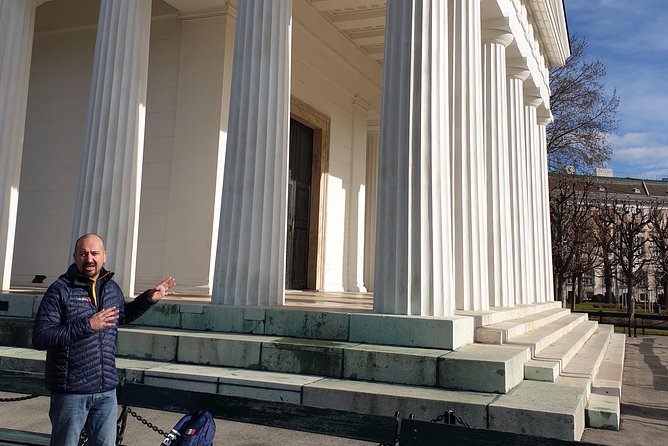
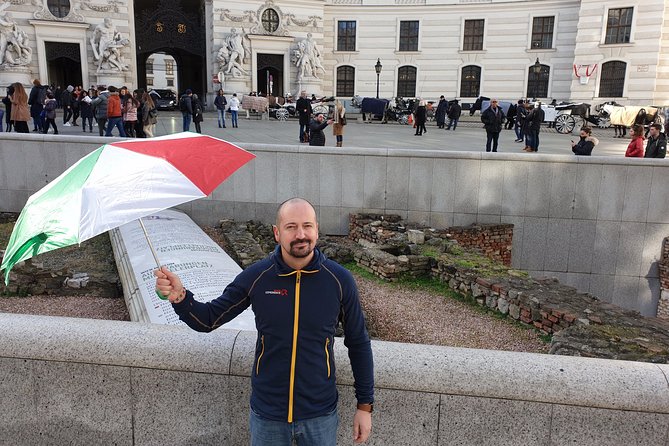
The second named stop is the Hofburg, Vienna’s imperial palace. About 15 minutes are allotted here, and admission is listed as free. The palace is associated with the Habsburg family and the apartments of Emperor Franz Joseph and Empress Elisabeth, widely known as Sissi.
For many people, the Hofburg is already high on the Vienna itinerary. That makes this stop particularly useful. Instead of repeating a standard palace introduction, the Italian Vienna theme asks you to consider the artistic and architectural forces behind the imperial image.
The Hofburg is a large and layered complex, so a 15-minute stop cannot cover every wing, room, and period. That is a limitation, but it is also the point of the tour. You get a focused interpretation rather than a full palace admission experience.
I would treat this stop as an outside explanation unless the guide tells you otherwise. The supplied details identify the Hofburg as a stop and list admission as free, but they do not promise entry into the imperial apartments. If you want to tour those rooms, plan that as a separate visit.
The palace works well in the route because it connects style with power. Italian artists and builders did not work in isolation. Their work appeared in settings where rulers wanted to express order, prestige, and authority. The guide’s job is to make those links clear without turning the walk into a stack of names and dates.
The feedback about Mario repeatedly points to his skill with Italian architects and master builders. That is exactly the kind of focus that can sharpen your view of the Hofburg. You may begin by seeing an imperial complex, then start noticing the artistic choices that support its message.
From palace stories to Stephansplatz
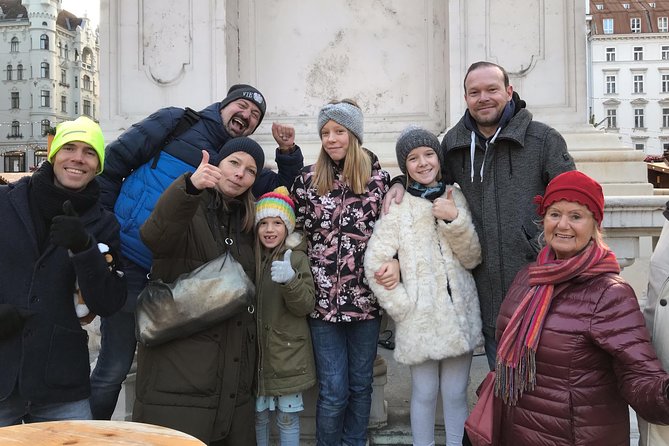
The tour ends at Stephansplatz, the square beside St. Stephen’s Cathedral. This gives the walk a strong finish in one of Vienna’s central public spaces.
The end point is practical. You are not left at an out-of-the-way address or required to retrace the entire route. From Stephansplatz, you can continue sightseeing, find food, use public transportation, or visit the cathedral area on your own.
The supplied itinerary names Minoritenkirche and the Hofburg, but the overall description promises a journey through the most important places connected with Italian Vienna. That means the route is broader than two quick stops, though the exact sequence between them is not spelled out in detail.
I would keep your expectations clear: this is a themed walking tour, not a complete survey of every Italian contribution to Vienna. Its strength is the guided connection between places. The route gives you a central walk, while Mario supplies the historical thread.
Ending at St. Stephen’s Cathedral also reinforces the contrast between Vienna’s many layers. You begin at a church tied to the Italian community and finish at one of the city’s best-known landmarks. Along the way, the focus shifts from community and cultural links to imperial architecture and the wider identity of the city.
A different side of Vienna on the same trip:
- Vienna: Schönbrunn Palace & Gardens Skip-the-Line Tour
★ 4.7 · 7,739 reviews - Vienna: Light of Creation Votive Church Immersive Light Show
★ 4.8 · 6,779 reviews - Vienna Spanish Riding School Guided Tour
★ 4.7 · 6,765 reviews - Vienna: Classical Concert in the World-Famous Musikverein
★ 4.6 · 6,673 reviews
Mario Casalone’s way of telling the story
The strongest part of this experience appears to be the guide. Mario Casalone is described as prepared, welcoming, good-humored, and patient with questions. Those qualities matter on a history walk because the subject can easily become too technical.
The feedback also highlights a balance between facts and trivia. That is a good mix for a two-and-a-half-hour tour. Too many dates can blur together, while only anecdotes can leave you without a clear understanding of the subject. Mario’s style appears to move between both.
His storytelling is also described as expressive, with charm and a touch of Italian personality. That does not mean the tour is a performance without substance. The repeated praise centers on his ability to explain Italian artists, architects, and builders in a way that remains easy to follow.
You should feel free to ask questions as the walk develops. Patience in answering questions is specifically noted, and that can make a major difference in a group setting. If you are curious about a building, a person, or a connection between Vienna and Italy, this is the sort of tour where asking is part of the experience.
The language situation deserves a little care. The available information includes feedback written in Italian and German, but it does not give a fixed list of tour languages. Check the booking details before paying if language is important to you.
How the $33.20 price works for you
At $33.20 per person, this is priced above a casual free walking tour, but the comparison is not entirely fair. You are paying for a specific subject, a named guide, and roughly two and a half hours of interpretation in central Vienna.
The value depends on your interests. If you already know Vienna’s major sights and want a new angle, the price is reasonable. A specialist theme can change how you understand several places during the rest of your trip. You are paying for context that is difficult to get from a quick photograph or a basic guidebook caption.
The price is less attractive if you mainly want entry to the Hofburg or Minoritenkirche. Admission is listed as free at both stops, and the experience does not include a clearly stated palace or church ticket. Book this for the guide and the story, not for included access to paid interiors.
I also like that the tour ends in the city center. The walk can fit into a day of sightseeing without requiring a separate trip across Vienna. That saves time, though you should still allow for the full 2 hours and 30 minutes rather than assuming it is a quick introduction.
The maximum group size is 30 people. That is not an intimate private walk, but it is limited enough to keep the group within a normal guided-tour scale. If you prefer a very quiet or highly personal experience, the group size is worth noting. If you like the energy of a group but still want a clear theme, it should be manageable.
What to bring and how to prepare
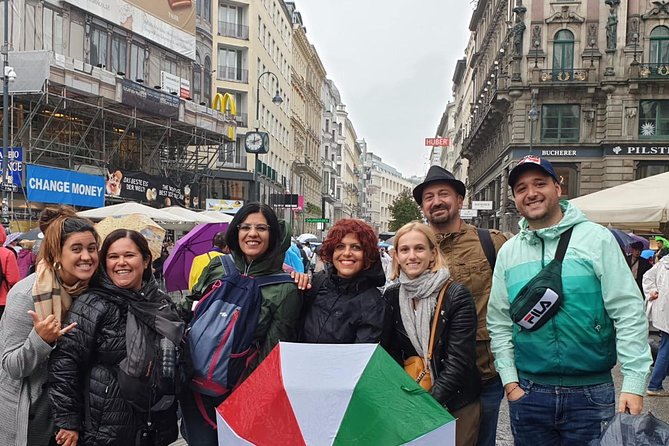
Wear shoes that are comfortable for a city walk. The tour lasts about two and a half hours, and even a route through central Vienna can feel tiring if you are dressed for sitting rather than walking.
Weather deserves special attention. The experience requires good weather, and poor conditions may lead to a different date or a full refund. Bring a rain layer when the forecast is uncertain, but do not assume the tour will operate in every condition.
The route is near public transportation, so reaching the starting point should be straightforward. The meeting address is Wiener Minoritenkirche, Minoritenplatz 2A, 1010 Wien. The end is Stephansplatz, 1010 Wien.
A mobile ticket is provided, which means you should have your booking available on your phone. Confirmation is received at the time of booking. I would check the exact start time and meeting instructions before setting out, since the tour depends on everyone gathering promptly.
The activity says most people can participate. No special physical requirements are stated, but this remains a walking experience. If you need detailed information about surfaces, seating, or step-free movement, ask the provider before booking rather than guessing.
Who will get the most from this walk
I would recommend Italian Vienna to anyone who has already seen some of Vienna’s standard highlights and wants a more focused story. It works especially well if architecture, art, church history, music, or the cultural relationship between Austria and Italy interests you.
It also suits Italian-speaking visitors or people with a personal connection to Italy, though the available details do not guarantee a particular language. The tour can add meaning to a Vienna visit that began for another reason, including a trip originally planned around an Italian destination.
First-time visitors can enjoy it too, but I would not make it your only introduction to Vienna. The tour assumes that the central sights matter as part of a bigger picture. Pair it with your own visit to the Hofburg or St. Stephen’s Cathedral if you want interior access and a fuller look at those landmarks.
Families with older children may find the stories more engaging than a formal museum visit, especially if the children enjoy characters and surprising connections. Very young children may find a 2.5-hour history walk demanding, and the details provided do not describe special activities for them.
This is not the best pick if you want a fast photo walk, a palace ticket, or a tour devoted only to Mozart and classical music. Composers are part of the wider theme, but the emphasis covers many kinds of people and Italian influence across Vienna.
Booking, cancellation, and group details
You receive confirmation when you book, and the activity accepts mobile tickets. The maximum group size is 30 people, and most people can participate.
Free cancellation is available if you cancel at least 24 hours before the local start time. Cancellations made less than 24 hours ahead are not refunded, and changes inside that period are not accepted.
The tour may also be canceled if the weather is poor or if the minimum number of participants is not reached. In those cases, you are offered another date or experience, or a full refund.
Those rules are fairly clear, but the weather clause matters more here than it would for an indoor museum visit. If your Vienna schedule is tight, avoid placing this tour on your only available morning unless you have room to move it.
Should you book Italian Vienna?
Book it if you want to see Vienna through its Italian artistic and cultural connections, and if you enjoy a guide who uses anecdotes as well as facts. Mario Casalone’s reported strengths are exactly what this theme needs: clear explanations, humor, broad knowledge of Italian architects and artists, and patience with questions.
The tour offers good value for a central, 2.5-hour experience at $33.20, especially for repeat visitors or anyone who likes history with a strong human angle. Just remember that the listed stops have free admission, so the purchase is for the guided interpretation rather than included palace or church entry.
Skip it if you want extensive interior time, a private walk, or a guaranteed indoor activity in uncertain weather. For the right reader, though, Italian Vienna can make familiar places feel new, which is one of the best reasons to take a city tour.
FAQ
How long does Italian Vienna last?
The tour lasts approximately 2 hours and 30 minutes.
How much does the tour cost?
The listed price is $33.20 per person.
Where does the tour begin?
It begins at Wiener Minoritenkirche, Minoritenplatz 2A, 1010 Wien, Austria.
Where does the tour end?
The tour ends at Stephansplatz, the square beside St. Stephen’s Cathedral in central Vienna.
Which places are included in the itinerary?
The named stops are Minoritenkirche and the Hofburg. Minoritenkirche is identified as the church of Vienna’s Italian community, while the Hofburg is the former imperial palace of the Habsburg family.
Is admission to the stops included?
Admission is listed as free for both Minoritenkirche and the Hofburg stops. The experience details do not promise entry into specific palace apartments or other paid interiors.
Can I cancel for a full refund?
Yes. You can cancel at least 24 hours before the local start time for a full refund. Cancellations or changes made less than 24 hours before the start are not accepted for a refund.
Just added around Vienna
- Private Tour from Vienna to Melk and Dürnstein★ 4.5 · 3 reviews
- Vienna: Johann Strauss 200th birthday anniversary exhibition★ 4.7 · 3 reviews
- Vienna Private Full Day Tour – Tickets to Schönbrunn & Lunch★ 5.0 · 3 reviews
- Private Salzburg Day Trip from Vienna★ 4.0 · 3 reviews
- Vienna: Entry Ticket Belvedere 21 & Contemporary Art★ 4.3 · 3 reviews
- Vienna by Night: Private Evening Food and Drink Tour★ 5.0 · 3 reviews
- Full-Day Private Trip from Vienna to Budapest★ 4.5 · 3 reviews
- 1.5 Hour Cinematic Style Portrait Photoshoot and Tour in Vienna★ 4.5 · 3 reviews