
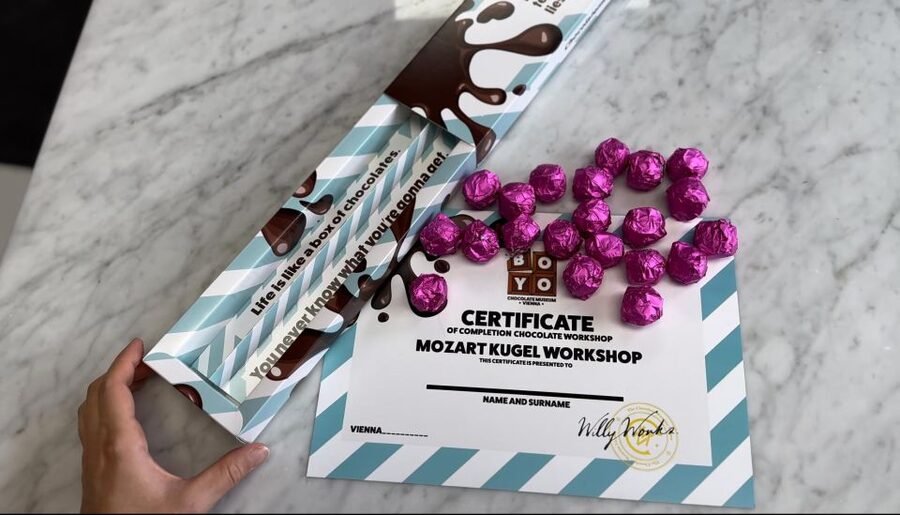
Reviewed · MOZART & STRAUSS CONCERTS
Mozart Kugel Workshop
The best part of this 90-minute workshop is that you do not just taste a Mozart Kugel, you build one from its nutty center outward. You shape hazelnut mixture, pistachio mass, and marzipan, then coat your sweets in milk, white, or dark chocolate.
I like the useful souvenir: 24 handmade treats packed in a pretty box. I also like the warm orange hot chocolate, which gives the class a small historical food lesson rather than making it only a candy-making session.
The main consideration is the nut content. Hazelnuts, pistachios, and marzipan are central to the recipe, so this activity is not suitable for people with nut allergies. It is also offered in English only.
In This Review
- Key Points at a Glance
- What Makes a Mozart Kugel Workshop Worth Your Time
- Arriving at the Chocolate Museum Vienna
- Building the Hazelnut Center
- Adding Pistachio and Marzipan
- Choosing the Chocolate Shell
- Making Maria Antonietta’s Orange Hot Chocolate
- The Take-Home Box of 24 Sweets
- Price, Time, and Overall Value
- Who Will Enjoy This Most
- Practical Advice Before You Book
- Should You Book the Mozart Kugel Workshop?
- FAQ
- Where is the Mozart Kugel Workshop held?
- How long does the workshop last?
- How many Mozart Kugels do I take home?
- Which chocolate coatings can I choose?
- Is the workshop offered in English?
- Is the activity suitable for people with nut allergies?
- Can children attend the workshop alone?
Key Points at a Glance
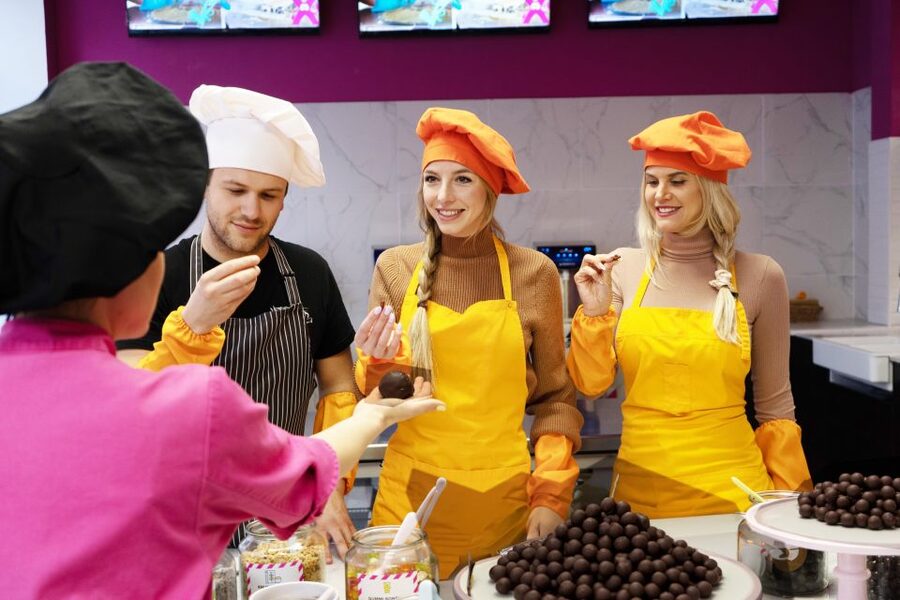
- Make 24 Mozart Kugels: Take home a full box of your own chocolate creations.
- Build the candy in layers: Work with hazelnut, pistachio, marzipan, and a chocolate shell.
- Pick your coating: Choose milk, white, or dark chocolate for the final finish.
- Prepare orange hot chocolate: Make Maria Antonietta’s spiced chocolate drink during the workshop.
- Meet at a colorful museum: The class takes place at the Chocolate Museum Vienna on Schönbrunner Strasse.
- Good for families and couples: The hands-on format has worked well for children, parents, and older adults, but unaccompanied minors cannot attend.
What Makes a Mozart Kugel Workshop Worth Your Time
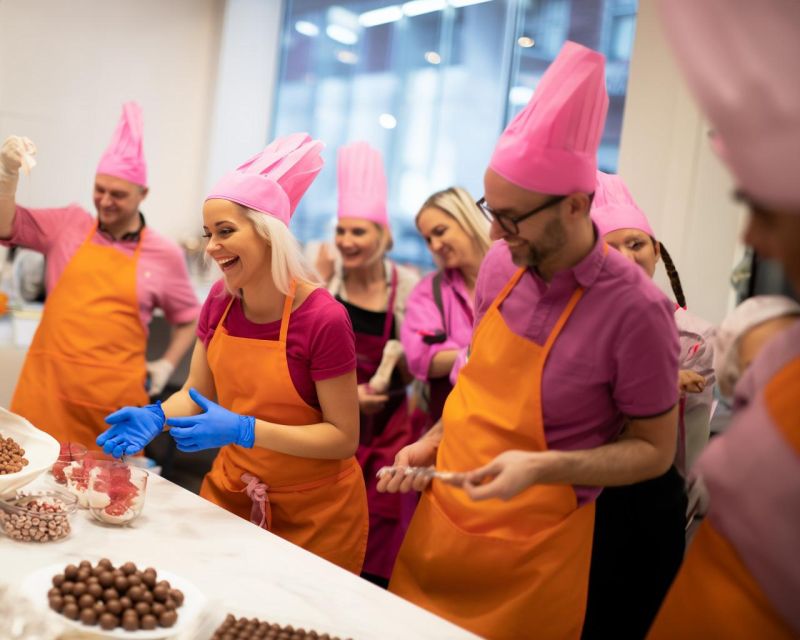
Vienna has no shortage of elegant palaces, grand churches, and formal museums. A chocolate class gives you a different kind of Austrian experience. You work with your hands, make something edible, and leave with a souvenir that does not need bubble wrap.
Mozart Kugel means Mozart ball, a round confection named after Wolfgang Amadeus Mozart. The workshop uses the familiar combination of nuts, marzipan, and chocolate, but asks you to assemble it yourself. That matters because the process explains the sweet better than simply buying a box at a shop.
You see how several strong flavors are balanced. The hazelnut mixture provides the base. Pistachio adds color and a second nut flavor. Marzipan brings sweetness and a smooth texture. The chocolate coating then supplies the finish and helps hold the shape together.
I find this more engaging than a standard tasting. You are not expected to produce perfect sweets on your first try. The point is to learn the sequence, shape the mixture, make your own choices, and enjoy the result.
More Mozart and Strauss evenings:
- Vienna: Mozart Concert at the Golden Hall
★ 4.6 · 3,986 reviews - Vienna: Classical Concert at Mozart’s First House
2,423 reviews - Vienna: Mozart and Strauss Concert at Schönbrunn
★ 4.5 · 2,364 reviews
Arriving at the Chocolate Museum Vienna
The meeting point is the Chocolate Museum Vienna at Schönbrunner Strasse 99, in a charming pink building. That gives you a clear landmark and puts the workshop in a setting designed around chocolate rather than in a generic cooking room.
You should allow enough time to reach the museum before the scheduled start. The activity lasts 90 minutes, so arriving late could cut into the hands-on work. Starting times vary, and you check availability when booking.
The class is taught in English. That is useful for international visitors, but it also means this is not the right pick if you need instruction in another language. The language applies to the workshop guidance and the historical food information.
The space has a colorful, candy-filled feel, which can be especially welcome on a cold or rainy afternoon in Vienna. This is an indoor activity, so it gives you a practical break from sightseeing without turning the whole day into a museum visit.
Building the Hazelnut Center
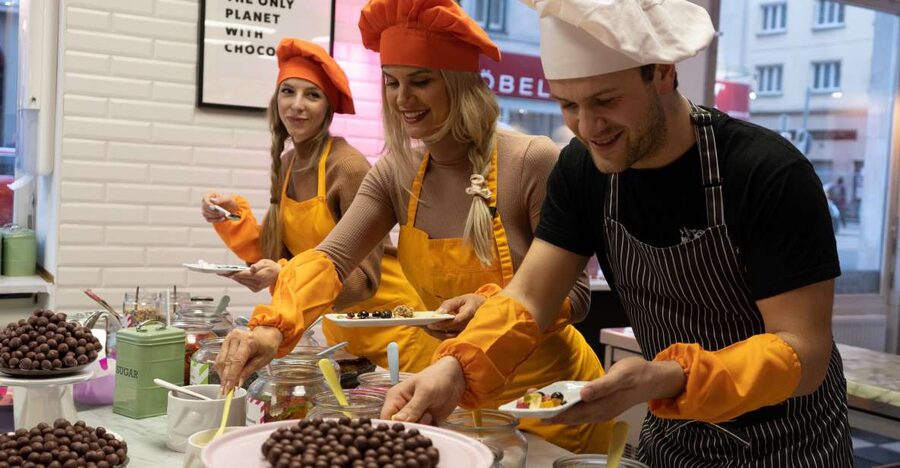
The first stage begins with hazelnuts. Under the chocolatier’s direction, you blend them into the mixture that forms the center of each Mozart Kugel.
This step gives you a sense of the candy’s basic structure. You are not simply dipping premade balls into chocolate. You begin with the inner layer and gradually create the finished sweet.
The hazelnut base is dense and nutty. It needs to be shaped with care so the later layers sit neatly around it. The instructor helps keep the process simple, which is useful if you have never worked with confectionery before.
This is also where the activity gets its hands-on character. Children can practice shaping and handling the mixture, while adults get the satisfaction of learning a small piece of candy craft. One family used the class as an educational activity that also helped a child practice motor skills.
The class is not presented as advanced professional training. You receive expert guidance, tools, and ingredients, but the aim is a relaxed finished product. If your Kugels are not perfectly round, that is part of the charm.
Adding Pistachio and Marzipan
Once the hazelnut center is ready, you wrap it with pistachio mass. This adds another nutty note and creates the colorful middle layer associated with the finished confection.
Next comes marzipan. You mold it around the earlier layers, turning the candy into a compact, layered ball. This part can feel more like simple food sculpture than cooking, which makes it accessible for mixed-age groups.
The order is important. Each layer has its own taste and texture, and the finished Kugel works because those parts are combined in a particular way. The instructor explains the method while you work, so you learn what each ingredient contributes.
You also get room for small personal differences. One person may make a tidy, even sphere, while another creates a slightly more handmade shape. The class is built around making your own box, not producing factory-perfect candy.
That distinction is worth keeping in mind. You are learning a traditional sweet through guided practice, not watching a long professional demonstration from the sidelines.
A few more Vienna tours worth weighing up
- Vienna: Chocolate Workshop in Chocolate Museum w/ Tasting
★ 4.5 · 1,802 reviews - Chocolate workshop in Chocolate Museum Vienna “BO-YO”
★ 4.5 · 352 reviews - Nabiel’s Vienna Cooking Class
★ 5.0 · 234 reviews - Vienna: Traditional Kaiserschmarrn Cooking Class & Tasting
★ 4.5 · 179 reviews
Choosing the Chocolate Shell
The final major choice is the coating. You select milk, white, or dark chocolate, then cover your assembled Mozart Kugels.
This is a simple choice, but it makes the box feel personal. Milk chocolate gives a familiar, gentle finish. White chocolate is sweeter and lighter. Dark chocolate brings a stronger cocoa taste. The information provided for the class does not specify how much of each option is available, so your choice may depend on the session setup.
As the chocolate sets, you choose colorful foil for each creation. The foil is more than decoration. It turns the sweets into individual little souvenirs and makes the box look ready for transport.
You can expect the chocolatier to guide you through the coating process and show you useful tricks. Past instructors have included Jana, Selma, Dimi, and Jelena, with personal, friendly teaching repeatedly praised. Since staffing can change, do not book around a particular instructor unless the provider confirms that person for your date.
The chocolate stage is usually the part people anticipate most, but it is not the entire class. The fun comes from seeing the coating complete all the earlier work.
Making Maria Antonietta’s Orange Hot Chocolate
The second part of the workshop moves from solid chocolate to a warm drink. You prepare Maria Antonietta’s Orange Hot Chocolate using premium chocolate, fresh orange zest, and spices.
This is a nice change of pace after shaping the Kugels. Instead of rushing straight to the take-home box, you pause over a drink that combines chocolate with citrus and spice.
The title connects the recipe to the courtly food culture associated with Maria Antonietta. The workshop uses this drink to add a little culinary history to the session. You do not just receive a cup. You take part in preparing it with the supplied ingredients.
The orange zest should give the hot chocolate a brighter note than a plain cocoa drink, while the spices add warmth. The exact spice blend is not specified, so do not expect a fixed tasting profile beyond chocolate, orange, and spice.
This part is particularly useful if someone in your group is less interested in careful candy shaping. The drink adds another activity and gives the class a more varied rhythm.
The Take-Home Box of 24 Sweets
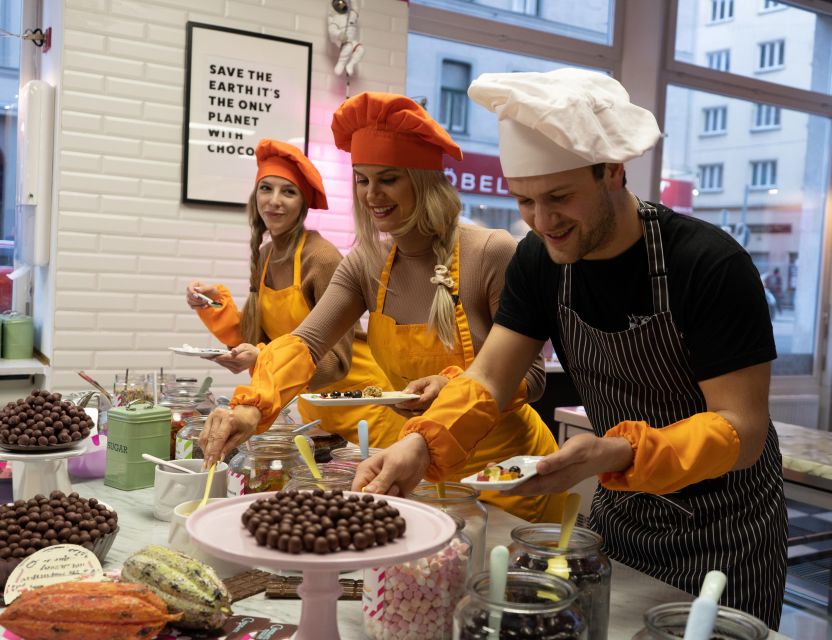
The practical payoff is a box containing 24 Mozart Kugels. You receive a beautiful box for storage and transport, so you do not need to find your own container before continuing around Vienna.
Twenty-four pieces is a generous amount for a single person. You can share them with family, take them back to friends, or spread them out over several days. If you are traveling with a group, the box can function as a ready-made souvenir for people at home.
You should remember that handmade chocolate is still a food item. The supplied information does not give storage temperatures or a shelf life, so ask the chocolatier for current advice before leaving. The box protects the sweets, but it does not remove the need to handle chocolate sensibly during the rest of your trip.
I like this take-home element because it changes the value calculation. You are paying for instruction and an activity, but you also leave with 24 finished treats, a presentation box, and the memory of making them. It is more useful than a souvenir that sits on a shelf and more personal than a standard store-bought box.
You also get to try at least one during the session, according to the experience details and participant accounts. The rest are yours to enjoy later.
Price, Time, and Overall Value
The price is $82 per person for 90 minutes. That is not a cheap snack stop. You should compare it with the cost of a simple chocolate purchase and ask what kind of afternoon you want.
If your only goal is to eat Mozart Kugels, a shop will be faster and less expensive. If you want a guided activity, a warm drink, instruction from a chocolatier, tools, ingredients, a box, and 24 sweets to take home, the price makes more sense.
The workshop also saves you from arranging several separate experiences. The candy-making, hot chocolate, historical context, and souvenir are combined into one short session. For a family, that can be easier than finding an activity that works for different ages.
The format has also suited an older parent and a 75-year-old participant, as well as children accompanied by adults. That suggests the physical demands are manageable, though the provided information does not describe accessibility arrangements in detail. If anyone in your group has mobility or other access needs, ask the provider before booking.
The 90-minute length is another strength. It is long enough to feel like a real activity but short enough to fit between other Vienna plans. You could use it as a rainy-day stop or place it in a lighter half-day schedule.
Who Will Enjoy This Most
I would recommend this class to families, couples, parent and adult-child pairs, and anyone who likes edible souvenirs. It works especially well for a group that wants to do something together rather than sit through another formal explanation.
Children can take part in shaping and decorating, but minors cannot attend without an adult. The activity is in English only, so make sure everyone in your party can follow spoken instructions.
It is also a good fit for repeat visitors to Vienna. If you have already seen the main sights, making a local-style sweet gives you a fresh way to spend part of the day.
Chocolate fans will enjoy the layered recipe and the coating choice. People who dislike nuts or marzipan should skip it, since those ingredients are not minor additions. They are part of the structure of every Mozart Kugel.
You may want to think twice if you prefer polished, highly technical cooking classes. This is a friendly, guided confectionery activity. Its appeal comes from participation, humor, and the box you make, not from earning a professional pastry credential.
Practical Advice Before You Book
Choose your chocolate coating before the session if you already know your preference, but keep an open mind about trying the style you would not normally buy. Since each person gets 24 pieces, you will have enough to share.
Wear clothes you can work comfortably in. The supplied information does not list a dress code, but chocolate work is naturally less forgiving than a museum visit.
Plan the rest of your day around the fixed 90-minute appointment. Starting times depend on availability, and the activity is held at Schönbrunner Strasse 99 rather than at one of Vienna’s central landmark squares.
If your plans are uncertain, the booking terms allow free cancellation up to 24 hours ahead for a full refund. You can also reserve now and pay later, which is useful when your Vienna schedule is still shifting.
Most important, check the allergy warning honestly. This workshop is not suitable for people with nut allergies. Do not assume that avoiding one topping will solve the problem, since hazelnut and pistachio form key layers in the candy.
Should You Book the Mozart Kugel Workshop?
Book it if you want a hands-on Vienna activity with a clear result at the end. The 24-piece box, choice of chocolate coating, colorful foils, and orange hot chocolate give the 90 minutes plenty of variety.
I would especially choose it for a family day, a rainy afternoon, or a relaxed break from palaces and churches. The warm drink and take-home treats add real value to the price, while the English-speaking instructors keep the process approachable.
Skip it if nuts are a concern, if you need another language, or if you only want to buy a few Mozart Kugels quickly. For everyone else, this is a cheerful and practical way to meet one of Austria’s best-known sweets by making it yourself.
FAQ
Where is the Mozart Kugel Workshop held?
The workshop takes place at the Chocolate Museum Vienna, located at Schönbrunner Strasse 99 in Vienna. The museum is housed in a pink building.
How long does the workshop last?
The activity lasts 90 minutes. Starting times depend on availability.
How many Mozart Kugels do I take home?
Each person receives 24 Mozart Kugel treats to take home in a box provided for storage and transport.
Which chocolate coatings can I choose?
You can choose milk chocolate, white chocolate, or dark chocolate for the coating.
Is the workshop offered in English?
Yes. The instructor-led workshop is offered in English only.
Is the activity suitable for people with nut allergies?
No. The workshop is not suitable for people with nut allergies because the recipe includes hazelnuts and pistachios.
Can children attend the workshop alone?
No. Unaccompanied minors are not allowed. Children must attend with an adult.
Just added around Vienna
- Private Tour from Vienna to Melk and Dürnstein★ 4.5 · 3 reviews
- Vienna: Johann Strauss 200th birthday anniversary exhibition★ 4.7 · 3 reviews
- Vienna Private Full Day Tour – Tickets to Schönbrunn & Lunch★ 5.0 · 3 reviews
- Private Salzburg Day Trip from Vienna★ 4.0 · 3 reviews
- Vienna: Entry Ticket Belvedere 21 & Contemporary Art★ 4.3 · 3 reviews
- Full-Day Private Trip from Vienna to Budapest★ 4.5 · 3 reviews
- Vienna by Night: Private Evening Food and Drink Tour★ 5.0 · 3 reviews
- Private Tour of Viennese Art in the Leopold Museum: Klimt, Schiele, Kokoschka★ 5.0 · 3 reviews
Mozart & Strauss Concerts, compared.
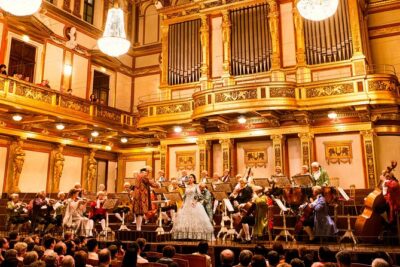
Vienna Mozart Concert in Historical Costumes at the Musikverein
Read our review →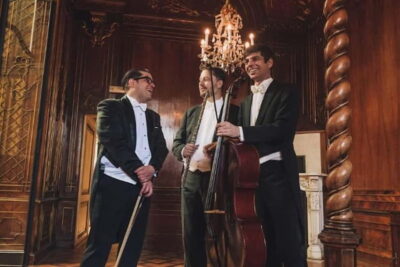
Mozart & Strauss Classical Concert at Börse Palace
Read our review →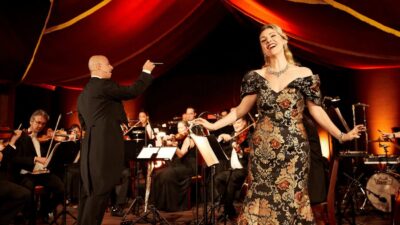
Browse the lists this tour appears in