
Reviewed · CITY TOURS
Mystery rally Vienna: The scary city
Vienna’s old center takes on a darker mood in this two-hour mystery rally, where real churches, former execution sites, tombs, and haunted stories become pieces of a citywide puzzle. You move from station to station, hunting for clues and cracking a final code rather than following a standard walking-tour script. I like the active format and the way it sends you to places with genuine historical weight. I also like the friendly competitive edge: the aim is to solve the puzzles before the other teams.
The main drawback is that you are largely on your own once the instructions begin. The staff stays nearby and can help, but this is not a guided history tour with a storyteller explaining every stop. Good weather is required, and the non-refundable booking terms make the forecast worth checking before you commit.
In This Review
- Key points at a glance
- Why Vienna’s first district makes a good mystery game
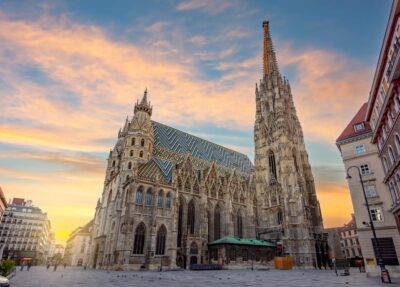
- St. Stephen’s Cathedral: beginning beneath the Gothic towers
- St. Michael’s Church and the old stories beneath the center
- Am Hof: a square with a grim public past
- Altes Rathaus: Vienna’s civic layers
- Augustinerkirche: a quieter religious stop
- Ankeruhr Clock: a striking change of mood
- The Hofburg: imperial grandeur with a darker edge
- Neuer Markt: the final stretch toward the code
- How the team format really works
- Price, timing, and practical value
- Who will enjoy the scary city rally
- Should you book Mystery Rally Vienna?
- FAQ
- Where does the mystery rally begin?
- Where does the activity end?
- How long does the rally take?
- What language is offered?
- What materials are provided?
- Is this a guided walking tour?
- How many people are in each team?
- What locations are included?
- Is the experience suitable in bad weather?
- Can I cancel for a refund?
Key points at a glance
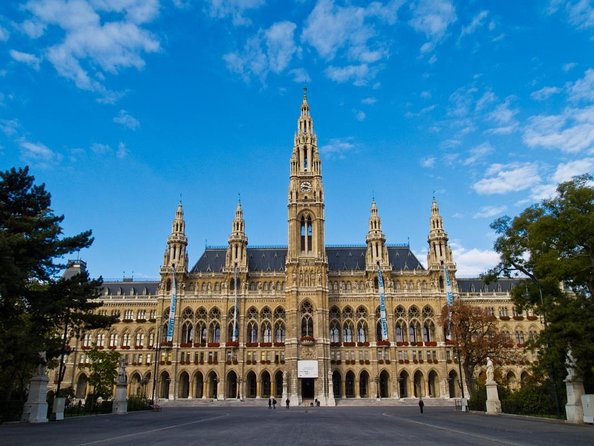
- Eight central Vienna stops: The route links St. Stephen’s Cathedral, the Hofburg, Neuer Markt, the Ankeruhr, and several historic churches and squares.
- Real morbid history: Former execution grounds, old tombs, haunted houses, and documented mysteries give the puzzles a darker setting than a typical city game.
- Small-team format: Each booking forms one team, so your group works together rather than being mixed into a large guided crowd.
- A sporty contest: Speed matters, and the aim is to solve the clues before the other teams.
- Staff support without a full-time guide: You receive the materials at the start, then rally staff remain reachable if your team gets stuck.
- A sweet finish: Once you crack the hidden code, you open a mysterious chest containing a small sweet surprise.
Why Vienna’s first district makes a good mystery game
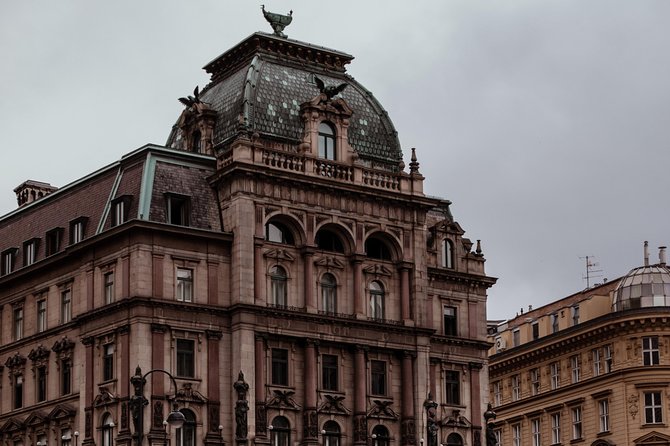
The Innere Stadt is compact, ornate, and full of layers. At street level, you see grand churches, palace façades, busy squares, and polished shopping streets. Beneath that surface are stories of executions, burials, illness, religious conflict, and grim punishments.
That contrast gives this activity its character. You are not solving clues in a made-up haunted village. The locations are real and historically documented, even if the game presents them with a playful vampire-and-ghost theme. I find that mix more effective than a generic horror attraction because the setting does much of the work.
The rally begins at Stephansplatz 5, beside St. Stephen’s Cathedral. From there, your team receives a card, puzzle book, and bag of mysterious clues and materials. The organizers explain how the game works, then you set out independently.
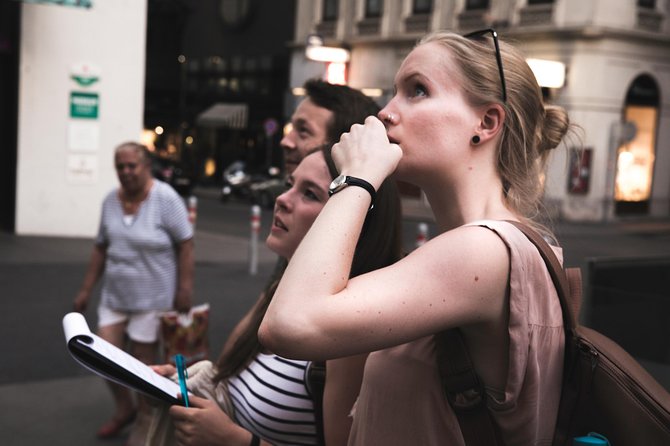
Plan to stay alert. You may need to examine details on buildings, connect information from more than one location, and arrange the materials in the right way. The game rewards teamwork and careful reading, but it also has a physical side. You walk between stops and try to keep ahead of the other teams.
More self-guided hunts around Vienna:
- Vienna: Scavenger Hunt Self-Guided Tour
★ 4.7 · 83 reviews - Fun & mobile scavenger hunt through Vienna
★ 4.5 · 17 reviews - Vienna Scavenger Hunt and Highlights Self Guided Audio Tour
★ 4.5 · 13 reviews
St. Stephen’s Cathedral: beginning beneath the Gothic towers
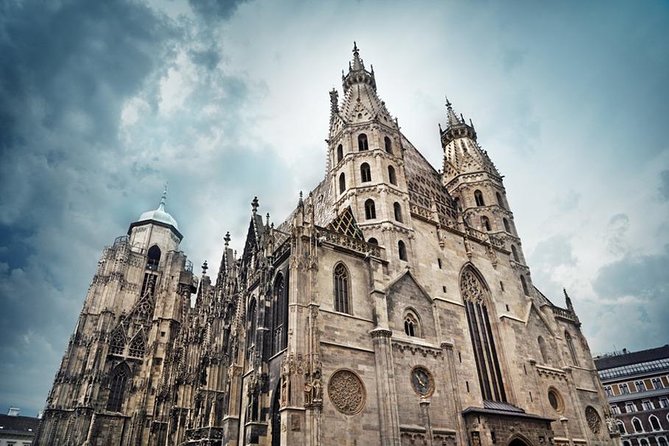
St. Stephen’s Cathedral is an imposing place to begin. Its patterned roof, tall Gothic form, and central position make it one of Vienna’s easiest landmarks to find. For this rally, it also sets the tone: the city’s religious monuments are not only beautiful, but tied to centuries of death, burial, ritual, and public fear.
You should expect the first stop to introduce the style of the game. Study the surroundings, read the puzzle material closely, and resist the urge to rush before your team understands the method. The large square can be active, so keeping your group together matters.
The cathedral is a strong opening point because you can reach it easily by public transportation, and it gives you a clear reference if your team needs to regroup. The tradeoff is that the square may feel more urban and crowded than spooky. The eerie mood comes from the subject matter and the clues, not from a quiet, theatrical set.
St. Michael’s Church and the old stories beneath the center
St. Michael’s Church adds another religious setting, but the mood shifts as you move through the historic center. Vienna’s churches often connect to burials and long-forgotten customs, making them natural locations for a puzzle built around ghosts and the dead.
At this stage, I would pay attention to how your team divides the work. One person can read the puzzle book, another can check the card and clue bag, and others can look closely at the surroundings. A team that discusses each answer will usually do better than four people solving separate pieces without sharing information.
This is also where the rally’s self-guided nature becomes clear. No guide is walking beside you to explain the church or translate the story into a short lecture. The materials lead you, and the nearby staff can help if you do not know what to do. That works well for groups that enjoy figuring things out. It is less suitable if you want detailed architectural or religious commentary at every stop.
Am Hof: a square with a grim public past
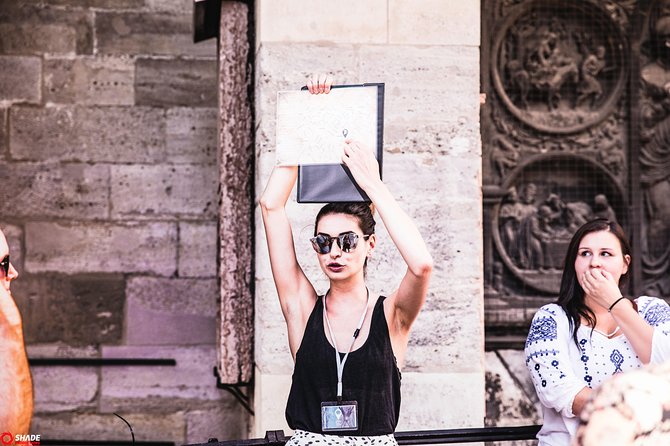
Am Hof is one of the places where the title of the rally makes the most sense. The square is linked to Vienna’s old public life, including punishment and execution. A grand urban space can feel very different once you know that it also served darker civic purposes.
The puzzle gives you a reason to look at the square rather than simply cross it. That is one of the best features of this format. Instead of moving past another historic place while following a guide, you stop, inspect, compare, and search for the information needed to continue.
You should keep an eye on the clock here. The game is designed with a competitive spirit, and the original German review highlighted the sporty challenge of solving the riddles before the other teams. You do not need to treat it like a race, but the experience is livelier if your group agrees on answers and keeps moving.
A few more Vienna tours worth weighing up
- Vienna: Guided Walking Tour of City Center Highlights
★ 4.7 · 4,989 reviews - Vienna: City Cruise with Optional Lunch
★ 3.4 · 3,982 reviews - Vienna: City Cruise
★ 3.3 · 2,978 reviews - Vienna: Guided Walking Tour of City Highlights & Hidden Gems
★ 4.9 · 2,180 reviews
Altes Rathaus: Vienna’s civic layers
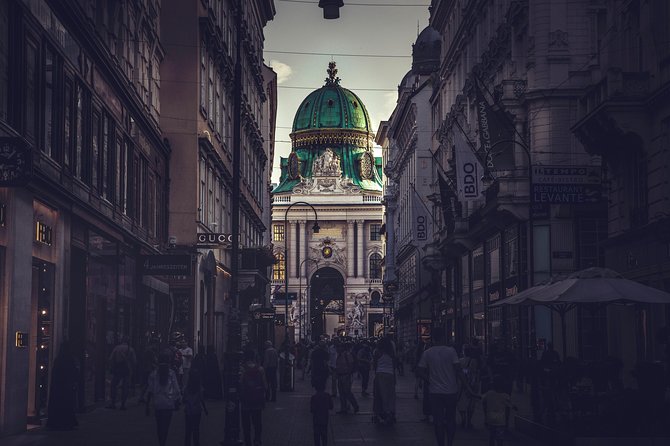
The Altes Rathaus brings the route back to public power and municipal history. Older civic buildings help explain how Vienna functioned before the modern capital took shape. In a mystery game, the setting also reinforces the idea that secrets can be hidden in ordinary-looking streets.
This stop may appeal to you if you like puzzles that require observation rather than physical strength. The activity does not promise a theatrical performance or special effects. Its tools are the city itself, printed materials, and your group’s ability to connect clues.
Because the route passes through the center, you may encounter regular city activity along the way. That is worth knowing if you expect an isolated ghost walk. The reward is a more authentic experience: you are investigating historic places in the middle of Vienna, not entering a purpose-built haunted attraction.
Augustinerkirche: a quieter religious stop
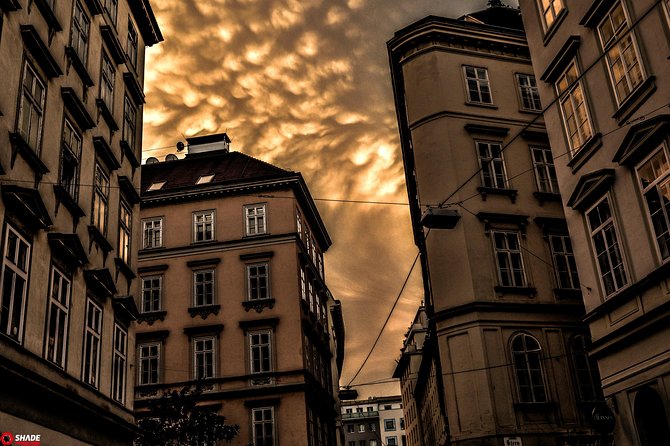
Augustinerkirche continues the church-and-tomb thread. Religious buildings can feel especially fitting for a ghost-themed game because they bring together burial traditions, memorials, and stories of people who shaped Vienna’s past.
You might find that the route’s repeated use of churches gives the experience a clear theme, but it can also make the middle section feel less varied if you prefer constant changes of scenery. The route balances these interiors and façades with open squares and civic landmarks, yet it remains firmly focused on the historic first district.
This is a good point to check that your team has kept all its materials together. The card, puzzle book, and bag of clues are central to the game. Losing or mixing up a piece could make an otherwise solvable puzzle harder.
Ankeruhr Clock: a striking change of mood
The Ankeruhr, or Anchor Clock, adds a decorative mechanical landmark to the route. Compared with the churches and former execution sites, it offers a lighter visual change. Its presence keeps the rally from feeling like a sequence of similar religious monuments.
For you, this stop is a reminder that the game is built around close attention. Look at the landmark, compare it with the information in your materials, and discuss what might be relevant. The activity asks you to notice the city in a practical way.
The clock is also a useful orientation point in the center. Still, the rally does not provide a detailed schedule for each stop, so your group controls the pace. If you spend too long debating one clue, you may lose the competitive advantage. If you rush, you may miss the detail that makes the answer clear.
The Hofburg: imperial grandeur with a darker edge
The Hofburg is the route’s biggest setting. Vienna’s former imperial palace complex gives the rally a grand backdrop, but the game’s theme encourages you to look beyond ceremony and polished façades. Power, punishment, religious authority, and public spectacle are all part of the city’s older story.
I like this stop because it widens the experience beyond the usual haunted-house idea. The horror here is not only about ghosts. It is also about how people lived, ruled, worshiped, judged, and died in earlier centuries.
The Hofburg area can be busy and spread out, so listen carefully to the opening instructions and keep your group organized. You will be moving independently, not following a guide holding a sign. That freedom is part of the fun, but it requires your team to manage its own route and materials.
Neuer Markt: the final stretch toward the code
Neuer Markt brings the activity back to an open urban square and helps set up the final phase. By now, your team should have gathered enough information to see how the clues fit together. The last section is less about sightseeing and more about checking your logic.
This is where the competitive format can become especially enjoyable. The German review describes the rally as both fun and sporty, with teams trying to solve the puzzles before the others. That makes it a good choice for friends, families with older children, or colleagues who like a little friendly pressure.
If your group prefers a slow, reflective walk, the time limit and competition may feel like a distraction. You can still enjoy the locations, but the activity asks you to play rather than simply observe.
How the team format really works
Each booking forms one small team. You are not placed into a large group with strangers, and your team moves independently from station to station. The maximum overall capacity is 70 people, but the key point is that the game is organized around separate booking groups.
At the beginning, rally management explains the process and provides the game sheet, card, puzzle book, and bag of letters and materials. After that, staff remain close enough to assist if questions arise or you get stuck.
That arrangement gives you privacy and flexibility. You can discuss answers at your own pace, and you do not have to hear a guide speak over a large crowd. On the other hand, you need to be comfortable reading instructions and making decisions without constant direction.
The final reward is simple but satisfying. Once the solutions are checked and your team cracks the hidden code, you open a mysterious treasure chest with a small sweet surprise inside. It is not a major prize, but it gives the activity a clear finish.
Price, timing, and practical value
The listed price is $42.01 per person for about two hours. I would judge the value by what you want from Vienna. If you want a traditional guided tour with rich commentary about art, architecture, and politics, this is not the best use of your money. If you want an active group activity that gives you a reason to explore eight central locations, the price is easier to justify.
You are paying for the game design, printed materials, staff support, and the chance to turn a city walk into a shared challenge. The historic sites themselves are part of the public city setting, not exclusive attractions included with admission.
The average booking lead time is 18 days, so do not assume you can always arrange it at the last minute. Confirmation is sent within 48 hours, subject to availability. The experience is offered in English, and no alcoholic beverages are included.
You should also take the weather rule seriously. The activity requires good weather, and poor conditions can lead to a new date or a full refund. The standard cancellation policy is strict: the experience is non-refundable and cannot be changed for any reason if you cancel or request an amendment. That makes travel insurance or a careful schedule useful, especially during unsettled weather.
The meeting point is Stephansplatz 5, 1010 Vienna, and the activity ends back at the meeting point. It is near public transportation, service animals are allowed, and most people can participate.
Who will enjoy the scary city rally
I would recommend this for:
- Friends who like escape rooms, clue hunts, and friendly competition
- Families whose children are old enough to read and solve puzzles
- Couples who want an active alternative to a standard walking tour
- Colleagues looking for a team-building activity in central Vienna
- History-minded people who enjoy discovering darker stories behind famous places
I would be more cautious about booking it for very young children, since the supplied details do not specify an age range. The themes include ghosts, vampires, executions, tombs, and morbid city history, so consider your group’s comfort level.
It may also disappoint you if you want a guide constantly explaining each landmark. The staff support the game, but the format is independent. You need to enjoy working things out for yourself.
Should you book Mystery Rally Vienna?
Book it if you want to explore Vienna’s first district with a puzzle in your hands and a little pressure to beat another team. The route uses famous sights such as St. Stephen’s Cathedral and the Hofburg, but it also points you toward darker locations and stories that a regular sightseeing walk might skip.
Skip it if you prefer a relaxed, lecture-style tour, dislike competitive games, or cannot commit to a weather-dependent, non-refundable booking. For the right group, though, the combination of documented morbid history, eight central stops, independent exploration, and a final treasure chest makes this a distinctive way to spend two hours in Vienna.
FAQ
Where does the mystery rally begin?
It begins at Stephansplatz 5, 1010 Vienna, Austria.
Where does the activity end?
The activity ends back at the meeting point.
How long does the rally take?
The activity lasts approximately two hours.
What language is offered?
The rally is offered in English.
What materials are provided?
You receive a card, a puzzle book, and a bag containing mysterious clues and materials.
Is this a guided walking tour?
No. After a short explanation at the beginning, teams move independently from station to station. Rally staff remain nearby and can assist if needed.
How many people are in each team?
The game is played in small teams, with one team created per booking referral.
What locations are included?
The route includes St. Stephen’s Cathedral, St. Michael’s Church, Am Hof, the Altes Rathaus, Augustinerkirche, the Ankeruhr Clock, the Hofburg, and Neuer Markt.
Is the experience suitable in bad weather?
No. The activity requires good weather. If it is canceled because of poor weather, you will be offered another date or a full refund.
Can I cancel for a refund?
The experience is non-refundable and cannot be changed for any reason. If the provider cancels because of poor weather or because the minimum number of participants is not met, you will be offered another date, another experience, or a full refund.
Just added around Vienna
- Private Tour from Vienna to Melk and Dürnstein★ 4.5 · 3 reviews
- Vienna: Johann Strauss 200th birthday anniversary exhibition★ 4.7 · 3 reviews
- Vienna Private Full Day Tour – Tickets to Schönbrunn & Lunch★ 5.0 · 3 reviews
- Private Salzburg Day Trip from Vienna★ 4.0 · 3 reviews
- Vienna: Entry Ticket Belvedere 21 & Contemporary Art★ 4.3 · 3 reviews
- Full-Day Private Trip from Vienna to Budapest★ 4.5 · 3 reviews
- Vienna by Night: Private Evening Food and Drink Tour★ 5.0 · 3 reviews
- Semi-Private Tour: Central Europe &Balkans from Vienna to Athens★ 5.0 · 3 reviews
City Tours, compared.
Guided Walking Tour of City Center Highlights
Read our review →
Guided Walking Tour of City Highlights & Hidden Gems
Read our review →
Skip-the-Line Schonbrunn Palace Guided Tour and Vienna Historical City Tour
Read our review →
Browse the lists this tour appears in