
Reviewed · WALKING TOURS
Vienna: Guided Walking Tour of City Center Highlights
Vienna’s center is compact, but its story is not. In two hours, this walking tour ties imperial palaces, Lipizzaner horses, coffee-house customs, medieval lanes, and St. Stephen’s Cathedral into one useful first look at the city. You get the grand sights, plus a turn into Blutgasse, a narrow old district many visitors might otherwise miss.
I like the strong first-day value: at $25, you get a licensed guide and a clear introduction before deciding which palaces, churches, and museums deserve your own time. I also like the guides’ storytelling style. Alex, Sandra, Wolfgang, Stephan, Sarah, and others are praised for humor, local detail, and answers that go beyond memorized dates.
The main consideration is sound. This is a public tour, and a headset is not included. Some groups are small and easy to hear, but one group of 13 found it hard to catch every word, so stay close to the guide and ask for a repeat when city noise gets in the way.
In This Review
- Key points at a glance
- Why this two-hour walk works as a first look at Vienna
- Starting near the Sacher Hotel
- The Hofburg and the Habsburg center
- The Spanish Riding School and its Lipizzaner horses
- Vienna’s coffee houses, explained properly
- A turn through the Blutgasse district
- Ending beneath St. Stephen’s Cathedral
- Guide style and group experience
- Weather, pace, and practical value at $25
- Who should book this Vienna walking tour?
- FAQ
- How long does the walking tour last?
- What language is the tour in?
- Where does the tour start?
- Does the tour enter the Hofburg?
- Can I see the Lipizzaner horses?
- Is hotel pickup available?
- Is the tour wheelchair accessible?
- Can I cancel for a refund?
- My booking advice
Key points at a glance
- Imperial Vienna without admission fees: See the Hofburg complex and Spanish Riding School from the outside, with history and context from a guide.
- A useful coffee-house lesson: Learn how Vienna’s traditional cafés fit into local life, not just where to order a cake.
- Blutgasse adds a quieter turn: The route leaves the main parade of sights for one of the old center’s more atmospheric lanes.
- A strong introduction for first-time visitors: The tour gives you a map in your head and ideas for what to revisit later.
- Guide quality is the biggest strength: Alex, Sandra, Wolfgang, Stephan, Sarah, and Verena are among the guides praised for clear English, humor, and lively stories.
- Plan for weather and city noise: The tour is outdoors, and no tour guide system is supplied.
Why this two-hour walk works as a first look at Vienna
I would place this tour near the start of a Vienna visit. The route covers the historic center’s main themes without asking you to spend half a day indoors or commit to a large museum program. You see where the Habsburg rulers worked, where Lipizzaner horses are trained, how coffee houses shaped city life, and where medieval Vienna still peeks through.
The timing is sensible. A 1.5 to 2-hour walk is long enough to cover real ground but short enough to leave room for lunch, a museum, or a return visit to a favorite stop. You are not paying for entry tickets, transport, or a meal. You are paying for a guide who can connect the buildings around you.
That distinction matters in Vienna. The Hofburg can look like a grand collection of façades if you do not know how its parts fit together. The Spanish Riding School can seem like another ornate building unless someone explains its place in the former imperial court. A good guide turns an impressive street scene into a readable one.
The experience has earned a 4.7 rating from 4,989 reviews, with repeated praise for guides who keep the group engaged. That pattern is important here because a walking tour rises or falls on the person holding the group’s attention. The strongest guides appear to use jokes, personal touches, old photographs, and quick answers to make the past easier to follow.
More walking tours in Vienna:
- Vienna: Vienna Central Cemetery Guided Walking Tour
★ 4.8 · 3,307 reviews - Vienna: Guided Walking Tour of City Highlights & Hidden Gems
★ 4.9 · 2,180 reviews - Vienna: Viennese Underworld Guided Walking Tour
★ 4.7 · 1,865 reviews
Starting near the Sacher Hotel
The usual starting area is near the Sacher Hotel, though the exact meeting point depends on the option you book. That location puts you close to the center of Vienna from the first minute, with no long transfer out to a distant neighborhood.
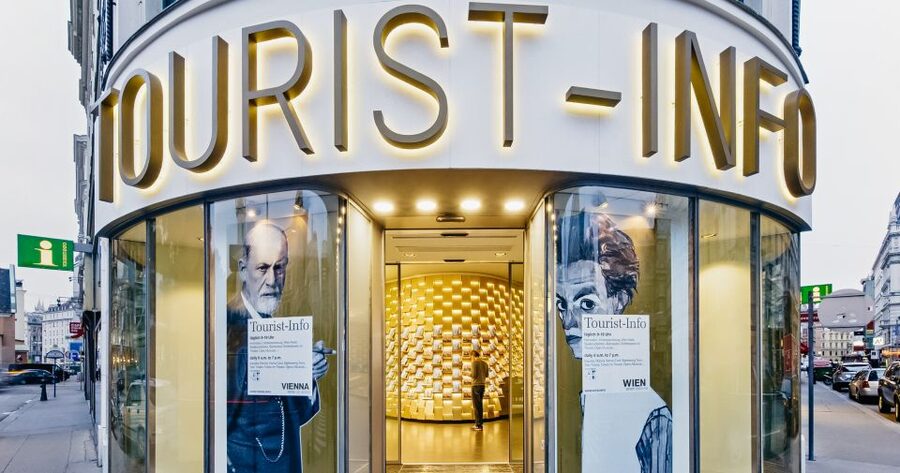
Check the meeting instructions carefully before setting out. One practical tip is to wait directly outside the Information Shop if that is the meeting location for your departure. The center has many walking tours operating near the same grand buildings, and one person specifically found it difficult to identify the correct group without a flag or other clear marker.
This is a public tour, so other people may join your group. A private group is available, and the private option can include hotel pickup and drop-off on foot. That does not mean a vehicle transfer. It means the guide meets you at your Vienna hotel and walks with you to and from the tour area.
Once the walk begins, expect a steady outdoor route rather than a series of formal stops with long breaks. You will listen, look up at façades, move through streets, and pause for explanations. Wear shoes suited to city pavement, and keep your phone ready for quick photos, but do not expect unlimited picture time at every point.
The Hofburg and the Habsburg center
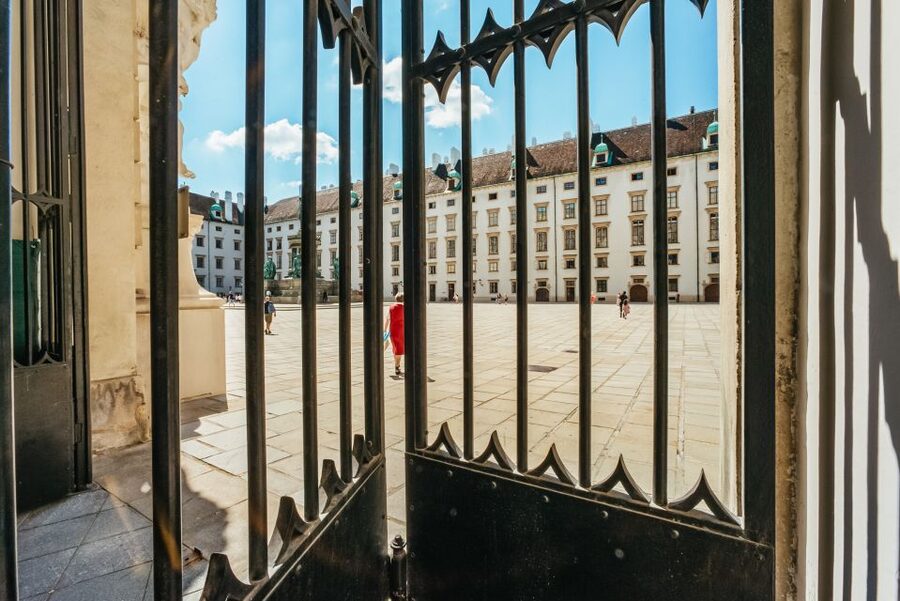
The Hofburg is the route’s main history lesson. This former principal palace of the Habsburg dynasty grew into a large complex, so the exterior alone gives you plenty to examine. The guide’s job is to explain how this imperial center shaped Vienna and why so many monuments, statues, and ornate buildings cluster around it.
You will not enter the Hofburg on this tour. That keeps the price down and the pace moving, but it also sets a clear limit. If you want the Imperial Apartments, museums, or other paid sections, you need a separate ticket and another visit.
I see the exterior visit as a good choice for a first orientation. You can take in the scale of the complex, learn the basic Habsburg story, and then decide if you want a more focused indoor tour. Guides tend to give the dynasty plenty of attention, so you should expect strong coverage of emperors and empresses.
One useful caveat is that the historical emphasis may lean toward the imperial period. That is a major part of Vienna’s story, and it explains much of what you see in the center. Still, if your main interest is modern Vienna, Roman Vienna, or the city’s post-imperial decades, tell the guide what you want to know. Some guides cover the story from the Roman era to the present, but the main weight remains on the Habsburg years.
The best guides make this section feel human rather than merely royal. Wolfgang is praised for adding small details and adapting explanations to the people in his group. Alex is praised for clear stories and humor. Verena is described as especially passionate about Vienna’s history and art. Those details suggest the experience can feel personal, not like a recorded lecture.
The Spanish Riding School and its Lipizzaner horses
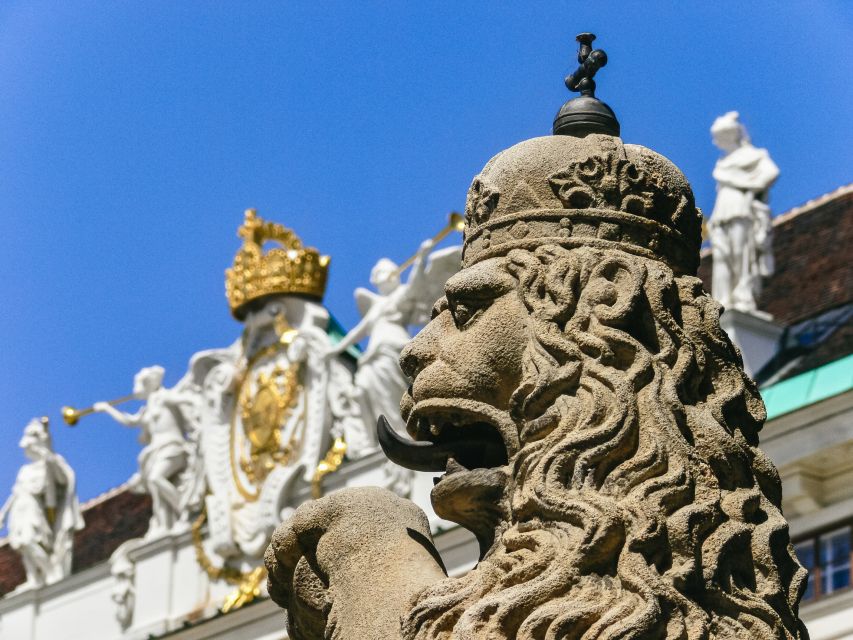
The walk continues to the Spanish Riding School, the famous institution where Lipizzaner horses are trained. Again, you are viewing the site from outside rather than attending a riding display or entering the facilities.
That matters when you plan your day. If you specifically want to see a performance or training session, this walk will not replace that ticketed experience. What it does provide is context: why the school belongs in the story of the imperial court, and how the horses fit into Vienna’s public image.
The exterior stop also gives you a chance to appreciate the surrounding architecture without the pressure of a scheduled indoor visit. Your guide can point out details that are easy to miss when you simply walk past. Keep your expectations focused on explanation and sightseeing, not horse access.
This is one of the tour’s most appealing combinations: a very recognizable Vienna sight paired with information that helps you understand its purpose. You get a headline attraction, but the visit stays quick enough to keep the rest of the old town in view.
A few more Vienna tours worth weighing up
- Vienna Spanish Riding School Guided Tour
★ 4.7 · 6,765 reviews - Vienna: Bus & Schönbrunn Palace Skip-the-Line Guided Tour
★ 4.3 · 2,802 reviews - Vienna: Tickets for Mozarthaus Vienna with Audio Guide
★ 4.2 · 2,344 reviews - Classic Vienna: 3-Hour Guided Bike Tour
★ 4.7 · 1,846 reviews
Vienna’s coffee houses, explained properly
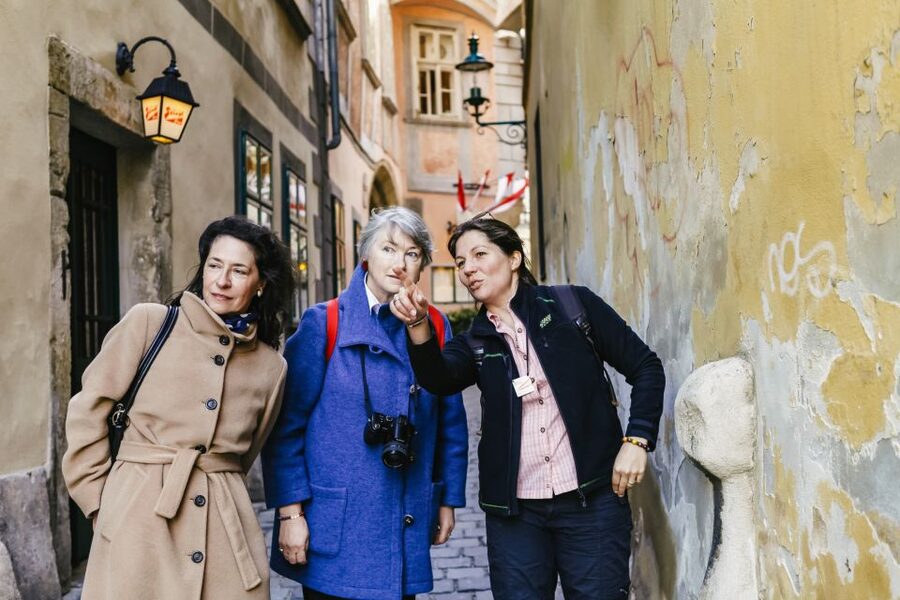
The coffee-house section adds local life to a route otherwise dominated by palaces. Vienna’s cafés are not just places to grab caffeine and leave. They are part of the city’s social and cultural identity, and the guide explains the traditions surrounding them.
The supplied details do not promise a café stop, a drink, or a pastry, so do not book this expecting refreshments to be included. Think of this part as a cultural explanation while walking past or near some of the city’s famous coffee houses. You can return later and order your own coffee if the guide’s recommendations catch your interest.
I like this stop because it breaks up the imperial story. A city is more than its rulers and monuments. Coffee houses show how people spent time, met friends, read, talked, and made the center feel like a lived-in place.
It is also a useful moment to ask questions. You might want to know how the café tradition differs from an ordinary restaurant, which customs still matter, or which places fit your budget and mood. The guides are repeatedly praised for taking questions, so this is a good section for joining the conversation rather than simply listening.
A turn through the Blutgasse district
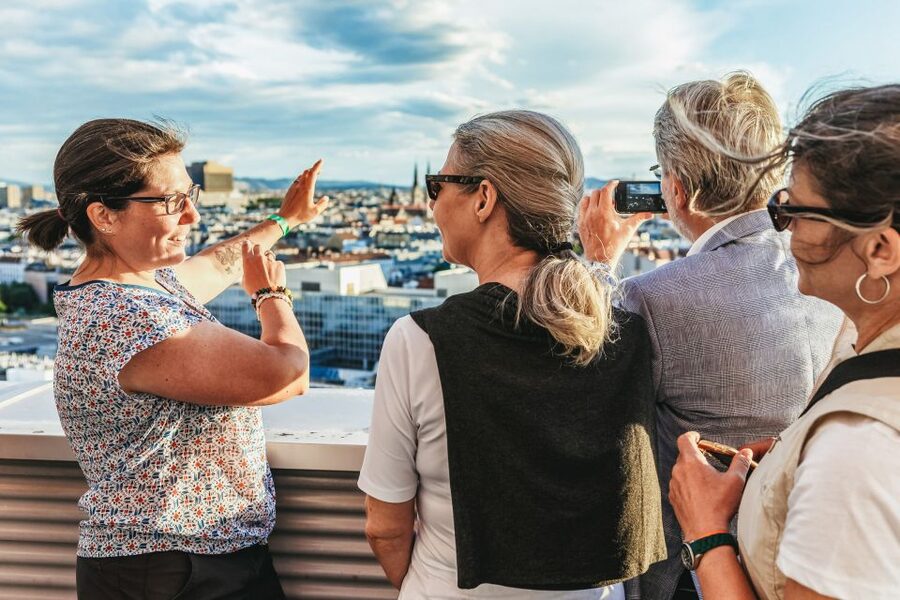
The route then leaves the most obvious sightseeing path and enters the Blutgasse district. This is a smart change of pace. After the large Hofburg buildings and formal riding-school setting, narrower streets offer a glimpse of Vienna’s older urban shape.
Do not expect a long neighborhood tour. The full experience lasts about two hours, and Blutgasse is one part of a wider route. Its value is in the contrast. You see how the old center shifts from imperial scale to tight lanes and smaller details within only a few minutes of walking.
This is where a local guide earns the fee. A person walking alone might pass through without knowing why the area matters or what to look for. The guide can give the lane a place in the city’s story and point out details that would otherwise blur into the background.
The route’s mix of famous sights and less obvious corners is one reason I would choose it over a simple palace-only introduction. You get the photographs people expect from Vienna, but you also get a little time in streets that feel less arranged for grand display.
Ending beneath St. Stephen’s Cathedral
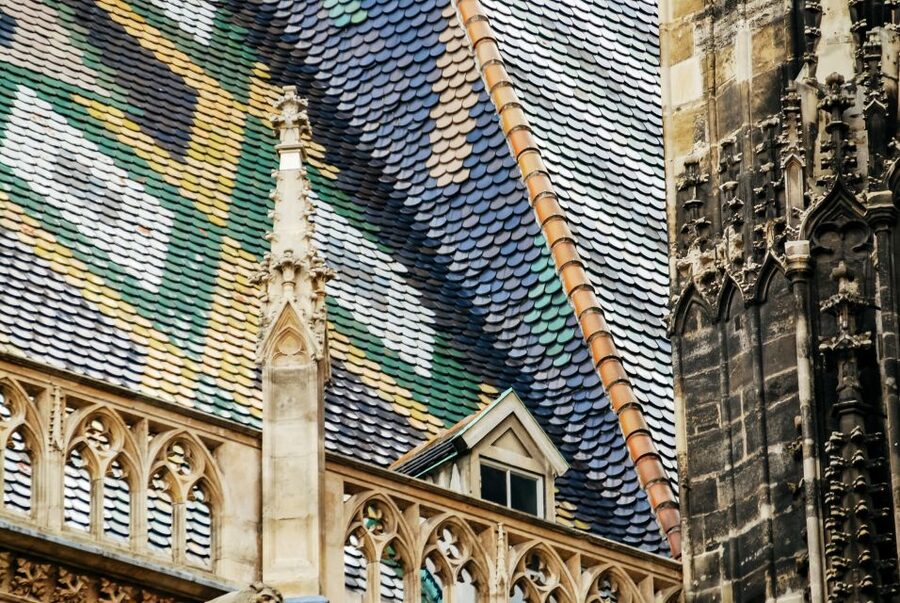
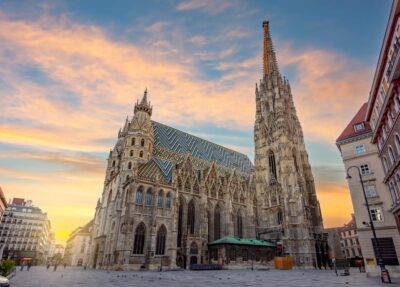
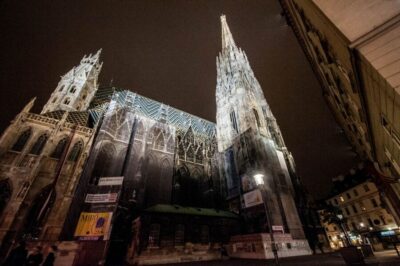
The final view is St. Stephen’s Cathedral, Vienna’s most famous church and one of the best orientation points in the center. Ending here gives the walk a clear finish and puts you in a useful location for continuing your day.
The tour focuses on the exterior and the legends connected with the cathedral. That is a good fit for a short city walk. You get the building’s visual impact, the stories that make it memorable, and a chance to decide if you want to return for a longer look inside.
The cathedral is also a practical endpoint. From here, you can continue exploring the old town, find a coffee house, or retrace part of the route at your own speed. One of the tour’s best uses is as a launch pad: listen for places you want to revisit, then come back when you have more time for photos or an indoor visit.
Do not expect a long photography pause at every landmark. One person found the guide was working to keep the group on schedule and allowed little time for pictures. If photography is your main goal, use the tour to learn the layout, then return later with your camera.
Guide style and group experience
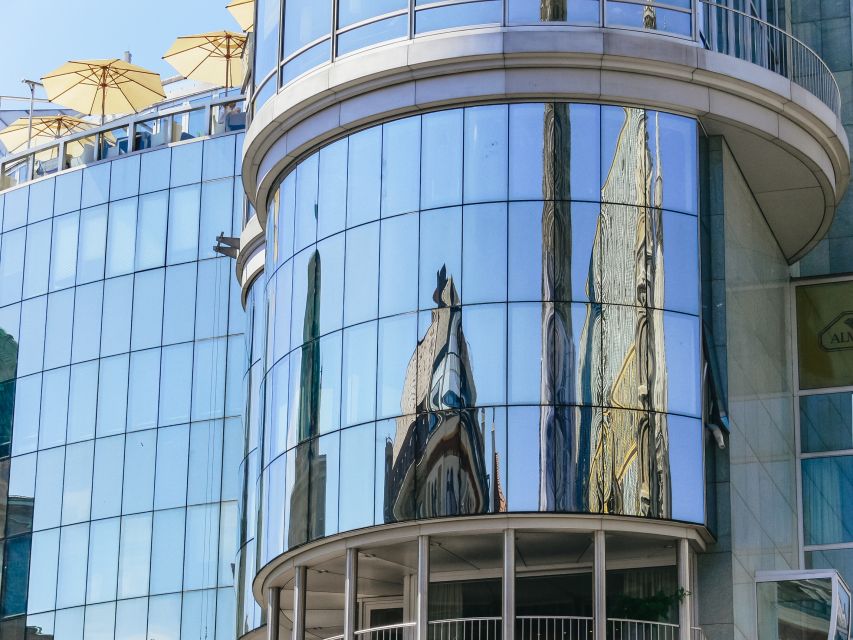
The guide is the deciding factor, and the names attached to the strongest experiences include Alex, Sandra, Wolfgang, Stephan, Sarah, Margareta, Verena, Johann, Lukas, and Leonora. The praise is consistent in a few areas: clear explanations, good English, humor, local perspective, and a willingness to answer questions.
Sandra is repeatedly described as friendly, funny, and well prepared. Wolfgang receives praise for keeping attention over more than two hours and using photographs to make difficult material easier to grasp. Alex is often described as a strong storyteller, while Stephan is praised for combining facts with an approachable sense of humor.
You cannot choose a particular guide from the information provided, so treat the names as examples of the range rather than a guarantee. The guide roster may vary by departure.
Group size also changes the feel. Some departures are small enough for easy questions and relaxed conversation. A public group can be larger, and without headsets, hearing becomes harder near traffic or crowds. Stay near the guide, especially during explanations, and ask where to stand before the next stop.
The tour is wheelchair accessible, though it remains a walking experience through an active city center. If you need a private pace or hotel meeting, check the private option when booking.
Weather, pace, and practical value at $25
At $25 per person, this is a good-value orientation tour. You cover major sights, receive historical context, and get suggestions for what to explore next without paying admission to places you may not want to enter. The cost is especially reasonable if this is your first time in Vienna and you want a clear framework before spending money on palace or museum tickets.
The price is less compelling if you already know the center well or want extended interior visits. This is not a specialist architecture walk, a food tour, or a full Habsburg museum experience. Its purpose is broad coverage and useful context.
Plan for changing weather. The route is outside, and the walk has gone ahead in heavy rain and on very hot days. Guides have adapted by finding shade during heat, but you should still bring suitable clothing, water, and shoes. The experience does not include a headset, hotel transport for the standard option, Hofburg admission, food, or drinks.
You can cancel up to 24 hours before the start for a full refund, and the reserve-now, pay-later option keeps your plans flexible. Starting times vary, so check availability for the date you want.
Who should book this Vienna walking tour?
Book it if you want a well-priced first orientation that covers the city center’s major sights and gives you a few places to revisit. It suits first-time visitors, couples, families, and solo visitors who prefer a human guide to a map or audio app.
It is also a good choice for anyone who likes history with a little humor. The guides often make the imperial material easier to follow with stories and personal touches rather than a long list of dates.
Skip it if your priority is entering the Hofburg, watching Lipizzaner training, or sitting down for a café meal during the tour. You will see the Hofburg and Spanish Riding School from outside, learn about coffee-house culture, walk through Blutgasse, and finish at St. Stephen’s Cathedral, but the indoor experiences require separate plans.
FAQ
How long does the walking tour last?
The tour lasts about two hours, with the stated duration ranging from 1.5 to 2 hours.
What language is the tour in?
Live tours are offered in English or German.
Where does the tour start?
The meeting point can vary by booking option. The standard route starts near the Sacher Hotel, and some meeting instructions may direct you to wait outside the Information Shop.
Does the tour enter the Hofburg?
No. The tour admires the Hofburg complex from outside. Admission to the Hofburg is not included.
Can I see the Lipizzaner horses?
The route visits the Spanish Riding School, where Lipizzaner horses are trained, and allows you to view the site from outside. A performance or training admission is not included.
Is hotel pickup available?
Hotel pickup and drop-off on foot is available if you select the private option.
Is the tour wheelchair accessible?
Yes, the activity is listed as wheelchair accessible.
Can I cancel for a refund?
Yes. You can cancel up to 24 hours in advance for a full refund. A reserve-now, pay-later option is also available.
My booking advice
I would book this tour early in a Vienna visit, ideally on your first day in the center. At $25, it gives you the city’s main imperial sights, a useful lesson in coffee-house culture, a quieter walk through Blutgasse, and a strong finish at St. Stephen’s Cathedral.
Stay close to the guide, confirm the meeting point, and bring weather protection. If you want a broad, entertaining introduction rather than ticketed interiors, this is an easy choice. If you want palace rooms, horse performances, or lots of time for photographs, use the walk as your orientation and plan those activities separately.
Just added around Vienna
- Private Tour from Vienna to Melk and Dürnstein★ 4.5 · 3 reviews
- Vienna: Johann Strauss 200th birthday anniversary exhibition★ 4.7 · 3 reviews
- Vienna Private Full Day Tour – Tickets to Schönbrunn & Lunch★ 5.0 · 3 reviews
- Private Salzburg Day Trip from Vienna★ 4.0 · 3 reviews
- Vienna: Entry Ticket Belvedere 21 & Contemporary Art★ 4.3 · 3 reviews
- Full-Day Private Trip from Vienna to Budapest★ 4.5 · 3 reviews
- Vienna by Night: Private Evening Food and Drink Tour★ 5.0 · 3 reviews
- 1.5 Hour Cinematic Style Portrait Photoshoot and Tour in Vienna★ 4.5 · 3 reviews
Walking Tours, compared.
Guided Walking Tour of City Highlights & Hidden Gems
Read our review →
Vienna Historic Center Small Group Walking Tour
Read our review →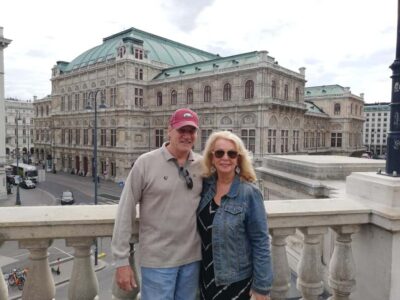
Ghosts and Legends Guided Nighttime Walking Tour
Read our review →
Browse the lists this tour appears in