Reviewed · PRIVATE
Semi-Private Tour: Central Europe &Balkans from Vienna to Athens
This is a grand overland journey across ten Central European and Balkan countries, not a quick city break. You begin with wine country near Lake Neusiedl and finish among the monasteries of Meteora, with Budapest, Sarajevo, Mostar, Kotor, Albania, Kosovo, Ohrid, and Athens along the way. The route gives you a broad look at a region that is still changing fast.
I like the small maximum of 10 people, which should make border crossings, meals, and walking tours easier to manage. I also like the food and drink angle: Serbian and Albanian wine, olive oil, raki, byrek, qofte, farm produce, and a cooking lesson in Kruja make this more than a parade of monuments. The main drawback is the pace. Twenty-one days sounds generous, but this itinerary includes many one-night stops and long drives, so you will trade depth for range.
In This Review
- Key points at a glance
- What this Vienna to Athens route really offers
- Days 1 to 4: From Vienna and Rust to Budapest
- Days 5 to 8: Serbia, wine country, and Belgrade
- Days 9 to 11: Sarajevo, Mostar, and Montenegro’s coast
- Days 12 to 15: Albania, Kosovo, and the best food stops
- Days 16 to 19: Ohrid, Berat, and Gjirokaster
- Days 20 and 21: Ioannina, Meteora, and the finish
- Comfort, group size, and the pace of the road
- Should you book this Balkan adventure?
- FAQ
- Where does the tour begin?
- Where does the tour end?
- How many people can join the tour?
- Are hotels included?
- What meals are included?
- Is transportation included?
- Is the tour physically demanding?
Key points at a glance
- Ten countries in 21 days: Austria, Slovakia, Hungary, Serbia, Bosnia and Herzegovina, Montenegro, Albania, Kosovo, North Macedonia, and Greece all appear on the route.
- A maximum of 10 people: Small-group travel offers more personal contact with the tour leader than a large coach trip.
- Food is part of the story: Sample wine, olive oil, raki, byrek, qofte, local cheese, farm products, and regional dishes.
- UNESCO sites come thick and fast: Budapest, Mostar, Kotor, Ohrid, Berat, Gjirokaster, and Meteora all feature in the journey.
- Private road transport is included: Petrol, road taxes, international car insurance, and tourist taxes are covered.
- Guide quality matters: Sokol received especially warm praise for keeping the trip smooth and enjoyable.
What this Vienna to Athens route really offers
At $7,315.17 per person, this is a major purchase. The price is based on double, twin, triple, or quadruple occupancy in three-star hotels, so you should think of it as a packaged private road trip rather than a luxury tour.
The cost includes private transport, a professional tour leader, hotel pickup in Vienna, hotel drop-off in Athens or transfer to Igoumenitsa Port, 20 breakfasts, selected entrance tickets, tourist taxes, fuel, road charges, and international car insurance. Lunches, dinners, drinks, snacks, souvenirs, and personal spending are extra.
That package has real value if you want one booking to handle a complicated route through ten countries. Driving across this part of Europe involves changing road systems, border crossings, unfamiliar currencies, and hotel logistics. You avoid arranging all that yourself.
Still, the price does not cover most meals, and the hotels are not described as luxury properties. If you prefer to spend several nights in each city and choose your own restaurants, independent travel may offer more control. This tour makes the strongest financial sense for someone who values convenience and a dedicated vehicle.
A previous guest specifically praised the accommodations, food, wine, and Sokol, the guide. That matters on a trip this long. A good leader can make the difference between a tiring transfer and a useful introduction to a new place.
A few more Vienna tours worth weighing up
- Vienna: Private Walking Tour with a Local Guide
★ 4.6 · 1,420 reviews - Vienna: Private Walking Tour with a Guide
★ 4.7 · 962 reviews - Vienna: Wine Tasting Experience in a Private Wine Cellar
★ 4.8 · 413 reviews
Days 1 to 4: From Vienna and Rust to Budapest
Your tour leader collects you at your Vienna hotel at 11 a.m. That is convenient, but it also means your Vienna sightseeing must be finished before the tour begins. The route does not include a full Vienna tour, so plan extra nights if you want to see the city’s museums, palaces, and coffeehouses properly.
The first drive heads south to Rust in Burgenland. This small wine town sits near Lake Neusiedl, a UNESCO-listed area known for its low hills and vineyards. Rust itself offers flower-boxed houses, a preserved old center, small shops, and a relaxed first walk.
You get free time for food and wine in the vineyard area overlooking the lake. The stop is a pleasant introduction to the trip, though admission to specific wine venues and your meal are not included. If you enjoy buying regional crafts, look for items made from natural materials, including wood from wine barrels.
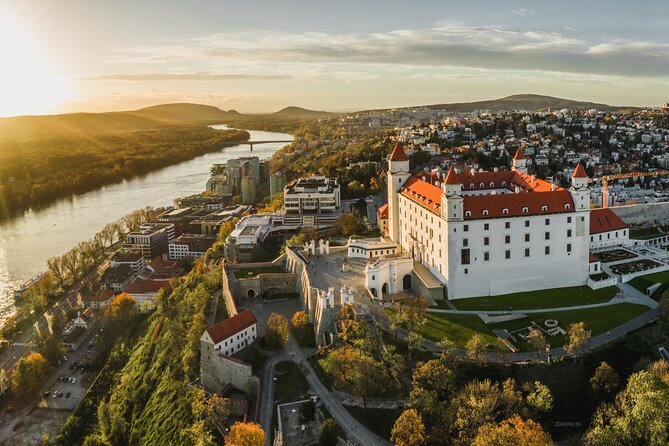
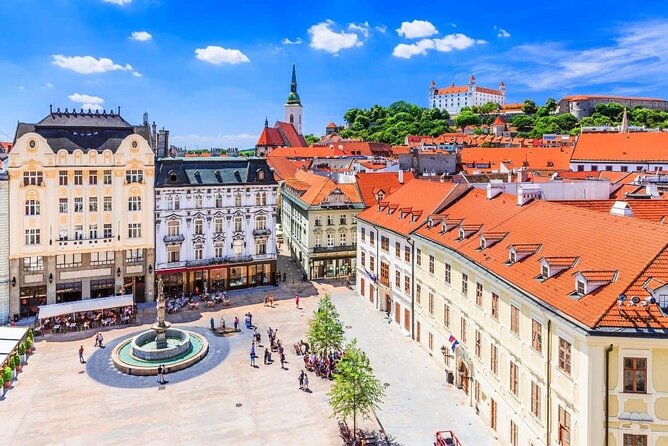
You spend the first night in Bratislava. The next morning brings a compact introduction to Slovakia’s capital. The old town includes the Old Town Hall, churches, cultural buildings, and Michael’s Gate, the only surviving gate from the medieval fortifications.
Bratislava Castle requires a walk uphill, but the view across the Danube and the city is the payoff. The castle visit is included. You also get free time for a traditional coffeehouse, a useful chance to slow down after the first transfers.
On day three, the group crosses into Hungary and stops in Győr, the City of Rivers. Its baroque center, multicolored houses, churches, Town Hall tower, cathedral, synagogue, and pedestrian Baross Gabor Street make it a good short walking stop.
You have time to seek out Hungarian food and the locally mentioned blueberry beer, but meals and drinks are your responsibility. The route then continues to Budapest, where you spend the night.
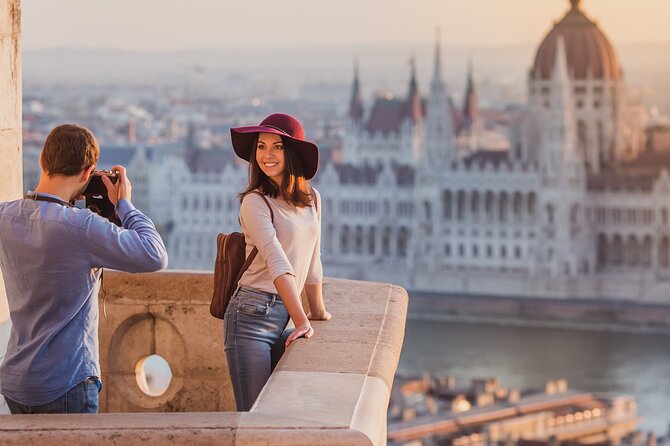
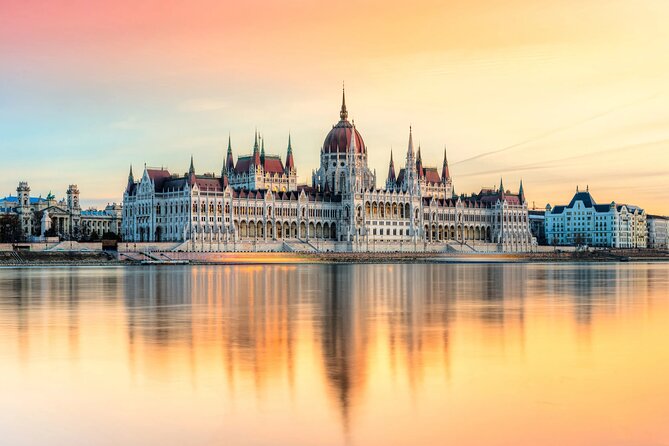
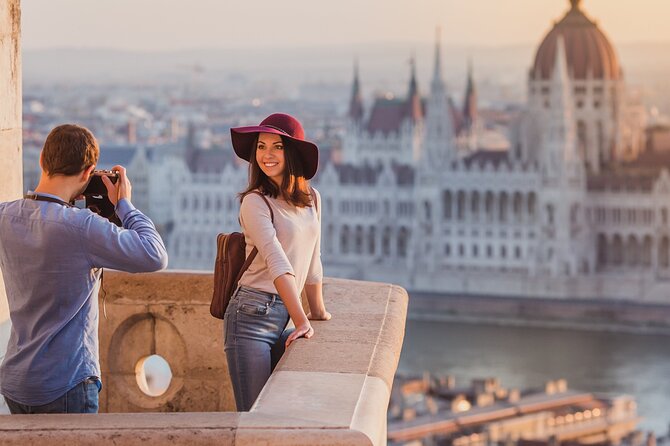
Day four is devoted to Budapest, though the schedule is still brief for a city of this size. You pass St. Stephen’s Basilica and see the Opera, Parliament, Heroes’ Square, bridges, Fisherman’s Bastion, Buda Castle, and a baroque street in the Buda district.
The major strength here is orientation. You see both sides of the Danube and learn how Buda and Pest developed as different parts of one city. The weakness is that several sights are pass-by or exterior visits, and two hours is not enough for a full Budapest experience. The free evening helps. Budapest is especially rewarding after dark, when the riverfront and bridges take on a different mood.
Days 5 to 8: Serbia, wine country, and Belgrade
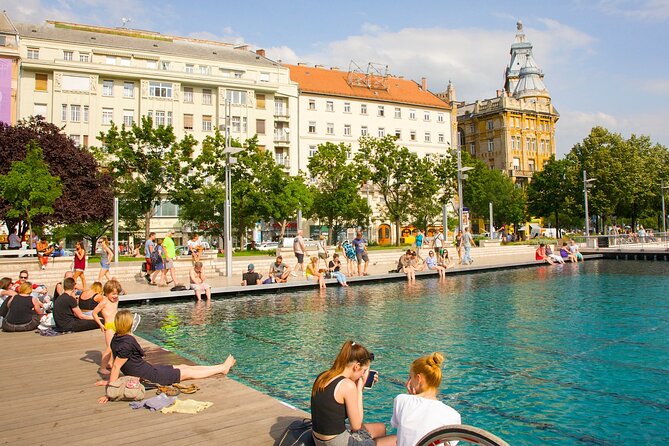
The Serbian section begins in Subotica, a town shaped by its former place in the Austro-Hungarian world. Its City Hall, fountains, park, cathedral, synagogue, colorful facades, and relaxed café culture give you a different architectural flavor from the cities earlier in the trip.
Subotica is also a useful food stop. You have free time for local dishes, coffee, and wine. Entry to some buildings is not included, so ask the tour leader what can be visited during your time.
Novi Sad follows on day six. This is northern Serbia’s cultural center, with Austro-Hungarian and Ottoman influences visible in the streets and buildings. The pedestrian lanes of Zmaj Jovina and Dunavska are easy to explore, while Petrovaradin Fortress provides the signature sight across the Danube.
The three-hour visit is more generous than the time given to some other cities. You can walk, pause for a drink, and get a feel for the town rather than simply taking photographs from the vehicle.
Day seven takes you to Sremski Karlovci, a small baroque town closely tied to Serbian culture and wine production. The Four Lions fountain comes with a local marriage-and-return legend, and the wine cellars give the stop a clear purpose.
This is one of the route’s more appealing food and drink days. You have time to sample regional wines while looking toward the vineyards. Wine tasting is central to the stop, but you should confirm which tastings are covered, since the general inclusions do not list every tasting or meal.
Belgrade arrives on day eight. The tour begins at the fortress and Kalemegdan Park, positioned where the Sava and Danube meet. The Pobednik monument and river views provide a strong introduction before the group walks along Knez Mihailova to Republic Square.
After Belgrade, the road continues to Zvornik in Bosnia and Herzegovina. This is a short stop by the Drina River, mainly for lunch and a walk. It breaks up the drive, but it is not a substitute for a longer visit to Bosnia’s major cities.
Days 9 to 11: Sarajevo, Mostar, and Montenegro’s coast
Sarajevo brings some of the trip’s most serious and moving material. You walk through Ottoman and Austro-Hungarian quarters, passing bazaars, mosques, churches, and synagogues. Bullet holes and cannon marks remain visible in parts of the city, so this is not only an architectural tour.
The Latin Bridge connects the city to the assassination of Archduke Franz Ferdinand, the event that helped trigger the First World War. The visit is short, and the uneven ground requires moderate fitness. Wear shoes with good grip and expect a walking tour that deals directly with conflict and loss.
Sarajevo is also a strong place for food. Meat dishes and desserts are specifically part of the local appeal, but your meals are not included. Use the free food opportunities carefully, since this trip’s best memories may come from small local dishes rather than formal sightseeing.
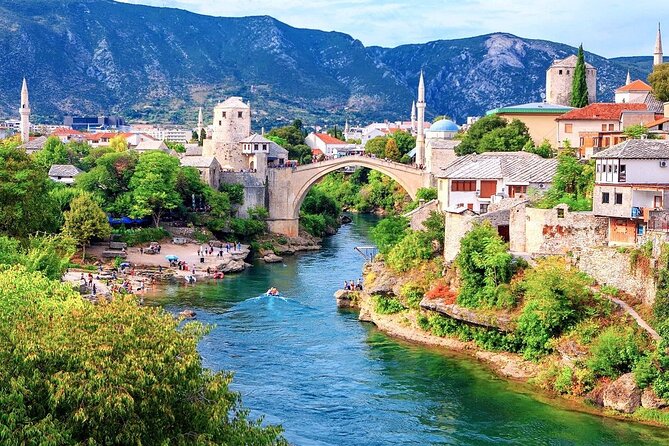
Mostar follows the same day, which is ambitious. The Old Bridge, or Stari Most, is the main attraction, with its Islamic architectural style, stone lanes, old mosques, Turkish bazaar, and memorial reminders not to forget the city’s past.
Mostar is photogenic, but the crowds and cobblestones can make the short visit feel hurried. You do get free time, so you can choose between exploring more streets, finding a meal, or simply sitting near the bridge.
Kotor is next, and the scenery changes sharply as you reach Montenegro. The UNESCO-listed old town is a maze of narrow streets built partly to confuse raiders. You visit St. Luke’s Church and have an afternoon to explore independently.
Kotor rewards slow wandering, but the schedule does not include a climb to the fortress heights. If the tour leader offers practical advice on timing, follow it. The old town’s compact streets are easy to cover, while the surrounding mountains invite more time than this itinerary allows.
Day eleven takes you to Budva, where the old town contains St. Ivan Church, St. Mary’s Church, and medieval streets. The newer part has modern buildings, shops, bars, and restaurants, so you see both the resort side and the older stone center.
A viewpoint near Sveti Stefan provides a photograph of the former fishing island. You cannot visit the island because it now functions as an exclusive residential resort. The day ends in Shkoder, Albania, where Rozafa Castle offers views over Lake Shkoder and the rivers flowing toward the Adriatic.
A different side of Vienna on the same trip:
- Vienna: Vivaldi’s Four Seasons Concert in Karlskirche
★ 4.7 · 14,951 reviews - Vienna: Spanish Riding School Training
★ 3.9 · 9,281 reviews - Vienna: Skip-the-cashier-desk-line Giant Ferris Wheel Ride
★ 4.5 · 7,859 reviews - Vienna: Schönbrunn Palace & Gardens Skip-the-Line Tour
★ 4.7 · 7,739 reviews
Days 12 to 15: Albania, Kosovo, and the best food stops
The Albanian food focus begins at Mrizi i Zanave, an agro-tourism farm near Shkoder. You tour the farm, learn how it developed local jobs, and see how old communist buildings were adapted for storage and food production.
The farm works with regional organic products, preserving and preparing local ingredients. You have time for a traditional lunch or to buy fresh produce, but the meal is not included. This is one of the most useful stops for understanding modern Albanian rural life, not just looking at old stones.
Prizren in Kosovo follows. The river, bridges, Ottoman-era buildings, churches, and religious sites create a compact walking experience. Sinan Pasha Mosque is included, as is the hilltop Kalaja Fortress, whose view over the old town is worth the climb.
The next day brings Gjakova’s long bazaar. It has been rebuilt after repeated destruction, and its craft shops offer a better chance for useful souvenirs than generic airport stores. Expect traditional handmade goods and time for a meal.
The Monastery of Decan adds a different layer. Orthodox monks still live there and produce food such as cheese, while the frescoes earned the site UNESCO status. Access to religious sites can be sensitive, so follow local instructions and dress respectfully.
Rahovec Valley then returns the focus to wine. Grapes have been grown here since ancient Illyrian times, and the hills sit between about 350 and 520 meters above sea level. The annual wine festival takes place in September, but the vineyard visit is worthwhile outside festival season too.
Kruja is the historical centerpiece of the Albanian portion. The town sits high on rocky ground and is linked to Albanian resistance against Ottoman expansion in the fifteenth century. Its old bazaar is one of the best places on the route for handmade carpets, jewelry, and other Albanian crafts.
Kruja Castle is included, and the tour leader takes you along lesser-used paths associated with local escape routes. The castle and bazaar involve slopes and uneven stones, so comfortable shoes are important.
The strongest food day comes in Tirana. With a local companion, you start at Tregu Çam for byrek, the flaky pastry filled with cheese, meat, or spinach. At the New Bazaar, you try qofte with bread, or bread with gjize for a vegetarian option, followed by Albanian raki.
Coffee is part of the experience too. You visit a local café for Albanian coffee and walk through markets and residential neighborhoods rather than staying only on the main sights. Bunk’Art 2 closes the day with a museum inside a former nuclear bunker, focused on the communist army and everyday life during Enver Hoxha’s rule.
Days 16 to 19: Ohrid, Berat, and Gjirokaster
North Macedonia begins with a short stop in Struga at the source of the Drini River. Ohrid then provides one of the trip’s finest combinations of water, old churches, Orthodox tradition, and hill views.
The town and lake have UNESCO status, and the route visits viewpoints near St. John’s Church, St. Nicholas Church, and the Halveti Hayati Tekke. Ohrid is said to have 365 Orthodox churches, one for every day of the year, though this itinerary introduces you to only a few.
Day seventeen includes St. Naum Monastery, located at the source of the Crni Drim River. The monastery is included, and its spring water, greenery, and mountain setting give you a quieter stop after several busy city visits.
After crossing back into Albania, you pause in Tushemisht and at Drilon National Park. Drilon’s small lake, willows, and clear water offer a calm hour. These short nature stops help break up the road journey, though they are not long enough for a full outdoor excursion.
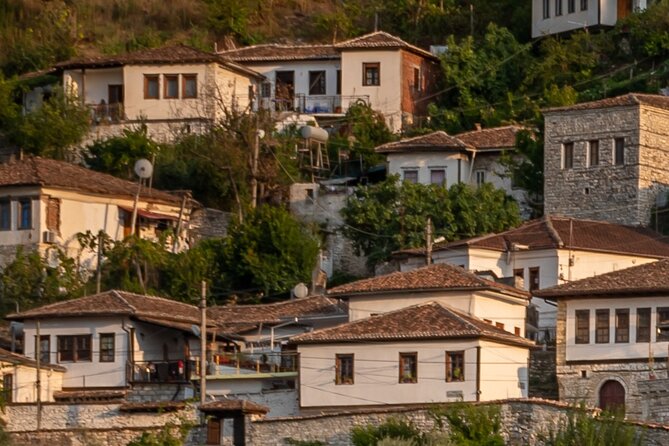
Berat is one of Albania’s major sights. Known for its many stacked windows, the town combines a castle where people still live, old churches, mosques, steep streets, a stone bridge, museums, and reminders of the communist period.
Three hours gives you enough time to walk the upper and lower town, but the slopes can be demanding. Berat is best approached at an unhurried pace, so do not spend every minute taking photographs from the first viewpoint.
Gjirokaster brings another stone-built town, with houses that resemble small fortresses and a medieval bazaar climbing the hill. Skenduli House is included and preserves an authentic interior, offering a more personal sense of how people lived than a distant castle view.
Days 20 and 21: Ioannina, Meteora, and the finish
Ioannina introduces Greece through its old town and Byzantine-era castle. Cobblestone streets, old walls, cafés, and Ottoman traces make it a fitting bridge between the Balkan and Greek sections.
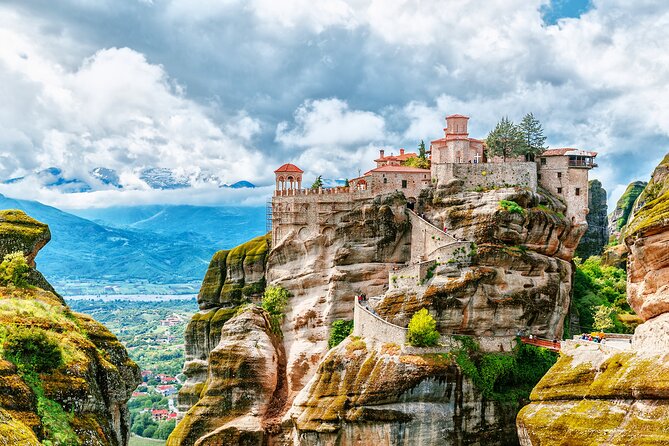
Meteora follows, with monasteries perched on dramatic rock formations. The itinerary aims for sunset, when the changing light gives the site its full impact. The visit is short, so you should not expect to see every monastery interior.
The final day offers two possible endings. Your tour leader can take you to your Athens hotel, or you can be dropped at Igoumenitsa Port with ferry tickets included for Corfu. The Athens drop-off is practical for an onward city stay, while the Corfu option works if you want to add an island visit.
The itinerary lists four hours for Athens and two hours for Corfu, but the final day is mainly a transfer and drop-off day. Do not plan an important Athens museum booking immediately after arrival unless you have plenty of flexibility.
Comfort, group size, and the pace of the road
Private transport is a major part of the tour’s appeal. Fuel, road taxes, insurance, and petrol are included, and hotel pickup reduces the need to find a meeting point with luggage.
The tradeoff is time in the vehicle. This route covers a large portion of Central Europe and the Balkans, with frequent border crossings and many one-night stays. You should be comfortable unpacking often, sitting through long drives, and treating some stops as introductions rather than full visits.
A maximum of 10 people is a useful middle ground. You get more flexibility than on a full coach, but the tour is still a shared experience, not a private itinerary designed only for you.
Moderate physical fitness is required. Expect cobbled streets, castle hills, uneven ground in Sarajevo, and slopes in Kruja, Berat, and Gjirokaster. The tour does not promise a specific accessibility arrangement, so ask before booking if you have mobility concerns.
The cancellation terms are severe: the experience is non-refundable and cannot be changed for any reason. Confirm your dates, room arrangement, passport requirements, and preferred Athens or Corfu ending before paying.
Should you book this Balkan adventure?
Book it if you want maximum geographic range, private road transport, a small group, and a guide to handle the practical work. It suits curious first-time visitors to the Balkans who want cities, food, wine, religious sites, communist-era history, and natural scenery in one long trip.
It is less suitable if you dislike long drives, need slow mornings, want upscale hotels, or prefer to choose every restaurant and activity yourself. The price is easier to justify when you value convenience and the included transport, breakfasts, entry fees, and taxes.
I would pay special attention to the guide. Sokol was singled out for making the journey smooth and enjoyable, an important point on a route this demanding. If you can confirm who will lead your departure and clarify which wine tastings and meals are included, this can be a strong way to see a wide slice of Europe without arranging the entire trip yourself.
FAQ
Where does the tour begin?
The tour begins in Vienna, Austria, with hotel pickup at 11 a.m.
Where does the tour end?
You can be dropped at your hotel in Athens, or at Igoumenitsa Port. Ferry tickets to Corfu are included with the port drop-off option.
How many people can join the tour?
The maximum group size is 10 people.
Are hotels included?
Yes. Prices are calculated for double, twin, triple, or quadruple room occupancy in three-star hotel accommodation.
What meals are included?
Twenty breakfasts are included. Lunches, dinners, drinks, and snacks are not included.
Is transportation included?
Yes. The company provides private transport, fuel, road taxes, international car insurance, and petrol.
Is the tour physically demanding?
A moderate level of physical fitness is recommended. The route includes uneven ground, cobbled streets, castle hills, and walking in places such as Sarajevo, Kruja, Berat, and Gjirokaster.
Just added around Vienna
- Private Tour from Vienna to Melk and Dürnstein★ 4.5 · 3 reviews
- Vienna: Johann Strauss 200th birthday anniversary exhibition★ 4.7 · 3 reviews
- Vienna Private Full Day Tour – Tickets to Schönbrunn & Lunch★ 5.0 · 3 reviews
- Private Salzburg Day Trip from Vienna★ 4.0 · 3 reviews
- Vienna: Entry Ticket Belvedere 21 & Contemporary Art★ 4.3 · 3 reviews
- Full-Day Private Trip from Vienna to Budapest★ 4.5 · 3 reviews
- Vienna by Night: Private Evening Food and Drink Tour★ 5.0 · 3 reviews
- 1.5 Hour Cinematic Style Portrait Photoshoot and Tour in Vienna★ 4.5 · 3 reviews
Private, compared.
Wine Tasting Experience in a Private Wine Cellar
Read our review →
Private Day Tour Trip Salzburg Hallstatt and Melk from Vienna
Read our review →
Private Hidden Vienna Walk — Stories Behind Quiet Corners
Read our review →