
Reviewed · JEWISH VIENNA TOURS
Private Jewish Walking Tour Vienna
Vienna’s Jewish story is woven into its grandest streets, cafés, palaces, and squares. This private walk connects those places, from the medieval community at Judenplatz to the Ephrussi family palace and the Seitenstettengasse Synagogue. I like the way it treats Jewish life as more than a Holocaust story, and I like that your guide can adjust the walk to your interests, including family-history stops when possible.
The private format is a real advantage for families and small groups. You can ask questions, slow down for a detail, or ask for help with the rest of your afternoon. The main caution is price: at $450.53 per group, it is a strong buy for a larger party, but a costly choice for one or two people. Also, the synagogue is viewed from outside only.
In This Review
- Key points to know before booking
- Jewish Vienna begins in the imperial center
- University of Vienna and the city’s intellectual life
- Café Landtmann and Sigmund Freud’s Vienna
- Palais Ephrussi and one family’s rise
- Seitenstettengasse Synagogue, seen from outside
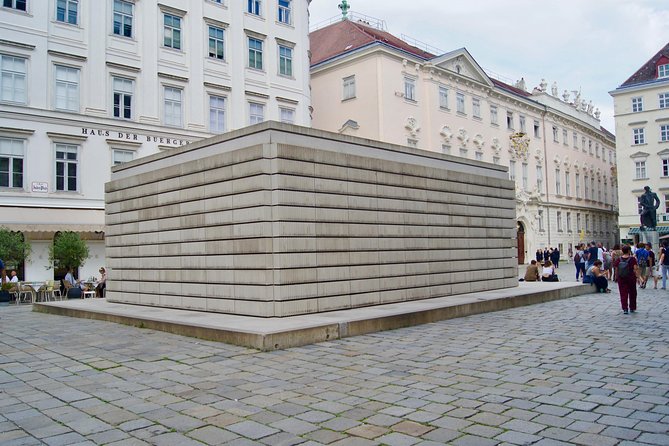
- Judenplatz and the Holocaust Memorial
- Joseph’s Square inside the imperial setting
- Memorial against War and Fascism
- Vienna State Opera and the final citywide view
- What the guide adds to the experience
- Is $450.53 a fair price?
- Practical details that affect your day
- Who should book this Jewish Vienna walk?
- Should you book it?
- FAQ
- How long is the Private Jewish Walking Tour Vienna?
- What language is the tour offered in?
- How many people can join the private tour?
- Where does the tour begin?
- Where does the tour end?
- Can I go inside the Seitenstettengasse Synagogue?
- What is included in the price?
- Can I cancel for a full refund?
Key points to know before booking
- Jewish Vienna beyond the Holocaust: The route covers medieval Jewish life, influential families, religion, architecture, modern Vienna, and the Shoah.
- A private guide for up to 15 people: Your group gets one certified Austria guide, rather than sharing the walk with strangers.
- A flexible, question-friendly experience: Guides such as Lisa, Bettina, Elizabeth, Marlene, Humberto, and Reinhard have been praised for tailoring talks to personal interests.
- The Seitenstettengasse Synagogue is exterior-only: Entry is not included, and an inside visit must be booked directly with the synagogue.
- Central Vienna from Albertinaplatz to Schwedenplatz: The walk begins at Helmut-Zilk-Platz near the Albertina and generally ends at Schwedenplatz, though the final location can change.
- Plan ahead: The experience is booked about 49 days in advance on average, so do not leave it until the last few days of your Vienna stay.
Jewish Vienna begins in the imperial center
This is not a walk through a separate, neatly fenced Jewish quarter. Vienna’s Jewish past appears in the same central streets that carry the city’s imperial story. That is one of the tour’s best features. You see the elegant public face of Vienna while learning who helped shape it, who was excluded from it, and how Jewish life changed across the centuries.
The walk is listed at about two and a half hours, with the main historic-center portion described as roughly two hours. That gives your guide enough time to cover several sites without turning every stop into a rushed photo break. Still, this is a walking tour, not a museum visit. You should expect outdoor explanations and plenty of standing.
Your guide meets you at Helmut-Zilk-Platz, beside Albertinaplatz, unless your inner-city hotel pickup has been arranged. That pickup is useful on your first morning in Vienna, especially if you are still learning the city center. If your hotel lies outside the inner city, the operator contacts you before the tour to settle the meeting place.
More Jewish Vienna walks:
- Jewish Vienna: City Synagogue Guided Tour
★ 4.6 · 208 reviews - Vienna: Jewish Museum Vienna and Museum Judenplatz Tickets
★ 4.5 · 170 reviews - Vienna: Jewish Life in Leopoldstadt 2-Hour Walking Tour
★ 4.9 · 109 reviews
University of Vienna and the city’s intellectual life
The University of Vienna gives the tour a natural opening into education, public life, and the place of Jewish thinkers in modern Vienna. Your guide uses the building and its setting to connect the city’s academic world with the people who studied, taught, argued, and worked here.
This is also where the private format earns its keep. If you are interested in writers, medicine, philosophy, or family connections to Vienna, you can steer the conversation. Several guides have been praised for answering side questions rather than forcing everyone back onto a fixed script.
The information provided does not promise entry into the university. Treat this as an exterior stop, with the building and surrounding streets providing the setting for the explanation.
Café Landtmann and Sigmund Freud’s Vienna
Next comes Café Landtmann, identified as Sigmund Freud’s favorite coffeehouse. The café helps turn an abstract story about Vienna’s intellectual life into something you can picture: a city where cafés served as meeting places for thinkers, artists, politicians, and professionals.
You may find this stop especially useful if you want more than dates and names. It places Jewish Vienna within the wider cultural life of the city. The tour does not include a café admission or meal, so think of this as a historical stop rather than a scheduled coffee break.
If you want to sit down afterward, note the location and return later. During a walking tour, the guide’s priority is the story of the place, not a long café visit.
Palais Ephrussi and one family’s rise
Palais Ephrussi introduces the Ephrussi family, one of Vienna’s prominent Jewish families. The palace is a strong stop because architecture, social position, and personal history meet in one address.
Your guide can use the building to explain how Jewish families became part of Vienna’s economic and cultural elite, while also discussing the barriers and dangers they faced. That balance matters. A Jewish Vienna tour should not reduce Jewish life to victimhood, and this route makes room for achievement, influence, family life, and loss.
The palace is viewed as part of the street walk. No interior admission is included in the tour details, so you should not expect a palace visit inside.
More walking tours in Vienna:
- Vienna: Guided Walking Tour of City Center Highlights
★ 4.7 · 4,989 reviews - Vienna: Vienna Central Cemetery Guided Walking Tour
★ 4.8 · 3,307 reviews - Vienna: Guided Walking Tour of City Highlights & Hidden Gems
★ 4.9 · 2,180 reviews - Vienna: Viennese Underworld Guided Walking Tour
★ 4.7 · 1,865 reviews
Seitenstettengasse Synagogue, seen from outside
The Seitenstettengasse Synagogue is likely to be one of the most important stops, but you need to understand the limitation before paying. The tour looks at the synagogue from the outside only. Entry is not included.
That is not a minor footnote for many people. If you specifically want to see the sanctuary interior, you must arrange a separate visit directly with the synagogue. Keep the two plans distinct, and check the synagogue’s own conditions before setting your schedule.
Even from the street, the stop gives your guide a chance to discuss Jewish religious life in Vienna and the survival of the community. The surrounding area also helps you see how a functioning Jewish institution fits into the central city rather than sitting apart from it.
For visitors with family ties, this can be an emotional point on the route. Give yourself room to ask questions, but remember that outdoor conditions and synagogue access are separate matters.
Judenplatz and the Holocaust Memorial
Judenplatz is the core historical stop. Here, the guide can take you back to the medieval Jewish community and explain how Jewish life developed in Vienna long before the 20th century.
The square also contains the Holocaust Memorial, a stark reminder of the destruction of Vienna’s Jewish population. Its placement in a central public space makes the memorial difficult to treat as a distant chapter. You are standing in a place where older Jewish history and the memory of the Shoah meet.
I appreciate that the tour places this stop within a longer timeline. The best version of Jewish Vienna includes medieval settlement, religious life, commercial success, cultural influence, persecution, destruction, and the community’s continued presence. The guides praised most warmly, including Marlene, Humberto, and Reinhard, were described as willing to discuss both historical detail and present-day questions.
Expect the subject matter to be serious. The tour is not a light sightseeing stroll with a few Jewish references added on. At the same time, it does not appear to focus only on tragedy.
Joseph’s Square inside the imperial setting
Joseph’s Square, within the imperial palace area, brings the Jewish story into Vienna’s Habsburg center. Here, the city’s grand courtly setting provides a useful contrast to the stories of minority life, legal restrictions, opportunity, and social change.
This part of the route also keeps the walk from becoming too narrowly defined. You are learning about Jewish Vienna, but you are also learning how Vienna itself was built and governed. Guides have been praised for connecting Jewish history with art, architecture, geography, and the broader development of the city.
The square is an outdoor stop, and the tour does not include admission to imperial interiors. If you have already seen the palace complex, the guide can add context that independent sightseeing often misses. If you have not, this gives you a helpful orientation before choosing which museums or rooms to visit later.
Memorial against War and Fascism
The Memorial against War and Fascism adds another layer of 20th-century memory. It helps place Vienna’s wartime experience beside the specific history of Jewish persecution and the Holocaust.
This is a useful contrast with Judenplatz. One site centers Jewish memory; the other addresses war and fascism in a broader public setting. Your guide can help you understand how Vienna remembers different parts of its past, and why those memorials look and feel different.
Because the walk covers several serious subjects, I would not schedule it when you are exhausted or rushing to a train. You will get more from it if you can pause, listen, and ask questions.
Vienna State Opera and the final citywide view
The Vienna State Opera is one of the familiar landmarks on the route. It may seem at first like a standard Vienna sightseeing stop, but that is exactly why it belongs here. Jewish history is not separate from the city’s famous music, arts, commerce, and public culture.
The opera also gives your guide a chance to connect individual lives with Vienna’s cultural identity. The tour description promises this stop and many more, so the precise order can vary. Treat the route as a guided walk through central Vienna rather than a fixed checklist with equal time at every address.
The usual endpoint is Schwedenplatz. That is convenient for public transportation and for continuing into the city, though the operator may notify you of a different ending before the tour begins.
What the guide adds to the experience
The guide is the main reason to choose this walk over a self-guided route. The experience includes a state-certified Austria guide, and the strongest guide feedback describes people who were energetic, organized, friendly, and willing to repeat information for a guest with hearing difficulty.
Lisa received especially warm praise for tailoring the walk, handling cold or rainy weather with good energy, and helping with afternoon museum plans. Bettina was noted for a clear route and organized presentation. Elizabeth was praised for linking Jewish history with art, architecture, and the city’s wider story.
Other named guides include Marlene, Humberto, Gisella, Reinhard, and Christopher. The quality can depend on who leads your tour. One disappointing experience specifically described a mismatch between expectations and the guide’s background, while the operator offered a future replacement walk. That tells you to contact the operator ahead of time if a specialist focus, family-history research, or a particular guide matters greatly to you.
The private setting lets you explain your interests before the walk begins. Do you care most about medieval Jewish life, Vienna’s intellectual circles, Holocaust memory, architecture, or your own family connections? Tell the guide early. The best use of a private tour is not simply following a route, but shaping the conversation.
Is $450.53 a fair price?
The price is $450.53 for a group of up to 15 people. For a full group, that works out to about $30 per person. For five people, it is about $90 each. For two people, the cost is much harder to justify unless the subject is a major reason for your visit or you place a high value on a private guide.
You are paying for the guide, privacy, route planning, and the ability to ask questions. You are not paying for synagogue admission, food, museum entry, or transportation. That distinction is important when comparing this with a general Vienna city walk.
The most serious criticism of the experience concerns value. One person felt a regular private Vienna tour covered many of the same central areas at about half the price. That is a fair concern. The value here depends on the guide’s ability to add Jewish context, not on how many famous buildings you can photograph.
I would book it for a family group, a synagogue or history-minded group, or anyone with Jewish connections to Vienna. If you are a couple seeking a broad introduction to the city and watching every euro, a less specialized walk may offer better value.
Practical details that affect your day
The tour is offered in English and comes with a mobile ticket. Confirmation arrives at booking, and the activity is private, so only your group participates. Service animals are allowed, and the route is near public transportation.
Most people can take part, but remember that this is a central-city walking experience. Wear shoes suitable for pavement and plan for changing weather. If it is cold or rainy, the tour can still proceed, but your comfort will affect how much you absorb.
Free cancellation is available until 24 hours before the start time. Changes or cancellations inside that window are not accepted for a refund. Since the experience is often reserved about 49 days ahead, booking early makes sense if your Vienna dates are fixed.
Who should book this Jewish Vienna walk?
Book this tour if you want a Jewish-focused explanation of Vienna that still includes the city’s major landmarks. It suits first-time visitors who want orientation, repeat visitors who want a more personal theme, and families who need a guide willing to adapt the route.
It is also a good match if you want to discuss family history. The guide may be able to include specific family-related locations, as one guest arranged successfully, but you should raise that request before the tour rather than assume research or extra stops are included.
Think twice if you expect to enter the Seitenstettengasse Synagogue, visit museum interiors, or spend long periods inside each landmark. Those are not part of this experience. Also think twice if you are booking for only one or two people and the price feels high.
Should you book it?
I would book this private walk when Jewish Vienna is a central reason for your trip, especially for a group of four or more. The route gives you more than memorials: it links Jewish life with cafés, palaces, intellectual circles, imperial Vienna, and the city’s public memory.
Before booking, confirm your pickup point, tell the operator what period or family connection interests you, and make sure you understand the synagogue access rule. If you want a broad, low-cost overview of Vienna, choose a general city tour. If you want time for serious questions and a personal Jewish history of the center, this is a worthwhile choice.
FAQ
How long is the Private Jewish Walking Tour Vienna?
The experience lasts approximately 2 hours and 30 minutes. The historic-center portion is described as about 2 hours, with additional time reflected in the overall duration.
What language is the tour offered in?
The tour is offered in English.
How many people can join the private tour?
The price covers one private group of up to 15 people.
Where does the tour begin?
The listed meeting point is Helmut-Zilk-Platz, Albertinaplatz 2-3, in Vienna’s 1010 district. Inner-city hotel pickup is also offered.
Where does the tour end?
The listed endpoint is Schwedenplatz. The tour may finish elsewhere, and the operator will notify you before the experience if the ending location changes.
Can I go inside the Seitenstettengasse Synagogue?
No. This experience views the synagogue from outside only. You must book an interior visit directly with the synagogue.
What is included in the price?
A state-certified Austria guide is included. Gratuities and entry inside the Seitenstettengasse Synagogue are not included.
Can I cancel for a full refund?
Yes, if you cancel at least 24 hours before the experience begins. Cancellations or changes made less than 24 hours before the start time are not accepted for a refund.
Just added around Vienna
- Private Tour from Vienna to Melk and Dürnstein★ 4.5 · 3 reviews
- Vienna: Johann Strauss 200th birthday anniversary exhibition★ 4.7 · 3 reviews
- Vienna Private Full Day Tour – Tickets to Schönbrunn & Lunch★ 5.0 · 3 reviews
- Private Salzburg Day Trip from Vienna★ 4.0 · 3 reviews
- Vienna: Entry Ticket Belvedere 21 & Contemporary Art★ 4.3 · 3 reviews
- Full-Day Private Trip from Vienna to Budapest★ 4.5 · 3 reviews
- Vienna by Night: Private Evening Food and Drink Tour★ 5.0 · 3 reviews
- 1.5 Hour Cinematic Style Portrait Photoshoot and Tour in Vienna★ 4.5 · 3 reviews