
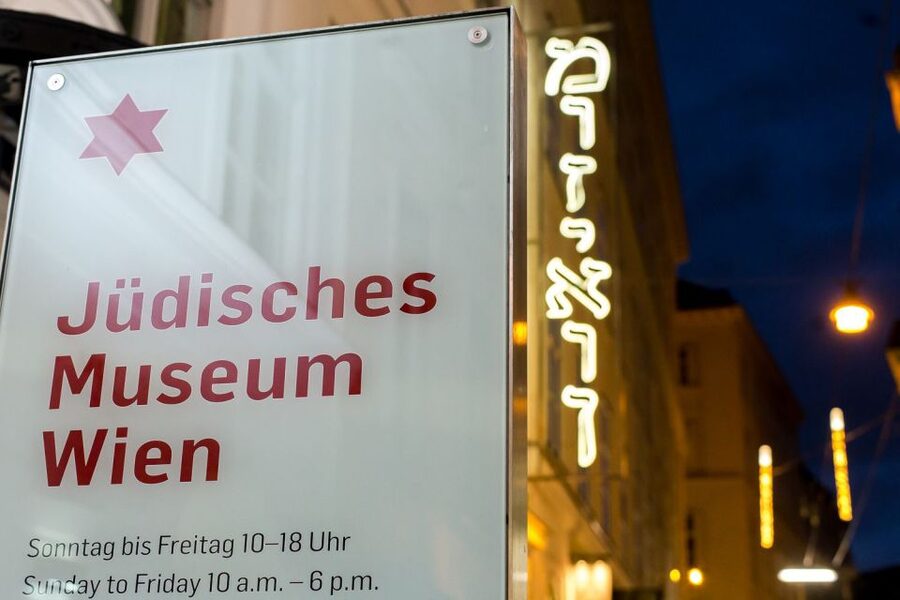
Reviewed · JEWISH VIENNA TOURS
Vienna: Jewish Museum Vienna and Museum Judenplatz Tickets
Vienna’s Jewish story is told across two small, central museums, and the most striking feature is the change in viewpoint. At Dorotheergasse, you move from present-day Jewish life back through centuries of exclusion, achievement, persecution, and survival. At Judenplatz, you stand above the foundations of a medieval synagogue destroyed in 1421. I like the two-museum format and the fact that the exhibitions address the Holocaust without turning the visit into a spectacle.
I also like the calm layout, places to sit, and the chance to visit over several days instead of rushing through both sites. The main drawback is that some displays may feel text-heavy, especially if you prefer objects and dramatic presentation to reading. Arrival guidance can also be clearer, so note both addresses before setting out.
In This Review
- Key points at a glance
- Start at Dorotheergasse, near St. Stephen’s Cathedral
- Our City! begins with Jewish Vienna after 1945
- Upstairs, the route moves from the Middle Ages to the Holocaust
- Museum Judenplatz reveals Vienna’s medieval foundations
- How to plan the two museums
- Temporary exhibitions add a changing layer
- Guided visits and the audio guide are different experiences
- Why the 17 dollar price can be good value
- Who will get the most from this visit
- My verdict on the Jewish Museum Vienna ticket
- FAQ
- What does the ticket include?
- Where are the museums located?
- How long is the ticket valid?
- Is an audio guide included?
- Is the experience available in English?
- What can I see at the main Jewish Museum Vienna?
- What is at Museum Judenplatz?
- Are temporary exhibitions included?
- Is the museum wheelchair accessible?
- Can I cancel the booking?
Key points at a glance
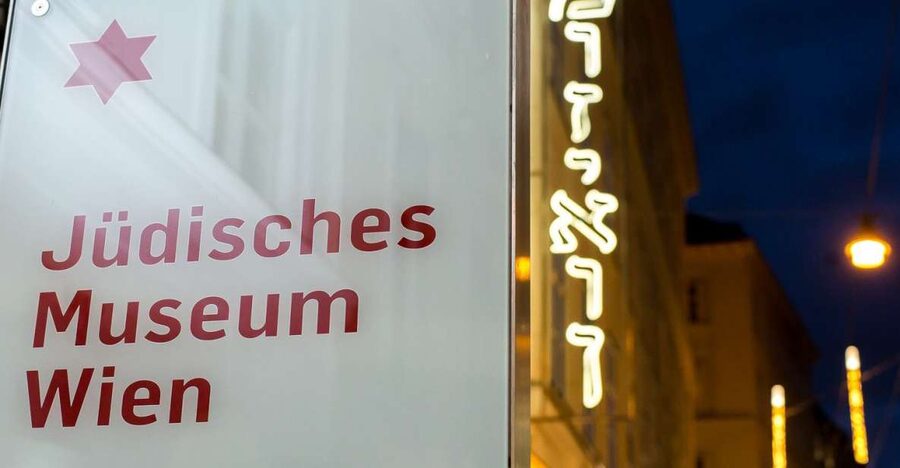
- Two museums, one ticket: Visit the Dorotheergasse museum and Museum Judenplatz in central Vienna.
- A chronological view with a twist: The main exhibition begins with Jewish Vienna after 1945, then moves backward to the Middle Ages and Holocaust.
- Medieval synagogue remains: Museum Judenplatz presents the foundations of the synagogue destroyed in the 15th century.
- English and German audio guide: Use added commentary to place objects and exhibitions in context.
- Quiet, thoughtful setting: Both museums are suitable for adults, teenagers, and children who can engage with serious history.
- Flexible timing: The ticket is described as valid for three days from first activation, while the inclusion details also state four days from the date of issue. Confirm the exact validity shown on your booking.
Start at Dorotheergasse, near St. Stephen’s Cathedral
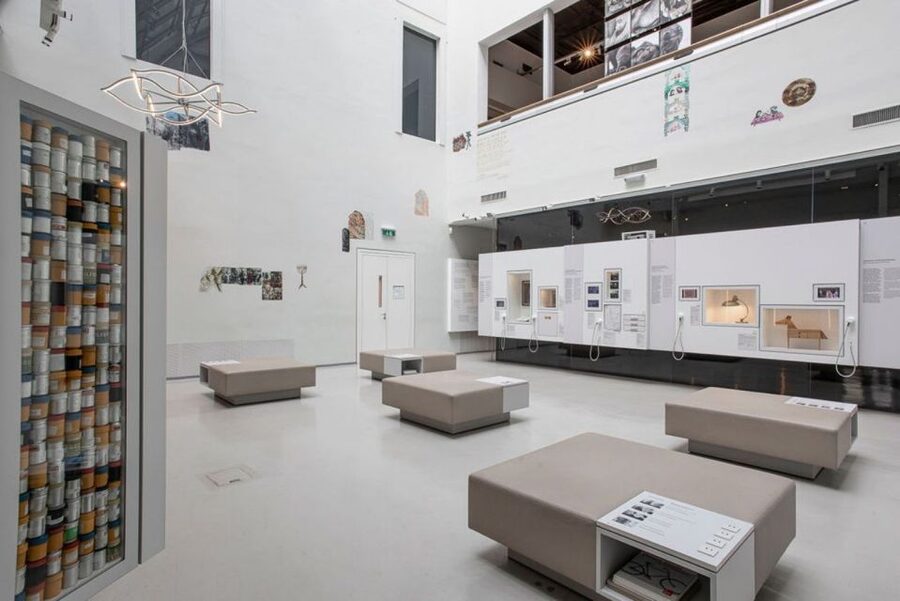
The main Jewish Museum Vienna occupies an old palace at Dorotheergasse 11, a short walk from St. Stephen’s Cathedral. That location matters. You are not being sent to a distant memorial site with little connection to the rest of Vienna. The museum sits in the city center, close to the streets and buildings where Jewish life once unfolded.
Give yourself time to get oriented before entering the exhibitions. The ticket covers both museum locations, but Dorotheergasse is the larger visit and the better place to begin. You can take in the present-day community first, then work backward through earlier centuries.
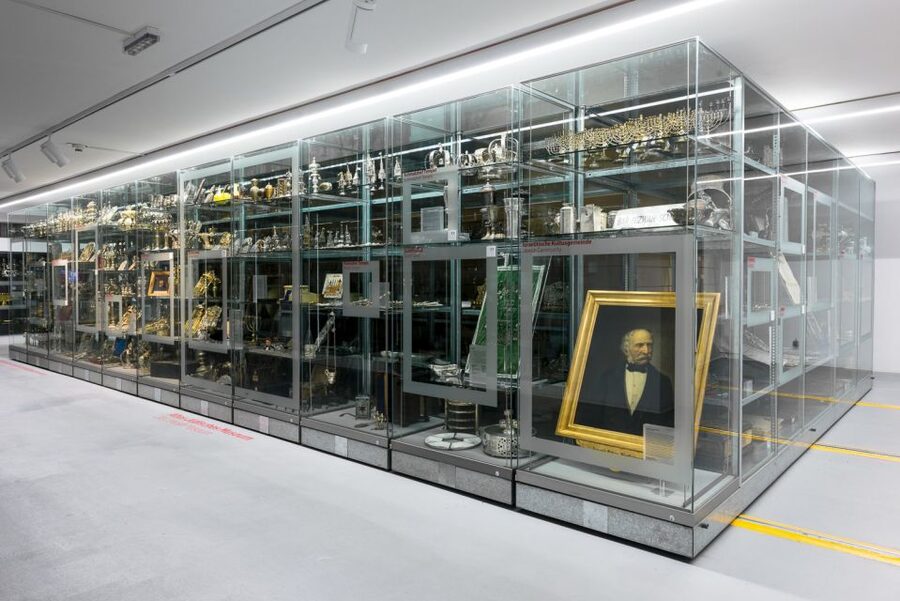
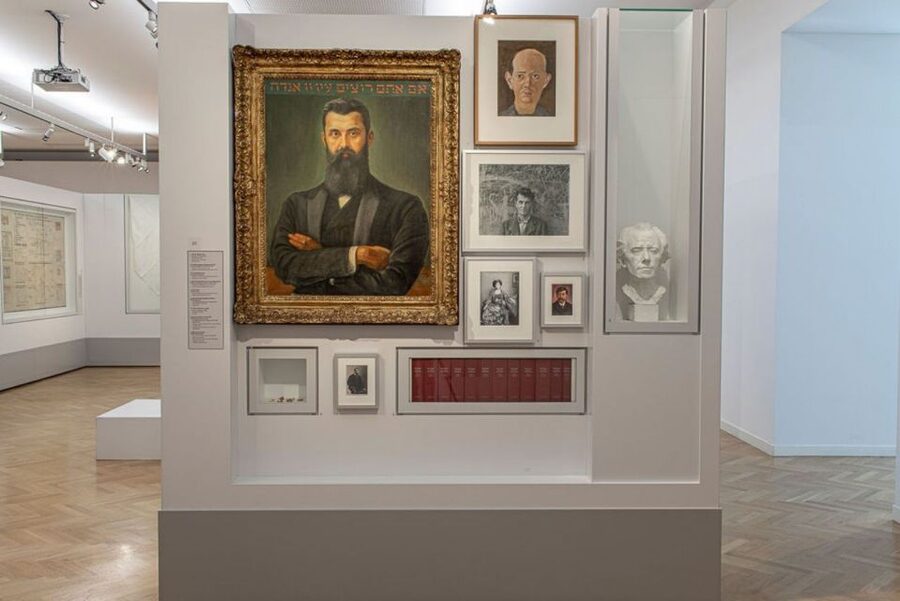
The museum’s collections include religious objects, works connected with Jewish communities, and material linked to synagogues and collectors such as Max Berger and Martin Schlaff. The displays do more than place objects behind glass. They explain where those objects came from and how they fit into Jewish life in Austria.
That context is one of the strongest reasons to visit. A ceremonial item can look beautiful but remote when shown alone. Here, its connection to a synagogue, household, collector, or community gives it a human setting.
More Jewish Vienna walks:
- Jewish Vienna: City Synagogue Guided Tour
★ 4.6 · 208 reviews - Vienna: Jewish Life in Leopoldstadt 2-Hour Walking Tour
★ 4.9 · 109 reviews - Jewish Vienna Walking Tour
★ 5.0 · 36 reviews
Our City! begins with Jewish Vienna after 1945
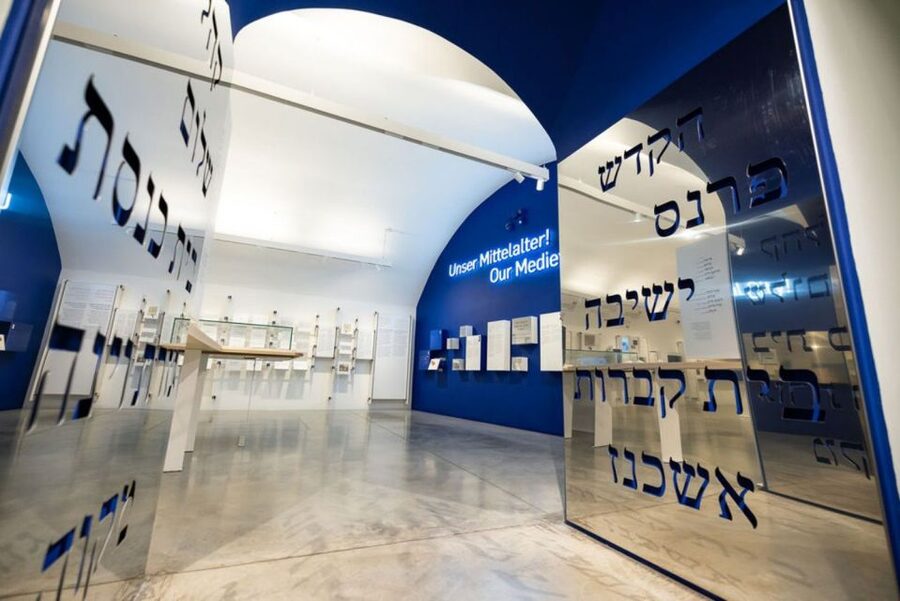
The permanent exhibition at Dorotheergasse, Our City! Jewish Vienna, Then to Now, takes an unusual route through time. On the ground floor, it begins in 1945 and follows Jewish Vienna into the present.
This opening section deals with a community that had been almost completely destroyed. It then shows how Jewish life developed after the war into a modest but varied community, despite resistance from Austrian postwar policies.
I find this starting point useful because many museums begin with the Holocaust and end there. This exhibition asks what came afterward. It presents Jewish people not only as victims of persecution, but also as members of a community rebuilding religious, cultural, and family life.
That does not make the difficult material easier. It gives it a wider frame. You see that 1945 was not the end of the story, and that survival involved more than returning to old buildings or reopening institutions.
The modern section also gives you a better sense of Jewish Vienna today. The emphasis is not on a single fixed identity. Instead, the exhibition presents a community that changed over time and remained diverse.
If you have limited museum stamina, this section is a good reason not to rush. Read enough to understand the postwar setting before moving upstairs. The museum’s subject is serious, but the tone is factual rather than sensational.
Upstairs, the route moves from the Middle Ages to the Holocaust
After the present-day section, the exhibition takes you back to Jewish Vienna from the Middle Ages through the Holocaust. This reverse movement can feel more thoughtful than a standard chronological route. You begin with the question of what survived, then examine the forces that shaped and damaged Jewish life over the centuries.
The material covers Jewish religion, traditions, community life, and the repeated discrimination that affected Jewish residents in Austria. It also places objects within their original settings, including synagogues and private collections.
You will need to read here. One visitor found the museum a little like reading a book, and that is a fair warning. The displays are informative and well illustrated, but this is not a quick collection of big visual effects. If you want the fullest experience, plan to pause at the text panels and use the multimedia guide.
The English and German audio guide adds another layer. It can help explain objects and historical periods without requiring you to absorb every panel. It is especially useful if you are visiting with someone who prefers listening to reading.
The material about the Holocaust is frank, but the presentation is not morbid. That balance is valuable. You are asked to face suffering and loss while still seeing the work of Jewish people to maintain a life through discrimination and danger.
Museum Judenplatz reveals Vienna’s medieval foundations
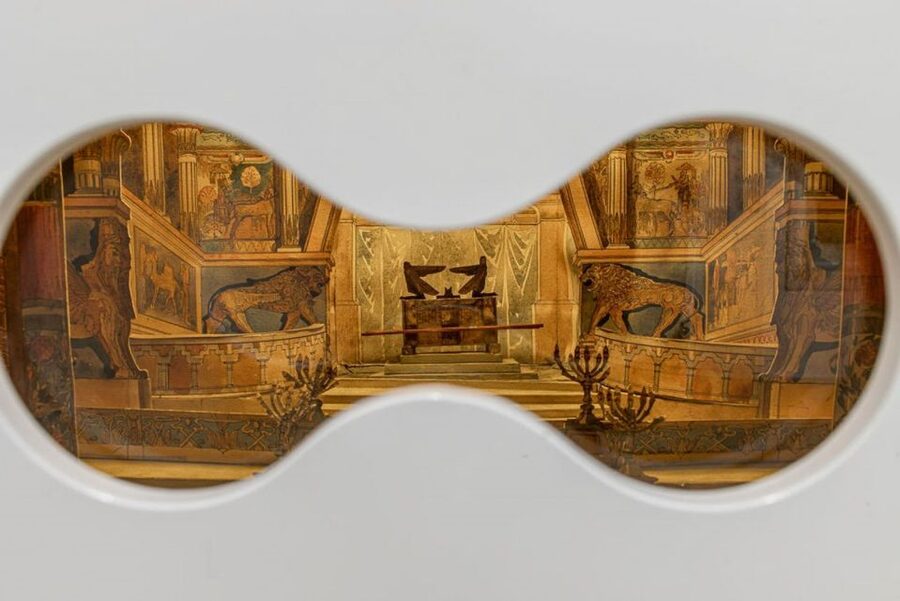
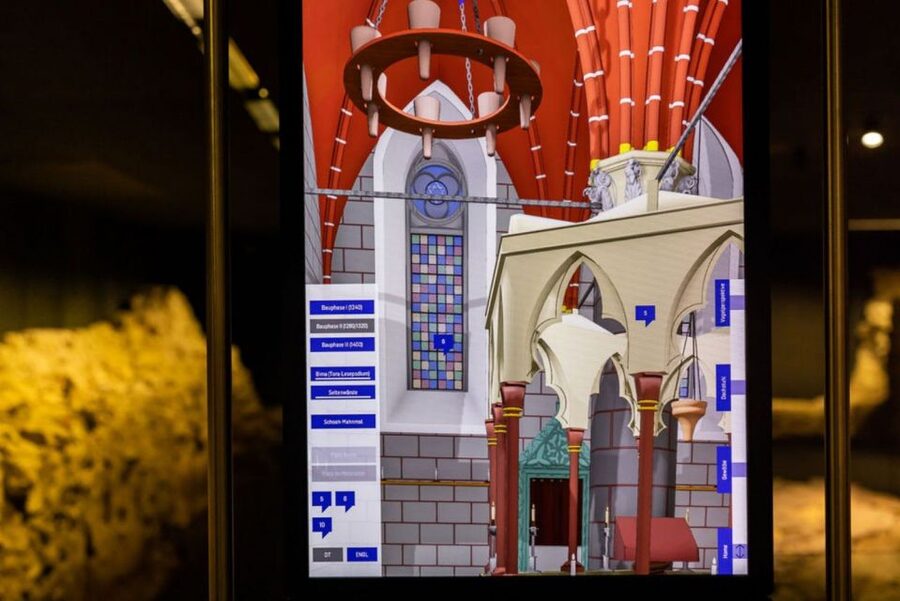
The second stop is Museum Judenplatz at Judenplatz 8. This museum presents the foundations of the medieval synagogue, along with a 3D reconstruction that helps you picture the building that once stood there.
The remains are the reason to make the short journey from Dorotheergasse. At the main museum, you learn about Jewish Vienna across long stretches of time. At Judenplatz, the story becomes physical. You are looking at the vestiges of a real place of worship and community life.
The foundations can be easy to underestimate if you expect a complete medieval building. They are not a restored synagogue waiting for you to walk through. Their value lies in what they reveal about the size and presence of the Jewish community in medieval Vienna.
The 3D reconstruction helps bridge that gap. It gives you a clearer idea of the synagogue’s form and makes the archaeological remains easier to understand. You might want to visit this museum after the main house, when you already have some background on Jewish life in Vienna.
The Judenplatz visit also adds an important reminder: Jewish Vienna did not begin in the 20th century. Its roots reach back centuries, and those centuries included both religious and cultural achievement as well as expulsion and persecution.
More museums in Vienna:
- Vienna: Skip-the-Line Sisi Museum, Hofburg and Gardens Tour
★ 4.8 · 5,918 reviews - Vienna Kunsthistorisches Museum Day Admission Ticket
★ 4.6 · 3,690 reviews - Tickets for the Albertina Exhibitions
★ 4.7 · 2,126 reviews - Vienna: Chocolate Workshop in Chocolate Museum w/ Tasting
★ 4.5 · 1,802 reviews
How to plan the two museums
Both addresses are in Vienna’s 1010 district, and the ticket is designed to let you visit them as separate stops. I would not treat this as one long museum session unless you enjoy several hours of concentrated reading.
A practical plan is:
- Begin at Dorotheergasse for the permanent exhibition and temporary displays.
- Take a break in the central city.
- Continue to Museum Judenplatz the same day, or return on another day within the ticket’s stated validity.
The supplied information gives two validity descriptions: three days from first activation and four days from the date of issue. Since those phrases may refer to different stages of the ticket, check the exact wording attached to your booking. Do not assume you must visit both museums on the day you collect or activate the ticket.
The museums can both fit into a morning for visitors who move briskly. I would allow more time if you want to read the displays, use the audio guide, and consider the temporary exhibitions. A hurried visit can reduce the experience to a list of dates and objects.
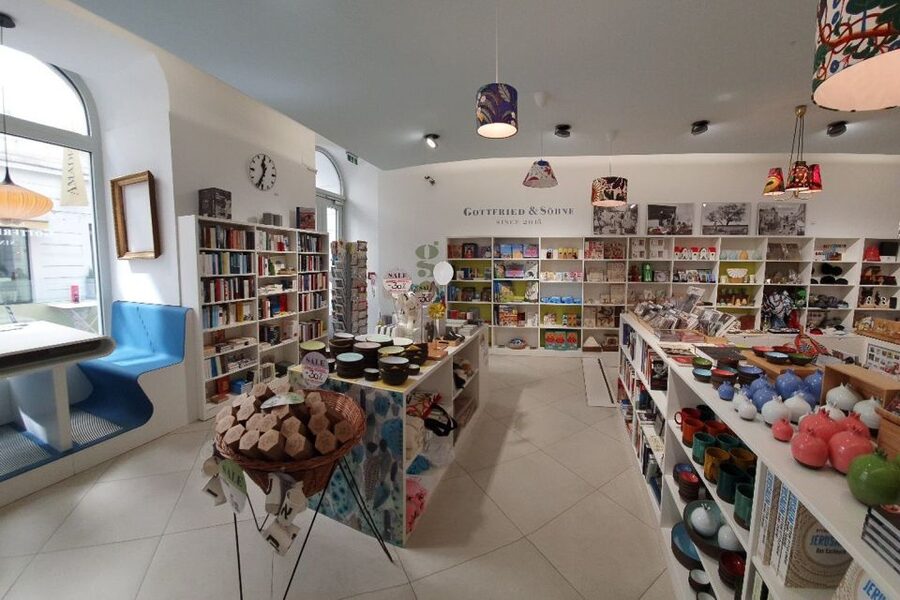
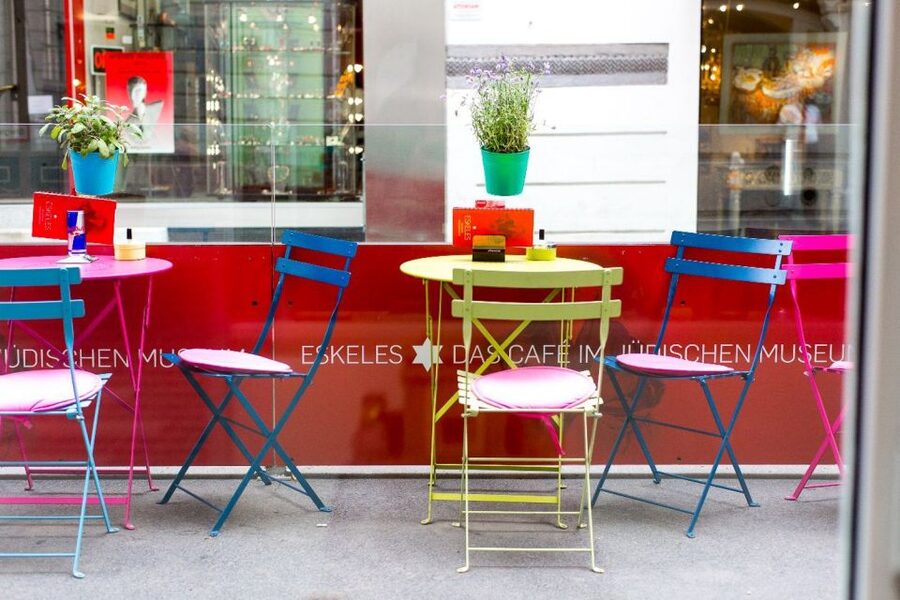
There are places to sit at both locations, which helps during a serious museum visit. The sites are wheelchair accessible. English and German support is available through the audio guide.
Temporary exhibitions add a changing layer
The ticket also includes temporary exhibitions and events at both Dorotheergasse and Judenplatz, depending on what is showing during your visit. These displays cover different parts of Jewish history and culture, so the exact experience can change.
That is a useful feature if you are staying in Vienna for several days. You can return to see a temporary display you did not have time for on your first visit, provided it remains open and fits within your ticket period.
Do check the current exhibition details before you go if a particular subject matters to you. The permanent material gives you the main framework, but a temporary display may focus on a narrower period, collection, or theme.
The changing program also prevents the museum from feeling like a single fixed statement about Jewish life. Jewish history is too broad for one display, and temporary exhibitions can give specific people, objects, or events more room.
Guided visits and the audio guide are different experiences
The activity information specifically includes an English or German audio guide. That means you can visit independently and set your own pace.
Some experiences connected with these museum visits have also included live guides. Names associated with guided visits include Miki, Wolfgang, and Victoria. Wolfgang was praised for explaining the history of Jews in Vienna in a creative way, while Victoria gave background on the synagogue and current events. Miki led a full visit with added information.
Because the ticket details identify the audio guide rather than a guaranteed live guide, confirm what your selected booking includes if personal guiding is important to you. Do not assume that every ticket comes with one of these guides.
For an independent visit, the audio guide is likely the better tool for controlling the pace. You can spend longer with an object that interests you and move past material that feels familiar. A live guide, when included, can help connect the museum to the wider city and answer questions as they arise.
Why the 17 dollar price can be good value
At about $17 per person, the ticket gives you admission to two museums rather than one short attraction. That makes it a fair value for anyone interested in Vienna beyond palaces, music, and imperial architecture.
The value is strongest when you visit both locations. Museum Judenplatz is not an optional extra in practical terms. It supplies the physical remains and 3D reconstruction that the main museum cannot provide. Skipping it means missing the clearest link to medieval Jewish Vienna.
The price is less compelling if you only have time for a very short stop and plan to read little. The museum’s strength is its explanation and context, so a ten-minute visit will not show you what you paid for.
The ticket also provides flexibility, although you should verify the three-day and four-day validity wording before booking. Free cancellation up to 24 hours in advance and a reserve-now, pay-later option make it easier to fit the visit into a changing Vienna schedule.
Who will get the most from this visit
I recommend the museums to anyone who wants a fuller view of Vienna’s past. The city’s grand buildings tell only part of the story. These exhibitions show how Jewish residents helped shape urban life, preserved traditions, built institutions, and faced repeated discrimination.
The visit suits:
- Adults who want serious historical context without a sensational presentation.
- Teenagers and children who can handle material about persecution and the Holocaust.
- Visitors with Jewish family or cultural interests.
- Museum lovers who appreciate objects supported by clear explanation.
- Anyone seeking a quieter alternative to Vienna’s busiest sights.
It may be less suitable if you want a highly interactive attraction with little reading. The content is well organized and well illustrated, but you need to give it attention.
The museums are also a good choice for a rainy morning or a thoughtful break from Vienna’s grand tourist circuit. You do not need to know Jewish history before arriving. The exhibitions build a path from basic context toward more difficult subjects.
My verdict on the Jewish Museum Vienna ticket
Book this experience if you want to understand Vienna as a lived-in city, not only as an imperial showpiece. The two locations work together: Dorotheergasse gives you the long story and the postwar present, while Judenplatz gives you the medieval remains and a clearer sense of place.
I especially value the honest treatment of suffering alongside Jewish community life. The museums do not stop at destruction. They show people building and maintaining a life through pressure, loss, and discrimination.
Allow at least a morning, use the audio guide, and visit both sites. If you dislike text-heavy museums, keep your expectations realistic. If you are willing to read, pause, and think, the $17 ticket offers one of Vienna’s more useful historical encounters.
FAQ
What does the ticket include?
It includes entry to the Jewish Museum Vienna at Dorotheergasse and Museum Judenplatz.
Where are the museums located?
The main museum is at Dorotheergasse 11, 1010 Vienna. Museum Judenplatz is at Judenplatz 8, 1010 Vienna.
How long is the ticket valid?
The activity information says it is valid for three days from first activation. The inclusion details also describe the tickets as valid for four days from the date of issue. Check the exact validity printed on your booking.
Is an audio guide included?
Yes. An audio guide is included in English and German.
Is the experience available in English?
Yes. English is available through the audio guide. German is also available.
What can I see at the main Jewish Museum Vienna?
You can see exhibitions about Jewish history, religion, and traditions in Austria. The permanent exhibition covers Jewish Vienna from 1945 to the present, then returns to the Middle Ages through the Holocaust.
What is at Museum Judenplatz?
Museum Judenplatz presents the foundations of a medieval synagogue, along with a 3D reconstruction.
Are temporary exhibitions included?
The museum offers temporary exhibitions and events at both locations, and the ticket covers both museum sites. The exact temporary displays depend on the date of your visit.
Is the museum wheelchair accessible?
Yes. The activity is described as wheelchair accessible.
Can I cancel the booking?
You can cancel up to 24 hours in advance for a full refund. A reserve-now, pay-later option is also available.
Just added around Vienna
- Private Tour from Vienna to Melk and Dürnstein★ 4.5 · 3 reviews
- Vienna: Johann Strauss 200th birthday anniversary exhibition★ 4.7 · 3 reviews
- Vienna Private Full Day Tour – Tickets to Schönbrunn & Lunch★ 5.0 · 3 reviews
- Private Salzburg Day Trip from Vienna★ 4.0 · 3 reviews
- Vienna: Entry Ticket Belvedere 21 & Contemporary Art★ 4.3 · 3 reviews
- Full-Day Private Trip from Vienna to Budapest★ 4.5 · 3 reviews
- Vienna by Night: Private Evening Food and Drink Tour★ 5.0 · 3 reviews
- Semi-Private Tour: Central Europe &Balkans from Vienna to Athens★ 5.0 · 3 reviews