Reviewed · PRIVATE
Private Vienna Music Tour
The best part of this private Vienna music tour comes early: you enter the Vienna State Opera with skip-the-line access, then walk through the old town where Mozart, Beethoven, and Johann Strauss left their mark. The tour connects famous buildings with the people and performances that made Vienna a music capital.
I like the private format because your guide can adjust the pace and answer your questions, rather than delivering a fixed speech to a large group. I also like the mix of opera, architecture, and city sights. The main catch is important: the opera admission fee is not included. You receive skip-the-line access, but you still pay for the ticket at the entrance.
In This Review
- Key points at a glance
- Starting at the Vienna State Opera
- Palais Lobkowitz and Beethoven’s Eroica
- The Hofburg Imperial Chapel and the Vienna Boys Choir
- Mozart, Strauss, and the personalities behind the city
- Beethoven’s former residence
- St. Stephen’s Cathedral and the final stretch
- What the private format changes
- Price, group size, and practical value
- Who will enjoy this Vienna music tour
- Booking advice and final verdict
- FAQ
- Where does the Private Vienna Music Tour begin?
- Where does the tour end?
- How long does the tour last?
- Is the tour private?
- Is the tour offered in English?
- Is hotel pickup available?
- Is admission to the Vienna State Opera included?
- Which composers and musical figures are included?
- Can children join the tour?
- What is the cancellation policy?
Key points at a glance
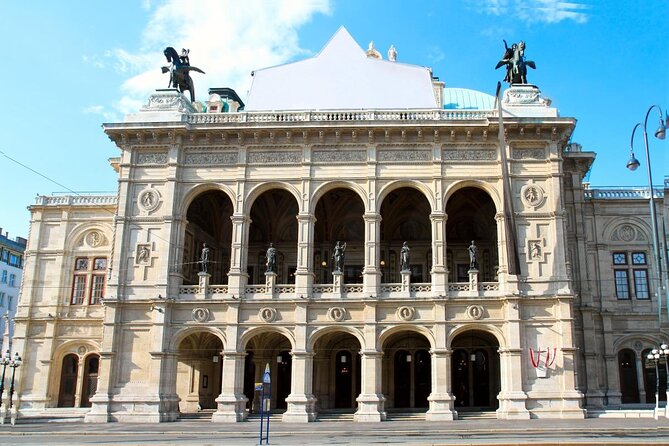
- Behind-the-scenes opera access: Begin at the Vienna State Opera with about 45 minutes inside one of Europe’s best-known opera houses.
- A walk through music history: Continue from Palais Lobkowitz toward Stephansplatz, with stops connected to Beethoven, Mozart, Strauss, and the Vienna Boys Choir.
- Private attention: Only your group takes part, with a maximum of 15 people.
- Guide-led storytelling: A state-certified Austria Guide explains the music, buildings, personalities, and city setting.
- Good for mixed-age groups: The route can suit adults, teens, children, and anyone who enjoys architecture as much as music.
- A central finish: The tour ends at Stephansplatz, close to St. Stephen’s Cathedral and central Vienna sights.
Starting at the Vienna State Opera
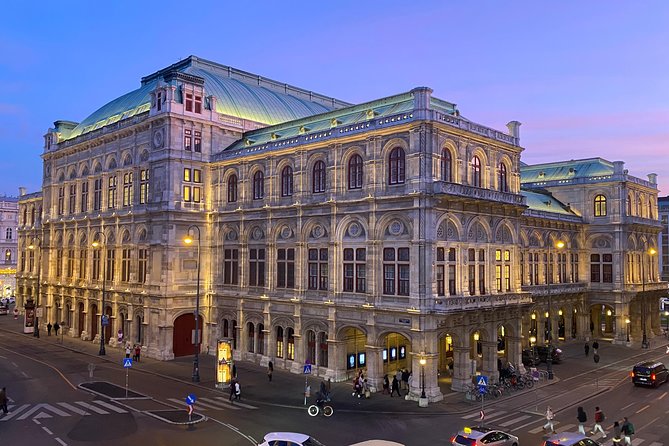
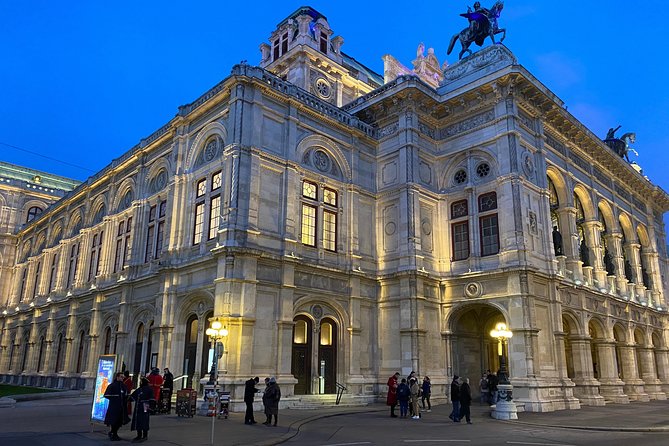
Your tour begins outside the Vienna State Opera at Opernring 2. This is a sensible starting point. The opera house is one of Vienna’s defining buildings, and beginning here gives the rest of the walk a clear theme: music is not a side note in Vienna. It is built into the city’s public life, grand architecture, and everyday identity.
The interior visit lasts about 45 minutes. Your guide takes you behind the scenes and explains the building’s past, its place in Vienna’s musical life, and major conductors such as Gustav Mahler. You are not simply looking at a grand facade from the sidewalk. You get a closer look at the opera house as a working cultural institution.
The phrase skip-the-line can be misleading if you do not read the fine print. It means the tour includes priority access, not a free ticket. You must pay the entrance charge separately at the opera house. Since the exact admission cost can vary, check the current amount before booking and budget for it in addition to the $450.09 group price.
That group price covers up to 15 people, so the value depends heavily on your party size. For a group of six to 15, the cost per person becomes much more reasonable than it first appears. For one or two people, it is a premium experience, but you are paying for a private guide rather than a standard group outing.
A few more Vienna tours worth weighing up
- Vienna: Private Walking Tour with a Local Guide
★ 4.6 · 1,420 reviews - Vienna: Private Walking Tour with a Guide
★ 4.7 · 962 reviews - Vienna: Wine Tasting Experience in a Private Wine Cellar
★ 4.8 · 413 reviews
Palais Lobkowitz and Beethoven’s Eroica
After the opera house, the walking portion begins around Palais Lobkowitz. This palace is tied to Beethoven’s Symphony No. 3, the Eroica, and to one of the composer’s main patrons.
This stop helps explain how music worked in Beethoven’s Vienna. Composers needed patrons, performance spaces, and well-connected supporters. A palace such as Lobkowitz was not only a beautiful address. It was part of the network that allowed major musical works to be written, performed, and heard by influential audiences.
I appreciate this kind of stop because it gives the city’s music story a physical setting. Instead of hearing only that Beethoven lived in Vienna, you see the places where his career intersected with wealthy patrons and aristocratic culture.
The guide’s role matters here. A good explanation can turn a palace facade into a story about ambition, money, artistic freedom, and changing ideas about composers. The experience is strongest if you ask questions about Beethoven’s working life or how his music differed from the courtly style that came before him.
The Hofburg Imperial Chapel and the Vienna Boys Choir
The route continues to the Hofburg Imperial Chapel. The Vienna Boys Choir performs here every Sunday, making this stop especially useful if you are interested in how music remains part of Vienna’s religious and ceremonial life.
The chapel also adds variety after the secular grandeur of the opera house and palace. You move from a public performance institution to an imperial religious setting. The contrast helps you see that music in Vienna developed in many places, not only in opera houses and concert halls.
The tour information does not promise a performance during your visit. You should treat the chapel as a historical and architectural stop, with the Vienna Boys Choir connection as a key part of its importance. If hearing the choir is a priority, you will need to check the Sunday performance arrangements separately.
Mozart, Strauss, and the personalities behind the city
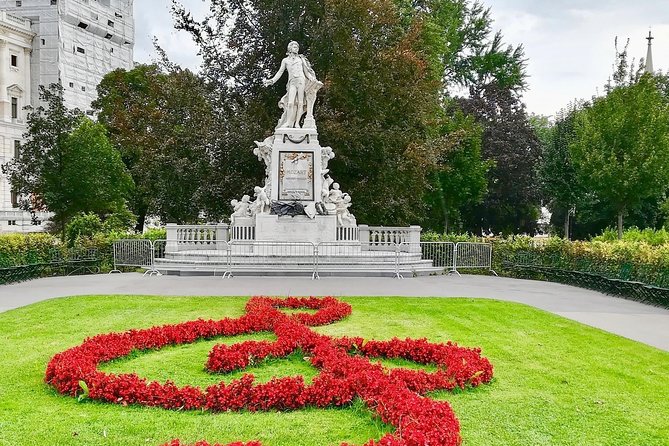
One stop is dedicated to Wolfgang Amadeus Mozart, Vienna’s most famous musical resident. The details provided identify a memorial, but not a specific address or performance. Your guide supplies the context, helping connect Mozart’s public image with the streets and monuments of central Vienna.
The walk also reaches a former dance salon associated with Johann Strauss, the Waltz King. This shifts the story from opera and symphonies to the social world of the Viennese waltz. Dance salons were places where music became entertainment, flirtation, and public fashion. It is a lighter chapter in the route, and a welcome change from Beethoven’s more serious reputation.
I like that the tour includes both Mozart and Strauss. A program focused only on the most famous classical composers could feel narrow. Strauss shows another side of Vienna, one tied to dancing, popular taste, and the polished social life that many people picture when they think of imperial Vienna.
The tour is also not limited to music facts. Lisa, a guide frequently named in the tour’s feedback, is described as adding architecture and general city information, with a lively style that works for people who are not devoted music fans. That matters for families and mixed groups. You can enjoy the buildings and central sights even if you cannot tell Mahler from Mozart.
A different side of Vienna on the same trip:
- Vienna: Vivaldi’s Four Seasons Concert in Karlskirche
★ 4.7 · 14,951 reviews - Vienna: Spanish Riding School Training
★ 3.9 · 9,281 reviews - Vienna: Skip-the-cashier-desk-line Giant Ferris Wheel Ride
★ 4.5 · 7,859 reviews - Vienna: Schönbrunn Palace & Gardens Skip-the-Line Tour
★ 4.7 · 7,739 reviews
Beethoven’s former residence
The itinerary includes a former residence of Ludwig van Beethoven. The supplied details do not identify the exact building, so you should not expect a separate museum visit unless your guide confirms it. The value is in placing Beethoven within the city rather than treating him as a name floating above it.
Beethoven moved often and had a complicated relationship with Vienna. A residence stop can help you understand the practical side of a composer’s life: where he worked, how he fit into the city, and how personal struggles affected his career. The guide’s storytelling will determine how much depth you get here.
Because this is a walking tour with several stops, do not expect long museum-style visits at every address. You are moving through central Vienna, using streets, facades, memorials, and landmarks as the setting for the story. That makes the tour efficient, but it also means the experience is more about interpretation than extended interior access.
St. Stephen’s Cathedral and the final stretch
The walk finishes at Stephansplatz, beside Vienna’s famous Gothic cathedral, St. Stephen’s Cathedral. This is one of the strongest endings available in central Vienna because the cathedral is both a major sight and a useful place to continue exploring on your own.
The cathedral’s music connections are substantial. Mozart was married there, and Joseph Haydn served as a chorister for eight years. The stop also brings together several strands of the tour: church music, composers, imperial Vienna, and the central city itself.
The tour ends at Stephansplatz rather than returning you to the opera house. That is convenient if you want to continue sightseeing, visit the cathedral, or explore the surrounding old town. It is less convenient if you have left luggage or need to return to a hotel outside the center, though inner-city hotel pickup may be available at the beginning.
What the private format changes
This is not a large coach tour with a guide speaking into a microphone. Only your group participates, with space for up to 15 people. That makes a real difference in Vienna’s busy center, where narrow streets and crowded squares can make a large group tiring.
A private guide can adjust the route’s emphasis. One family used the time for both music and general city information. Another group appreciated help with a concert question, including an effort to check ticket availability. That kind of personal attention is one of the strongest reasons to choose this format.
The guide can also help with pace. The tour lasts about two and a half hours, which is long enough to cover several major sites but not so long that it consumes your entire day. Families with children may benefit from a guide who keeps explanations moving. Adults who want more detail can ask for it.
Lisa receives especially strong praise for energy, humor, flexibility, and her ability to include children and teens. She is not the only possible guide, so you should not assume she will lead every departure. Still, the repeated mention of her gives you a useful sense of the tour’s intended style: personal, conversational, and adaptable.
Price, group size, and practical value
The listed price is $450.09 per group of up to 15 people. That is not a bargain for a solo visitor or a couple. It can be a fair deal for a family, reunion, or small club that wants one guide and a private schedule.
Remember to add the separate Vienna State Opera admission fee. The tour includes skip-the-line access, but not the actual ticket. This is the most important cost detail, and it is easy to miss when comparing experiences.
The tour is offered in English and includes a state-certified, accredited Austria Guide. Pickup is available from hotels in Vienna’s inner city. If your hotel is outside that area, the operator contacts you with the exact meeting point.
The stated operating window runs from April 3, 2025, through October 12, 2026, daily from 9 a.m. to 4 p.m. Confirmation arrives when you book. The tour is near public transportation, and service animals are allowed. Most people can participate, but the itinerary includes a 2.5-hour city walk, so you should be comfortable spending that time on foot.
Free cancellation is available up to 24 hours before the start time. Cancellations or changes made inside that 24-hour window are not refunded or accepted, based on local time.
Who will enjoy this Vienna music tour
I would choose this tour for a first visit to Vienna when you want an introduction that combines orientation with a clear theme. The walk covers central landmarks while giving you a framework for returning to those places later.
It suits music lovers especially well, including people interested in opera, Beethoven, Mozart, Strauss, or the Vienna Boys Choir. It also works for families. The guide’s ability to explain architecture and broader city history keeps the experience from becoming a two-and-a-half-hour lecture on composers.
This is a good fit for groups with different interests. One person can focus on music, another on architecture, and another on the city’s imperial past. A private guide can shift the balance as you go.
I would think twice if your main goal is attending a performance. The tour explains the opera house and music culture, but it does not include an opera or concert ticket. It also may not suit you if you prefer a long, quiet museum visit at one site rather than a guided walk through several places.
Booking advice and final verdict
Book early if your schedule is fixed. The tour is booked an average of 41 days in advance, which suggests that popular dates can fill well ahead of time. For the best value, bring enough people to share the group price, and check the separate opera admission charge before confirming.
If you are visiting Vienna for the first time, schedule this near the start of your stay. The route finishes in the city center and gives you a useful sense of where the main sights fit together. You can then return to the opera house, cathedral, or old town with better bearings.
I recommend the tour for families, small groups, and music fans who want a human guide rather than a recorded introduction. The price is high for a small party, and the extra opera ticket needs clear budgeting. But if you want private attention, a lively English-speaking guide, and a well-connected walk through Vienna’s musical landmarks, this is a strong choice.
FAQ
Where does the Private Vienna Music Tour begin?
It begins at the Vienna State Opera, Opernring 2, 1010 Vienna, Austria.
Where does the tour end?
The tour ends at Stephansplatz in central Vienna.
How long does the tour last?
The experience lasts approximately 2 hours and 30 minutes.
Is the tour private?
Yes. Only your group participates, with a maximum group size of 15 people.
Is the tour offered in English?
Yes. The tour is offered in English.
Is hotel pickup available?
Pickup is offered if your hotel is located in Vienna’s inner city. If it is outside that area, the operator contacts you with an exact meeting location.
Is admission to the Vienna State Opera included?
No. Skip-the-line access is included, but you must pay the opera house entrance fee separately.
Which composers and musical figures are included?
The tour covers Beethoven, Mozart, Johann Strauss, Gustav Mahler, and the Vienna Boys Choir, along with the musical settings connected to them.
Can children join the tour?
Most people can participate, and the experience has been used successfully by groups that included children and teenagers. The tour is a walking experience lasting about two and a half hours.
What is the cancellation policy?
You can cancel up to 24 hours before the start time for a full refund. Cancellations or changes made less than 24 hours before the start time are not accepted or refunded.
Just added around Vienna
- Private Tour from Vienna to Melk and Dürnstein★ 4.5 · 3 reviews
- Vienna: Johann Strauss 200th birthday anniversary exhibition★ 4.7 · 3 reviews
- Vienna Private Full Day Tour – Tickets to Schönbrunn & Lunch★ 5.0 · 3 reviews
- Private Salzburg Day Trip from Vienna★ 4.0 · 3 reviews
- Vienna: Entry Ticket Belvedere 21 & Contemporary Art★ 4.3 · 3 reviews
- Full-Day Private Trip from Vienna to Budapest★ 4.5 · 3 reviews
- Vienna by Night: Private Evening Food and Drink Tour★ 5.0 · 3 reviews
- 1.5 Hour Cinematic Style Portrait Photoshoot and Tour in Vienna★ 4.5 · 3 reviews
Private, compared.
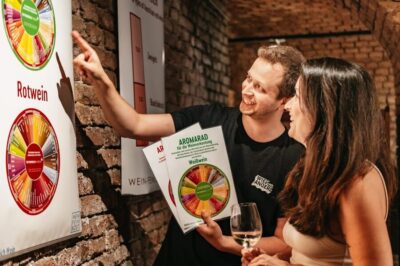
Wine Tasting Experience in a Private Wine Cellar
Read our review →
Private Day Tour Trip Salzburg Hallstatt and Melk from Vienna
Read our review →
Private Hidden Vienna Walk — Stories Behind Quiet Corners
Read our review →