
Reviewed · VIENNA
The best of Vienna on foot
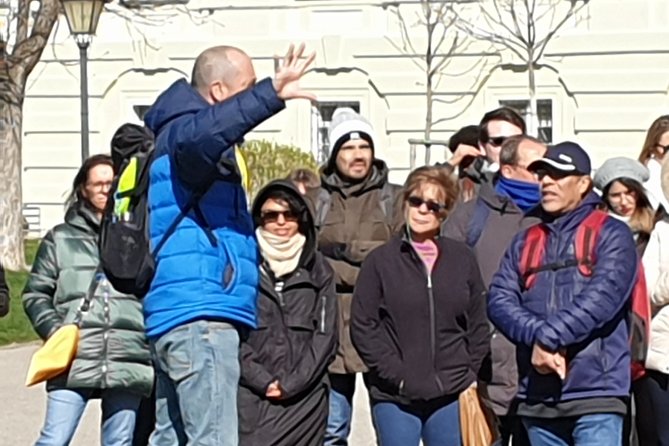
Vienna reveals its best opening chapter on foot, in a compact route from the Maria Theresa Memorial to St. Stephen’s Cathedral. In 150 minutes, you pass imperial palaces, royal burial places, grand squares, and baroque monuments while your guide ties the buildings to Vienna’s stories and daily life.
I like the route’s strong first-day value and its practical advice about restaurants, culture, and public transport. I also like the planned photo pauses, which keep the walk from becoming a nonstop history lecture. The main drawback is simple: this is an outdoor tour in all weather, and the route may not suit anyone with mobility problems despite the activity being marked wheelchair accessible.
In This Review
- Key points at a glance
- Why this walk is a smart first look at Vienna
- Starting at the Maria Theresa Memorial
- Passing the Albertina and Vienna State Opera
- The Capuchin Crypt and the Habsburg story
- The Hofburg, Franz Josef, and Empress Sissi
- Heldenplatz and Vienna’s monumental scale
- The Plague Column and baroque Vienna
- Ending at St. Stephen’s Cathedral
- What the Italian-language format means for you
- Weather, walking, and accessibility
- Who gets the best value from this tour
- Booking details that matter
- Should you book the Vienna walk?
- FAQ
- Where does the tour begin?
- How do I identify the meeting point?
- Where does the tour finish?
- How long does the tour last?
- What language is the tour conducted in?
- What sights are included on the route?
- Is a guide included?
- Can I ask questions during the tour?
- Are food and drinks included?
- Can I cancel for a full refund?
Key points at a glance
- A clear city-center route: Begin at the Maria Theresa Memorial and finish beside St. Stephen’s Cathedral.
- More than 10 major sights: See the Hofburg, Heldenplatz, Albertina, Vienna State Opera, Capuchin Crypt, Plague Column, and other central landmarks.
- Italian-speaking guidance: The tour is conducted in Italian, with guides named Raffaele and Mara appearing in recent tour feedback.
- Useful first-day advice: Ask about restaurants, public transport, cultural life, and how to plan the rest of your stay.
- Built-in photo time: You have chances to stop and photograph Vienna’s baroque facades and imperial spaces.
- Flexible booking: The $40 price includes a certified official guide, with cancellation up to 24 hours before the start for a full refund.
Why this walk is a smart first look at Vienna
Vienna’s center is compact, but it is packed with names, dates, rulers, churches, palaces, and public squares. Without some explanation, you can easily see a grand facade and move on without understanding why it matters.
This walk gives you a useful framework. You begin outside the Maria Theresa Memorial, cross the central area, pass major Habsburg sights, and end at Vienna’s most recognizable church. That direction makes sense for a first visit because it introduces the imperial city in a logical order rather than scattering sights across different neighborhoods.
I like the 150-minute length. It is long enough to cover the major center without becoming an all-day commitment. You can take it near the start of your stay, then use the guide’s tips to decide which museums, churches, restaurants, or cultural events deserve more of your time.
The tour costs $40 per person. That is fair value if you want an official guide and a broad orientation in one sitting. You are paying for interpretation, not entry to the monuments, meals, or drinks. If you already know Vienna well, the route may feel familiar. For a first visit, though, the mix of landmarks and local advice makes the fee easier to justify.
Other Vienna tours people book alongside this one:
- Vienna: Vivaldi’s Four Seasons Concert in Karlskirche
★ 4.7 · 14,951 reviews - Vienna: Spanish Riding School Training
★ 3.9 · 9,281 reviews - Vienna: Skip-the-cashier-desk-line Giant Ferris Wheel Ride
★ 4.5 · 7,859 reviews
Starting at the Maria Theresa Memorial
The meeting point is at the fountain by the Maria Theresa Memorial on Maria-Theresien-Platz. Look for the red, white, and green Italian-colored umbrella, a useful detail in a large open square.
The memorial gives the tour a suitably grand start. Maria Theresa was one of the most important Habsburg rulers, and her monument places you in the world of imperial Vienna immediately. From here, the walk moves toward the city center and its best-known buildings.
This is also a practical meeting point because the square gives the group room to gather before setting off. You should arrive ready to walk outdoors for two and a half hours. Bring weather protection, and avoid carrying large bags or luggage, which are not allowed.
Passing the Albertina and Vienna State Opera
The route continues toward the Albertina and Vienna State Opera. These stops show two sides of Vienna: imperial power and a serious cultural life.
The Albertina is associated with one of the city’s best-known art collections, but this walk focuses on the exterior and the surrounding setting rather than museum entry. You get a chance to photograph the building and hear how it fits into the central city.
The Vienna State Opera adds another layer. Vienna’s musical identity is not just a marketing line, and the opera house gives your guide a natural place to discuss the city’s cultural life. If you plan to attend a performance, ask for practical advice while you are there. The tour includes time for questions, so this is a good moment to ask how to approach Vienna’s concert and opera scene.
I appreciate that the walk does not treat these buildings as isolated photo stops. The point is to understand how art, music, court life, and public space fit together in the center.
The Capuchin Crypt and the Habsburg story
One of the most meaningful stops comes outside the Capuchin Crypt, the burial place of the Habsburg monarchs. The crypt is tied directly to the dynasty that shaped Vienna and much of Central Europe.
You do not need to enter the crypt for the stop to work. Standing outside, you can hear about the role of the Habsburgs and the way Vienna’s monuments reflect their long rule. The guide can also help separate the grand imperial image from the human stories behind it.
This is where the walk gains more weight than a simple sightseeing circuit. Vienna’s palaces and ceremonial squares can feel polished and almost theatrical. The Capuchin Crypt points to mortality, succession, and the private side of monarchy.
If entering the crypt is important to you, confirm separately whether admission is part of your own plans. The experience itself includes guided sightseeing, not food, drinks, or stated monument entry tickets.
A different side of Vienna on the same trip:
- Vienna: Schönbrunn Palace & Gardens Skip-the-Line Tour
★ 4.7 · 7,739 reviews - Vienna: Light of Creation Votive Church Immersive Light Show
★ 4.8 · 6,779 reviews - Vienna Spanish Riding School Guided Tour
★ 4.7 · 6,765 reviews - Vienna: Classical Concert in the World-Famous Musikverein
★ 4.6 · 6,673 reviews
The Hofburg, Franz Josef, and Empress Sissi
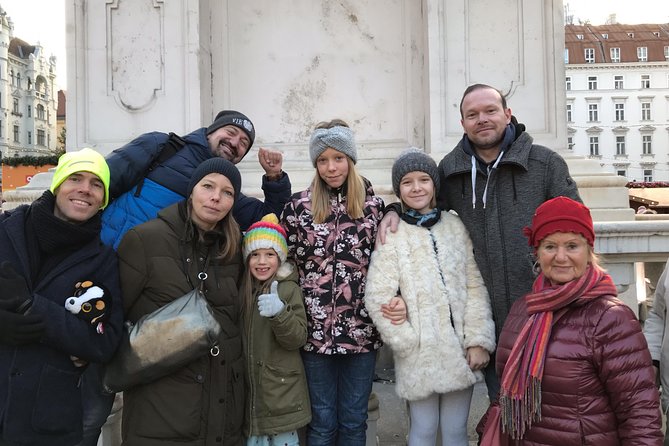
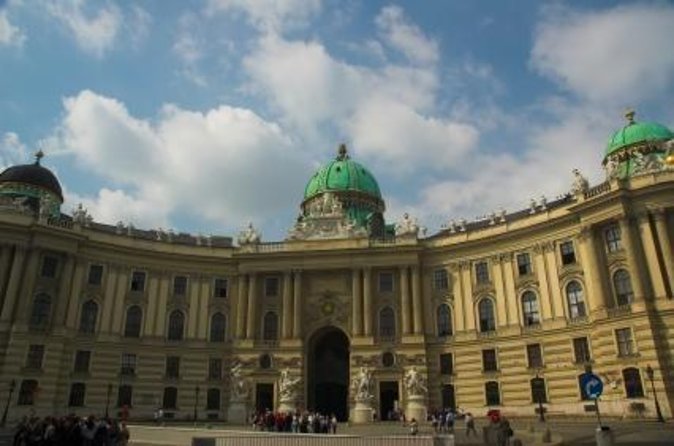
The Hofburg is the emotional center of the imperial story. This vast palace complex was home to Franz Josef and Empress Sissi, two figures closely tied to Vienna’s public image.
At the Hofburg, I would pay close attention to the guide’s stories rather than simply photographing the facade. The value here lies in learning how the palace functioned and why it remains central to Vienna’s identity.
The experience promises specific facts, dates, and anecdotes, not only broad statements about royalty. That matters because imperial Vienna can quickly become a blur of similar names and grand buildings. A good explanation gives you something to remember when you later visit a museum or return to the palace on your own.
Guides named in recent feedback include Raffaele and Mara. Raffaele is described as prepared, friendly, and never dull, while Mara is praised for complete explanations, amusing anecdotes, and a precise historical framework. Your guide may differ, but these comments suggest that the tour’s personality depends greatly on who leads it.
Heldenplatz and Vienna’s monumental scale
From the Hofburg, the route reaches Heldenplatz, one of Vienna’s most imposing public spaces. The name means Heroes’ Square, and its broad scale helps you understand how the imperial center was designed to impress.
Here, I would take time to look beyond the individual buildings. The open space, palace fronts, and ceremonial design work together. Vienna’s center was built to project authority, and Heldenplatz makes that message easy to read.
The guide also talks about Vienna’s popular culture and the special role of its residents. That promise is important. A city becomes more useful to you when the tour moves beyond rulers and architecture to explain how people live, talk, eat, and use the center today.
The broad square is also one of the better places for photographs. Since the tour includes time for pictures, you should not feel forced to choose between listening and taking a careful shot.
The Plague Column and baroque Vienna
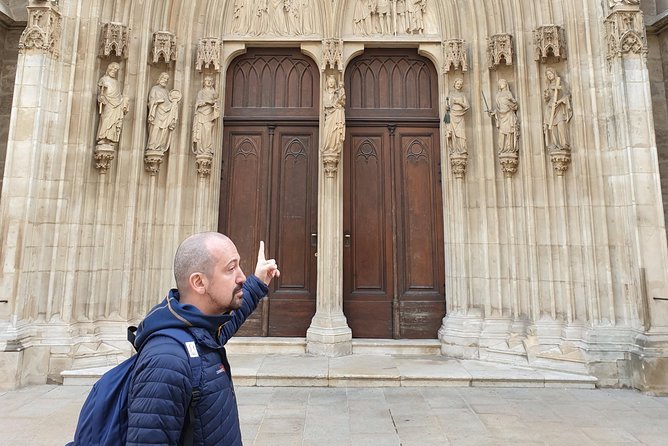
The Plague Column is another major stop. This elaborate monument recalls the plague and reflects Vienna’s Catholic and baroque character.
For me, the column is most interesting when treated as a public expression of fear, faith, and gratitude rather than as decorative stonework. Your guide can point out why the monument looks so theatrical and how it fits the city’s larger baroque style.
Several parts of the route highlight Vienna’s magnificent baroque buildings. That word can become vague if you simply hear it repeated, so use the stop to compare shapes, decoration, and scale. The walk is especially useful here because you see several buildings in sequence, not one monument in isolation.
The center can feel crowded around major sights, and you may have to position yourself carefully for photographs. That is normal for a city-center walk. The benefit is that the landmarks are close enough to connect on foot.
Ending at St. Stephen’s Cathedral
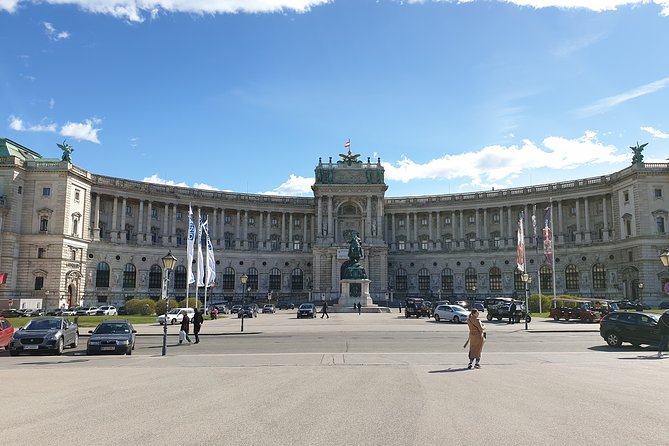
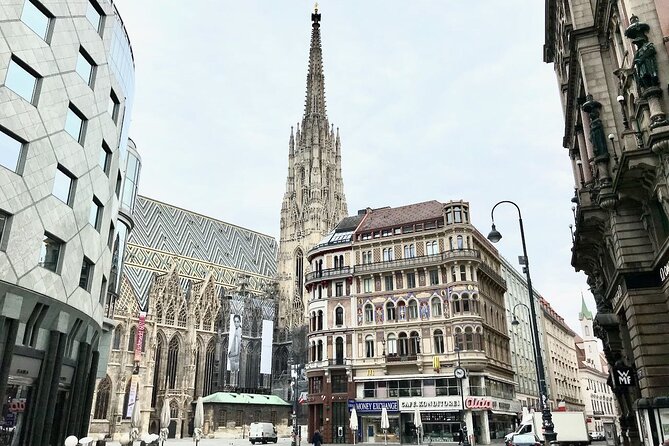
The tour finishes at St. Stephen’s Cathedral, Vienna’s landmark and one of the easiest meeting points for the rest of your day.
Ending here works well. You have moved from the imperial memorial of Maria Theresa through palaces, cultural buildings, public squares, and religious monuments, then arrived at the church that anchors the old center.
The cathedral is also a useful place to continue exploring independently. The tour does not promise an interior visit, so plan separately if you want to go inside or spend more time examining the building. What the walk gives you is context and orientation, making the cathedral more than a final photo stop.
You can also use the end of the tour to ask for directions and advice about the next part of your day. Questions are included, and the guide is specifically expected to help with restaurant visits, public transport, and cultural life.
What the Italian-language format means for you
The live guide speaks Italian, so this experience is best suited to Italian-speaking visitors who want explanations rather than an audio guide. Audio recording is not allowed, but you can ask questions during the walk and take photographs.
The Italian focus can make the pace and explanations feel more natural if Italian is your preferred language. It also means you should not book this particular departure expecting English or another language.
Recent feedback names Raffaele and Mara, with especially strong praise for clear explanations, humor, and historical detail. That is useful when setting expectations, but guide assignments can vary. The overall rating is 4.8 from 126 reviews, with one lower rating showing that the experience will not suit every person or every day.
A winter walk can be demanding. One recent outing took place in severe cold and strong wind, yet the guide kept the nearly three-hour walk pleasant. That tells you two things: the guide can help carry the experience, and you should dress for the forecast rather than assume Vienna’s center will feel comfortable.
Weather, walking, and accessibility
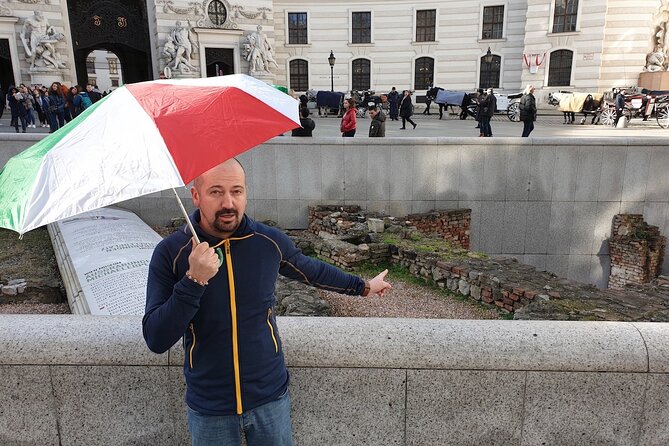
The tour runs rain or shine. It is canceled only in the event of an environmental disaster, so you need to be prepared for ordinary rain, cold, heat, or wind.
The route lasts 150 minutes and takes place outdoors. Comfortable shoes are sensible, though the supplied information does not specify the exact surface or elevation. You should also avoid bringing luggage or large bags.
There is a contradiction in the accessibility information. The activity is marked wheelchair accessible, but it is also described as not suitable for people with mobility impairments. Because the route is a long walking tour through the city center, I would contact the provider before booking if you use a wheelchair, walker, or need frequent rest stops.
Pets are not allowed. Food and drinks are not included, though a stop at a punch kiosk was added during one outing after the group requested it. Treat that as a possible group decision, not a guaranteed part of the route, and budget separately for any purchase.
Who gets the best value from this tour
I would choose this walk if you are visiting Vienna for the first time, want a fast orientation, and prefer a real guide to an app. It suits people who like history in manageable portions, with time for questions and photos.
It is also a good fit for a short stay. You see the main central sights in one 150-minute block, then receive advice that can help shape the rest of your visit. A first-day booking is particularly sensible, since the route ends in a useful part of town and gives you a clearer sense of where things are.
Families and mixed-age groups may appreciate the limited duration, but the walking and weather exposure still matter. Anyone who dislikes outdoor tours, has difficulty standing for long periods, or needs guaranteed access to interiors should choose carefully.
If you have already explored the Hofburg, State Opera, Albertina, and cathedral area in detail, you may find the route repetitive. In that case, a specialized museum or neighborhood tour could offer more new material.
Booking details that matter
The price is $40 per person. Included are a certified official tour guide, the chance to ask questions, and time for photographs. Food, drinks, luggage storage, and stated entry tickets are not included.
You can cancel up to 24 hours before the tour for a full refund. The reserve-now, pay-later option also lets you hold a place without paying immediately, which is useful when your Vienna schedule is still moving around.
At the meeting point, look for the Italian-colored umbrella beside the fountain at the Maria Theresa Memorial. Since the route is outdoors and luggage is not permitted, arrive with a small day bag and clothing suited to the weather.
Should you book the Vienna walk?
Book it if you want a well-shaped introduction to Vienna’s central sights, delivered in Italian, with history, anecdotes, photo time, and practical advice. The route covers a lot without taking your entire day, and the strong feedback about Raffaele and Mara points to guides who can make the historical material lively.
Think twice if you have mobility limits, need an indoor activity, or want extensive interior visits. The rain-or-shine policy is firm, and the accessibility wording needs clarification.
For a first day in Vienna, I see this as a sensible purchase: broad enough to orient you, focused enough to avoid wasting time, and personal enough to let you ask the questions that guidebooks cannot answer on the spot.
FAQ
Where does the tour begin?
It begins at the Maria Theresa Memorial, by the fountain on the square.
How do I identify the meeting point?
Look for an Italian-colored umbrella in red, white, and green.
Where does the tour finish?
The tour finishes at St. Stephen’s Cathedral.
How long does the tour last?
It lasts 150 minutes, or two and a half hours.
What language is the tour conducted in?
The live tour guide speaks Italian.
What sights are included on the route?
The route passes the Capuchin Crypt, Albertina, Vienna State Opera, Hofburg, Heldenplatz, Plague Column, St. Stephen’s Cathedral, and other central sights.
Is a guide included?
Yes. A certified official tour guide is included.
Can I ask questions during the tour?
Yes. There is an opportunity to ask questions during the experience.
Are food and drinks included?
No. Food and drinks are not included.
Can I cancel for a full refund?
Yes. You can cancel up to 24 hours in advance for a full refund.
Just added around Vienna
- Private Tour from Vienna to Melk and Dürnstein★ 4.5 · 3 reviews
- Vienna: Johann Strauss 200th birthday anniversary exhibition★ 4.7 · 3 reviews
- Vienna Private Full Day Tour – Tickets to Schönbrunn & Lunch★ 5.0 · 3 reviews
- Private Salzburg Day Trip from Vienna★ 4.0 · 3 reviews
- Vienna: Entry Ticket Belvedere 21 & Contemporary Art★ 4.3 · 3 reviews
- Full-Day Private Trip from Vienna to Budapest★ 4.5 · 3 reviews
- Vienna by Night: Private Evening Food and Drink Tour★ 5.0 · 3 reviews
- 1.5 Hour Cinematic Style Portrait Photoshoot and Tour in Vienna★ 4.5 · 3 reviews