
Reviewed · CITY TOURS
Vienna by Bike 3-Hour All-In-One City Bike Tour in English
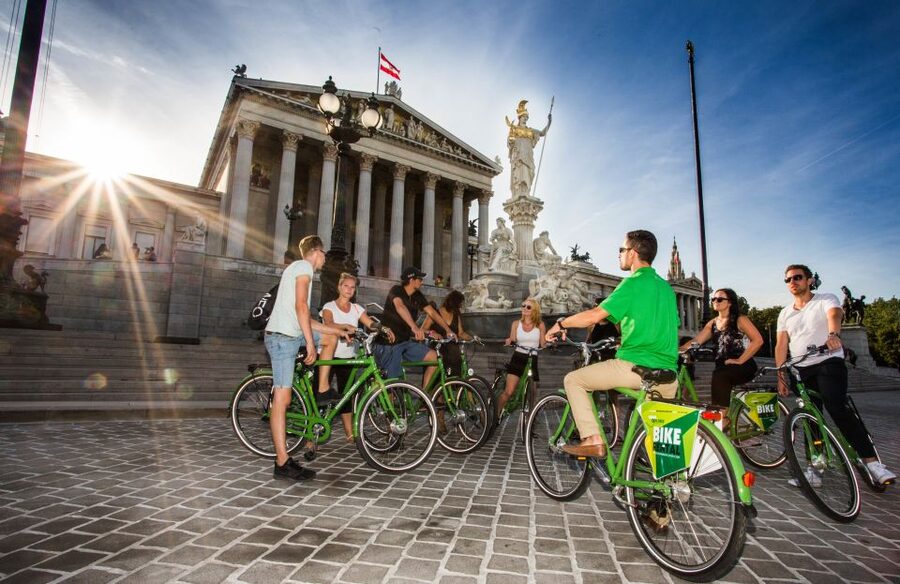
Vienna’s grand center makes more sense when you see it from a bicycle. In three hours, this tour links the Ringstrasse, imperial buildings, the Danube canal, Hundertwasserhaus, and Prater Park, covering ground that would take much longer on foot.
I like the easy city bikes and relaxed pace, which let you focus on Vienna rather than on gears and traffic. I also like the mix of famous sights and odd details, from the grand Rathaus to Prater’s trees and the wonderfully unruly Hundertwasserhaus. The main drawback is that the route focuses on the Ringstrasse and outer central districts, so you do not spend much time inside Vienna’s oldest lanes.
In This Review
- Key points at a glance
- Why a bike is a smart way to see Vienna
- Starting at Franz Josefs Kai
- The Ringstrasse and imperial Vienna
- Karlskirche and Karlsplatz
- Along the Danube canal
- Hundertwasserhaus, Vienna’s unruly address
- Prater Park and the giant Ferris wheel
- A route built around stories, not constant talking
- How difficult is the three-hour ride?
- Rain, clothing, and the $55 price
- Who should book this Vienna bike tour?
- Should you book it?
- FAQ
- How long is the Vienna bike tour?
- How much does the tour cost?
- What language is the tour conducted in?
- Where does the tour meet?
- Which subway station is closest to the meeting point?
- What sights are included on the route?
- Are bicycles provided?
- Does the tour operate in bad weather?
- Can I cancel the booking?
Key points at a glance
- A broad 10-kilometer-style city ride: You cover far more ground than on a walking tour, with most riding on smooth cycle paths and relatively flat streets.
- Imperial Vienna from the saddle: The route brings you past the Opera House, Rathaus, Parliament, Vienna University, Hofburg, Heroes’ Square, and Karlskirche.
- A useful first-day orientation: The three-hour route helps you decide where to return for museums, churches, cafés, and longer visits.
- A good balance of riding and stops: You pedal between sights, then pause for explanations and photographs rather than listening to one long speech.
- Strong guide-led storytelling: Guides including Lisa, Marco, Jan, Horst, Robert, and Karl have been praised for history, humor, local advice, and careful group handling.
- Weather is not a deal breaker: The tour runs in rain, and ponchos are provided, though a wet ride can still be less pleasant than a dry one.
Why a bike is a smart way to see Vienna
Vienna is a large city with its sights spread across several districts. The grand buildings along the Ringstrasse are close enough to connect by bike, but far enough apart that walking from one end to the other can eat up a good part of your day.
On this ride, you get a moving introduction to the city. You see the architecture from several angles, hear short explanations at planned stops, and keep going before your attention fades. That rhythm works well for a first visit.
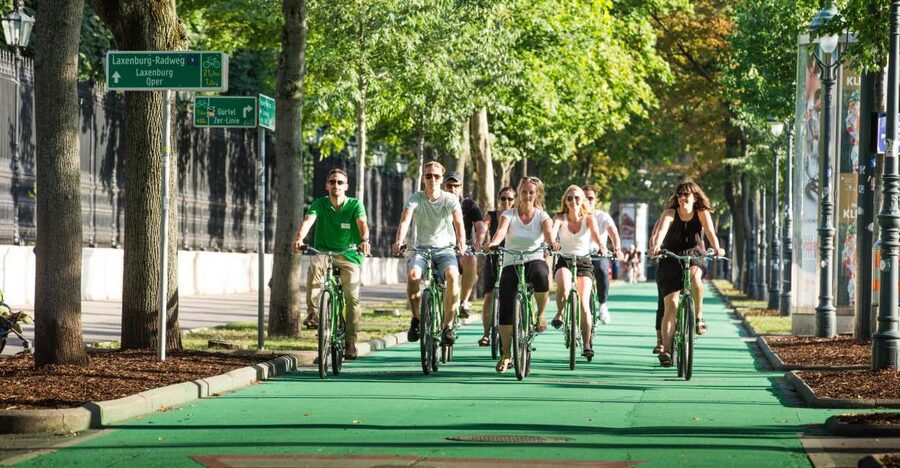
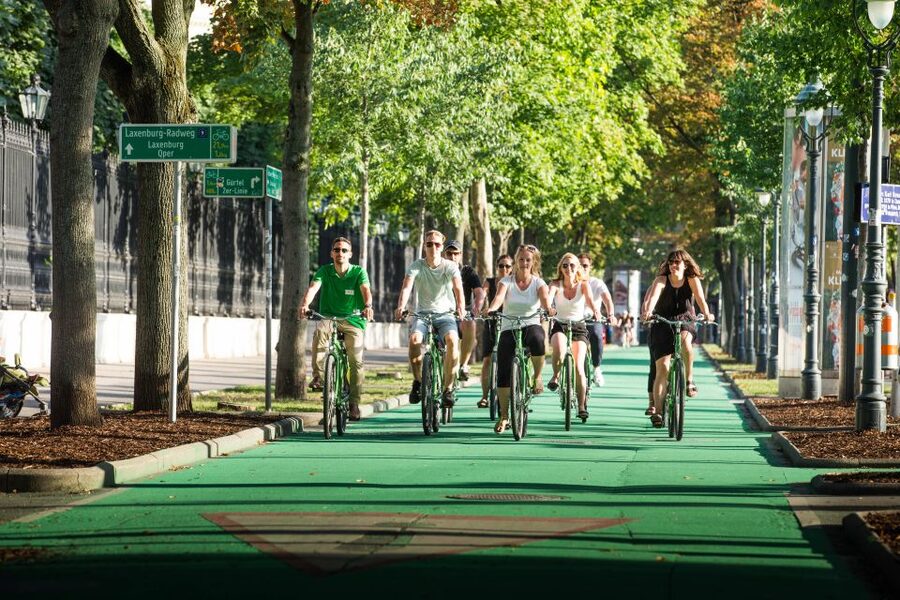
The route is also practical for people who want exercise without signing up for a hard cycling outing. The roads and cycle paths are described as safe and well surfaced, and the ride is largely flat. Guides have been praised for keeping older and younger riders together, helping at intersections, and setting a steady pace.
You should still feel comfortable riding a bicycle in a city. This is not a sightseeing bus with a bicycle parked beside it. You will pedal for much of the three hours, with stops for photographs and commentary.
More bike days around Vienna:
- Classic Vienna: 3-Hour Guided Bike Tour
★ 4.7 · 1,846 reviews - Wachau Valley Wine Tasting Bike Tour from Vienna
★ 5.0 · 829 reviews - Vienna City Bike Tour
★ 4.5 · 599 reviews
Starting at Franz Josefs Kai
The meeting point is at Franz Josefs Kai, 45, in Vienna’s 1010 district. Schottenring station, served by the U2 and U4 subway lines, is the nearest useful transport stop.
Allow enough time to find the address and check in. The company asks you to bring comfortable clothing, which is sensible even in good weather. Wear something that lets you pedal freely, and remember that Vienna’s weather can change during a three-hour outdoor activity.
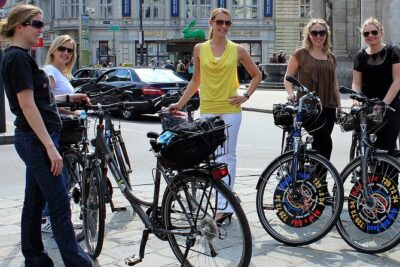
The bikes are modern city bicycles designed to be easy to ride. Helmets are available, and the condition of both bikes and seats has received repeated praise. One departure included riders using e-bikes, so it is worth checking current availability if you would prefer some assistance, but the standard tour is described as using regular city bikes.
The Ringstrasse and imperial Vienna
The first major section follows the Ringstrasse, Vienna’s grand ceremonial boulevard. This is the architectural heart of the outing, and you will see why the road is one of the city’s best introductions.
The boulevard grew after Vienna’s old defensive walls were removed in the nineteenth century. The new space became a showcase for the Austro-Hungarian Empire, lined with public buildings meant to project education, law, culture, and imperial power.
The route passes the Neo-Renaissance Vienna Opera House, one of the city’s most famous cultural buildings. You also ride by the Gothic façade of the Rathaus, whose pointed details and tall central tower make it easy to recognize even from a distance.
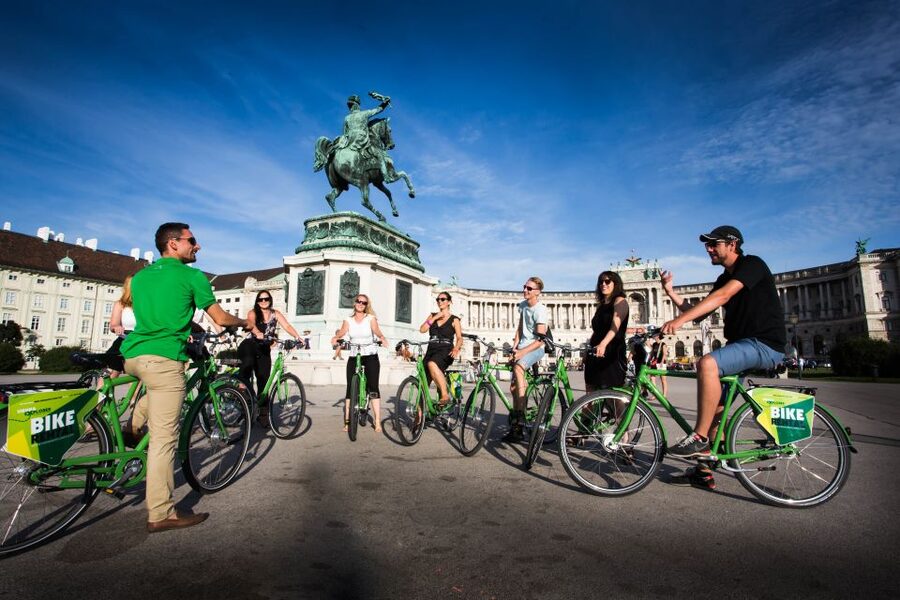
Other stops include the nineteenth-century Parliament buildings, Vienna University, the Hofburg, and Heroes’ Square. These buildings are not random sights placed along a scenic road. Together, they explain how the Habsburg capital presented itself to the world.
I like this part of the ride because the guide can connect architecture with politics. Instead of merely hearing the names of buildings, you get a sense of why so many different revival styles appeared along the boulevard.
Heroes’ Square adds a darker layer. It was the setting for Adolf Hitler’s 1938 Anschluss speech, when Nazi Germany announced the annexation of Austria. A good guide can place that event within Vienna’s twentieth-century story without turning the entire ride into a lecture.
The cycling itself is part of the appeal here. You can look down the long boulevard, then pull over for a closer view and a photograph. On foot, you might visit one or two buildings in this stretch. By bike, you see the full sequence.
Karlskirche and Karlsplatz
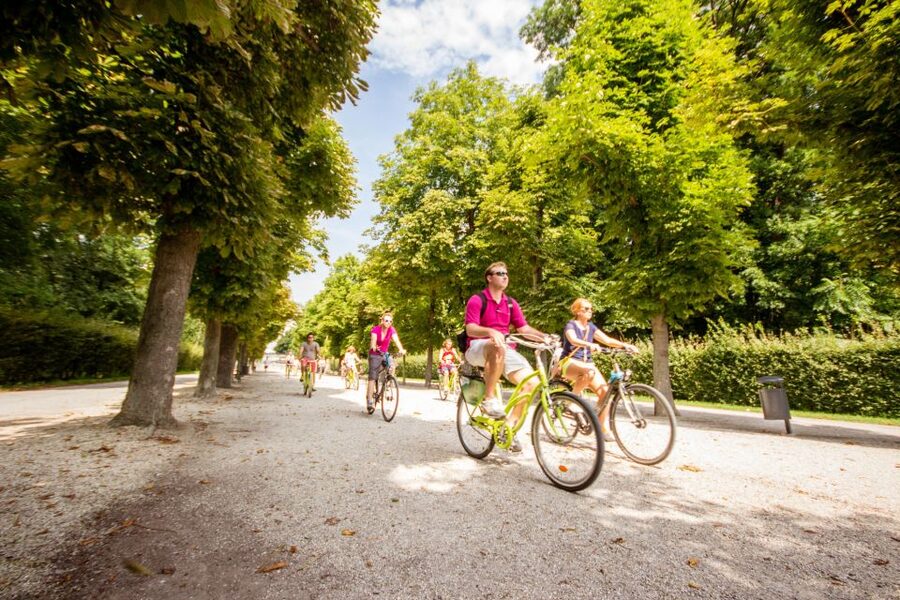
Karlskirche, on Karlsplatz, brings a different style to the route. Its large dome and classical columns create one of Vienna’s most striking church façades.
The church is especially useful as a visual pause after the long imperial buildings of the Ringstrasse. Its design is more theatrical and open, with the dome drawing your eye from across the square.
You should understand that this is a sightseeing stop rather than a guaranteed extended interior visit. The activity promises views of the church and time for photographs, not an organized church tour.
Karlsplatz also helps you see how Vienna’s major buildings sit within everyday city life. The grand architecture is not isolated in a museum district. It is part of the routes people use to cross the city.
A few more Vienna tours worth weighing up
- The unknown Vienna City- a guided walking tour in 3 hours
★ 4.7 · 137 reviews - Highlights of Vienna in a Historical & Cultural 3h Walking Tour
★ 5.0 · 74 reviews - 3-Hour Walking Tour of Vienna Central Cemetery
★ 4.7 · 71 reviews - Vienna: Tour RAXI (electric rickshaw) 3 hours in Vienna
★ 4.9 · 42 reviews
Along the Danube canal
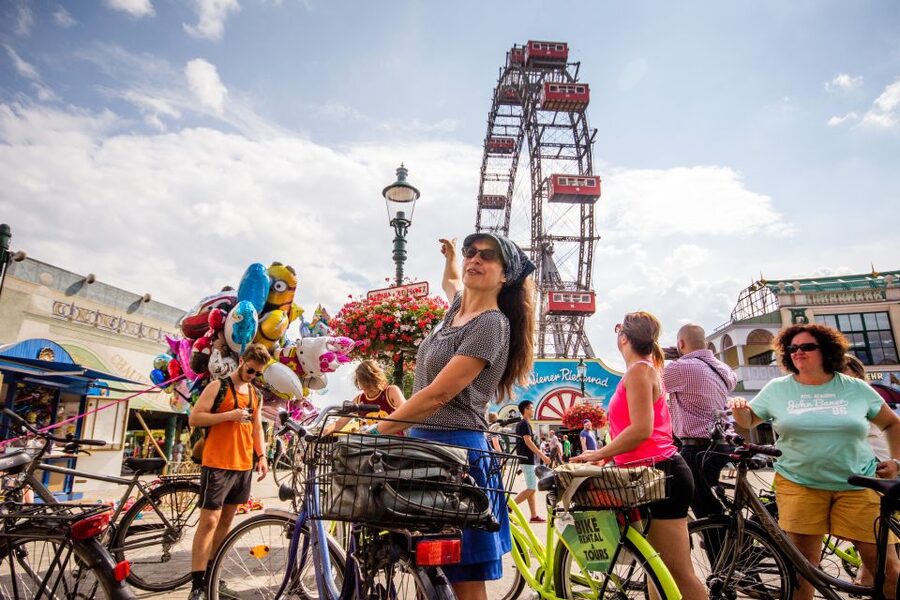
The ride then reaches the banks of the Danube canal, a sidearm of the River Danube. This section gives your legs a change of scenery after the formal boulevard.
The canal route feels less ceremonial than the Ringstrasse. You get water, open views, and a better sense of Vienna beyond its imperial façade. It is also a pleasant place to keep moving, since the ride is not built around stopping at every landmark.
For some riders, this part may be less memorable than the Opera House or Rathaus. That is the trade-off of a city bike tour: you exchange long visits at a few major sights for a wider look at Vienna’s districts and public spaces.
The canal also makes the route feel like a real city ride rather than a tightly packed architecture lesson. You are moving through the city’s different moods, from imperial boulevard to waterfront path.
Hundertwasserhaus, Vienna’s unruly address
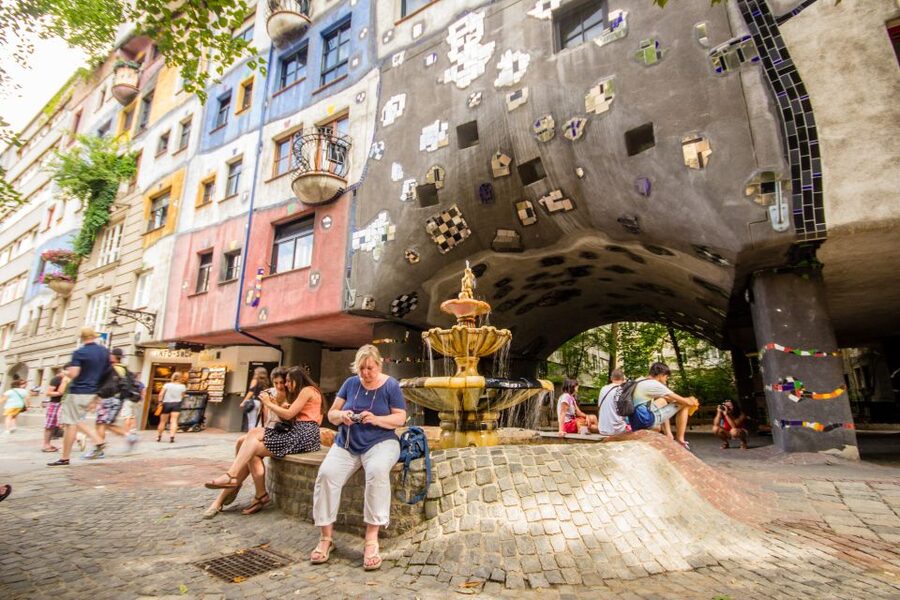
Hundertwasserhaus is one of the route’s most enjoyable changes of tone. Its uneven lines, bright colors, irregular windows, and planted surfaces look nothing like the formal nineteenth-century buildings around the Ringstrasse.
The apartment complex was designed by Friedensreich Hundertwasser, an artist and architect who rejected straight lines and uniform surfaces. You do not need to be an architecture specialist to enjoy it. The building is playful, strange, and easy to photograph.
This stop is valuable because it keeps the tour from becoming a parade of palaces and government buildings. Vienna is not only polished imperial stone. It also has experimental, eccentric places that challenge the city’s traditional image.
Your guide may also point out small details that you would miss alone. The strongest guides on this route are good at answering unexpected questions, including questions about tree markings and local customs. That sort of conversation can make the stop feel less scripted.
There is one practical point to keep in mind: the tour offers an exterior look at Hundertwasserhaus. It is not a dedicated architectural visit with time to study every feature.
Prater Park and the giant Ferris wheel
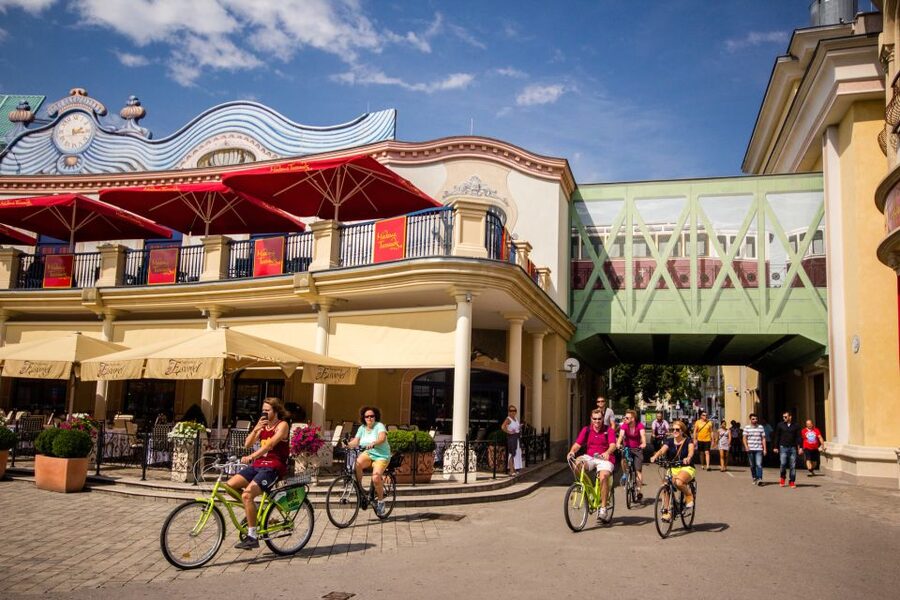
The ride continues to Prater Park, one of Vienna’s best-known recreation areas. The giant Ferris wheel, or Riesenrad, is the obvious landmark, and its silhouette gives the stop a memorable finish.
Prater offers a welcome contrast to the heavy stone façades of central Vienna. The park’s broad paths and trees make the city feel more open. One guide explained why the park has trees but no bushes in certain areas, a small detail that shows how much character can be found beyond the headline sights.
The Ferris wheel is a photo stop on this tour, not a ride admission. If you want to go up, you will need to arrange that separately and allow extra time outside the three-hour schedule.
Prater is also where the tour’s value becomes clear. Walking from the Hofburg area to Prater, then continuing to the canal, would take significant time. Cycling lets you connect these districts while still hearing the stories behind them.
A route built around stories, not constant talking
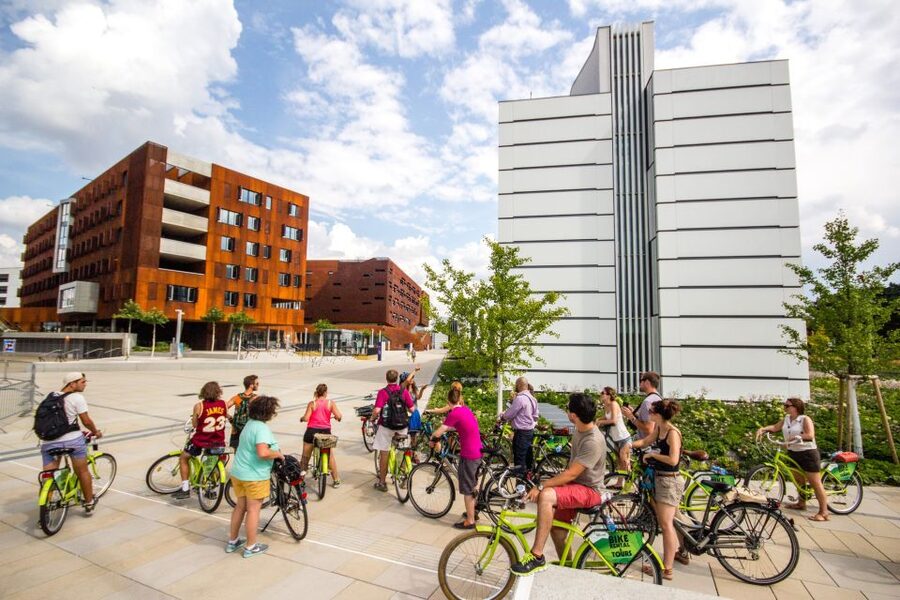
The guides are a major part of the experience. Lisa has been praised for high energy and humor, even in heavy rain. Marco has been singled out for detailed explanations, thoughtful answers, and careful handling of historical subjects. Jan is known for lively storytelling and for looking after both the oldest and youngest riders in a group.
Horst has guided many departures and is often described as funny, energetic, and full of local facts. Robert has been praised for giving useful context about Austrian politics, wartime history, and present-day life. Karl is another popular guide, with a style that combines detailed explanations and a light touch.
Guide quality can vary from one departure to the next, as it does with any live tour. The important point is that this company uses guides who do more than recite building names. They explain how Vienna developed, answer questions, and give practical suggestions for food, drinks, shopping, and the rest of your stay.
I also like the stop-and-ride format. Several guides have been praised for giving information at strategic stops rather than talking continuously while everyone is trying to navigate. That is safer and easier to follow.
English is the operating language. Most English speakers should find the tour easy to follow, but a second-language listener may find a fast guide or unfamiliar pronunciation harder to catch. If you are not fully confident in English, stay near the guide at stops and ask for repetition when needed.
How difficult is the three-hour ride?
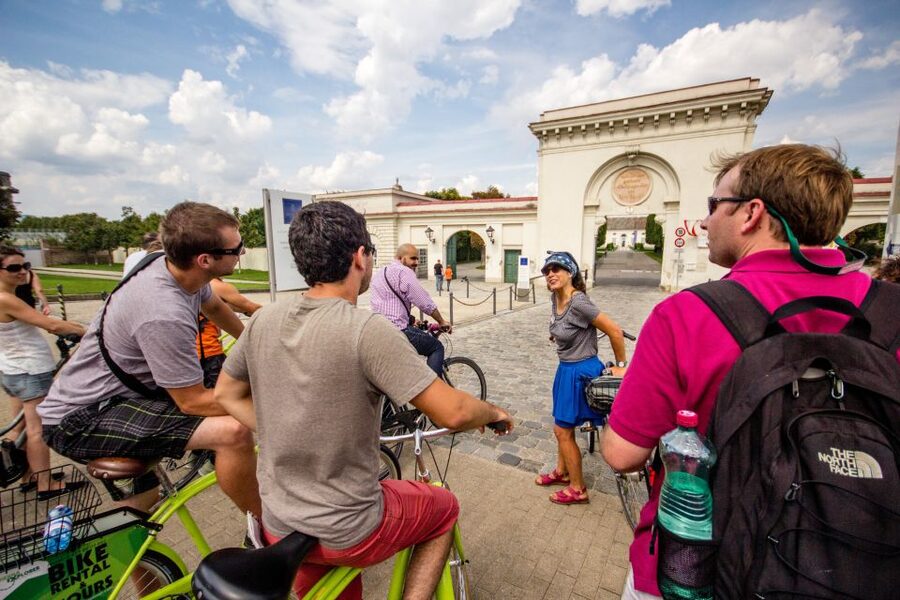
This is an easy city ride rather than a sporting excursion. The route is largely flat, the pace is described as leisurely, and the bikes are comfortable and simple to handle.
You should expect enough pedaling to feel active. The exact distance varies, but one departure covered more than 10 kilometers. That is a useful guide for planning, though the pace and route can change with traffic, weather, and group ability.
The company aims to operate on safe cycle paths and well-surfaced routes. Guides have been praised for managing intersections and keeping the group together. Still, you are riding in a city, so basic road awareness matters.
The tour can suit families, and a 12-year-old rider completed it with a patient guide. Children must be able to ride safely and follow instructions. Parents should also consider the three-hour length and the fact that this is a real bike ride, not a short loop.
There is at least one small comfort issue to consider. Three hours can feel long without a proper break, especially on a hot day. One rider suggested another comfort stop would help. Bring water if you can, and use the planned sightseeing pauses to rest.
Rain, clothing, and the $55 price
The cost is $55 per person. That is not the cheapest way to see Vienna’s buildings, but it is fair value if you want a guide, a bike, a helmet, and a broad route in a single morning or afternoon.
You are paying for more than bicycle hire. A rental bike alone will not explain the Ringstrasse, connect the political history of Heroes’ Square to the city, or help you move safely through unfamiliar streets. The tour can also save time if you have only two or three days in Vienna.
The value is weaker if you prefer long museum visits or want to explore the old town street by street. You will pass many important places, but you will not spend enough time at each one for a full visit. A walking tour or museum ticket may suit you better if indoor culture is your main goal.
The tour runs in all weather. Rain ponchos are provided when it is wet, and they do the job, but you may look and feel a little like a bright plastic banana by the end. Comfortable clothes, shoes that handle pedals well, and a willingness to accept changing weather will make the ride easier.
Free cancellation is available up to 24 hours before departure, and you can reserve now and pay later. Those policies are helpful if your Vienna schedule is still shifting.
Who should book this Vienna bike tour?
I would choose this tour early in a Vienna visit. It gives you a city map in your head, shows you which buildings deserve a return visit, and helps you understand how the Ringstrasse connects with Prater and the canal.
It is a particularly good fit for:
- First-time visitors with limited time
- Families with confident young riders
- History fans who prefer stories tied to real places
- People who want exercise without a demanding cycling route
- Anyone who finds walking tours too slow
- Visitors who enjoy both grand architecture and unusual modern design
I would think twice if you dislike cycling in city traffic, need frequent long breaks, or want to spend most of your time inside palaces and museums. The route is designed for coverage and context, not for lingering at one attraction.
Should you book it?
Yes, if you want a lively orientation to Vienna that combines exercise, architecture, politics, and local detail. The $55 price makes sense when you value a good bicycle, an English-speaking guide, and the ability to reach sights spread across the city.
Book it for your first or second day, when the route can shape the rest of your plans. Choose a dry-weather slot if you have flexibility, though ponchos make rain possible. If you want Vienna beyond the postcard center, and you are comfortable on a bike, this is a strong three-hour introduction.
FAQ
How long is the Vienna bike tour?
The tour lasts three hours.
How much does the tour cost?
The listed price is $55 per person.
What language is the tour conducted in?
The live tour guide speaks English. The activity information also refers to English and German-speaking guides.
Where does the tour meet?
The meeting point is Franz Josefs Kai, 45, 1010 Vienna.
Which subway station is closest to the meeting point?
Schottenring is the nearest subway station, served by lines U2 and U4.
What sights are included on the route?
The route includes the Ringstrasse, Vienna Opera House, Rathaus, Parliament buildings, Vienna University, Hofburg, Heroes’ Square, Karlskirche, the Danube canal, Hundertwasserhaus, and Prater Park with its giant Ferris wheel.
Are bicycles provided?
Yes. Comfortable, modern city bikes are included. Helmets are also available according to the tour information and direct experience described for the departures.
Does the tour operate in bad weather?
Yes. The tour operates in all weather conditions, and rain ponchos are provided in wet weather.
Can I cancel the booking?
You can cancel up to 24 hours in advance for a full refund. The tour also offers a reserve-now, pay-later option.
Just added around Vienna
- Private Tour from Vienna to Melk and Dürnstein★ 4.5 · 3 reviews
- Vienna: Johann Strauss 200th birthday anniversary exhibition★ 4.7 · 3 reviews
- Vienna Private Full Day Tour – Tickets to Schönbrunn & Lunch★ 5.0 · 3 reviews
- Private Salzburg Day Trip from Vienna★ 4.0 · 3 reviews
- Vienna: Entry Ticket Belvedere 21 & Contemporary Art★ 4.3 · 3 reviews
- Full-Day Private Trip from Vienna to Budapest★ 4.5 · 3 reviews
- Vienna by Night: Private Evening Food and Drink Tour★ 5.0 · 3 reviews
- 1.5 Hour Cinematic Style Portrait Photoshoot and Tour in Vienna★ 4.5 · 3 reviews
City Tours, compared.
Guided Walking Tour of City Center Highlights
Read our review →
Guided Walking Tour of City Highlights & Hidden Gems
Read our review →
Skip-the-Line Schonbrunn Palace Guided Tour and Vienna Historical City Tour
Read our review →
Browse the lists this tour appears in