
Reviewed · HISTORICAL TOURS
Highlights of Vienna in a Historical & Cultural 3h Walking Tour
Vienna’s grand center makes the most sense when someone connects the buildings, rulers, composers, cafés, and occasional royal scandal as you walk. This tour links Mozart’s Vienna with the Habsburg court, the Spanish Riding School, coffee culture, and the city’s grandest public buildings in one half-day route.
I like the small group size, capped at 18 people, because you can ask questions without shouting across a crowd. I also like that the walk ends at the State Opera and includes practical advice about museums, cafés, restaurants, and venues, so you can use the tour to plan the rest of your stay.
The main consideration is pace. You cover a lot of ground and stop at 13 places in about three hours, although an extra 30-minute coffeehouse break is included. Cold weather, crowds, or a family walking at a slower speed may make the schedule feel hurried.
In This Review
- Key points to know before booking
- From Mozart’s apartment to St. Stephen’s Cathedral
- Graben, plague history, and Vienna’s sweet tooth
- Freyung Passage and the Café Central corner
- The Parliament, Rathaus, and Burgtheater
- Museums around the Winter Palace
- The Hofburg and the Habsburg story
- Meeting the Lipizzaner horses
- Sacher, cake, and the Vienna State Opera
- How the three hours feel on foot
- What is included for $66.37
- Who should book this Vienna walking tour?
- Booking details and cancellation
- Should you book it?
- FAQ
- How long does the Vienna walking tour last?
- Where does the tour begin and end?
- Is the tour offered in English?
- Are museum entrance fees included?
- How large is the group?
- What happens if the weather is poor?
Key points to know before booking
- Start with Mozart and finish at the Opera: The route runs through central Vienna from Mozarthaus to the Vienna State Opera.
- See the Habsburg center from the outside: You learn about the Hofburg, its emperors, nearby museums, and the buildings around the former imperial court, but museum entrance fees are not included.
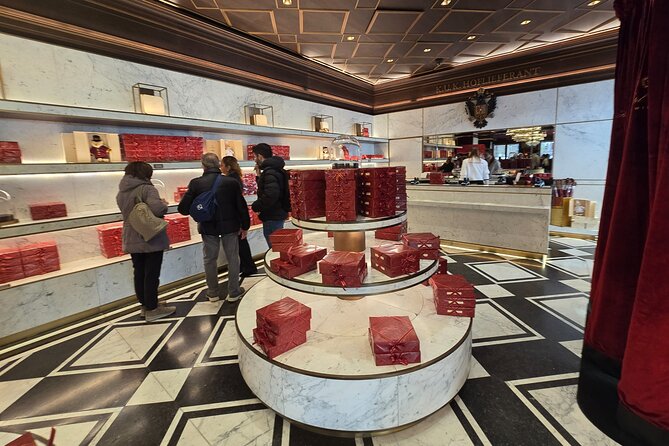
- Coffee culture is part of the story: Stops at Julius Meinl, Café Central, Demel, Hotel Sacher, and a traditional coffeehouse connect food with Viennese history.
- Guides bring personality to the walk: Nikoleta, Nicoletta, Nicole, and Giselle are among the guides praised for clear explanations, humor, and useful local suggestions. Your guide may be different.
- Expect a city orientation, not a museum tour: Most stops are exterior visits or short explanations, with no included admission tickets.
- Plan it early in your stay: The route gives you a useful map of central Vienna and helps you choose which museums, cafés, and landmarks deserve more time.
From Mozart’s apartment to St. Stephen’s Cathedral
The tour begins at Mozarthaus Vienna on Domgasse, where Mozart lived during a major part of his time in Vienna. The scheduled stop lasts about 15 minutes and focuses on his life and career rather than a full museum visit.
That distinction matters. You will not have time to explore every room or display in detail, and admission to the museum is not included. Still, beginning here gives the walk a human scale. Before you encounter imperial palaces and monumental buildings, you start with a composer whose work remains one of Vienna’s best-known cultural exports.
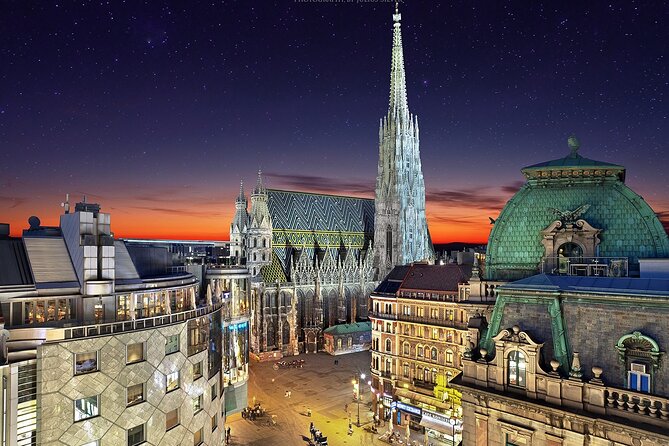
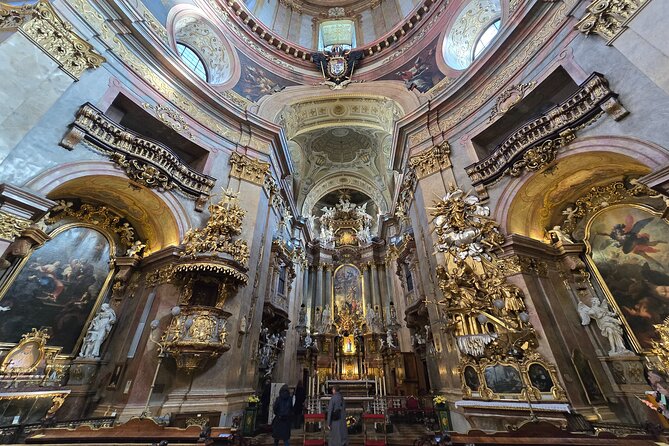
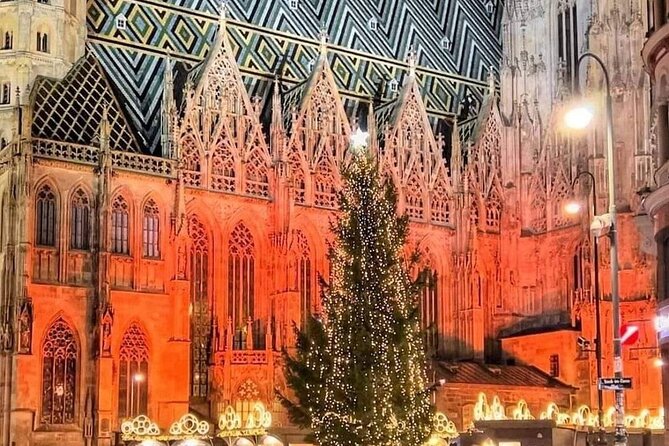
From Mozarthaus, the route moves to St. Stephen’s Cathedral, Vienna’s principal church. You get around 15 minutes to take in its medieval architecture and long story. The cathedral is one of those places where a guide helps you notice more than the familiar roof pattern and tall tower.
The short stop is useful for orientation, but it is not enough for a full interior visit. If you want to see the cathedral at length, inspect its chapels, or explore other areas, set aside separate time and budget for that after the walk.
More walking tours in Vienna:
- Vienna: Guided Walking Tour of City Center Highlights
★ 4.7 · 4,989 reviews - Vienna: Vienna Central Cemetery Guided Walking Tour
★ 4.8 · 3,307 reviews - Vienna: Guided Walking Tour of City Highlights & Hidden Gems
★ 4.9 · 2,180 reviews
Graben, plague history, and Vienna’s sweet tooth
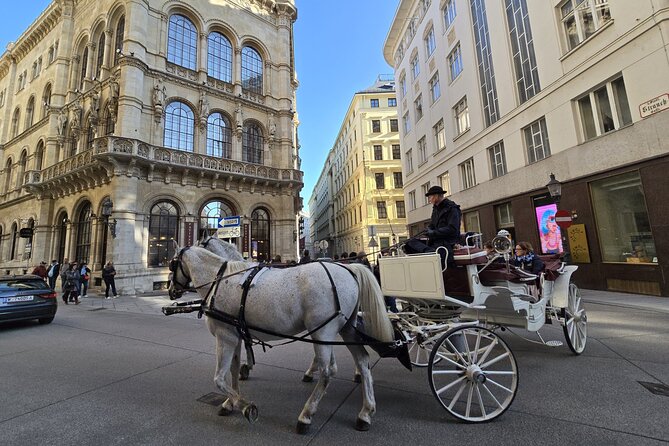
The next section brings you into the old city center, with stops near St. Peter’s Church, the Plague Column, Demel cake shop, and other central sights. The formal stop is listed as about 20 minutes, so expect a brisk collection of stories rather than long visits inside each place.
This is one of the better parts of the route for getting Vienna’s character. A church, a memorial column, an elegant pastry shop, and the surrounding streets show how religion, public memory, imperial display, and daily café life sit side by side in the center.
At Julius Meinl on Graben, the guide explains how Vienna’s coffee culture developed over more than 300 years. The point is not simply where to order a coffee. You learn why the café became such an important part of city life and how it remains tied to Vienna’s social and artistic identity.
The stop lasts about 10 minutes and does not include food or drinks. You will need to return later if you want to sit down and sample pastries or coffee at your own pace. That is actually useful, since the guide can point out places that fit your budget and interests before you spend time in a café.
Freyung Passage and the Café Central corner
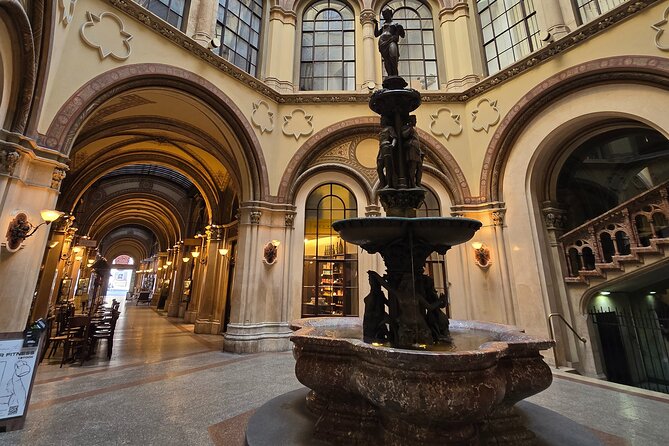
Freyung Passage is scheduled as a short five-minute stop. It is a compact passage in the historic center, with Café Central nearby. The brief timing tells you what to expect: a quick look, a few remarks, and perhaps a recommendation for a later visit.
Café Central is one of Vienna’s famous coffee institutions, and its location makes it easy to connect the café tradition with the city’s grand old streets. You should not expect to sit down for a coffee during this particular stop. The tour is moving through the center, not reserving tables.
That is a recurring theme here. The walk gives you a useful first look at places that can take up half a morning or afternoon on their own. I would mark your favorites on the supplied Vienna map and return later, especially if you want time for photographs, food, or a proper museum visit.
The Parliament, Rathaus, and Burgtheater
The route then heads toward the monumental buildings along Vienna’s grand public avenues. At the Austrian Parliament, you spend about five minutes admiring its Greek-inspired design and the Pallas Athene Fountain in front.
A five-minute stop is enough to understand the building’s style and hear why it matters, but not enough to explore the interior. Entrance fees and museum visits are not part of the tour, so treat this as an architectural and historical introduction.
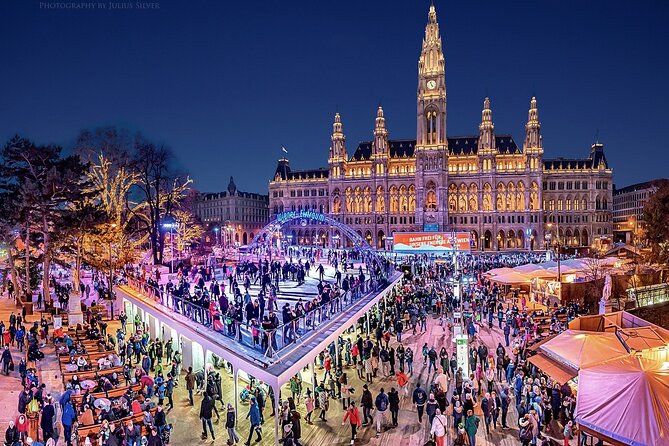
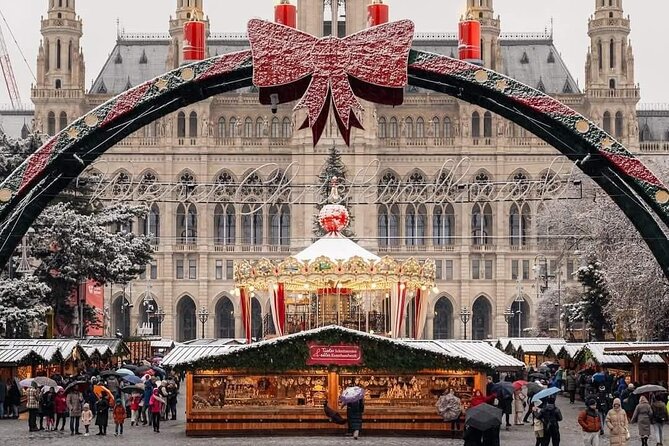
Next comes Vienna’s Rathaus, or City Hall, with its Gothic architecture. The stop is also listed at about five minutes, though the actual timing can change. In colder months, the area may include seasonal activity such as the Christmas market, and one guide adapted the walk to allow time there for a warm drink, snack, and rest stop.
That flexibility can make a real difference. A three-hour walk is manageable for most people with moderate fitness, but a short pause helps families and anyone dealing with cold weather. You should still wear comfortable shoes and dress for an outdoor activity.
The Burgtheater follows, with about 10 minutes devoted to the former royal theater. Its Renaissance-style appearance and connection with the reign of Maria Theresa add another piece to Vienna’s court culture. Here, the guide’s storytelling matters more than the length of the stop. You are looking at the façade while learning how theater fit into the life of the imperial capital.
More history walks in Vienna:
- Vienna: Time Travel and Magic Vienna History Tour
★ 4.6 · 3,879 reviews - Vienna: World War II Historical Walking Tour
★ 4.8 · 1,772 reviews - Vienna Historic Center Small Group Walking Tour
★ 5.0 · 1,746 reviews - Time Travel-Magic Vienna History Tour Ticket
★ 4.5 · 1,099 reviews
Museums around the Winter Palace
At the Kunsthistorisches Museum, the guide explains the 18 museums in and around the former winter palace area. This is a planning stop rather than a museum admission.
That advice can save you time. Vienna has more museums than most first-time visitors can sensibly fit into a short stay, and the imperial center can feel confusing when you first arrive. A quick explanation of what each museum offers helps you decide where to spend your limited hours.
You will not enter the Kunsthistorisches Museum as part of the standard tour, and entrance fees are not included. If art is a priority, note this stop as a preview and return with a separate ticket. If you prefer architecture and city history, the outside views and guide’s explanation may be enough.
The Hofburg and the Habsburg story
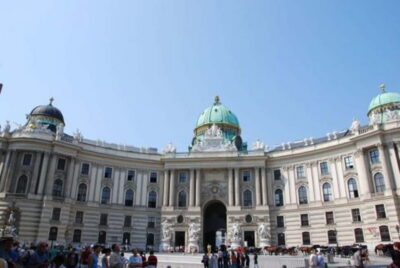
The Hofburg is the tour’s longest scheduled stop, at about 20 minutes. This was the winter palace and the Habsburg residence from the 13th century, so it provides the main setting for the tour’s imperial history.
The guide introduces important emperors and empresses and explains how the palace grew into a large complex. You see the scale of the former court and begin to understand how Vienna was shaped by dynastic power, ceremony, and administration.
The Hofburg can be overwhelming if you arrive without a plan. There are several museums and collections in the complex, and a short walk cannot cover them in detail. That is why this stop works best as a guide to future choices. You can ask which sections suit your interests, then return later for the interiors.
I especially value this part of the tour because the Habsburg story is not presented as a list of names alone. The route links the palace with the Parliament, theater, museums, cathedral, and Opera, showing how the city’s public face developed around the court.
Meeting the Lipizzaner horses
The Spanish Riding School follows with a 10-minute stop at its stables, where you can see the famous horses. The tradition began in the 15th century, and the school remains one of Vienna’s most recognizable institutions.
This is a memorable change of pace after the stone façades and palace history. You get a glimpse of a living tradition rather than another monument. The stop is short, so do not expect a full riding performance or a long stable visit unless that is separately arranged.
The experience is particularly useful if you are curious about the Spanish Riding School but unsure how it fits into your itinerary. The guide can provide context, and you can decide later if a performance, morning exercise, or other paid visit is worth adding. Those entrance costs are not included in the walking tour.
Sacher, cake, and the Vienna State Opera
Near the end, the route reaches Hotel Sacher Vienna. The guide explains the hotel’s history and the story of Austria’s famous chocolate cake, Sachertorte. This is another short stop of about 10 minutes.
The value here is cultural as much as culinary. Vienna’s cafés and desserts are not just convenient treats. They are part of the city’s public life, and the stories behind places such as Sacher, Demel, Café Central, and Julius Meinl help you understand why food is so closely tied to a visit here.
The tour ends at the Vienna State Opera on Opernring. The Opera is one of the city’s most striking buildings, and the guide explains why Emperor Franz Joseph was unhappy when he first saw it, along with the consequences of his criticism.
Ending here is practical. You are in a central location with easy access to other parts of Vienna, and you can continue with a performance, a meal, or a return visit to one of the places marked on your map. The walk does not include an Opera entrance, so check separately if you want a guided interior visit or a performance.
How the three hours feel on foot
The tour is designed as a broad introduction rather than a slow inspection of every landmark. The schedule adds up to a series of short stops, with the Hofburg receiving the most time and several exterior buildings getting five to 10 minutes.
You should expect regular walking through central streets, pauses for explanations, and time for questions. Moderate physical fitness is requested, and the tour requires good weather. Comfortable shoes are sensible, particularly if you plan to stay in the city center afterward.
The group size ranges from four to 18 people. That is small enough for a more personal feel than a large city group, but the experience can still vary depending on the guide and the mix of people. Guides such as Nikoleta and Nicoletta received especially warm praise for humor, clear speech, flexibility, and the ability to keep both adults and children interested.
The guide may adjust the pace for a family or add time when the group needs a break. One family’s walk extended to accommodate children, and another group stopped at the Rathaus Christmas market. You should see this as helpful flexibility, not a guarantee that every departure will run long.
What is included for $66.37
At $66.37 per person, the price is reasonable if you want a structured introduction to central Vienna with an English-speaking guide. You are paying for three hours of interpretation, local suggestions, a printed Vienna information package, a city map, and a medium-size group rather than for museum admission.
The included 30-minute break at a traditional Viennese coffeehouse adds value, though the supplied details do not state that food or drinks are included. Plan to pay for anything you order.
The tour also gives you something difficult to get from a guidebook alone: a sense of sequence. Mozart, the cathedral, coffee culture, the public buildings, the Hofburg, the Riding School, Sacher, and the Opera become parts of one connected city rather than isolated photo stops.
The limitation is clear. If you want to enter several museums, spend time inside the cathedral, or attend a Riding School event, you will pay extra and need additional hours. This tour helps you choose those later activities, but it does not replace them.
Who should book this Vienna walking tour?
I would put this near the start of a first visit, ideally on your first or second day. The map and practical suggestions can shape the rest of your stay, especially if you want help choosing among the Hofburg museums, cafés, restaurants, and cultural venues.
It also suits families, since the guide can explain difficult history with stories and humor, and the route includes possible pauses. Children still need to be comfortable walking outdoors for several hours, and cold or wet weather may reduce the enjoyment.
You may want a different plan if your main goal is extended time inside museums or a slow food tour. The many stops are appealing, but they are necessarily brief. Independent visitors who already know central Vienna may find the broad orientation less useful than a focused museum, music, or culinary experience.
Booking details and cancellation
The tour is offered in English with a mobile ticket and confirmation at booking. It begins at Mozarthaus, Domgasse 5, 1010 Vienna, and finishes in front of the Vienna State Opera at Opernring 2.
It is near public transportation, but the supplied details do not specify a particular station or route. Allow time to reach the Mozart apartment and arrive ready to walk.
You can cancel for a full refund up to 24 hours before the start time. Changes or cancellations within 24 hours are not refunded. Poor weather or failure to reach the minimum number of participants can lead to a new date, another experience, or a full refund.
Should you book it?
Book this tour if you want a lively, story-led introduction to Vienna’s central sights and plan to explore more on your own afterward. The strongest features are the route, the small maximum group, the mix of imperial history and café culture, and the practical advice you receive at the end.
The best guide for you will be one who can connect the buildings to daily life, and the strongest feedback centers on guides such as Nikoleta and Nicoletta for their humor, clear explanations, and useful suggestions. Guide assignments can vary, so treat those names as examples rather than a promise.
Skip it if you want long interior visits or a quiet, unhurried architectural walk. For most first-time visitors, though, $66.37 buys a useful three-hour framework for Vienna, with enough local direction to make the rest of your trip better organized.
FAQ
How long does the Vienna walking tour last?
The tour lasts approximately three hours, followed by an included extra 30-minute break in a traditional Viennese coffeehouse.
Where does the tour begin and end?
It begins at Mozarthaus Vienna, Domgasse 5, 1010 Vienna. It ends in front of the Vienna State Opera at Opernring 2.
Is the tour offered in English?
Yes. The tour is offered in English and uses a mobile ticket.
Are museum entrance fees included?
No. Entrance fees to museums are not included. The tour provides information about places such as the Hofburg complex and Kunsthistorisches Museum so you can decide which ones to visit separately.
How large is the group?
The group can include between four and 18 people.
What happens if the weather is poor?
The experience requires good weather. If it is canceled because of poor weather, you will be offered a different date or a full refund.
More 3-Hour Experiences in Vienna
- Classic Vienna: 3-Hour Guided Bike Tour
★ 4.7 · 1,846 reviews - Vienna by Bike 3-Hour All-In-One City Bike Tour in English
★ 4.7 · 438 reviews - The unknown Vienna City- a guided walking tour in 3 hours
★ 4.7 · 137 reviews - 3-Hour Walking Tour of Vienna Central Cemetery
★ 4.7 · 71 reviews
Just added around Vienna
- Private Tour from Vienna to Melk and Dürnstein★ 4.5 · 3 reviews
- Vienna: Johann Strauss 200th birthday anniversary exhibition★ 4.7 · 3 reviews
- Vienna Private Full Day Tour – Tickets to Schönbrunn & Lunch★ 5.0 · 3 reviews
- Private Salzburg Day Trip from Vienna★ 4.0 · 3 reviews
- Vienna: Entry Ticket Belvedere 21 & Contemporary Art★ 4.3 · 3 reviews
- Full-Day Private Trip from Vienna to Budapest★ 4.5 · 3 reviews
- Vienna by Night: Private Evening Food and Drink Tour★ 5.0 · 3 reviews
- Semi-Private Tour: Central Europe &Balkans from Vienna to Athens★ 5.0 · 3 reviews
Historical Tours, compared.
Vienna Historic Center Small Group Walking Tour
Read our review →
Skip-the-Line Schonbrunn Palace Guided Tour and Vienna Historical City Tour
Read our review →
Vienna Mozart Concert in Historical Costumes at the Musikverein
Read our review →
Browse the lists this tour appears in