
Reviewed · VIENNA OLD TOWN TOURS
Vienna: City Highlights Guided Walking Tour & Old Town
Vienna’s old town is best understood on foot, where Roman traces, medieval lanes, Habsburg grandeur, Jewish history, and famous cafés sit close together. This tour links those pieces in two hours, ending at St. Stephen’s Cathedral, the city’s unmistakable center.
I like the route’s range. You get both major sights, especially the Hofburg and cathedral, and smaller details such as passageways, courtyards, the Capuchin Crypt, and the story of Sacher cake. I also like the chance to walk through the former palace gardens and see the rose bushes, rather than spending the whole tour on busy streets.
The main caution is depth. One 3-star rating specifically described the information as limited for a city of Vienna’s importance, though the guide was called kind and helpful. At $25, this is a good orientation walk, but history lovers wanting long, detailed explanations may want a more specialized tour.
In This Review
- Key points at a glance
- Why this two-hour walk works as a first look at Vienna
- Starting near the Roman Museum or Carré d’artistes
- Medieval lanes and Vienna’s Jewish quarter
- The Hofburg: Habsburg residence and working city center
- A pause among 3,000 rose bushes
- Ring Street buildings and Vienna’s grand face
- Sacher cake, café culture, and the Capuchin Crypt
- Finishing at St. Stephen’s Cathedral
- What $25 gets you, and what it does not
- Who should book this Vienna walk
- Should you book the City Highlights Walking Tour?
- FAQ
- How long does the Vienna walking tour last?
- What languages are available?
- Where does the tour start?
- Where does the tour end?
- Is St. Stephen’s Cathedral included?
- Does the tour enter the Hofburg Palace?
- Is the tour wheelchair accessible?
- What should I bring?
Key points at a glance
- Two hours through central Vienna: The route covers the historic center at a brisk but manageable pace.
- Roman and medieval Vienna: You’ll hear about the city’s Ancient Roman beginnings and medieval development.
- Jewish history included: The walk crosses the area of Vienna’s medieval Jewish quarter.
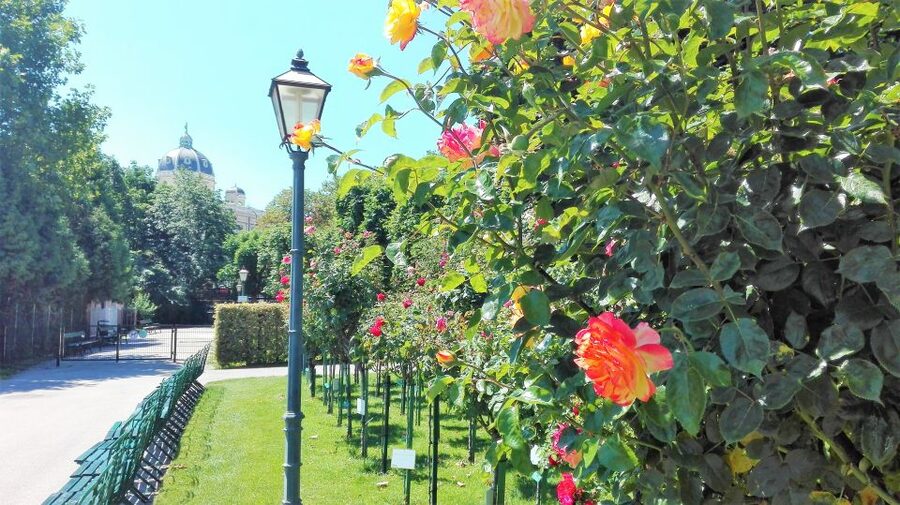
- Hofburg and palace gardens: You’ll see the Habsburg residence area, nearby museums, and former gardens with 3,000 rose bushes.
- Food and royal history together: The tour explains Sacher cake, other Viennese cakes, and the Capuchin Crypt.
- English or Italian guiding: The tour is led by a licensed local guide and is listed as wheelchair accessible.
Why this two-hour walk works as a first look at Vienna
This experience is designed to help you get your bearings quickly. Instead of focusing on a single museum or palace interior, it moves through the city center and connects places that can otherwise feel like separate stops on a map.
That approach suits you if you have only a short time in Vienna, or if you want a guided introduction before exploring alone. You’ll hear about Ancient Roman Vienna, the Middle Ages, the Habsburg period, modern uses of the Hofburg, and Viennese cake culture in one compact outing.
I see the tour as a broad introduction rather than a specialist history lesson. The route promises many subjects, and that range is useful, but two hours leaves limited time for each one. The rating of 4.5 from 36 ratings suggests a generally strong experience, though the available 3-star comment is a fair warning that the amount of detail may not satisfy everyone.
The experience provider is Astrid Stangl. No individual guide’s name is guaranteed in the supplied information, so you should not book expecting a particular person. You can expect a live guide in English or Italian.
More of the Vienna old town:
- Vienna Historic Center Small Group Walking Tour
★ 5.0 · 1,746 reviews - Vienna: Old Town Sightseeing Tour in a Vintage-Style E-Car
★ 4.5 · 1,107 reviews - Vienna: 30-Minute Fiaker Ride in the Old Town
★ 4.5 · 1,092 reviews
Starting near the Roman Museum or Carré d’artistes
There are two possible starting locations: Art gallery Carré d’artistes Wien or the Wien Museum Römermuseum. Your meeting point depends on the option you book, so check the exact address carefully before setting out.
The Römermuseum connection fits the tour’s opening subject. Vienna’s center has an Ancient Roman story, and beginning near a Roman museum can put that early chapter in context before the walk moves into medieval and Habsburg Vienna.
The other starting point places you near the central city without tying the tour to a museum visit. Either way, do not treat the meeting location as interchangeable. The booking option determines where you begin, and arriving at the wrong point could be an avoidable start to a short tour.
Because this is a walking experience, wear comfortable shoes. Two hours on old city streets and through passageways is not a good match for footwear chosen only for appearance. The activity is listed as wheelchair accessible, but the exact route conditions are not described in detail, so you may want to confirm any specific mobility needs before booking.
Medieval lanes and Vienna’s Jewish quarter
One of the most useful parts of the route is its attention to medieval Vienna. You will cross the area of the former medieval Jewish quarter and hear about the city’s Jewish history.
That matters because Vienna’s grand imperial image can crowd out other stories. The palaces and ceremonial buildings are important, but they do not explain the whole city. A walk that includes Jewish history gives you another way to read the old town and helps place its narrow streets in a broader social setting.
The route also uses picturesque passageways and stops at one or more courtyards. These are the kinds of spaces you can easily miss when walking from one famous sight to the next. They give the tour a more intimate feel and create natural pauses between the larger historical subjects.
Still, keep your expectations measured. The information does not specify which passageways or courtyards you will visit, and the precise route may vary. Think of these stops as smaller discoveries along a city orientation walk, not as a guaranteed visit to a particular secret site.
The Hofburg: Habsburg residence and working city center
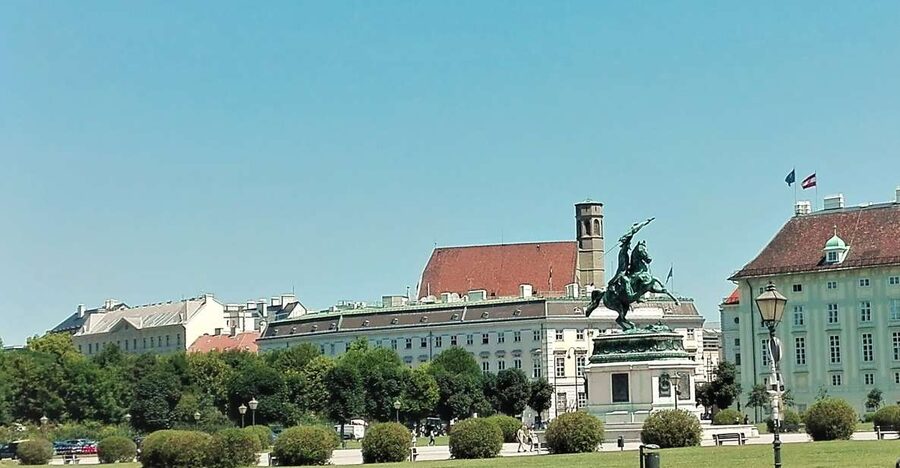
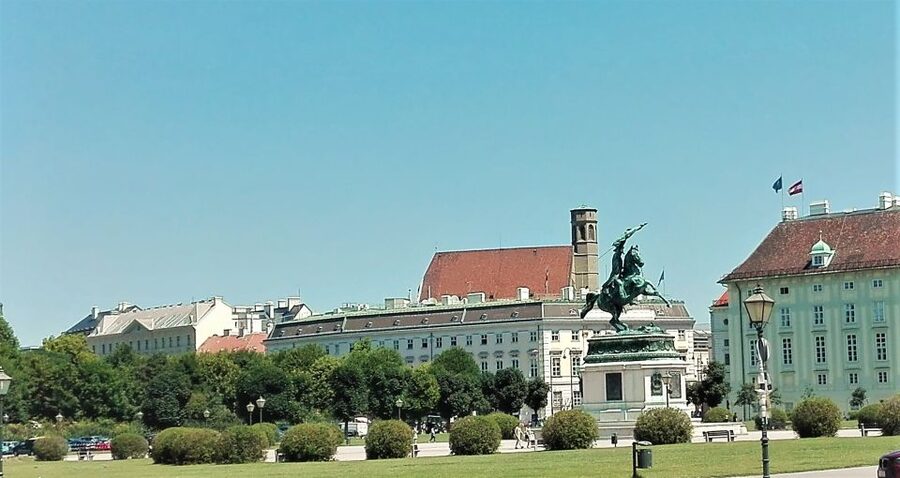
The tour then reaches the area around the Hofburg Palace, once the residence of the Habsburgs and now home to several museums. Here, the guide explains stories about former residents and the building’s present use.
This is a strong choice for a short tour because the Hofburg packs several layers of Vienna together. You get royal history, architecture, museums, and the continuing role of the area in city life. Even if you later return to visit one of the museums, an outside explanation can help you understand how the palace complex fits into the old town.
The tour focuses on the surroundings rather than promising entry into the palace museums. That is an important distinction. The $25 price covers a guided walk, not an admission ticket or an indoor palace tour.
I like this part for practical reasons. You can see where the Hofburg sits in relation to the rest of central Vienna, then decide if you want to spend more time there after the walk. If you prefer tours built around interiors, exhibits, and long commentary at each object, this section may feel too brief.
More walking tours in Vienna:
- Vienna: Guided Walking Tour of City Center Highlights
★ 4.7 · 4,989 reviews - Vienna: Vienna Central Cemetery Guided Walking Tour
★ 4.8 · 3,307 reviews - Vienna: Guided Walking Tour of City Highlights & Hidden Gems
★ 4.9 · 2,180 reviews - Vienna: Viennese Underworld Guided Walking Tour
★ 4.7 · 1,865 reviews
A pause among 3,000 rose bushes
The route includes a stroll through the former palace gardens, where you can enjoy the scent of 3,000 rose bushes. This adds a welcome change of pace after the streets and buildings.
Gardens also help explain how the imperial setting worked as a place of leisure and display, not just government and ceremony. For you, the practical benefit is simpler: it offers a calmer stretch of the walk and a good setting for photographs.
The description does not state how long the group remains in the gardens, so do not plan on a long garden visit. It is one element of a tightly packed route. If flowers and formal gardens are your main reason for booking, you may want a separate visit with more time.
Ring Street buildings and Vienna’s grand face
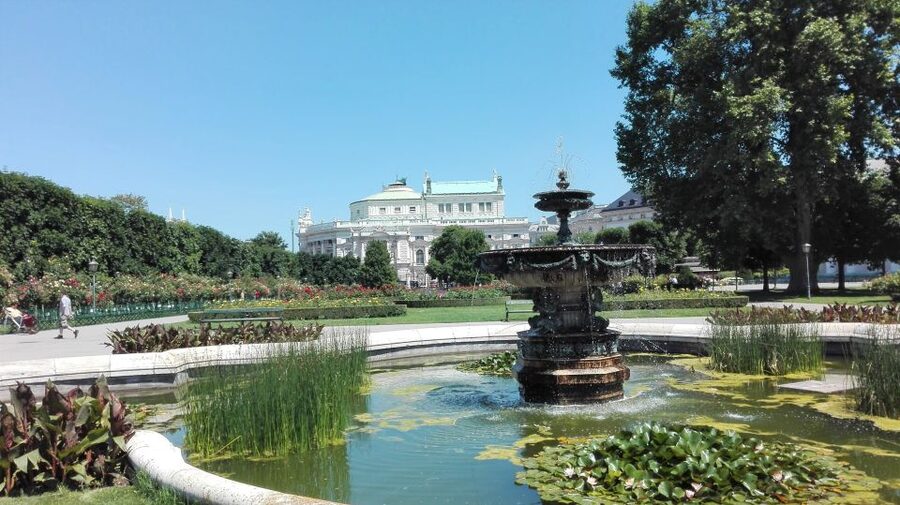
The walk also introduces the history of Vienna’s famous Ring Street and its impressive buildings. This gives you a look at the city beyond the medieval core, where larger public architecture presents a more formal, imperial side of Vienna.
The contrast is useful. In a short span, you move from narrow old-town routes and medieval stories to the grander urban image associated with the Habsburg capital. The guide’s task here is to show how Vienna’s streets and buildings reflect changing periods, not simply point out attractive façades.
The supplied information does not name individual Ring Street buildings or promise interior access. You should expect an outdoor explanation and viewing stops. Bring a camera if you like architectural details, since the tour is designed to provide plenty of photo opportunities.
Sacher cake, café culture, and the Capuchin Crypt
Food gets a place on the route through the story of Vienna’s famous Sacher cake. You will also hear which other cakes are worth trying during your stay.
This is a small but useful touch. Vienna’s cafés are part of the city experience, and a guide can give you ideas for what to order after the tour. The activity does not include cake or a café stop, so treat this as local food advice rather than a tasting.
The walk also passes the Capuchin Crypt, the Habsburg family crypt. This is another example of the route pairing everyday culture with dynastic history. One moment concerns a dessert associated with Vienna, and the next points to the burial place of the ruling family.
Again, passing by is not the same as entering. No admission to the crypt is included in the tour details. If you want to see the interior, you will need to arrange that separately.
Finishing at St. Stephen’s Cathedral
The tour ends at St. Stephen’s Cathedral in the heart of Vienna’s old town, with drop-off points listed at Stephansplatz and Schulerstraße.
Ending here makes practical sense. St. Stephen’s is one of Vienna’s best-known landmarks, and Stephansplatz is a useful place to continue your day. You can use the cathedral as your next stop, find a café, or keep walking through the center with a better sense of direction.
The activity says the tour ends back at the meeting point, while the itinerary lists Stephansplatz and Schulerstraße as possible drop-off locations. Since the exact start and end arrangement may depend on the option booked, check the details attached to your reservation.
The cathedral is a fitting final image because the tour has moved through so many parts of Vienna’s past before arriving at one of its most recognizable sights. You finish with a clear central reference point rather than at an obscure side street.
What $25 gets you, and what it does not
At $25 per person, the value is strongest if you want a guided introduction to central Vienna without committing half a day. You receive two hours with a licensed local guide, a route through major historic areas, and an explanation of subjects ranging from Roman Vienna to Habsburg life and cake traditions.
The price also works well for a first morning or afternoon activity. You can use the walk to decide which places deserve a longer visit later. That can prevent you from spending precious time wandering between sights without knowing what you are looking at.
The limits are just as clear. There is no stated entry to the Hofburg museums, Capuchin Crypt, St. Stephen’s Cathedral, or the Römermuseum. Food is not included, and the group size is not provided. The guide may cover many topics quickly, which connects with the 3-star comment about receiving fewer details than a city like Vienna deserves.
I would pay $25 for orientation, local context, and a well-planned route. I would not choose it as my only Vienna history experience if you want detailed discussion of the Jewish quarter, the Habsburgs, Roman remains, or the Ring Street buildings.
Who should book this Vienna walk
This tour suits you best if:
- You are visiting Vienna for the first time.
- You want a short introduction to the historic center.
- You enjoy seeing major sights mixed with courtyards and passageways.
- You want ideas for cakes and later sightseeing.
- You prefer walking outdoors to spending two hours in one museum.
- You need an English or Italian tour.
- You want a wheelchair-accessible activity, subject to confirming route details for your needs.
It may be less suitable if you want a small, highly specialized history tour, extensive time inside monuments, or a guaranteed named guide. The available feedback describes the guide as kind and helpful but criticizes the amount of information, so your expectations should match an overview walk.
Free cancellation up to 24 hours before the start and the reserve-now, pay-later option make it easier to fit into a changing itinerary. The duration is fixed at two hours, but starting times depend on availability.
Should you book the City Highlights Walking Tour?
Book it if you want to cover a lot of Vienna’s historic center in a short time and value connections between places more than long stops at any one sight. The Roman beginnings, medieval Jewish quarter, Hofburg surroundings, rose gardens, Sacher cake story, Capuchin Crypt, and cathedral create a useful first portrait of the city.
Skip it if you want a detailed academic account or indoor access to Vienna’s major monuments. For most visitors, I would treat this as a smart orientation walk, then return on your own to the Hofburg museums, cathedral, gardens, or crypt that interest you most.
FAQ
How long does the Vienna walking tour last?
The tour lasts two hours.
What languages are available?
The live tour guide is available in English and Italian.
Where does the tour start?
There are two possible starting locations: Art gallery Carré d’artistes Wien and the Wien Museum Römermuseum. The meeting point depends on the option you book.
Where does the tour end?
Possible end points are Stephansplatz and Schulerstraße, 1010 Wien, Austria. The activity details also state that it ends back at the meeting point, so check your selected option.
Is St. Stephen’s Cathedral included?
The route ends at St. Stephen’s Cathedral and passes by it. The information does not state that cathedral admission is included.
Does the tour enter the Hofburg Palace?
The tour explores the surroundings of the Hofburg and discusses its former residents and present use. Entry into the palace or its museums is not listed as included.
Is the tour wheelchair accessible?
Yes, the activity is listed as wheelchair accessible. Because the route involves walking through historic streets and passageways, confirm any specific access requirements before booking.
What should I bring?
Bring comfortable shoes suitable for two hours of walking.
Just added around Vienna
- Private Tour from Vienna to Melk and Dürnstein★ 4.5 · 3 reviews
- Vienna: Johann Strauss 200th birthday anniversary exhibition★ 4.7 · 3 reviews
- Vienna Private Full Day Tour – Tickets to Schönbrunn & Lunch★ 5.0 · 3 reviews
- Private Salzburg Day Trip from Vienna★ 4.0 · 3 reviews
- Vienna: Entry Ticket Belvedere 21 & Contemporary Art★ 4.3 · 3 reviews
- Full-Day Private Trip from Vienna to Budapest★ 4.5 · 3 reviews
- Vienna by Night: Private Evening Food and Drink Tour★ 5.0 · 3 reviews
- 1.5 Hour Cinematic Style Portrait Photoshoot and Tour in Vienna★ 4.5 · 3 reviews
Vienna Old Town Tours, compared.
Vienna Historic Center Small Group Walking Tour
Read our review →
Old Town Sightseeing Tour in a Vintage-Style E-Car
Read our review →
Exclusive Vienna Old Town Highlights Walking Tour (max. 6 persons)
Read our review →
Old Town Highlights Private or Group Walking Tour
Read our review →

Browse the lists this tour appears in