
Reviewed · HISTORICAL TOURS
Vienna Historic Center Small Group Walking Tour
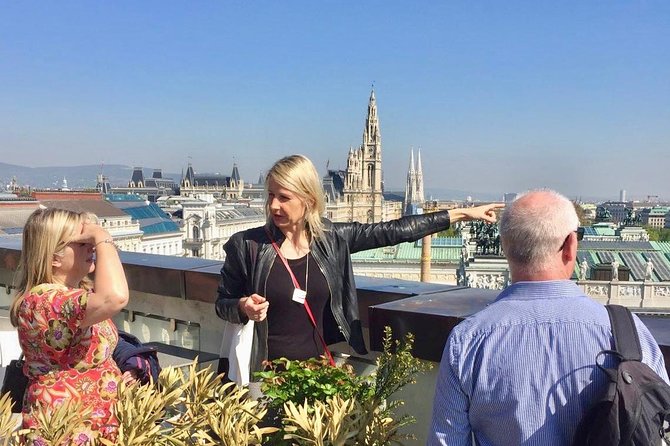
Vienna’s imperial center packs palaces, grand museums, churches, gardens, theaters, and elegant streets into a walkable area. This 2.5-hour tour gives you the city’s basic layout while connecting the Habsburg court, modern Austria, music, science, and café culture. Guides such as Dace, Giselle, Gabriela, and Beatrice are praised for clear explanations, humor, and strong local knowledge.
I like the small group limit of 15, which makes it easier to ask questions and stay close to the guide in crowded streets. I also like the audio devices, especially when you are standing beside a noisy road or in a busy square. The main drawback is clear: this is chiefly an outdoor sightseeing walk, so the $72.56 price does not include entry to the major museums or palace interiors.
In This Review
- Key points before you book
- Why this walk works well on your first day
- Maria-Theresien-Platz and the Ringstrasse
- The Hofburg: Habsburg power and difficult modern history
- Churches, court streets, and the city’s intellectual life
- Volksgarten, Beethoven, and Vienna’s music story
- Graben, Kohlmarkt, and the finish at St. Stephen’s
- What the guide adds to the price
- Walking conditions, timing, and what to bring
- Who should book this Vienna walk?
- My verdict: a strong introduction, with one clear limitation
- FAQ
- How long does the Vienna Historic Center Small Group Walking Tour last?
- Where does the tour begin?
- Where does the tour end?
- How many people can join the tour?
- Is the tour offered in English?
- Are museum and palace admission tickets included?
- Is the tour physically demanding?
- Can I cancel for a full refund?
Key points before you book
- A smart first-day route: You see many central landmarks, then finish beside St. Stephen’s Cathedral, a useful launch point for exploring on your own.
- The Hofburg gets real attention: The palace complex receives two stops and about 25 minutes of explanation, including court life and its modern political role.
- No museum admissions are included: You look at the buildings from outside, with some possible indoor visits depending on the day.
- Guides add personality: Dace, Giselle, Gabriela, Beatrice, and Annelie are praised for humor, stories, historical context, and practical advice.
- Plan for a serious walk: One review counted about 14,000 steps, so wear comfortable shoes and prepare for weather.
- The route links more than famous façades: You hear about Freud, Lise Meitner, Beethoven, Lipizzan horses, coffeehouses, and Vienna’s political past.
Why this walk works well on your first day
Vienna can feel grand but confusing at first. The Ringstrasse curves around the old center, the Hofburg spreads across several courtyards, and important sights sit behind broad façades that do not always explain themselves. This walk gives you a map in your head.
You begin at Maria-Theresien-Platz, between the Natural History Museum and the Kunsthistorisches Museum. From there, the route moves along the Ringstrasse and into the Hofburg quarter before crossing the old center toward Graben and Stephansplatz.
I would book it early in your stay if you want help choosing what to do next. Guides offer restaurant and café suggestions, as well as tips about Viennese customs, food, and daily life. Several guides also use images on an iPad to make past people and events easier to picture.
The format is more teaching walk than hands-on activity. You will not enter every landmark or spend long periods inside buildings. Instead, you pause at key sites while the guide explains what happened there and why the architecture matters.
More of the Vienna old town:
- Vienna: Old Town Sightseeing Tour in a Vintage-Style E-Car
★ 4.5 · 1,107 reviews - Vienna: 30-Minute Fiaker Ride in the Old Town
★ 4.5 · 1,092 reviews - Vienna: Romantic Old Town 2-Hour Discovery Tour
★ 4.7 · 816 reviews
Maria-Theresien-Platz and the Ringstrasse
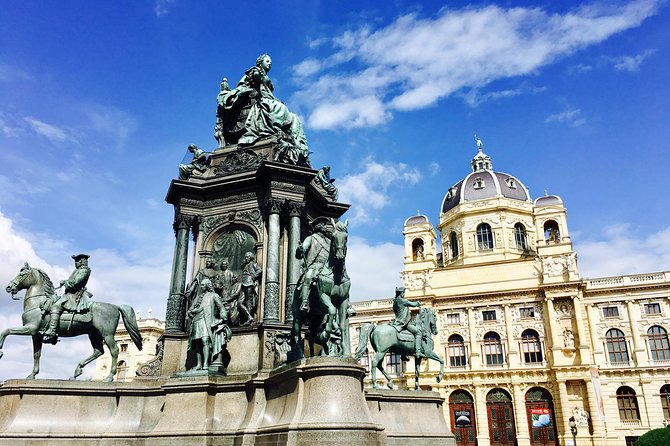
The opening square is an efficient lesson in Vienna’s imperial ambitions. The two matching museums face each other across the plaza, while the monument to Maria Theresa anchors the space. The empress is shown surrounded by figures from government, the arts, and science, including Mozart.
This is a short stop, but it sets up the rest of the route. You begin to see how Vienna used architecture and public monuments to present itself as the center of a powerful empire.
The walk then reaches the Ringstrasse, the grand boulevard built after Vienna’s medieval fortifications were removed in the 19th century. Its buildings use several historic styles, including Classical, Gothic, Renaissance, and Baroque forms. City Hall, Parliament, the Burgtheater, the University of Vienna, and the State Opera all belong to this grand civic project.
You should pay attention to the scale. The boulevard was not built as a single palace district. It was designed to display government, culture, education, and national identity in one broad public setting.
The route passes the Burgtor, a Neoclassical castle gate built after the Napoleonic Wars, and continues toward the Hofburg. These stops are mainly for explanation and photographs. If you want to go inside either museum at the starting square, you will need a separate ticket and more time.
The Hofburg: Habsburg power and difficult modern history
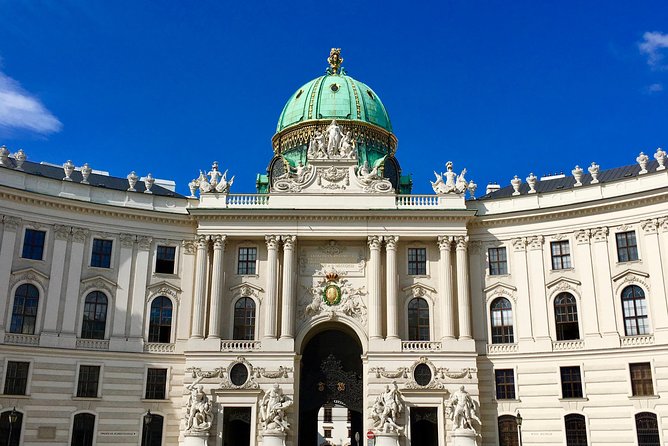
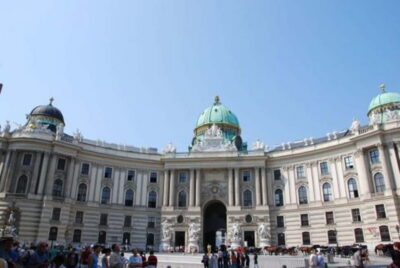
The Hofburg is the heart of the walk. This former imperial residence grew over many centuries, so it feels less like one building than a series of courtyards, wings, gates, and formal façades. The guide explains how the Habsburgs shaped Vienna and how emperors, empresses, officials, and servants used the complex.
You also hear about court life and the palace’s role in modern Austria. The New Castle contains museums and collections, including the World Museum, Imperial Armoury, and National Library facilities. It also houses the Hofburg Congress Centre.
The guide discusses the balcony connected with Adolf Hitler’s proclamation of Austria’s annexation into Nazi Germany. That history gives the palace district a more serious edge. Vienna’s imperial image is only one part of its story, and this stop helps place the city’s 20th-century past beside its older grandeur.
Heroes’ Square, or Heldenplatz, opens beside the palace. It was created after a bastion was demolished during the Napoleonic Wars. Today, the open lawns and monumental buildings make it one of Vienna’s most recognizable public spaces.
Depending on the route and day, you might also hear about the Austrian National Library, the Baroque Winter Riding School, and the Lipizzan horses trained and performed there. The tour does not promise a riding-school performance, so think of this as orientation rather than admission.
Churches, court streets, and the city’s intellectual life
St. Michael’s Church dates to 1220 and offers a change from the imperial façades. Its age and atmosphere help you see that Vienna was already a major medieval city long before the Habsburg palace reached its present size.
The route also passes the Federal Chancellery and Vienna City Hall. Rathaus is a striking Gothic Revival building and the seat of the city government. It is also used for public events, so the guide may connect the building to present-day civic life rather than treating it as a frozen monument.
At the University of Vienna, the focus shifts to ideas and people. The guide shares stories about Sigmund Freud and Lise Meitner, the Jewish physicist whose work changed modern science. This is one of the tour’s more useful choices because it widens the picture beyond emperors, wars, and composers.
You also pass Palais Ferstel, once home to the Austro-Hungarian National Bank and Stock Exchange. The building adds a lesson in finance and public life to the usual palace-and-church route.
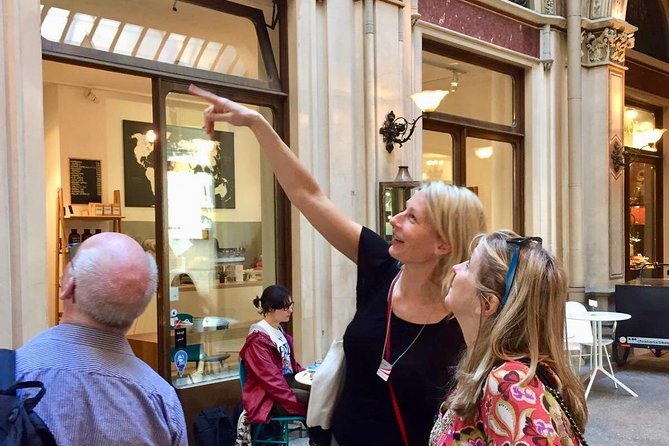
Freyung, one of the oldest squares in the center, is smaller and more intimate than the Ringstrasse spaces. This portion of the walk can feel more like ordinary old Vienna, with lanes, courtyards, and façades that reward close attention.
A coffeehouse reference fits naturally here. Vienna’s cafés were meeting places for writers, composers, architects, painters, psychoanalysts, and political thinkers. One guide may point out a famous coffeehouse, and some tours have included a coffee stop at Café Demel. Do not assume a drink or pastry is included, but ask your guide for a recommendation if you want to make café culture part of the rest of your day.
More walking tours in Vienna:
- Vienna: Guided Walking Tour of City Center Highlights
★ 4.7 · 4,989 reviews - Vienna: Vienna Central Cemetery Guided Walking Tour
★ 4.8 · 3,307 reviews - Vienna: Guided Walking Tour of City Highlights & Hidden Gems
★ 4.9 · 2,180 reviews - Vienna: Viennese Underworld Guided Walking Tour
★ 4.7 · 1,865 reviews
Volksgarten, Beethoven, and Vienna’s music story
Volksgarten provides a welcome green pause near the Hofburg. At its center is the Theseus Temple, a small version of the Hephaisteion in Athens. It was designed to display a sculpture by Antonio Canova.
The park also carries a music connection through the Cortisches coffeehouse, where Johann Strauss played waltzes. These small details are exactly what can be hard to spot when you walk alone. The park may look like a pleasant shortcut, but the guide gives it a place in Vienna’s artistic life.
The Beethoven Pasqualatihaus is another music-related stop. It was once a residence of Ludwig van Beethoven, positioned on the ramp of the old city fortifications. The tour generally treats it from the outside, so you get context and a photo opportunity rather than a full house visit.
Music appears again later near the State Opera and the Hofburg’s riding-school district. Vienna’s cultural identity is not limited to a concert ticket. It is built into the streets, institutions, monuments, and homes connected with composers and performers.
Graben, Kohlmarkt, and the finish at St. Stephen’s
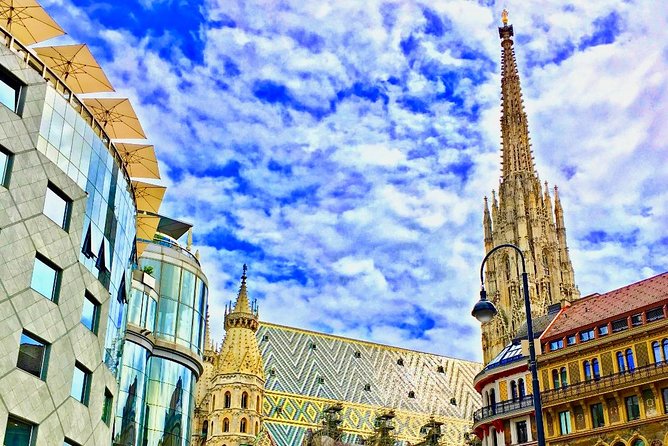
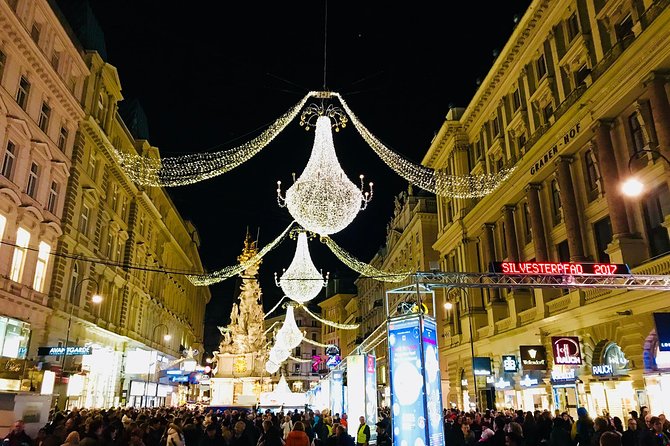
The walk turns toward Graben and Kohlmarkt, two of the center’s most elegant pedestrian streets. These streets combine shopping, old façades, churches, and heavy foot traffic. The guide helps you understand the area as both a historic route and a living commercial center.
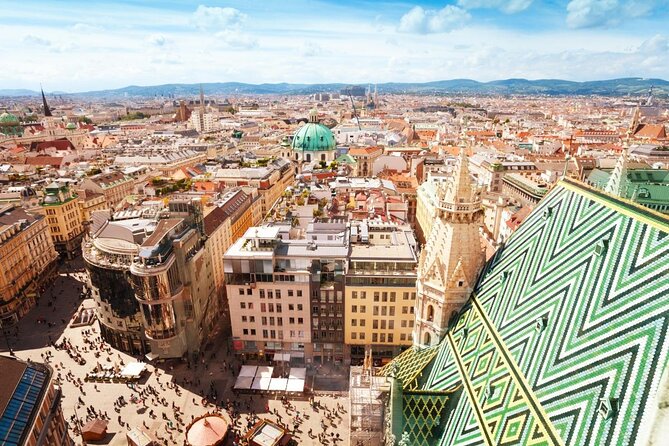
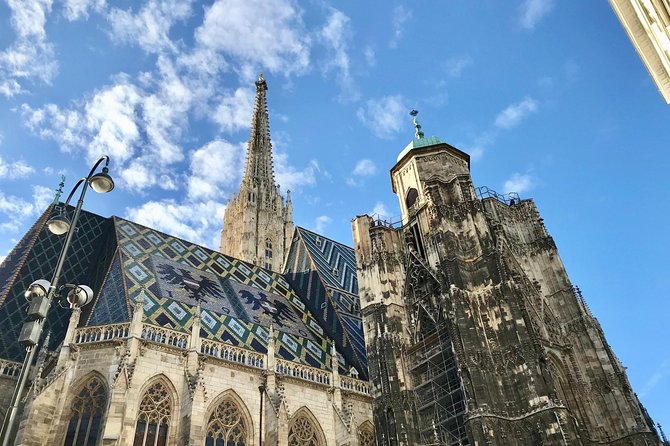
Stephansplatz is the symbolic center of Vienna. It is the place where the old city’s major paths seem to meet, and St. Stephen’s Cathedral provides the unmistakable finish. The cathedral is Vienna’s best-known landmark, with a roof and tower profile that make it easy to recognize from across the center.
The tour ends here, which is practical. You can enter the cathedral on your own, continue along the shopping streets, find lunch, or use the square as a base for further sightseeing. The walking tour itself includes only a short cathedral stop, not a full interior visit.
This ending also keeps the schedule flexible. You are not rushed into a final group transfer or returned to the starting point. You simply receive the main orientation and choose what deserves more of your time.
What the guide adds to the price
At $72.56 per person, this is not the cheapest way to see Vienna’s façades. You can walk the same streets for free with a map or audio guide. The price makes more sense if you value a live explanation, the chance to ask questions, personal recommendations, and a route that has already been planned.
The audio devices are a real practical benefit. A group of 15 is small by city-tour standards, but it can still stretch across a square or gather beside traffic. Clear sound means you do not have to stand shoulder to shoulder with the guide.
The strongest guide feedback centers on presentation. Dace is described as funny, clear, and full of personal insight. Giselle receives praise for keeping the group together, explaining Vienna’s past and present, and offering useful suggestions for food and further sightseeing. Gabriela is noted for making warm-up stops on a cold day, while Beatrice and Annelie are praised for passion and lively storytelling.
The guide can shape the whole experience, so the exact style may vary. Some sessions may feel more historical and lecture-like. One assessment found the tour informative but less interactive because most sights were viewed from outside. That is a fair warning if you want tastings, extended interior visits, or activities beyond listening and walking.
Walking conditions, timing, and what to bring
The stated duration is about two hours and 30 minutes, but the route covers a lot. One person reported roughly 14,000 steps, which gives you a useful sense of scale. The time includes many brief stops, but you remain on your feet for most of the experience.
Wear comfortable shoes. This is not a suitable choice if you have walking difficulties, and a moderate level of physical fitness is expected. There are several convenient start times, which helps you fit the walk around a train arrival, museum booking, or evening concert.
Vienna weather can change quickly. Bring layers and dress warmly in winter. A guide has sometimes found places for the group to warm up, but you should still treat this as an outdoor activity. The experience requires good weather, and poor conditions can lead to a new date or a refund.
The meeting point is Maria-Theresien-Platz in central Vienna. The tour ends at Stephansplatz, beside the cathedral. Both points are near public transportation, and the one-way route saves you from retracing your steps.
Service animals are allowed. Confirmation is provided when you book. Free cancellation is available until 24 hours before the start time. Cancellations or changes inside that window are not refunded or accepted, and the tour can also be canceled if its minimum group size is not reached.
Who should book this Vienna walk?
I would choose this tour for a first visit, a short stay, or the first morning of a longer Vienna break. It gives you a useful framework before you commit to the Hofburg museums, the State Opera, the National Library, or a concert.
It also suits people who like political and cultural context. The route brings together Maria Theresa, the Habsburgs, Hitler’s annexation speech, Freud, Meitner, Beethoven, Johann Strauss, and the city government. That is a lot of ground in one walk.
Families and mixed-age groups can benefit from the small size and audio equipment, though younger children must be comfortable walking and listening for several hours. Solo visitors and couples may especially value the easy chance to ask questions.
I would hesitate if your main goal is to go inside attractions. The tour does not include museum admissions, and interior access to palaces, churches, universities, or cafés depends on the weekday and circumstances. At this price, you should see the tour as a guided orientation and history lesson, not an admission package.
My verdict: a strong introduction, with one clear limitation
Book this if you want to understand Vienna before exploring it on your own. The route is packed, the finish beside St. Stephen’s Cathedral is convenient, and the best guides bring humor and personal detail to places that can otherwise blur into a series of grand buildings.
Skip it if you prefer slow museum visits or hands-on experiences. For everyone else, especially first-time visitors with comfortable shoes and an interest in how Vienna’s imperial, musical, scientific, and political stories fit together, the 97 percent recommendation and 4.9 rating make sense. The value comes from the guide’s voice and the careful route, not from included admissions.
FAQ
How long does the Vienna Historic Center Small Group Walking Tour last?
The tour lasts approximately two hours and 30 minutes.
Where does the tour begin?
It begins at Maria-Theresien-Platz in central Vienna, Austria.
Where does the tour end?
The tour ends at Stephansplatz, beside St. Stephen’s Cathedral.
How many people can join the tour?
The group is limited to a maximum of 15 people.
Is the tour offered in English?
Yes. The experience is offered in English.
Are museum and palace admission tickets included?
No. Museum admission is not included, and the tour does not visit the inside of any museum. Some indoor locations, such as palaces, churches, a university, or a café, may be visited depending on the weekday.
Is the tour physically demanding?
You should have moderate physical fitness and be ready for substantial walking. Comfortable shoes are important, and the tour is not recommended if you have walking difficulties.
Can I cancel for a full refund?
Yes, if you cancel at least 24 hours before the experience start time. Cancellations or changes made less than 24 hours in advance are not refunded or accepted.
More History Walks in Vienna
- Vienna: Time Travel and Magic Vienna History Tour
★ 4.6 · 3,879 reviews - Vienna: World War II Historical Walking Tour
★ 4.8 · 1,772 reviews - Time Travel-Magic Vienna History Tour Ticket
★ 4.5 · 1,099 reviews - Skip-the-Line Schonbrunn Palace Guided Tour and Vienna Historical City Tour
★ 3.5 · 940 reviews
Just added around Vienna
- Private Tour from Vienna to Melk and Dürnstein★ 4.5 · 3 reviews
- Vienna: Johann Strauss 200th birthday anniversary exhibition★ 4.7 · 3 reviews
- Vienna Private Full Day Tour – Tickets to Schönbrunn & Lunch★ 5.0 · 3 reviews
- Private Salzburg Day Trip from Vienna★ 4.0 · 3 reviews
- Vienna: Entry Ticket Belvedere 21 & Contemporary Art★ 4.3 · 3 reviews
- Full-Day Private Trip from Vienna to Budapest★ 4.5 · 3 reviews
- Vienna by Night: Private Evening Food and Drink Tour★ 5.0 · 3 reviews
- 1.5 Hour Cinematic Style Portrait Photoshoot and Tour in Vienna★ 4.5 · 3 reviews
Historical Tours, compared.
Skip-the-Line Schonbrunn Palace Guided Tour and Vienna Historical City Tour
Read our review →
Vienna Mozart Concert in Historical Costumes at the Musikverein
Read our review →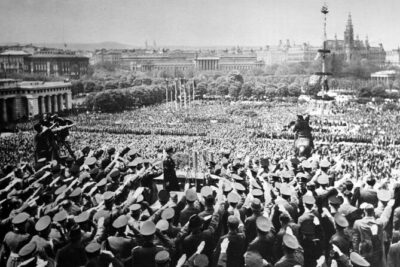
Vienna Classical Concert – Strauss in Historic 1837 Hall
Read our review →Browse the lists this tour appears in