
Reviewed · MOZART & STRAUSS CONCERTS
Vienna: Johann Strauss – Immersive Audiovisual Experience Ticket
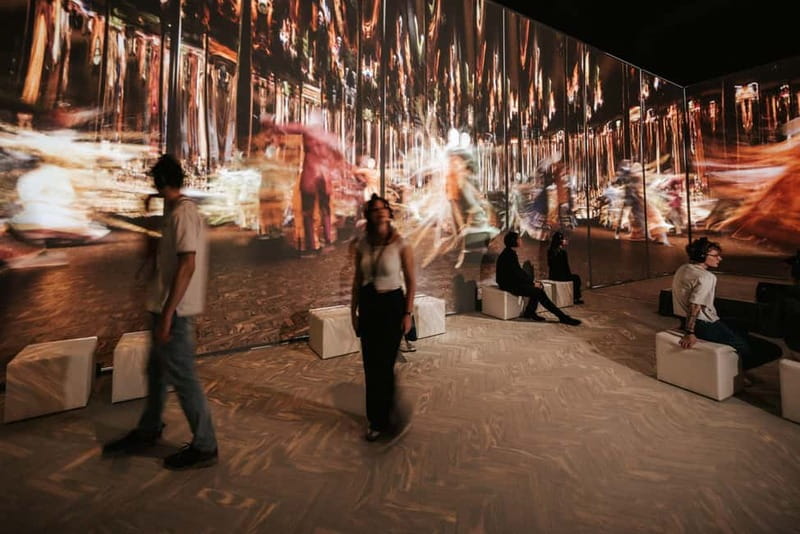
Vienna’s Johann Strauss Museum turns the Waltz King’s life into a moving audiovisual show, not a quiet display of dusty cases. You follow his music through projected scenes, interactive stations, and location-based 3D sound that changes as you move. The goal is to make Johann Strauss feel less like a name on a concert program and more like the first pop star.
I like the freedom to move with the headphones and the chance to create a personal waltz on the composing machine. I also like that the experience works for both classical-music fans and people who usually find museums slow. The main consideration is the large headphone set, which you wear for most of the visit, and the museum advises against it for people with motion sickness.
In This Review
- Key points
- Johann Strauss as Vienna’s first pop star
- Starting the 75-minute museum visit
- Moving through Strauss’s musical world
- What the audio guide does differently
- The interactive exhibits and historical scenes
- Making a waltz you can take home
- The Johann Strauss photo booth
- Who will get the most from this experience
- Is $28 a good value in Vienna?
- Planning tips for a smoother visit
- Should you book the Johann Strauss Museum?
- FAQ
- Where does the Johann Strauss experience begin?
- How long does the experience last?
- What are the museum’s opening hours?
- Do I need to follow a specific arrival time?
- Which audio-guide languages are available?
- What languages does the host or greeter speak?
- Is the museum wheelchair accessible?
- Is the audio guide included in the ticket?
- Can I create my own music?
- Is the experience suitable for people with motion sickness?
- Can I cancel and receive a refund?
Key points
- A 75-minute Johann Strauss story: Follow the composer’s life and music through interactive scenes rather than traditional text panels alone.
- Location-based 3D audio: Move through the exhibition while the headphone system tracks your position with high precision.
- Your own Viennese waltz: Use the composing machine to make a waltz and take home personalized sheet music.
- A printed Strauss portrait: Step into the photo booth and have a picture made as Johann Strauss.
- Several audio languages: Choose Chinese, English, French, German, Italian, Japanese, Korean, or Spanish.
- Simple planning: The museum is at the Johann Strauss Museum, the visit begins and ends there, and wheelchair access is available.
Johann Strauss as Vienna’s first pop star
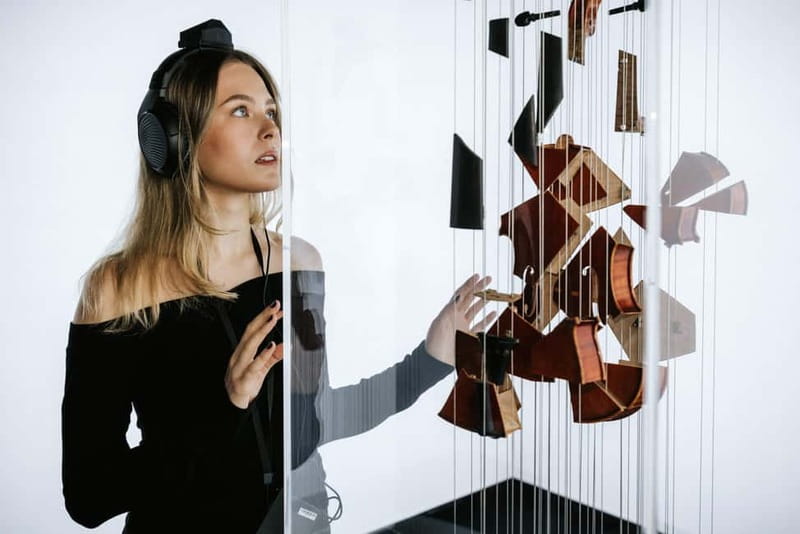
Johann Strauss is often presented as the Waltz King, but this experience gives you a broader idea of what made him famous. The museum frames him as the first pop star in history, a useful comparison because his music was not locked away for specialists. It reached a wide public and helped define Vienna’s musical identity.
You move through his world with a headset rather than a guide leading a fixed group. That matters because you are not tied to one spot while the narration plays. The location-based 3D system follows your position, so sound can shift with you as you pass through virtual spaces.
This format suits you if you want information without standing still for long stretches. It also gives the museum a theatrical feel. Projections and animations bring the melodies and period scenes to life, while interactive stations ask you to take part instead of simply reading.
The experience lasts about 75 minutes. That is long enough to feel substantial, but short enough to fit into a busy day in Vienna. You return to the same meeting point at the end, so there is no separate exit location to find.
More Mozart and Strauss evenings:
- Vienna: Mozart Concert at the Golden Hall
★ 4.6 · 3,986 reviews - Vienna: Classical Concert at Mozart’s First House
2,423 reviews - Vienna: Mozart and Strauss Concert at Schönbrunn
★ 4.5 · 2,364 reviews
Starting the 75-minute museum visit
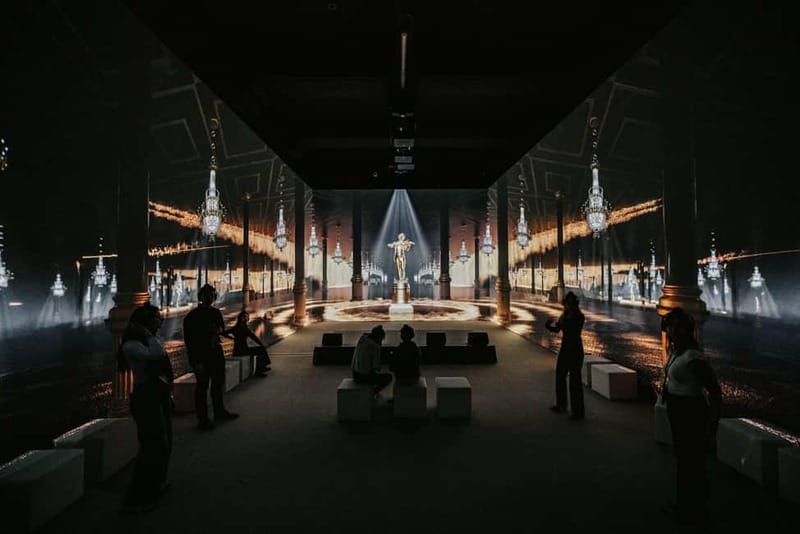
Your visit begins at Johann Strauss Museum, New Dimensions. The experience provider supplies the headphones and audio guide, and a German or English host or greeter is available at the entrance. The entrance staff are described as kind and helpful, which is useful when you need help choosing a language or understanding how the system works.
The ticket is listed at $28 per person. I consider that a fair price if you enjoy music, digital exhibitions, or unusual museum formats. You are paying for more than admission to a room of objects: the ticket includes the audio equipment, the interactive installations, the composing machine, and access to the souvenir shop and photo booth.
The value is less certain if you want a traditional museum with original manuscripts, instruments, or a large collection of physical objects. This is primarily a designed audiovisual experience. You come for the story, sound, and interaction rather than a long look at historic artifacts.
Timeslot tickets require you to follow the selected day and time. Flexible tickets are also available, with weekday or every-day options depending on the ticket type. Opening hours are Sunday through Thursday from 10 a.m. to 6 p.m., and Friday and Saturday from 10 a.m. to 7 p.m. Check the available start times when booking, especially if you are fitting this around a concert or another timed attraction.
Moving through Strauss’s musical world
The central part of the visit uses projections, animation, music, and interactive displays to explain key parts of Johann Strauss’s life and work. The exact order of scenes is designed as a multimedia journey through time, so you should expect a flowing presentation rather than a conventional gallery with numbered rooms.
That approach can make the material easier to follow. Instead of memorizing dates and names from wall text, you connect the music with images and historical settings. The exhibition also gives you new ways to hear familiar melodies, with audiovisual stations designed to show how Strauss’s compositions work.
You can move through the virtual spaces while the headphones continue the narration. This is one of the most interesting technical features. The system uses real-time localization, meaning it detects where you are and produces high-precision sound without forcing you to remain in a marked position.
I like this freedom because it gives you control over your pace. If one display catches your attention, you can spend a little longer there. If a scene feels less interesting, you can continue without waiting for an entire group to catch up.
The tradeoff is that the headphones become a major part of the visit. You are not simply listening to a guide while looking around. The sound is the thread holding the whole experience together. One useful point to consider before booking is comfort: the headset is large, and the museum specifically says the experience is not suitable for people with motion sickness.
What the audio guide does differently
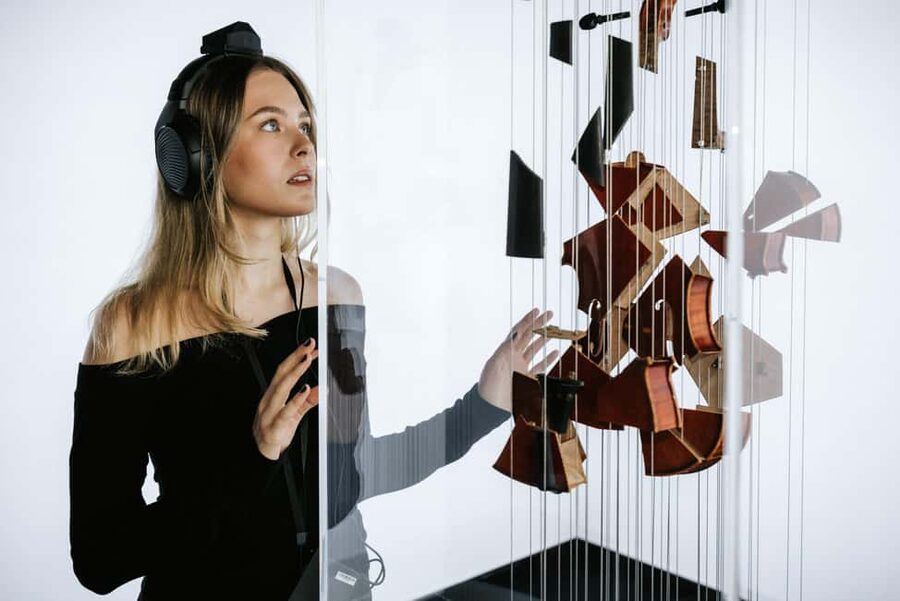
The audio guide is included and available in eight languages: Chinese, English, French, German, Italian, Japanese, Korean, and Spanish. The host or greeter language is German and English, but the recorded guide gives you a much wider choice.
The location-based system is valuable because it lets you walk naturally. In a typical audio tour, you press a button at each stop or listen to commentary that does not respond to your position. Here, the sound is linked to the spaces around you, helping the scenes feel more connected to your movement.
The format also works well for mixed-interest groups. One person may already know Strauss’s waltzes, while another may be curious about Vienna but not interested in a standard classical-music lecture. The visual effects and interactive features give newcomers something to do, while the music and biography provide enough substance for people who already enjoy Strauss.
Still, this is not a quiet visit. You will hear the program through headphones, and the exhibition is built around sound. If you prefer to read at your own speed or talk with companions throughout a museum, this format may feel restrictive.
More one-off experiences in Vienna:
- Vienna: Light of Creation Votive Church Immersive Light Show
★ 4.8 · 6,779 reviews - Vienna: Madame Tussauds Admission Ticket
★ 4.6 · 1,077 reviews - Ikono Vienna an Immersive Experience
★ 4.5 · 543 reviews - Vienna: IKONO VIENNA Immersive Experience Ticket
★ 4.2 · 316 reviews
The interactive exhibits and historical scenes
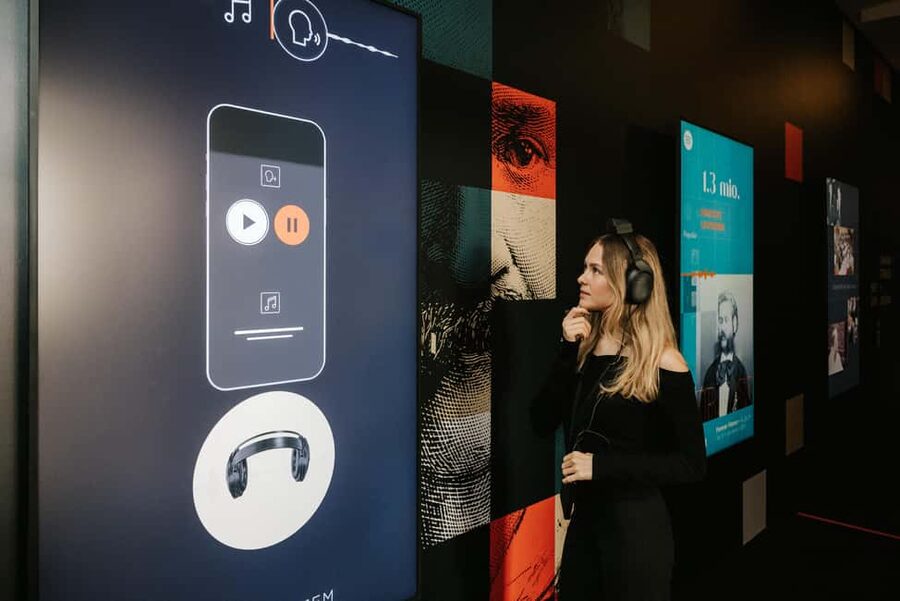
The museum’s displays cover important phases of Strauss’s life and present his music in new ways. Rather than giving you one long block of biography, they break the material into interactive moments and audiovisual scenes.
That structure is particularly helpful for younger visitors and for anyone who finds standard museums hard to sustain. One strong response to the experience came from a visitor with ADHD, who found the constant interaction and changing environment far more engaging than a conventional museum. You should not read that as a promise that every person will react the same way, but it does point to a real strength: the visit gives your attention several things to do.
You might watch a projection, listen to music, follow an animation, or operate an interactive station. The museum makes an effort to connect Strauss’s personal story with the sounds associated with him, rather than treating the composer as a portrait and a list of achievements.
The historical material is presented through technology, so the experience feels modern even as its subject belongs to nineteenth-century Vienna. That contrast is part of the appeal. You get a taste of the period without being asked to spend an hour reading dense labels.
The drawback is that the technology may take center stage. If your main interest is the physical evidence of Strauss’s life, you may find the museum lighter on objects than expected. The experience is best understood as a theatrical museum presentation, not a traditional archive.
Making a waltz you can take home
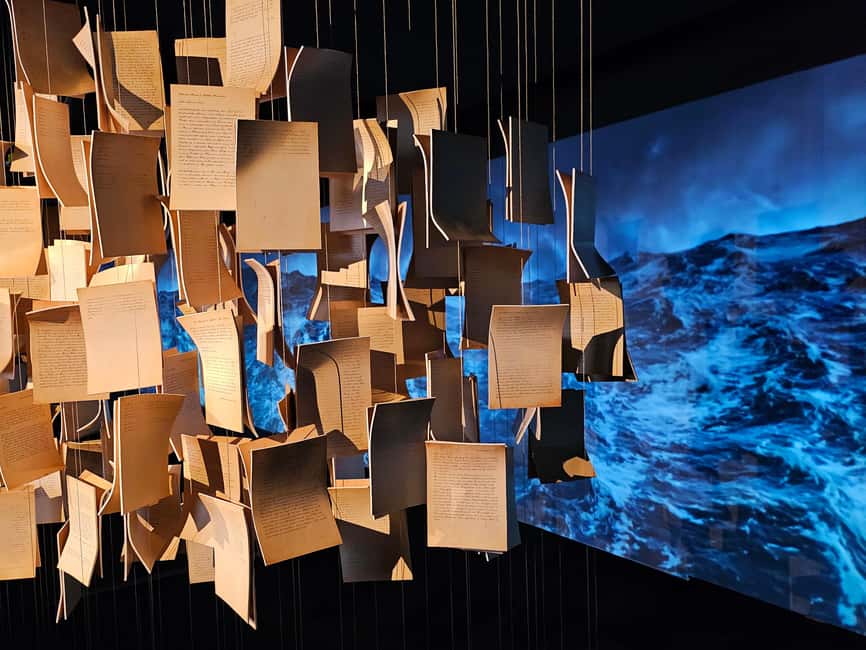
The composing machine is the most personal feature of the visit. You use it to create your own waltz, then take home the result as personalized sheet music.
You do not need to be a trained musician to appreciate this stop. The point is not to produce a concert-ready masterpiece. It is to give you a playful way to understand the structure and character of a waltz by making choices yourself.
This activity also gives the visit a souvenir with more meaning than a standard postcard. Your sheet music connects you directly with the subject of the museum. It can be a fun keepsake for children, music students, couples, or anyone who wants to leave with something they helped create.
The information does not specify how much time each person gets at the machine, so you should treat it as one feature within the 75-minute program rather than a separate workshop. If the museum is busy, you may need to share access with other people in your time period.
The Johann Strauss photo booth
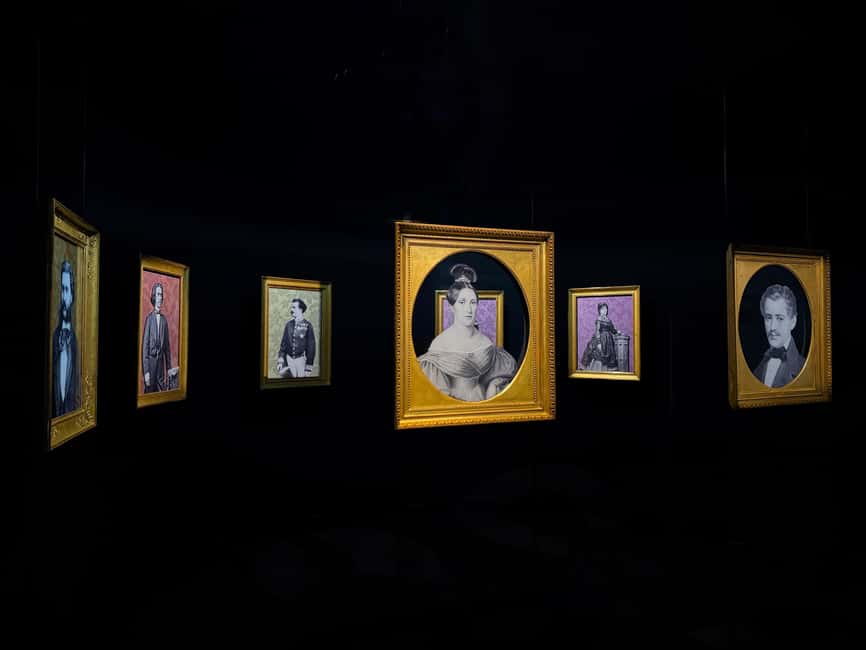
The souvenir shop includes a photo booth where you can have a photo printed as Johann Strauss. It is a lighthearted way to finish the musical story, and it fits the museum’s theme of putting you inside Strauss’s world.
I see this as a bonus rather than a reason to buy the ticket on its own. The composing machine offers a more distinctive souvenir because it creates music, while the printed photo is mainly a playful memory of the visit.
For families and friends, the photo booth can add a little humor after the more structured audiovisual sections. You can also use it as a final pause before leaving, since the activity ends back at the starting point and includes access to the souvenir shop.
Who will get the most from this experience
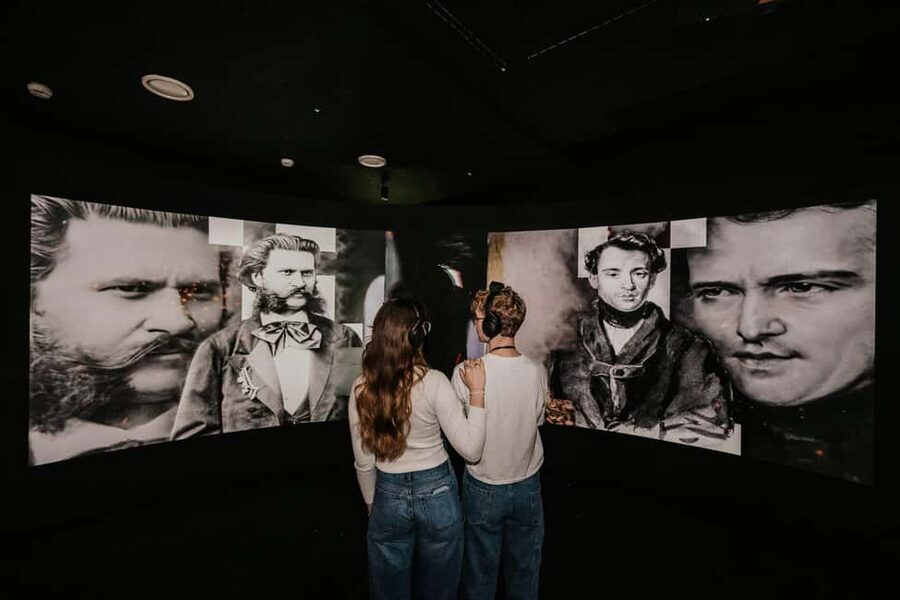
I would recommend the museum to several different types of visitors:
- Classical-music newcomers: You get context and recognizable musical ideas without needing prior study.
- Johann Strauss fans: The exhibition offers a fresh presentation of his life and work through sound and images.
- Families with older children: The interactive displays, photo booth, and composing machine give children more to do than read labels.
- Visitors who dislike slow museums: The format keeps changing and asks you to participate.
- Digital-art and technology fans: The location-based 3D audio and projections are central to the experience.
- Short-stay visitors: The 75-minute length is easy to place between other Vienna plans.
I would be more cautious if you suffer from motion sickness, dislike wearing headphones, or want a museum focused on original objects. The museum itself identifies motion sickness as a concern, and the headphone system is not a minor add-on. It shapes the visit from start to finish.
Is $28 a good value in Vienna?
At $28, the ticket sits in the range where you should decide based on format, not only subject. If you want a complete Johann Strauss presentation with guided sound, projections, interaction, and a creative activity, the price is reasonable.
The included extras improve the value. You receive the audio guide, use of the composing machine, and access to the photo booth and souvenir shop. The personalized sheet music gives you something connected to the visit rather than just admission to an exhibition.
The 75-minute duration also helps. You are not committing half a day, and the museum can fill a gap in your schedule without sending you across Vienna. Friday and Saturday hours extend to 7 p.m., while Sunday through Thursday hours end at 6 p.m.
I would not call it a bargain for someone who only wants to hear Strauss music. A concert may be a better choice for that purpose. This ticket makes sense when you want music combined with biography, images, movement, and hands-on features.
Planning tips for a smoother visit
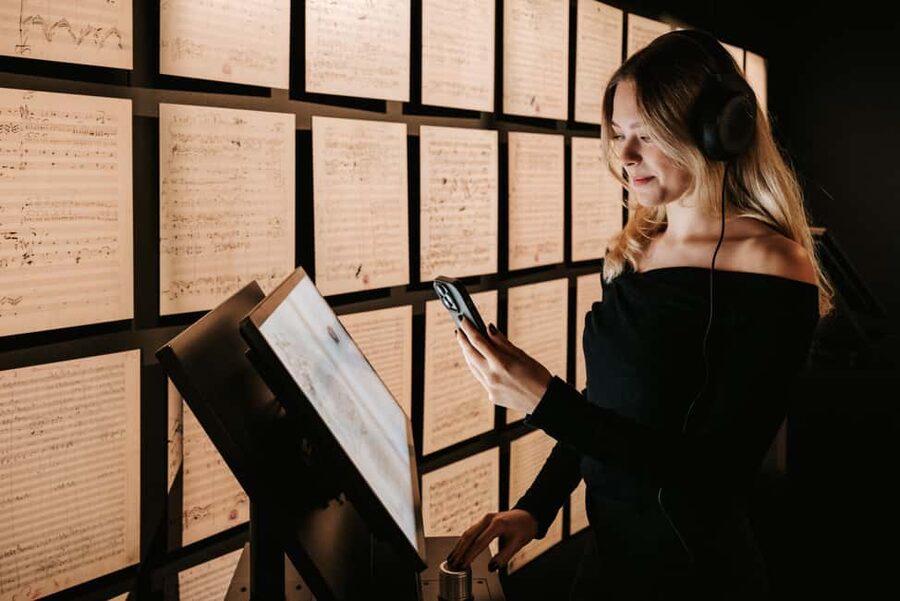
Book a time that gives you room before and after the 75-minute program. Timeslot tickets must be used on the selected day and time, so do not assume you can arrive whenever convenient.
If your schedule is uncertain, check the flexible ticket options. A weekday flex ticket can be redeemed on weekdays, while an every-day flex ticket offers broader use. The exact option matters more than it might seem during a busy Vienna trip.
Choose your audio language before the visit begins. English is available, along with seven other languages. The host or greeter speaks German and English, so you can ask entrance questions in either of those languages.
The museum is wheelchair accessible. For anyone sensitive to motion effects, remember that the attraction specifically says it is not suitable for people with motion sickness. Since the headphones are a core part of the presentation, you should also be comfortable wearing a substantial headset for much of the visit.
Cancellation is free up to 24 hours before the activity for a full refund, and a reserve-now, pay-later option is available. Those terms are helpful if your Vienna plans may shift.
Should you book the Johann Strauss Museum?
Book it if you want a modern, active introduction to Johann Strauss rather than a conventional display of objects. The strongest reasons are the location-based 3D audio, the changing audiovisual scenes, and the chance to compose a waltz and take home the sheet music.
I would especially choose it for a family, a mixed-interest group, or anyone who usually loses patience in quiet museums. The interactive design gives you a reason to keep looking and listening, and the 75-minute length keeps the commitment manageable.
Skip it if you want a traditional music museum, dislike headphones, or are prone to motion sickness. For everyone else, $28 is a fair price for a polished cultural activity that gives you both context and something to do. The 4.8 rating from 60 reviews reflects its strongest qualities: clear audio guidance, helpful entrance staff, and an engaging format that can make Vienna’s waltz tradition feel immediate.
FAQ
Where does the Johann Strauss experience begin?
It begins at Johann Strauss Museum, New Dimensions, and the activity ends back at the same meeting point.
How long does the experience last?
The visit lasts approximately 75 minutes.
What are the museum’s opening hours?
The museum is open from 10 a.m. to 6 p.m. Sunday through Thursday, and from 10 a.m. to 7 p.m. Friday and Saturday.
Do I need to follow a specific arrival time?
Timeslot tickets require you to use the selected day and time. Flexible weekday and every-day ticket options can be redeemed more flexibly, depending on the ticket purchased.
Which audio-guide languages are available?
The audio guide is available in Chinese, English, French, German, Italian, Japanese, Korean, and Spanish.
What languages does the host or greeter speak?
The host or greeter speaks German and English.
Is the museum wheelchair accessible?
Yes, the activity is wheelchair accessible.
Is the audio guide included in the ticket?
Yes, headphones with an audio guide are included.
Can I create my own music?
Yes. You can use the composing machine to create your own waltz and take it home as personalized sheet music.
Is the experience suitable for people with motion sickness?
No. The museum states that the experience is not suitable for people with motion sickness.
Can I cancel and receive a refund?
Yes. You can cancel up to 24 hours in advance for a full refund.
Just added around Vienna
- Private Tour from Vienna to Melk and Dürnstein★ 4.5 · 3 reviews
- Vienna: Johann Strauss 200th birthday anniversary exhibition★ 4.7 · 3 reviews
- Vienna Private Full Day Tour – Tickets to Schönbrunn & Lunch★ 5.0 · 3 reviews
- Private Salzburg Day Trip from Vienna★ 4.0 · 3 reviews
- Vienna: Entry Ticket Belvedere 21 & Contemporary Art★ 4.3 · 3 reviews
- Full-Day Private Trip from Vienna to Budapest★ 4.5 · 3 reviews
- Vienna by Night: Private Evening Food and Drink Tour★ 5.0 · 3 reviews
- Semi-Private Tour: Central Europe &Balkans from Vienna to Athens★ 5.0 · 3 reviews
Mozart & Strauss Concerts, compared.
Vienna Mozart Concert in Historical Costumes at the Musikverein
Read our review →
Mozart & Strauss Classical Concert at Börse Palace
Read our review →
Browse the lists this tour appears in