
Reviewed · SELF-GUIDED TOURS
Vienna: The Great Plague Exploration Game
Vienna’s Great Plague Exploration Game turns the old city into a self-guided puzzle trail. You follow clues from a 13-century-old church to St. Stephen’s Cathedral, the Albertina, and the Hofburg, while the story connects the route to the legend of dear Augustin. It feels less like a formal tour and more like a city walk with a plot.
I like the freedom to pause anywhere, especially in a city built for coffee breaks. I also like the way the route mixes famous sights with details you could easily miss, such as the medieval mural on Bäckerstrasse and the nail-studded Stock im Eisen.
The trade-off is simple: there is no human guide. You rely on your smartphone, the app, and your own ability to solve clues. Some players found the app tricky, and answers may need exact spelling or formatting, so this suits patient families and independent explorers more than anyone seeking a polished history lecture.
In This Review
- Key points before you set out
- A story-led walk through Vienna’s oldest center
- Starting at St. Rupert’s Church
- Griechenbeisl and Vienna’s old dining culture
- Bäckerstrasse and the odd medieval mural
- Stephansplatz and the Stock im Eisen
- St. Stephen’s Cathedral and the cost of going inside
- A coffeehouse pause at Frauenhuber
- The Albertina and imperial surroundings
- Ending at the Hofburg
- How the app affects the experience
- Who will get the most from the $7.23 price
- Practical details for planning your walk
- Should you book the Great Plague Exploration Game?
- FAQ
- How long does the Vienna Great Plague Exploration Game take?
- Is a tour guide included?
- Where does the game start and end?
- What language is the game offered in?
- Are entrance fees included?
- Can I cancel for a refund?
Key points before you set out
- A 90-minute route through central Vienna: Begin at Ruprechtskirche and finish near the Hofburg.
- The story links the clues to dear Augustin: You learn why this familiar Viennese song has a darker historical meaning.
- Famous sights share space with odd little details: Look for the old mural at Bäckerstrasse No. 2 and the Stock im Eisen.
- You play privately with your own group: There is no guide and no need to join strangers.
- Flexible timing: Start any time from 7:00 AM to 10:00 PM, take breaks, and continue when ready.
- Very low price: At $7.23 per person, the experience costs less than many short city tours, though admission to St. Stephen’s Cathedral and museums is extra.
A story-led walk through Vienna’s oldest center
The Great Plague Exploration Game is built around movement, observation, and problem-solving. At each stop, you receive a clue or question. You inspect your surroundings, enter an answer in the app, and then receive directions to the next location along with an audio story.
That format changes the pace of sightseeing. Instead of walking past a doorway or plaque, you have a reason to look closely. The questions are not described as highly difficult, and some players found them fairly easy. That is useful if you are playing with children, but puzzle fans seeking a serious challenge may find the game light.
The route also gives you permission to wander. You can stop for coffee, spend longer at a church, or pause when a side street catches your eye. One useful feature is that the game can be played at any time after booking, without rescheduling. That is a good fit for Vienna, where a morning museum visit can easily turn into a late lunch.
A few more Vienna tours worth weighing up
- Vienna: Tickets for Mozarthaus Vienna with Audio Guide
★ 4.2 · 2,344 reviews - Vienna: New Hofburg Palace Audio-Guided Tour & Entry Ticket
★ 4.1 · 566 reviews - Vienna: Schlumberger Wine Cellar Guided or Self-Guided Tour
★ 4.8 · 285 reviews
Starting at St. Rupert’s Church
The route begins at St. Rupert’s Church, or Ruprechtskirche, at Ruprechtsplatz 1. This is a strong starting point because the church feels far older and quieter than the grand monuments along the main sightseeing routes.
St. Rupert’s is about 13 centuries old and was built with stone taken from an ancient Roman settlement. It is dedicated to St. Rupert of Salzburg, the patron saint of the Danube’s salt merchants. Inside, you can look for Vienna’s oldest stained-glass window, located in the vaulted apse and dating from the 13th century.
The church also has Vienna’s oldest bells. In summer, it hosts concerts of ancient music, with evening performances in July. The game itself gives you a question to answer by studying the site. Allow about 10 minutes, but the church is worth more time if it is open and you want to look around without rushing.
This first stop sets the tone. You are not simply told that Vienna is old. You are asked to inspect a real fragment of its past and use what you see to move on.
Griechenbeisl and Vienna’s old dining culture
Next comes Griechenbeisl, one of Vienna’s oldest restaurants and a place with a long musical connection. Mozart, Beethoven, and Schubert ate here, and the Mark Twain Room contains framed signatures of famous diners. Luciano Pavarotti and Johnny Cash are also linked to the restaurant’s visitor list.
The name means Greek Inn. Greek tradesmen and Levant travelers settled in this part of the city, near the Holy Trinity Greek Orthodox Church, and their presence shaped the area’s character.
The challenge here asks you to inspect the place and find information that advances the game. You are given about 15 minutes. The route does not include a meal, so treat Griechenbeisl as a point of interest rather than a required restaurant stop.
I like this part of the walk because it adds ordinary city life to the monumental sights. A church can tell you about religion and power. An old inn can tell you about trade, music, migration, and the people who passed through Vienna for work or pleasure.
Bäckerstrasse and the odd medieval mural
Bäckerstrasse is one of the most enjoyable stretches of the route. Its 17th and 18th century façades and interior courtyards give you a reason to slow down and look above street level.
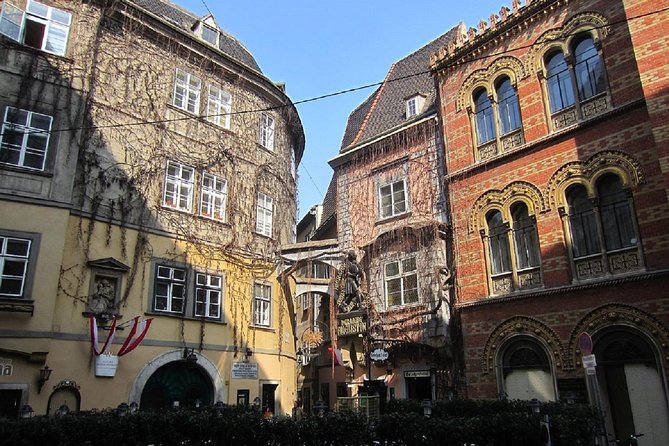
At No. 2, you’ll find the Hasenaus, or Hare House, with a peculiar mural on the façade. A wolf and a cow wearing spectacles are shown playing backgammon. That strange scene may be part of an older painting of medieval life, or it may symbolize the conflict between Protestants and Catholics. The game presents the mystery and asks you to examine the building for the answer.
You get only about five minutes at this stop, but the route information also points out other buildings along Bäckerstrasse. No. 2 has a 17th-century tower, No. 8 was the Palace of Count Seilern from 1722, and No. 7, the Schwanenfeld House, has a Renaissance courtyard with arcades and galleries.
This is exactly the kind of stop that makes the game different from a standard sightseeing circuit. You may pass the mural without noticing it on an ordinary walk. Here, the puzzle gives you a reason to search for a detail that is easy to overlook.
A different side of Vienna on the same trip:
- Vienna: Vivaldi’s Four Seasons Concert in Karlskirche
★ 4.7 · 14,951 reviews - Vienna: Spanish Riding School Training
★ 3.9 · 9,281 reviews - Vienna: Skip-the-cashier-desk-line Giant Ferris Wheel Ride
★ 4.5 · 7,859 reviews - Vienna: Schönbrunn Palace & Gardens Skip-the-Line Tour
★ 4.7 · 7,739 reviews
Stephansplatz and the Stock im Eisen
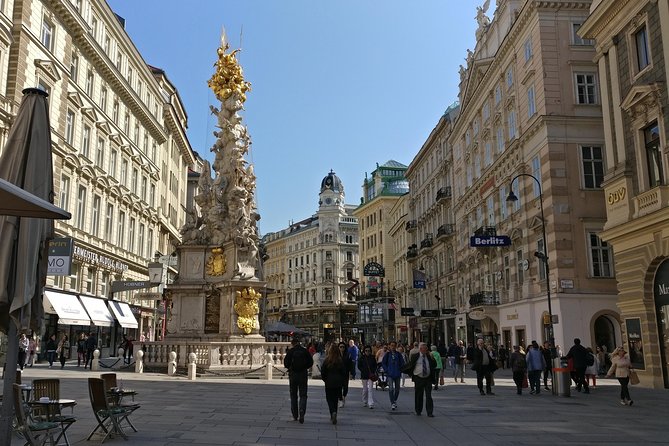
The route then leads you to Stephansplatz by clue and puzzle. This is one of Vienna’s busiest and most recognizable squares, so it gives the game a clear change of scale after the narrow streets around Bäckerstrasse.
You receive instructions for the next stage while learning about the square. The stop is listed at about 10 minutes, but you may need extra time to get your bearings, especially if the area is crowded.
From here, you reach the Stock im Eisen, sometimes called Vienna’s Nails Tree. The object is a section of a medieval tree trunk mounted on a pedestal about 1.5 meters high. Hundreds of nails were hammered into it over generations because the act was believed to bring good luck.
The trunk is surrounded by an iron ring with a dummy lock. Its unusual appearance once led people to connect it with Satan, but the nail tradition explains why it looks so strange. The game uses another clue to bring you here, and you can spend as long as you wish before moving on.
I find this a smart choice for a puzzle route. It is not as grand as the cathedral beside it, but it is visually odd and easy to remember. It also shows how urban traditions survive in small physical objects rather than only in palaces and monuments.
St. Stephen’s Cathedral and the cost of going inside
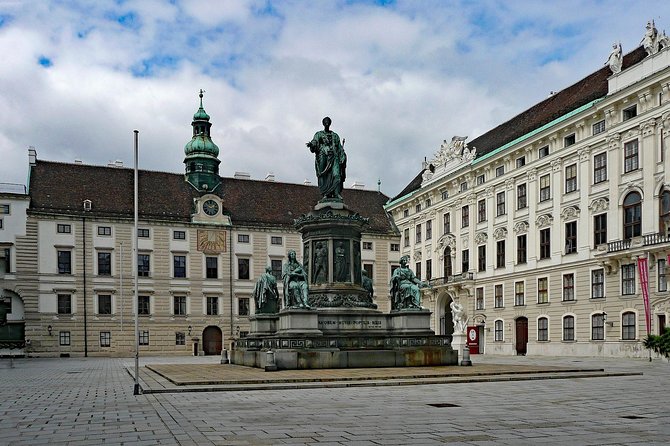
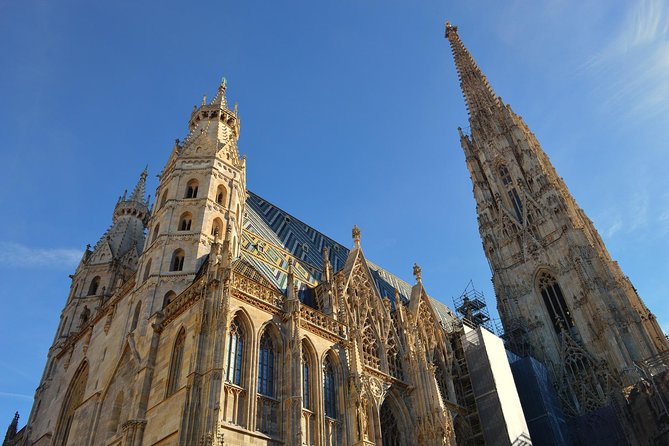
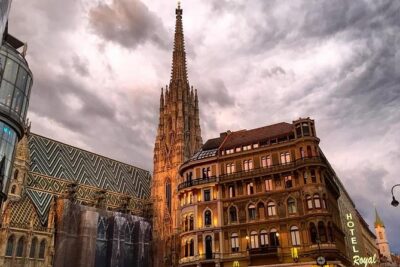
St. Stephen’s Cathedral, or Stephansdom, is the major landmark on the route. The cathedral dates from the 12th century and is one of Austria’s most important Gothic buildings.
Your challenge asks you to look around and find the answer. The cathedral’s roof gives you plenty to study. It rises about 38 meters and uses roughly 230,000 glazed tiles arranged in colorful patterns. The mosaics include the double-headed eagle of the Habsburg Empire, along with eagles carrying the arms of Vienna and Austria.
The cathedral has 13 bells in its tower room, which also offers a view over Vienna. The game does not include admission, so budget separately if you want to enter paid areas or visit the tower. The route’s 15-minute estimate is enough for the puzzle, not for a full cathedral visit.
This is an important distinction when comparing the experience with a guided tour. You get a reason to notice the building, but you do not receive a full architectural explanation from a person standing beside you. If St. Stephen’s is high on your list, plan extra time and treat the game as an introduction rather than a complete visit.
A coffeehouse pause at Frauenhuber
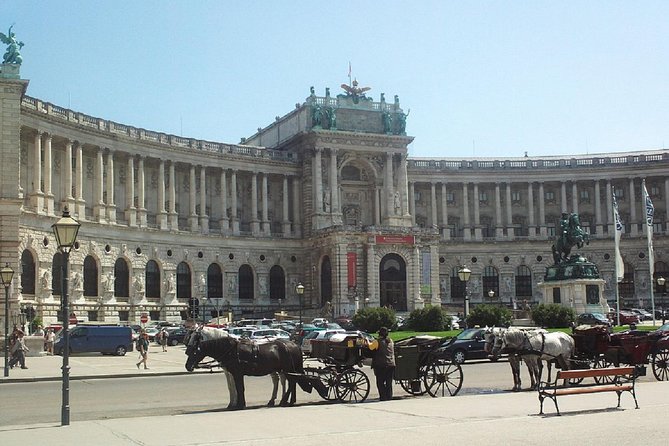
The route information also points you toward Café Frauenhuber on Rauhensteingasse. It is described as Vienna’s oldest coffeehouse, dating from 1746, and is linked to Mozart and Beethoven, who reportedly played table music for diners there several times between 1782 and 1791.
Frauenhuber is known for a peaceful, unpretentious coffeehouse atmosphere. It makes a natural break in the game because you can stop for coffee, rest your feet, and return to the clues later.
The café is not listed as one of the timed puzzle stops, so check the game instructions as you play to understand exactly how it fits your route. Still, it captures one of the best parts of the experience: the walk does not force you to hurry from monument to monument.
The Albertina and imperial surroundings
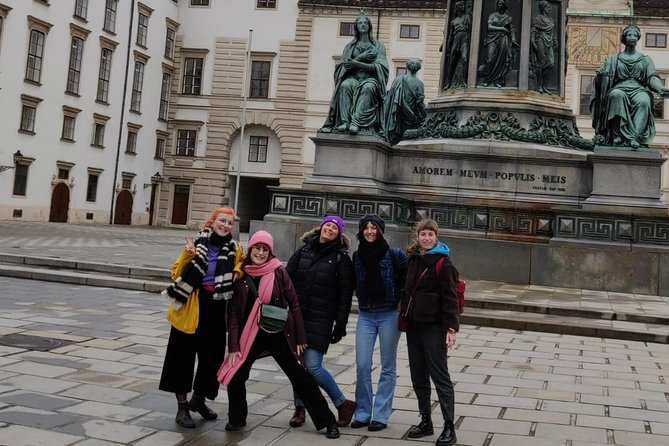
The Albertina comes next. The museum occupies part of the former Habsburg residential palace and has been connected with Vienna’s cultural life since 1805. Its collections cover modern art, graphic art, architecture, and photography.
The holdings include more than 50,000 drawings and over 1 million master prints, shown on a rotating basis. Notable works include Monet’s The Water Lily Pond, along with art connected to Impressionism, Fauvism, German Expressionism, and the Russian avant-garde.
The game gives you around 10 minutes to search for an answer outside or around the site. Museum admission is not included. If you want to see the collections, allow much more time and pay the separate entry fee.
This stop works well for a first orientation to the Albertina and its imperial setting. It does not replace a museum visit. Think of it as a prompt to notice the building and decide if you want to return for the art.
Ending at the Hofburg
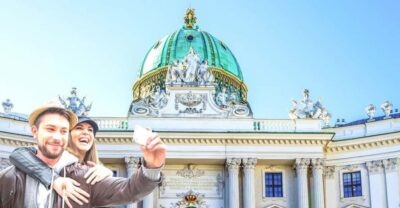
The final stop is the Hofburg, the former seat of the Habsburg emperors and the current home and workplace of Austria’s president. The palace has been at the center of Vienna’s political life since the 13th century.
You can explore its Imperial Apartments, the Sisi Museum, the silver collections, and the National Library on separate visits. The palace includes 24 Imperial Apartment rooms, and its 19th-century Hall of Ceremonies is still used for Viennese balls.
The game ends here after one last observation challenge. The listed time is about 10 minutes, but the Hofburg complex deserves longer if you plan to continue sightseeing. You can also finish the game and simply carry on at your own pace, which is useful if your afternoon plans include the palace museums.
Ending at the Hofburg gives the route a satisfying progression. You begin with a small, ancient church and finish at the center of imperial power. The walk covers religious buildings, old commerce, street folklore, art, and government without requiring a formal group tour.
How the app affects the experience
The smartphone setup keeps the cost low and gives your group privacy. You do not need to coordinate with a guide or follow a fixed departure time. Audio stories add narrative, while the clues make you look at the buildings instead of merely passing them.
The weak point is the app itself. Installation and game activation have caused trouble for some players. Another practical issue is answer validation. Correct responses may fail if you omit a capital letter or leave out a required word such as and between two names.
To avoid frustration, install the app before reaching Ruprechtskirche, make sure your phone is charged, and enter answers carefully. If a response seems correct but does not work, check spelling and formatting before assuming the clue is wrong. Support has helped resolve problems, but you should not count on instant assistance if you are in a hurry.
Who will get the most from the $7.23 price
At $7.23 per person, this is inexpensive for a private activity lasting about an hour and a half. Children play free, which makes the price especially attractive for families. Group discounts may reduce the cost further, and groups of more than 15 can make multiple bookings.
The value comes from the structure rather than from inclusions. You are paying for the app, story, clues, and route design. You are not paying for a guide, museum tickets, food, or entry to the cathedral.
I would choose it if you want a low-cost way to get moving through central Vienna and you enjoy solving simple puzzles. I would not choose it as your main history tour if you want detailed explanations, dates, and a guide who can answer questions on the spot.
The private format is useful for families, couples, and friends. Easily distracted children have a clear task at each stop, and adults can still appreciate the architecture and unusual details. The route can also work for repeat visitors who already know the big squares but want a fresh reason to explore side streets.
Practical details for planning your walk
The experience is offered in English and can be played Monday through Sunday between 7:00 AM and 10:00 PM. It starts at Ruprechtskirche and finishes at the Hofburg, both in central Vienna and near public transportation.
The advertised duration is approximately 90 minutes, but your real time can vary. Add time for photographs, coffee at Frauenhuber, a cathedral visit, or museum stops at the Albertina and Hofburg. Some players have stretched the route into a relaxed day, which is entirely possible because the game allows breaks.
The activity is private, and service animals are allowed. Most people can participate. Free cancellation is available up to 24 hours before the local start time. Inside that window, changes and refunds are not accepted.
Should you book the Great Plague Exploration Game?
Book it if you want a flexible, low-cost city walk with a story, light puzzles, and a mix of major sights and overlooked details. It is particularly well suited to families, independent couples, and friends who like to set their own pace.
Skip it if you want a live guide, a detailed lecture, or guaranteed app-free simplicity. The route is at its best when you treat it as a playful introduction to Vienna, not as a replacement for visiting St. Stephen’s Cathedral, the Albertina, or the Hofburg properly.
For $7.23, the risk is small. Bring a charged phone, read the answer instructions closely, and leave room for pleasant distractions along the way.
FAQ
How long does the Vienna Great Plague Exploration Game take?
The planned duration is approximately 1 hour and 30 minutes. You can take breaks and continue later, so the walk may take longer if you stop for coffee, sightseeing, or museum visits.
Is a tour guide included?
No. This is a self-guided experience played on your own smartphone. It includes audio stories and clues, but no physical guide.
Where does the game start and end?
The game starts at St. Rupert’s Church, Ruprechtspl. 1, 1010 Vienna. It ends at the Hofburg in central Vienna.
What language is the game offered in?
The experience is offered in English.
Are entrance fees included?
No. Admission to St. Stephen’s Cathedral and the Albertina is not included. The route also points you toward places such as the Hofburg and Café Frauenhuber, where any separate admission or purchase is your responsibility.
Can I cancel for a refund?
Yes. You can cancel up to 24 hours before the local start time for a full refund. Cancellations or changes made less than 24 hours in advance are not refunded.
Just added around Vienna
- Private Tour from Vienna to Melk and Dürnstein★ 4.5 · 3 reviews
- Vienna: Johann Strauss 200th birthday anniversary exhibition★ 4.7 · 3 reviews
- Vienna Private Full Day Tour – Tickets to Schönbrunn & Lunch★ 5.0 · 3 reviews
- Private Salzburg Day Trip from Vienna★ 4.0 · 3 reviews
- Vienna: Entry Ticket Belvedere 21 & Contemporary Art★ 4.3 · 3 reviews
- Full-Day Private Trip from Vienna to Budapest★ 4.5 · 3 reviews
- Vienna by Night: Private Evening Food and Drink Tour★ 5.0 · 3 reviews
- 1.5 Hour Cinematic Style Portrait Photoshoot and Tour in Vienna★ 4.5 · 3 reviews
Self-Guided Tours, compared.
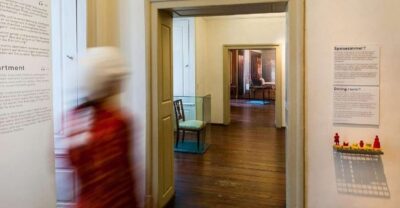
Tickets for Mozarthaus Vienna with Audio Guide
Read our review →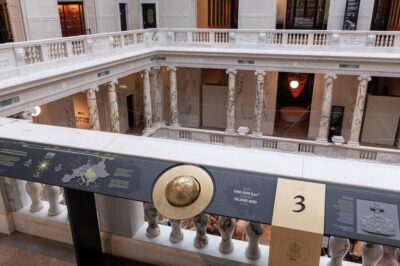
New Hofburg Palace Audio-Guided Tour & Entry Ticket
Read our review →
Schlumberger Wine Cellar Guided or Self-Guided Tour
Read our review →
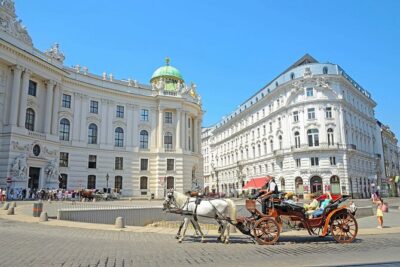
Vienna Walking Tour with Audioguide on Your Smartphone
Read our review →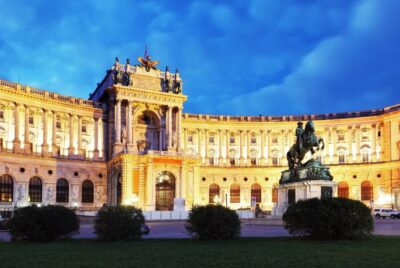
Vienna’s Old Town and Attractions Self-Guided Tour Booklet
Read our review →Browse the lists this tour appears in