
Reviewed · WALKING TOURS
Vienna Walking Tour with Audioguide on Your Smartphone
Vienna’s grand center works especially well on foot, and this self-guided tour gives you a broad sweep of it for just $8.40. You move from St. Stephen’s Cathedral and Baroque churches to Hofburg monuments, old coffeehouses, Mozart, Beethoven, and the Vienna State Opera, all with a professional historian speaking through your phone.
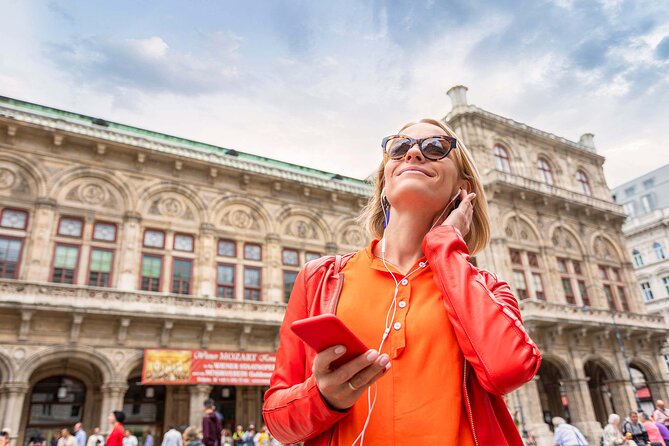
I like two things here: you set the pace, and the route gives you a useful first look at many famous sights without joining a group. I also like the pause button in real life. Stop for coffee, take photographs, enter a museum, or split the walk over two days.
The main catch is distance. The route is advertised at about two and a half hours, but completing the full circuit can mean nearly 7 kilometers and several hours of walking. The app’s GPS and directions have also been uneven for some users, so bring your own sense of direction and perhaps a second map.
In This Review
- Key points to know before you book
- Starting beneath St. Stephen’s Cathedral
- Small churches and grand Baroque details
- Coffeehouses at Demel and Café Central
- Michaelerplatz and the Habsburg center
- The Imperial Crypt and Vienna’s imperial story
- War memory, Albertina, and the Vienna State Opera
- Mozart in Burggarten and Maria Theresa Square
- Hofburg, Sisi, and the city’s public institutions
- Beethoven, Collalto Palace, and smaller details
- How the app works in real life
- Is $8.40 a good deal?
- Who should book this Vienna walk?
- Should you book it?
- FAQ
- Where does the Vienna audio tour begin?
- Where does the tour end?
- How long does the tour take?
- Is there a human guide?
- What is included?
- Are entrance tickets included?
- What should I bring?
Key points to know before you book
- 29 narrated sites: The route covers churches, palaces, monuments, cafés, museums, and music landmarks.
- Start and finish at Stephansplatz: The walk begins and ends near St. Stephen’s Cathedral in central Vienna.
- English audio only: Recordings are delivered through an iPhone or Android app.
- No human guide: You download and activate the tour yourself, then follow the map and audio prompts.
- About $8.40 per person: That is a low price for a full city orientation, especially if you use the tour across two days.
- Bring headphones and charge your phone: Neither headphones nor a smartphone is supplied, and the audio can use battery power.
Starting beneath St. Stephen’s Cathedral
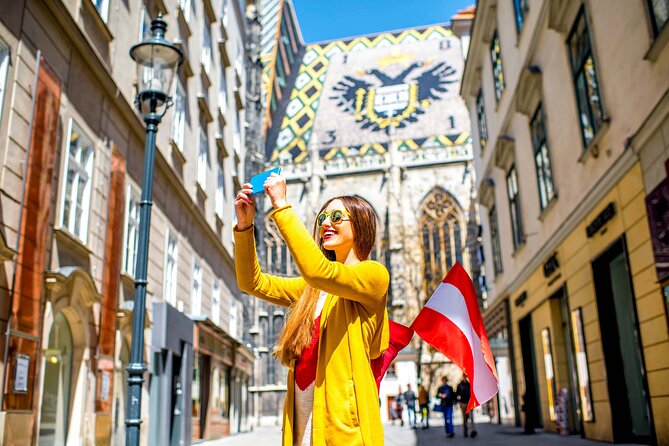
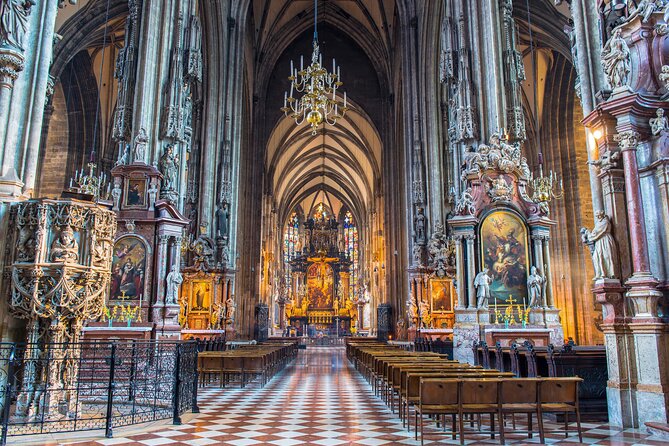
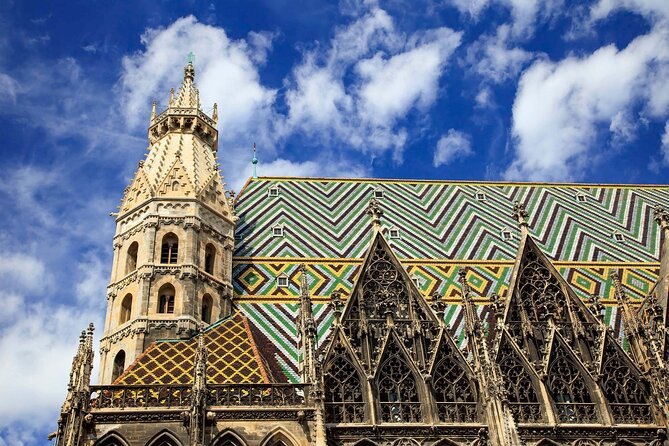
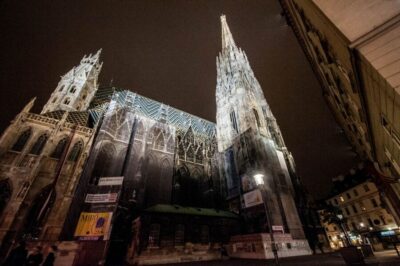
The tour begins at Stephansplatz, Vienna’s central stage. St. Stephen’s Cathedral is the natural starting point, with its Gothic spires, patterned roof, carved stonework, stained glass, High Altar, and catacombs.
The recording gives you more than a quick architectural label. It covers the building’s long story and the sense of mystery attached to its underground spaces. You can also choose to climb the South Tower for city views, though the tower and other interior attractions may require an entrance ticket. The tour price does not include admission fees.
The listed stop is only about 15 minutes, so think of it as an introduction rather than a full cathedral visit. If you want to explore the interior, catacombs, or tower properly, pause the recording and allow extra time.
A practical tip: activate the tour before you reach the square and download the content in advance. The route uses GPS, but phone signals and location accuracy can falter among dense city buildings.
More walking tours in Vienna:
- Vienna: Guided Walking Tour of City Center Highlights
★ 4.7 · 4,989 reviews - Vienna: Vienna Central Cemetery Guided Walking Tour
★ 4.8 · 3,307 reviews - Vienna: Guided Walking Tour of City Highlights & Hidden Gems
★ 4.9 · 2,180 reviews
Small churches and grand Baroque details
A short walk brings you to the Church of the Teutonic Order. Its Baroque interior and connection with the religious order make it a quieter counterpoint to St. Stephen’s. The stop takes about 10 minutes, and it rewards you with close views of frescoes, sculpture, and decorative detail without demanding a long visit.
Next comes the Pestsäule, or Plague Column, on the Graben. This tall Baroque monument was built in gratitude for Vienna’s survival of the plague. The audio helps you read the crowded sculpture instead of treating it as just another ornate object in the street.
Peterskirche follows. Its dome and lavish interior show Vienna’s Baroque style in a compact setting. You may also see information about classical concerts held there, but a concert is not part of this tour. The recording is an orientation to the church, not an event ticket.
These early stops show one of the tour’s strengths. You are not simply walking from palace to palace. You get churches, public monuments, religious art, and the changing scale of central Vienna.
Coffeehouses at Demel and Café Central
Café Demel is one of the route’s most tempting pauses. Founded in 1786, it is known for Viennese pastries, cakes, coffee, chandeliers, and marble tables. The stop is brief, about 10 minutes, but I would not treat that as a command to rush in and out. If you want Sachertorte or another pastry, pause the tour and make the café part of your day.
Later, Café Central appears for about five minutes. Founded in 1876, it is tied to Vienna’s café tradition and its old intellectual circles. The audio explains why these cafés matter to the city’s cultural life, while the room itself gives you a chance to sit with a coffee and watch the place operate.
The route’s café stops are valuable because they turn a sightseeing circuit into a flexible day in Vienna. You do not need to march past every café while a guide waits at the curb. You can stop, rest your legs, and restart the recording when ready.
Michaelerplatz and the Habsburg center
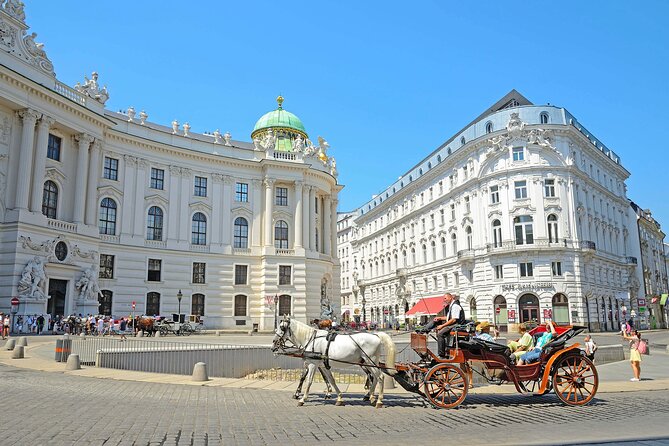
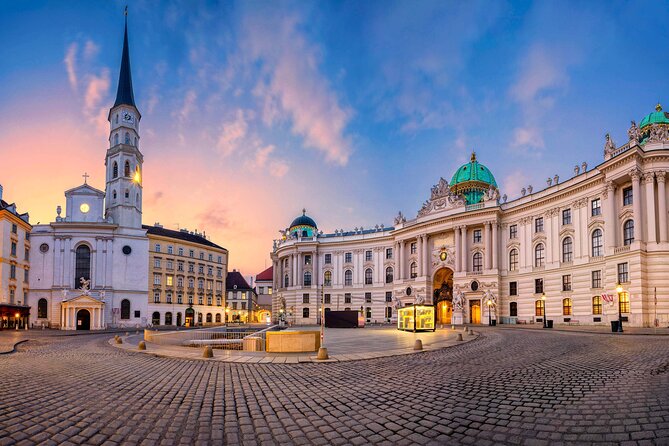
Michaelerplatz is one of the most layered parts of the walk. The square looks toward Hofburg Palace and Michaelerkirche, while archaeological remains beneath the pavement point to earlier chapters of Vienna.
The stop helps connect the imperial buildings around you. This is where the city’s ceremonial face becomes clear: palace entrances, church architecture, archaeological remains, and public space packed into one area.
At Josefsplatz, the statue of Emperor Joseph II introduces an important figure of the Enlightenment period. He is remembered for reforms and a changing vision of imperial rule. The bronze monument sits near Hofburg Palace, so you can link the ruler’s public image with the buildings of the court.
The Donnerbrunnen in Neuer Markt offers another change of pace. This elaborate fountain uses mythological figures and sculpture to decorate a central city square. It is a good example of how Vienna places serious art in ordinary public space, where you might otherwise be thinking only about getting to the next stop.
A few more Vienna tours worth weighing up
- Vienna: Tickets for Mozarthaus Vienna with Audio Guide
★ 4.2 · 2,344 reviews - Vienna: New Hofburg Palace Audio-Guided Tour & Entry Ticket
★ 4.1 · 566 reviews - Vienna: Schlumberger Wine Cellar Guided or Self-Guided Tour
★ 4.8 · 285 reviews - Vienna: Scavenger Hunt Self-Guided Tour
★ 4.7 · 83 reviews
The Imperial Crypt and Vienna’s imperial story
The Imperial Crypt is one of the most serious stops on the route. It contains the burial places of Habsburg emperors, empresses, and other members of the dynasty. The tombs are large, ornate, and often solemn rather than cheerful.
This part of the tour gives the imperial story a human ending. Palaces and statues can make monarchy seem polished and distant. A crypt brings you face to face with succession, family, death, and the long passage of time.
The entrance is not included, so check the current admission arrangements if you want to go inside. The audio recording can introduce the site, but it cannot replace the visit itself.
War memory, Albertina, and the Vienna State Opera
The Memorial Against War and Fascism offers a sharp change in tone. Its shattered-column sculpture honors victims of oppression and recalls Austria’s difficult 20th-century past. This is not a decorative stop. Give it a quiet moment, especially if you have been moving quickly through imperial Vienna.
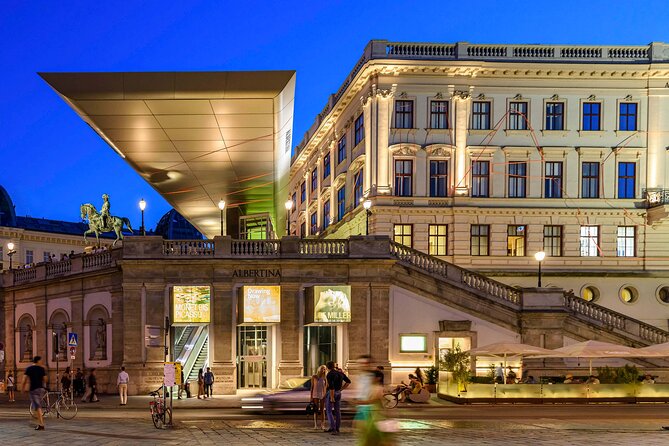
The Albertina is next among the city’s major cultural institutions. Its collection reaches from Renaissance art to modern works, including artists such as Dürer, Monet, and Picasso. The tour introduces the gallery, but admission is separate. If you want to see the collection, plan a longer visit than the short outdoor stop allows.
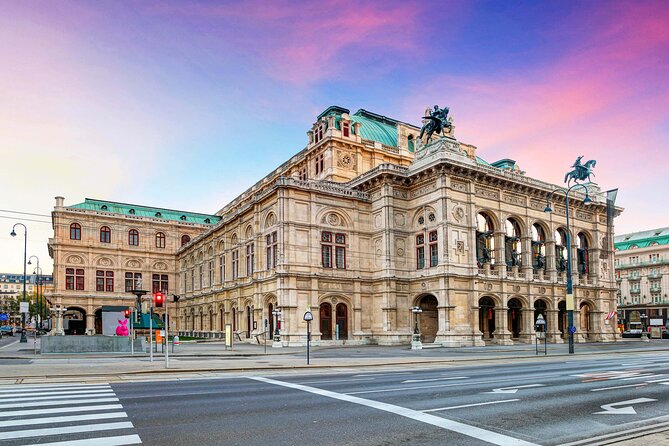
The Vienna State Opera is another major landmark. You can admire the grand architecture and learn about its place in classical music and opera. A performance is not included, and the tour does not function as a ticket or backstage visit. Still, the stop helps you understand why music is so closely tied to Vienna’s identity.
Mozart in Burggarten and Maria Theresa Square
The Mozart Monument in Burggarten gives the composer a fitting setting among formal gardens. The bronze statue recalls his place in Vienna’s musical story, while the park offers a welcome breather after several dense central sights.
Maria Theresa Square broadens the view again. The empress’s monument sits between major museum buildings and open green space. The recording places her reign within Vienna’s imperial story, and the square makes a good photo stop because the statue, gardens, and surrounding architecture are all easy to take in at once.
The tour is strongest when it links people to places. Mozart is not just a name on a monument. Maria Theresa is not just a statue in a square. The audio gives you enough context to understand why each figure matters, without turning every stop into a long lecture.
Hofburg, Sisi, and the city’s public institutions
Hofburg Palace is one of the route’s biggest subjects. The complex includes the Sisi Museum, Imperial Apartments, Spanish Riding School, and National Library. The audio gives you a framework for the palace, but you need separate tickets and extra time to visit the interiors.
The Monument to Empress Elisabeth, better known as Sisi, sits in the Volksgarten. It offers a quieter moment than the palace itself and adds a personal figure to the Habsburg story. Sisi’s image has become part of Vienna’s popular memory, and the monument helps explain that continuing fascination.
Vienna City Hall brings you into the city’s civic world. Its Gothic Revival façade, tall spires, Rathausmann statue, and broad square contrast with the imperial buildings. Cultural events and concerts may take place there, but none is included with the audio tour.
The University of Vienna rounds out this section. Founded in 1365, it represents the city’s academic life and long intellectual tradition. The Main Building and University Library are mentioned as points of interest, though the tour itself does not promise entry.
Beethoven, Collalto Palace, and smaller details
Beethoven’s House focuses on the composer’s Vienna years from 1804 to 1815. Original manuscripts and personal belongings are displayed in the museum, but admission is not part of the tour. If Beethoven interests you, this is another place where a short recording can become a longer independent visit.
Collalto Palace is a smaller architectural stop. Its Baroque design and aristocratic associations offer a change from Vienna’s largest attractions. Smaller sites can be easy to miss, so the app’s illustrations are useful for confirming that you are looking at the correct building.
The Vermahlungsbrunnen, or Marriage Fountain, is another short stop. The Baroque fountain presents the union of two rivers as a symbol of harmony and love. The description places it in the courtyard of Schönbrunn Palace, but the supplied route information does not clearly explain a separate transfer to Schönbrunn. Since transportation is not included, check the app’s exact map and route before setting out.
Finally, the Ankeruhr Clock on Hoher Markt provides a lively finish. This Art Nouveau clock features figures that move every hour. Timing matters here. If you want to see the figures in motion, check the hour and be ready to wait.
How the app works in real life
You receive an audio guide app for iPhone or Android, illustrations for identifying landmarks, an offline map, and one year of access in your chosen language. The supplied tour is offered in English, while the app system may provide other language choices at checkout or activation.
There is no human guide. You download the app, activate your purchase, and follow the route using the map. The audio starts at the points of interest, while the map is meant to help you find the next location.
The strongest practical feature is flexibility. You can pause for a coffee, spend longer at a church, take photographs, or stop for lunch. Several people found it useful to complete half the route on one day and finish the next morning.
The weak point is navigation. Some audio stops do not give enough spoken guidance between sights, and small buildings or poor signage can make identification difficult. GPS may also behave badly in the city center. One useful map design detail is the red route line and blue dot showing your position, but you may still want another map app open beside it.
Download everything before you start. Bring headphones, though you can listen directly from the phone if your headphone battery runs out. Keep your phone charged, and do not assume the approximate booking time controls when you must use the tour. The guide is available anytime during the one-year access period.
Is $8.40 a good deal?
At $8.40, this is inexpensive for a route that introduces 29 Vienna sights and remains available for a full year. A human-led walking tour usually gives better direction, live answers, and stronger storytelling in the moment. This audio tour gives you privacy and control instead.
The value is highest if you want an overview rather than an expert visit inside every museum and church. It is also a good choice for couples or families who dislike keeping pace with a group.
The price looks less attractive if you expect perfect turn-by-turn navigation or a tightly timed two-and-a-half-hour walk. The route can take much longer, especially if you enter attractions, stop at cafés, or walk the full circuit in one day.
Who should book this Vienna walk?
I would choose this tour if you want to get your bearings on a first visit, prefer independent sightseeing, or like stopping often for photographs and coffee. It also suits anyone who wants to avoid a large walking group.
I would be cautious if you have limited walking stamina. The full route is long, and the final section may feel tiring. You can split it over two days, which is likely the best plan for anyone with sore knees or limited energy.
I would also avoid relying on it as your only navigation tool. Use the supplied offline map, but keep a second map available if you can. The audio content is generally the stronger part of the product.
Free cancellation is available up to 24 hours before the scheduled start time. Changes or cancellations inside that window are not refunded.
Should you book it?
Book it for a low-cost, flexible introduction to central Vienna, especially if you value freedom over live interaction. The narration covers an impressive range, from Gothic stonework and imperial tombs to coffee culture, modern memory, and Vienna’s musical greats.
Skip it if you want a human guide, reliable spoken directions at every turn, or a short walk that ends neatly after two hours. For the best experience, start early, download the app and map beforehand, wear comfortable shoes, carry headphones, and divide the route into two days.
FAQ
Where does the Vienna audio tour begin?
It begins at Stephansplatz, 1010 Wien, Austria, near St. Stephen’s Cathedral.
Where does the tour end?
The activity ends back at the meeting point near Stephansplatz.
How long does the tour take?
The stated duration is approximately two hours and 30 minutes. Completing all the sites can take longer, and the full circuit is nearly 7 kilometers according to the route information.
Is there a human guide?
No. This is a self-guided smartphone tour with audio recordings narrated by a professional historian.
What is included?
You receive 29 audio recordings, an iPhone and Android audio guide app, landmark illustrations, an offline route map, and one year of access.
Are entrance tickets included?
No. Entrance fees and tickets are not included. This applies to attractions such as the Imperial Crypt, Albertina, Hofburg facilities, and other sites that charge admission.
What should I bring?
Bring your own smartphone and headphones. Download and activate the app before starting, and consider bringing a backup map because GPS or directions may not always be clear.
Just added around Vienna
- Private Tour from Vienna to Melk and Dürnstein★ 4.5 · 3 reviews
- Vienna: Johann Strauss 200th birthday anniversary exhibition★ 4.7 · 3 reviews
- Vienna Private Full Day Tour – Tickets to Schönbrunn & Lunch★ 5.0 · 3 reviews
- Private Salzburg Day Trip from Vienna★ 4.0 · 3 reviews
- Vienna: Entry Ticket Belvedere 21 & Contemporary Art★ 4.3 · 3 reviews
- Full-Day Private Trip from Vienna to Budapest★ 4.5 · 3 reviews
- Vienna by Night: Private Evening Food and Drink Tour★ 5.0 · 3 reviews
- 1.5 Hour Cinematic Style Portrait Photoshoot and Tour in Vienna★ 4.5 · 3 reviews
Walking Tours, compared.
Guided Walking Tour of City Center Highlights
Read our review →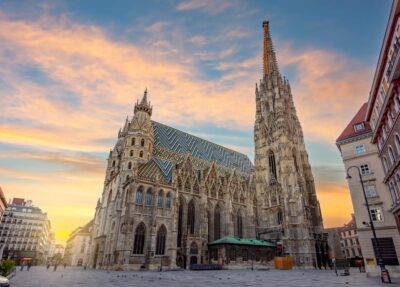
Guided Walking Tour of City Highlights & Hidden Gems
Read our review →
Vienna Historic Center Small Group Walking Tour
Read our review →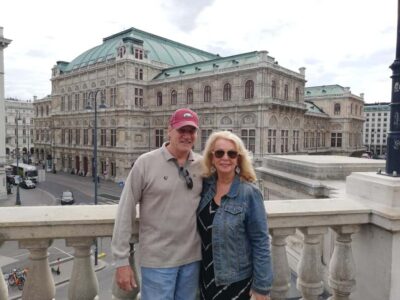
Ghosts and Legends Guided Nighttime Walking Tour
Read our review →Browse the lists this tour appears in