
Reviewed · MUSEUMS
Vienna: Tour of Gustav Klimt’s Art in 3 Museums with Tickets
Vienna’s greatest Klimt works are spread across three museums, but this private three-hour tour links them into one clear story. You begin with The Kiss at the Belvedere, face Klimt’s Beethoven Frieze at the Secession, then finish with Life and Death at the Leopold Museum.
I like the smart route and the art historian guide. You see the paintings in the order that makes sense, with context before the details. I also like the included taxi from the Belvedere to the Secession, which saves time. The main drawback is the price: at $341 per person, this is a serious splurge, especially for a short tour.
In This Review
- Key points at a glance
- Why this route makes sense for Klimt
- Starting at the Belvedere Palace
- The taxi transfer to the Secession
- Facing the Beethoven Frieze at the Secession
- Walking to the Leopold Museum
- Life and Death at the Leopold Museum
- What the guiding is really worth
- Is $341 per person a fair price?
- Timing, access, and practical details
- Who should book this Klimt tour?
- Should you book it?
- FAQ
- How long does the Klimt tour last?
- Which museums are included?
- Which Klimt paintings will I see?
- Is transportation included?
- Can I stay at the Leopold Museum after the tour?
- Is the tour private?
- What languages are available?
- Is the tour wheelchair accessible?
- Can I cancel or pay later?
Key points at a glance
- Three essential Klimt stops: Visit the Belvedere Palace, Secession Exhibition Hall, and Leopold Museum in one morning or afternoon.
- The Kiss and Judith at the Belvedere: See two major works from Klimt’s golden period in the setting that made The Kiss a Vienna must-see.
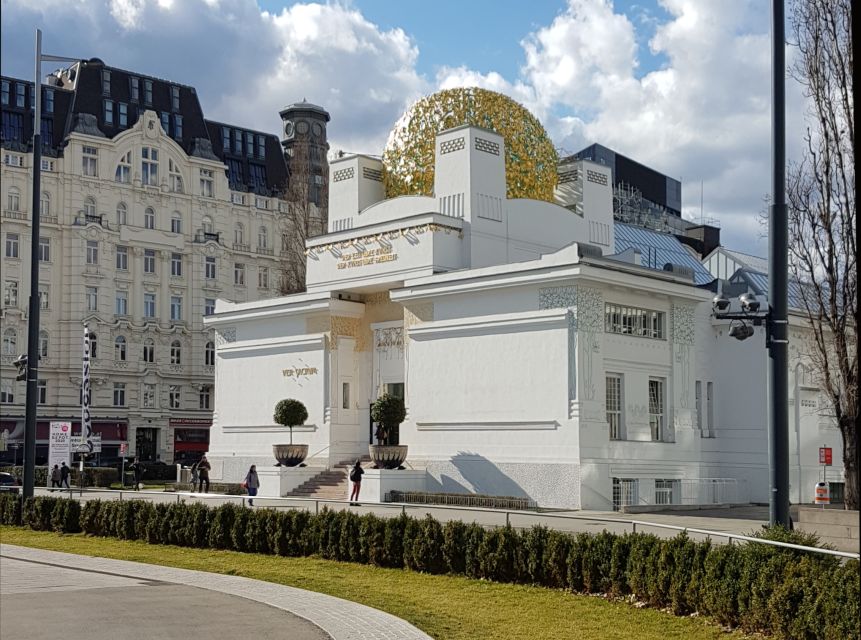
- The Beethoven Frieze surrounds you: The Secession stop gives you a rare chance to experience Klimt’s monumental wall work as he intended.
- A focused art historian guide: Julia Abramovic has led tours praised for clear explanations, strong background information, and an easygoing manner.
- Tickets and transfer included: Skip the ticket lines, ride by taxi from the Belvedere to the Secession, and walk about 10 minutes to the Leopold Museum.
- Private and wheelchair accessible: The tour is designed for a private group and is offered in English, German, or Russian.
Why this route makes sense for Klimt
Gustav Klimt was born and died in Vienna, and the city holds the largest collection of his major works in a compact area. The problem is that no single museum tells the whole story. The Belvedere has the famous golden paintings, the Secession has his monumental Beethoven Frieze, and the Leopold Museum adds a different side of his work.
This tour solves that problem in three hours. Instead of seeing one Klimt painting and then trying to assemble the rest yourself, you move from his best-known decorative style to his symbolic work and then to a later, more personal painting.
That order matters. At the Belvedere, you start with the paintings most people already know from posters and postcards. At the Secession, you see how Klimt worked on a much larger scale. At the Leopold, you finish with Life and Death and a look at the reconstruction of his studio.
The pace is brisk, but that is part of the appeal. The tour is not designed for a slow, all-day museum visit. It gives you a guided framework, then lets you return to the Leopold Museum afterward for as long as you wish.
More museums in Vienna:
- Vienna: Skip-the-Line Sisi Museum, Hofburg and Gardens Tour
★ 4.8 · 5,918 reviews - Vienna Kunsthistorisches Museum Day Admission Ticket
★ 4.6 · 3,690 reviews - Tickets for the Albertina Exhibitions
★ 4.7 · 2,126 reviews
Starting at the Belvedere Palace
Meet at the main entrance of the Upper Belvedere, on the side with the view across Vienna. This detail matters because the palace and garden entrances can cause confusion. If you are looking at the palace rather than looking out over the city, follow the Museum entrance signs to the opposite side.
Your guide waits on the right side of the main entrance when you are facing the palace. Arrive punctually, and allow a little extra time to get your bearings in the palace grounds. The meeting instructions include an automated suggestion to arrive 15 minutes early, but that timing may not be known to the guide. Contact the guide if you have trouble finding the entrance or the meeting point.
The Belvedere portion lasts about 90 minutes, making it the longest stop. That is sensible. The Upper Belvedere is home to Klimt’s most famous work, and rushing through it would weaken the whole experience.
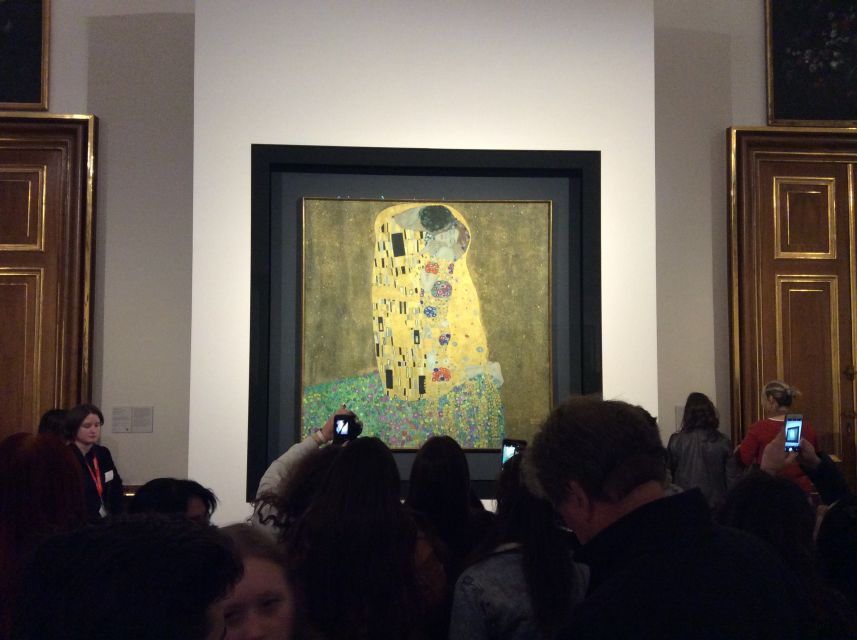
The Kiss is the star. Its gold surface, decorative patterns, and intimate subject make it easy to treat as a beautiful object and move on. A good guide gives you more to look for: the contrast between the man’s geometric clothing and the woman’s softer floral pattern, the way the figures merge into the surrounding ornament, and the tension between flat design and human closeness.
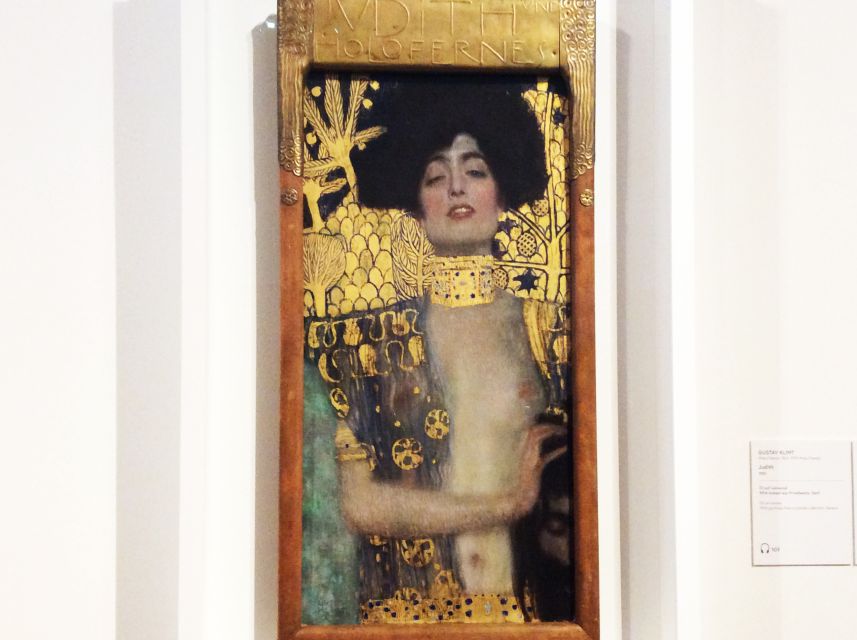
You also see Judith, another major painting from the golden period. It gives you a useful comparison with The Kiss. Klimt’s women are not presented in one simple way, and Judith brings a more forceful, self-possessed figure into the conversation.
The value of the guide is clearest here. You are not left to guess how Klimt’s style developed or why gold became such a strong part of his visual language. The tour places the works in the artist’s life and in Vienna’s artistic setting without turning the visit into a lecture.
The Belvedere itself is part of the experience. You get palace architecture, formal grounds, and the city view before settling into the galleries. Since entrance tickets are included and the tour uses skip-the-line access, you avoid spending part of your limited time sorting out admission.
The taxi transfer to the Secession
After the Belvedere, a taxi transfer to the Secession Hall is included. This is a small feature with real value. Vienna is easy to explore on foot, but three museums in three hours requires careful timing. The ride keeps the group together and protects the schedule.
The transfer also gives you a break between two very different settings. You leave the palace atmosphere of the Belvedere and move to the Secession, an exhibition building tied directly to the artistic movement that Klimt helped shape.
The tour is a private group experience, so you are not folded into a large crowd with a fixed set of questions. That can matter when looking at art. You can ask why a particular figure is painted in a certain way, request more background, or signal that you need a little more time with a work.
The total tour lasts three hours, so do not expect a long unstructured pause between museums. The transfer is practical rather than scenic. Its purpose is to get you to the next major work without wasting time.
Facing the Beethoven Frieze at the Secession
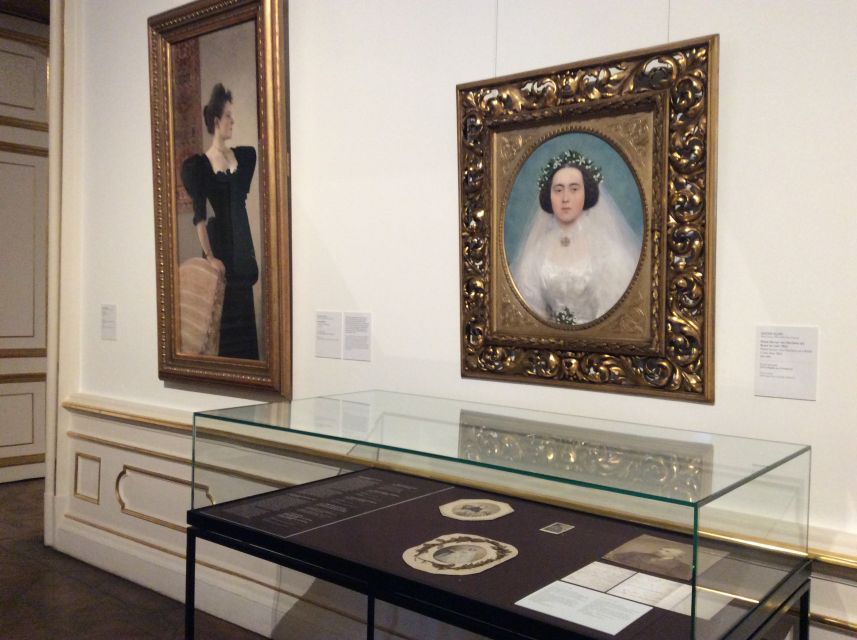
The Secession visit lasts about 30 minutes. That sounds short, but the Beethoven Frieze is one of the few works that truly demands a different kind of viewing.
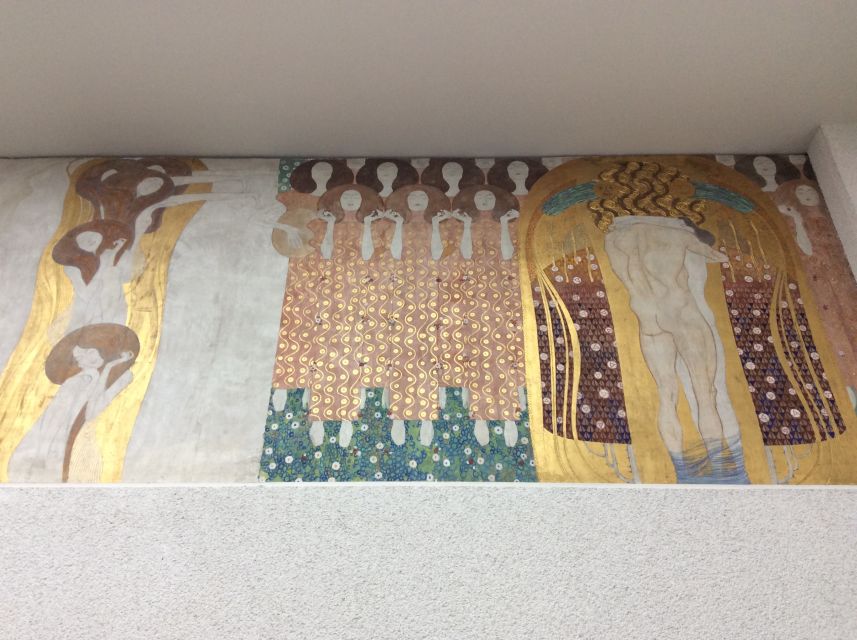
This is not a framed painting in a gallery. Klimt designed the work to run around the viewer, so the images surround you on all sides. That changes how you read it. You are not simply standing in front of Klimt. You are inside a sequence of figures, symbols, and ornamental forms.
The frieze was created for the Secession’s Beethoven exhibition, and its scale gives you a better sense of Klimt’s ambition than The Kiss alone can provide. Here, his work becomes architectural and theatrical. The art asks you to move, look around, and connect one section with the next.
A 30-minute guided stop is enough to introduce the major ideas and point out key details. It is not enough for every possible interpretation, so listen closely and ask questions while you are there. If you already know Klimt well, this part may feel quick. If you are new to him, the guide’s explanation will help you understand why the work is so important.
The Secession is also a useful reminder that Klimt was not only a painter of romantic golden portraits. He was part of a wider break with traditional academic art. The building and the frieze together show that modern Vienna was experimenting with new ways to join painting, design, architecture, and symbolism.
A few more Vienna tours worth weighing up
- Vienna: Classic Ensemble Vienna in St. Peter’s Church Ticket
★ 4.7 · 4,819 reviews - Vienna: Tickets for Mozarthaus Vienna with Audio Guide
★ 4.2 · 2,344 reviews - Vienna: Skip-the-Line Entrance Ticket to the Danube Tower
★ 4.5 · 2,303 reviews - Sigmund Freud Museum Ticket
★ 4.6 · 1,668 reviews
Walking to the Leopold Museum
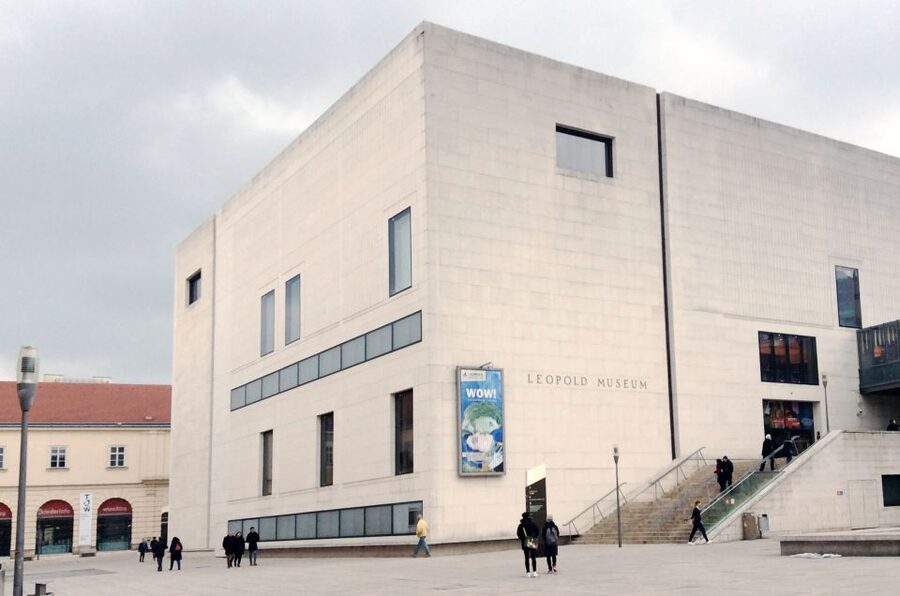
From the Secession, the group walks about 10 minutes to the Museumsquartier and the Leopold Museum. This is the only walking transfer listed in the route, and it is short enough to be manageable for most people.
The walk connects the Secession with one of Vienna’s major museum districts. You do not need to arrange another taxi or navigate public transport during this part of the tour. The route remains efficient, though you should wear comfortable shoes if you plan to stay at the Leopold afterward.
The final museum stop lasts about 40 minutes. Compared with the Belvedere, that is a compact visit, but the focus is specific: Klimt’s Life and Death, along with reconstructions of his studio.
Life and Death at the Leopold Museum
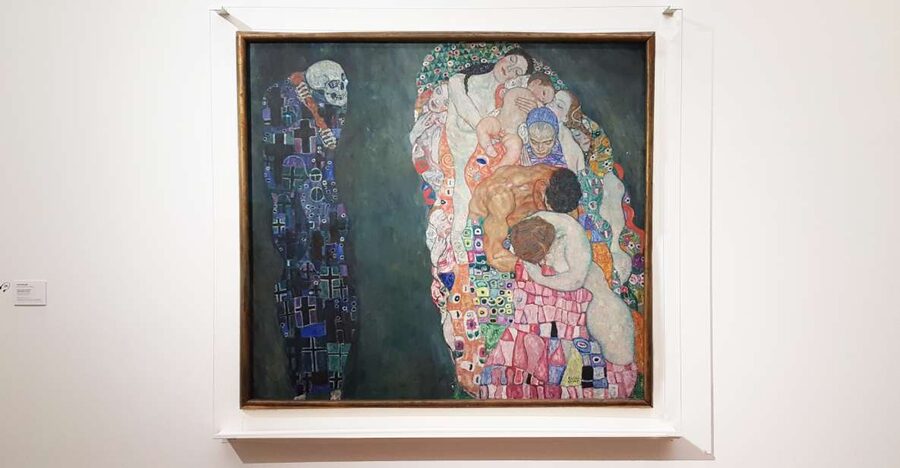
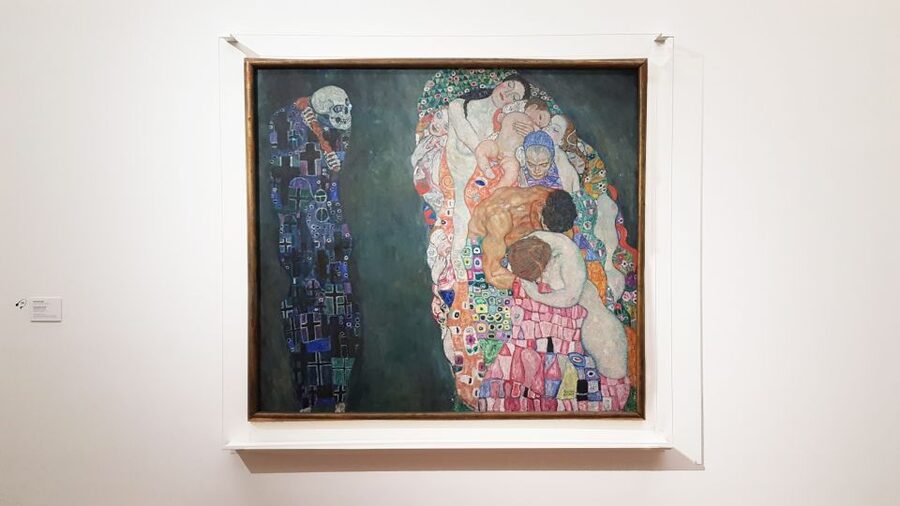
Life and Death gives the tour a different closing note. The painting is not simply another example of Klimt’s decorative style. Its subject allows the guide to discuss mortality, human figures, and the symbolic choices Klimt made in reworking the picture.
The work is especially useful after The Kiss and the Beethoven Frieze because it shows a less narrowly romantic side of Klimt. You can compare its treatment of bodies and pattern with the golden-period paintings at the Belvedere, then consider how Klimt’s themes changed or expanded.
The Leopold Museum also houses reconstructions of Klimt’s studio. These spaces cannot replace the original working environment, but they help you think about the artist as a working person rather than a name attached to famous images.
The tour ends at the Leopold, and you may stay in the museum as long as you like. This is one of the best practical features. The guided portion gives you a route through the Klimt material, but you are not forced to leave when the three hours are over.
You can revisit Life and Death, look at other works in the Leopold, or simply slow down after the fast pace of the earlier stops. If you are booking this tour partly for the broader museum collection, the extra time is important because the guided schedule itself is tightly focused on Klimt.
What the guiding is really worth
The strongest part of this experience is the explanation between the paintings. Klimt’s work can look immediately accessible, but the symbols, historical setting, and changes in style reward careful guidance.
The guide language options are English, German, and Russian. Julia Abramovic has led tours with a clear teaching style, beginning with background before moving through the artist’s life and work. That approach suits visitors who want more than a list of dates and titles.
One useful quality to look for in this kind of tour is the ability to answer questions without making you feel that you need specialist training. Julia’s tours have been praised for detailed answers, strong background information, and a pleasant pace. A teacher who took the tour particularly valued the way Julia established context first and then connected each museum to a stage in Klimt’s career.
That does not mean every departure will have Julia. Guides can vary, so treat her name as a helpful indication of the standard associated with the experience, not a guarantee unless your booking confirms it.
The private format is also valuable. You get a more personal discussion than you would from a large public group, and the tour can be more responsive to your interests. Still, the schedule has fixed museum times, so private does not mean leisurely.
Is $341 per person a fair price?
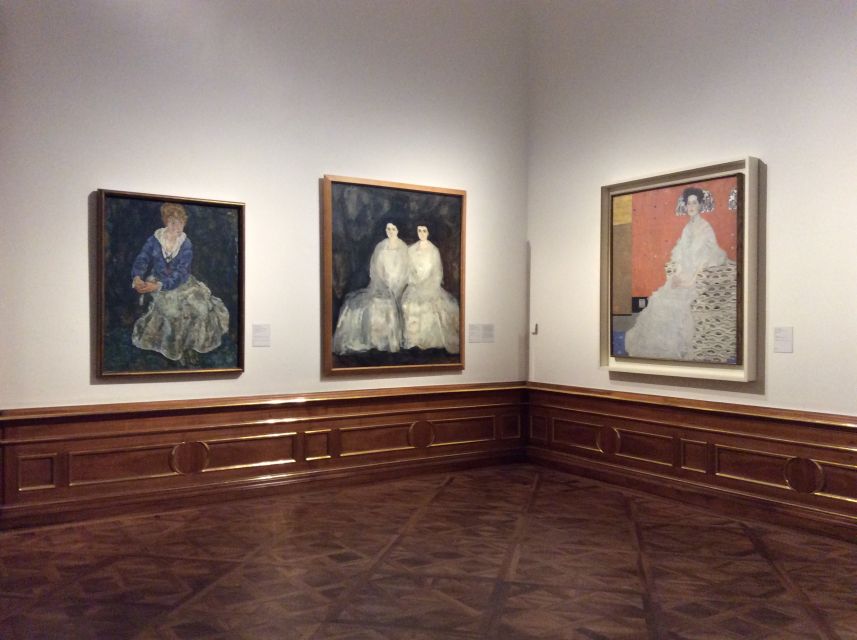
At $341 per person, this is expensive for three hours. You are paying for more than admission, though. The price includes tickets to all three museums, an art historian guide, skip-the-line entry, and a taxi transfer from the Belvedere to the Secession.
The value depends on your priorities. If you would visit all three museums anyway and feel comfortable reading Klimt on your own, buying regular admission and using public transport would likely cost less. You would also have more time in each museum.
If Klimt is one of your main reasons for visiting Vienna, the calculation changes. The tour removes the planning work, connects the works in a logical order, and gives you expert help at the exact paintings that can otherwise feel disconnected. For a private group sharing the cost, the price may feel easier to justify.
I would see this as a specialist tour rather than a general introduction to Vienna. It is a good use of money for an art-focused visit, a first-time Klimt enthusiast, or a small group that wants one polished Klimt session. It is less suitable if you want to wander slowly, see many artists, or keep museum costs low.
Timing, access, and practical details
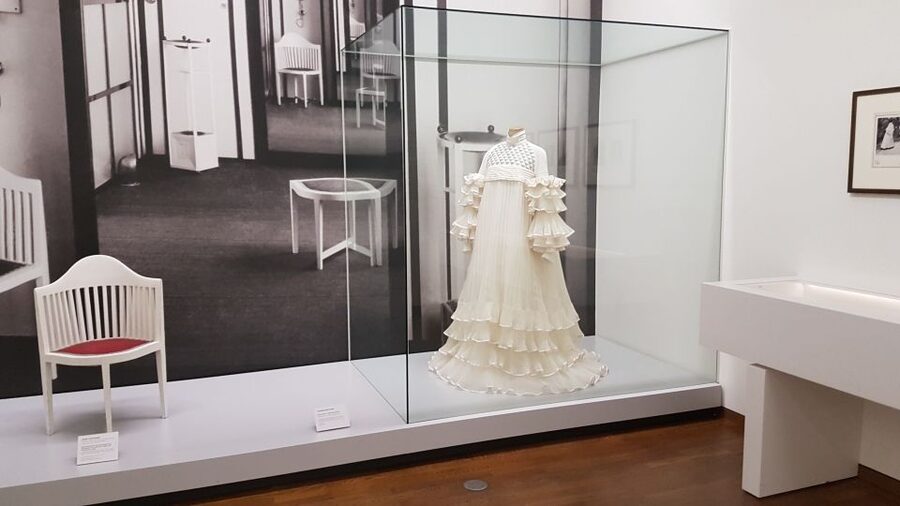
The tour takes three hours, with approximately 90 minutes at the Belvedere, 30 minutes at the Secession, and 40 minutes at the Leopold Museum. The remaining time covers the taxi transfer and the walk between the Secession and the Museumsquartier.
Skip-the-line tickets help protect the schedule, but you should still arrive on time. Missing the start could affect the whole chain of museum visits.
The activity is wheelchair accessible. It is offered for private groups, and the listed languages are English, German, and Russian.
You can cancel up to 24 hours before the tour for a full refund. You can also reserve now and pay later, which helps if your Vienna plans are still changing.
The itinerary has little spare time, so bring your questions with you. If you want to spend longer with one painting, tell the guide early. Then plan to remain at the Leopold after the official tour, where you can continue at your own pace.
Who should book this Klimt tour?
I would recommend it most strongly if you meet one or more of these descriptions:
- You want to see The Kiss, Beethoven Frieze, and Life and Death in one organized visit.
- You prefer an art historian to explain symbolism, style, and context.
- You are visiting Vienna for a short time and want a focused Klimt experience.
- You are booking for a private group and value a personal guide.
- You want included tickets and transport rather than arranging three museum visits yourself.
I would think twice if you prefer slow museum days. The Secession and Leopold sections are brief, and $341 per person is hard to defend if you only want casual contact with Klimt’s best-known painting.
Should you book it?
Book this tour if Klimt is a main priority and you want the city’s key works explained as one connected story. The route is clever, the included taxi saves time, and the chance to stay at the Leopold afterward makes the short schedule more useful.
Skip it if you are watching your budget or want to explore the museums independently. For everyone else, this is a focused, high-cost way to get far more from The Kiss than a quick photograph and a walk-by.
FAQ
How long does the Klimt tour last?
The tour lasts three hours. The scheduled museum visits include about 1.5 hours at the Belvedere, 30 minutes at the Secession, and 40 minutes at the Leopold Museum.
Which museums are included?
The tour includes the Upper Belvedere, the Secession Building in Vienna, and the Leopold Museum in the Museumsquartier.
Which Klimt paintings will I see?
At the Belvedere, you see The Kiss and Judith. At the Secession, you see the Beethoven Frieze. At the Leopold Museum, you see Life and Death and reconstructions of Klimt’s studio.
Is transportation included?
A taxi transfer from the Belvedere Palace to the Secession Hall is included. The group then walks about 10 minutes from the Secession to the Leopold Museum.
Can I stay at the Leopold Museum after the tour?
Yes. After the guided visit, you may remain in the Leopold Museum as long as you like.
Is the tour private?
Yes. The activity is offered as a private group experience.
What languages are available?
The live tour guide is available in English, German, and Russian.
Is the tour wheelchair accessible?
Yes. The activity is listed as wheelchair accessible.
Can I cancel or pay later?
You can cancel up to 24 hours in advance for a full refund. You can also reserve your place and pay later.
Just added around Vienna
- Private Tour from Vienna to Melk and Dürnstein★ 4.5 · 3 reviews
- Vienna: Johann Strauss 200th birthday anniversary exhibition★ 4.7 · 3 reviews
- Vienna Private Full Day Tour – Tickets to Schönbrunn & Lunch★ 5.0 · 3 reviews
- Private Salzburg Day Trip from Vienna★ 4.0 · 3 reviews
- Vienna: Entry Ticket Belvedere 21 & Contemporary Art★ 4.3 · 3 reviews
- Full-Day Private Trip from Vienna to Budapest★ 4.5 · 3 reviews
- Vienna by Night: Private Evening Food and Drink Tour★ 5.0 · 3 reviews
- 1.5 Hour Cinematic Style Portrait Photoshoot and Tour in Vienna★ 4.5 · 3 reviews
Museums, compared.
Skip-the-Line Sisi Museum, Hofburg and Gardens Tour
Read our review →
Vienna Kunsthistorisches Museum Day Admission Ticket
Read our review →

Chocolate Workshop in Chocolate Museum w/ Tasting
Read our review →
St. Stephen’s Cathedral & Dom Museum Wien Tickets
Read our review →

Browse the lists this tour appears in