
Reviewed · MUSEUMS
Admission Pass to The Roman Quarter and the Museum Carnuntinum
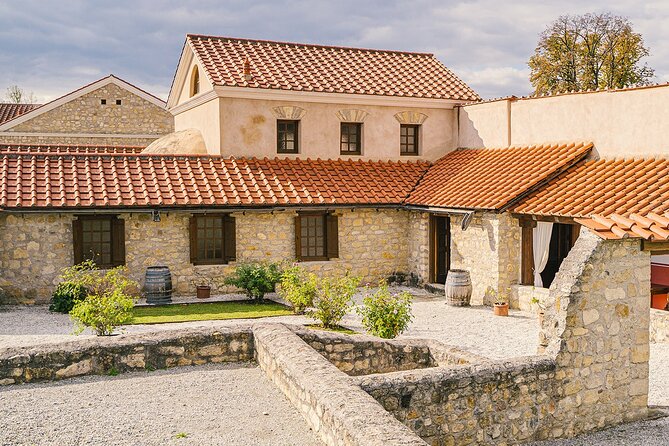
At Carnuntum, Roman life is not left to your imagination. You can walk into reconstructed houses, see a working bath complex, stroll through a garden, and study objects found at a former Roman city on the Danube. The Roman Quarter is the main attraction, with four complete buildings that show how people lived, worked, and relaxed.
I like the practical reconstructions and the chance to pair them with original artifacts at Museum Carnuntinum. The $16.21 admission price is also fair for a visit that can fill about three hours. The main thing to consider is distance between parts of the site, so plan your route rather than treating Carnuntum as one compact building.
In This Review
- Key points to know before you go
- Why Carnuntum feels different from a standard Roman ruin
- Start in the Roman Quarter with about 80 minutes
- The Roman Therme
- The Villa Urbana
- The oil merchant’s house
- The House of Lucius
- Amphitheaters and the public side of Roman life
- Museum Carnuntinum and the exhibition on the Danube Limes
- How the two parts fit together
- Price, timing, and practical value
- Who will enjoy Carnuntum most
- Small details that improve the visit
- My verdict: should you book it?
- FAQ
- Where is the Roman Quarter and Museum Carnuntinum?
- How long does the experience take?
- What does the admission pass include?
- Are guided tours included?
- Are guided visits available in English?
- What can I see in the Roman Quarter?
- What is currently shown at Museum Carnuntinum?
- When is the attraction open?
- Are service animals allowed?
- Can I cancel for a refund?
Key points to know before you go
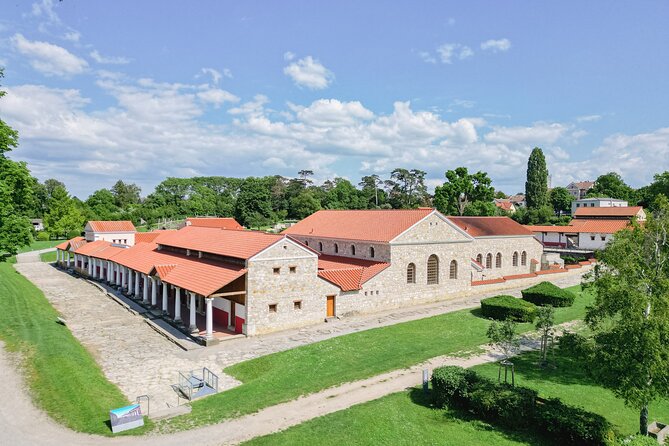
- Four Roman houses you can enter: See a bathhouse, city palace, oil merchant’s home, and House of Lucius.
- A working Roman Therme: Water splashes in the reconstructed bath complex, making ancient daily life easier to understand.
- Museum Carnuntinum adds the evidence: Its current exhibition, Weltstadt am Donaulimes, covers Carnuntum, its people, and the Danube Limes.
- Allow about three hours: The Roman Quarter takes roughly 1 hour and 20 minutes, while the museum takes about an hour.
- Guides are not included: Some guided visits have been offered in English, but this admission pass is for independent entry.
- Weekend shuttle information matters: A shuttle has been set up between locations on weekends during the current season, which may help with the site’s spread-out layout.
Why Carnuntum feels different from a standard Roman ruin
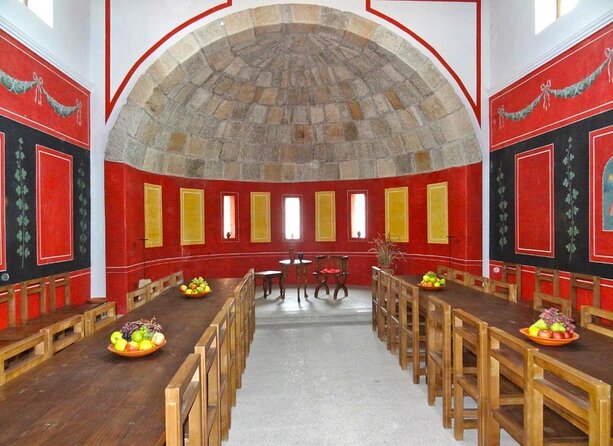
Many Roman sites give you foundations, broken columns, and a helpful diagram. Carnuntum gives you rooms with walls, decoration, furniture, and household objects. That changes the visit from a hunt for fragments into a more direct look at ordinary Roman life.
You can enter four reconstructed houses in the Roman Quarter. The buildings are fully functional rather than simple stage sets. That means you can see how rooms connect, how a bath complex works, and how a prosperous household might have been arranged.
I find this especially useful if you are visiting with children or with someone who does not usually enjoy archaeological sites. A bare foundation requires imagination. A complete room with painted walls and furnishings gives you something concrete to read and discuss.
The setting also gives the site breathing room. Trees, meadows, an outdoor area, a playground, and the Forum Culinarium restaurant make it possible to slow down between buildings. You are not confined to a dense museum corridor for the entire visit.
More museums in Vienna:
- Vienna: Skip-the-Line Sisi Museum, Hofburg and Gardens Tour
★ 4.8 · 5,918 reviews - Vienna Kunsthistorisches Museum Day Admission Ticket
★ 4.6 · 3,690 reviews - Tickets for the Albertina Exhibitions
★ 4.7 · 2,126 reviews
Start in the Roman Quarter with about 80 minutes
Give the Roman Quarter the larger share of your time. The suggested visit takes about 1 hour and 20 minutes, but you may want longer if you read every display, take photographs, or stop for food.
Begin with the visitor center to get your bearings. The exact order of the buildings is less important than making sure you see all four. The reconstructed homes are the reason to visit this part of Carnuntum.
The Roman Therme
The Roman Therme is the most immediate way to understand ancient comfort. The reconstructed bathhouse is fully functional, and you can see water moving through the space. This helps explain that Roman baths were not only archaeological remains. They were working places tied to washing, warmth, leisure, and social life.
I would take time here instead of rushing past it as another reconstructed room. Look at how the different areas relate to one another. Even without a guide, the building gives you a sense of the planning and engineering behind Roman public facilities.
The Villa Urbana
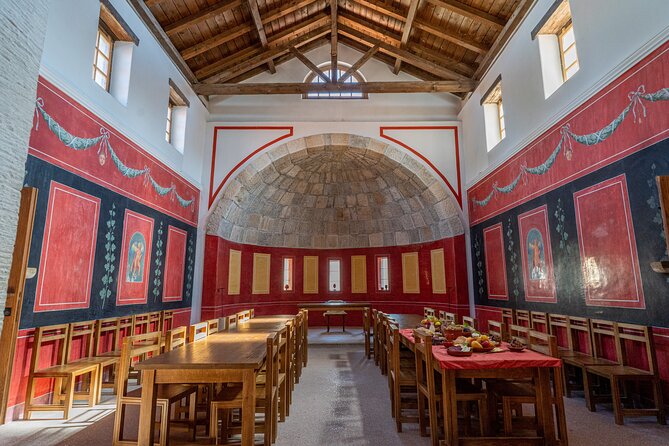
The villa urbana is the stately city palace of the quarter. Its murals are a major visual reward, giving you a better idea of how color and decoration shaped a Roman home.
This is the stop for visitors who like interiors and design. The painted walls help you picture the difference between a plain working space and an upper-class residence. You might also compare the villa with the smaller homes nearby, which makes social differences easier to grasp.
A different side of Vienna on the same trip:
- Vienna: Vivaldi’s Four Seasons Concert in Karlskirche
★ 4.7 · 14,951 reviews - Vienna: Spanish Riding School Training
★ 3.9 · 9,281 reviews - Vienna: Skip-the-cashier-desk-line Giant Ferris Wheel Ride
★ 4.5 · 7,859 reviews - Vienna: Schönbrunn Palace & Gardens Skip-the-Line Tour
★ 4.7 · 7,739 reviews
The oil merchant’s house
The oil merchant’s house brings commerce into the picture. Instead of viewing Carnuntum only as a place of emperors, soldiers, and public monuments, you see the home of someone whose work depended on trade and daily business.
That is one of the site’s strengths. Roman history is often presented through famous rulers, but this building points toward the people who supplied cities and kept them running. Allow yourself time to consider what the rooms reveal about work and home life.
The House of Lucius
The bourgeois House of Lucius offers another domestic view. Its garden is a pleasant detail, and the house helps show how a less grand household might have lived within the Roman city.
The garden also gives the Roman Quarter a human scale. You can picture domestic routines rather than only public ceremonies. If you are visiting with family, this is a good place to talk about what would have happened in each room and how a garden might have been used.
Amphitheaters and the public side of Roman life
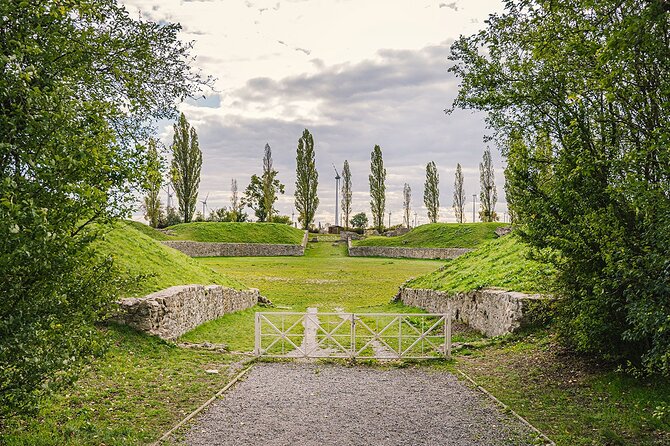
The amphitheaters shift your attention from homes to public entertainment and gladiators. The reconstructed houses show private life. The amphitheaters suggest the crowds, spectacles, and civic identity that shaped a Roman city.
The available information does not specify a separate guided presentation at the amphitheaters, so treat them as part of your independent visit. Their value comes from seeing how the public side of Carnuntum fits beside its homes and baths.
You will not get the same experience here as in a fully staged performance, and that is worth keeping in mind. The site is best when you use the reconstructions to build your own picture of Roman life rather than expecting a scheduled show with actors.
Museum Carnuntinum and the exhibition on the Danube Limes
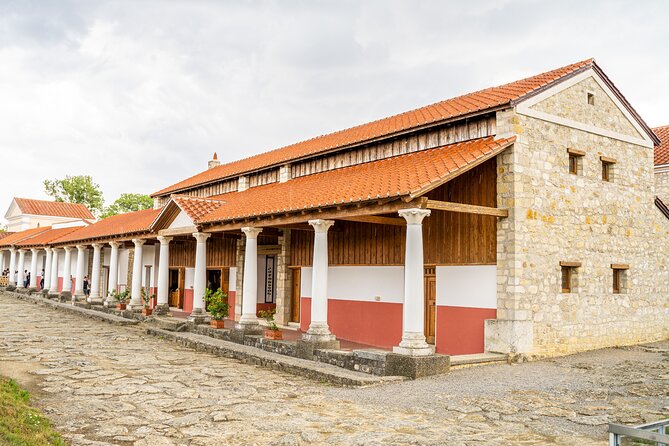
Set aside about an hour for Museum Carnuntinum. It is an important partner to the Roman Quarter because it houses finds connected with 2,000 years of Roman history at Carnuntum.
The current exhibition is Weltstadt am Donaulimes, or Metropolis at the Danube Limes. It covers the story of Carnuntum, the people who lived there, and the UNESCO World Heritage Site near Vienna.
I like this order: see the buildings first, then visit the museum. The quarter shows how spaces may have looked and worked. The museum gives you the original objects and historical evidence behind that picture.
The museum is described as theatrical, which can be a plus or a minus depending on your taste. If you prefer displays that tell a clear story through atmosphere and presentation, you may enjoy it. If you want a strictly quiet, object-by-object museum, some parts may feel more staged than expected.
Still, the museum is not optional in practical terms. Skipping it would leave the reconstructed buildings without enough context. The exhibits help connect the Roman city to the wider Danube frontier and to the people who made Carnuntum their home.
How the two parts fit together
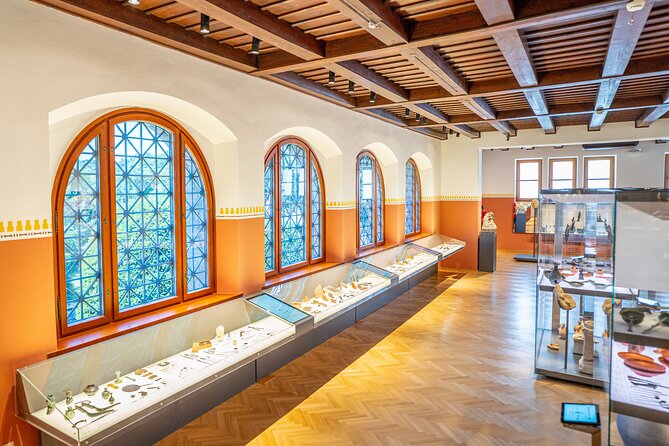
The Roman Quarter and Museum Carnuntinum offer different kinds of evidence. The quarter uses rooms, walls, baths, murals, and gardens to show the physical setting of Roman life. The museum uses archaeological finds and an organized exhibition to explain the people and the wider city.
I would not treat the admission as two unrelated attractions. Together, they create a useful progression:
- First, see the reconstructed environment.
- Next, inspect the original finds.
- Finally, think about how daily life, trade, public entertainment, and frontier politics connected.
The experience is also flexible. You can spend extra time in the villa if murals interest you, linger at the baths, or move quickly through the museum if your children need more outdoor space. That freedom is useful because the pass does not include a guide directing your pace.
Price, timing, and practical value
At $16.21 per person, the pass is reasonably priced for the amount of ground and material covered. You get entry to both the Roman Quarter and Museum Carnuntinum, with all fees and taxes included. A three-hour visit makes the cost especially sensible if you are already in Lower Austria or planning a day trip from the Vienna area.
The price does not include guided tours. If you want an expert explanation throughout, check whether an English guided visit is available for your date and whether it requires a separate payment. English guided visits have been available, but the admission described here is not a guided tour.
The official opening period listed for this experience runs from April 23, 2025, through November 15, 2025, daily from 9 a.m. to 5 p.m. Those hours give you a broad window, but I would arrive early enough to see both locations without rushing near closing time.
The locations are near public transportation. The site is spread out, though, and the distance between locations can matter if you have limited mobility or young children. A weekend shuttle has been set up during the current season, so check its operating details when planning your day.
The booking is also flexible in one useful way. You can cancel for a full refund up to 24 hours before the start time. Changes or cancellations made less than 24 hours ahead are not accepted for a refund, and the cut-off follows local time.
Who will enjoy Carnuntum most
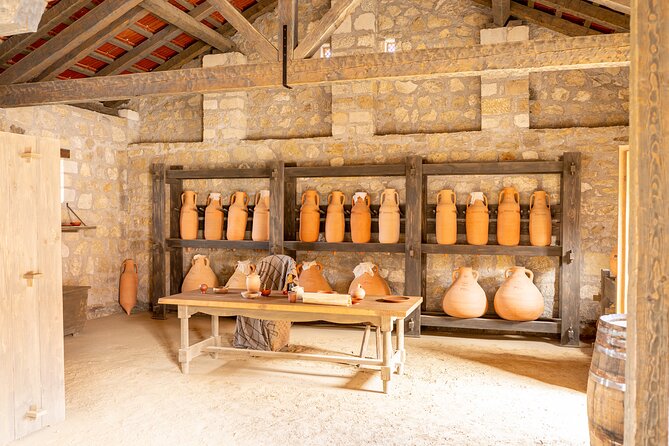
I would recommend this experience to anyone interested in Roman domestic life rather than monuments alone. The complete houses make it easier to understand how people used their rooms, decorated their homes, washed, worked, and spent time outdoors.
Families should find the quarter approachable. The playground and open outdoor areas give children a break from the displays, while the reconstructed buildings offer a clear visual story. Service animals are allowed, and most people can participate.
History enthusiasts will appreciate the combination of reconstructed architecture and museum evidence. You can look at the murals and rooms, then see objects tied to Carnuntum’s long history. The exhibition’s focus on the Danube Limes also adds a wider frontier setting.
I would be more cautious if you want a tightly scheduled guided tour or a single compact attraction. The pass is independent, the site covers multiple areas, and the museum’s theatrical presentation may not suit every museum preference.
Small details that improve the visit

Start by checking how you will move between the Roman Quarter and Museum Carnuntinum. The weekend shuttle may help, but the available information does not give its exact schedule or route. If you are relying on public transportation, leave room for walking and allow extra time.
Wear practical shoes. The attraction includes a large outdoor area with trees and meadows, and the separate locations mean you may spend more time moving around than the stop durations suggest.
Do not rush through the houses. The painted walls, furniture, objects, bath equipment, and garden details are what make the visit work. I would rather see three buildings carefully than race through all four without looking at how they differ.
Save the museum for a quieter stretch of your visit. After the open-air quarter, the indoor exhibition can help organize what you have seen. The combination also makes a three-hour stay feel varied instead of repetitive.
My verdict: should you book it?
Book this pass if you want Roman history presented through real rooms, clear reconstructions, and original museum finds. The rebuilt bathhouse, villa murals, oil merchant’s home, and House of Lucius give you more to look at than a typical ruin field, while the museum adds historical depth.
At $16.21, the value is strong for a self-guided visit of about three hours. I would skip it only if you need a fully guided experience, dislike theatrical museum displays, or cannot comfortably manage a spread-out site. For most people with an interest in Roman life, Carnuntum offers an unusually direct and useful look at the past.
FAQ
Where is the Roman Quarter and Museum Carnuntinum?
They are in Lower Austria, Austria. The sites are near public transportation.
How long does the experience take?
The approximate duration is three hours. The Roman Quarter takes about 1 hour and 20 minutes, and Museum Carnuntinum takes about one hour.
What does the admission pass include?
It includes entry to the Roman Quarter and Museum Carnuntinum, along with all fees and taxes.
Are guided tours included?
No. Guided tours are not included in the admission pass.
Are guided visits available in English?
English guided visits have been available, but the provided admission does not include a guided tour. Check availability separately for your visit date.
What can I see in the Roman Quarter?
You can see four reconstructed Roman houses, including the Roman Therme, the villa urbana, the oil merchant’s house, and the House of Lucius. The area also includes a visitor center, restaurant, playground, trees, and meadows.
What is currently shown at Museum Carnuntinum?
The current exhibition is Weltstadt am Donaulimes, or Metropolis at the Danube Limes. It covers Carnuntum, its inhabitants, and the UNESCO World Heritage Site at the Danube Limes near Vienna.
When is the attraction open?
The listed opening period is April 23, 2025, through November 15, 2025. It is open Monday through Sunday from 9 a.m. to 5 p.m.
Are service animals allowed?
Yes. Service animals are allowed.
Can I cancel for a refund?
Yes. You can cancel at least 24 hours before the experience start time for a full refund. Cancellations or changes made less than 24 hours before the start time are not accepted for a refund.
Just added around Vienna
- Private Tour from Vienna to Melk and Dürnstein★ 4.5 · 3 reviews
- Vienna: Johann Strauss 200th birthday anniversary exhibition★ 4.7 · 3 reviews
- Vienna Private Full Day Tour – Tickets to Schönbrunn & Lunch★ 5.0 · 3 reviews
- Private Salzburg Day Trip from Vienna★ 4.0 · 3 reviews
- Vienna: Entry Ticket Belvedere 21 & Contemporary Art★ 4.3 · 3 reviews
- Full-Day Private Trip from Vienna to Budapest★ 4.5 · 3 reviews
- Vienna by Night: Private Evening Food and Drink Tour★ 5.0 · 3 reviews
- 1.5 Hour Cinematic Style Portrait Photoshoot and Tour in Vienna★ 4.5 · 3 reviews
Museums, compared.

Skip-the-Line Sisi Museum, Hofburg and Gardens Tour
Read our review →
Vienna Kunsthistorisches Museum Day Admission Ticket
Read our review →

Chocolate Workshop in Chocolate Museum w/ Tasting
Read our review →
St. Stephen’s Cathedral & Dom Museum Wien Tickets
Read our review →

Browse the lists this tour appears in