Reviewed · TOURS
Alternative Tour in Vienna Off the tourist track
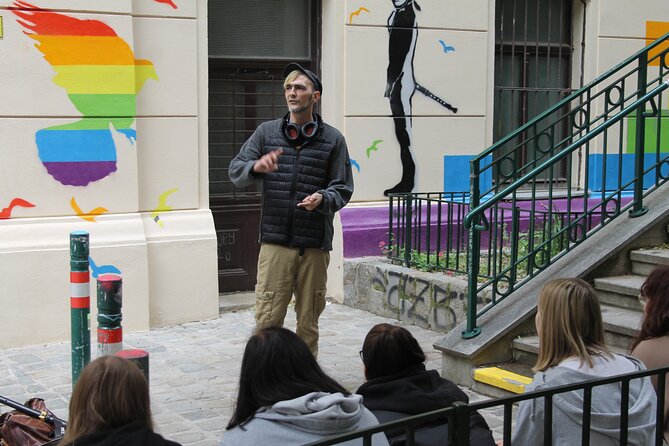
Vienna’s grand palaces and coffeehouses tell only part of the story. This two-hour walking tour with Martin, who once lived on the streets, looks at the city through homelessness, addiction, squatting, and punk culture. His stories are personal, direct, and sometimes funny, but they also ask you to rethink quick judgments about people living outside ordinary society.
I like two things in particular: the first-hand point of view, and the way the tour connects personal experience with real places, from a park used as a sleeping spot to the site of the famous Pizzeria Anarchia eviction. The route also stays manageable, with seating and breathing points along the way. The main consideration is the subject matter. This is not a light sightseeing walk, and some stories may be difficult for younger participants or anyone sensitive to addiction and homelessness.
In This Review
- Key points before you book
- A different way to read Vienna
- Starting beneath Karlsplatz
- Alfred-Grünwald-Park and the reality of sleeping outside
- Ilse-Pisk-Stiege and Vienna’s squat history
- Stories first, sightseeing second
- Humor, honesty, and difficult subjects
- What the $46 price includes
- Route, comfort, and practical planning
- Cancellation and booking details
- Who should choose this tour
- Should you book Martin’s Vienna tour?
- FAQ
- How long is the Alternative Tour in Vienna?
- Where does the tour begin?
- Where does the tour end?
- Who leads the tour?
- What places are included on the route?
- How many people can join the tour?
- Can I cancel for a refund?
Key points before you book
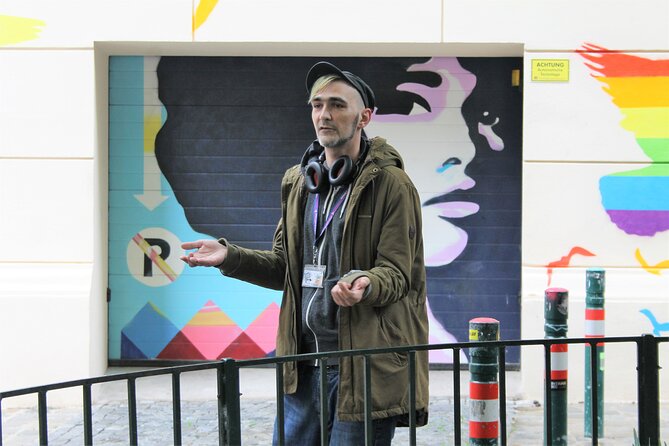
- Martin leads from personal experience: He speaks openly about street life, drug addiction, and recovery rather than offering a detached lecture.
- The route includes central Vienna landmarks: Begin at Karlsplatz, pass the Secession, and finish near Haus des Meeres.
- Alfred-Grünwald-Park has a personal connection: Martin explains why it once served as his sleeping place and why the meadow was not always the best choice.
- Ilse-Pisk-Stiege opens the door to squat culture: Hear about Vienna’s punk scene and the evacuation of Pizzeria Anarchia.
- The group is limited to 20 people: That matters when the guide is answering personal questions and telling detailed stories.
- The price is $46 for about two hours: You are paying for a guided social-history experience, not for entry to monuments or museums.
A different way to read Vienna
Most first visits to Vienna focus on imperial buildings, music, art, and elegant streets. This tour takes a sharper turn. It asks you to notice the people and places that usually sit outside a traditional city tour.
Martin is the center of the experience. His background gives the walk its purpose, but he does not simply recount a dramatic past for shock value. The strongest part of the format is the connection between his memories and the streets around you. A park becomes more than a patch of grass. A staircase becomes a place to talk about squats, police action, and the fragile line between protest and displacement.
The tone can change quickly. A story about addiction or sleeping outdoors may be painful, followed by a joke or a burst of local anarchist history. That mix of seriousness and humor is important. It keeps the tour from becoming a grim lecture, while the personal detail prevents it from feeling like a polished tourism product.
You should come ready to listen, not just to collect unusual photographs. The point is not to see Vienna’s most famous sights from a new angle. The point is to hear about a side of city life that most visitors would never encounter on their own.
Other Vienna tours people book alongside this one:
- Vienna: Vivaldi’s Four Seasons Concert in Karlskirche
★ 4.7 · 14,951 reviews - Vienna: Spanish Riding School Training
★ 3.9 · 9,281 reviews - Vienna: Skip-the-cashier-desk-line Giant Ferris Wheel Ride
★ 4.5 · 7,859 reviews
Starting beneath Karlsplatz
The meeting point is at the Police Inspectorate Vienna in the Kärntnertorpassage at Karlsplatz. This is a central and practical starting point, close to public transportation.
The opening section takes you through the subway passage at Karlsplatz. You then leave near the Secession, the distinctive white exhibition building topped by its famous golden dome. The Secession itself is not the main subject of the tour, but passing it gives you an immediate reminder of Vienna’s polished cultural image before the route moves toward less familiar ground.
That contrast works well. You begin in one of the city’s best-known central areas, surrounded by grand urban symbols, then walk toward places linked to life on the margins. You are not whisked into a distant neighborhood. The tour shows how these different worlds exist within the same central city.
The route is on foot, and the tour lasts approximately two hours. Wear comfortable shoes, since the experience includes walking between stops and uses an urban passage and stairs. The supplied details do not give a precise distance or a full list of every stop, so you should not treat it as a fixed sightseeing checklist.
Alfred-Grünwald-Park and the reality of sleeping outside
At Alfred-Grünwald-Park, Martin talks about why this became his sleeping place. The park provides seating for the whole group, which makes it one of the more comfortable pauses on the route and gives the discussion room to breathe.
The detail about where someone sleeps matters. A park can look safe and inviting during the day, yet offer little privacy or security at night. Martin explains why sleeping directly on the meadow was not necessarily wise. That kind of practical information brings the subject down from broad ideas about homelessness to the small decisions that shape each night outdoors.
This stop is also where you may begin to understand the value of hearing from someone with direct experience. Statistics can describe homelessness, but they rarely explain how a person chooses one place over another, what risks are involved, or how public space feels after dark. Martin’s account gives those questions a human scale.
The park stop lasts about 20 minutes and has free admission because it is an outdoor public space. Do not expect a museum display or formal presentation. The setting is simple, and the story does the work.
Ilse-Pisk-Stiege and Vienna’s squat history
The penultimate station is Ilse-Pisk-Stiege, also called the Capistran Ascent. The stairs provide a place to pause before the final part of the walk. This is where Martin discusses squats, punks, and the politics surrounding occupied buildings.
The most striking story concerns the evacuation of Pizzeria Anarchia, a well-known Vienna squat. A house occupied by 19 people was eventually cleared by 1,700 police officers. The numbers alone are startling, but Martin’s personal connection and explanation give the event more meaning than a passing mention in a city-history book.
This section broadens the tour beyond homelessness and addiction. It looks at alternative communities, political protest, housing, policing, and the way a city decides who has a legitimate claim to a building or neighborhood. You get a glimpse of Vienna’s anarchist past and the conflicts that can develop when housing activism meets official authority.
The staircase is not described as fully accessible, so anyone with mobility concerns should ask the operator before booking. It is also worth remembering that a stairway is a less relaxed setting than the park. If you need a long rest, this may be the point to pace yourself and tell the guide.
A different side of Vienna on the same trip:
- Vienna: Schönbrunn Palace & Gardens Skip-the-Line Tour
★ 4.7 · 7,739 reviews - Vienna: Light of Creation Votive Church Immersive Light Show
★ 4.8 · 6,779 reviews - Vienna Spanish Riding School Guided Tour
★ 4.7 · 6,765 reviews - Vienna: Classical Concert in the World-Famous Musikverein
★ 4.6 · 6,673 reviews
Stories first, sightseeing second
The tour’s main attraction is not architecture. It is Martin’s storytelling.
He speaks about his own life with unusual openness, including homelessness and drug addiction. That directness can make the experience moving and uncomfortable in equal measure. You may hear about choices, consequences, survival, and the systems around people who fall through them. The purpose is not to present Martin as a symbol. He appears as a person with a particular history and a clear willingness to answer questions.
This makes the tour especially useful for anyone who wants to understand how quickly a life can move away from the familiar path. Several comments from younger participants and school groups describe the tour as educational, memorable, and easy to follow. The two-hour length helps. It is long enough to develop a serious subject but short enough to hold the attention of teenagers.
The format also allows questions. People describe being able to ask about subjects they would not normally have a chance to discuss so openly. Still, use good judgment. Personal experience does not mean every question is automatically appropriate. A respectful tone will help the group get more from the time with Martin.
The guide has also been praised for speaking English well. The experience appears to work in English, though the operator may use other languages in some settings. If language is important to you, confirm it when booking.
Humor, honesty, and difficult subjects
A tour about street life can easily become bleak or self-serious. Martin’s style seems to avoid that trap. He uses humor, including local anarchist stories that can be genuinely funny, without making light of addiction or homelessness.
That balance is one of the tour’s strongest qualities. Humor gives the group a way to stay engaged, while the hard facts and personal memories keep the experience grounded. You may leave feeling sad, surprised, entertained, and thoughtful, sometimes within the same hour.
I would not book this as a casual filler between palace visits. The tour asks you to consider tolerance, social judgment, and the reasons people end up in situations that can be hard to imagine from the outside. It may change how you look at public spaces and at people you normally pass without thinking.
For parents and teachers, the tour can be useful for mature teenagers and school groups. The subject matter is adult in nature, even if the format is accessible. The operator does not set a stated minimum age in the supplied information, so adults arranging a youth group should ask about suitability before booking.
What the $46 price includes
At $46, this is not the cheapest way to spend two hours in Vienna. You are not paying for a palace admission, a museum ticket, or a meal. The included value is Martin’s time, personal account, and the chance to discuss places connected to his life.
That makes the price easier to judge by comparison with a lecture, workshop, or specialist walking tour. If you want a list of landmarks and quick facts, another city walk may offer more conventional sightseeing for the money. If you value direct conversation and an unusual social perspective, this tour offers something that a standard guidebook cannot provide.
The small maximum group of 20 is helpful. It is large enough to create a group atmosphere but not so large that every question becomes difficult. Since the tour depends heavily on spoken stories, a smaller group should also make it easier to hear and stay involved.
There are no admission charges at the two named stops. The route passes public places, and the Secession is seen from the outside on the way. The $46 therefore pays for the guided experience rather than for attractions.
Route, comfort, and practical planning
The tour starts at Karlsplatz and ends at Esterhazypark G, next to Haus des Meeres in the 6th district. That ending point is useful if you plan to visit Haus des Meeres afterward or want to continue around Mariahilf, though no admission to the aquarium and zoo is included.
The route is near public transportation at the start and ends in another well-connected part of Vienna. A mobile ticket is available, and confirmation is sent at booking. Dogs are allowed, and service animals are allowed as well.
You should plan for outdoor conditions. The itinerary includes a park, a subway passage, city streets, and a staircase. Seating is specifically available at Alfred-Grünwald-Park, with another pause at Ilse-Pisk-Stiege, but the tour is still a walking activity. Comfortable shoes and a willingness to stand or walk between stops are sensible.
The group can include up to 20 people. Group discounts are available, which may make this a practical choice for schools, youth organizations, or cultural groups. The strong response from school groups suggests the two-hour format fits well into a day of activities, but the themes should be explained to participants beforehand.
Cancellation and booking details
You can cancel for a full refund up to 24 hours before the scheduled start time. Cancellations made within 24 hours are not refunded, and changes inside that period are not accepted.
The tour requires a minimum number of participants. If the operator cancels because that minimum is not reached, you will be offered another date or experience, or receive a full refund. Since the details do not state the exact minimum, check the booking confirmation if your plans depend on a particular departure.
Who should choose this tour
I would recommend it most strongly to:
- Adults looking for a social-history experience rather than a standard sightseeing walk.
- Teenagers and school groups who can handle serious discussion about addiction and homelessness.
- Visitors interested in Vienna’s punk, squat, and anarchist history.
- People who value direct conversation and personal storytelling.
- Returning visitors who have already seen the main imperial sights.
- Anyone who wants to question easy assumptions about poverty and public space.
I would hesitate if you want a relaxed tour filled with architecture, famous interiors, and pretty views. I would also think twice if difficult stories about drug use, homelessness, or police evictions are likely to upset you.
Should you book Martin’s Vienna tour?
Book it if you want to hear Vienna from a human point of view, not just an architectural one. Martin’s experience, the stop at Alfred-Grünwald-Park, and the Pizzeria Anarchia story give the walk a clear purpose and a strong sense of place.
Skip it if your priority is traditional sightseeing or if you prefer tours that avoid painful social subjects. At $46, the value depends entirely on what you want from your time in Vienna. For an honest, challenging, and personal look at the city beyond its postcard image, this is a worthwhile choice.
FAQ
How long is the Alternative Tour in Vienna?
The tour lasts approximately two hours.
Where does the tour begin?
It begins at the Police Inspectorate Vienna in the Kärntnertorpassage at Karlsplatz, 1010 Vienna.
Where does the tour end?
The tour ends at Esterhazypark G, next to Haus des Meeres.
Who leads the tour?
The guide is Martin, who previously experienced homelessness and drug addiction and shares personal stories connected to his life in Vienna.
What places are included on the route?
The route goes through the subway passage at Karlsplatz, passes the Secession, and includes Alfred-Grünwald-Park and Ilse-Pisk-Stiege, also known as the Capistran Ascent.
How many people can join the tour?
The maximum group size is 20 people.
Can I cancel for a refund?
Yes. You can receive a full refund if you cancel at least 24 hours before the experience start time. Cancellations within 24 hours are not refunded.
Just added around Vienna
- Private Tour from Vienna to Melk and Dürnstein★ 4.5 · 3 reviews
- Vienna: Johann Strauss 200th birthday anniversary exhibition★ 4.7 · 3 reviews
- Vienna Private Full Day Tour – Tickets to Schönbrunn & Lunch★ 5.0 · 3 reviews
- Private Salzburg Day Trip from Vienna★ 4.0 · 3 reviews
- Vienna: Entry Ticket Belvedere 21 & Contemporary Art★ 4.3 · 3 reviews
- Full-Day Private Trip from Vienna to Budapest★ 4.5 · 3 reviews
- Vienna by Night: Private Evening Food and Drink Tour★ 5.0 · 3 reviews
- 1.5 Hour Cinematic Style Portrait Photoshoot and Tour in Vienna★ 4.5 · 3 reviews
Tours, compared.
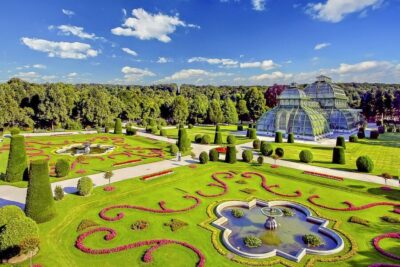
Schönbrunn Palace & Gardens Skip-the-Line Tour
Read our review →
Skip-the-Line Sisi Museum, Hofburg and Gardens Tour
Read our review →
Skip-the-Line Schönbrunn Palace & Gardens Tour
Read our review →
Guided Walking Tour of City Center Highlights
Read our review →
Bus & Schönbrunn Palace Skip-the-Line Guided Tour
Read our review →
Guided Walking Tour of City Highlights & Hidden Gems
Read our review →