
Reviewed · CONCERTS
Concerts at Mozarthouse Vienna – Chamber Music concerts.
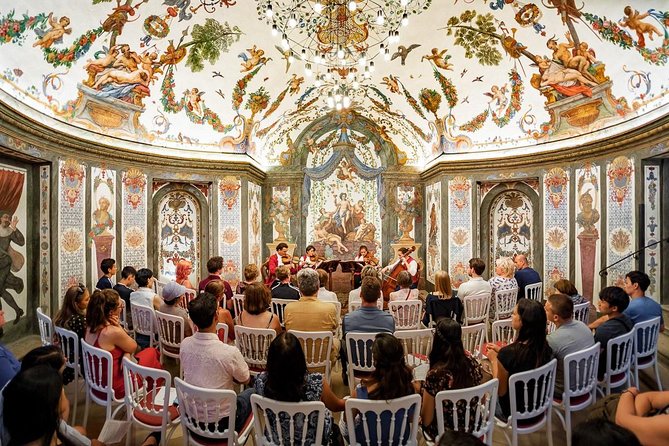
Mozart’s music feels especially at home in the small Sala Terrena, where frescoed walls, close seating, and excellent acoustics put you just a few steps from the musicians. This is not a grand concert in a huge hall. It is a compact, personal evening in one of Vienna’s oldest performance rooms, a place associated with Mozart himself.
I like the historic setting and the chance to hear a live quartet or piano trio without paying opera-house prices. I also like the friendly, informal touches: a printed keepsake program, free coat check, short explanations of the music, and sometimes a drink during the interval. The main drawback is space. The room can feel crowded, and some chairs are tight or uncomfortable, especially toward the back.
In This Review
- Key points to know before booking
- A Mozart concert in Vienna’s oldest performance room
- What happens during the 90-minute program
- Why the small room changes the music
- Cost, ticket categories, and what you receive
- Collecting your ticket at the venue
- The interval, drinks, and the practical details
- How the music suits different listeners
- The best seats and the student option
- A balanced look at the atmosphere
- Cancellation and booking advice
- Should you book the Sala Terrena concert?
- FAQ
- Where does the concert take place?
- How long does the concert last?
- Which musicians perform?
- Which composers are included?
- Is a program included?
- Is the coat check included?
- Can I cancel for a refund?
Key points to know before booking
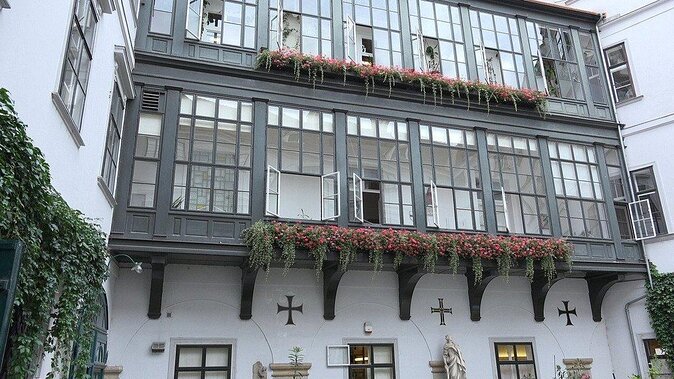
- Mozart played in this historic room: The Sala Terrena is in Vienna’s Deutschordenshaus, a building described as about 800 years old.
- Two musical formats are used: A string quartet performs on Wednesday, Friday, Saturday, and Sunday, while a piano trio is scheduled for Tuesday and Thursday.
- The room is deliberately intimate: You sit close to the performers, but the seating can feel cramped when every chair is filled.
- The program covers familiar classics: Expect works by Mozart, Bach, Beethoven, Schubert, Haydn, and other composers.
- The evening lasts about 90 minutes: The program commonly includes a break, often after about 45 minutes.
- Bring cash for extras: Interval drinks, including sparkling wine when available, may require cash and are not part of the ticket.
A Mozart concert in Vienna’s oldest performance room
The first thing to understand is that this is a room-centered experience. The music matters, of course, but the Sala Terrena gives the evening its character.
You enter a historic building in central Vienna and make your way to a small concert room decorated with old frescoes. The room does not try to compete with the grand Musikverein or the Vienna State Opera. Instead, it gives you a close view of the players and lets the sound gather naturally around you.
The venue is connected with the Deutschordenshaus, the headquarters of the Teutonic Order in Vienna. The building is said to be about 800 years old, and Mozart lived there briefly and played in the Sala Terrena. That link gives the concert a useful sense of place. You are not simply hearing Mozart in a modern tourist hall. You are hearing classical music in a room tied to Vienna’s musical past.
I would not treat the event as a museum visit. The focus is the performance, and the time inside the room is limited to the concert itself. Still, take a few minutes before the music begins to study the frescoes and the old interior. The setting is part of the ticket’s value.
More concerts in Vienna:
- Vienna: Vivaldi’s Four Seasons Concert in Karlskirche
★ 4.7 · 14,951 reviews - Vienna: Classical Concert in the World-Famous Musikverein
★ 4.6 · 6,673 reviews - Vienna: Classical Concert at St. Stephen’s Cathedral
★ 4.1 · 4,177 reviews
What happens during the 90-minute program
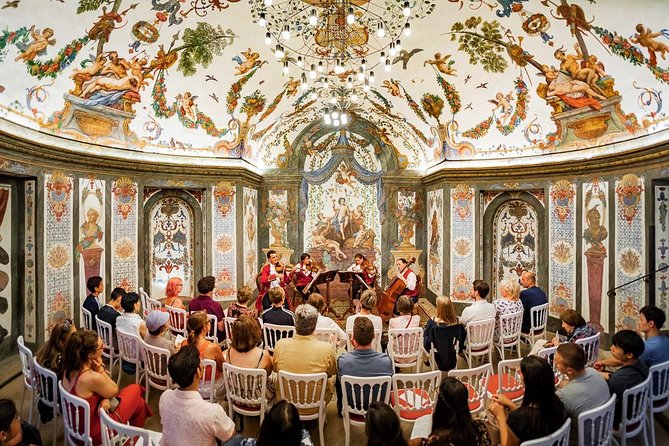
Plan on an evening of about one hour and 30 minutes. The exact order and length of each section can vary, but the program is commonly split into two parts with a short interval.
The music draws from composers most visitors recognize: Mozart, Bach, Beethoven, Schubert, and Haydn. You may also hear less familiar pieces, which keeps the program from becoming a string of greatest hits. The mix can give you a pleasant balance of melody, drama, and contrast.
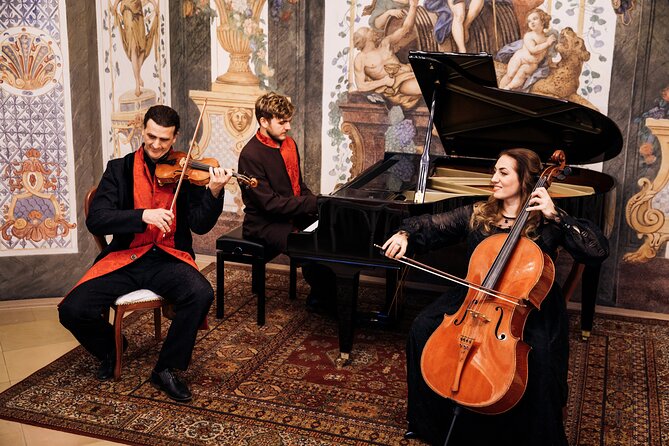
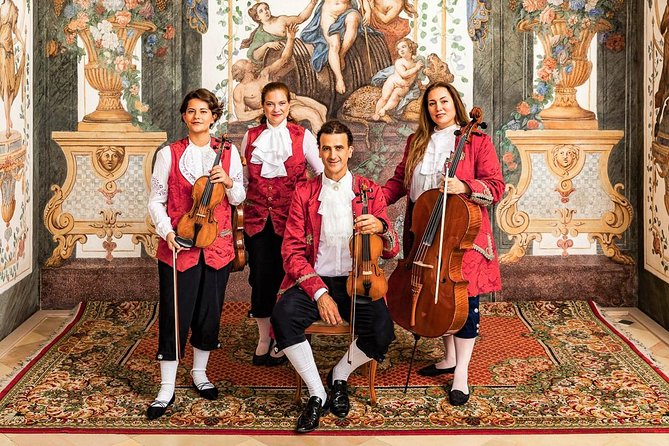
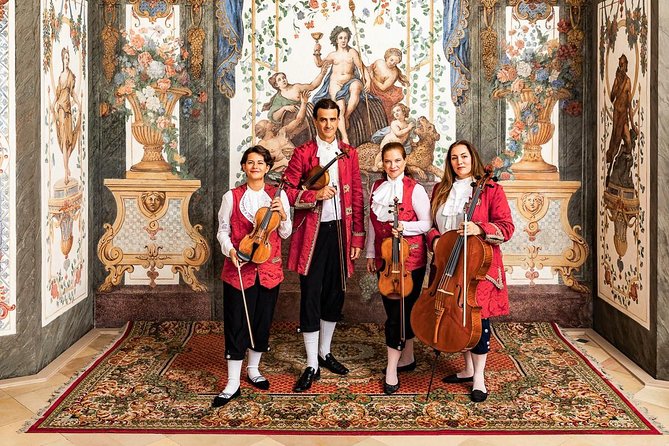
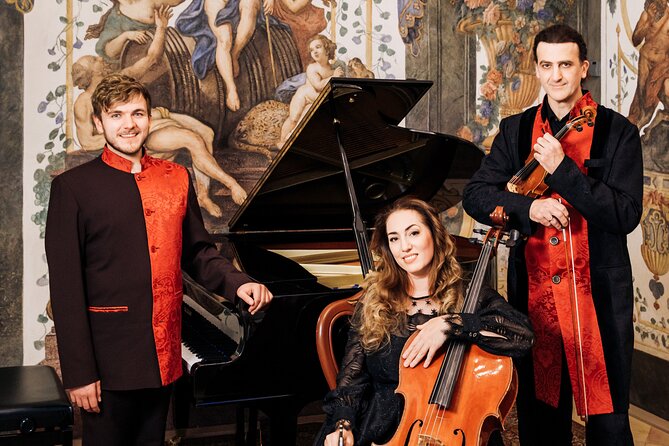
On Wednesday, Friday, Saturday, and Sunday, the performers are scheduled to be a string quartet in historical costumes. On Tuesday and Thursday, the program is scheduled around a piano trio. Check the date carefully when booking, since the size and sound of the ensemble will change the feel of the evening.
A quartet gives you the classic Viennese chamber music sound: two violins, viola, and cello. A piano trio offers a different balance, with the piano adding weight and color to the strings. The small room suits both formats, though the intimate scale is particularly effective when you can watch the players communicate with one another.
The musicians may give short explanations before pieces. This helps if you are not a regular classical music listener. You do not need to know sonata form, follow a composer’s life, or recognize every work. The program is intended to be approachable, and familiar pieces such as Beethoven’s Moonlight Sonata or Schubert’s Ave Maria may appear alongside works you have not heard before.
Why the small room changes the music
The Sala Terrena’s size is both its greatest strength and its main limitation.
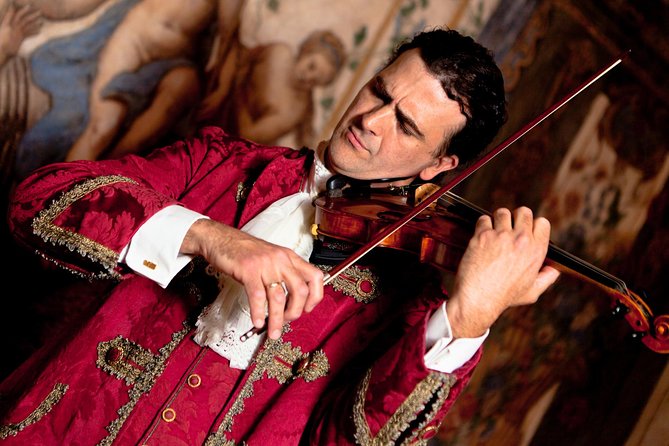
From a good seat, you can see the musicians’ hands, expressions, and interaction. One performer may lean toward another at the start of a phrase. The cellist’s bow movement is clear. The piano’s touch becomes part of the experience, not just a sound coming from a distant stage.
That closeness also makes the performance feel less formal. The music can seem conversational rather than remote. The musicians have room to show personality, and the audience is close enough to notice their energy and focus.
The acoustics receive especially strong praise. Even a trio can fill the room without sounding thin. The small space carries the sound well, so you do not need a large orchestra to feel the music’s force.
The tradeoff is seating. The room can hold a lot of chairs for its size, and some arrangements leave very little space between rows. A few seats may feel cramped, and chairs are not universally comfortable. One practical point is worth stressing: a higher ticket category does not necessarily mean you will sit in the center of the first row. Ticket categories are listed as Category A for rows 1 to 3, Category B for rows 4 to 6, and student seating in all rows. If a front-row view matters to you, ask at the box office exactly where your assigned seat is.
Cost, ticket categories, and what you receive
The listed price is about $50.81 per person. That is not the cheapest classical concert in Vienna, but it can be good value if you care about the setting and want a polished, short evening activity.
Your price covers live entertainment, the concert program, and coat check. The program is provided in German and English, which is useful if you want a little context without committing to a long spoken introduction.
The ticket does not include food or drinks. Alcoholic beverages may be available for purchase, and sparkling wine has been offered during the interval, but bring cash. Several practical details point to this being important: drinks may not accept credit cards, and the box office or interval service may require cash for additional charges.
A keepsake program is a small but worthwhile inclusion. It gives you the evening’s music in writing and makes the experience feel more complete than a bare admission ticket. CDs may also be available for purchase, but they cost extra.
The event is often booked about 35 days ahead. That is a useful signal for planning, especially if you have only one night free in Vienna. I would reserve early for a preferred date and ticket category, then keep the confirmation on your phone.
A different side of Vienna on the same trip:
- Vienna: Spanish Riding School Training
★ 3.9 · 9,281 reviews - Vienna: Skip-the-cashier-desk-line Giant Ferris Wheel Ride
★ 4.5 · 7,859 reviews - Vienna: Schönbrunn Palace & Gardens Skip-the-Line Tour
★ 4.7 · 7,739 reviews - Vienna: Light of Creation Votive Church Immersive Light Show
★ 4.8 · 6,779 reviews
Collecting your ticket at the venue
Your ticket is held at the theater box office for collection on the day of the performance. Arrive at least 15 minutes before the advertised start time so you can collect it and find your seat without rushing.
Allow a little extra patience for entry. The ticket collection process has sometimes been slower than expected, with a noticeable wait before the music began. A reported evening had people waiting from about 7:40 p.m. until an 8:15 p.m. start, followed by two sections of music. That does not mean every performance runs late, but it is a good reason not to arrive at the last minute.
The venue is near public transportation, and most people can take part without special preparation. There are no stated health restrictions. The coat check is included, a useful advantage in winter when bulky coats would make the tight seating even less comfortable.
The room is in the heart of Vienna, so it works well after dinner, a museum visit, or an afternoon walk through the central district. Keep your phone ticket ready, but remember that the actual admission process requires collecting the held ticket at the box office.
The interval, drinks, and the practical details
The break is usually short and often comes after roughly 45 minutes. I like this format because it gives you a chance to stretch and reset without turning a 90-minute concert into a long formal event.
Drinks may be served in an adjoining courtyard or nearby area. Champagne or sparkling wine can make the break feel festive, but it is optional and extra. Carry cash if you want anything during the interval. Food is not included, and you should not count on a meal being part of the experience.
The short break also helps the program feel more substantial. A continuous 45-minute concert can feel brief, while two sections with an interval create a proper evening rhythm. Some performances end with an encore, which can be a pleasant final touch, though you should not treat it as guaranteed.
If you dislike crowded rooms, ask about seating before you settle in. The intimate layout is central to the experience, and the organizers may fill the available chairs. You get closeness to the musicians, but not much personal space.
How the music suits different listeners
You do not need to be a devoted classical music follower to enjoy this concert. The program includes recognizable composers and often combines well-known selections with lesser-known pieces. That makes it a sound choice for a first taste of chamber music.
If you already attend classical concerts, you may value the close view and the room’s acoustic character more than the famous names on the program. This is not a substitute for a full symphony orchestra. You will not hear the broad force of dozens of instruments. You will hear detail, interplay, and the texture of a small ensemble.
I would especially consider it for:
- A first classical concert in Vienna
- A date night or quiet evening activity
- Anyone interested in Mozart’s personal connection to a venue
- People who prefer small rooms to large formal halls
- Listeners who want a shorter program with an interval
- Visitors looking for live music at a moderate price
It may be less suitable if you need generous legroom, prefer large orchestral sound, or want a performance with extensive English commentary. The program is bilingual, but this is primarily a music event, not a guided lecture.
The best seats and the student option
The ticket structure gives you three broad choices. Category A covers rows 1 through 3, Category B covers rows 4 through 6, and student tickets can be used in all rows.
A Category A ticket should place you closer to the performers, but row and seat placement still matter. The room is small enough that even a rear seat may offer a clear view, yet a corner or seat behind a reserved row can feel less satisfying than expected. I would not assume that paying to upgrade guarantees the exact position you want.
Category B can still be a reasonable buy if your main goal is hearing the music and enjoying the historic room. In such a compact hall, distance is limited. The main difference is likely to be the angle and sense of closeness rather than a completely different sound.
Students have a separate ticket category, but the provided details do not state the age or identification rules. Bring any required student identification if you book that option.
A balanced look at the atmosphere
The atmosphere is intimate, warm, and personal. The musicians are close enough for you to see their concentration, and short comments about the pieces can make the evening feel welcoming rather than stiff.
The audience is seated closely, so the room may feel full. That can be part of the charm, but it also means you should not expect the spacious comfort of a major concert venue. Some seats have been described as tight, and the chairs may not suit everyone for a full 90 minutes.
The staff help shape the experience. The box office and seating process can be a little disorganized at times, but the people assisting with registration and seating are generally attentive and polite. Plan ahead, collect your ticket early, and you will remove most of the avoidable stress.
One billing point deserves care. The experience price and any extra charges are separate. If you are asked to pay for an upgrade, drinks, or another item at the venue, confirm the amount and keep cash available. This is especially important because additional purchases may not accept cards.
Cancellation and booking advice
Free cancellation is available if you cancel at least 24 hours before the local start time. A cancellation made less than 24 hours before the performance is not refundable, and changes inside that window are not accepted.
I would book ahead if your schedule is tight, since the experience is commonly reserved more than a month in advance. At the same time, avoid reserving it on the same night as a major timed attraction unless you leave a generous buffer for ticket collection and city transport.
Keep the mobile ticket confirmation with you, arrive 15 minutes early, and carry cash. Those three steps cover the main practical issues.
Should you book the Sala Terrena concert?
Book it if you want a short, atmospheric evening of live classical music in a genuinely historic room. The strongest reasons are the close-up view of the players, the excellent acoustics, Mozart’s connection to the space, and a program built from familiar composers.
Think twice if comfort and elbow room matter more to you than atmosphere. The room can be crowded, seating may be tight, and a Category A upgrade may not deliver the exact front-row position you expect.
For most people, I see this as a good-value introduction to chamber music in Vienna. It gives you history, music, and a memorable setting without requiring a full evening at a major concert house. Bring cash, arrive early, and treat the small room as the main feature rather than a flaw.
FAQ
Where does the concert take place?
The concert takes place at the Sala Terrena in the Deutschordenshaus, in central Vienna. It is described as one of Vienna’s oldest concert halls and a room where Mozart once played.
How long does the concert last?
The experience lasts about one hour and 30 minutes. A short interval is commonly included.
Which musicians perform?
A string quartet dressed in historical costumes is scheduled for Wednesday, Friday, Saturday, and Sunday. A piano trio is scheduled for Tuesday and Thursday.
Which composers are included?
The program can include Mozart, Bach, Beethoven, Schubert, Haydn, and other composers. The exact selection can vary by performance.
Is a program included?
Yes. A keepsake concert program is included, and the program is provided in German and English.
Is the coat check included?
Yes. Coat check is included in the ticket price.
Can I cancel for a refund?
Yes, if you cancel at least 24 hours before the experience’s local start time. Cancellations or changes made less than 24 hours before the start are not accepted for a refund.
Just added around Vienna
- Private Tour from Vienna to Melk and Dürnstein★ 4.5 · 3 reviews
- Vienna: Johann Strauss 200th birthday anniversary exhibition★ 4.7 · 3 reviews
- Vienna Private Full Day Tour – Tickets to Schönbrunn & Lunch★ 5.0 · 3 reviews
- Private Salzburg Day Trip from Vienna★ 4.0 · 3 reviews
- Vienna: Entry Ticket Belvedere 21 & Contemporary Art★ 4.3 · 3 reviews
- Full-Day Private Trip from Vienna to Budapest★ 4.5 · 3 reviews
- Vienna by Night: Private Evening Food and Drink Tour★ 5.0 · 3 reviews
- Semi-Private Tour: Central Europe &Balkans from Vienna to Athens★ 5.0 · 3 reviews
Concerts, compared.

Vivaldi’s Four Seasons Concert in Karlskirche
Read our review →
Classical Concert in the World-Famous Musikverein
Read our review →
Classical Concert in St. Anne’s Church (Annakirche)
Read our review →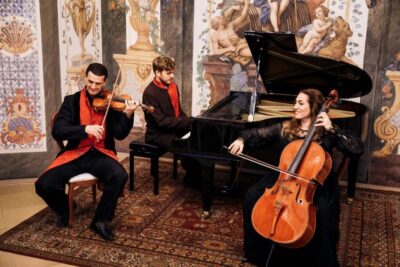
Vienna Classical Concert at St. Peter’s Church
Read our review →Browse the lists this tour appears in