Reviewed · TOURS
Fall in Love with Vienna Tour- the best of Vienna on foot!
Vienna’s center is compact, but its story is not. In three hours, this walking tour links Mozart, the Habsburgs, Sisi, Beethoven, coffeehouses, baroque churches, and the Opera House into one useful first look. You move from the old city around Stephansdom to the Hofburg and Ringstrasse, with guides such as Nicoletta, Nicoleta, and Moritz bringing the details to life.
I like two things in particular: the route gives you a fast sense of where Vienna’s main sights sit, and the guide offers practical advice for the rest of your stay. The coffee stop, printed information pack, and willingness to take photos or help with local questions add real value. The main drawback is the pace: with roughly 5 kilometers of walking and many short stops, you usually look at grand interiors from outside rather than tour museums in depth.
In This Review
- Key points at a glance
- What this Vienna walking tour actually delivers
- From Mozart to Stephansdom
- Baroque churches, plague memorials, and coffee culture
- The Hofburg and the Habsburg court
- Roses, Greek columns, and the Ringstrasse
- Beethoven, old churches, and elegant passages
- The Spanish Riding School and imperial hearts
- Albertinaplatz, Sacher, and the Opera finale
- The coffee break and the practical extras
- Price, pace, and who should book
- Should you book Fall in Love with Vienna?
- FAQ
- How long does the Fall in Love with Vienna Tour last?
- Where does the tour begin?
- Where does the tour end?
- Is the tour offered in English?
- What is the maximum group size?
- Are museum entrance fees included?
- Is a coffee or cake included?
- How much walking is involved?
- Are morning and afternoon departures available?
- What happens if bad weather cancels the tour?
Key points at a glance
- A useful first-day route: Connect Stephansdom, the Hofburg, Volksgarten, the Opera, and many central landmarks in one morning or afternoon.
- A coffeehouse pause: From January through November, the tour includes an extra 30-minute break in a traditional Viennese café.
- Many subjects in three hours: Expect stories about Mozart, the Habsburg court, Sisi, Beethoven, coffee culture, architecture, music, and local food.
- Small to medium groups: The stated maximum is 18 people, though the group may feel less intimate during busy periods.
- Easy but substantial walking: The route is mostly level, yet cobblestones and the distance call for sensible shoes.
- Useful follow-up advice: Your guide can suggest museums, restaurants, concert venues, coffee shops, and other places to explore later.
What this Vienna walking tour actually delivers
This is an orientation tour, not a museum-heavy historical seminar. You spend a few minutes at each stop, hear the key story, take photos, and keep moving. That format works well if Vienna is new to you or if you have only a short stay.
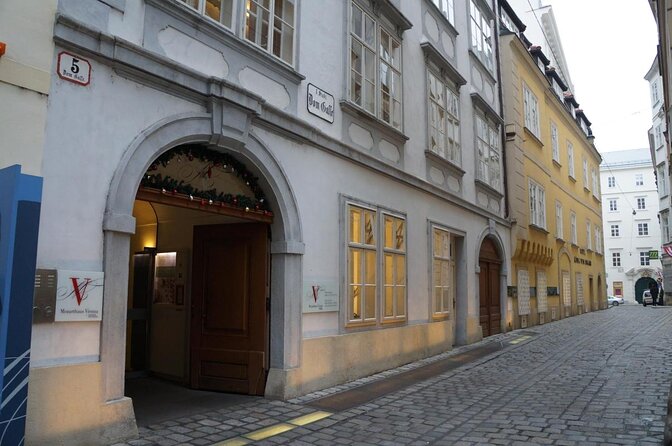
The route covers the old center and part of the Ringstrasse. It begins at Mozarthaus Vienna on Domgasse and ends in front of the Wiener Staatsoper at Herbert-von-Karajan-Platz. Along the way, the guide explains how Vienna grew from a medieval city into the imperial capital of the Habsburgs and, later, a center of music, cafés, museums, and public life.
The strongest part is the connection between places. You do not simply collect postcard views. You learn why a palace has several sections, how coffee culture fits into Viennese life, and why a church, fountain, café, or concert hall matters.
The stated maximum is 18 people. That is smaller than a large coach group, but it is not a private tour. In a busy season, a group of 17 can make the guide harder to hear, especially beside traffic or in crowded squares. If you want frequent questions and close conversation, an unusually small departure will be much better.
Other Vienna tours people book alongside this one:
- Vienna: Vivaldi’s Four Seasons Concert in Karlskirche
★ 4.7 · 14,951 reviews - Vienna: Spanish Riding School Training
★ 3.9 · 9,281 reviews - Vienna: Skip-the-cashier-desk-line Giant Ferris Wheel Ride
★ 4.5 · 7,859 reviews
From Mozart to Stephansdom
The meeting point is Mozarthaus Vienna, Domgasse 5. The guide begins with Mozart and his life in Vienna, using the composer’s former residence as a natural opening to the city’s musical identity.
You do not enter the museum as part of the walking tour, and the itinerary gives only about five minutes here. That is enough to set the scene, but not enough to study Mozart’s rooms or career in detail. If Mozart is a major reason for your visit, plan a separate visit to Mozarthaus.
The route then reaches Stephansdom, Vienna’s great cathedral. Its origins reach back to the 11th century, and its position in the center makes it an ideal landmark for understanding the old city. Again, the short stop is mainly for orientation and explanation. Museum and interior entrance fees are not included, so you will need extra time and money if you want a fuller visit.
Near the cathedral, you also get a taste of Vienna’s edible side at the central wafer and sweets shop. The focus is not only on the familiar Neapolitan-style wafer. You can see a broad selection of candies and choose something to try later. This is a quick shopping stop rather than a formal tasting, but it gives the route a welcome local-food break.
Baroque churches, plague memorials, and coffee culture
From Stephansdom, the walk continues to the Pestsäule, or Column of Pest. This tall baroque memorial recalls Vienna’s plague epidemic and the gratitude expressed after the crisis. It is one of those monuments that can look decorative until someone explains the story and symbolism.
Peterskirche offers a different kind of visual reward. The present Roman Catholic church was rebuilt after the earlier structure was destroyed in the 16th century. Its interior has the theatrical decoration you expect from high baroque design, and even a short look can feel more like stepping into an art gallery than a plain place of worship.
The guide also explains how Viennese coffee culture developed. The stop near Julius Meinl on Kohlmarkt places that story beside one of the city’s most polished shopping streets. You should not assume the tour includes a drink here. The included café break is listed separately, and only from January through November.
St. Michael’s Church, dating from the 12th century, adds another layer to the old center. The itinerary allows little time at each church, so this is best treated as a preview. You can mark the places you want to revisit when the group moves on.
The Hofburg and the Habsburg court
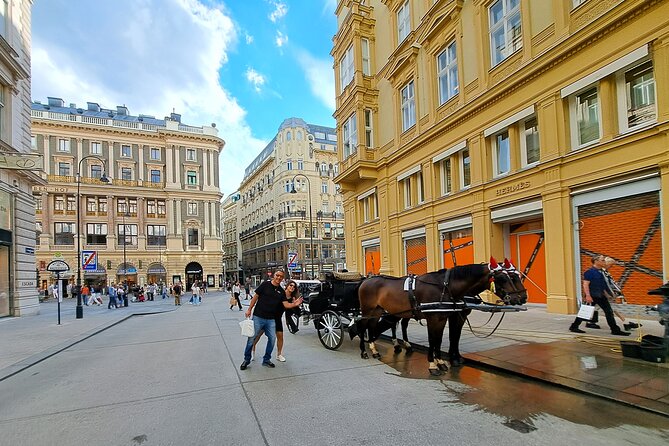
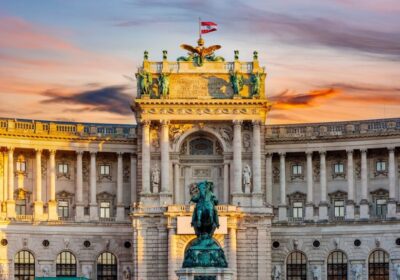
The Hofburg is the historical center of the tour. This huge palace complex grew over about 700 years as the Habsburg rulers expanded their power and their home. Your guide points out areas linked with Elisabeth, known as Sisi, Franz Joseph, and Maria Theresa, while explaining how the palace worked for both rulers and staff.
This is where a good guide matters most. The buildings can seem like a grand sequence of courtyards unless someone gives you a framework. The useful questions are simple: who lived here, who worked here, how did the court function, and what did the Habsburgs care about?
The Sisi Museum and Imperial Apartments are connected to the Hofburg complex. The guide can explain Elisabeth’s public image and private life, but admission is not included. The 10-minute stop cannot replace a museum visit. It does help you decide if the Sisi Museum deserves a place on your own schedule.
Heldenplatz, the Heroes’ Square, opens the palace district toward the Ringstrasse. It marks the entrance to the Winter Palace area and leads your eye across one of Vienna’s grandest public spaces. The area includes six museums and the palace’s largest ballroom, according to the tour information. The guide uses the square to connect architecture, court ceremony, and major events in Vienna’s past.
A different side of Vienna on the same trip:
- Vienna: Schönbrunn Palace & Gardens Skip-the-Line Tour
★ 4.7 · 7,739 reviews - Vienna: Light of Creation Votive Church Immersive Light Show
★ 4.8 · 6,779 reviews - Vienna Spanish Riding School Guided Tour
★ 4.7 · 6,765 reviews - Vienna: Classical Concert in the World-Famous Musikverein
★ 4.6 · 6,673 reviews
Roses, Greek columns, and the Ringstrasse
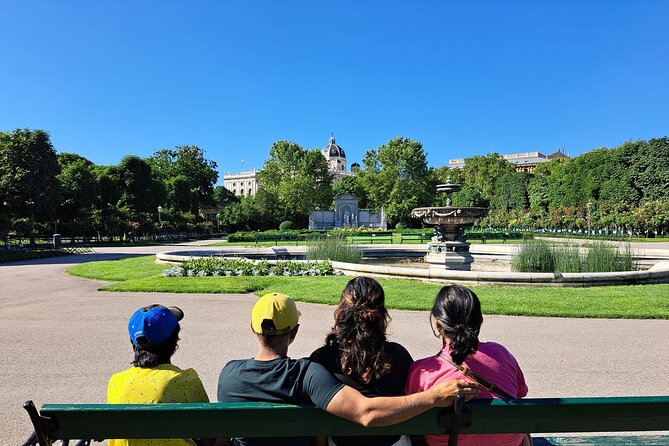
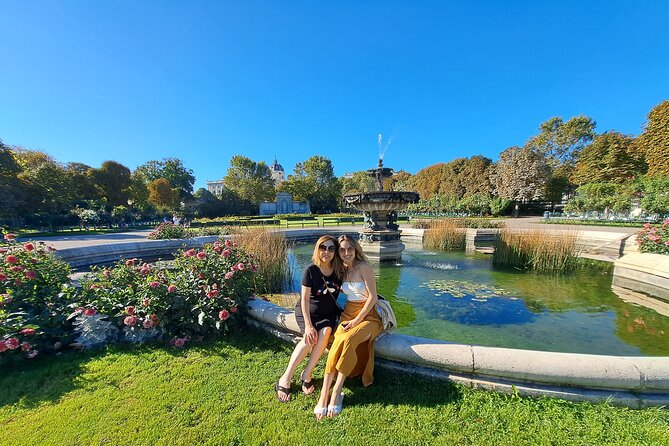
Volksgarten provides a welcome change from stone courtyards. Created in 1821, this central public park is known as the Garden of the 1000 Roses. The 10-minute stop gives you a chance to slow down, look at the plantings, and take photographs.
Inside the garden is a Greek-style temple. It reflects the Habsburg fascination with Greece and gives the park a classical accent. This is a good example of the tour’s range: one moment you are considering imperial power, and the next you are looking at a garden designed for public enjoyment.
The Pallas Athena Fountain in front of Parliament introduces civic Vienna. The guide points out what the goddess holds and explains its meaning. You get architecture and symbolism without having to spend twenty minutes standing in one place.
The Vienna City Hall follows, with its new Gothic design and public role. The building hosts events throughout the year, including Vienna’s largest Christmas market. If you visit during the holiday season, this stop may help you plan a return visit when the square is in full seasonal use.
The Burgtheater, built in the 18th century under Maria Theresa, continues the theme of public culture. Its history reaches back to the 17th century, and it remains one of the city’s major theater landmarks. The nearby Café Landtmann adds a personal connection, since it was a favorite coffeehouse of Sigmund Freud.
Beethoven, old churches, and elegant passages
The route passes Beethoven’s Pasqualatihaus, one of the composer’s former Vienna residences and now a museum. The tour does not include entry, but the stop is useful if you want to add a composer-focused visit later.
Schottenkirche, a 13th-century church, monastery, and museum, gives you another look at Vienna’s early religious foundations. By this point, you have seen medieval, baroque, imperial, and 19th-century buildings in a relatively small area. The short stops make the variety easy to grasp, though anyone interested in church art will need independent visits afterward.
Palais Ferstel is one of the route’s more atmospheric stops. Its passage contains cafés, restaurants, shops, architectural details, and a fountain. Unlike a broad square, a passage rewards a slower glance, and it shows how Vienna’s grand buildings can still function as everyday places.
Café Central is next, one of Vienna’s best-known historic coffeehouses. The café occupies an old palace and is closely tied to the city’s literary and intellectual image. The tour gives you the backstory and location, but it does not promise a reserved table or included food.
Demel, just outside the Hofburg, brings the focus back to sweets. The former favorite cake shop of Empress Elisabeth is known for chocolates, pancakes, and cakes. The stop lasts about 10 minutes, enough to look and decide if you want to return for a proper dessert visit.
The Spanish Riding School and imperial hearts
At the Spanish Riding School, the guide explains a tradition that reaches back to Emperor Maximilian and the court’s interest in military training. You hear about the school’s role, the training of its exceptional horses, and its place in Vienna’s imperial identity.
This is another preview rather than a performance. The tour does not include riding-school admission, and you should not expect to see a full training session simply because the route passes the building. If the Lipizzan horses are high on your list, ask the guide about current concert or venue options and arrange a separate ticket.
Augustinerkirche contains one of the tour’s more unusual details: a chapel holding the hearts of 50 Austrian emperors and empresses, preserved since the 17th century. It is a small, memorable fact that gives the imperial story a human, and slightly macabre, edge.
Albertinaplatz, Sacher, and the Opera finale
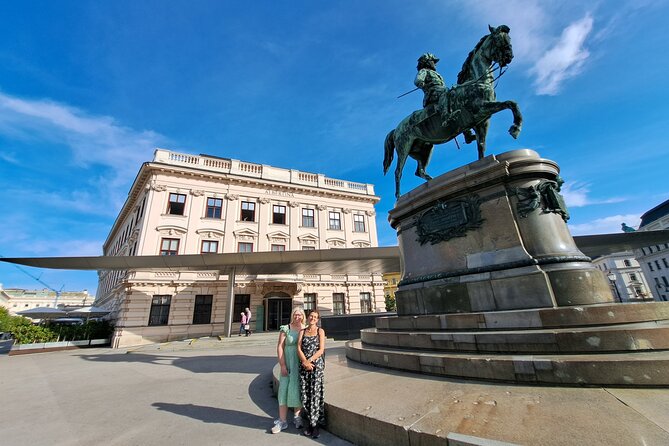
Albertinaplatz marks another section of the Winter Palace and the Albertina museum. The square also includes a memorial for Vienna’s Jewish community and the city’s central tourist information office. This is a practical point in the route, since you can note where to collect more information or return for museum planning.
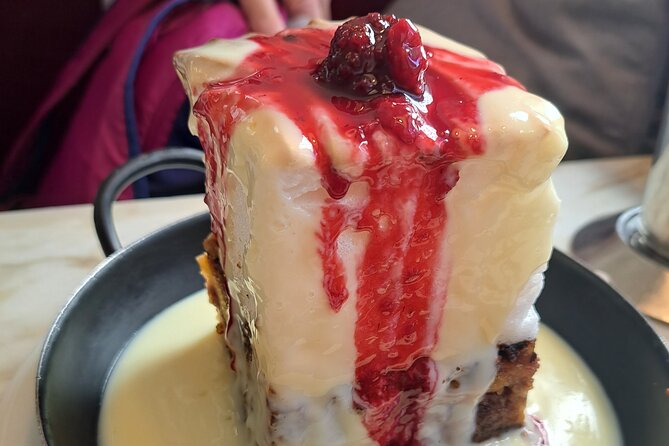
Hotel Sacher is the place associated with the original Sacher cake. The guide tells the story behind the dessert and points out where you can try it. The cake is not part of the tour price, so consider this a useful introduction, not a tasting.
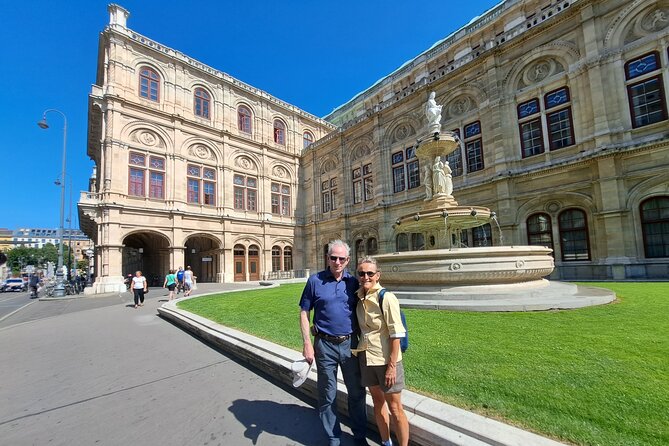
The final stop is the Wiener Staatsoper, built in 1869 on the Ringstrasse. Ending here works well. You finish among Vienna’s grandest music landmarks, close to public transportation and the central city, with a clear choice of what to do next.
The guide can also help with concert suggestions. Concert tickets in major Vienna venues may be arranged on request, but you should ask in advance rather than assume a ticket is included.
The coffee break and the practical extras
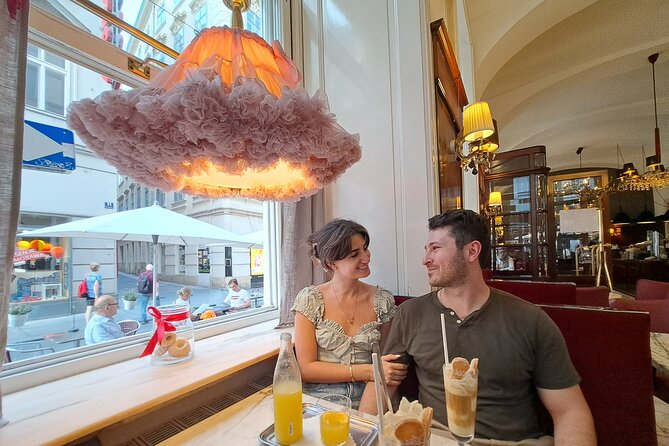
From January through November, the tour includes an extra 30-minute pause at a traditional Viennese coffeehouse. This is more than a chance to rest your feet. It gives you time to ask questions, compare the cafés you have passed, and decide which ones deserve a return visit.
The break is especially helpful on a hot day or when someone in the group needs a slower stretch. One guide even extended the tour to accommodate an 80-year-old participant who could not walk at the group’s usual pace. That suggests some flexibility, but you should still arrive ready for a substantial walk.
You receive a printed Vienna information package and a city map. These are simple extras, yet they can be useful after the tour, when you are deciding between the Sisi Museum, Albertina, a concert, a café, or a neighborhood restaurant.
The guide may take photographs for you and offer suggestions for museums, venues, restaurants, and coffee shops. The best value here is not admission to sights. It is the ability to use the rest of your Vienna stay more wisely.
Price, pace, and who should book
At $72.59 per person, this is not the cheapest way to see Vienna’s center. Still, the price is reasonable if you value a live guide, a route that covers a large number of landmarks, a printed map and information pack, and the included coffeehouse pause for most of the year.
You pay for context and time saved. In three hours, you cover far more ground than you might manage while stopping to research every palace, church, fountain, and café. You also get a list of places to revisit, which helps prevent a first day from becoming a string of random photographs.
I would choose this tour if you are visiting Vienna for the first time, have limited time, or prefer to get your bearings before booking museums and concerts. It also suits people who enjoy music, imperial stories, architecture, cafés, and food in equal measure.
I would hesitate if you want long interior visits, extensive art commentary, or a slow private walk. The route is full, and the short stops mean you will often hear an introduction and then move on. Large groups can also make it harder to hear, especially in high season. Wear good walking shoes, expect some uneven cobblestones, and choose the early departure if you want cooler streets and fewer crowds.
The tour is offered in English, with morning and afternoon departures. It requires moderate fitness, has a maximum stated group size of 18, and begins at Mozarthaus before ending at the Opera. Tips and museum entrance fees are extra.
Should you book Fall in Love with Vienna?
Book it if you want a well-packed first look at central Vienna and plan to explore several sights on your own afterward. The route is especially useful at the start of a city break, since it shows you where the major museums, cafés, palaces, churches, and concert venues fit together.
Skip it if your priority is sitting inside museums or taking a slow architectural walk with long explanations at every stop. For most first-time visitors, though, the combination of strong city coverage, local recommendations, a coffee break, and guides such as Nicoletta or Moritz makes the $72.59 fare worthwhile.
FAQ
How long does the Fall in Love with Vienna Tour last?
The walking tour lasts approximately three hours. From January through November, an additional 30-minute break in a traditional Viennese coffeehouse is included.
Where does the tour begin?
The meeting point is Mozarthaus Vienna, Wien Museum Mozart apartment, at Domgasse 5, 1010 Vienna.
Where does the tour end?
The tour ends on Ringstrasse in front of the Wiener Staatsoper, at Herbert-von-Karajan-Platz.
Is the tour offered in English?
Yes. The experience is offered in English.
What is the maximum group size?
The stated maximum is 18 people. The group may be smaller, depending on the departure.
Are museum entrance fees included?
No. Entrance fees to museums are not included in the tour price.
Is a coffee or cake included?
The tour includes an extra 30-minute break in a traditional Viennese coffeehouse from January through November. The information provided does not state that drinks, cake, or other food are included.
How much walking is involved?
The route involves substantial walking. One description puts the distance at about 5 kilometers, and you should expect some uneven cobblestones.
Are morning and afternoon departures available?
Yes. You can choose a morning or afternoon departure.
What happens if bad weather cancels the tour?
If poor weather causes cancellation, you will be offered a different date or a full refund. A full refund is also available when you cancel at least 24 hours before the start time.
Just added around Vienna
- Vienna: Johann Strauss 200th birthday anniversary exhibition★ 4.7 · 3 reviews
- Vienna Private Full Day Tour – Tickets to Schönbrunn & Lunch★ 5.0 · 3 reviews
- Private Tour from Vienna to Melk and Dürnstein★ 4.5 · 3 reviews
- Private Salzburg Day Trip from Vienna★ 4.0 · 3 reviews
- Vienna: Entry Ticket Belvedere 21 & Contemporary Art★ 4.3 · 3 reviews
- Full-Day Private Trip from Vienna to Budapest★ 4.5 · 3 reviews
- Vienna by Night: Private Evening Food and Drink Tour★ 5.0 · 3 reviews
- 1.5 Hour Cinematic Style Portrait Photoshoot and Tour in Vienna★ 4.5 · 3 reviews
Tours, compared.
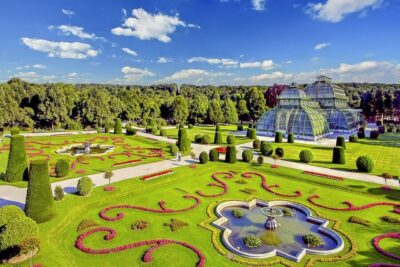
Schönbrunn Palace & Gardens Skip-the-Line Tour
Read our review →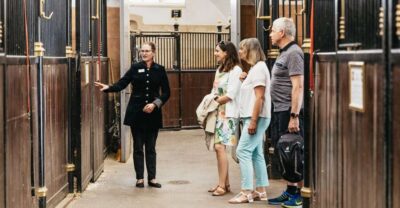
Skip-the-Line Sisi Museum, Hofburg and Gardens Tour
Read our review →
Skip-the-Line Schönbrunn Palace & Gardens Tour
Read our review →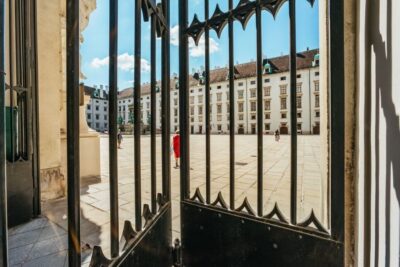
Guided Walking Tour of City Center Highlights
Read our review →
Bus & Schönbrunn Palace Skip-the-Line Guided Tour
Read our review →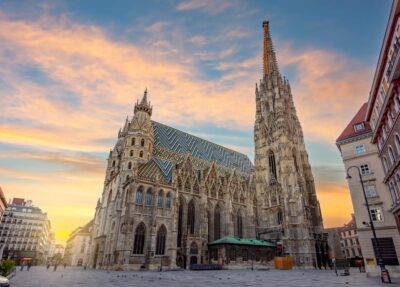
Guided Walking Tour of City Highlights & Hidden Gems
Read our review →