Reviewed · TICKETS
Forchtenstein Castle Entrance Ticket
Forchtenstein Castle’s biggest surprise is inside: a vast 17th-century portrait gallery where Esterházy princes appear beside figures such as Attila the Hun, Charlemagne, and Vlad the Impaler. The castle also holds one of Europe’s largest private armouries, so this is much more than a quick look at old stone walls.
I like the freedom to set your own pace, especially since the visit takes about one to two hours. I also like the mix of art and military objects, from large portraits and saddles to weapons kept within a fortress with more than four centuries of military use.
The main drawback is that the castle’s appeal is stronger for visitors who enjoy collections and historic interiors than for those seeking a highly polished, story-led tour. Some displays may feel repetitive, and the castle can have limited parking and occasional waits at the ticket desk, making advance booking a sensible choice.
In This Review
- Key Things to Know Before You Go
- Why Forchtenstein Castle Is Worth the Trip from Vienna
- Entering the Inner Courtyard and Seeing the Secco Murals
- The Chapel and Oratory Begin the Indoor Visit
- Four Centuries of Weapons Inside the Fortress
- The 17th-Century Gallery of Princes and Famous Figures
- Understanding the Esterházy Collection
- Is the Self-Guided Format a Strength?
- Timing, Opening Hours, and Practical Planning
- How the Visit Compares with Other Castle Stops
- Who Should Book This Castle Ticket?
- Should You Book Forchtenstein Castle?
- FAQ
- Where is Forchtenstein Castle located?
- How long does a visit to Forchtenstein Castle take?
- How much does admission cost?
- Can I explore the castle at my own pace?
- What can I see inside the castle?
- When is Forchtenstein Castle open?
- Can I cancel the ticket?
Key Things to Know Before You Go
- The portrait gallery is the star: See a grand line of Esterházy family portraits alongside legendary historical figures.
- The armoury is unusually extensive: Weapons and saddles reveal the family’s long military tradition.
- The inner courtyard has a major visual surprise: It contains the largest secco murals north of the Alps.
- You explore without a fixed route: The ticket lets you move through the castle at your own speed.
- The castle is about an hour from Vienna: Allow extra time for the journey beyond the one to two hours inside.
- Seasonal hours matter: Opening runs Tuesday through Sunday in spring and autumn, and daily from June through August.
Why Forchtenstein Castle Is Worth the Trip from Vienna
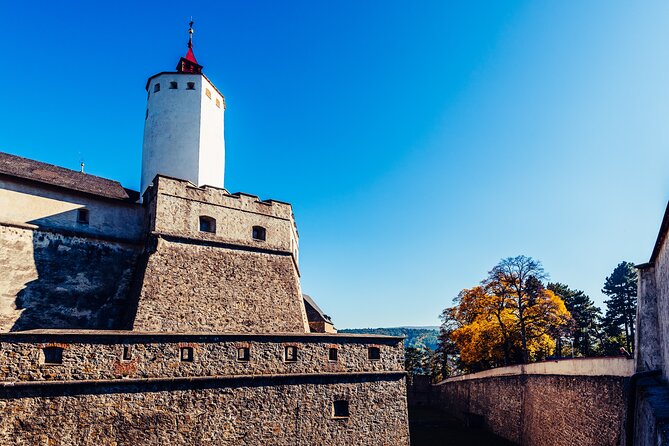
Forchtenstein Castle gives you two experiences in one. Outside, it is a powerful hilltop fortress with broad views over the surrounding Burgenland countryside. Inside, it becomes a family archive, art collection, armoury, chapel, and carefully preserved record of Esterházy power.
That contrast is what makes the visit worthwhile. You are not simply walking through empty rooms. The castle presents the objects that helped a major noble family show its wealth, status, military strength, and place in European history.
The journey from Vienna takes about an hour, according to the practical information available for the experience. That makes this a reasonable half-day outing, though the ticket itself covers only the castle entrance and the visit normally lasts one to two hours.
I would not plan a full day around the castle alone unless you want a slow meal at the castle restaurant or time in the surrounding area. For most people, the castle works best as part of a wider Burgenland outing.
A few more Vienna tours worth weighing up
- Vienna: Classic Ensemble Vienna in St. Peter’s Church Ticket
★ 4.7 · 4,819 reviews - Vienna Kunsthistorisches Museum Day Admission Ticket
★ 4.6 · 3,690 reviews - Vienna: Tickets for Mozarthaus Vienna with Audio Guide
★ 4.2 · 2,344 reviews
Entering the Inner Courtyard and Seeing the Secco Murals
Your first major view comes in the inner courtyard. Look up and around before heading into the exhibitions, because the courtyard contains the largest secco murals north of the Alps.
Secco painting is applied to dry plaster rather than wet plaster. The murals give the courtyard a more decorated, ceremonial feel than you might expect from a defensive stronghold. They also set the tone for the visit: Forchtenstein is concerned not only with military protection, but with display.
The setting is one of the castle’s most praised features. Its position gives you wide views over the surrounding countryside, and the approach helps explain why this was a useful defensive site. The scenery may be the most immediately pleasing part of your visit, especially if you prefer architecture and open views to dense museum displays.
Take a moment here before moving indoors. The courtyard helps you understand the castle as a working fortress and a statement of family power.
The Chapel and Oratory Begin the Indoor Visit
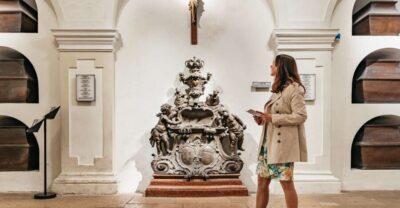
The castle visit begins with the oratory and chapel on the first floor. These rooms provide a quieter introduction to the Esterházy world before you reach the larger collections.
The chapel and oratory matter because they show the religious side of aristocratic life. A fortress of this scale was not only a place for soldiers and storage. It also had spaces for worship, ceremony, and private devotion.
You may find the chapel more memorable if you look for the relationship between the rooms and the castle’s defensive structure. The heavy walls and historic setting remain present even in these more intimate spaces.
The available information does not name a specific guide, and the basic ticket is designed for self-guided exploration rather than a tour led by a named host. Explanatory texts are available, and the quality of interpretation appears to vary by visitor. I would allow yourself time to read the material instead of rushing from one room to the next.
Four Centuries of Weapons Inside the Fortress
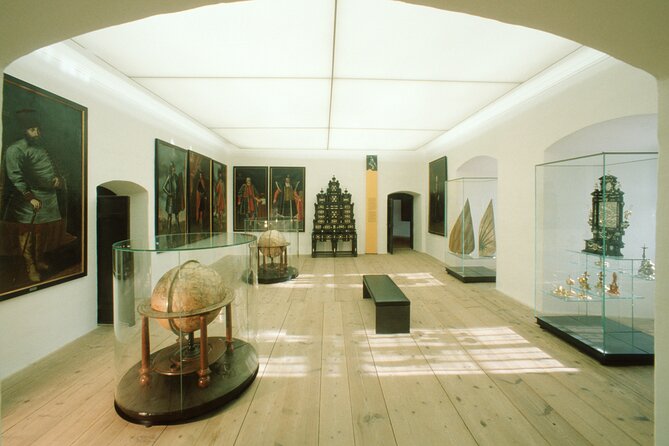
The armoury is one of Forchtenstein Castle’s strongest sections. The collection is described as one of Europe’s largest private armouries, with weapons that reflect more than four hundred years of military history.
This is not just a room with a few swords on the wall. The collection helps you see how a noble family protected its estates, displayed its authority, and preserved the memory of military service. Weapons and saddles add texture to the story because they connect warfare with travel, ceremony, and status.
I especially like the contrast between this section and the portrait gallery. The portraits tell you how the Esterházy family wanted to be seen. The armoury shows the practical tools behind that image.
If your interest in castles is mainly architectural, the weapon collection gives the interior visit a clear purpose. If you prefer paintings, you can move through this section more quickly and spend longer upstairs.
A different side of Vienna on the same trip:
- Vienna: Vivaldi’s Four Seasons Concert in Karlskirche
★ 4.7 · 14,951 reviews - Vienna: Spanish Riding School Training
★ 3.9 · 9,281 reviews - Vienna: Skip-the-cashier-desk-line Giant Ferris Wheel Ride
★ 4.5 · 7,859 reviews - Vienna: Schönbrunn Palace & Gardens Skip-the-Line Tour
★ 4.7 · 7,739 reviews
The 17th-Century Gallery of Princes and Famous Figures
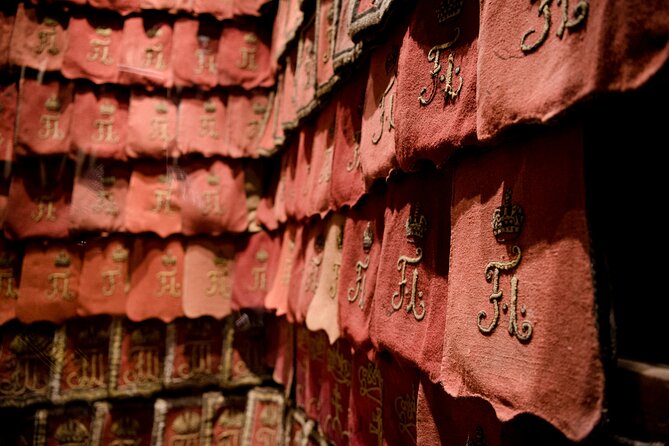
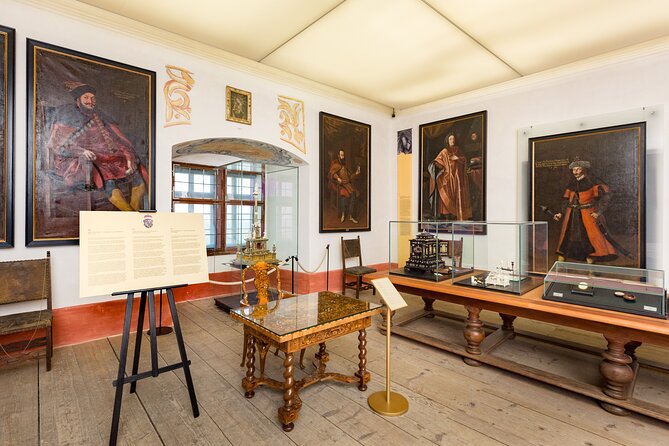
The second floor contains the castle’s main collection areas. Here, portraits of the Esterházy family create a visual record of several generations. The gallery also includes full-size portraits of figures such as Attila the Hun, Charlemagne, and Vlad the Impaler.
The portrait of Vlad, often linked with the Dracula story, is likely to catch your eye. It is one of the collection’s most unusual talking points, especially for visitors who might not normally spend much time looking at aristocratic portraiture.
The gallery’s scale is part of its impact. Full-size portraits were made to impress. They are not modest family snapshots. They present rulers, ancestors, and legendary figures as part of a grand historical line.
That style can also create the visit’s main weakness. If you are not interested in portrait painting, you may find many similar images after the first few rooms. The displays focus heavily on the Esterházy family’s status and connections, so the experience is less varied than a museum that mixes many different periods and artists.
I suggest looking for differences in clothing, posture, symbols, and surroundings. These details show how each person was presented and what the family wanted you to remember.
Understanding the Esterházy Collection
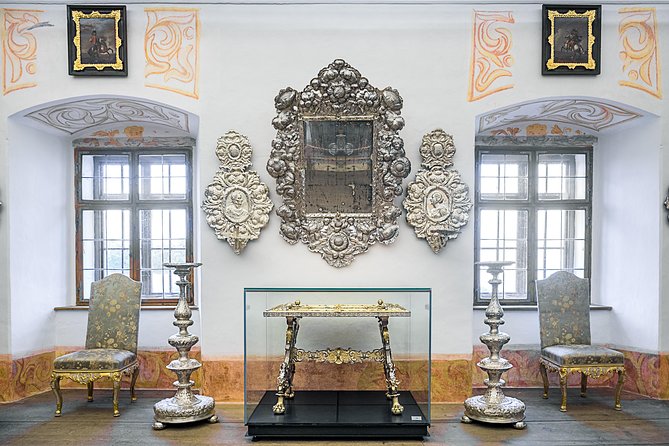
Forchtenstein Castle preserves more than portraits and weapons. Its collections reflect the wide interests and resources of the Esterházy family. The displays show how noble households gathered objects, recorded ancestry, and turned private possessions into a public statement.
The castle’s appeal depends on this connection between place and collection. The objects are not presented in a modern gallery removed from their original setting. They remain inside the fortress that protected the family’s holdings and helped preserve its identity.
I find that setting valuable because it gives the collection a clear sense of purpose. You can see why portraits, armour, saddles, and ceremonial objects were kept together. They all helped tell the story of a powerful family.
At the same time, you should set realistic expectations. This is not a fast, interactive attraction with a tightly scripted narrative. The visit depends on your curiosity and willingness to read. Some interpretation has been described as simple, and the number of similar portraits may test your patience.
Is the Self-Guided Format a Strength?
The ticket allows you to explore at your own pace, with no fixed itinerary. That is useful if you want to pause at the armoury, move quickly through less appealing displays, or spend extra time with the murals and views.
I prefer this format in a castle with several different collections. You can follow your own interests instead of staying with a group. Families and independent visitors may appreciate the ability to stop, regroup, and continue when ready.
The tradeoff is that you must create your own structure. A guide would help connect the portraits, military objects, and Esterházy family story. Without that narrative thread, the castle may feel like a series of rooms rather than one carefully shaped account.
Two guided tours are available at the castle according to the supplied visitor information, but this particular product is an entrance ticket. If you want a guided experience, check the castle’s current arrangements separately rather than assuming a guide is included.
Timing, Opening Hours, and Practical Planning
The ticket costs $22.11 per person. That is fair value if you plan to spend the full one to two hours inside and have a real interest in art, castles, or military collections.
The price is less convincing if you only want a quick photograph of the exterior. The views and setting are important, but the admission cost is mainly paying for the indoor collections.
Opening hours change with the season:
- From April 1 through May 31, the castle is open Tuesday through Sunday from 10:00 a.m. to 5:00 p.m.
- From June 1 through August 31, it is open daily from 10:00 a.m. to 5:00 p.m.
- From September 1 through October 31, it returns to Tuesday through Sunday hours, from 10:00 a.m. to 5:00 p.m.
The ticket redemption point is on Burggasse in Forchtenstein. Check your chosen date carefully, especially if you are visiting in spring or autumn when Mondays are generally outside the stated opening schedule.
Advance booking is useful because the experience is often reserved well ahead of the visit. It confirms your admission and lets you choose a date and time that fit your plans. You can cancel for a full refund up to 24 hours before the start time. Changes or cancellations inside that window are not accepted for a refund.
Parking may be limited. I would not leave arrival until the last minute, particularly during busy periods. The castle is easy to combine with a day outside Vienna, but you need to treat the drive as part of the outing rather than a short city attraction.
How the Visit Compares with Other Castle Stops
Forchtenstein is best for the depth of its collections. Many castles give you walls, furniture, and a few historic rooms. This one adds a major armoury, a large portrait collection, chapel spaces, saddles, murals, and the Esterházy family story.
It is also a good choice if you want something connected to Austria’s aristocratic past without staying in central Vienna. The setting feels separate from the capital, and the wide views add a welcome outdoor element.
I would choose another attraction if your main goal is a lively guided story or a highly modern museum presentation. The castle’s interpretation can feel basic, and the interior displays may not hold your attention for two hours unless you enjoy paintings and historic objects.
The best visit combines a little preparation with an open mind. Read a short account of the Esterházy family before you arrive, then look for how the collection supports that story. You will get more from the portraits once you understand that they are part of a family record, not simply a long line of faces.
Who Should Book This Castle Ticket?
I would recommend Forchtenstein Castle to:
- Art lovers who enjoy Baroque portraiture and formal aristocratic paintings.
- Castle fans who want more than an exterior view.
- Visitors interested in arms, armour, saddles, and military objects.
- History-minded families who prefer to explore independently.
- People looking for a half-day trip from Vienna with countryside views.
- Anyone who wants to see a less conventional collection connected to the Esterházy family.
I would be more cautious if you dislike museums, have very little time, or want a guide to explain every room. The castle can be visually impressive, but the indoor experience asks you to bring your own interest and attention.
Should You Book Forchtenstein Castle?
Book it if you value unusual collections in an authentic fortress setting. The combination of large portraits, the Vlad the Impaler image, one of Europe’s major private armouries, secco murals, chapel rooms, and wide views gives the visit a clear identity.
Skip it if you only want a short sightseeing stop or expect a polished, highly interactive presentation. For the right visitor, $22.11 is a reasonable price for one to two hours of art and military history, especially with the freedom to set your own route.
I would reserve in advance, plan for the drive from Vienna, and arrive with enough time to see both the courtyard and the upper-floor collections without rushing.
FAQ
Where is Forchtenstein Castle located?
The ticket redemption point is on Burggasse in Forchtenstein, Austria. The castle is described as roughly one hour from Vienna.
How long does a visit to Forchtenstein Castle take?
The visit takes approximately one to two hours.
How much does admission cost?
The listed price is $22.11 per person.
Can I explore the castle at my own pace?
Yes. The entrance ticket allows you to explore the galleries without a fixed itinerary.
What can I see inside the castle?
You can see the inner courtyard murals, the chapel and oratory, military collections, weapons, saddles, Esterházy family portraits, and portraits of figures including Attila the Hun, Charlemagne, and Vlad the Impaler.
When is Forchtenstein Castle open?
From April through May and September through October, it is open Tuesday through Sunday from 10:00 a.m. to 5:00 p.m. From June through August, it is open daily from 10:00 a.m. to 5:00 p.m.
Can I cancel the ticket?
Yes. You can cancel up to 24 hours before the experience start time for a full refund. Cancellations or changes made less than 24 hours before the start time are not accepted for a refund.
Just added around Vienna
- Private Tour from Vienna to Melk and Dürnstein★ 4.5 · 3 reviews
- Vienna: Johann Strauss 200th birthday anniversary exhibition★ 4.7 · 3 reviews
- Vienna Private Full Day Tour – Tickets to Schönbrunn & Lunch★ 5.0 · 3 reviews
- Private Salzburg Day Trip from Vienna★ 4.0 · 3 reviews
- Vienna: Entry Ticket Belvedere 21 & Contemporary Art★ 4.3 · 3 reviews
- Full-Day Private Trip from Vienna to Budapest★ 4.5 · 3 reviews
- Vienna by Night: Private Evening Food and Drink Tour★ 5.0 · 3 reviews
- 1.5 Hour Cinematic Style Portrait Photoshoot and Tour in Vienna★ 4.5 · 3 reviews
Tickets, compared.
Classic Ensemble Vienna in St. Peter’s Church Ticket
Read our review →
Vienna Kunsthistorisches Museum Day Admission Ticket
Read our review →
Tickets for Mozarthaus Vienna with Audio Guide
Read our review →
Skip-the-Line Entrance Ticket to the Danube Tower
Read our review →
St. Stephen’s Cathedral & Dom Museum Wien Tickets
Read our review →