Reviewed · TOURS
Future Bus Tours – Vienna’s highlights bus tour with virtual reality
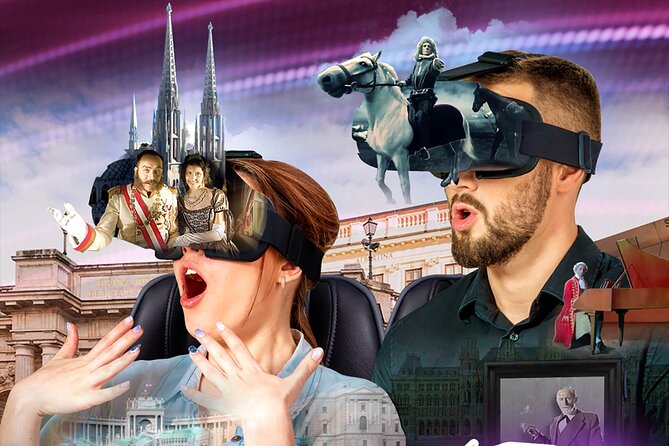
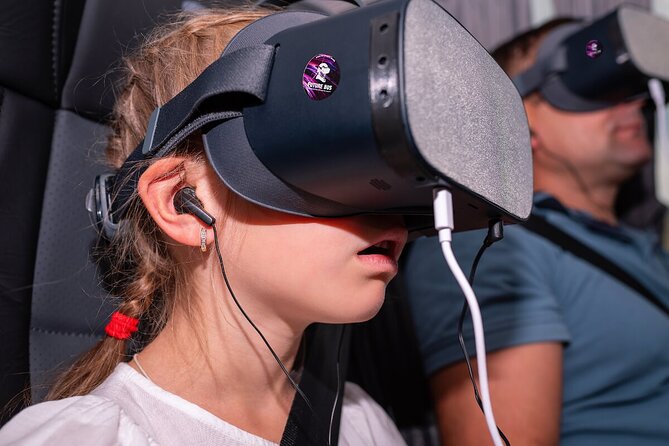
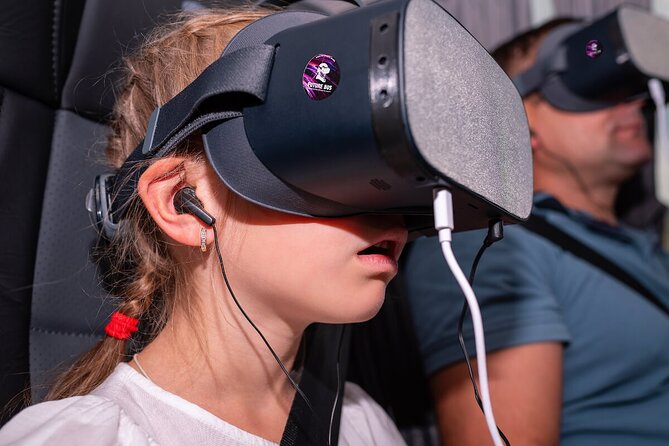
Vienna’s grand buildings are impressive from the street, but this tour adds an unusual trick: at four stops, you put on a VR headset and watch actors bring former rulers and historic scenes to life in 3D. I like the efficient one-hour route and the comfortable, air-conditioned ride, especially if you want a quick first look at central Vienna. I also like that the VR scenes give familiar monuments a story instead of leaving you to admire facades in silence.
The main caution is the language information. The tour is advertised with several audio languages, but one Japanese-speaking customer received only German and English. Confirm your preferred language before booking, and treat the VR portion as a lively introduction rather than a substitute for a proper palace or museum visit.
In This Review
- Key points at a glance
- A quick history lesson with a VR headset
- Starting at Operngasse 4 near Albertinaplatz
- Heldenplatz and the Hofburg rulers
- Rathaus, the Ringstrasse, and a famous café connection
- The Ringstrasse from an easy seat
- Votivkirche and the assassination attempt
- MuseumsQuartier and the final return to the Opera
- What the audio guide adds, and where to be careful
- Is $32.10 a fair price for one hour?
- Who will enjoy this bus tour most?
- Practical booking advice
- Should you book Future Bus Tours?
- FAQ
- Where does the Vienna VR bus tour begin?
- Where does the tour end?
- How long does the tour last?
- How many people can join the tour?
- Which landmarks does the bus pass?
- How many VR stops are included?
- Can I cancel for a full refund?
Key points at a glance
- Four VR stops: Use a provided headset at Heldenplatz, Rathaus, Votivkirche, and the State Opera area.
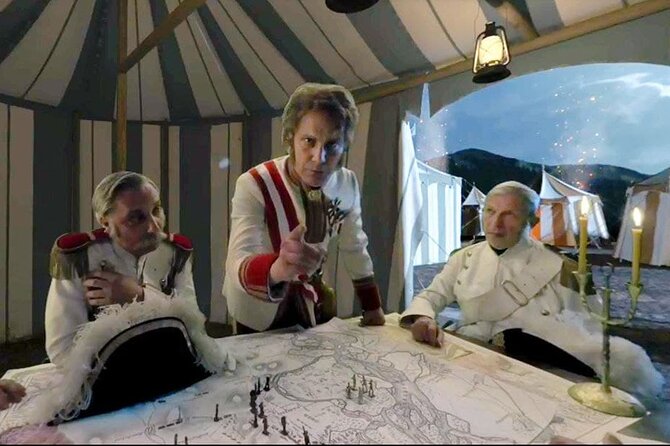
- Habsburg stories in 3D: Meet two generals, Empress Maria Theresia, and an emperor with his wife through filmed historical scenes.
- A fast Ringstrasse survey: See the Opera, Parliament, City Hall, University of Vienna, MuseumsQuartier, and more without a long walk.
- Small vehicle, short ride: The air-conditioned shuttle holds no more than 18 people and returns to its starting point after about one hour.
- Unusual history lesson: The Votivkirche stop connects the church to an assassination attempt, while another scene explores a historic figure linked with Rathaus.
- Check the audio language: The published information refers to seven or nine languages in different places, while a booking in Japanese reportedly offered only German and English.
A quick history lesson with a VR headset
The basic idea is simple. You board near Albertinaplatz, ride through Vienna’s central districts, and use a headset at selected stops to see historical figures and places in a new way.
That format works well for a first afternoon in the city. Vienna can feel like a parade of grand palaces, churches, monuments, and government buildings. The bus lets you cover plenty of ground, while the virtual scenes give you a reason to remember what you are seeing.
I especially like the contrast between the real city outside the windows and the staged scenes inside the headset. You first see Heldenplatz as it exists today, with the Hofburg entrance nearby. Then the VR presentation shifts the clock back and introduces three important Austrian rulers, including Maria Theresia and two military leaders.
This is not a slow, scholarly walking tour. The pace is brisk, the route is compact, and the history comes in short portions. If you prefer long explanations and time to study architecture, you will want to pair this ride with a palace visit or a guided walk.
Other Vienna tours people book alongside this one:
- Vienna: Vivaldi’s Four Seasons Concert in Karlskirche
★ 4.7 · 14,951 reviews - Vienna: Spanish Riding School Training
★ 3.9 · 9,281 reviews - Vienna: Skip-the-cashier-desk-line Giant Ferris Wheel Ride
★ 4.5 · 7,859 reviews
Starting at Operngasse 4 near Albertinaplatz
The tour begins at Operngasse 4, beside Albertinaplatz in Vienna’s inner city. This is a useful location because the State Opera, the Albertina area, and several central sights are close by.
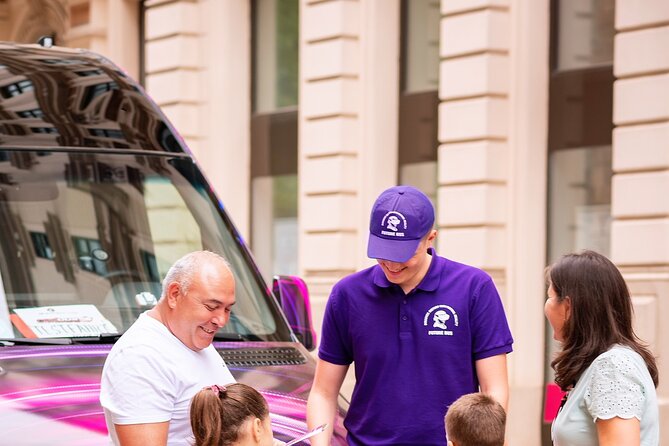
At the start, you receive instructions for the VR equipment and the audio commentary. Since the ride lasts only about an hour, pay attention to the setup before the vehicle leaves. The value of the tour depends partly on being ready when each headset segment begins.
Your ticket is mobile, which keeps the arrival process simple. The meeting point is near public transportation, though the supplied details do not name a particular tram or subway connection. Plan to reach Operngasse 4 with enough time to locate the pickup point rather than arriving at the last minute.
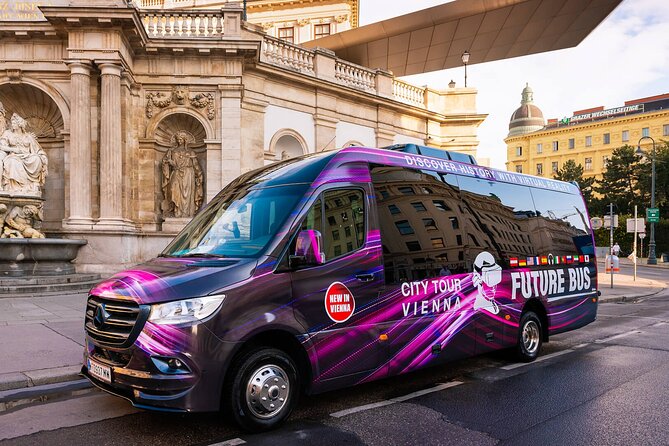
The vehicle is air-conditioned and the group is limited to 18 people. That is a more personal scale than a large sightseeing coach, and it should make the headset instructions easier to follow. You remain in the vehicle for much of the ride, so this suits anyone who wants to see central Vienna without committing to a long walk.
Heldenplatz and the Hofburg rulers
The first major stop is Heldenplatz, or Heroes’ Square, directly by the Hofburg complex. This wide ceremonial space is one of the best places in central Vienna to understand the power of the former Habsburg court.
The Hofburg entrance gives the stop a strong visual anchor. You see the imperial setting in front of you, then the VR presentation adds three historical figures: two generals and an empress. The combination helps turn an open square into a stage for Austrian history.
Maria Theresia receives additional attention at the nearby Maria-Theresien-Platz. Her large monument is hard to miss, and the audio material explains her role while the virtual scenes allow you to meet her in a more theatrical way.
This is one of the tour’s strongest sections because it uses the setting well. You are not simply passing a statue and hearing a name. You see the monument, the Hofburg, and the surrounding imperial space before the headset supplies a human story.
The limitation is time. Ten minutes at a stop can give you the broad idea, but not the chance to inspect every detail of the square or palace. If the Hofburg interests you, return later for a longer visit.
Rathaus, the Ringstrasse, and a famous café connection
The route continues to Vienna’s Rathaus, one of the most recognizable buildings along the Ringstrasse. Its tall Gothic design and ornate details make it a natural highlight from the bus window.
The tour uses this stop to introduce another historical personality whose office was nearby and whose favorite café was across the street. The supplied information does not identify this person by name, so do not expect the itinerary alone to tell you every detail in advance. The point is the connection between public life, nearby cafés, and the grand civic buildings around Rathaus.
The stop also places you near the Burgtheater, Vienna’s famous theater. The bus stops beside the theater and the Volksgarten, where hundreds of roses can be seen. Café Landtmann is across from the area, adding a classic Viennese coffeehouse reference to the route.
This part of the ride shows how much the Ringstrasse packs into a small area. In a short distance, you can see City Hall, a major theater, a formal garden, and one of the city’s best-known cafés.
You will not have much time to walk through the Volksgarten or sit at Café Landtmann during the tour. Think of this as a preview. Mark the places that deserve a return visit after the bus ride.
A different side of Vienna on the same trip:
- Vienna: Schönbrunn Palace & Gardens Skip-the-Line Tour
★ 4.7 · 7,739 reviews - Vienna: Light of Creation Votive Church Immersive Light Show
★ 4.8 · 6,779 reviews - Vienna Spanish Riding School Guided Tour
★ 4.7 · 6,765 reviews - Vienna: Classical Concert in the World-Famous Musikverein
★ 4.6 · 6,673 reviews
The Ringstrasse from an easy seat
The Ringstrasse is the backbone of the sightseeing route. This broad boulevard circles Vienna’s historic center and passes a long list of important buildings.
From the shuttle, you see or pass the Vienna State Opera, Parliament, Rathaus, the University of Vienna, and other major monuments. The bus format matters here because these sights are spread along a route that would take more effort to cover on foot.
I like this portion for orientation. If you have just arrived in Vienna, it gives you a mental map of the central district. You begin to understand how the Opera relates to Rathaus, how the university fits into the Ringstrasse, and where the MuseumsQuartier sits beyond the formal boulevard.
The windows also give you a moving view of the architecture. The tradeoff is that a bus is not the same as standing in front of a building. Traffic, passing vehicles, and limited stopping time can make photographs harder. Keep your expectations realistic and enjoy the ride as a survey, not as a series of full visits.
The University of Vienna receives a brief mention as the route passes by. The audio commentary points to the institution’s connection with major thinkers who studied or taught there. That detail adds a human layer to the monumental street, even if the tour cannot offer a full look inside.
Votivkirche and the assassination attempt
Votivkirche is the third virtual reality stop, according to the supplied route sequence. This Neo-Gothic church is one of the most striking buildings in central Vienna, with soaring forms that look quite different from the Baroque and imperial architecture elsewhere in the city.
The historical hook is an assassination attempt. The VR material explains how the church connects to that event, giving you a story to carry with you as you look at the real building.
This is exactly where the virtual format makes sense. A church can be visually impressive but hard to understand from a quick roadside view. The headset adds a narrative frame and shows you why the building matters beyond its appearance.
The stop is also useful because Votivkirche can be missed when you focus only on the Hofburg and Opera. The bus brings it into the route without requiring you to plan a separate visit.
Again, time is the issue. You see the church and receive the historical explanation, but the tour does not present itself as an interior church visit. If you want to study the architecture or enter the building, allow separate time after the ride.
MuseumsQuartier and the final return to the Opera
After the Ringstrasse portion, the bus leaves the boulevard and passes through other central areas, including MuseumsQuartier. This modern cultural district is home to several museums and provides a useful contrast with the imperial buildings seen earlier.
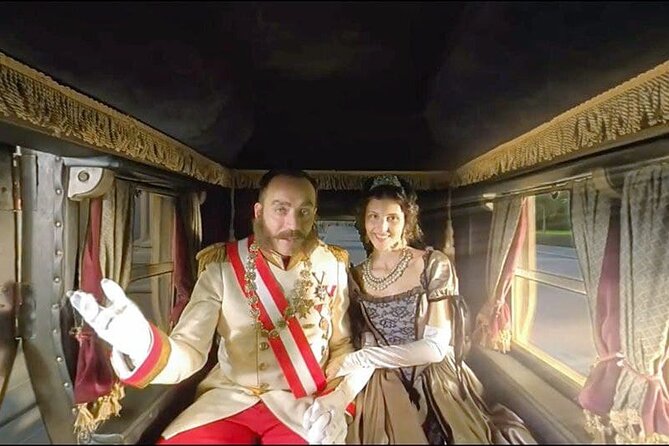
The route then returns toward the Vienna State Opera and Albertinaplatz. The last VR stop takes place in this area. Here, you meet one of Vienna’s best-known emperors and his wife, followed by a private virtual concert inside the opera house.
That closing scene gives the tour a fitting finish. The Opera is one of Vienna’s signature buildings, and a virtual concert offers a way to experience its performance tradition without buying a concert ticket or spending an evening inside the real venue.
The phrase private virtual concert should be understood as part of the headset presentation, not a live performance in the Opera. It is a short theatrical finale, designed to leave you with a sense of the building’s cultural importance.
Once the last segment ends, the activity finishes back at the original meeting point. This makes the tour easy to fit into a day of sightseeing. You do not need to arrange a separate return from an outlying district.
What the audio guide adds, and where to be careful
The audio commentary is a key part of the ride. It explains the monuments as the vehicle moves and supports the VR scenes at the stops. Without it, the route would be mostly a quick look at grand buildings through a window.
The language information needs careful checking. One part of the published material refers to seven audio languages, another says nine, and a Japanese-language booking reportedly provided only German and English. That is a meaningful concern if you do not understand either of those languages well.
I would confirm the available language directly before paying. Do not assume that every language listed in promotional details will be available on every departure.
The historical style appears to be lively and documentary-like rather than formal academic instruction. That is a strength for families, first-time visitors, and anyone who finds dates and dynasties hard to retain. The scenes use actors portraying people from the past, which makes the presentation more memorable than a plain recorded narration.
The same approach may feel light for serious history fans. You get an entertaining outline, not a full account of Austria’s political and cultural development.
Is $32.10 a fair price for one hour?
At $32.10 per person, this is not the cheapest way to see Vienna’s center. You can walk many of these streets for free, and public transportation costs less.
The comparison changes when you value the VR material and the compact route. You are paying for an air-conditioned vehicle, audio commentary, a small group capped at 18 people, and four headset presentations. You also save the energy required to cover several separate areas on foot.
I see the tour as a good value for a short orientation, especially on your first day or during a tight schedule. It is less convincing as your only Vienna sightseeing activity. The ride shows you the outside of major sights, but it does not replace admission to the Hofburg, a museum, Votivkirche, or an actual concert.
The strongest value comes from the unusual format. The VR scenes are not just a gadget added to a standard bus loop. They connect specific people and events with the places outside the windows. For the right audience, that added storytelling makes the price easier to justify.
Who will enjoy this bus tour most?
I would recommend it to you if you want a quick introduction to Vienna and prefer sitting to walking. The air-conditioned shuttle is helpful on a warm day, and the one-hour duration leaves plenty of time for other plans.
It also suits families and visitors who like visual storytelling. The actor-led scenes and 3D views offer a break from conventional audio guides. History becomes something you watch as well as hear.
This tour may work for older family members who do not want a long walking route, provided they are comfortable using a VR headset. The group size of no more than 18 should make the activity less crowded than a large coach tour.
I would choose another format if you want detailed architectural commentary, long photo stops, or access inside the monuments. You should also think twice if language support is essential and cannot be confirmed before booking.
The tour is booked, on average, about 34 days ahead. That suggests planning early may be sensible during popular travel periods, although the supplied information does not promise that every departure sells out.
Practical booking advice
You receive confirmation at booking and use a mobile ticket. The activity starts and ends at Operngasse 4, 1010 Vienna, near Albertinaplatz.
The tour is close to public transportation, and most people can participate. The supplied details do not provide specific information about wheelchair access or other mobility arrangements, so contact Future Bus Tours directly if you need those details.
Cancellation is flexible up to 24 hours before the local start time. You can receive a full refund if you cancel at least a day ahead. Cancellations or changes made less than 24 hours before departure are not accepted for a refund.
Try to arrive ready for the equipment instructions. Since the route includes four headset moments within roughly one hour, a late start or confusion with the device could reduce the time you have to enjoy the presentation.
Should you book Future Bus Tours?
Book it if you want to see many central Vienna landmarks quickly and enjoy an imaginative history lesson. The best reasons are the four VR scenes, the Ringstrasse route, the small air-conditioned vehicle, and the final virtual concert at the Opera.
Skip it if you want a deep architectural tour, substantial time at each monument, or guaranteed commentary in a particular language without confirming first. I would treat this as a smart orientation and a fun supplement to Vienna sightseeing, not as a complete replacement for visiting the city’s interiors.
FAQ
Where does the Vienna VR bus tour begin?
It begins at Operngasse 4, 1010 Vienna, Austria, near Albertinaplatz.
Where does the tour end?
The activity ends back at the original meeting point near Albertinaplatz.
How long does the tour last?
The tour lasts approximately one hour.
How many people can join the tour?
The group size is limited to a maximum of 18 people.
Which landmarks does the bus pass?
The route includes Heldenplatz and the Hofburg entrance, Maria-Theresien-Platz, Rathaus, the Ringstrasse, the Vienna State Opera, Parliament, the University of Vienna, Votivkirche, MuseumsQuartier, Volksgarten, Burgtheater, and Café Landtmann.
How many VR stops are included?
The tour includes four virtual reality stops. The supplied route information identifies Heldenplatz, Rathaus and the Burgtheater area, Votivkirche, and the State Opera area as the VR locations.
Can I cancel for a full refund?
Yes. You can cancel at least 24 hours before the local start time for a full refund. Cancellations or changes made less than 24 hours before the start are not accepted for a refund.
Just added around Vienna
- Private Tour from Vienna to Melk and Dürnstein★ 4.5 · 3 reviews
- Vienna: Johann Strauss 200th birthday anniversary exhibition★ 4.7 · 3 reviews
- Vienna Private Full Day Tour – Tickets to Schönbrunn & Lunch★ 5.0 · 3 reviews
- Private Salzburg Day Trip from Vienna★ 4.0 · 3 reviews
- Vienna: Entry Ticket Belvedere 21 & Contemporary Art★ 4.3 · 3 reviews
- Full-Day Private Trip from Vienna to Budapest★ 4.5 · 3 reviews
- Vienna by Night: Private Evening Food and Drink Tour★ 5.0 · 3 reviews
- 1.5 Hour Cinematic Style Portrait Photoshoot and Tour in Vienna★ 4.5 · 3 reviews
Tours, compared.
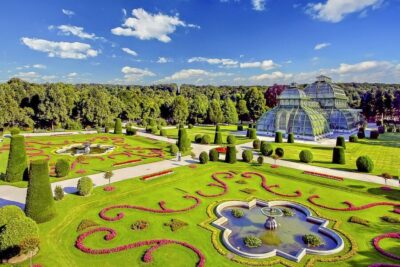
Schönbrunn Palace & Gardens Skip-the-Line Tour
Read our review →
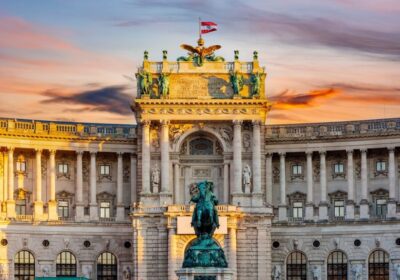
Skip-the-Line Sisi Museum, Hofburg and Gardens Tour
Read our review →
Skip-the-Line Schönbrunn Palace & Gardens Tour
Read our review →
Guided Walking Tour of City Center Highlights
Read our review →
Bus & Schönbrunn Palace Skip-the-Line Guided Tour
Read our review →
Guided Walking Tour of City Highlights & Hidden Gems
Read our review →