Reviewed · TICKETS
Mozarthaus Vienna Admission Ticket
Mozart’s former Vienna apartment is the heart of this visit. From 1784 to 1787, he lived here during one of the most productive periods of his life, writing The Marriage of Figaro and three of his six Haydn Quartets. You can walk through the only Mozart residence in Vienna that remains intact.
I like the three-floor layout, which places the apartment in a wider story about Mozart’s friends, work, and social life. I also like the self-guided audio tour, available in 13 adult languages and eight children’s languages, because you can pause and move at your own speed.
The main thing to understand is that this is not a perfectly restored eighteenth-century home. You will see some period furniture and a great deal of information, but many objects are reproductions, copies, or modern exhibition material. If you need a museum filled with Mozart’s personal belongings, the $19.27 ticket may feel less satisfying.
In This Review
- Key points before you book
- Why this apartment matters in Mozart’s story
- The first floor: Mozart’s surviving apartment
- The second floor: colleagues, opera, and collaboration
- The third floor: Mozart’s personal and social world
- The audio guide and the pace of the visit
- What you actually see, and what you do not
- Price, timing, and practical value
- Who will get the most from Mozarthaus Vienna?
- Should you book the Mozarthaus ticket?
- FAQ
- Where is Mozarthaus Vienna located?
- How much does admission cost?
- How long does the visit take?
- What are the opening hours?
- Is the ticket available on a mobile device?
- Is an audio guide included?
- How many audio guide languages are available?
- What is the main historic room at Mozarthaus Vienna?
- Is hotel pickup included?
- Can I cancel the ticket for a refund?
Key points before you book
- Mozart’s largest Vienna home: See the apartment he occupied from 1784 to 1787, the most elegant and expensive home he ever rented.
- Three floors, three angles on Mozart: Learn about his personal life, musical colleagues, and domestic setting in separate sections.
- The Marriage of Figaro connection: This is the place where Mozart composed one of his best-known operas.
- Audio guide included: Choose from 13 adult languages or eight children’s languages, then explore at your own pace.
- Allow one to two hours: An hour works for a focused visit, while two hours gives you time to listen carefully and examine the displays.
- Near St. Stephen’s Cathedral: The house is close to one of Vienna’s main sights, making it easy to pair with a central walking day.
Why this apartment matters in Mozart’s story
Mozart spent several years in Vienna, but most of the places connected with him have disappeared or changed beyond recognition. The Mozarthaus apartment is unusual because the building and residence remain intact. You are not simply looking at a plaque marking an old address. You are entering the setting where Mozart lived and worked during a major creative peak.
The dates matter. Mozart lived here from 1784 to 1787, after moving into Vienna’s demanding musical and social world. During these years, he wrote The Marriage of Figaro, along with three of the six string quartets dedicated to Joseph Haydn. The apartment therefore gives you a useful physical link between Mozart’s daily surroundings and music that still fills concert halls.
I find that connection more valuable than a room full of unrelated memorabilia. Even when an object is a copy, the address itself carries weight. You are standing in the rooms that supported Mozart’s professional life, family life, entertaining, and composition.
The setting is also close to St. Stephen’s Cathedral. A walk between the cathedral and Mozarthaus gives you a strong sense of central Vienna, and the route can easily fit into a day of sightseeing without a special trip across town.
A few more Vienna tours worth weighing up
- Vienna: Classic Ensemble Vienna in St. Peter’s Church Ticket
★ 4.7 · 4,819 reviews - Vienna Kunsthistorisches Museum Day Admission Ticket
★ 4.6 · 3,690 reviews - Vienna: Tickets for Mozarthaus Vienna with Audio Guide
★ 4.2 · 2,344 reviews
The first floor: Mozart’s surviving apartment
Begin with the apartment on the first floor. This is the centerpiece of Mozarthaus Vienna, and it is the section to prioritize if your time is short.
The residence was the largest, most elegant, and most expensive apartment Mozart ever occupied. That detail helps correct the familiar image of Mozart as a permanently struggling young genius. At this point in his life, he had reached a level of success that allowed him to live in a substantial home in central Vienna.
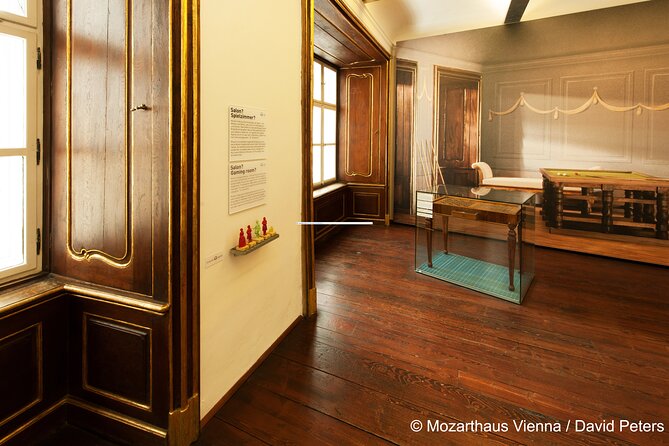
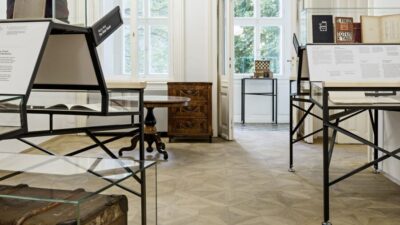
Do not expect every room to look exactly as it did when Mozart lived there. The displays do not recreate the entire apartment with original furniture, and the number of authentic personal objects is limited. Some rooms can feel more like historical spaces within a museum than fully furnished domestic interiors.
That limitation is worth knowing before you arrive. I still find the rooms meaningful because the apartment offers something a display case cannot: a sense of scale and setting. You can imagine Mozart moving through the home, receiving visitors, and working in the same rooms connected with his most important Vienna years.
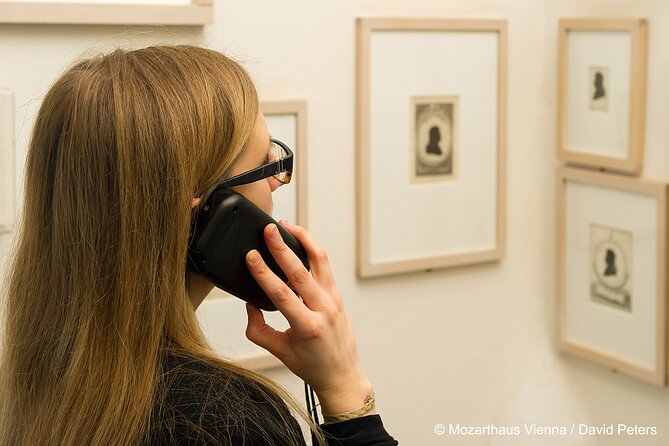
The audio guide adds useful context here. It points out the significance of the apartment and explains how the domestic setting fits Mozart’s career. You can stop for as long as you like, replay information, and take the visit at a comfortable pace rather than keeping up with a scheduled group.
Photography inside may be restricted. One particularly memorable way to approach the apartment is to look out through the windows and consider the streets and views Mozart and his visitors would have known. That simple pause can make the visit feel less like a collection of panels and more like a place connected to an actual life.
The second floor: colleagues, opera, and collaboration
The second floor shifts from Mozart’s rooms to the people and musical partnerships around him in Vienna. This section examines his main composer and musical colleagues, giving you a better sense of the professional circle in which his work developed.
The most important relationship here is with Lorenzo da Ponte, the librettist who worked with Mozart on The Marriage of Figaro and Don Giovanni. Mozart’s operas did not emerge from music alone. They depended on words, theater, singers, patrons, and the practical work of getting a production onto the stage.
I like this floor because it broadens the story beyond the lone-genius version of Mozart. You get a clearer picture of cooperation and creative exchange. The displays help connect the apartment to the operas, rather than treating the home as a frozen shrine.
Some material is contemporary in presentation, including video clips and performance extracts. That may appeal to you if you want sound and stage context instead of only text and documents. It also helps if you are not deeply familiar with the operas, since the music gives the historical material a more immediate connection.
The amount of original material is limited. You may see original manuscript sections or important documents, but you should not expect a large collection of Mozart’s personal possessions. The appeal here is the explanation of his working world, supported by selected objects and media.
The third floor: Mozart’s personal and social world
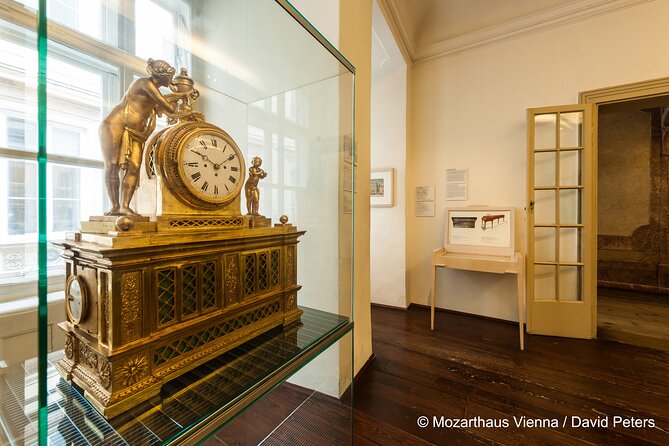
The third floor looks at Mozart’s personal and social situation in Vienna. It starts from his excitement about his new life in the city and places the composer in the world around him.
This part helps explain why Vienna was so important to Mozart’s career. The city offered audiences, contacts, performers, patrons, and competition. Success depended not only on talent but also on social connections and the ability to work within a complicated musical culture.
The displays also include material about the people who influenced Mozart’s life. You may find portraits and information about women connected with him, along with details that add human scale to the familiar musical legend. The result is a more personal picture of Mozart, though the museum remains an exhibition rather than a fully reconstructed home.
If you are mainly interested in manuscripts and composition, you might spend less time on this floor. If you want to understand Mozart as a person living in Vienna, it is worth listening to the audio guide carefully here.
The three floors work best together. The apartment shows where Mozart lived, the second floor explains his professional connections, and the third examines his personal setting. Taken in that order, the visit builds from place to people to the wider life surrounding his music.
A different side of Vienna on the same trip:
- Vienna: Vivaldi’s Four Seasons Concert in Karlskirche
★ 4.7 · 14,951 reviews - Vienna: Spanish Riding School Training
★ 3.9 · 9,281 reviews - Vienna: Skip-the-cashier-desk-line Giant Ferris Wheel Ride
★ 4.5 · 7,859 reviews - Vienna: Schönbrunn Palace & Gardens Skip-the-Line Tour
★ 4.7 · 7,739 reviews
The audio guide and the pace of the visit
The audio guide is included with admission and is available in 13 languages for adults and eight for children. That is a useful feature for an international audience, especially since the exhibition covers social and musical details that are easy to skim past when you rely only on labels.
You do not need to bring your own headphones. The audio tour is designed for independent use, and you can stop, continue, or linger according to your interests. I would plan closer to two hours if you want to hear most of the commentary and examine the documents.
An hour is enough for a brisk visit. You can focus on Mozart’s apartment, listen to the main sections, and move through the remaining floors without stopping at every display. Two hours works better for music lovers, families using the children’s audio guide, and anyone who wants time with the manuscripts and performance clips.
This is not a guided walking tour with a named live guide. The format is a museum visit with an audio guide, so you should expect to manage your own route. That makes the experience flexible, but it also means the quality of your visit depends on how much time you give the material.
The maximum group size is listed as 10 people, though the self-guided format means you are not tied to a group leader’s pace. Confirmation is provided when you book, and the ticket is mobile, which keeps the arrival process simple.
What you actually see, and what you do not
The strongest parts are the apartment, the connection with The Marriage of Figaro, the material on da Ponte, and the explanation of Mozart’s Vienna years. Original manuscript material, including part of Mozart’s Requiem, can be especially rewarding for anyone who wants a direct link to his hand and working process.
At the same time, the museum does not present a room-by-room reconstruction filled with Mozart’s own furniture. You will see relatively few objects that belonged directly to him. Copies of documents and modern interpretive material make up an important part of the visit.
I consider that a fair trade if you arrive for context and place. The museum is strongest as a portrait of Mozart in Vienna, not as a treasure vault. If your main goal is to see a large number of personal artifacts, you may leave wishing for more.
The presentation can also feel uneven. The museum covers a lot across three floors, and some sections may seem more organized than others. The audio guide helps give the visit structure, but it is still wise to read the basic floor plan or follow the intended sequence rather than wandering without a plan.
Price, timing, and practical value
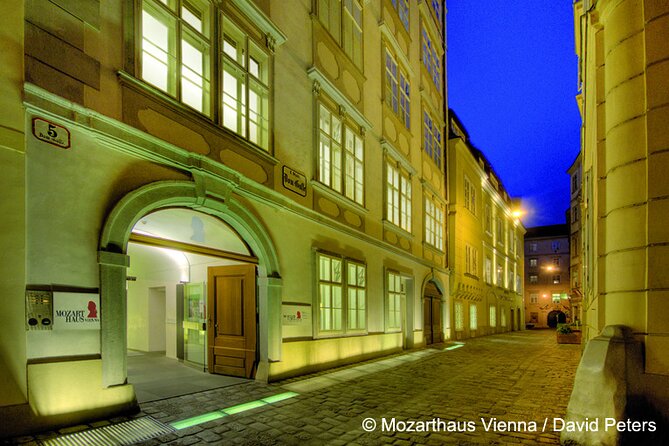
At $19.27 per person, the ticket is reasonably priced for a central Vienna museum that can occupy one to two hours. The value improves if you already plan to visit St. Stephen’s Cathedral or explore the surrounding center, since Mozarthaus is easy to add to that route.
The price is harder to justify if you expect a concert, a fully restored apartment, or a large collection of original Mozart belongings. This admission ticket covers the exhibition and audio guide. Food, drinks, and hotel transportation are not included.
Opening hours are 10 a.m. to 7 p.m. daily through the stated 2025 and 2026 periods. That broad window gives you room to fit the museum around a morning cathedral visit, an afternoon walk, or an evening meal.
Because the visit is self-paced, you can make it short when your schedule is tight. You can also linger for two hours without feeling rushed. I would avoid arriving at the last possible moment if you want to hear the full audio presentation.
The ticket is free to cancel up to 24 hours before the experience start time for a full refund. Cancellations or changes made less than 24 hours in advance are not accepted for a refund, and the cut-off follows Vienna local time.
Who will get the most from Mozarthaus Vienna?
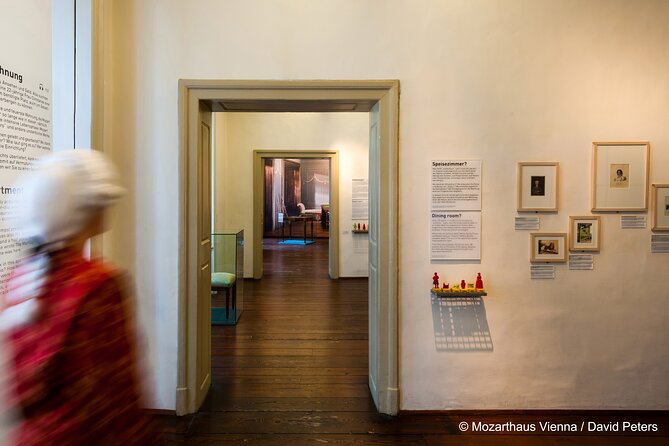
I would recommend this for music lovers, opera fans, and anyone who enjoys visiting places tied directly to artists. It is especially worthwhile if The Marriage of Figaro, Don Giovanni, or Mozart’s chamber music already means something to you.
It also works for a first-time Vienna visitor who wants a compact cultural stop in the center. The museum does not require a full day, and its location near St. Stephen’s Cathedral makes the surrounding walk part of the experience.
Families can benefit from the children’s audio guide, available in eight languages. The independent format lets you move on when younger children lose interest, though the amount of reading and listening may still be demanding for very young visitors.
You should think twice if you dislike museums built around copies, explanatory panels, and a small number of original objects. The apartment is authentic as a place, but the rooms are not a complete reconstruction of Mozart’s household.
Most people can participate, and service animals are allowed. The museum is near public transportation, but the supplied information does not specify every access detail, so you should confirm any particular mobility needs before booking.
Should you book the Mozarthaus ticket?
Book it if you want to stand in Mozart’s Vienna home and connect his music with the rooms, colleagues, and social world that shaped his career. The apartment and the story of the 1784 to 1787 period provide the strongest reasons to go.
I would pair it with a visit to St. Stephen’s Cathedral and allow two hours if you are a serious Mozart fan. If you have only one hour, make the first-floor apartment your priority, then choose the second or third floor according to your interests.
Skip it if you expect an ornate, fully furnished residence or a concert included with admission. For the right visitor, the $19.27 price buys a thoughtful look at Mozart’s most important Vienna home. For someone seeking original possessions above all else, the limited artifacts may make another museum a better choice.
FAQ
Where is Mozarthaus Vienna located?
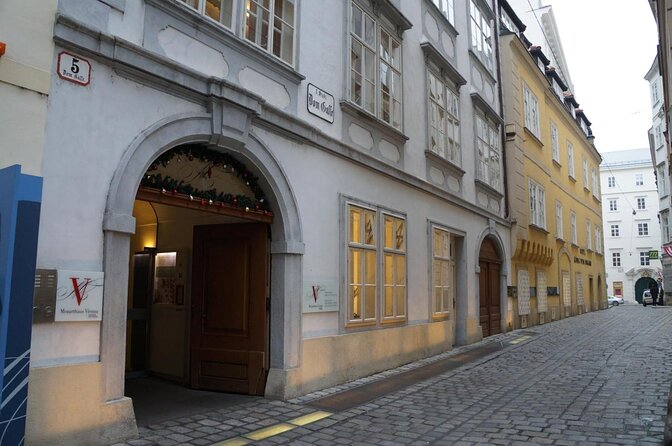
Mozarthaus Vienna is in Vienna, Austria, near St. Stephen’s Cathedral and public transportation.
How much does admission cost?
The listed price is $19.27 per person.
How long does the visit take?
The visit takes approximately one to two hours, depending on how much time you spend with the audio guide and displays.
What are the opening hours?
Mozarthaus Vienna is open daily from 10 a.m. to 7 p.m. during the stated 2024, 2025, and 2026 operating periods.
Is the ticket available on a mobile device?
Yes. The admission ticket is provided as a mobile ticket.
Is an audio guide included?
Yes. An audio guide is included with admission.
How many audio guide languages are available?
The adult audio guide is available in 13 languages. A children’s audio guide is available in eight languages.
What is the main historic room at Mozarthaus Vienna?
Mozart’s apartment on the first floor is the main highlight. He lived there from 1784 to 1787 and wrote The Marriage of Figaro there.
Is hotel pickup included?
No. Hotel pickup and drop-off are not included. Food and drinks are also not included.
Can I cancel the ticket for a refund?
You can cancel up to 24 hours before the experience start time for a full refund. Cancellations or changes made less than 24 hours before the start time are not accepted for a refund.
Just added around Vienna
- Private Tour from Vienna to Melk and Dürnstein★ 4.5 · 3 reviews
- Vienna: Johann Strauss 200th birthday anniversary exhibition★ 4.7 · 3 reviews
- Vienna Private Full Day Tour – Tickets to Schönbrunn & Lunch★ 5.0 · 3 reviews
- Private Salzburg Day Trip from Vienna★ 4.0 · 3 reviews
- Vienna: Entry Ticket Belvedere 21 & Contemporary Art★ 4.3 · 3 reviews
- Full-Day Private Trip from Vienna to Budapest★ 4.5 · 3 reviews
- Vienna by Night: Private Evening Food and Drink Tour★ 5.0 · 3 reviews
- Private Tour of Viennese Art in the Leopold Museum: Klimt, Schiele, Kokoschka★ 5.0 · 3 reviews
Tickets, compared.
Classic Ensemble Vienna in St. Peter’s Church Ticket
Read our review →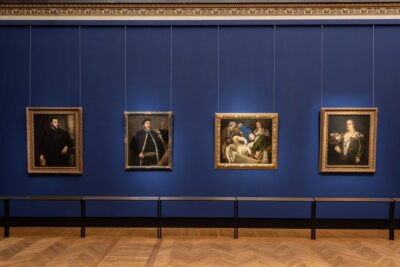
Vienna Kunsthistorisches Museum Day Admission Ticket
Read our review →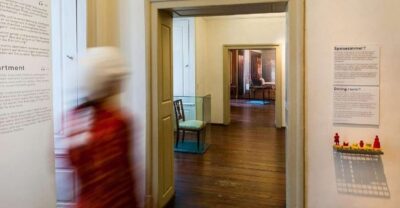
Tickets for Mozarthaus Vienna with Audio Guide
Read our review →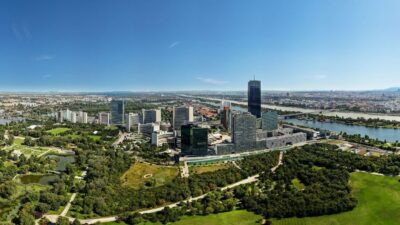
Skip-the-Line Entrance Ticket to the Danube Tower
Read our review →
St. Stephen’s Cathedral & Dom Museum Wien Tickets
Read our review →