Reviewed · TOURS
Sightseeing Tour With Oldtimer Cabrio Car (80 min)
Vienna’s grand center is made for a slow, stylish ride, and this private oldtimer convertible tour gives you a quick look at the city without the effort of a long walking circuit. You pass the Hofburg, Opera, Stephansdom, Karlskirche, Naschmarkt, museums, cafés, and other landmarks while a licensed driver-guide explains what you are seeing.
I like two things right away: the car makes the sightseeing feel special, and the price of $44 per group of up to seven can be excellent value if you fill the seats. I also like the personal format, since your group rides alone rather than joining a large bus. The main caution is timing: the advertised duration is about 80 minutes, but some departures have lasted closer to one hour, with traffic affecting the route and schedule.
In This Review
- Key points to know before booking
- Why a vintage convertible works well in Vienna
- Starting at Albertinaplatz beside Vienna’s Opera district
- Hofburg, Michaelerplatz, and the Spanish Riding School
- Maria Theresa Square and Vienna’s paired museums
- Parliament, Rathaus, and the University of Vienna
- Stephansdom, Mozart, and the old city center
- Karlskirche, Schwarzenbergplatz, and the Soviet War Memorial
- Opera, Albertina, Sacher, and Naschmarkt
- Urania, Kursalon, and the Strauss connection
- What the guide adds to the ride
- Comfort, weather, and the convertible question
- Is $44 good value for a private 80-minute ride?
- Timing, meeting details, and cancellation
- Who should book this Vienna oldtimer tour?
- Should you book it?
- FAQ
- Where does the tour start and finish?
- How long does the tour last?
- How many people can join the private tour?
- Is a guide included?
- Does the tour include entry to the palaces, museums, or churches?
- Can I cancel for a full refund?
Key points to know before booking
- You see a wide sweep of central Vienna: The route passes palaces, churches, museums, monuments, cafés, and major streets in one compact ride.
- The price is per group: Up to seven people can share the private vehicle, making the cost especially attractive for families or friends traveling together.
- A licensed guide drives and narrates: Guide Allen is one named guide associated with the experience, and the commentary is intended to be live rather than prerecorded.
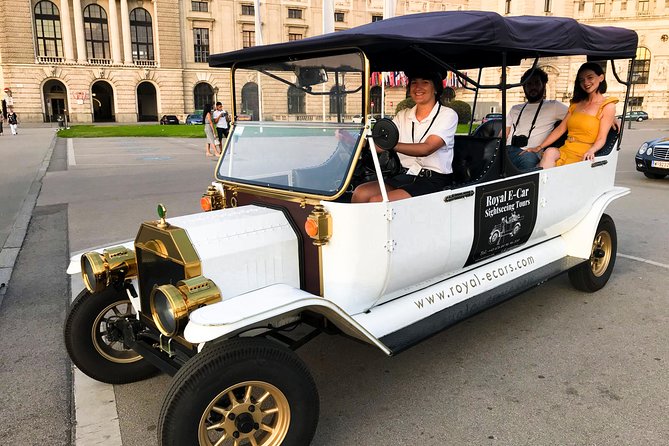
- The car is part of the attraction: This is not simply transport between sights. The vintage convertible gives the outing a classic Vienna feel.
- Sound and visibility can vary: One car had limited viewing and weak audio, so ask the guide to speak clearly and sit where you can hear best.
- Allow some schedule flexibility: The planned ride is 80 minutes, but traffic and operating conditions can shorten the actual time.
Why a vintage convertible works well in Vienna
Vienna’s central sights are close together, but they are spread across a large ceremonial district. On foot, you can cover them, though your attention will shift between maps, traffic crossings, and crowded sidewalks. From the oldtimer, you can keep moving while looking up at façades, monuments, domes, and palace gates.
I see this as an orientation ride rather than a replacement for visiting Vienna’s museums and palaces. You will pass the major sights, hear useful background, and learn which places deserve a return visit. That is a smart way to begin a first day in the city, especially if you want to get your bearings before choosing where to spend your limited museum time.
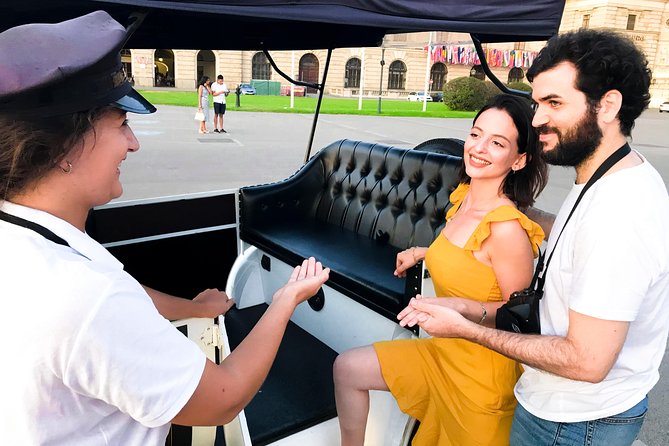
The private setup matters. You are not waiting for strangers or following a fixed group on foot. Your driver-guide can keep the ride personal, and your own group can enjoy the novelty of the car together. The vehicle holds up to seven passengers, so this format works particularly well for a family, two couples, or a small group of friends.
The convertible also changes the mood. Vienna can feel formal and grand, with imperial buildings and broad avenues dominating the center. An old-fashioned car softens that formality and turns a standard city tour into a small occasion. In cold weather, the operator has provided blankets, and one departure included sparkling wine, though those touches should be viewed as possible extras rather than guaranteed features.
Other Vienna tours people book alongside this one:
- Vienna: Vivaldi’s Four Seasons Concert in Karlskirche
★ 4.7 · 14,951 reviews - Vienna: Spanish Riding School Training
★ 3.9 · 9,281 reviews - Vienna: Skip-the-cashier-desk-line Giant Ferris Wheel Ride
★ 4.5 · 7,859 reviews
Starting at Albertinaplatz beside Vienna’s Opera district
The meeting point is Albertinapl. 2 in the first district, close to the Albertina and the Vienna State Opera. This is a useful starting area because you are already near some of the city’s most important central sights, and it is served by public transportation.
Beginning here puts you straight into Vienna’s grandest core. The Albertina occupies a former Habsburg residential setting, while the Opera is one of the city’s best-known cultural buildings. You may not stop for a visit, so treat these first sights as visual introductions and note where you might return later.
Pickup is offered, but the information provided does not spell out every pickup area or the exact conditions. Confirm the meeting arrangement when booking, and allow time to reach Albertinaplatz if you are making your own way there. The activity ends back at the meeting point, which is convenient for continuing on foot or heading elsewhere by transit.
Hofburg, Michaelerplatz, and the Spanish Riding School
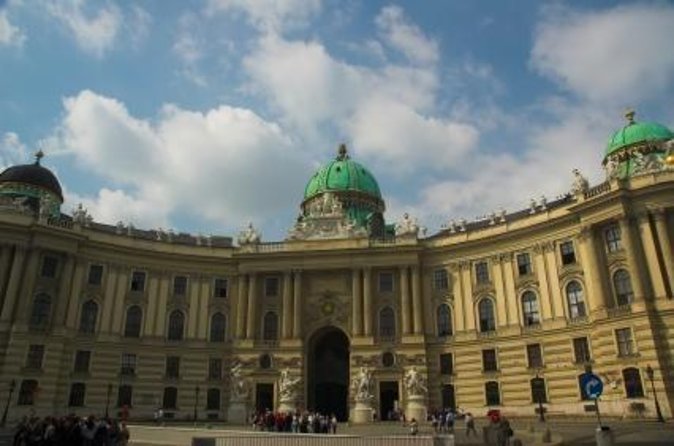
The Hofburg is one of the central sights on the route, and it gives the tour much of its imperial character. From the car, you can see the broad palace complex and the surrounding ceremonial spaces without committing to an indoor visit.
The nearby Michaelerplatz and Spanish Riding School add another layer to the same area. The riding school is closely linked with Vienna’s Lipizzaner tradition, while the square offers one of the city’s most striking architectural views. Your guide can place these buildings in context as you pass, but remember that this is a drive-by experience. You will not be attending a performance or entering the palace as part of the stated tour.
The National Library is also included among the passing points. Its grand exterior helps complete the picture of Vienna as a former imperial capital. If you are interested in architecture, this stretch of the route is one of the strongest parts of the ride because several major institutions appear close together.
Maria Theresa Square and Vienna’s paired museums
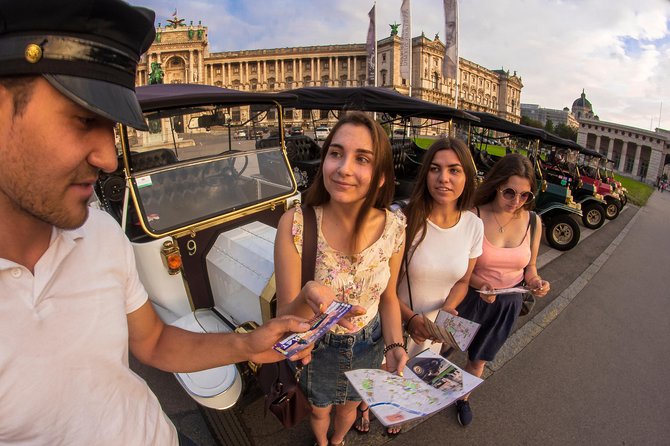
The Maria Theresia Monument sits between the Kunsthistorisches Museum and the Naturhistorisches Museum. These matching museum buildings make a dramatic pair, and the open space around them gives you a good chance to appreciate their scale from the car.
The Kunsthistorisches Museum is Vienna’s major art museum, while the Naturhistorisches Museum focuses on natural history. The tour does not include admission, but passing between them helps you decide if either belongs on your own itinerary. I would pay attention to the guide’s comments here, since a short explanation can help separate the two imposing buildings when you first see them.
The route also includes MuseumsQuartier. This district brings a more modern cultural note after the imperial architecture around the Hofburg and Maria Theresia Square. The contrast is useful: Vienna is not only palace façades and formal monuments, and this part of the ride hints at the city’s wider arts scene without requiring a long detour.
A different side of Vienna on the same trip:
- Vienna: Schönbrunn Palace & Gardens Skip-the-Line Tour
★ 4.7 · 7,739 reviews - Vienna: Light of Creation Votive Church Immersive Light Show
★ 4.8 · 6,779 reviews - Vienna Spanish Riding School Guided Tour
★ 4.7 · 6,765 reviews - Vienna: Classical Concert in the World-Famous Musikverein
★ 4.6 · 6,673 reviews
Parliament, Rathaus, and the University of Vienna
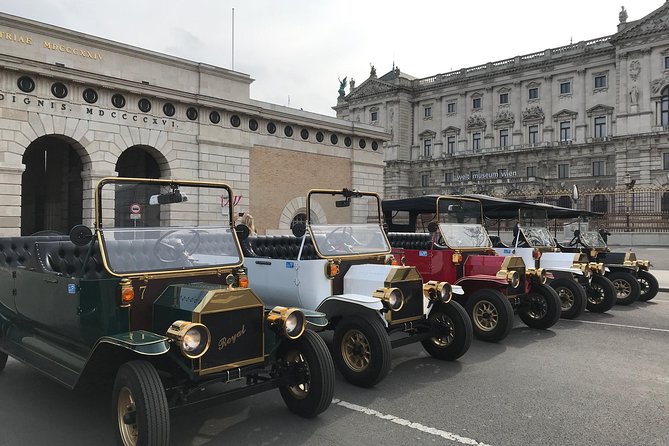
The Parliament, City Hall, and University of Vienna place you along one of Vienna’s most impressive civic corridors. These buildings are best appreciated from the street, where their scale and ornate fronts can be seen together.
The Rathaus, or City Hall, is particularly easy to recognize, with its tall central tower and elaborate Gothic-inspired design. Parliament represents the political life of the country, while the university adds an academic presence to the same broad urban setting. Since these are passing points, you will want to keep your camera ready rather than expect a long stop.
The Votive Church follows this civic stretch. Its twin towers and dramatic Gothic form are easy to spot, and it provides a strong visual change from the palace and museum buildings. The advantage of seeing so many places in one ride is clear here: you cover districts that would otherwise require several separate walks.
Stephansdom, Mozart, and the old city center
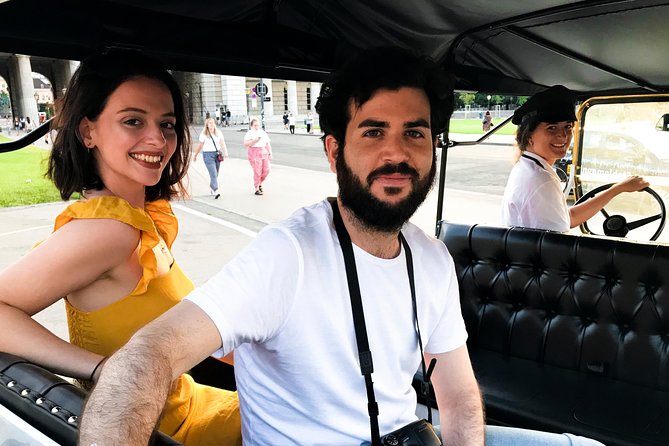
Stephansdom is one of Vienna’s essential city-center landmarks. The cathedral’s roof and tower are among the most familiar sights in the city, and seeing it from the old streets gives you a useful sense of how tightly packed the historic center is.
A Mozart sculpture is also listed among the passing points. The reference to Mozart fits Vienna’s musical identity, but the tour gives you only a brief look rather than a concert or museum visit. The same is true of the Johann Strauss sculpture later on the route. These stops are visual markers, not full cultural activities.
The car offers an advantage in this area because walking streets can be busy and confusing during a first visit. At the same time, the vehicle limits how long you can study each façade. If Stephansdom is high on your list, use the tour to locate it, then return on foot when you have time to look around properly.
Karlskirche, Schwarzenbergplatz, and the Soviet War Memorial
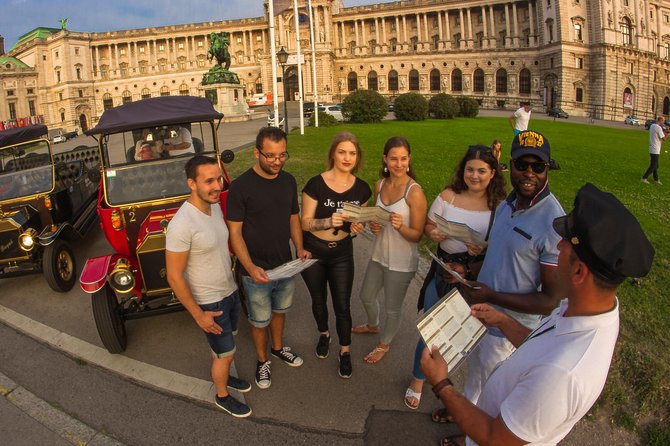
Karlskirche, also called St. Charles Church, is another major architectural highlight. Its large dome and distinctive columns make it easy to identify, and it is one of the most memorable church exteriors on the route.
The tour also passes Schwarzenbergplatz and its fountain, followed by the Soviet War Memorial. These sights create a compact lesson in Vienna’s layered public spaces. You move from a grand baroque church to a broad square, then to a monument tied to the city’s more recent wartime past.
Café Schwarzenberg is included as another passing point. Vienna’s coffeehouse culture is part of the city’s daily character, not just a sightseeing theme, and recognizing a traditional café from the car can help you choose a place for a later pause. You will not have time to settle in for coffee during the ride, so make a note of it and return independently.
Opera, Albertina, Sacher, and Naschmarkt
The State Opera and Albertina appear near the beginning or during the central portion of the route, depending on traffic and the driver’s path. Together they show two sides of Vienna’s cultural life: performance and visual art.
Hotel and Café Sacher add a famous culinary address to the ride. This is another place where the car provides orientation rather than a full activity. If you want the classic café experience, you will need to come back on your own and allow time beyond the 80-minute circuit.
Naschmarkt gives the route a more everyday feel. It is a well-known market district, and its food stalls and produce stands offer a contrast to the formal palaces and monuments. The tour passes it, and the itinerary lists it more than once, which suggests it may appear at different points in the driving circuit. Do not expect a market visit or food tasting unless that is specifically arranged separately.
Urania, Kursalon, and the Strauss connection
The Urania is another recognizable Vienna landmark on the route. Its distinctive building sits near the canal area and helps connect the inner city with the eastern side of the central sightseeing circuit.
Kursalon and the Johann Strauss sculpture bring the focus back to Vienna’s music tradition. These are useful sights to see from a car because they are spread into the broader city center, and reaching them on foot from the Hofburg or Stephansdom would take extra time.
This section is also a good reminder that the tour is designed to show range. You see imperial buildings, churches, museums, cafés, markets, monuments, and music-related places in one outing. The tradeoff is depth. You get a clear map of the city’s highlights, but only a quick look at each one.
What the guide adds to the ride
The driver-guide is a professional licensed guide, and live narration is a central part of the experience. The strongest feedback about the tour focuses on the guide’s friendly manner, clear explanations, and ability to make the ride informative as well as pleasant. Allen is specifically named as a wonderful guide on one departure.
You should expect commentary while the car is moving, not a long lecture at every landmark. That style suits the route because the sights come quickly. A good guide helps you notice details you could miss from the back seat, gives you useful addresses, and points out places worth revisiting.
Sound is the one practical weakness to keep in mind. One passenger found the car’s viewing area limited and said the guide needed a speaker, while another suggested a microphone. If you cannot hear clearly, say so early and ask the guide to repeat important points. Your seat may also affect how much of the city you can see, so move or adjust your position if the arrangement allows it.
Comfort, weather, and the convertible question
The oldtimer is clean and comfortable according to the information available, but a vintage car is not the same as a modern sightseeing bus. Space, sightlines, and audio may be less consistent. The exact car and whether the roof is open can affect the experience.
Cold weather deserves attention. A morning during Christmas week was described as very cold, and the operator supplied two blankets. That was a thoughtful touch, but you should still dress warmly because the car may expose you to the air more than a closed vehicle would.
The promise of a convertible raises an important point: an open roof would improve visibility and make the ride feel more classic, but weather and operating conditions may determine what you actually experience. The available information does not guarantee an open-top ride on every departure, so ask if that feature matters to you.
Is $44 good value for a private 80-minute ride?
At $44 per group of up to seven people, the value can be strong. A full group pays less per person than a private experience priced individually, and you receive a dedicated car and guide rather than a seat on a large shared circuit.
For one or two people, the price is less of a bargain on a per-person basis, though the private format still has appeal. You are paying for the car, the guide, the convenience, and the chance to see a wide area without arranging several separate walks or transit rides.
The value depends on your goal. If you want interior access to the Hofburg, museums, or churches, this tour will not replace admission tickets. If you want a fast city overview with live commentary and a memorable vehicle, it gives you a lot in a short period.
The rating is 4.6 out of 5, with 93 percent recommending it, based on 14 ratings. That is a small sample, so I would treat it as encouraging rather than final proof. The consistent strengths are the friendly guide, the informative narration, the pleasant ride, and the novelty of the car. The recurring concerns are audio, limited viewing in at least one vehicle, and ride length.
Timing, meeting details, and cancellation
The stated duration is approximately 1 hour and 20 minutes. Traffic is included in the operating estimate, and actual time has sometimes been closer to one hour. If you have a train, restaurant reservation, museum entry, or concert afterward, leave a generous buffer.
The tour starts at Albertinaplatz 2 in Vienna’s first district and returns there. Pickup is offered, though the exact pickup terms are not specified. Confirmation arrives at booking, the activity is near public transportation, and service animals are allowed. Most people can participate, but the provided details do not explain vehicle-specific mobility arrangements, so ask before booking if you need that information.
Free cancellation is available when you cancel at least 24 hours before the local start time. Cancellations or changes within 24 hours are not accepted for a refund.
Who should book this Vienna oldtimer tour?
I would choose this ride for first-time visitors who want a clear overview before deciding how to spend the rest of their stay. It also suits families and small groups who want to share one private experience, older visitors who prefer not to walk between every landmark, and anyone drawn to classic cars.
It is a good fit for a short Vienna visit because the route covers so many central sights. It can also work well on a cold day if the operator provides blankets, though you should not assume the car will feel as sheltered as a bus.
I would hesitate if you need detailed time at each attraction, guaranteed open-air viewing, amplified narration, or a precisely timed 80-minute ride. For those priorities, walking tours or indoor visits may serve you better. The oldtimer ride is about atmosphere, orientation, and a broad sweep of central Vienna.
Should you book it?
Book this tour if you want a private city introduction with character, especially when traveling with enough people to share the $44 group price. The route covers nearly every major central landmark you will want to identify, and a good licensed guide can turn a quick circuit into a useful plan for the rest of your stay.
Before confirming, ask about the exact car, roof position, audio setup, and expected duration. If you can accept a possible one-hour ride instead of a full 80 minutes, this is a pleasant and efficient way to see Vienna’s grand center without spending your first day on a map.
FAQ
Where does the tour start and finish?
The tour starts at Albertinapl. 2, 1010 Vienna, Austria, and ends back at the same meeting point.
How long does the tour last?
The stated duration is approximately 1 hour and 20 minutes. Actual departures have sometimes lasted about one hour, and traffic can affect the timing.
How many people can join the private tour?
The private tour is for up to seven passengers, and only your group participates.
Is a guide included?
Yes. A professional licensed driver-guide leads the ride and provides live narration. Guide Allen is one guide associated with the experience.
Does the tour include entry to the palaces, museums, or churches?
No entrance is specified. The route passes sights including the Hofburg, Kunsthistorisches Museum, Naturhistorisches Museum, Spanish Riding School, Stephansdom, and Karlskirche.
Can I cancel for a full refund?
Yes, if you cancel at least 24 hours before the experience start time. Cancellations or changes made within 24 hours are not refunded.
Just added around Vienna
- Private Tour from Vienna to Melk and Dürnstein★ 4.5 · 3 reviews
- Vienna: Johann Strauss 200th birthday anniversary exhibition★ 4.7 · 3 reviews
- Vienna Private Full Day Tour – Tickets to Schönbrunn & Lunch★ 5.0 · 3 reviews
- Private Salzburg Day Trip from Vienna★ 4.0 · 3 reviews
- Vienna: Entry Ticket Belvedere 21 & Contemporary Art★ 4.3 · 3 reviews
- Full-Day Private Trip from Vienna to Budapest★ 4.5 · 3 reviews
- Vienna by Night: Private Evening Food and Drink Tour★ 5.0 · 3 reviews
- Semi-Private Tour: Central Europe &Balkans from Vienna to Athens★ 5.0 · 3 reviews
Tours, compared.
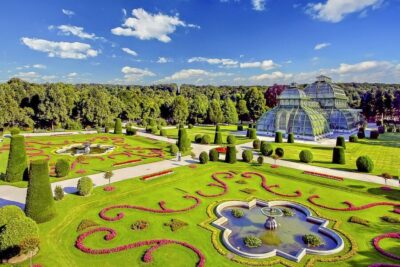
Schönbrunn Palace & Gardens Skip-the-Line Tour
Read our review →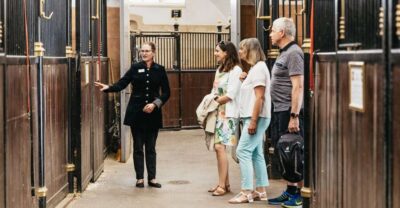
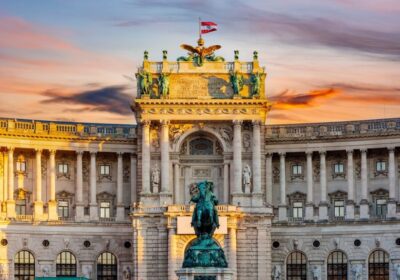
Skip-the-Line Sisi Museum, Hofburg and Gardens Tour
Read our review →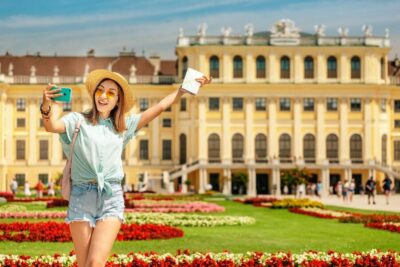
Skip-the-Line Schönbrunn Palace & Gardens Tour
Read our review →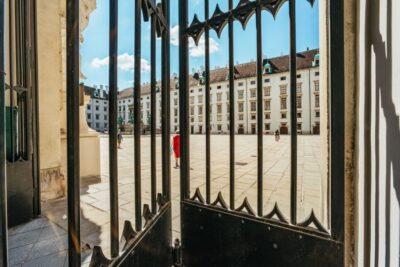
Guided Walking Tour of City Center Highlights
Read our review →
Bus & Schönbrunn Palace Skip-the-Line Guided Tour
Read our review →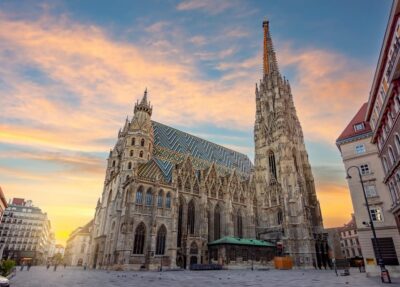
Guided Walking Tour of City Highlights & Hidden Gems
Read our review →