Reviewed · TOURS
Small Group Tour; Central Europe & the Balkans – Vienna to Tirana
This journey crosses eight countries in 14 days, moving from Vienna’s grand boulevards to Tirana’s lively streets by way of wine towns, Danube cities, Ottoman bazaars, medieval fortresses, and Balkan mountain roads. It is a broad first look at Central Europe and the western Balkans, not a slow holiday in any one place.
I like the way the route mixes famous sights, such as Budapest’s Buda Castle and Mostar’s Old Bridge, with less expected stops like Rust, Subotica, Gjakova, and Mrizi i Zanave. I also like the small-group format, private transport, included breakfasts, and hotel-to-hotel service. The main consideration is pace: several days involve long drives and brief visits, and the advertised group size needs clarification because some details say eight people while the additional information allows up to 10.
In This Review
- Key points to know
- Vienna to Rust: a gentle start in Burgenland
- Bratislava’s old town and castle views
- Győr and the road to Budapest
- Budapest in a single busy day
- Subotica and Novi Sad: Austro-Hungarian Serbia
- Sremski Karlovci and Serbian wine country
- Belgrade, Zvornik, and the long move south
- Sarajevo and Mostar: history in plain view
- Kotor and Budva on the Montenegrin coast
- Shkodër and the Albanian border
- Mrizi i Zanave and Prizren’s riverside old town
- Gjakova, Deçan, and Rahovec
- Kruja and arrival in Tirana
- What the $4,881 price includes
- Who should book this route
- Should you book Small Group Tour, Central Europe and the Balkans?
- FAQ
- How long is the tour from Vienna to Tirana?
- What time does the tour begin?
- Which countries does the route visit?
- Is hotel pickup included?
- What type of accommodation is provided?
- How many people can join the tour?
- Are meals included?
- Are entrance tickets included?
- Is travel insurance included?
- Can the booking be canceled or changed?
Key points to know
- Eight countries in 14 days: Austria, Slovakia, Hungary, Serbia, Bosnia and Herzegovina, Montenegro, Albania, and Kosovo all appear on the route.
- Private transport from Vienna to Tirana: Hotel pickup in Vienna and drop-off in Tirana make this a useful one-way trip for a larger regional holiday.
- Strong UNESCO and heritage stops: Buda Castle, Mostar’s Old Bridge, Kotor, and Kosovo’s Dečani Monastery anchor the sightseeing.
- Two nights in Kosovo: Prizren, Gjakova, Deçan, and Rahovec give you more than a quick capital-city visit.
- Food and wine are part of the route: Serbian wine country, Rahovec vineyards, Hungarian dishes, and an Albanian farm meal add local flavor.
- A fast-moving schedule: Most stops last one to three hours, so you should be comfortable with walking, early starts, border crossings, and limited free time.
Vienna to Rust: a gentle start in Burgenland
Your tour begins with pickup at your Vienna hotel at 11 a.m. Vienna itself is not part of the guided sightseeing, so plan to explore the Austrian capital before this journey starts. That arrangement works well if Vienna is already part of your holiday, but it means you should not expect a full Vienna tour within the 14 days.
The first drive heads southeast toward Rust in Burgenland. This is a pleasant opening day because the route quickly trades imperial city streets for rolling vineyards and views toward Lake Neusiedl, a UNESCO World Heritage area. Rust is compact and easy to explore on foot, with colorful homes, flower boxes, traditional architecture, and small shops selling natural craft items.
You get about two hours here, enough for a walk and a relaxed meal. I would use this stop to sample regional wine if you are not driving, since Burgenland is one of Austria’s known wine areas. The schedule then continues toward Bratislava, with only a short orientation stop listed for the Slovak capital.
Other Vienna tours people book alongside this one:
- Vienna: Vivaldi’s Four Seasons Concert in Karlskirche
★ 4.7 · 14,951 reviews - Vienna: Spanish Riding School Training
★ 3.9 · 9,281 reviews - Vienna: Skip-the-cashier-desk-line Giant Ferris Wheel Ride
★ 4.5 · 7,859 reviews
Bratislava’s old town and castle views
Day two gives Bratislava more attention. The Old Town has medieval lanes, churches, cafés, embassies, and public buildings packed into a walkable center. The Old Town Hall helps set the historical scene, while Michael’s Gate is especially worthwhile because it is the only surviving gate from the medieval city walls.
The walk up to Bratislava Castle adds a fine city view over the Danube. Admission to the castle is included, although the listed hour does not leave much time for a detailed museum visit. I would focus on the grounds, the view, and the story of the hilltop site rather than trying to see every room.
You also have about an hour for coffee in the city center. That free time matters on a quick tour. It gives you a chance to sit down, watch local life, and enjoy Bratislava without turning every minute into a guided explanation.
Győr and the road to Budapest
The Hungarian portion begins in Győr, called the City of Rivers. Its center is filled with baroque façades, churches, and colorful homes, making it a good short stop between Slovakia and Budapest.
The Town Hall is easy to spot because of its 59-meter tower and green roof. The Cathedral of the Virgin Mary brings an earlier Romanesque element, while the Győr Synagogue is notable for its large gray dome and its place in Central European Jewish architecture.
Baross Gábor Way is the practical place to use your free time. This pedestrian street has cafés, shops, bars, and restaurants. The tour information specifically points to Hungarian food and blueberry beer, so you have a chance to try something local rather than relying only on standard roadside meals.
The drawback is clear: Győr receives roughly three hours split among several sights. You will get an introduction, not a full city visit. That is the pattern for much of this tour.
Budapest in a single busy day
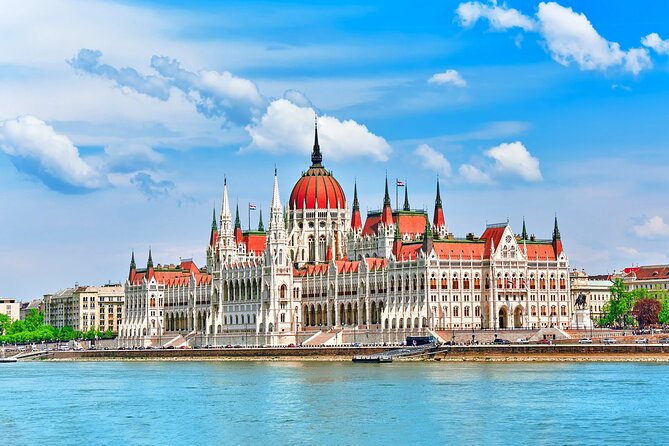
Budapest receives a fuller treatment, though the schedule remains compact. You pass Saint Stephen’s Basilica, the Opera, Parliament, Heroes’ Square, and Fisherman’s Bastion before visiting Buda Castle. The city’s setting along the Danube gives the day a strong visual rhythm, with grand Pest on one side and hillier Buda on the other.
Buda Castle is a UNESCO World Heritage site, and the included admission adds value. The castle district also gives you a taste of Budapest’s baroque streets and the bridges that tie the city together. The listed sightseeing time is about three hours before a free evening.
Use that evening wisely. Budapest is one of the places on this route where you may wish for more time, especially if you want to see the city after dark, visit another museum, or linger over dinner. Since meals are not included, the evening is also your chance to choose your own restaurant and pay only for what suits you.
A different side of Vienna on the same trip:
- Vienna: Schönbrunn Palace & Gardens Skip-the-Line Tour
★ 4.7 · 7,739 reviews - Vienna: Light of Creation Votive Church Immersive Light Show
★ 4.8 · 6,779 reviews - Vienna Spanish Riding School Guided Tour
★ 4.7 · 6,765 reviews - Vienna: Classical Concert in the World-Famous Musikverein
★ 4.6 · 6,673 reviews
Subotica and Novi Sad: Austro-Hungarian Serbia
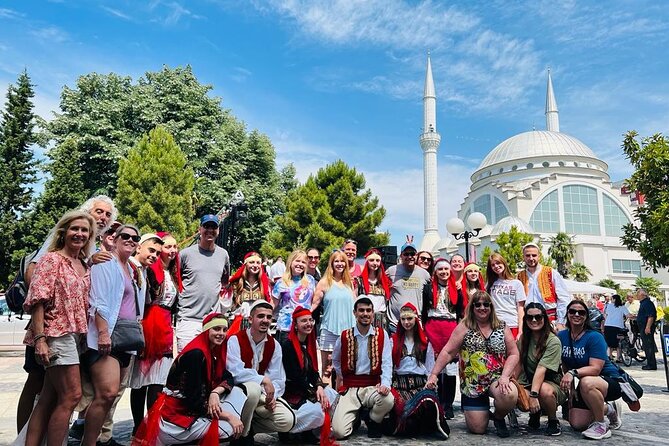
Crossing into Serbia brings a change in mood and architecture. Subotica is known for its colorful buildings and Austro-Hungarian design, with the City Hall set beside a park, fountains, and a broad square.
The tour also visits Saint Teresa of Ávila Cathedral and the synagogue. That pairing reflects the city’s mixed religious and cultural character more effectively than a quick look at the main square alone. You get an additional hour to explore independently, which is useful for coffee, photographs, or a simple walk through the side streets.
Novi Sad receives three hours the next day, enough for a more satisfying introduction. Its pedestrian center includes Zmaj Jovina and Dunavska streets, and the city’s location between former Ottoman and Austro-Hungarian spheres gives its architecture a layered feel.
The main sight is Petrovaradin Fortress, known as the Gibraltar on the Danube. The fortress helps explain Novi Sad’s strategic importance, while the old town offers cafés and an easy walking route. An overnight in Novi Sad breaks up the driving and gives you a little more breathing room than the shorter city stops.
Sremski Karlovci and Serbian wine country
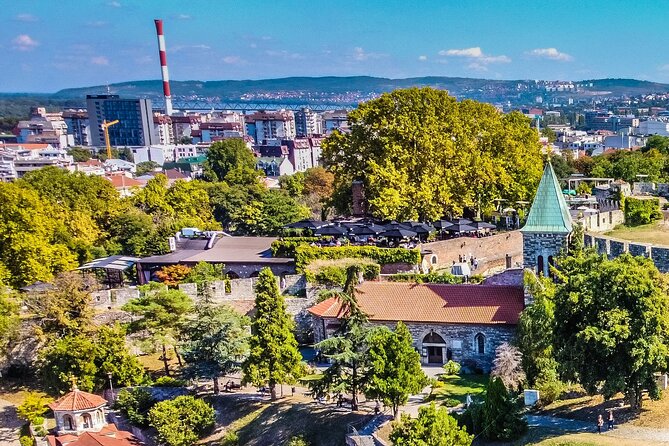
Sremski Karlovci is a small baroque town near Novi Sad and one of the route’s more appealing pauses. It served as a center of Serbian culture in the 18th century and is tied to local wine production.
You have about three hours here, including free time to taste regional wines. The Four Lions Fountain is linked to a local legend saying that anyone who drinks from it will return and marry in Karlovci. You can treat that as folklore, but it adds personality to a town that can otherwise be covered too quickly.
This is a good place to slow down. The compact streets, old buildings, vineyards, and wine cellars offer a more personal experience than another large capital. Just remember that drinks and meals are extra, and tasting opportunities may depend on the day’s operating schedule.
Belgrade, Zvornik, and the long move south
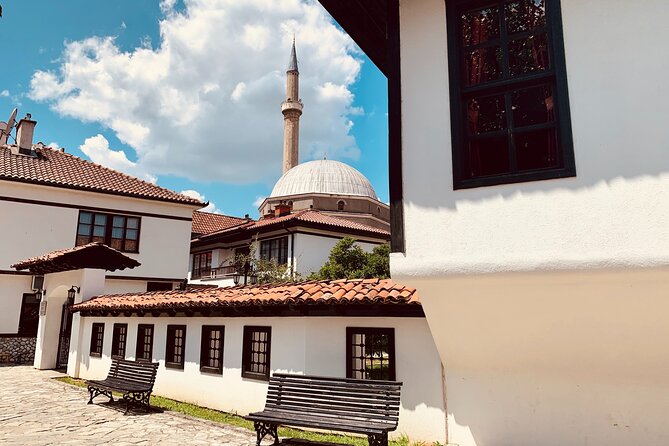
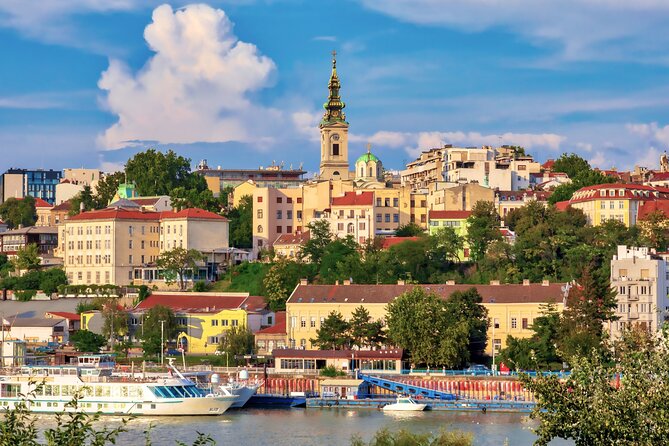
Day eight is ambitious. The sightseeing described for Belgrade includes the fortress and Kalemegdan Park, set above the meeting point of the Sava and Danube rivers. The Pobednik monument, green park paths, and views over the water make this one of the strongest city panoramas on the tour.
The walk continues along Knez Mihailova toward Republic Square, a useful way to connect Belgrade’s monumental center with its everyday café and shopping life. Afterward, the route continues toward Bosnia and Herzegovina, with Zvornik as the overnight area.
The schedule deserves careful attention here. Belgrade is a major city, but the listed visit is paired with a cross-border transfer to Zvornik. You will see key sights, not cover the capital in detail. If Belgrade is a priority, add separate nights before or after the tour.
Sarajevo and Mostar: history in plain view
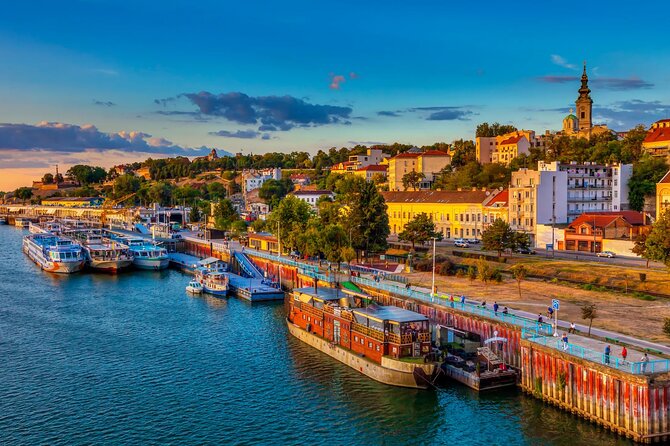
Sarajevo is one of the most meaningful stops. You walk through Ottoman and Austro-Hungarian quarters, passing mosques, churches, synagogues, markets, and bazaars. The city’s mixed traditions explain why it is often called the European Jerusalem.
You will also see reminders of the Yugoslav War, including bullet holes and cannon marks. This is not light sightseeing, but it is important. The tour places the city’s past beside its present-day streets, food, and neighborhoods rather than treating the war as a distant footnote.
At the Latin Bridge, the guide explains the assassination of Archduke Franz Ferdinand and the event that helped trigger World War I. The walking route includes uneven ground and ruins, so wear sturdy shoes.
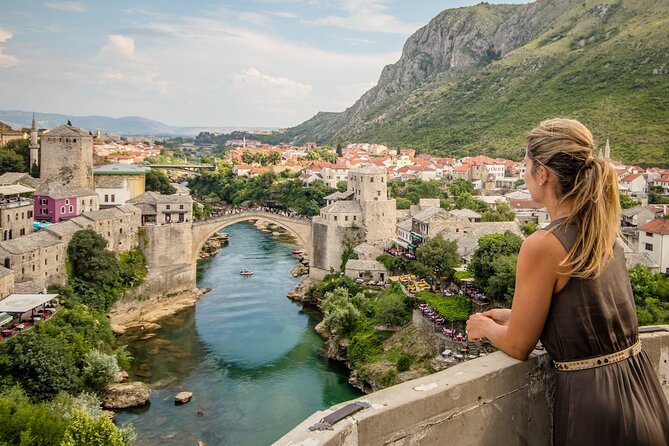
Mostar follows with the famous Stari Most, or Old Bridge, a UNESCO World Heritage site. The old bazaar, stone lanes, mosques, and small shops give the city a strong Ottoman character. The short visit is enough for the bridge and central streets, but you will want to keep moving if you hope to take photographs and browse the bazaar.
Kotor and Budva on the Montenegrin coast
Kotor offers three hours, making it one of the more generous stops on the route. Its old town is a maze of narrow cobbled streets, churches, and stone buildings. The confusing street plan was designed to slow down would-be attackers, and today it makes wandering part of the fun.
Saint Luke’s Church is included, and you have an afternoon to explore independently. Kotor is a place where free time has real value. You can walk without a fixed route, find a quiet square, or simply enjoy the setting between the old walls and surrounding mountains.
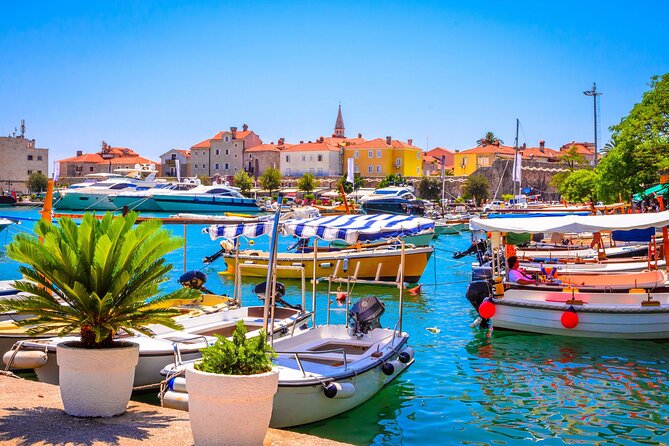
Budva the next day gives you two hours in its old town. The medieval center includes Saint Ivan’s Church and the small Church of Saint Mary, while the newer part has modern buildings, restaurants, bars, and shopping.
A short stop near Sveti Stefan follows. You cannot visit the island because it has become an exclusive residential resort, but the coastal viewpoint is worthwhile for photographs. The tour is honest about the limitation, though you should not expect a resort visit.
Shkodër and the Albanian border
Crossing into Albania, Shkodër brings another shift in language, architecture, and food. The city has a long settlement history, and Rozafa Castle provides the main view. From the hilltop, you can see the lake and the rivers joining toward the Adriatic.
The city also carries Venetian influence, especially in its buildings and craft traditions. If your trip falls in February, the schedule notes the possibility of seeing the carnival, including handmade Venetian masks produced locally. That is a seasonal possibility, not a guaranteed part of every departure.
The two-hour visit gives you time for the castle and a short look around town. The climb and uneven surfaces may be tiring, especially after a border crossing and a full driving day.
Mrizi i Zanave and Prizren’s riverside old town
Mrizi i Zanave is one of the route’s most distinctive stops. This agro-tourism farm works with regional organic products and has adapted former communist buildings for storage. The operation has created jobs for more than 400 people in nearby communities, giving you a useful look at how local food production can support rural areas.
You have time for a farm visit, lunch, or shopping for fresh products. Lunch is not included, but this is one place where paying for a meal adds real value because the food is tied directly to the area.
Prizren is the main Kosovo stop and one of the most rewarding towns on the itinerary. The river runs through the old center, under stone bridges and past Ottoman-era buildings. Sinan Pasha Mosque is included, with painted patterns and arabesque decoration, and Kalaja Fortress gives you a broad view over the town.
You have a free afternoon, which I would reserve for wandering, coffee, and a slow meal. Prizren is also home to Dokufest in August, so film lovers may want to check dates before booking.
Gjakova, Deçan, and Rahovec
Gjakova’s bazaar is one of Kosovo’s best places for traditional crafts and local food. It has been destroyed and rebuilt more than once, including during the Kosovo War, yet it remains a working market area rather than a polished museum display.
The next stop is the Deçan Monastery, an Orthodox site with 14th-century frescoes and a continuing monastic community. The monastery became a UNESCO site in 2004. Visitors should dress respectfully and follow security or photography rules given on arrival.
Rahovec adds wine to the Kosovo portion. Grapes have been grown here since Illyrian times, and the vineyards sit on gentle hills between about 350 and 520 meters above sea level. September’s annual wine festival could make this a particularly appealing time to visit, though the festival is not part of every departure.
Kruja and arrival in Tirana
The final sightseeing day takes you to Kruja, a mountain city linked to Albanian resistance against Ottoman expansion in the 15th century. The old bazaar has narrow lanes, wooden buildings, carpets, jewelry, and handmade souvenirs.
Kruja Castle sits on a rocky hill and includes paths once used by locals to leave the fortress unnoticed during attacks. The included visit adds context to the city’s military role, while free time allows for lunch and shopping.
The journey ends with a drive to Tirana and hotel drop-off. Tirana sightseeing is not included, so plan extra time if you want to see the capital properly.
What the $4,881 price includes
At $4,881.23 per person, this is a major purchase. The value depends on how much you would otherwise spend arranging a one-way, multi-country trip across changing borders.
The price includes 13 breakfasts, three-star accommodation based on double, twin, triple, or quadruple occupancy, private transportation, a professional tour leader, hotel pickup in Vienna, drop-off in Tirana, tourist taxes, fuel, road fees, international vehicle insurance, and entry tickets for listed included sites.
Lunches, dinners, drinks, snacks, souvenirs, personal spending, and travel insurance are extra. A solo traveler should also ask about the room supplement, since the quoted pricing is based on shared occupancy.
The package is strongest for you if you value convenience and would rather not handle border routes, hotels, fuel, and regional transport yourself. It is weaker if you prefer long stays, luxury hotels, or a carefully paced visit to each capital.
Who should book this route
I would recommend it to an independent-minded first-time visitor who wants a broad introduction without driving. It suits people who enjoy history, food, wine, old towns, and changing scenery more than beach time or resort comforts.
You should be comfortable with long hours in a vehicle, walking on cobbles and uneven ground, quick visits, and border crossings. Most people can take part, but the Sarajevo and fortress walks call for reasonable mobility.
The small group should make the trip more relaxed than a large coach tour. Still, confirm whether your departure is capped at eight or 10 people, since both figures appear in the trip details.
Should you book Small Group Tour, Central Europe and the Balkans?
Book it if you want one continuous route from Vienna to Tirana and value transport, breakfast, accommodation, and a guide more than a slow schedule. The best moments are the contrast between regions: Rust’s vineyards, Budapest’s grand architecture, Sarajevo’s layered past, Kotor’s stone lanes, Prizren’s riverfront, and Kruja’s old bazaar.
Think twice if you want deep time in Budapest, Belgrade, Sarajevo, or Tirana. I would add nights before the 11 a.m. Vienna pickup and after the Tirana arrival, and I would carry comfortable shoes, modest clothing for religious sites, and a budget for meals and drinks.
The experience is non-refundable and cannot be changed after booking. Because weather, strikes, holidays, closures, or other outside events can affect the schedule, travel insurance is especially sensible for a route crossing so many borders.
FAQ
How long is the tour from Vienna to Tirana?
The journey lasts approximately 14 days and ends with hotel drop-off in Tirana.
What time does the tour begin?
The stated start time is 11 a.m., with pickup at your hotel in Vienna.
Which countries does the route visit?
The route passes through Austria, Slovakia, Hungary, Serbia, Bosnia and Herzegovina, Montenegro, Albania, and Kosovo.
Is hotel pickup included?
Yes. Hotel pickup in Vienna and hotel drop-off in Tirana are included.
What type of accommodation is provided?
Accommodation and breakfast are provided in three-star hotels. Pricing is based on double, twin, triple, or quadruple room occupancy.
How many people can join the tour?
The experience is described as a small-group tour. One section says places are limited to eight people, while the additional information gives a maximum of 10, so confirm the exact group size for your departure.
Are meals included?
Thirteen breakfasts are included. Lunches, dinners, drinks, and snacks are not included.
Are entrance tickets included?
Entry tickets are included for the listed sites marked as included, such as Bratislava Castle, Buda Castle, Sinan Pasha Mosque, Kalaja Fortress, and Kruja Castle.
Is travel insurance included?
No. Every participant is responsible for arranging personal health and travel insurance.
Can the booking be canceled or changed?
No. The experience is non-refundable and cannot be changed for any reason after booking.
Just added around Vienna
- Private Tour from Vienna to Melk and Dürnstein★ 4.5 · 3 reviews
- Vienna: Johann Strauss 200th birthday anniversary exhibition★ 4.7 · 3 reviews
- Vienna Private Full Day Tour – Tickets to Schönbrunn & Lunch★ 5.0 · 3 reviews
- Private Salzburg Day Trip from Vienna★ 4.0 · 3 reviews
- Vienna: Entry Ticket Belvedere 21 & Contemporary Art★ 4.3 · 3 reviews
- Full-Day Private Trip from Vienna to Budapest★ 4.5 · 3 reviews
- Vienna by Night: Private Evening Food and Drink Tour★ 5.0 · 3 reviews
- 1.5 Hour Cinematic Style Portrait Photoshoot and Tour in Vienna★ 4.5 · 3 reviews
Tours, compared.
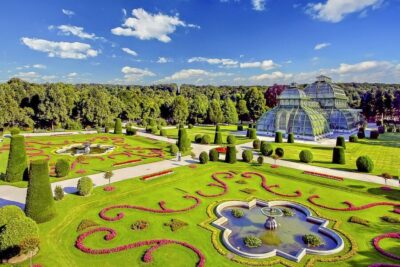
Schönbrunn Palace & Gardens Skip-the-Line Tour
Read our review →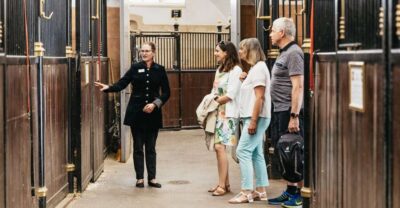
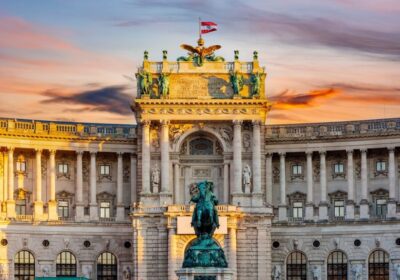
Skip-the-Line Sisi Museum, Hofburg and Gardens Tour
Read our review →
Skip-the-Line Schönbrunn Palace & Gardens Tour
Read our review →
Guided Walking Tour of City Center Highlights
Read our review →
Bus & Schönbrunn Palace Skip-the-Line Guided Tour
Read our review →
Guided Walking Tour of City Highlights & Hidden Gems
Read our review →