Reviewed · TICKETS
STATE OPERA – PRIVATE guided tour (tickets included)
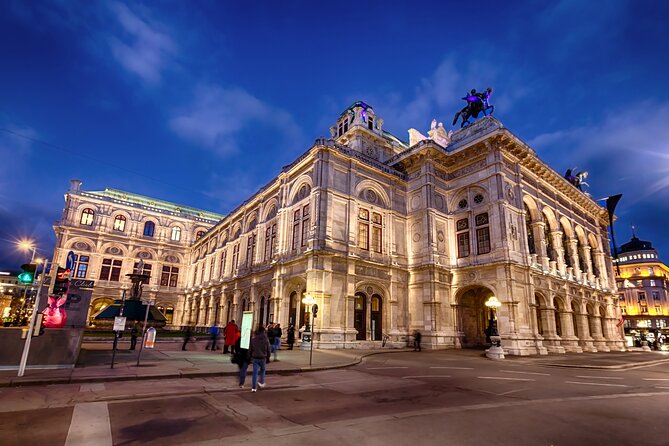
Vienna’s State Opera is more than a handsome building on the Ringstrasse. It is a working theater where sets change daily, performers come and go, and the grand halls carry stories of scandal, ambition, politics, and music. This private 90-minute tour with Giselle takes you through the public areas while explaining how the institution works behind the polished façade.
I like the private format, since Giselle can adjust the conversation to your interests. I also like the mix of architecture and theater life, from the old imperial rooms to the postwar additions and the practical business of storing and changing scenery. The main consideration is price: at $267, this makes the most sense for a group that values personal attention, not for someone seeking the cheapest quick look inside.
In This Review
- Key points at a glance
- Meeting Vienna’s musical heart at Opernring 2
- The original opera house and the scandal around it
- The postwar sections and a theater rebuilt for modern use
- How the stage changes from one day to the next
- The artists who shaped the house
- The Opera Ball and Vienna’s public life
- What Giselle adds to a private visit
- Is $267 a fair price for 90 minutes?
- Who will enjoy this State Opera tour?
- Practical details before you book
- Should you book the private State Opera tour?
- FAQ
- Where does the State Opera private tour begin?
- Where does the activity end?
- How long does the guided visit last?
- Is admission to the State Opera included?
- Is this a private activity?
- What is the cancellation policy?
Key points at a glance
- A private tour with Giselle: Only your group takes part, allowing room for questions and personal interests.
- Two eras of architecture: See the ornate original sections and areas rebuilt after the Second World War.
- Behind-the-scenes theater knowledge: Learn how scenery changes each day, where sets are kept, and how the opera operates.
- A cast of famous names: Stories include Gustav Mahler, Herbert von Karajan, Placido Domingo, Montserrat Caballé, José Carreras, Rudolf Nureyev, and Margot Fonteyn.
- Opera Ball traditions: Hear how Vienna’s famous annual ball brings together wealthy patrons and local political figures.
- Simple central meeting point: Begin and end at Opernring 2, beside the Vienna State Opera, with public transportation nearby.
Meeting Vienna’s musical heart at Opernring 2
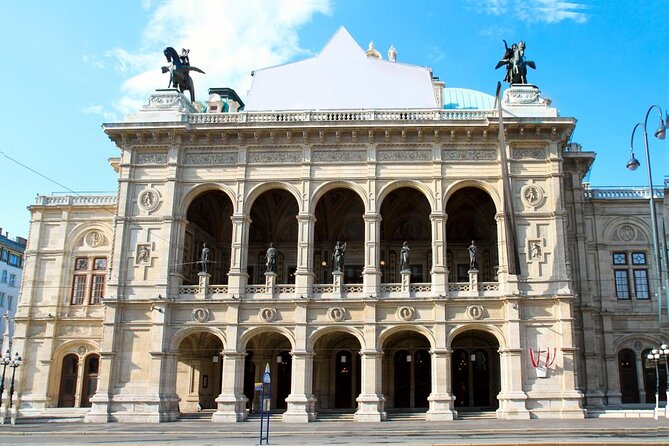
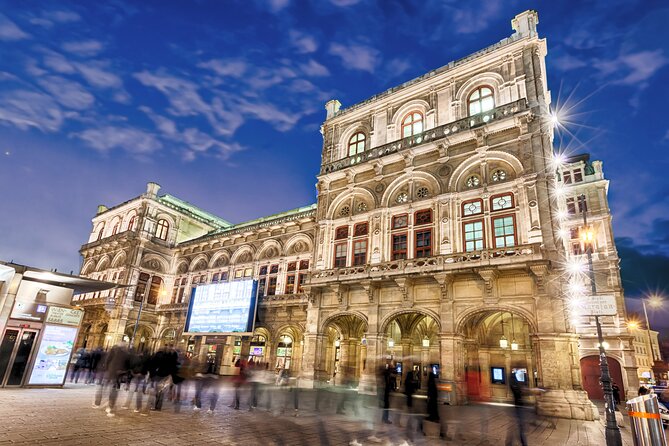
The tour starts at the Wiener Staatsoper, Opernring 2, in central Vienna. This is a useful meeting point if you are already exploring the Ringstrasse, the Hofburg area, Kärntner Straße, or the city center. Public transportation is nearby, and the activity returns to the same place after about an hour and a half.
That return to the starting point keeps the outing easy to fit into a busy day. You can schedule it before another central Vienna sight, a concert, or an evening performance without needing to arrange a second pickup point.
Because this is a private activity, the experience is limited to your own party. That matters inside a theater, where a smaller group makes it easier to hear explanations and ask about the details that catch your eye. If one person in your group cares about architecture and another prefers opera singers or stagecraft, Giselle can shift the conversation rather than follow a fixed group script.
A few more Vienna tours worth weighing up
- Vienna: Classic Ensemble Vienna in St. Peter’s Church Ticket
★ 4.7 · 4,819 reviews - Vienna Kunsthistorisches Museum Day Admission Ticket
★ 4.6 · 3,690 reviews - Vienna: Tickets for Mozarthaus Vienna with Audio Guide
★ 4.2 · 2,344 reviews
The original opera house and the scandal around it
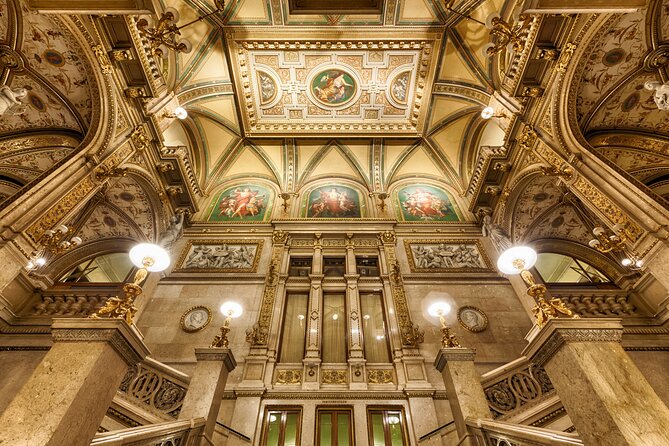
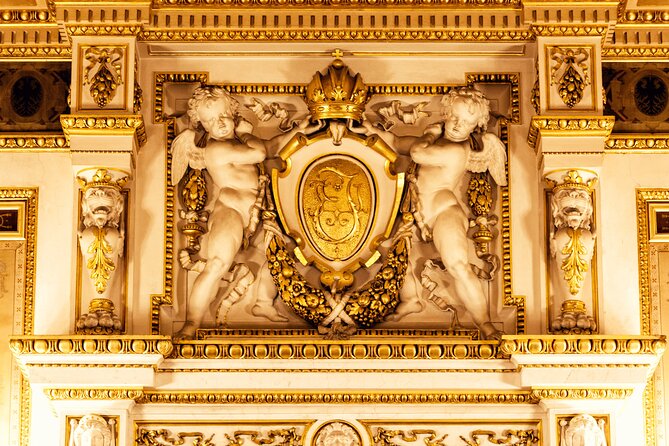
The State Opera was built about 150 years ago, during the period when Vienna was reshaping itself along the Ringstrasse. Its construction caused a major scandal, serious enough to have tragic consequences for one of the architects. That story gives the building a human beginning. Grand public projects often look inevitable once completed, but this one was controversial from the start.
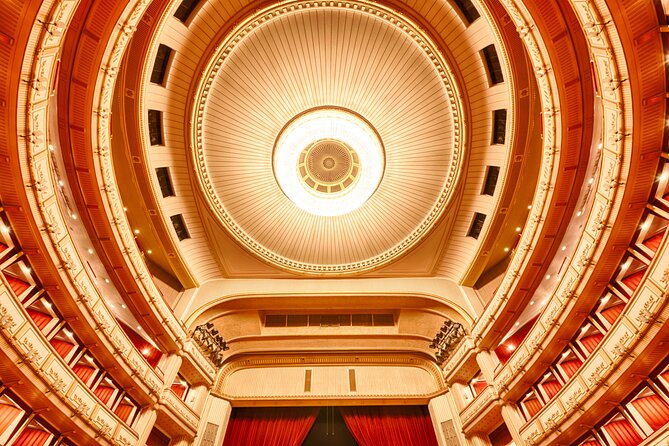
As you move through the older parts of the opera house, expect a strongly formal setting with the pomp associated with imperial Vienna. The tour places that decoration in context rather than asking you to admire it as a series of pretty rooms. You learn how the building represented the city, its rulers, and its musical ambitions.
I find this part especially useful for first-time visitors because it links the opera to Vienna itself. The theater is not an isolated attraction. It belongs to the city’s public life and to the grand urban plan that surrounds it.
The architectural contrast is one of the clearest reasons to choose a guided visit. You are not only seeing ornament. You are also comparing the original structure with sections shaped by the building’s later history.
The postwar sections and a theater rebuilt for modern use
The State Opera was damaged during the Second World War, and the tour includes the modern parts built afterward. This creates a useful visual shift from the old, highly decorated rooms to spaces shaped by reconstruction and changing needs.
You should not expect every part of the building to look like a palace. That is part of the appeal. The newer areas show that the opera is a living institution, not a preserved shell. They help explain how a famous theater continues to function after destruction, repair, and decades of artistic change.
The available information does not promise access to private backstage rooms or working areas beyond those open to the public. Keep that limit in mind. You are seeing the public sections of the opera house, with a guide providing the context that a self-guided visit would lack.
For many people, that is enough. A building this important can be hard to read on your own. You may notice columns, stairways, and grand spaces, but miss the reason they matter or how the postwar sections fit into the whole.
How the stage changes from one day to the next
The most practical part of the tour concerns the stage itself. Giselle explains how productions change daily, where stage sets are stored, and how the theater manages the physical work behind performances.
This is the kind of information that makes an opera house feel less like a monument and more like a busy workplace. From the audience, a set can seem to appear by magic. In reality, scenery must be stored, moved, assembled, and replaced according to the changing program.
The tour also covers how many people work for the institution in total. No single number is provided in the tour details, but the point is clear: a major opera house depends on a large team, not only singers and musicians. Technical crews, stage workers, administrators, costume staff, and other employees all support what the audience sees.
I like this focus because it gives you a practical sense of scale. You come away understanding that the opera is not simply a room with a stage. It is an organization with a demanding daily schedule.
This section may be the strongest fit for anyone who has already attended an opera and wants to understand what happens before the curtain rises. It also gives children and teenagers a concrete way into the subject, since changing scenery and storing sets can be easier to grasp than a long discussion of architectural style.
A different side of Vienna on the same trip:
- Vienna: Vivaldi’s Four Seasons Concert in Karlskirche
★ 4.7 · 14,951 reviews - Vienna: Spanish Riding School Training
★ 3.9 · 9,281 reviews - Vienna: Skip-the-cashier-desk-line Giant Ferris Wheel Ride
★ 4.5 · 7,859 reviews - Vienna: Schönbrunn Palace & Gardens Skip-the-Line Tour
★ 4.7 · 7,739 reviews
The artists who shaped the house
Giselle connects the building to performers and directors who made Vienna important on the international opera and dance circuit. The names include Placido Domingo, Montserrat Caballé, José Carreras, Gustav Mahler, Herbert von Karajan, Rudolf Nureyev, and Margot Fonteyn.
These figures represent different parts of the theater’s story. Domingo, Caballé, and Carreras bring the focus to celebrated singers. Mahler and Karajan point to the influence of major conductors and musical directors. Nureyev and Fonteyn remind you that the opera house also belongs to the world of ballet.
The value here is not just name recognition. A good explanation can show how performers change the identity of a theater. Some become linked to a particular role, season, production, or period of artistic leadership. The supplied details do not specify exactly which stories Giselle tells about each person, so you should think of the names as a guide to the subjects covered rather than a promised list of full biographies.
If you are a musician or serious music fan, this part may be the reason to book. One person who took the tour was a musician, and Giselle used the opportunity to talk about Beethoven. That suggests she is comfortable adapting the discussion when a guest brings strong musical interests.
At the same time, you do not need a technical background. The comments about Giselle describe a friendly, professional style, with clear answers and a humorous approach. Her ability to adjust the subject should suit a mixed group better than a lecture aimed only at experts.
The Opera Ball and Vienna’s public life
The annual Opera Ball adds a social and political angle. Giselle explains how the event works and how wealthy patrons and local politicians take part.
This is a useful subject because the State Opera is tied to more than performance. The Opera Ball turns the building into a highly visible stage for Vienna’s social life. It brings together money, public office, ceremony, fashion, and the city’s long connection with music.
You may not care much about formal balls, but the topic helps explain why this building has such a high profile. It is used and discussed as a cultural institution throughout the year, then becomes a focus of national attention during the ball.
The tour does not include attendance at the Opera Ball, and no evening performance is listed. You are learning about the event and the opera’s traditions during the daytime guided visit. That distinction matters if you are comparing this experience with an actual concert or opera ticket.
What Giselle adds to a private visit
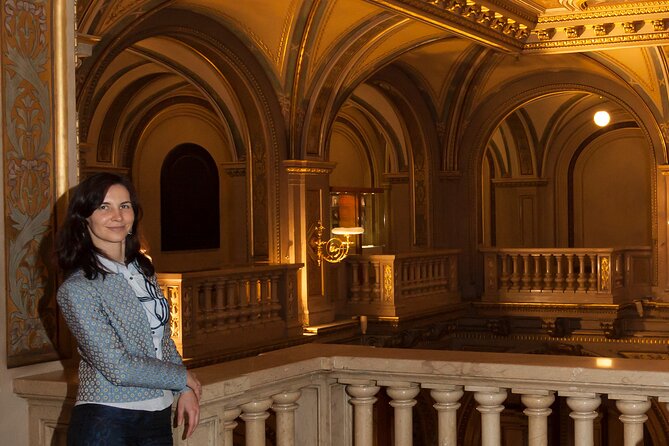
The guide is Giselle, the person behind Giselle Tours Vienna. The strongest pattern in the available feedback is her personal approach: she is described as warm, funny, professional, communicative before the meeting, and able to change direction when a group has particular interests.
That flexibility is more useful on a private tour than on a large scheduled visit. You can ask about a singer, a conductor, Beethoven, the building’s reconstruction, or the stage machinery without worrying that you are holding up a busload of people.
Several comments also point to her ability to explain history and music in an entertaining way. One Spanish-language comment praises her sympathetic and professional manner, while another describes a detailed explanation and strong personal attention. This suggests that the tone is likely conversational rather than stiff.
You should still keep your expectations sensible. A 90-minute tour cannot cover every composer, room, production, and period of the State Opera. The benefit is the chance to make the visit more focused and human, with Giselle choosing the most useful details for your group.
Is $267 a fair price for 90 minutes?
The listed price is $267 for an approximately 90-minute private tour, with admission included. The important question is how many people are in your group. Since the activity is private, the price may offer better value for a family or group of friends than for one or two people, though the supplied details do not state the maximum group size or whether the amount changes by party size.
You are paying for three things at once:
- Entry to the State Opera
- A private guide for your group
- A tailored explanation of the building, artists, stage work, and traditions
For a solo visitor or a couple focused mainly on seeing the interior, the price is high compared with a basic public visit. For a group with varied interests, the calculation looks better because you are sharing the private cost and gaining the freedom to ask questions.
The price also makes this a poor choice if you only have a few spare minutes. The tour lasts about an hour and a half, and its value comes from the stories and explanations. If you plan to rush through the opera house for photographs, a private guide may be more than you need.
Who will enjoy this State Opera tour?
I would recommend it most strongly to:
- Families or friend groups wanting their own guide
- Music lovers interested in famous singers, conductors, and dancers
- Visitors curious about how stage sets and performances are managed
- People who prefer conversation and questions to a fixed audio guide
- Guests who want to connect Vienna’s architecture with its cultural life
- First-time visitors who want help making sense of the opera house
It is less suited to someone looking for an actual opera performance. This experience is a guided visit, not a ticket to a show, and the Opera Ball discussion is explanatory rather than admission to the event.
The tour should also appeal to people who are not regular opera fans but enjoy grand buildings and local stories. The architect’s scandal, the war-related rebuilding, the daily set changes, and the mix of artists and politicians give the visit several entry points.
Practical details before you book
You receive a mobile ticket, and confirmation is normally issued at booking. If you reserve within one hour of the start time, confirmation comes as soon as possible and depends on availability.
The meeting point is the Vienna State Opera at Opernring 2, 1010 Vienna. The activity ends back at that point. Public transportation is nearby, and the information provided says most people can participate.
Because no special physical restrictions are listed, you should still consider your own comfort with a 90-minute guided visit through a large historic building. The tour covers all areas open to the public, but it does not promise access to every working or restricted section.
Cancellation is free if you cancel at least 24 hours before the start time. Inside that window, the amount paid is not refunded, and changes are not accepted. Use Vienna local time when judging the deadline.
Should you book the private State Opera tour?
Book it if you want the State Opera explained by a person who can respond to your interests, especially if you are traveling with family or friends. The combination of old and postwar architecture, famous musical figures, Opera Ball traditions, and practical stage operations gives the visit more substance than a quick look around the grand rooms.
Skip it if your main goal is simply to enter the building at the lowest possible cost, or if you want to attend a live performance. At $267, the tour earns its value through private attention and conversation. For a group that wants a more personal introduction to Vienna’s musical center, that can be a worthwhile splurge.
FAQ
Where does the State Opera private tour begin?
It begins at the Vienna State Opera, Opernring 2, 1010 Wien, Austria.
Where does the activity end?
The tour ends back at the meeting point at the Vienna State Opera.
How long does the guided visit last?
The visit lasts approximately 1 hour and 30 minutes.
Is admission to the State Opera included?
Yes. An admission ticket is included in the tour price.
Is this a private activity?
Yes. Only your group participates in the private tour.
What is the cancellation policy?
You can cancel at least 24 hours before the start time for a full refund. Cancellations or changes made less than 24 hours before the start time are not accepted, and the payment is not refunded.
Just added around Vienna
- Private Tour from Vienna to Melk and Dürnstein★ 4.5 · 3 reviews
- Vienna: Johann Strauss 200th birthday anniversary exhibition★ 4.7 · 3 reviews
- Vienna Private Full Day Tour – Tickets to Schönbrunn & Lunch★ 5.0 · 3 reviews
- Private Salzburg Day Trip from Vienna★ 4.0 · 3 reviews
- Vienna: Entry Ticket Belvedere 21 & Contemporary Art★ 4.3 · 3 reviews
- Full-Day Private Trip from Vienna to Budapest★ 4.5 · 3 reviews
- Vienna by Night: Private Evening Food and Drink Tour★ 5.0 · 3 reviews
- Private Tour of Viennese Art in the Leopold Museum: Klimt, Schiele, Kokoschka★ 5.0 · 3 reviews
Tickets, compared.
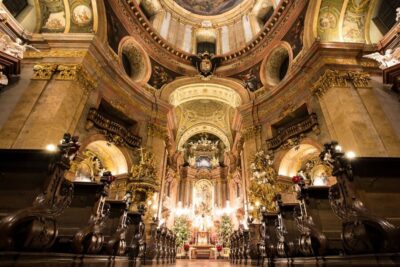
Classic Ensemble Vienna in St. Peter’s Church Ticket
Read our review →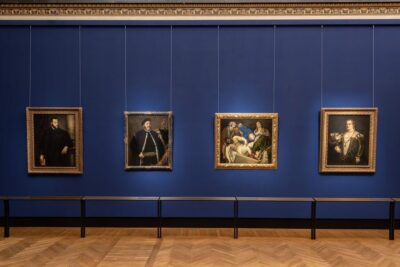
Vienna Kunsthistorisches Museum Day Admission Ticket
Read our review →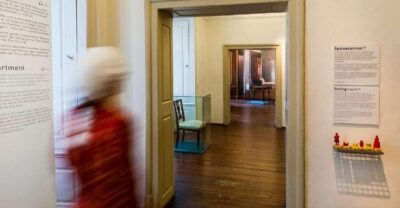
Tickets for Mozarthaus Vienna with Audio Guide
Read our review →
Skip-the-Line Entrance Ticket to the Danube Tower
Read our review →
St. Stephen’s Cathedral & Dom Museum Wien Tickets
Read our review →