Reviewed · TOURS
“The Third Man” Film Location Tour
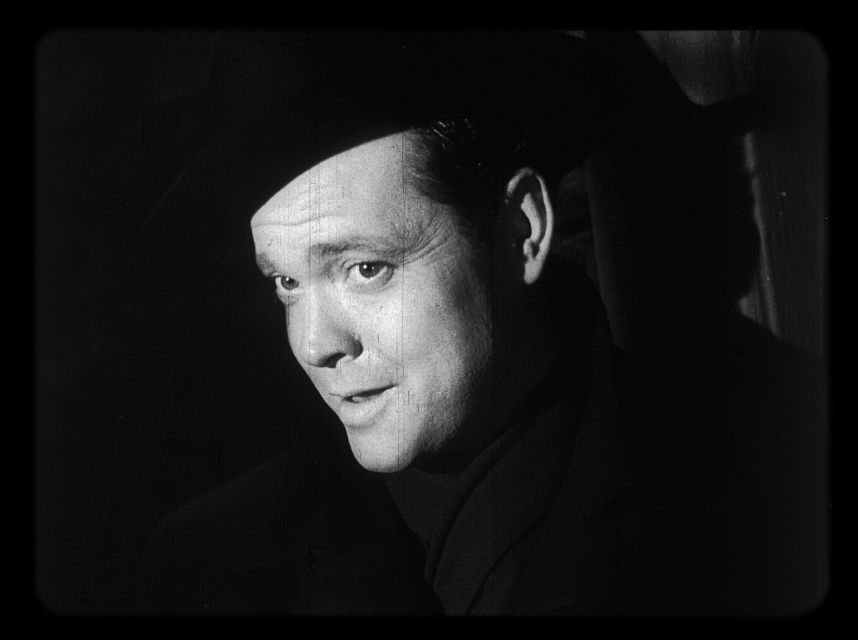
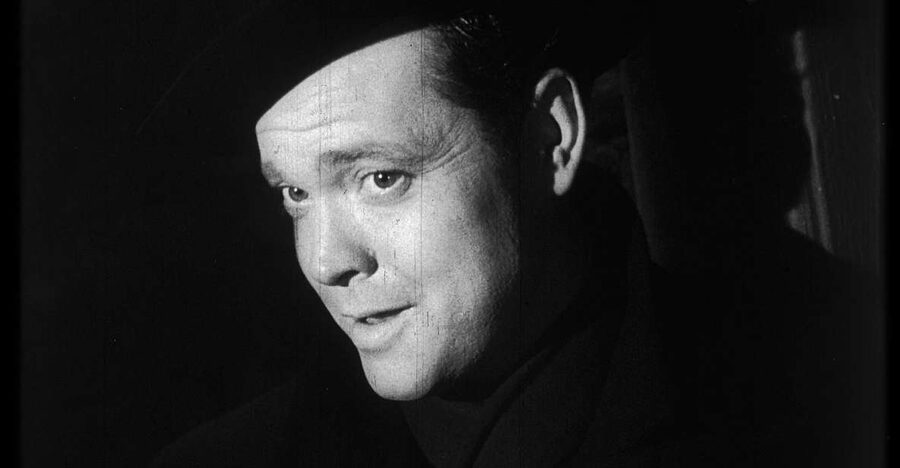
Vienna becomes a shadowy character on this The Third Man film location tour, where cobbled lanes, old facades, and quiet corners reveal how Carol Reed turned a damaged postwar city into one of cinema’s great settings. Your state-certified guide uses film stills to match the Vienna you see today with the Vienna of Harry Lime, Orson Welles, and Graham Greene.
I love the way the tour connects movie-making with postwar politics, so you learn about Allied occupation, spies, ruins, and the black market rather than simply stopping for a photograph. I also like the guides’ personal command of the subject. Brigitte Timmermann has written extensively about the film, while guides including Christopher, Christian Timmermann, Kirstin, and Brigitte bring different anecdotes and personalities to the walk.
The main consideration is the walking. The route crosses central Vienna on foot and includes cobblestones. Some tours have lasted closer to three hours, and the sewer system, Prater Ferris wheel, and cemetery are not part of this walk. The tour runs rain or shine.
In This Review
- Key things to know before booking
- Start at Stadtpark and enter Harry Lime’s Vienna
- Film stills beside real streets
- Vienna’s occupation zones and the real story behind the thriller
- The famous sewer scenes, without entering a sewer
- What the route covers, and what it leaves out
- A two-hour tour that may run longer
- Why the $30 price feels fair
- The guides make the difference
- How to prepare for the best experience
- Who should book this Vienna film tour?
- Should you book The Third Man Film Location Tour?
- FAQ
- How long is The Third Man Film Location Tour?
- Where does the tour meet?
- What languages are available?
- Does the tour enter Vienna’s sewer system?
- Does the tour visit the Prater Ferris wheel?
- Does the tour visit the cemetery from the film?
- Is the tour held in bad weather?
- What does the $30 price include?
Key things to know before booking
- The film locations are in central Vienna: The route focuses mainly on the old town, especially the area south of Stephansplatz, rather than taking you to every famous location outside the center.
- The history is as important as the cinema: Expect discussion of occupied Vienna, Allied control, Cold War tension, spies, wartime damage, and the black market.
- Illustrated film stills make the stops work: Your guide shows how locations looked on screen and explains what was altered, combined, or faked for the camera.
- The guides bring serious research: Brigitte Timmermann and other guides have built their talks around years of study, interviews, and close attention to the production.
- See the film first if you can: You can join without knowing the story, but familiar scenes and characters make the walk far more rewarding.
- The sewer chase is not part of the tour: The famous sewer scenes were created with a mixture of real locations and studio work, but you will not enter Vienna’s sewer system.
Start at Stadtpark and enter Harry Lime’s Vienna
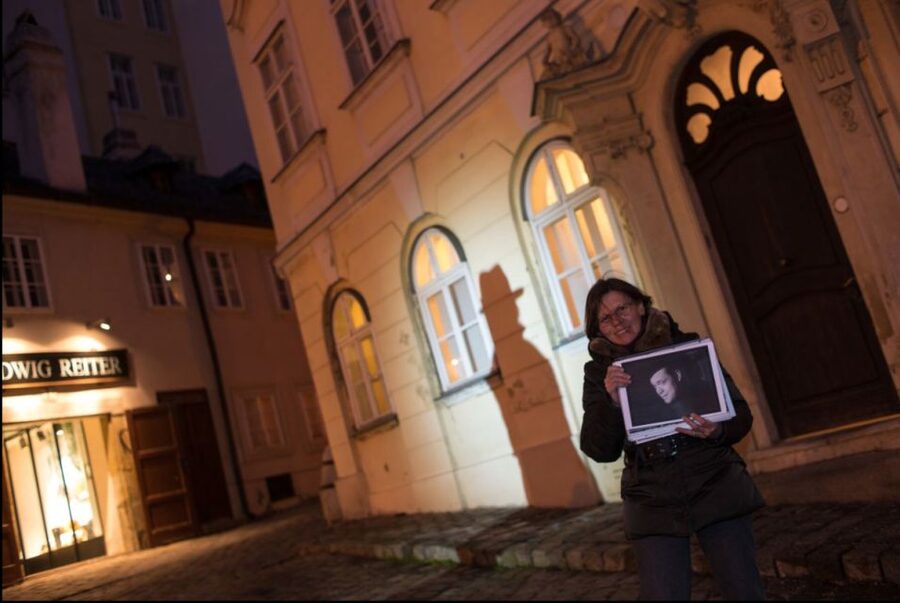
The meeting point is U4 Station Stadtpark, at the Johannesgasse exit. That is a practical start because you can reach it by Vienna’s efficient underground system, then begin the walk close to the historic center.
Do not expect a coach ride between locations. This is a city walk, and the distance between stops is part of the appeal. You move through ordinary streets and public squares while the guide uses photographs to bring the film’s darker Vienna back into view.
The contrast is striking. Modern Vienna is polished and orderly, but The Third Man was made against the memory of bomb damage, shortages, divided authority, and uncertain loyalties. Your guide explains how the city was split among the Allied powers after the Second World War and how that setting gave Graham Greene’s screenplay its political edge.
This opening section is useful even if you are not a film specialist. You get the basic story of Harry Lime, Holly Martins, and Anna Schmidt, along with the real conditions that made a story about smuggling and betrayal feel plausible.
Other Vienna tours people book alongside this one:
- Vienna: Vivaldi’s Four Seasons Concert in Karlskirche
★ 4.7 · 14,951 reviews - Vienna: Spanish Riding School Training
★ 3.9 · 9,281 reviews - Vienna: Skip-the-cashier-desk-line Giant Ferris Wheel Ride
★ 4.5 · 7,859 reviews
Film stills beside real streets
The strongest feature of the tour is the use of illustrative photographs. At each important stop, your guide can show the matching film image and point out what remains, what changed, and what was created for the production.
That visual comparison matters. A street corner may look unremarkable until you see the angle used by Carol Reed. A doorway or alley can suddenly become part of the film’s tense visual language. The tour helps you notice how Reed used shadows, tilted compositions, narrow passages, and stark contrasts to make Vienna feel unstable.
You will hear about the international making of the film, from Graham Greene’s screenplay to the work of the cast and crew in Vienna. The guides also discuss the relationship between the written story and the finished movie, along with anecdotes about Orson Welles and the production.
Several guides are praised for treating the subject as more than a prepared script. Christopher is known for tying film details to the city as a whole, while Christian Timmermann has been singled out for his command of the film, its music, politics, actors, and production stories. Brigitte Timmermann’s research gives the subject unusual depth, including interviews with people connected to the making of the film.
The tone is not dry. Expect jokes, behind-the-scenes stories, and lively explanations. That balance keeps the tour from becoming a lecture, even when the subject turns toward occupation zones, espionage, and the damage left by war.
Vienna’s occupation zones and the real story behind the thriller
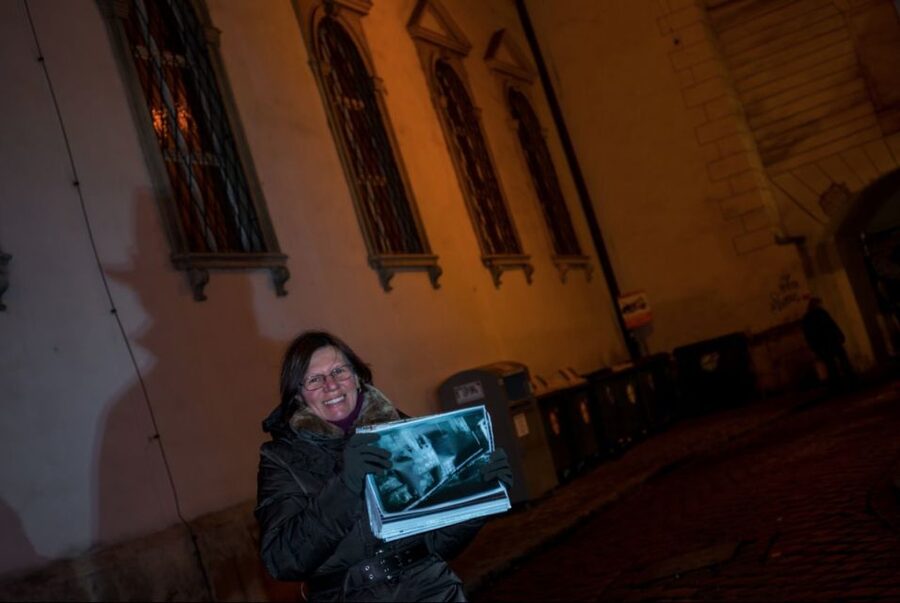
The film works because its fiction sits on top of a very real city crisis. Your guide explains the four-power occupation of Vienna and the uneasy relationship between the Soviet, American, British, and French authorities.
You also learn about the less glamorous side of daily life. Shortages encouraged smuggling and black-market trade. Ruined buildings and uncertain borders created opportunities for spies and criminals. Those details help explain why The Third Man feels so different from a standard mystery set in a European capital.
I especially like this part because it changes the way you see the locations. Instead of treating the streets as decorative scenery, the tour presents them as places shaped by political pressure and physical destruction. The city’s old center becomes a working part of the plot.
The guide may also explain how the movie plays with fact. Some scenes suggest a continuous journey through Vienna even though the production combined different locations. Other moments use sets or altered spaces. This is one of the tour’s most useful lessons: a film location is not always a complete record of what was there.
The effect is particularly strong for anyone interested in twentieth-century Europe. You get a compact introduction to Vienna at the point when the city was moving from wartime ruin into the early Cold War.
The famous sewer scenes, without entering a sewer
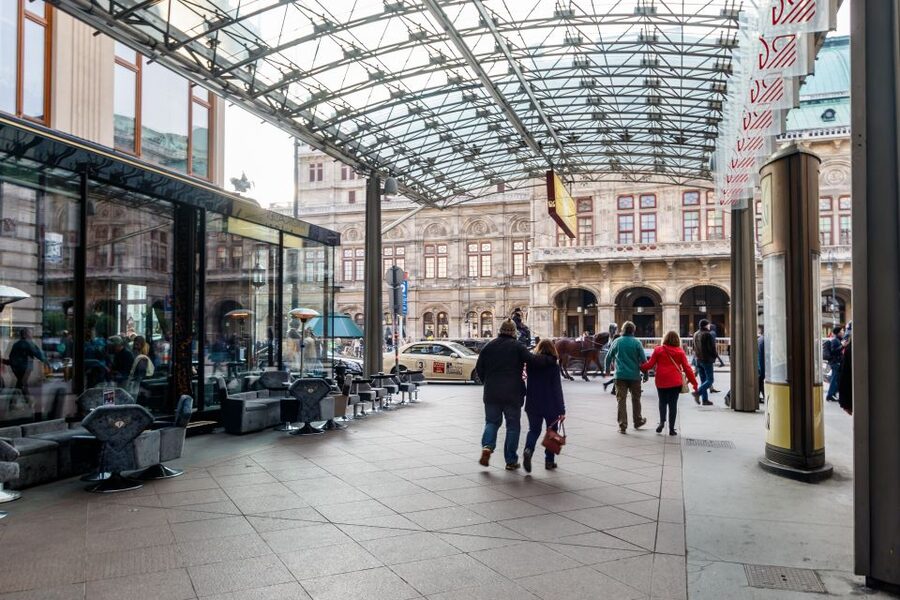
The sewer chase is one of the film’s signature sequences, but this tour does not include a visit to Vienna’s sewer system. That fact is important because some people book a Third Man tour expecting to go underground.
Your guide does explain the sewer scenes and the tricks behind them. Parts were filmed in real underground spaces, while other sections were recreated or adapted for the movie. The result feels like one continuous maze, even though the production did not simply follow the characters through one uninterrupted sewer route.
For me, this is still valuable without an underground visit. You learn how Reed created suspense through editing, angles, light, and location changes. The explanation also corrects a common assumption about the film, which is often more interesting than simply walking into a tunnel.
If the sewers are your main reason for booking, adjust your expectations. This is a surface walking tour with film context, not an underground adventure.
A different side of Vienna on the same trip:
- Vienna: Schönbrunn Palace & Gardens Skip-the-Line Tour
★ 4.7 · 7,739 reviews - Vienna: Light of Creation Votive Church Immersive Light Show
★ 4.8 · 6,779 reviews - Vienna Spanish Riding School Guided Tour
★ 4.7 · 6,765 reviews - Vienna: Classical Concert in the World-Famous Musikverein
★ 4.6 · 6,673 reviews
What the route covers, and what it leaves out
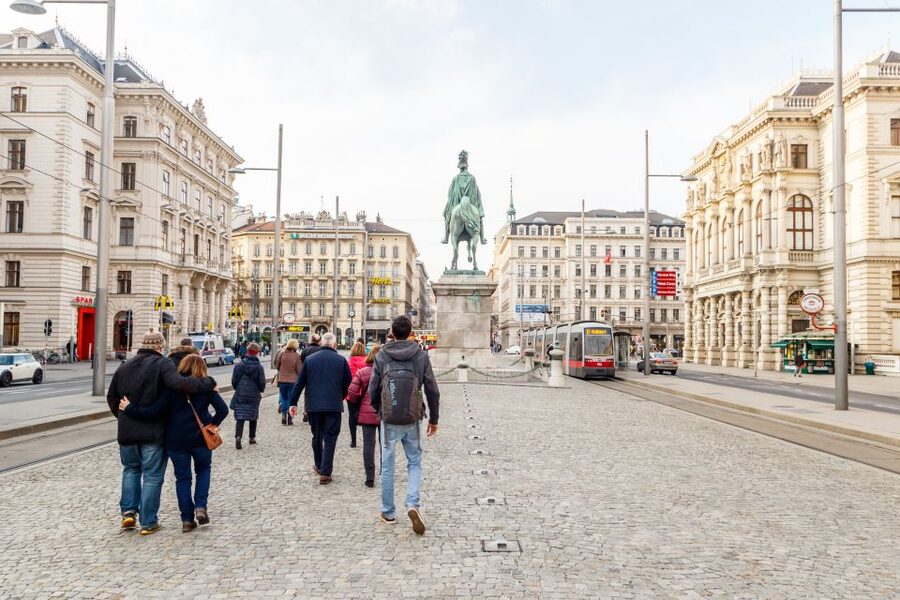
The walk visits important locations in Vienna’s old town, with much of the route south of Stephansplatz. It gives you a useful look at central Vienna in its own right, even when a particular doorway or alley is not immediately recognizable from the movie.
The cemetery and Prater Ferris wheel are outside the route covered in the two-hour format. The giant wheel is an important image associated with the film, so you may want to visit the Prater separately. The same applies to the cemetery.
That omission is not necessarily a flaw. Including every distant location would turn a compact central walk into a much longer outing and could leave less time for the detailed explanation at each stop. Still, you should plan extra time if the Ferris wheel or cemetery matters to you.
The Third Man Museum is also separate. It can make a good follow-up for serious fans, particularly if you want memorabilia and more production material. One practical warning from past experience shared by participants is that the book connected with the tour is substantial and may be inconvenient to carry around all day.
The route itself is mainly flat, but flat does not mean effortless. You cover plenty of ground, and Vienna’s old-town paving can be hard on your feet. Comfortable shoes are more important here than stylish ones.
A two-hour tour that may run longer
The advertised duration is two hours, but you should avoid scheduling a tight appointment immediately afterward. Some departures have extended toward three hours, depending on the guide, questions, group pace, and how much material is covered.
That extra time can be a benefit. The film has layers, and a rushed guide would have to skip the political background or the production stories. On the other hand, it can be tiring if you have limited mobility or have already spent the day walking around Vienna.
The tour takes place in all weather. Rain does not cancel the walk, so bring suitable clothing and protect any printed film guide or camera equipment. Because the activity is outdoors for most of its duration, a wet day will affect the experience more than it would at a museum.
English and German are offered. Some departures may use both languages, and bilingual delivery can make the talk longer. If you are fluent in both, hearing the same material twice may feel inefficient. If you speak only one, confirm the language arrangement when you check available times.
Why the $30 price feels fair
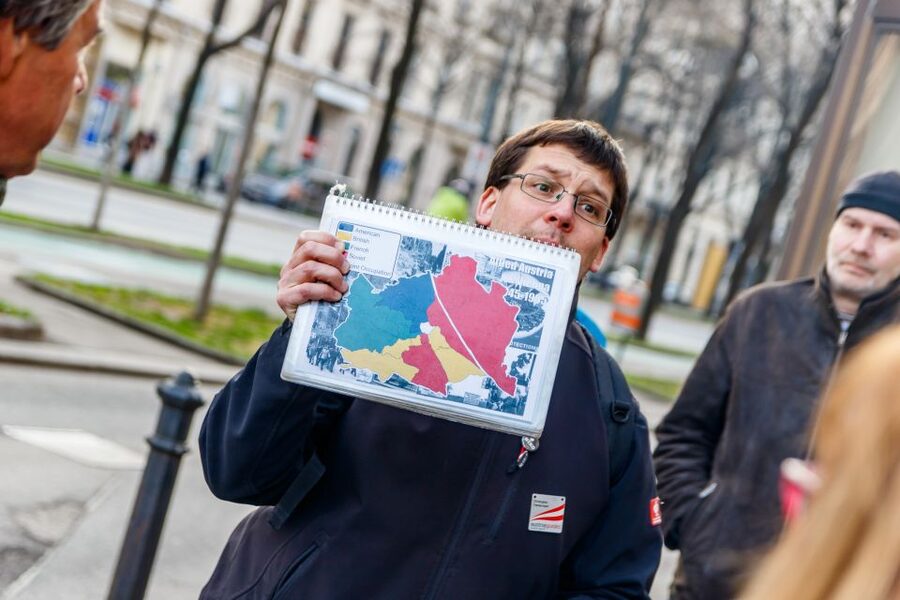
At $30 per person, this is a reasonably priced guided walk in a major European capital. The cost includes a state-certified guide, and the value comes mainly from the research, storytelling, and film stills rather than from admission to a venue.
I would not compare it with a basic city stroll. The best guides provide a concentrated film seminar, a postwar Vienna lesson, and a central walking tour in one package. That combination makes the price particularly fair for film fans and people interested in twentieth-century politics.
The value depends on how much you engage with the subject. If you have seen The Third Man several times, you will notice small details and appreciate the production anecdotes. If you have never watched it, you can still enjoy the city and historical setting, but some locations will have less emotional force.
The tour does not include transport, food, museum admission, a sewer visit, or the Prater wheel. Those are not surprise costs within the walk, but they may matter when you plan your wider The Third Man day.
Free cancellation up to 24 hours before the start and the option to reserve now and pay later make the booking less rigid. The useful point is flexibility, especially when your Vienna schedule depends on weather or changing arrival plans.
The guides make the difference
The tour has been led by several guides, and names associated with it include Brigitte Timmermann, Brigita, Christopher, Christian Timmermann, Kirstin, Kersten, Bridget, and Sonia. The exact guide depends on the departure.
Brigitte Timmermann is especially notable for her published research on the film and Vienna. Her work gives the tour a strong foundation in production history, locations, and the people involved. Christopher is often praised for his humor and ability to connect the movie to wider Viennese history.
That variety means the delivery may differ from one date to another. The common thread is subject expertise and enthusiasm, but the rhythm, jokes, and amount of detail can change with the guide and group.
Some departures have included a memorable final stop or a musical surprise connected to Vienna’s traditional sound. Treat that as a possible bonus rather than a guaranteed feature, since the activity details do not promise it for every departure.
How to prepare for the best experience
Watch the film before you go. This is the single best preparation. You do not need to memorize names or locations, but recognizing Harry Lime’s entrances, the tilted streets, the Ferris wheel, and the sewer sequence will make the guide’s comparisons click.
If you cannot watch it beforehand, ask the guide for the basic story at the start. The tour can still work as a historical walk, and the guides explain the characters and production clearly.
Bring walking shoes, weather protection, and a phone or camera for your own reference pictures. You will not be entering the sewer system, so do not dress as if this were an underground excursion.
Plan the Prater Ferris wheel for another time if it matters to you. You might also schedule the Third Man Museum separately and leave a little breathing room after the tour in case the walk runs beyond two hours.
Who should book this Vienna film tour?
I would book it if you love classic cinema, enjoy location tours, or want a different way to understand Vienna’s postwar years. It is also a good choice for a couple or small group with mixed interests because the historical material gives non-fans plenty to follow.
It suits curious first-time visitors who want to walk through the Inner Stadt with a clear theme. The route is not a general overview of every major sight, but it offers a focused look at streets that many standard tours pass without explaining.
I would hesitate only if you dislike walking, need a strictly timed two-hour activity, or expect to visit the sewers and Prater Ferris wheel as part of the ticket. Those limits are clear, but they are worth keeping in mind.
Should you book The Third Man Film Location Tour?
Yes, if you have seen the film or plan to watch it before your Vienna visit. The combination of still images, real locations, postwar politics, production stories, and passionate guides gives you far more than a checklist of movie scenes.
Even without prior knowledge of the film, you can enjoy the central Vienna walk and learn about the city after the Second World War. But fans get the fullest payoff, especially when a familiar scene appears in an ordinary street and the guide explains exactly how it was created.
Book with comfortable shoes, allow more than two hours, and save the Prater wheel and museum for separate stops. At $30, this is a strong-value experience for anyone who wants Vienna to feel less like a backdrop and more like part of the story.
FAQ
How long is The Third Man Film Location Tour?
The stated duration is two hours. Depending on the guide, questions, and walking pace, you should allow additional time because some departures have lasted closer to three hours.
Where does the tour meet?
The meeting point is U4 Station Stadtpark, at the Johannesgasse exit in Vienna.
What languages are available?
The tour is offered in English and German. Check the available departure details if you prefer one language, since some tours may be conducted bilingually.
Does the tour enter Vienna’s sewer system?
No. The sewer system is not included. The guide can explain the famous sewer scenes and how they were made, but you remain above ground during the tour.
Does the tour visit the Prater Ferris wheel?
No. The Prater Ferris wheel is not included in the walking route. You need to plan a separate visit if you want to ride it or see the location.
Does the tour visit the cemetery from the film?
No. The cemetery is outside the locations covered on this tour.
Is the tour held in bad weather?
Yes. The tour operates rain or shine, so bring clothing and shoes suitable for the forecast.
What does the $30 price include?
The price includes the guided walking tour with a state-certified guide. It does not include a sewer visit, Prater Ferris wheel visit, museum admission, or transportation.
Just added around Vienna
- Private Tour from Vienna to Melk and Dürnstein★ 4.5 · 3 reviews
- Vienna: Johann Strauss 200th birthday anniversary exhibition★ 4.7 · 3 reviews
- Vienna Private Full Day Tour – Tickets to Schönbrunn & Lunch★ 5.0 · 3 reviews
- Private Salzburg Day Trip from Vienna★ 4.0 · 3 reviews
- Vienna: Entry Ticket Belvedere 21 & Contemporary Art★ 4.3 · 3 reviews
- Full-Day Private Trip from Vienna to Budapest★ 4.5 · 3 reviews
- Vienna by Night: Private Evening Food and Drink Tour★ 5.0 · 3 reviews
- 1.5 Hour Cinematic Style Portrait Photoshoot and Tour in Vienna★ 4.5 · 3 reviews
Tours, compared.
Schönbrunn Palace & Gardens Skip-the-Line Tour
Read our review →
Skip-the-Line Sisi Museum, Hofburg and Gardens Tour
Read our review →
Skip-the-Line Schönbrunn Palace & Gardens Tour
Read our review →
Guided Walking Tour of City Center Highlights
Read our review →
Bus & Schönbrunn Palace Skip-the-Line Guided Tour
Read our review →
Guided Walking Tour of City Highlights & Hidden Gems
Read our review →