Reviewed · TOURS
Vienna: ‘Armenia In The Heart Of Austria’ Tour
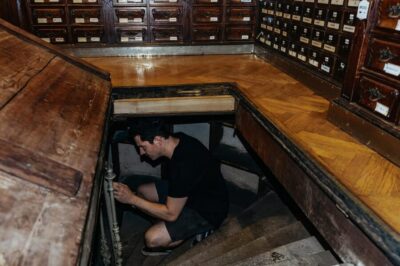
Vienna’s Armenian quarter is easy to miss, which is exactly why this tour is so appealing. Inside the Mekhitarist Monastery, you’ll see Maria Schutz Church, a Loretto Chapel, an extraordinary library, Armenian art, and one of the Western world’s largest collections of Armenian books. I especially like the personal guidance from a monk such as Father Vahan and the chance to taste Mechitharine liqueur at the end.
I also like the small group size, capped at 10 people, and the mix of art, faith, books, and living culture. The main consideration is pace: two hours goes quickly, and the tour is best for you if you enjoy close-looking and guided explanation more than a fast list of Vienna’s headline sights.
In This Review
- Key points to know before booking
- Finding Small Armenia inside Vienna
- Maria Schutz Church and its Armenian connections
- The Loretto Chapel and Mary with the Rose
- The Refectory and a monumental biblical scene
- The Mekhitarist Library: 2,800 manuscripts and 170,000 publications
- Museum objects, coins, ceramics, and carpets
- Armenian paintings, including three by Aivazovsky
- Mechitharine liqueur and the final tasting
- Is $84 a fair price for two hours?
- Who will enjoy this tour most?
- Practical details for your visit
- Should you book Armenia in the Heart of Austria?
- FAQ
- How long does the Armenia in the Heart of Austria tour last?
- What language is the tour offered in?
- Where is the meeting point?
- What does the tour include?
- How many people are in the group?
- Can I cancel for a refund?
Key points to know before booking
- Maria Schutz Church dates from 1874, replacing an older Capuchin church.
- The library holds more than 2,800 Armenian manuscripts and over 170,000 Armenian publications.
- Three paintings by Ivan Aivazovsky are part of the museum’s art collection.
- The Loretto Chapel contains Mary with the Rose, a Baroque image linked to the 1683 siege of Vienna.
- The tour ends with Mechitharine liqueur tasting, including an explanation of its history and production.
- Small groups of no more than 10 make it easier to ask questions in Armenian, English, or German.
Finding Small Armenia inside Vienna
Vienna is packed with grand churches, imperial palaces, and famous museums. This tour takes you somewhere quieter: the Mekhitarist Monastery, where Armenian religious, scholarly, and artistic life has been maintained in the center of Austria.
The focus is the Mekhitarist Congregation, a group founded around Armenian learning and religious life. Your guide begins by explaining how the congregation developed in Vienna and how the monastery became a place for preserving Armenian language, faith, books, art, and objects.
That introduction matters. Without it, you could admire the paintings and shelves of manuscripts without fully understanding why this monastery matters. With it, the tour becomes a compact lesson in how a small community kept its identity alive far from Armenia.
The setting also gives the experience its character. You are not simply walking through a public museum with labels and glass cases. A monk leads the visit, and Father Vahan has guided several tours with a warm, personal style. One German-Armenian couple described feeling immediately at home and remembered his farewell message about the Armenian people gaining another Armenian. That detail gives you a sense of the welcome this tour aims to provide.
Other Vienna tours people book alongside this one:
- Vienna: Vivaldi’s Four Seasons Concert in Karlskirche
★ 4.7 · 14,951 reviews - Vienna: Spanish Riding School Training
★ 3.9 · 9,281 reviews - Vienna: Skip-the-cashier-desk-line Giant Ferris Wheel Ride
★ 4.5 · 7,859 reviews
Maria Schutz Church and its Armenian connections
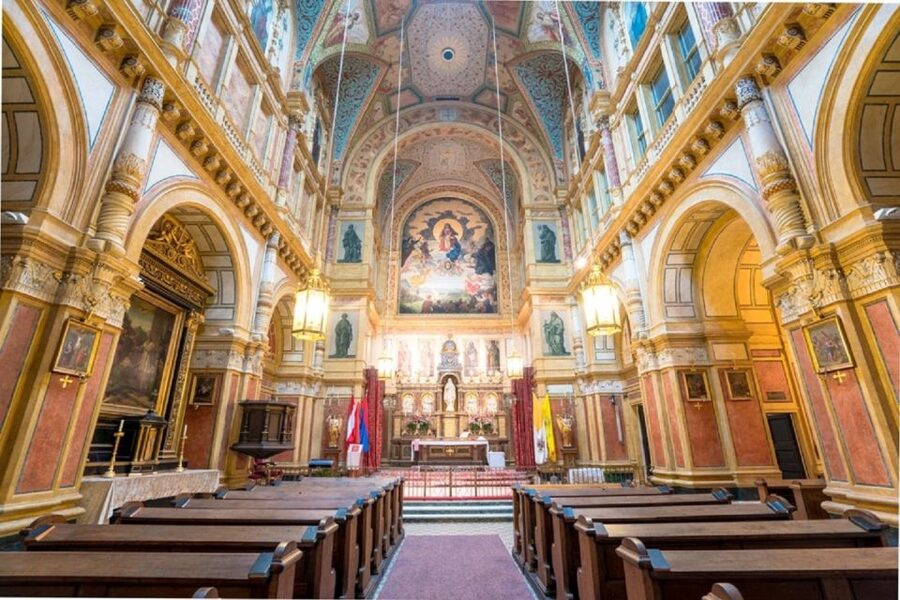
The first major stop is Maria Schutz Church, built in 1874 to replace an older Capuchin church. The exterior is only part of the story. The interior contains the art and religious details that make the visit worthwhile.
One important work is the altar painting showing the protection of Armenia by the Virgin Mary. It was painted by Camillo Sitte, giving you a direct visual link between the church’s Catholic setting and Armenian identity.
Another notable altar is dedicated to St Gregory the Illuminator, the figure traditionally associated with the Christian conversion of Armenia. The design is connected to Theophil von Hansen, the architect of Vienna’s Austrian Houses of Parliament. This is a useful connection for anyone interested in Vienna’s architecture, because it ties a less familiar church interior to one of the city’s best-known architects.
You should expect the guide to explain these works rather than simply point them out. The value lies in understanding who commissioned them, what they represent, and how Armenian devotion appears inside a Viennese church.
The church may appeal even if you have no Armenian background. The art is accessible, and the religious setting adds context to Vienna’s long tradition of church decoration. Still, this is a guided cultural visit, not a general sightseeing stop. If you prefer to explore entirely on your own, the close commentary may feel more structured than you want.
The Loretto Chapel and Mary with the Rose
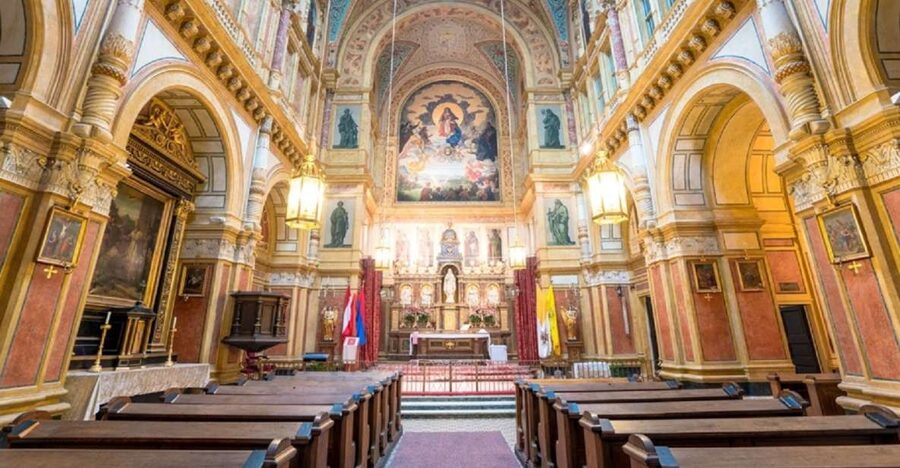
From the church, the tour continues to the Loretto Chapel. Its central object is the Baroque image Mary with the Rose, described as having survived the Turkish siege of Vienna in 1683 intact.
That link to the siege gives the painting a strong place in Vienna’s story. The image is not presented as an isolated work of art. It carries a connection to one of the city’s defining historical events and to the religious traditions of the monastery.
This is a small stop, but it rewards attention. The chapel is one of the places where the tour shifts from broad institutional history to a single object with a dramatic past. Your guide can help you notice why the image matters rather than leaving you to guess from a short label.
If you are photographing the church or chapel, remember that this is an active religious environment. The supplied information does not specify photography rules, so follow the guide’s instructions and be respectful during the visit.
The Refectory and a monumental biblical scene
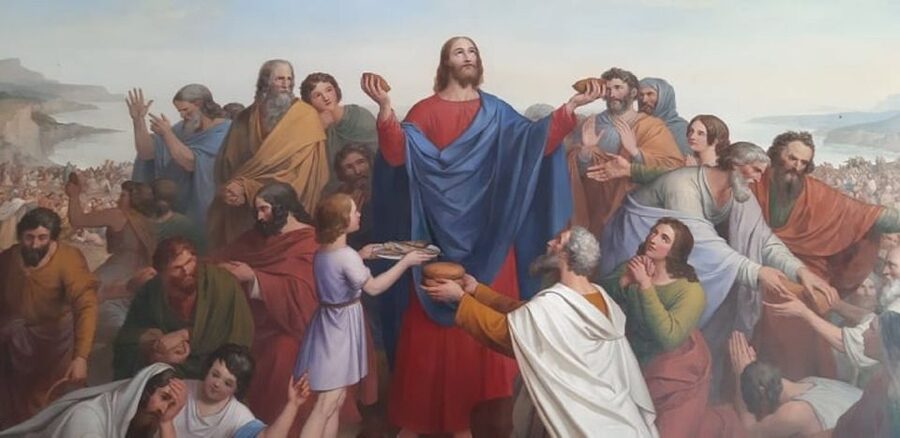
The route then passes through the refectory, the monastery’s dining room. Its key work is Ludwig Ferdinand Schnorr von Carolsfeld’s monumental painting The Feeding of the Five Thousand.
The subject is familiar, but the scale and setting give it weight. In a refectory, a large biblical scene is part of the room’s purpose, not just wall decoration. Your guide can connect the painting to the monks’ daily life and to the role of religious art within the monastery.
This is one of the tour’s strengths: the rooms are not treated as a string of unrelated sights. The church, chapel, refectory, library, and museum all show different sides of the same community.
You may find the refectory less immediately exciting than the library or the Aivazovsky paintings. It is worth giving the painting a few quiet moments, though, especially if you enjoy religious art and large historical canvases.
A different side of Vienna on the same trip:
- Vienna: Schönbrunn Palace & Gardens Skip-the-Line Tour
★ 4.7 · 7,739 reviews - Vienna: Light of Creation Votive Church Immersive Light Show
★ 4.8 · 6,779 reviews - Vienna Spanish Riding School Guided Tour
★ 4.7 · 6,765 reviews - Vienna: Classical Concert in the World-Famous Musikverein
★ 4.6 · 6,673 reviews
The Mekhitarist Library: 2,800 manuscripts and 170,000 publications
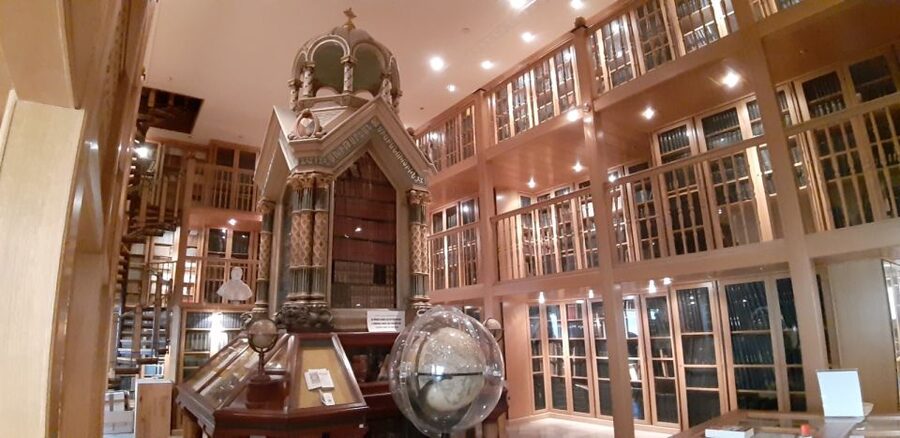
The library is likely to be the high point for anyone interested in books, languages, or Armenian culture. It contains more than 2,800 Armenian manuscripts, along with over 170,000 volumes of ancient and modern Armenian publications.
The collection also includes the largest group of Armenian newspapers and magazines in the Western world. That detail is important because it shows the library is not limited to rare religious texts. It preserves printed life, public debate, scholarship, and cultural memory across different periods.
You will not be able to study every shelf in a two-hour visit. The point is to see the scale of the collection and hear your guide explain its special role. A learned monk can place the books in the context of the Mekhitarist Congregation and Armenian scholarship in Vienna.
For many people, the library will be more meaningful than another ornate European room. It shows how culture survives through careful preservation. A manuscript or periodical can carry a language and a community’s memory across borders and generations.
The library also makes this tour especially suitable for you if you have already visited Vienna’s major palaces and museums. It offers something different, with a clear community focus rather than another imperial display.
Museum objects, coins, ceramics, and carpets
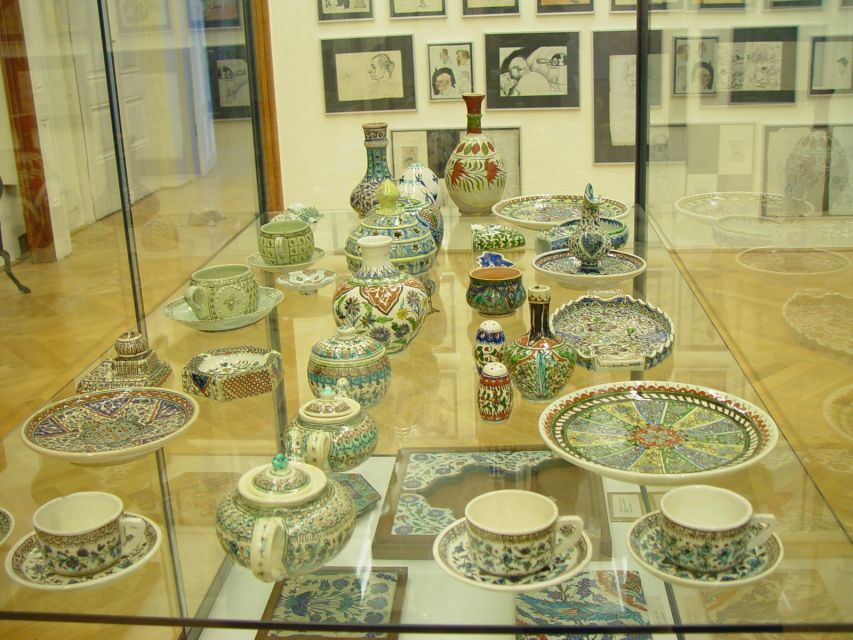
The museum adds breadth to the visit. Its collections include Armenian coins, currency from other countries, ceramics, carpets, and other objects, mainly made in Armenia.
The numismatic collection is particularly large, with about 10,000 Armenian coins and 20,000 coins from other countries. You do not need to be a specialist to appreciate the idea behind it. Coins reveal trade, rulers, borders, religious symbols, and changing political power in a very compact form.
The ceramics and carpets add a more domestic and artistic side to the museum. They help connect written culture and religious life with objects used, displayed, or valued in everyday settings.
Because the tour is limited to 10 participants, you should have a better chance to ask about specific pieces than you would in a large museum group. The guide’s explanations are central here. If you are curious about Armenian production, migration, or the way objects reached Vienna, ask questions as you go.
The museum’s range can also be a drawback for visitors who want one narrow subject. You will see many categories in a short time, so you may leave with a broad impression rather than a detailed understanding of every collection.
Armenian paintings, including three by Aivazovsky
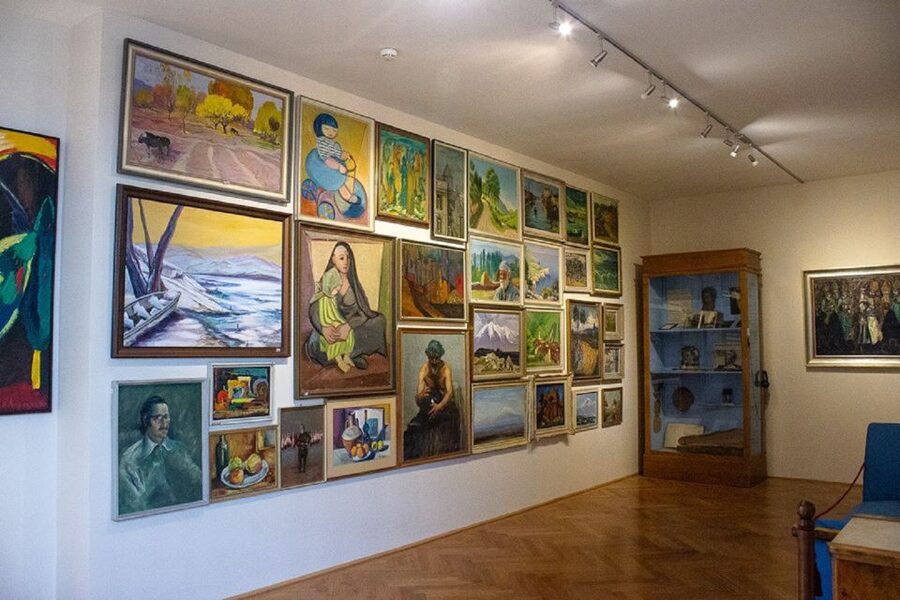
The gallery holds paintings by Armenian artists, including three works by Ivan Aivazovsky. Aivazovsky is best known for dramatic sea paintings, and his presence gives the art section an immediate point of interest for visitors who may not know much about Armenian painting.
These works are part of a larger story. The museum is not only preserving manuscripts and religious objects. It also presents Armenian artistic achievement and gives you a chance to see how national culture is represented through fine art.
I would treat this section as a reason to slow down. Ask the guide about the artists, the subjects, and how the paintings fit into the museum’s collection. The supplied details do not identify the titles or display arrangements of the three Aivazovsky paintings, so do not plan your visit around seeing one specific named work.
Still, the art gallery helps broaden the experience beyond the monastery’s religious function. You get architecture, sacred art, books, painting, coins, textiles, and liqueur in one compact visit.
Mechitharine liqueur and the final tasting
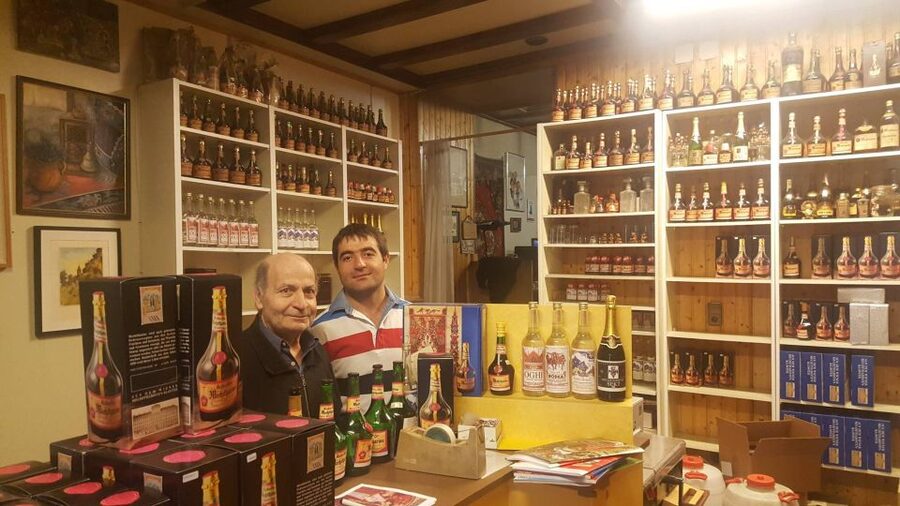
The tour ends with a tasting of Mechitharine liqueur, also known as Mechitharine or Mechitarine in different spellings. The tasting is not just a final drink. You will hear about its distinctive flavor, history, families, and business.
That makes the ending more useful than a standard sample poured without context. It gives you a small taste of a product connected to the monastery and its traditions.
The tasting also changes the mood of the visit. After two hours of church art, manuscripts, and museum objects, you have time to ask final questions and talk through what you have seen. If you do not drink alcohol, the information provided does not specify an alternative tasting, so you may want to check before booking.
The liqueur is included in the $84 price, along with the guide service and entrance fees. The tasting alone would not justify the cost, but it adds a memorable finish to a tour whose main value is access and explanation.
Is $84 a fair price for two hours?
At $84 per person, this is not a budget attraction. The price makes more sense when you consider what is included: entrance fees, a live monk guide, a small group capped at 10, access to the church, monastery museum, library, and liqueur tasting.
You are paying for a specialist visit rather than a general walking tour. The library and collection are the main value. Without a guide, you might recognize a beautiful church or an old painting, but you would miss much of the Armenian context that ties the rooms together.
The tour is also more appealing if you care about personal access and questions. A 10-person limit is small enough for direct interaction, and the available languages are Armenian, English, and German.
I would compare it with the cost of another paid museum visit in Vienna, but not as a simple price-per-hour calculation. Two hours is short. The experience is worthwhile if its subject interests you, yet it may feel expensive if you are choosing attractions only by duration.
Free cancellation up to 24 hours before the start and the option to reserve now and pay later reduce the risk of fitting it into a changing Vienna schedule. Check the available starting times when you book.
Who will enjoy this tour most?
I would recommend it most strongly to you if you fit one or more of these descriptions:
- You are interested in Armenian culture, language, religion, or family history.
- You enjoy unusual museums and smaller cultural institutions.
- You have already seen Vienna’s major imperial sights.
- You like art explained in its historical and religious setting.
- You prefer a small group with room for questions.
- You want a cultural experience that includes a personal welcome rather than only exhibits.
You do not need to be Armenian. One reviewer specifically found the tour worthwhile for anyone visiting Vienna, and that is a fair assessment. The paintings, church interior, books, and coins provide plenty of interest even without a personal connection.
Families with young children may find the two-hour format manageable, but the information provided does not give a recommended minimum age or children’s program. If your group needs a highly active outing, this may feel too quiet and discussion-based.
The tour is also a good choice for repeat visitors. Vienna has many famous sights, but this monastery gives you a different view of the city: one shaped by migration, scholarship, faith, and cultural preservation.
Practical details for your visit
Meet in front of the main entrance of the Mekhitarist Monastery. The tour lasts two hours, and starting times vary, so check availability before you commit to a particular day.
The live tour is offered in Armenian, English, or German. If you want the most from the visit, choose the language in which you can comfortably ask questions about art, religion, and history.
The experience is supplied by Ayrarat Tour. The current rating is 5 out of 5 from six verified bookings, with praise focused on the warm welcome, the church, the library, the art, and Father Vahan’s explanations. The small number of ratings means I would treat the score as encouraging rather than a complete measure of every possible experience.
Should you book Armenia in the Heart of Austria?
Book it if you want a focused, personal look at Armenian life in Vienna and value a guide who can connect architecture, paintings, manuscripts, objects, and tradition. The library, Aivazovsky paintings, Maria Schutz Church, and Mechitharine tasting give the two hours a clear shape.
Skip it if you want a broad tour of Vienna, a fast-paced activity, or a bargain attraction. At $84, the tour earns its price through specialist access and explanation, not through length.
For the right visitor, this is one of Vienna’s more distinctive cultural experiences. It lets you see a side of the city that most sightseeing routes leave out, and it does so through the people, books, art, and faith of a living Armenian community.
FAQ
How long does the Armenia in the Heart of Austria tour last?
The tour lasts two hours.
What language is the tour offered in?
The live guide service is available in Armenian, English, and German.
Where is the meeting point?
Meet in front of the main entrance of the Mekhitarist Monastery in Vienna.
What does the tour include?
The price includes entrance fees, guide service, and a Mechitharine liqueur tasting.
How many people are in the group?
The tour is a small-group experience limited to 10 participants.
Can I cancel for a refund?
You can cancel up to 24 hours in advance for a full refund. You can also reserve now and pay later.
Just added around Vienna
- Vienna: Johann Strauss 200th birthday anniversary exhibition★ 4.7 · 3 reviews
- Vienna Private Full Day Tour – Tickets to Schönbrunn & Lunch★ 5.0 · 3 reviews
- Private Tour from Vienna to Melk and Dürnstein★ 4.5 · 3 reviews
- Private Salzburg Day Trip from Vienna★ 4.0 · 3 reviews
- Vienna: Entry Ticket Belvedere 21 & Contemporary Art★ 4.3 · 3 reviews
- Full-Day Private Trip from Vienna to Budapest★ 4.5 · 3 reviews
- Vienna by Night: Private Evening Food and Drink Tour★ 5.0 · 3 reviews
- 1.5 Hour Cinematic Style Portrait Photoshoot and Tour in Vienna★ 4.5 · 3 reviews
Tours, compared.
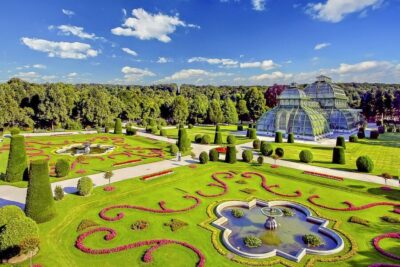
Schönbrunn Palace & Gardens Skip-the-Line Tour
Read our review →
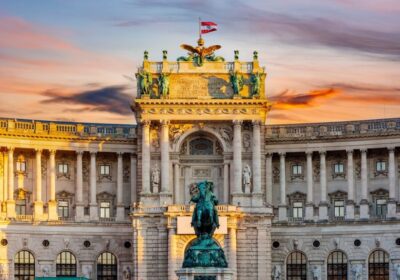
Skip-the-Line Sisi Museum, Hofburg and Gardens Tour
Read our review →
Skip-the-Line Schönbrunn Palace & Gardens Tour
Read our review →
Guided Walking Tour of City Center Highlights
Read our review →
Bus & Schönbrunn Palace Skip-the-Line Guided Tour
Read our review →
Guided Walking Tour of City Highlights & Hidden Gems
Read our review →