
Reviewed · CYCLING TOURS
Vienna: Small-Group Bike Tour with a Guide
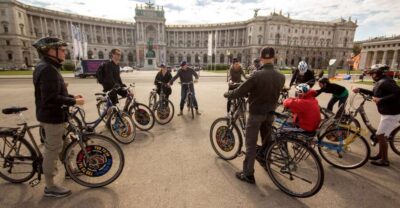
Vienna’s grand center makes far more sense from a bicycle seat. This three-hour ride links the Ring Boulevard and Danube Canal with major sights such as the Hofburg, Opera House, City Hall, and St. Stephen’s Cathedral, while also showing you the colorful Hundertwasser House and Leopoldstadt.
I like two things right away: you cover a lot of ground without being shut inside a tour bus, and the route mixes imperial Vienna with its more modern, artsy side. The well-maintained bike paths and included water also keep the outing practical. The main consideration is weather, since heavy rain, snow, or thunderstorms cancel the tour, and the ride is not suitable for people with mobility impairments.
In This Review
- Key points before you book
- Why a bicycle works so well in Vienna
- Getting set up at Velopold Vienna
- Prater and the first stretch beside the Danube
- Hundertwasser House and Vienna’s playful side
- The Ring Boulevard and imperial Vienna
- St. Stephen’s Cathedral and the historic center
- Leopoldstadt on the way back
- The guides, bikes, and quality of the ride
- Weather, comfort, and planning your day
- Who will get the most from this Vienna bike tour?
- Should you book it?
- FAQ
- Where does the Vienna bike tour meet?
- How long does the bike tour last?
- What languages are available?
- Is the tour offered as a small-group experience?
- What is included in the price?
- What sights does the route visit?
- What happens in bad weather?
Key points before you book
- A broad three-hour route: Start near the Prater amusement park, ride beside the Danube, then turn toward central Vienna and the Ring Boulevard.
- Imperial sights by bicycle: Stop for photos and stories at the Hofburg Palace, Opera House, City Hall, and St. Stephen’s Cathedral.
- A striking modern counterpoint: Hundertwasser House brings bright colors and unusual architectural shapes to a tour otherwise filled with grand historic buildings.
- Small-group format: You ride with a live guide in English or German rather than following a fixed audio commentary.
- Good practical value: The $55 price includes the bicycle, bottled water, and guide, but not food or transport to the meeting point.
- Useful for a first visit: The route gives you a quick orientation, followed by local hints for the rest of your time in Vienna.
Why a bicycle works so well in Vienna
Vienna can feel spread out when you walk between the old center, the Danube Canal, Leopoldstadt, and the Prater area. A bike lets you connect these districts in one outing, with less time spent crossing the same streets on foot.
This is not simply a sightseeing loop around the postcard center. The route begins by the colorful Prater amusement park, follows the Danube Cycle Path, then reaches Hundertwasser House before heading toward the Ring Boulevard. You get a useful contrast between Vienna’s recreational spaces, contemporary architecture, and imperial core.
I also like the balance between riding and stopping. The itinerary includes pauses at several historical sites, so you are not expected to pedal past everything while trying to take pictures. Your guide provides stories about Vienna and its former royals as you go, which gives the grand buildings some human context.
The listed price is $55 per person. For three hours with a bike, bottled water, and a live guide, that is a fair price if you want an active orientation to the city. You are paying for route planning and local explanation as much as for the bicycle itself. It is less appealing if you prefer to linger inside museums, since this tour focuses on outdoor sights and exterior views.
More bike days around Vienna:
- Classic Vienna: 3-Hour Guided Bike Tour
★ 4.7 · 1,846 reviews - Wachau Valley Wine Tasting Bike Tour from Vienna
★ 5.0 · 829 reviews - Vienna City Bike Tour
★ 4.5 · 599 reviews
Getting set up at Velopold Vienna
You check in at the front desk of the Velopold Vienna shop. The bicycle and biking gear are included, and the tour begins with an introduction to Vienna before you set off.
The available information describes the bicycles as high quality and well maintained. That matters on a three-hour ride, especially if you are not used to cycling in an unfamiliar city. You should still wear comfortable clothes and shoes. There is no need to dress for a formal palace visit, since the main sightseeing happens outdoors.
The tour is offered in English or German, with a live guide leading the group. A small-group format is available, which generally makes it easier to hear the guide and ask a question during stops. Exact group size is not specified, so I would not assume an intimate private ride.
Bring only what you need for the outing. Bottled water is supplied, but food is not included. Since hotel pickup and drop-off are also not included, you need to make your own way to the Velopold Vienna shop.
Prater and the first stretch beside the Danube
The ride sets off near the Prater amusement park. This gives the tour an early change of mood: instead of starting among palace facades, you begin near one of Vienna’s best-known recreational areas.
From there, the route reaches the Danube Cycle Path. Riding beside the water gives you a different view of the capital than the formal streets around the Hofburg. It also provides a practical introduction to Vienna’s cycling network, using designated and well-maintained paths rather than making the entire tour a contest with city traffic.
You should expect the guide to keep the group moving during this opening section. The chief value here is orientation and atmosphere. You see how Vienna connects its central districts with the Danube area, and you get a sense of the city beyond its most famous monuments.
The route is not described as a strenuous athletic ride, but it is still a three-hour cycling activity. If you rarely ride a bicycle, consider your comfort before booking. The tour is specifically not suitable for people with mobility impairments, and the supplied information does not promise an adapted bicycle or a slower alternative.
Hundertwasser House and Vienna’s playful side
One of the most distinctive stops is Hundertwasser House. Its colorful exterior and unconventional architectural design make it a sharp contrast to the symmetry and restraint of Vienna’s imperial buildings.
This is an especially useful stop because it prevents the tour from becoming a parade of palaces. Vienna is often introduced through emperors, formal avenues, and classical facades, but Hundertwasser House points to a more experimental side of the city. You can take pictures here and hear how the building fits into Vienna’s architectural character.
The stop is primarily an exterior photo and explanation point. Do not book this ride expecting a museum visit or an extended architectural tour inside the building. Its appeal comes from seeing the unusual design in person and placing it within the wider route.
I find this kind of contrast valuable on a first day. After seeing the grand center, a brightly colored building with irregular forms helps you understand that Vienna is not frozen in its imperial past. The tour gives both sides room without making either one the whole story.
A few more Vienna tours worth weighing up
- Vienna Spanish Riding School Guided Tour
★ 4.7 · 6,765 reviews - Vienna: Guided Walking Tour of City Center Highlights
★ 4.7 · 4,989 reviews - Vienna: Vienna Central Cemetery Guided Walking Tour
★ 4.8 · 3,307 reviews - Vienna: Bus & Schönbrunn Palace Skip-the-Line Guided Tour
★ 4.3 · 2,802 reviews
The Ring Boulevard and imperial Vienna
The Ring Boulevard is the historical heart of the ride. This broad ceremonial route was built around the old center and is lined with major public buildings, monuments, and palaces. By bicycle, you can connect several of these sights in one clear sequence.
The guide stops at important points along the way and explains Vienna’s former royals and political past. The commentary is a key part of the experience. Without it, the Opera House, City Hall, and Hofburg can blur into an attractive but confusing collection of grand facades.
The Hofburg Palace offers the strongest look at the city’s imperial identity. You see the exterior and hear stories linked to the former royal household. The palace complex is large, so a guided exterior stop cannot cover everything, but it gives you a useful first look and helps you decide if you want to return for a more detailed visit.
The Opera House brings another piece of Vienna’s identity into view. Even if you do not attend a performance, stopping outside lets you place the building within the city’s musical and cultural center. City Hall adds another impressive architectural stop and helps show how the Ring Boulevard was designed to display public power.
The pace is one of the tour’s advantages and its limit. You can see more than you would on foot in three hours, but each stop remains an introduction. If you want long visits inside the Hofburg or other buildings, plan separate time after the ride.
St. Stephen’s Cathedral and the historic center
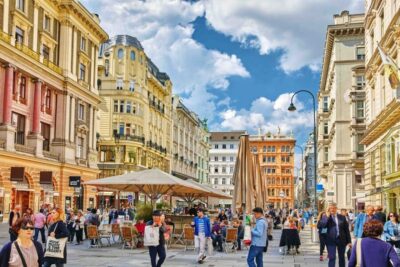
St. Stephen’s Cathedral is one of the most useful orientation points in central Vienna. Its distinctive roof and position in the old center make it easy to recognize, and the tour includes time to stop and take pictures.
A bicycle tour cannot replace walking through the surrounding streets, but it can show you where the cathedral sits in relation to the Ring Boulevard and the other central sights. That spatial sense helps when you return on your own.
The cathedral stop also rounds out the architectural story. Hundertwasser House shows modern color and irregular design. The Ring Boulevard presents imperial grandeur. St. Stephen’s Cathedral brings you into the older religious and civic center of Vienna.
You should think of the photo stops as markers for later exploring. The guide gives you a broad first look, while you decide which places deserve a longer visit. That is a sensible use of three hours, especially early in a stay.
Leopoldstadt on the way back
The return route passes through Leopoldstadt, an area described through its multicultural, gastronomical, and artsy character. This part of the tour adds everyday city texture after the formal buildings of central Vienna.
The information provided does not specify food tastings or restaurant stops, so food is not part of the package. You should read this section as a ride through the district, with the guide offering local context rather than a meal.
That distinction matters. If you want a food tour, this is not the right booking. If you want ideas for where to explore later, the ride through Leopoldstadt can help you notice a part of Vienna that may not appear on a palace-focused itinerary.
The return to the meeting point also makes the route easy to understand. You begin near Prater, see the Danube side and Hundertwasser House, cross into the historic center, then return through Leopoldstadt. It feels like a city overview rather than a single-neighborhood ride.
The guides, bikes, and quality of the ride
The experience is led in English or German. One recent tour was guided by Esther, who was specifically praised for giving useful information about the city and its sights. Guide assignments can vary, so you should not book on the assumption that Esther will lead your departure.
The strongest pattern in the available feedback concerns the basics that can make or break a bike tour: the bicycles, the route, and the guide’s explanations. The bikes are described as good, and the route is praised for combining a wide range of sights. That matches the design of the itinerary, which avoids sticking only to the best-known historic center.
The tour also benefits from clear stops. You are not simply following a guide through a city while trying to remember names. The Opera House, City Hall, Hofburg Palace, St. Stephen’s Cathedral, and Hundertwasser House give the ride a useful structure.
Still, this is a shared tour, not a private custom route. The guide has to balance cycling time, explanations, and the needs of the group. If you want to spend twenty minutes framing the perfect photograph or ask detailed questions about one building, a private guide or museum visit may suit you better.
Weather, comfort, and planning your day
Weather is the main practical risk. The tour does not operate in heavy rain, snow, or thunderstorms. Check the forecast before you build your day around it, and keep in mind that a clear morning can change by the scheduled starting time.
The duration is three hours, with starting times depending on availability. That makes it a useful morning activity or an early afternoon orientation, but you should allow extra time before and after for reaching the shop and continuing to your next plan.
Comfortable shoes and clothes are specifically recommended. You do not need food supplied by the tour, but you may want to eat before or after, since no meal is included. Bottled water comes with the booking.
Cancellation is flexible enough for uncertain plans: you can cancel up to 24 hours before the activity for a full refund. You can also reserve now and pay later. Those terms are helpful when weather is unsettled, though they do not remove the need to check the forecast and confirm the current start time.
Who will get the most from this Vienna bike tour?
I would choose this tour for a first visit when you want a fast, active introduction to Vienna. It is especially useful if you want to see both the imperial center and districts near the Danube without spending the entire day walking.
It suits you if you enjoy outdoor sightseeing, can ride comfortably for three hours, and like having a guide explain what you are seeing. The small-group option and live commentary are valuable if you want more contact than a self-guided rental provides.
It may not suit you if your main goal is interior access to palaces, museums, or churches. The route includes photo stops and historical explanations, but the activity is built around cycling between sights, not touring their rooms.
It is also a poor match for anyone with mobility impairments, since the activity is explicitly not suitable for that group. If severe weather is likely, keep another plan available.
Should you book it?
Book this Vienna bike tour if you want a well-rounded three-hour introduction with solid equipment, a route that reaches beyond the obvious center, and a guide who can connect the buildings to Vienna’s royal past. At $55, the combination of bicycle, water, guide, and route planning offers good value for an active first look at the city.
Skip it if you want a slow museum day, a food-focused outing, or a private itinerary. For most able-bodied visitors who are comfortable on a bicycle, this is a smart way to get your bearings quickly, photograph the major landmarks, and find parts of Vienna worth revisiting on foot.
FAQ
Where does the Vienna bike tour meet?
Check in at the front desk of the Velopold Vienna shop. Hotel pickup and drop-off are not included.
How long does the bike tour last?
The tour lasts three hours. Starting times depend on availability.
What languages are available?
A live guide is available in English or German.
Is the tour offered as a small-group experience?
Yes. A small-group option is available.
What is included in the price?
The booking includes a bicycle, bottled water, and a guide. Food and hotel transportation are not included.
What sights does the route visit?
The route includes the Prater area, the Danube Cycle Path, Hundertwasser House, the Ring Boulevard, the Opera House, City Hall, Hofburg Palace, St. Stephen’s Cathedral, and Leopoldstadt.
What happens in bad weather?
The tour does not take place during heavy rain, snow, or thunderstorms. You can cancel up to 24 hours in advance for a full refund.
Just added around Vienna
- Private Tour from Vienna to Melk and Dürnstein★ 4.5 · 3 reviews
- Vienna: Johann Strauss 200th birthday anniversary exhibition★ 4.7 · 3 reviews
- Vienna Private Full Day Tour – Tickets to Schönbrunn & Lunch★ 5.0 · 3 reviews
- Private Salzburg Day Trip from Vienna★ 4.0 · 3 reviews
- Vienna: Entry Ticket Belvedere 21 & Contemporary Art★ 4.3 · 3 reviews
- Full-Day Private Trip from Vienna to Budapest★ 4.5 · 3 reviews
- Vienna by Night: Private Evening Food and Drink Tour★ 5.0 · 3 reviews
- 1.5 Hour Cinematic Style Portrait Photoshoot and Tour in Vienna★ 4.5 · 3 reviews
Cycling Tours, compared.
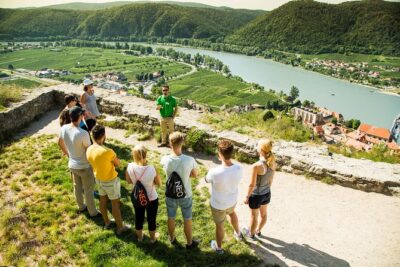
Wachau Valley Wine Tasting Bike Tour from Vienna
Read our review →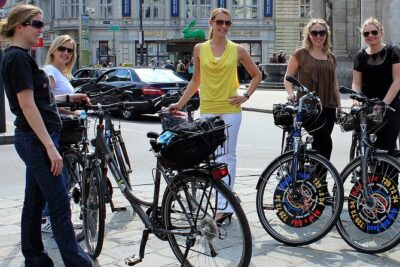
Grape Grazing: Wachau Valley Winery Biking Tour
Read our review →
Vienna by Bike 3-Hour All-In-One City Bike Tour in English
Read our review →
Browse the lists this tour appears in