Reviewed · GUIDED
Vienna – the making of a Weltstadt – guided Citytour
Vienna’s center makes more sense when you connect its buildings to the people and power behind them. This two-hour walk follows the city from a small Roman fort to an imperial capital, with stops at the Hofburg and St. Stephen’s Cathedral that explain why Vienna became both a royal residence and the emotional center of Austria.
I like two things here: the tour links architecture to history instead of treating monuments as isolated photo stops, and guide Christian Grausam adds practical tips for what to do next. The walk also reaches places many quick sightseeing routes pass too quickly, including Franziskanerplatz and Domgasse.
The main consideration is that the tour is German-language only and involves walking between several central sights. It is not suited to people with mobility impairments, and large bags or luggage are not allowed.
In This Review
- Key points to know before booking
- A two-hour walk that gives Vienna a storyline
- Freyung, Schottenkirche, and the city before the grand palaces
- Kohlmarkt and Michaelerplatz: approaching the imperial center
- The Hofburg and Vienna as a residential city
- Burggarten, Josefsplatz, and the city’s cultural side
- The Capuchin Crypt and the memory of rulers
- Franziskanerplatz and Domgasse: smaller streets, better detail
- St. Stephen’s Cathedral, Vienna’s central landmark
- Why the $35 price can be good value
- Pace, weather, bags, and who should book
- Should you book this Vienna city tour?
- FAQ
- How long does the Vienna city tour last?
- What language is the tour conducted in?
- Who guides the tour?
- How much does the tour cost?
- Where does the tour meet?
- What sights are included on the route?
- Can I bring luggage or a large bag?
- What happens if it rains?
- Can I cancel the booking?
Key points to know before booking
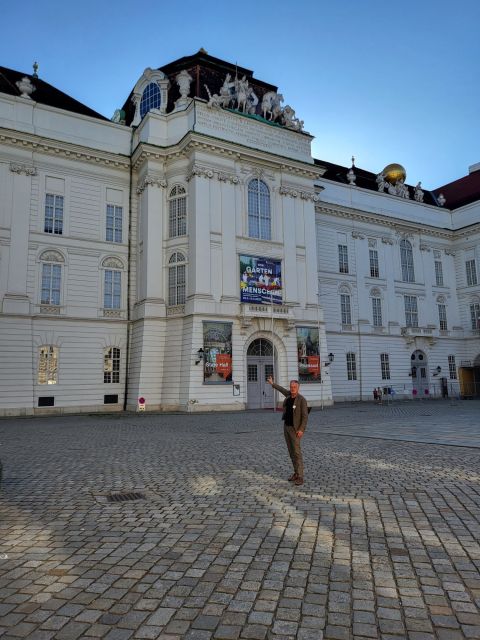
- Two millennia in two hours: Move from Roman Vienna through the Middle Ages, imperial rule, music, and the modern city.
- A guide who connects the dots: Christian Grausam is praised for tying historical periods to the buildings around you and keeping the walk lively.
- The Hofburg gets proper context: Learn why Vienna mattered as a residential city, not simply where the Habsburgs lived.
- St. Stephen’s Cathedral anchors the route: See the cathedral as Vienna’s geographical and emotional center.
- Central sights plus quieter corners: The route includes Freyung, Am Hof, Franziskanerplatz, and Domgasse along with major landmarks.
- Good value for a history-minded first look: At $35 per person for two hours, the tour is priced for an orientation walk rather than an in-depth interior visit.
A two-hour walk that gives Vienna a storyline
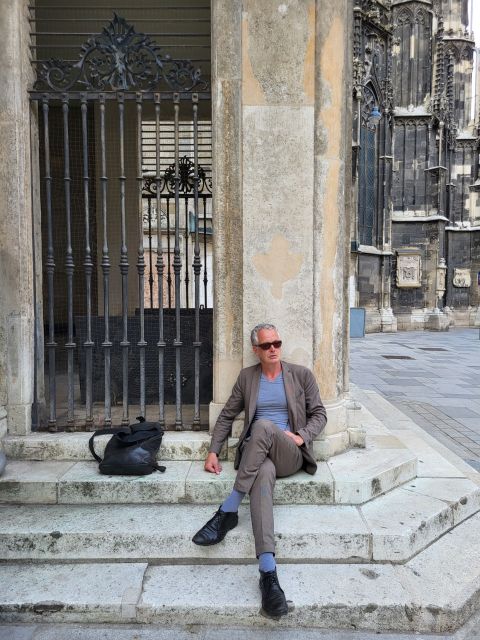
I find Vienna easiest to understand when you think of it as several cities layered on top of one another. A Roman military settlement came first. Medieval Vienna grew around religious and civic centers. The Habsburg court turned the city into a seat of power, and the 19th century pushed it toward major European importance.
This tour uses that sequence as its main idea. You are not simply shown a church, palace, or square and handed a date. You are asked to see how each place fits into Vienna’s growth.
That approach matters because the city center can feel polished and grand at first glance. The palaces are large, the streets are formal, and the famous names come quickly. A guide who explains the changes over time can help you see why the streets look as they do and why Vienna has such a strong sense of ceremony.
The walk is led by a certified local guide, and Christian Grausam is named as the guide associated with the experience. His style, as reflected in the feedback provided, focuses on making historical periods and buildings fit together. He also gives suggestions for later activities, which is useful when this is one of your first stops in the city.
The tour is conducted in German. That is an important booking point. If you are comfortable following a German-speaking historical tour, the format should suit you well. If not, the content may be difficult to follow, even though the route itself is easy to recognize.
A few more Vienna tours worth weighing up
- Vienna Spanish Riding School Guided Tour
★ 4.7 · 6,765 reviews - Vienna: Guided Walking Tour of City Center Highlights
★ 4.7 · 4,989 reviews - Vienna: Vienna Central Cemetery Guided Walking Tour
★ 4.8 · 3,307 reviews
Freyung, Schottenkirche, and the city before the grand palaces
Depending on the option booked, the walk begins at a different meeting point. One listed route starts at Freyung, where the itinerary includes the Schottenkirche, or Scots Church.
Freyung is a useful place to begin because it does not feel like a single monument with a single story. It brings together religious, civic, and urban history in one central setting. From here, the guide can begin explaining how Vienna developed beyond its earliest Roman base.
The Schottenkirche adds a medieval and ecclesiastical layer. Its presence helps shift your attention away from the later imperial image of Vienna. You begin to see that the city was shaped by religious foundations and urban institutions long before the grand 19th-century avenues.
The route then moves toward Am Hof. This square has a name that tells you something about Vienna’s courtly past, but the value of the stop is the connection between open civic spaces and the rulers who used them. I like this part of the route because it gives you a sense of Vienna as a working capital, not only a collection of palaces.
Do not expect a long interior visit at every stop. This is a walking tour, and the emphasis is on explanation from the street. That keeps the pace moving, but it also means you should book a separate visit if you want detailed time inside the churches or museums.
Kohlmarkt and Michaelerplatz: approaching the imperial center
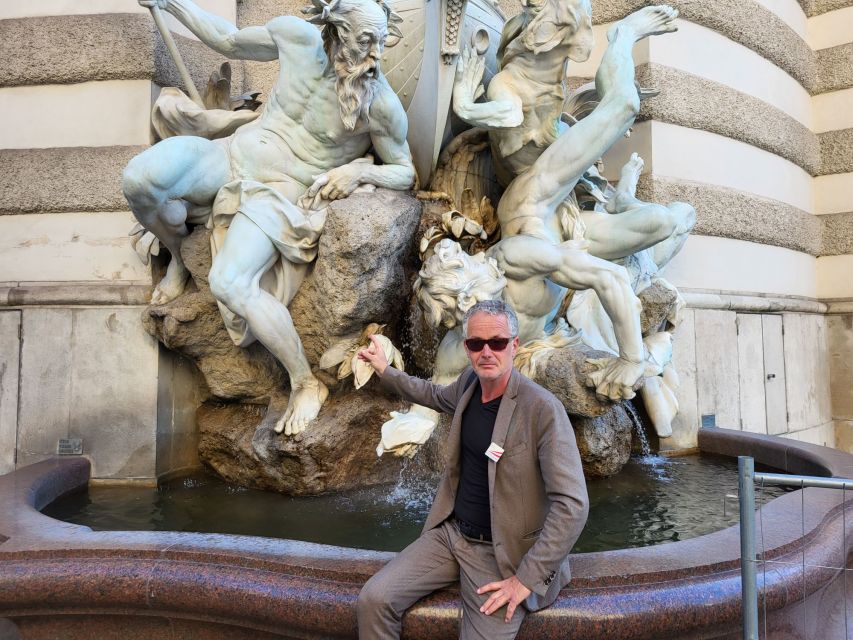
From the older central quarters, the route continues along Kohlmarkt toward Michaelerplatz. These streets bring you close to the Hofburg and show how Vienna’s commercial and royal worlds sit side by side.
Kohlmarkt is one of the city center’s best-known routes, but a guide can give it more meaning than a quick stroll alone. It helps you see the approach to the imperial complex as part of a larger urban design. The shift from narrow historic streets toward the Hofburg’s broad spaces is one of the tour’s strongest visual transitions.
Michaelerplatz is a natural pause before entering the Hofburg area. Here, the past is not confined to one period. The square leads you toward imperial Vienna while also recalling the city’s much older foundations. The tour’s focus on architectural styles is especially useful at this stage, since Vienna’s center brings different centuries into close view.
I would pay attention to the question of what remains from the Middle Ages. Vienna can look overwhelmingly Baroque and imperial, but earlier layers have not vanished. They survive in street patterns, churches, foundations, and the uneven texture of the old center.
The Hofburg and Vienna as a residential city
The Hofburg is the central historical lesson of the walk. It was not merely a palace to admire from outside. It was the heart of Vienna as a residential city, where rulers lived, governed, received visitors, and shaped the life of the capital.
That distinction is valuable. Many people see the Hofburg as one grand complex, but its importance comes from the way it expanded with the power of the Habsburg rulers. The tour follows the footsteps of major figures, from Charles V to Emperor Franz Joseph and Elisabeth, often known as Sisi.
The name Franz Joseph brings Vienna’s long imperial period into focus. Elisabeth adds a more personal and popular side to the story, though the tour’s larger purpose is to explain how rulers affected the city around them. You should come away with a clearer idea of why Vienna became a residential capital and why the Hofburg remains central to its identity.
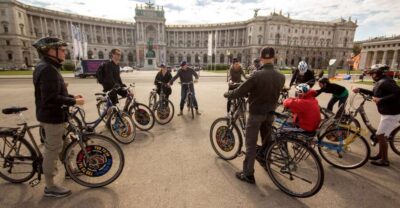
Heldenplatz continues that imperial story. The square gives the route a broad setting for discussing power, military history, and public ceremony. It also provides a useful contrast to the tighter streets earlier in the walk.
If you enjoy political history, this may be your favorite part. If you prefer art, music, or everyday urban life, the guide also places Vienna’s cultural story into the route, so the tour does not remain fixed on rulers alone.
A different side of Vienna on the same trip:
- Vienna: Vivaldi’s Four Seasons Concert in Karlskirche
★ 4.7 · 14,951 reviews - Vienna: Spanish Riding School Training
★ 3.9 · 9,281 reviews - Vienna: Skip-the-cashier-desk-line Giant Ferris Wheel Ride
★ 4.5 · 7,859 reviews - Vienna: Schönbrunn Palace & Gardens Skip-the-Line Tour
★ 4.7 · 7,739 reviews
Burggarten, Josefsplatz, and the city’s cultural side
The walk continues through Burggarten and toward Josefsplatz. These stops help soften the official image of the Hofburg area. Vienna was a center of court power, but it was also a city of gardens, scholarship, performance, and music.
The tour introduces Vienna as a center of art and music, with Mozart and Beethoven among the figures connected to the city. Josef Haydn also enters the story through a melody that is important to Germany today. These references are not random musical trivia. They show how Vienna’s cultural influence reached beyond the imperial court.
I like the way this part of the route broadens the tour. You are not asked to choose between political Vienna and musical Vienna. The two developed together. Royal patronage, urban wealth, churches, concert life, and the movement of famous composers all helped shape the city’s public image.
The stop at the Albertina adds another point of reference for Vienna’s art world. The tour does not promise an extended museum visit, so you should treat the building as part of the city walk rather than as a substitute for entering the museum.
That is a recurring practical point. This experience is best for orientation and context. It gives you a strong framework for later visits, but its two-hour length cannot cover every collection, interior, and historical detail in depth.
The Capuchin Crypt and the memory of rulers
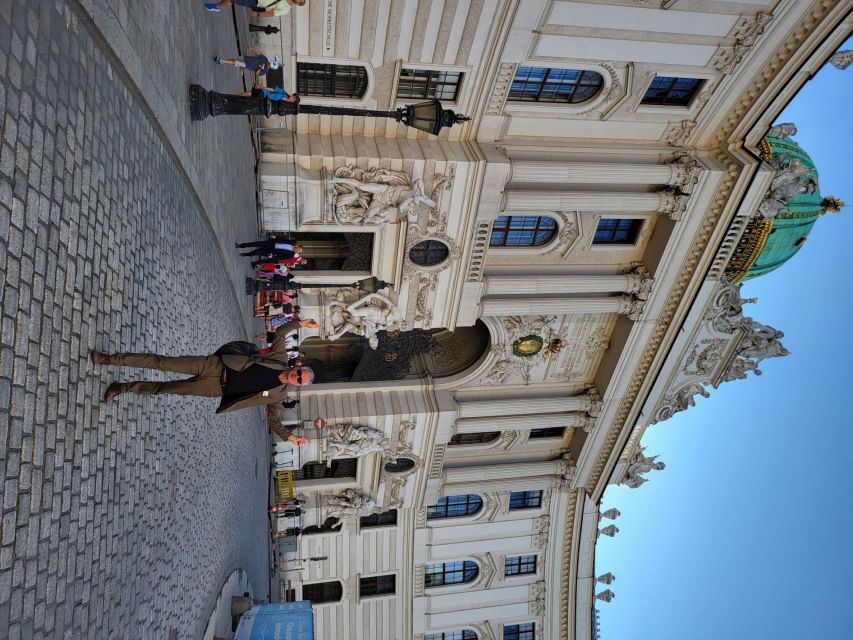
The Capuchin Crypt brings the imperial story to a more intimate scale. It is linked with the Habsburg rulers and the memory of the dynasty that shaped Vienna for centuries.
Even if you do not enter, the crypt belongs in the route because it helps explain how dynastic power was remembered. The Hofburg shows rulers in public life. The Capuchin Crypt points toward ceremony, inheritance, and death.
This is one of the more useful stops for understanding the emotional side of imperial Vienna. Grand buildings can make history feel distant. A place connected with the burial of rulers reminds you that the dynasty was made up of real people, families, and generations.
The tour does not list an included entrance to the crypt, so you should not assume that an interior visit forms part of the two-hour experience. The emphasis remains on the guided walk and the stories told along the way.
Franziskanerplatz and Domgasse: smaller streets, better detail
The route then moves toward Franziskanerplatz and Domgasse. These are the kinds of locations that can add texture to a city tour because they feel less like a formal parade of major landmarks.
Franziskanerplatz helps you see another side of central Vienna, one that is not defined only by imperial scale. Smaller squares and side streets make the historic center easier to read as a lived city. They also give the guide room to point out details you might miss while hurrying from one famous building to the next.
Domgasse carries a strong musical association through Mozart. His connection with Vienna is part of the city’s cultural identity, and this stop places that story in a specific street rather than leaving it as a general statement about famous composers.
For me, this section is important because it balances the large political spaces. The Hofburg and Heldenplatz explain the machinery of power. Franziskanerplatz and Domgasse help you picture the city as a place where people lived, worked, worshipped, composed, and moved through ordinary streets.
St. Stephen’s Cathedral, Vienna’s central landmark
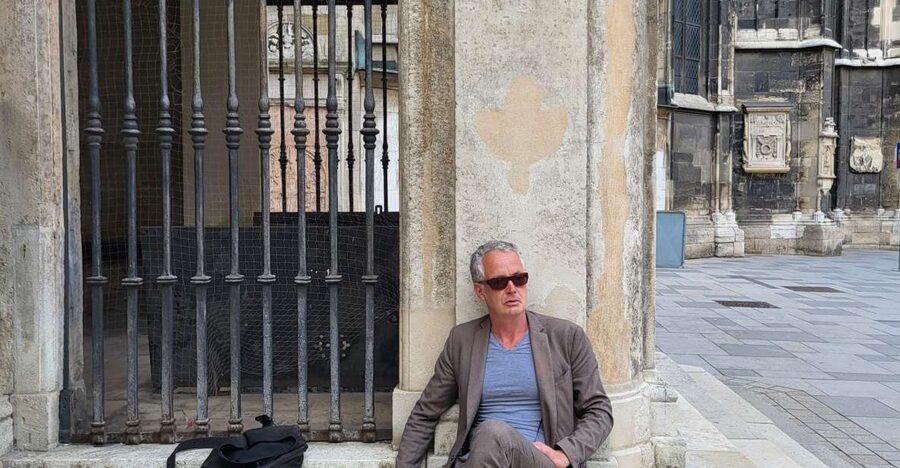
The walk ends at St. Stephen’s Cathedral, the geographical and emotional center of Vienna. This is a fitting finish because the cathedral brings together many of the themes introduced earlier: medieval memory, religious power, urban identity, and the way Vienna organizes itself around its historic core.
The cathedral is not just another stop on a list. Its location helps you understand the shape of the old city. It also offers a strong contrast with the Hofburg. The Hofburg represents dynastic government, while St. Stephen’s represents the city’s spiritual and civic center.
The final stop can help all the earlier pieces settle into place. You have seen the Roman origins discussed, older religious foundations, courtly streets, imperial buildings, musical associations, and smaller central squares. St. Stephen’s Cathedral gives the walk a clear point of arrival.
Again, this is primarily an exterior walking experience unless your particular arrangement says otherwise. If you want to explore the cathedral inside, plan that as a separate activity so you are not trying to fit too much into the guided time.
Why the $35 price can be good value
At $35 per person, the tour sits in a sensible range for a two-hour city-center orientation with a certified local guide. The value depends on what you want from Vienna.
If you only need directions and a list of sights, you can walk this part of the city on your own. The streets are central, and the major landmarks are easy to identify. You are paying for the historical connections, the route planning, and the explanations that turn separate buildings into one story.
I consider the price strongest for a first visit, especially if you want to understand Vienna before choosing which museums, churches, and palace interiors deserve more of your time. The guide’s practical suggestions for later activities add value because they can help you plan the rest of your stay.
It is less suited to someone seeking a long, specialist lecture on one subject. Two hours covers a wide span, from Roman beginnings to modern Vienna, so the treatment of each period must remain selective.
The excellent overall rating and repeated praise for the guide’s clear, lively presentation support the idea that the main value is the guide’s ability to explain. Still, I would judge the booking by language first. A well-reviewed German tour is not the right purchase if you need English.
Pace, weather, bags, and who should book
The tour lasts two hours, which is long enough to cover the main central route without taking up an entire morning or afternoon. You should arrive 10 minutes before the start, since the meeting point may vary by the option you choose.
The tour runs rain or shine. Wear shoes suitable for city walking and check the forecast before you leave, since there is no weather cancellation built into the experience. Large bags and luggage are not allowed, so this is not a good activity to schedule while carrying airport baggage.
The experience is aimed at people who can walk between the listed central locations. It is specifically not suitable for people with mobility impairments. If stairs, uneven historic streets, or a steady walking pace are a concern, choose a different format.
I would recommend it most strongly for:
- First-time visitors who want a clear overview before visiting interiors
- History-minded visitors interested in Vienna’s rulers and urban growth
- Music lovers who want Mozart, Beethoven, and Haydn placed in the city’s story
- German-speaking visitors who prefer a local guide
- Anyone who wants both famous landmarks and less obvious central streets
It may be less suitable for visitors who need English, want extensive time inside museums, or prefer a slow tour focused on one building.
Should you book this Vienna city tour?
Book it if you want Vienna to feel connected rather than scattered. The route brings together Freyung, the Hofburg, Heldenplatz, Burggarten, the Capuchin Crypt, Domgasse, and St. Stephen’s Cathedral, while the guide explains how Roman beginnings, medieval layers, imperial rule, and music shaped the city.
Christian Grausam’s strongest role is making the buildings part of a larger story and adding useful ideas for the rest of your visit. At $35, that is a fair trade for two hours of orientation.
Skip it if you need an English-language tour, cannot manage a walking route, or want detailed interior visits. For a German-speaking visitor who wants a lively introduction to Vienna’s past and present, this is a practical first step.
FAQ
How long does the Vienna city tour last?
The tour lasts two hours.
What language is the tour conducted in?
The live guided tour is conducted in German.
Who guides the tour?
The experience is provided by Christian Grausam, a local certified tourist guide.
How much does the tour cost?
The listed price is $35 per person.
Where does the tour meet?
The meeting point may vary based on the option booked. Freyung is the meeting point for the option identified with Freyung.
What sights are included on the route?
The route can include Schottenkirche, Freyung, Am Hof, Kohlmarkt, Michaelerplatz, the Hofburg, Heldenplatz, Burggarten, Josefsplatz, the Albertina, the Capuchin Crypt, Franziskanerplatz, Domgasse, and St. Stephen’s Cathedral.
Can I bring luggage or a large bag?
No. Luggage and large bags are not allowed.
What happens if it rains?
The tour takes place rain or shine.
Can I cancel the booking?
You can cancel up to 24 hours in advance for a full refund. A reserve now and pay later option is also available.
Just added around Vienna
- Private Tour from Vienna to Melk and Dürnstein★ 4.5 · 3 reviews
- Vienna: Johann Strauss 200th birthday anniversary exhibition★ 4.7 · 3 reviews
- Vienna Private Full Day Tour – Tickets to Schönbrunn & Lunch★ 5.0 · 3 reviews
- Private Salzburg Day Trip from Vienna★ 4.0 · 3 reviews
- Vienna: Entry Ticket Belvedere 21 & Contemporary Art★ 4.3 · 3 reviews
- Full-Day Private Trip from Vienna to Budapest★ 4.5 · 3 reviews
- Vienna by Night: Private Evening Food and Drink Tour★ 5.0 · 3 reviews
- 1.5 Hour Cinematic Style Portrait Photoshoot and Tour in Vienna★ 4.5 · 3 reviews
Guided, compared.
Guided Walking Tour of City Center Highlights
Read our review →
Bus & Schönbrunn Palace Skip-the-Line Guided Tour
Read our review →
Tickets for Mozarthaus Vienna with Audio Guide
Read our review →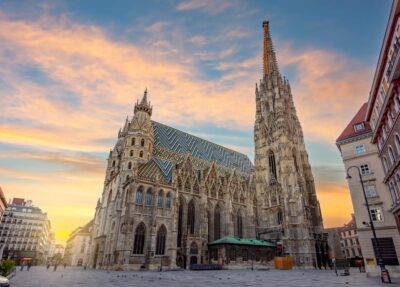
Guided Walking Tour of City Highlights & Hidden Gems
Read our review →