Reviewed · TICKETS
Vienna: Tickets to Haus der Musik
Vienna’s Haus der Musik turns music into something you can touch, test, and play. You can face a virtual Vienna Philharmonic as its conductor, build a waltz with dice, and hear your own name turned into a Mozart-style composition. The interactive exhibits are the main event, not a side feature.
I like the mix of composer stories and sound science, and I like that the museum works for adults, children, and people who cannot read a musical score. The main consideration is time: the museum is larger than it first appears, and a quick visit can leave you rushing past exhibits that deserve attention.
In This Review
- Key points at a glance
- A music museum that asks you to press buttons
- The composer level: Haydn through Schönberg
- Conducting the Vienna Philharmonic
- Sound science, hearing, and instruments
- The dice-made waltz and other hands-on stops
- How long should you spend here?
- Is the $22 ticket good value?
- Access and practical details
- Who will enjoy Haus der Musik most?
- Should you book Haus der Musik?
- FAQ
- Where is Haus der Musik located?
- How long is the ticket valid?
- What is included with admission?
- Do I need to bring headphones?
- Is Haus der Musik wheelchair accessible?
- Are children admitted free?
- Is the Namadeus certificate included?
- Are food and drinks included?
Key points at a glance
- Conduct the Vienna Philharmonic: Test your timing and see how a virtual orchestra responds to your baton.
- Meet seven major composers: Follow Haydn, Mozart, Beethoven, Schubert, Strauss, Mahler, and Schönberg through documents, objects, costumes, and installations.
- Play with sound: Explore hearing, instruments, noises, and the physics behind music through hands-on displays.
- Make music without training: Use the Namadeus Game to hear your name as a Mozart composition and create a waltz with a roll of the dice.
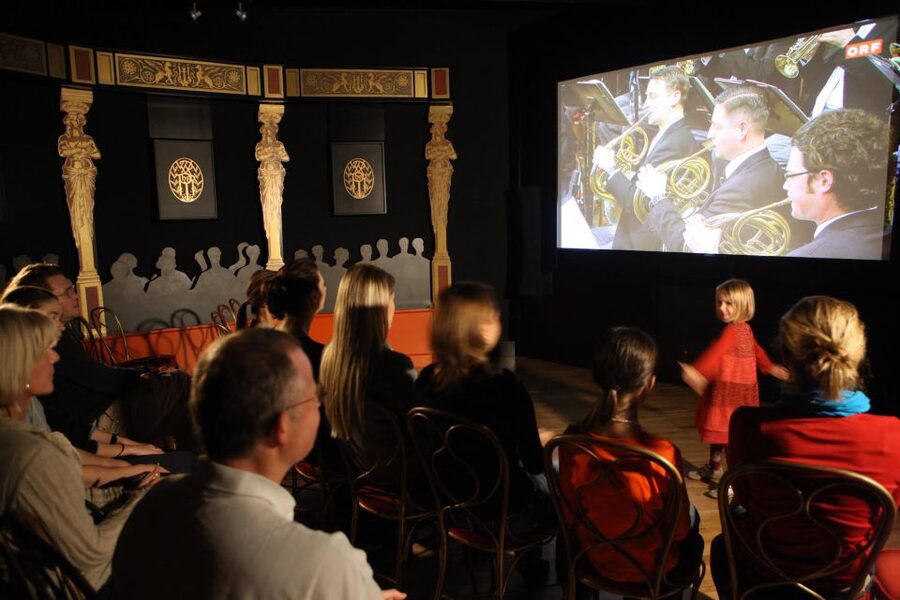
- Watch the New Year’s Concert: Hear the Vienna Philharmonic’s famous performance in HD quality.
- Plan for more than a quick stop: The four musical levels can fill a couple of hours, and careful visitors may spend four hours here.
A music museum that asks you to press buttons
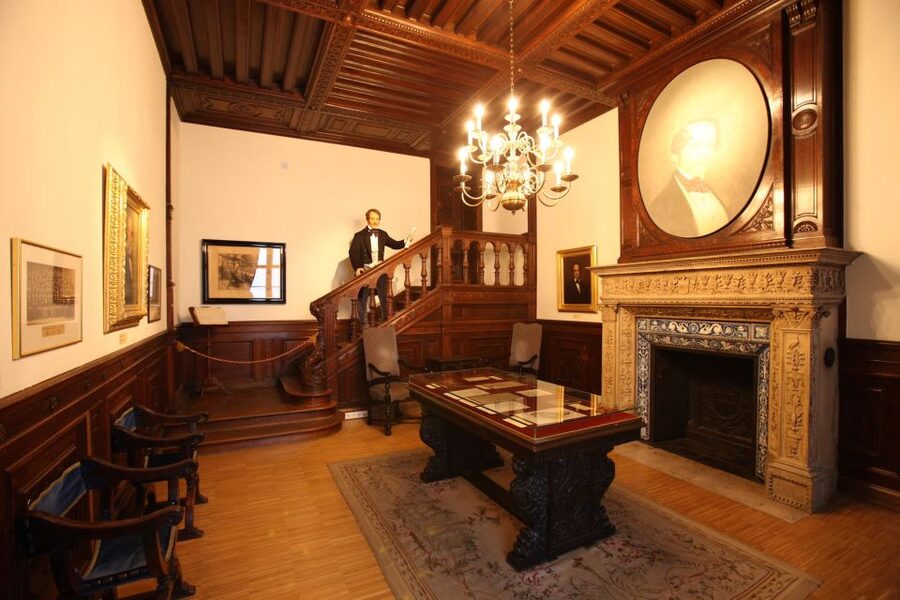
Haus der Musik occupies the former Palais of Archduke Charles in Vienna’s 1010 district. The setting gives the museum a serious musical connection: Otto Nicolai lived here when he founded the Vienna Philharmonic Orchestra in 1842.
That link is presented through the Museum of the Vienna Philharmonic, where you can see documents and mementos tied to the orchestra. It is a useful starting point because it places Vienna’s concert tradition in a real location rather than treating it as a vague cultural label.
Then the museum changes pace. Instead of walking through quiet rooms filled only with framed information, you encounter sound stations, digital displays, instruments, and tests that ask you to take part. You are not expected to be a musician to get something from the visit.
I especially like this balance. One person in your group can read about Viennese composers while another experiments with sound, and a child can try an interactive game without being pushed aside by a formal museum route. The mix also helps explain why the museum attracts both serious music fans and people who simply want an entertaining indoor stop.
A few more Vienna tours worth weighing up
- Vienna: Classic Ensemble Vienna in St. Peter’s Church Ticket
★ 4.7 · 4,819 reviews - Vienna Kunsthistorisches Museum Day Admission Ticket
★ 4.6 · 3,690 reviews - Vienna: Tickets for Mozarthaus Vienna with Audio Guide
★ 4.2 · 2,344 reviews
The composer level: Haydn through Schönberg
The history level introduces seven major figures connected with Vienna’s musical life: Haydn, Mozart, Beethoven, Schubert, Strauss, Mahler, and Schönberg. Each appears in the context of his time, with historic documents, personal items, models, costumes, and modern displays.
This is not just a list of names you may recognize from concert programs. The presentation places each composer in a social and historical setting, which helps you understand how music developed across generations. You can move from the world of the Wiener Klassik to later changes in Viennese music and see how different periods relate to one another.
Mozart receives particular attention, including a room that can be a highlight for anyone interested in his life and work. The museum also includes the Namadeus Game, where you can hear your name transformed into an original Mozart composition. A certificate is not included, so you would need to pay separately if you want that keepsake.
The composer displays are more useful if you slow down. The museum contains enough written and historical material to reward an adult who enjoys reading, but the interactive elements mean children do not have to stand still through every panel. I would let each person choose a favorite composer, then spend extra time in that section rather than trying to absorb everything equally.
Conducting the Vienna Philharmonic
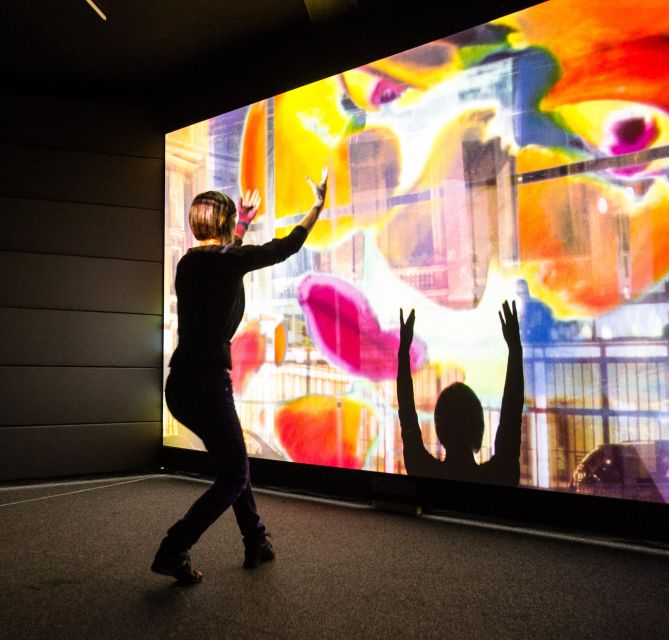
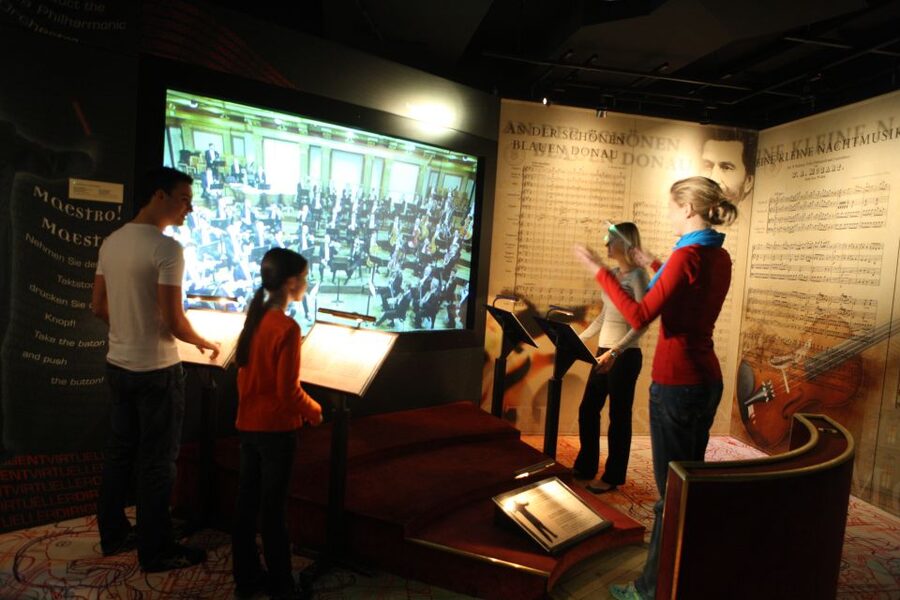
The virtual conducting station is one of the museum’s most memorable activities. You take the role of conductor and face a digital version of the Vienna Philharmonic Orchestra, testing whether you can keep the performance under control.
This exhibit gives you a practical sense of what a conductor does. You are not simply listening to a famous orchestra. You are asked to guide the pace and respond to the music, which makes the relationship between conductor and players easier to understand.
It is also a good activity for mixed groups. A classical music enthusiast may approach it with confidence, while someone with no musical background can enjoy the challenge as a game. The point is not to prove that you have perfect technique. The point is to feel how timing and gestures affect a performance.
You can also listen to the Vienna Philharmonic’s New Year’s Concert in HD quality. That adds a more traditional listening experience after the hands-on displays. The contrast works well: one part lets you control the music, while another lets you sit back and hear a polished performance from one of Vienna’s best-known orchestras.
Sound science, hearing, and instruments
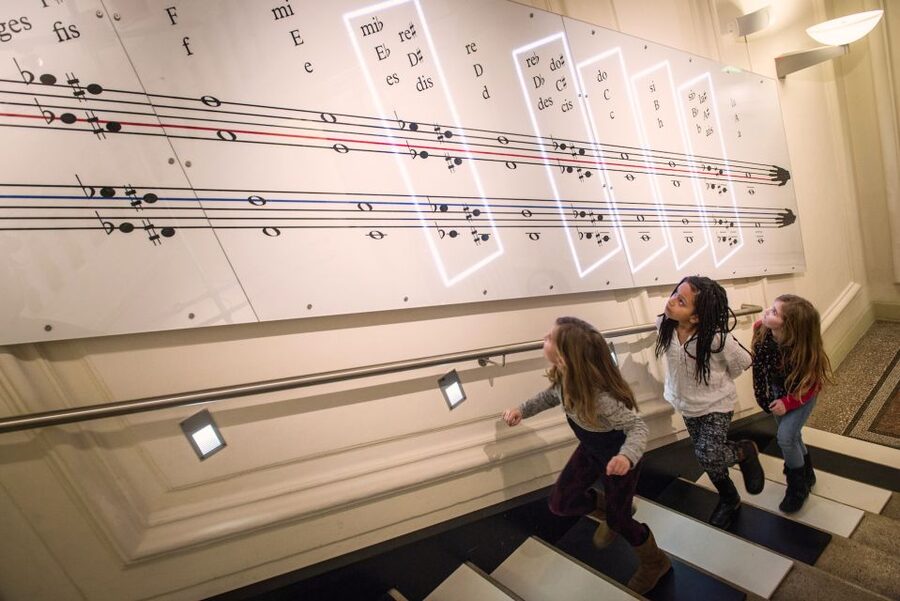
Another major section explains how sound works. You can experiment with noises, instruments, hearing, and the physical behavior of sound through interactive displays.
This part makes Haus der Musik useful even if you are not especially interested in composers. Music becomes a science lesson, but the museum presents it through actions rather than a schoolbook lecture. You can test things for yourself and connect what you hear with how sound is produced and received.
I would allow extra time here if you are visiting with children. The exhibits provide a reason to keep moving, testing, and comparing results. Adults can also find plenty to think about, especially if you enjoy the connection between physics, physiology, and music.
The museum’s four floors each have a different focus. That structure helps you change gears as you move through the building, but it also means the experience can feel quite full. A family stopping for a short break may enjoy the main interactive stations, while someone who wants to read every panel could easily spend an afternoon.
A different side of Vienna on the same trip:
- Vienna: Vivaldi’s Four Seasons Concert in Karlskirche
★ 4.7 · 14,951 reviews - Vienna: Spanish Riding School Training
★ 3.9 · 9,281 reviews - Vienna: Skip-the-cashier-desk-line Giant Ferris Wheel Ride
★ 4.5 · 7,859 reviews - Vienna: Schönbrunn Palace & Gardens Skip-the-Line Tour
★ 4.7 · 7,739 reviews
The dice-made waltz and other hands-on stops
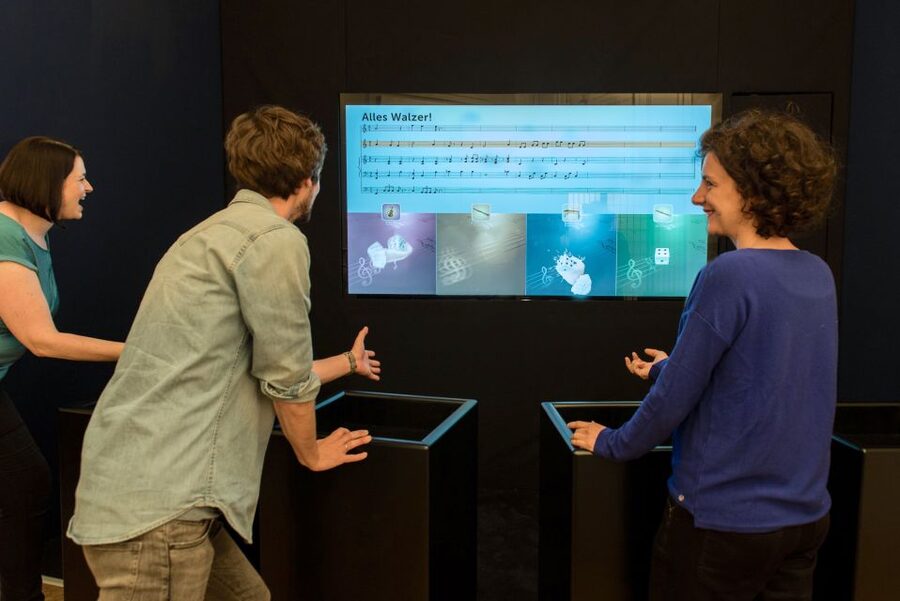
The waltz activity is a clever way to show how musical choices can combine into a complete piece. You create your own waltz by throwing dice, turning chance into part of the composition.
You do not need musical studies to take part. That is an important strength of the museum. The activities remove the fear that music belongs only to trained performers, and they give you something concrete to do instead of asking you to admire music from a distance.
The Namadeus Game works in a similar spirit. Hearing your own name as a Mozart composition is playful, personal, and easy to understand. If you are visiting as a couple or family, these are the sort of stations that can create shared memories without requiring everyone to have the same level of interest.
The hands-on displays are also why I would not label Haus der Musik only as a classical music museum. Classical composers are central, but the museum also deals with sound, instruments, technology, and the act of making music. That wider scope keeps the visit from becoming too narrow.
How long should you spend here?
Your ticket is valid for one day from first activation, so you do not need to race through the building in a fixed time slot. No guided tour or timed itinerary is listed, and the visit works as a self-paced museum stop.
For a quick introduction, you might spend a couple of hours on the main floors and focus on the conducting station, Mozart displays, sound experiments, and New Year’s Concert. If you enjoy reading and trying nearly every exhibit, plan for much longer. One especially enthusiastic visit lasted more than four hours without feeling tedious.
The museum is large enough that a return visit could make sense if you are staying in Vienna for several days. On a first visit, I would resist trying to complete every screen and panel. Pick a pace that leaves room for the interactive displays, since they are what make this museum different from a standard composer exhibition.
The central location also makes Haus der Musik easy to pair with other sightseeing in Vienna. It is at Seilerstätte 30, in the city’s 1010 district. Transfers are not included, so you make your own way there, but the location suits a day spent exploring central Vienna.
Is the $22 ticket good value?
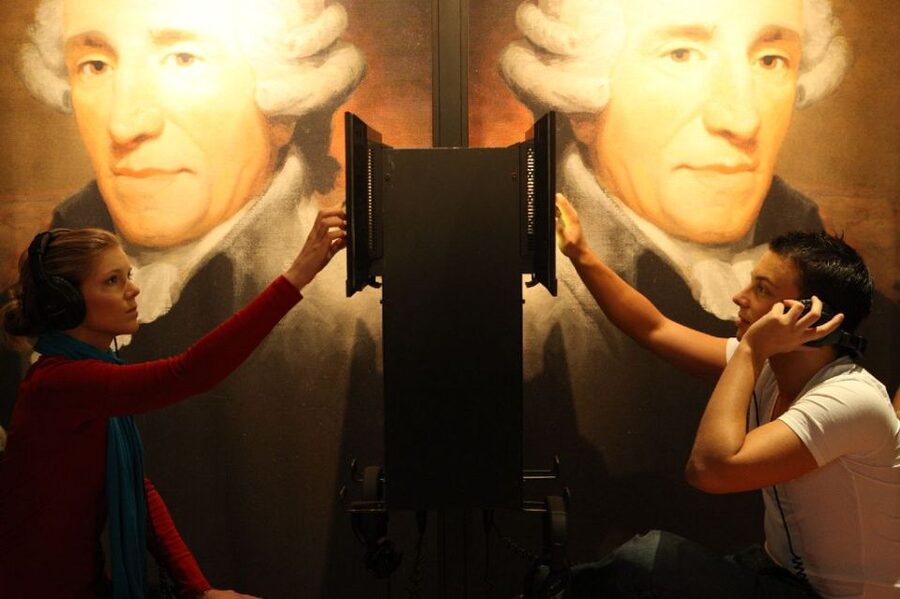
At $22 per person, Haus der Musik is not the cheapest short museum stop in Vienna. Its value depends on how you use it.
If you spend only 30 minutes looking at a few displays, the price may feel high. If you stay for two to four hours, try the interactive stations, read about the composers, and listen to the orchestra, the cost becomes easier to justify. The ticket pays off best when you treat this as a substantial museum visit, not a quick photo stop.
Families may find the price easier to defend because adults and children can follow different interests in the same building. Music lovers get composer material and orchestra history, while children get games and experiments. People who are less interested in classical music still have the science of sound and the digital activities.
Admission includes the museum, a map, coat check, and a free app guide for your smartphone in eight languages. There is also a children’s app in two languages. Food and drinks are not included, and the Namadeus certificate costs extra.
Bring headphones for the app and audio elements. The free floor plans are available at the ticket office in the same languages, which can help you decide where to spend your time.
Access and practical details
Haus der Musik is wheelchair accessible. The main and side entrances have step-free access, with automatic sliding doors and wheelchair-accessible elevators. Accessible toilets are located in the inner courtyard and on the top floor.
A person accompanying a visitor with a visual impairment or a wheelchair can enter free of charge. Guide dogs are permitted. Children under three also enter free.
The museum offers a free smartphone guide in eight languages, plus a children’s version in two languages. You download the app yourself, so bring a charged phone and headphones. If you prefer not to rely on your phone, ask for the free floor plan at the ticket office.
There is no food or drink included, so plan your café stop separately. Since the museum sits in central Vienna, you can handle refreshments before or after your visit rather than expecting a restaurant stop inside the experience.
The booking terms are flexible: you can cancel up to 24 hours in advance for a full refund, and reserve now while paying later. That can help if your Vienna plans are still shifting.
Who will enjoy Haus der Musik most?
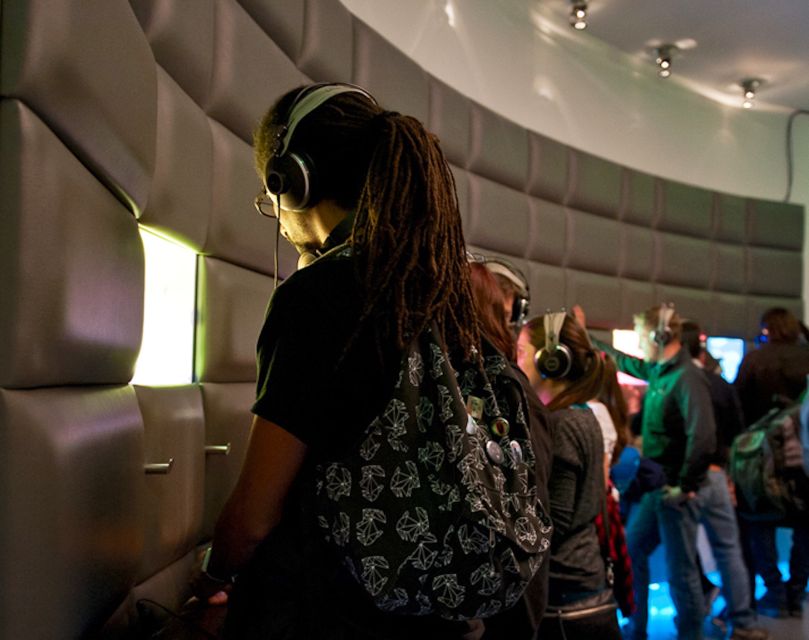
I would put this museum high on the list for families. Children can play with sound and music while adults explore composer displays, and the building offers enough variety to keep different ages occupied.
It also suits adults who like music but do not have formal training. The interactive parts explain ideas through direct experience, so you are not shut out by technical language. A person who prefers science may find the sound and hearing displays more engaging than the composer rooms.
Classical music fans will appreciate the Vienna Philharmonic connection, the orchestra documents, the composer sections, and the HD New Year’s Concert. Still, I would not visit only for a static display of memorabilia. The museum’s real strength is the combination of history, technology, and participation.
It may be less suitable if you want a quiet, traditional gallery visit with minimal screens and activities. The museum is designed to involve you. That is its appeal, but it may feel busy if you prefer to look at objects without interacting with them.
Should you book Haus der Musik?
Yes, if you want a flexible indoor activity that gives you more than one way to enjoy Vienna’s musical culture. The best reasons to book are the virtual conducting challenge, the sound experiments, the composer displays, and the fact that children and adults can use the museum differently.
I would skip it only if your schedule is packed with concert halls and formal music sites, or if you are unlikely to spend at least a couple of hours inside. At $22, it rewards time. Bring headphones, download the app, and plan to try the exhibits instead of simply walking past them.
FAQ
Where is Haus der Musik located?
Haus der Musik is at Seilerstätte 30 in Vienna’s 1010 district.
How long is the ticket valid?
The ticket is valid for one day from first activation.
What is included with admission?
Admission, a museum map, coat check, and a smartphone app guide are included. The guide is available in eight languages, with a children’s app in two languages.
Do I need to bring headphones?
Yes. Headphones are listed as an important item to bring, especially for the smartphone guide and audio features.
Is Haus der Musik wheelchair accessible?
Yes. The main and side entrances have step-free access, automatic sliding doors, and wheelchair-accessible elevators. Accessible toilets are in the inner courtyard and on the top floor.
Are children admitted free?
Children under the age of three enter free.
Is the Namadeus certificate included?
No. The Namadeus Game is part of the museum’s interactive content, but the certificate is not included.
Are food and drinks included?
No. Food and drinks are not included in the admission.
Just added around Vienna
- Private Tour from Vienna to Melk and Dürnstein★ 4.5 · 3 reviews
- Vienna: Johann Strauss 200th birthday anniversary exhibition★ 4.7 · 3 reviews
- Vienna Private Full Day Tour – Tickets to Schönbrunn & Lunch★ 5.0 · 3 reviews
- Private Salzburg Day Trip from Vienna★ 4.0 · 3 reviews
- Vienna: Entry Ticket Belvedere 21 & Contemporary Art★ 4.3 · 3 reviews
- Full-Day Private Trip from Vienna to Budapest★ 4.5 · 3 reviews
- Vienna by Night: Private Evening Food and Drink Tour★ 5.0 · 3 reviews
- 1.5 Hour Cinematic Style Portrait Photoshoot and Tour in Vienna★ 4.5 · 3 reviews
Tickets, compared.
Classic Ensemble Vienna in St. Peter’s Church Ticket
Read our review →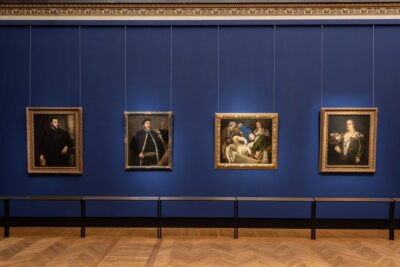
Vienna Kunsthistorisches Museum Day Admission Ticket
Read our review →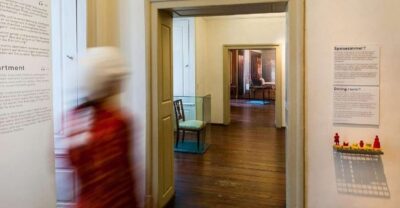
Tickets for Mozarthaus Vienna with Audio Guide
Read our review →
Skip-the-Line Entrance Ticket to the Danube Tower
Read our review →
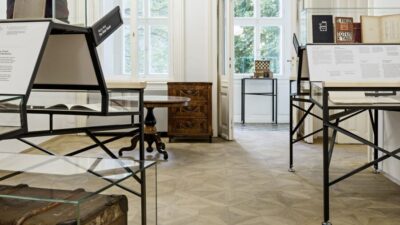
St. Stephen’s Cathedral & Dom Museum Wien Tickets
Read our review →