
Reviewed · BELVEDERE PALACE TOURS
Private Tour of the Belvedere Palace with an Art Historian: “Pictures of Austrian Identities”. Art & History Tour with Skip-the-line Tickets
The most rewarding part of this private Belvedere tour is the story it builds. You do not simply walk from one famous painting to the next. You follow Austrian art from the Middle Ages through the 20th century, with the palace, its gardens, and its collection all tied to the changing identity of Vienna.
I like the one-party format, which gives you room to ask questions and adjust the pace. I also like the way guide Julia connects paintings to social and political life, a useful approach if you want more than a quick look at Klimt. The main drawback is the price: at $228.91 per person, this is a serious splurge, especially for a couple or family.
In This Review
- Key points to know before booking
- Why the Belvedere works best with a story
- Meeting at the Upper Belvedere
- The five-minute garden introduction
- Inside the palace: architecture before paintings
- From medieval art to Austria’s changing identity
- Klimt’s The Kiss and the famous rooms
- Julia’s guiding style
- What the private format really adds
- Who should book it, and who should skip it
- Timing, cancellation, and practical planning
- Should you book the Belvedere art tour?
- FAQ
- Where does the Belvedere private tour begin?
- Where exactly should I meet the guide?
- How long does the tour last?
- Is admission included?
- Is this a private activity?
- Is the tour offered in English?
- Can I use a mobile ticket?
- What is the cancellation policy?
Key points to know before booking
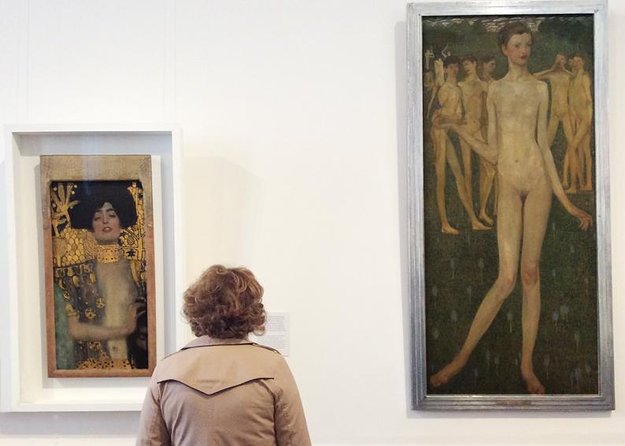
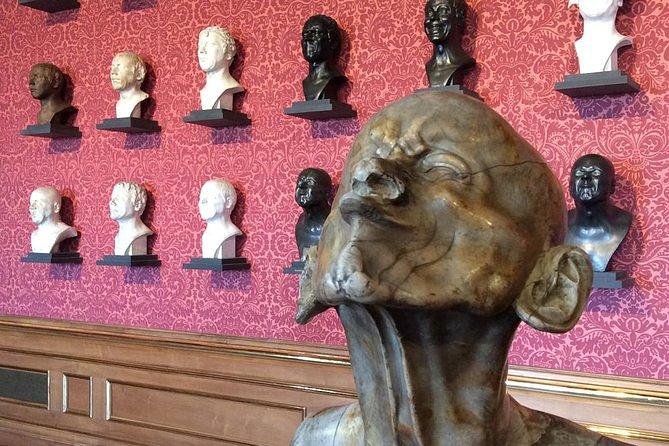
- Julia’s art-history approach: Expect clear explanations of symbolism, context, architecture, and Austrian society rather than a quick list of dates and artists.
- Upper Belvedere focus: The tour takes place at the palace museum, with its famous Klimt collection and art ranging from the Middle Ages to the 20th century.
- Private attention: Only your own party participates, so you can ask questions and spend more time on works that interest you.
- Skip-the-line entry: Admission is included, saving you from waiting in the regular ticket queue.
- A five-minute garden introduction: The opening view toward Vienna is used to explain the symbolic meaning of the grounds and palace setting.
- Allow more time afterward: The guided visit is scheduled for about 2 hours and 15 minutes, but you may want to revisit favorite rooms on your own.
Why the Belvedere works best with a story
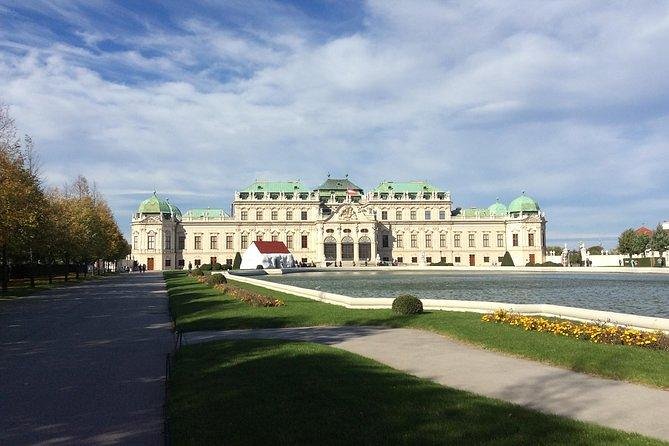
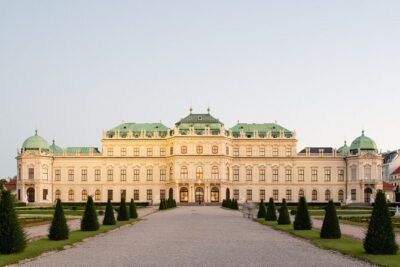
The Upper Belvedere is easy to admire at a glance. You approach the palace, look across the gardens toward Vienna, and see a grand Baroque setting made for ceremony and display. That visual impact is part of the lesson.
Your guide begins outside, near the entrance, using the view over Vienna to explain the garden’s symbolic meaning. This short introduction matters because the palace was not built as a plain container for art. Its design, position, and relationship to the city help explain how power and identity were presented in imperial Austria.
From there, the tour moves inside the museum. The sequence is designed to make the collection easier to read. Instead of treating medieval art, imperial portraits, and modern painting as unrelated rooms, Julia links them through changing ideas about religion, authority, daily life, and national character.
That approach suits you if you sometimes find historic painting hard to read. A guide can point out why a figure is posed in a certain way, how clothing signals rank, or how a religious scene reflects the world in which it was made. You leave with a better sense of what to look for when you visit another museum in Vienna.
More of the Belvedere:
- Entry Ticket Upper Belvedere, Klimt’s Kiss & Permanent Collection
★ 4.5 · 831 reviews - Vienna: Lower Belvedere Entry Ticket & Temporary Exhibitions
★ 4.1 · 275 reviews - Vienna: Belvedere Palace Skip-the-Line Tour
★ 4.9 · 197 reviews
Meeting at the Upper Belvedere
The meeting point is the Austrian Gallery Belvedere at Prinz-Eugen-Straße 27 in Vienna’s 1030 district. You should arrive at the main entrance of the Upper Belvedere, the palace building that contains the museum.
The directions deserve attention. Your guide waits on the right side of the main entrance when you face the palace from the front. If you turn your back to the palace, that same spot is on your left. The simplest check is the view: if you can see Vienna spread out beyond the gardens, you are in the right place. If you see only the palace and no city view, follow the Museum entrance sign to the opposite side.
That detail can save a few anxious minutes. The Belvedere grounds are large enough that arriving at the wrong side of the building can create confusion, especially if you are trying to find a guide at a precise start time.
The site is near public transportation, and you can show either a paper or electronic voucher. Confirmation is provided at booking. The activity ends back at the meeting point, so plan your onward route from the Upper Belvedere rather than from the lower end of the gardens.
The five-minute garden introduction
The garden portion is brief, only about five minutes, but it gives the palace a sense of place. From the entrance area, you get a strong view across the formal grounds and toward Vienna’s historic center.
Do not think of this as a garden tour. It is an orientation stop. Your guide explains the symbolic meaning of the garden and helps you understand why the palace was arranged to frame both its own architecture and the city beyond it.
I find this kind of beginning useful because it lets you read the palace before entering it. You see how the building presents itself, how the view creates a sense of authority, and how the grounds connect the residence to Vienna.
The tradeoff is simple: if you want a long stroll through every garden terrace, this tour will not provide it. The garden stop is short and serves the museum visit rather than replacing a separate walk through the Belvedere grounds.
Inside the palace: architecture before paintings
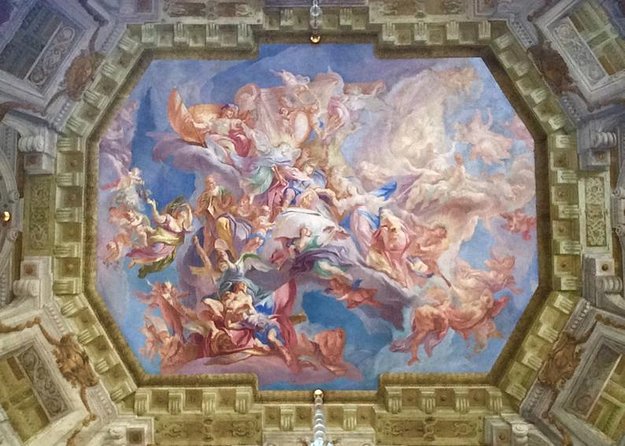
The main museum visit lasts about 2 hours and 5 minutes, with admission included. The first focus is the palace itself, including its architecture and history.
This is a smart choice. A grand building can become invisible once you start chasing famous paintings. By discussing the palace first, the guide keeps you aware that the rooms, decoration, and layout are part of the experience.
The architecture also creates a bridge to the collection. The palace represents courtly power and social order, while the art records how religious beliefs, political structures, and ideas about Austrian identity changed over time.
A private guide can make this part more flexible than a standard group visit. If your party is especially interested in design, military history, religion, or royal culture, you can ask for more explanation in that direction. If you are eager to reach Klimt, the guide can still provide the needed context without leaving the earlier rooms behind.
The tour calls for a moderate level of physical fitness. You should be comfortable walking through museum galleries for more than two hours and standing while listening. The information provided does not specify accessibility arrangements, so anyone with mobility concerns should confirm details before booking.
A few more Vienna tours worth weighing up
- Vienna at night! Private photo tour of Vienna’s most beautiful buildings
★ 5.0 · 63 reviews - Exclusive Vienna Photography Session and City tour
★ 5.0 · 30 reviews - Guided Photoshoot Experience in Wien
★ 5.0 · 24 reviews - Day Tour from Vienna to Hallstatt and Salzburg with Photographer
★ 3.0 · 10 reviews
From medieval art to Austria’s changing identity
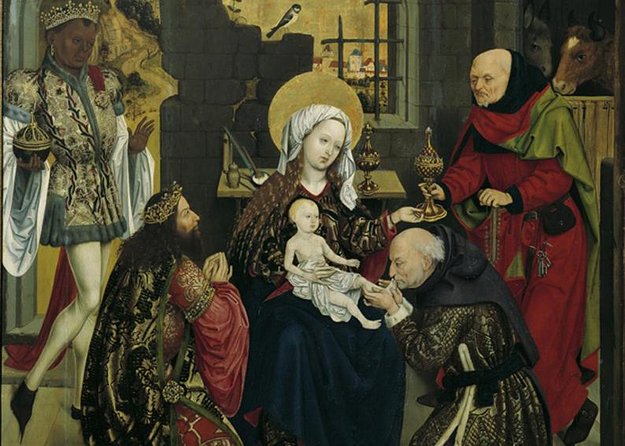
The collection spans from Middle Age art to 20th-century painting. That wide range is one of the strongest reasons to take a guided visit.
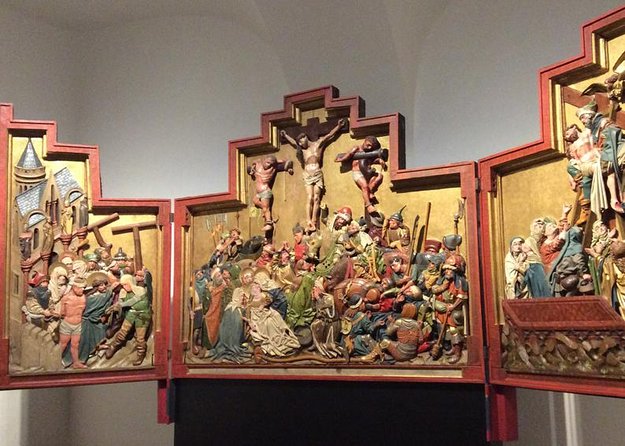
Without a plan, a museum with several centuries of art can feel like a series of disconnected images. Here, the purpose is to trace a line through the collection. Religious works from earlier periods can be viewed as records of belief and social structure. Later works reveal new ideas about portraiture, status, everyday life, and the relationship between the individual and the state.
The phrase Austrian identity can sound abstract, but the tour gives it a visual form. You look at how people are shown, what they wear, what they own, where they stand, and who is given importance. You also consider what artists leave out. Those choices can tell you as much about Austrian society as the subject itself.
This is especially useful for someone who wants Vienna beyond palaces and coffeehouses. Art becomes a way to understand how the country saw itself at different moments. The guide also links artistic changes to social and political issues, giving you a broader frame for the rest of your sightseeing.
You do not need a background in art. In fact, the experience may help most if you feel uncertain in galleries. The guide’s role is to give you a way into the paintings, not to test you on names and dates.
Klimt’s The Kiss and the famous rooms
The obvious draw is Gustav Klimt’s The Kiss. It is one of Vienna’s best-known paintings, and the Belvedere is the place to see it.
The value of a guide here is not simply pointing out the painting. You can find it on your own. The useful part is learning how to look at Klimt’s symbols, surfaces, figures, and decorative choices within the culture of his time.
The guide places Klimt at the end of a longer artistic story. After seeing earlier works and discussing how Austrian art changed, you have more context for why Klimt’s work feels so different. His painting is not just a beautiful gold surface. It also reflects a period of artistic change, shifting social attitudes, and new ideas about identity and expression.
Several people who took the tour found Julia’s discussion of Klimt especially strong. One useful tip is to save time after the guided visit to return to some rooms by yourself. The explanations can be intense, and a second look lets you enjoy the paintings without trying to remember every point at once.
If The Kiss is your only goal, you may find the tour longer and more expensive than necessary. If you want to understand why the painting matters, the wider route earns its place.
Julia’s guiding style
Julia is the guide most closely associated with this experience. Her approach is centered on art history, but it reaches into architecture, culture, and politics.
Her best quality is connection. She does not treat each painting as a sealed box. She explains how artworks relate to one another and how they reflect the lives, beliefs, and power structures of their time.
That makes the tour accessible to mixed-interest groups. One family found that a 16-year-old enjoyed it greatly, while another couple noted that a husband with less interest in art stayed engaged. This is not a guarantee that every teenager or reluctant museum visitor will love a two-hour art tour, but it suggests that the storytelling is not aimed only at specialists.
Julia is also described as personable and easygoing. That matters in a private setting, where the tone can shape the whole visit. You can ask a basic question without feeling out of place, or pause over a work that catches your attention.
The discussion may also continue beyond the museum. One couple found themselves referring back to Julia’s explanations while visiting other places in Vienna. That is a good sign for anyone who wants a museum visit to improve the rest of the trip, not just fill a morning.
What the private format really adds
Private touring costs more because you are paying for the guide’s time for your party alone. The benefit is not merely avoiding strangers. It is the ability to shape the conversation.
You can ask why one painting matters more than another, request more detail about the palace, or admit that you do not understand a particular work. The guide can respond to your interests rather than follow a fixed script for a large group.
This format is particularly useful for families, couples with different levels of art interest, and travelers who want to connect the museum to the rest of Vienna. It also works well for a first visit because the guide can give you a structure for returning to the collection later.
The price is $228.91 per person, with group discounts available. That amount is difficult to justify if you are planning a quick visit or already know the collection well. It is easier to defend if you are splitting the cost among a private group, care about personal attention, and would otherwise spend hours trying to make sense of the museum alone.
The skip-the-line admission adds practical value. It does not make the museum quieter or shorten the guided discussion, but it reduces the chance of losing sightseeing time before you enter. Since the tour is commonly booked well ahead, with an average booking lead time of about 44 days, you should not assume that a last-minute time will be available.
Who should book it, and who should skip it
I would recommend this tour to you if you enjoy asking why art matters, not only seeing famous names. It is also a good fit if you want Vienna’s history explained through visual evidence rather than through a standard city lecture.
Book it if you are traveling with a small private group and can share the cost. Families with older children may appreciate the personal format, especially if the guide can connect the art to politics and everyday life.
You may also like it late in your Vienna stay. One couple found the tour particularly useful after a week in the city because they already had some sense of Vienna and could place the palace and artworks within that larger experience. Taking it earlier has a different advantage: the guide’s ideas may help you read other museums and historic sites during your trip.
Skip it if you prefer to wander alone, want only the Klimt highlights, or have a tight budget. The Upper Belvedere can be visited without a private guide, and the tour’s price is mainly justified by interpretation and personal attention.
Timing, cancellation, and practical planning
The scheduled duration is approximately 2 hours and 15 minutes, including the short garden introduction and the longer museum visit. I would keep a little extra time afterward so you can revisit rooms at your own pace or enjoy the grounds without watching the clock.
Punctuality matters. Your guide is waiting at a specific point near the main entrance, and arriving late may make the meeting harder. Bring your booking voucher on paper or on your phone.
Free cancellation is available up to 24 hours before the local start time for a full refund. Cancellations or changes made less than 24 hours before the start are not accepted for a refund. That policy is worth noting when arranging museum visits around trains, flights, or other timed tickets.
Should you book the Belvedere art tour?
Book this experience if you want the Belvedere to become more than a beautiful palace with one famous painting. Julia’s art-history storytelling, the private format, and the clear path from medieval art to Klimt make it a strong choice for curious visitors.
At $228.91 per person, it is not a casual add-on. But if art, architecture, and Austrian culture are central to your Vienna plans, the personal attention and skip-the-line entry can make the cost worthwhile. Leave time afterward to see the collection again on your own. The first visit gives you the story; the second lets you look.
FAQ
Where does the Belvedere private tour begin?
It begins at the Austrian Gallery Belvedere, Prinz-Eugen-Straße 27, 1030 Vienna, at the main entrance of the Upper Belvedere.
Where exactly should I meet the guide?
The guide waits on the right side of the main entrance when you face the palace from the front. Look for the side with the breathtaking view of Vienna. If you see the palace but not the city view, follow the Museum entrance sign to the opposite side.
How long does the tour last?
The scheduled duration is approximately 2 hours and 15 minutes. About 2 hours and 5 minutes are allocated to the Belvedere Museum, with about 5 minutes for the gardens.
Is admission included?
Yes. Skip-the-line admission to the Belvedere Museum is included in the tour.
Is this a private activity?
Yes. Only your own party participates in the tour.
Is the tour offered in English?
Yes. The experience is offered in English.
Can I use a mobile ticket?
Yes. You can present either a paper voucher or an electronic voucher.
What is the cancellation policy?
You can cancel at least 24 hours before the local start time for a full refund. Cancellations or changes made less than 24 hours before the start time are not accepted for a refund.
More Skip the Line in Vienna
- Vienna: Schönbrunn Palace & Gardens Skip-the-Line Tour
★ 4.7 · 7,739 reviews - Vienna: Skip-the-Line Sisi Museum, Hofburg and Gardens Tour
★ 4.8 · 5,918 reviews - Vienna: Skip-the-Line Schönbrunn Palace & Gardens Tour
★ 4.8 · 5,411 reviews - Vienna: Bus & Schönbrunn Palace Skip-the-Line Guided Tour
★ 4.3 · 2,802 reviews
More History Walks in Vienna
- Vienna: Time Travel and Magic Vienna History Tour
★ 4.6 · 3,879 reviews - Vienna: World War II Historical Walking Tour
★ 4.8 · 1,772 reviews - Vienna Historic Center Small Group Walking Tour
★ 5.0 · 1,746 reviews - Time Travel-Magic Vienna History Tour Ticket
★ 4.5 · 1,099 reviews
Just added around Vienna
- Private Tour from Vienna to Melk and Dürnstein★ 4.5 · 3 reviews
- Vienna: Johann Strauss 200th birthday anniversary exhibition★ 4.7 · 3 reviews
- Vienna Private Full Day Tour – Tickets to Schönbrunn & Lunch★ 5.0 · 3 reviews
- Private Salzburg Day Trip from Vienna★ 4.0 · 3 reviews
- Vienna: Entry Ticket Belvedere 21 & Contemporary Art★ 4.3 · 3 reviews
- Full-Day Private Trip from Vienna to Budapest★ 4.5 · 3 reviews
- Vienna by Night: Private Evening Food and Drink Tour★ 5.0 · 3 reviews
- 1.5 Hour Cinematic Style Portrait Photoshoot and Tour in Vienna★ 4.5 · 3 reviews
Belvedere Palace Tours, compared.
Entry Ticket Upper Belvedere, Klimt’s Kiss & Permanent Collection
Read our review →
Lower Belvedere Entry Ticket & Temporary Exhibitions
Read our review →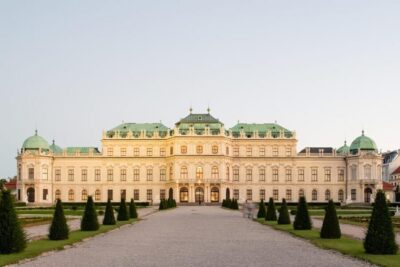

Skip-the-line Upper Belvedere Tickets and Guided Tour Vienna
Read our review →
Schönbrunn, Belvedere, Big Bus, Giant Wheel & Cruise
Read our review →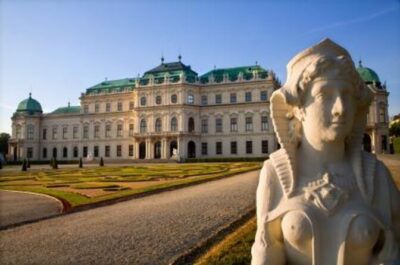
Skip-the-line Upper Belvedere Tickets and Guided Tour Vienna
Read our review →
Entry Ticket Lower Belvedere with Orangery & Palace Stables
Read our review →Browse the lists this tour appears in