
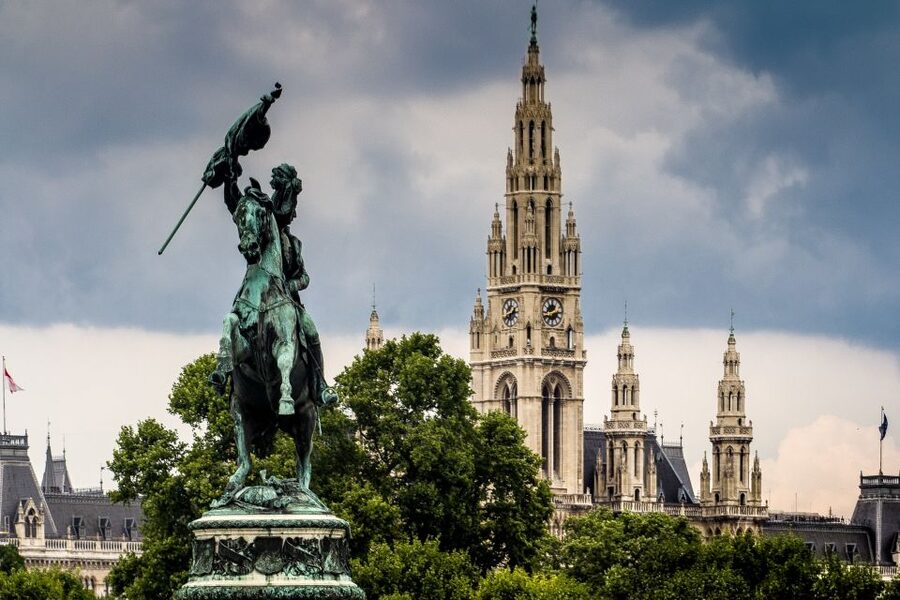
Reviewed · HISTORICAL TOURS
Vienna: World War II Historical Walking Tour
Vienna’s grand center hides a painful 20th-century story. This 2.5-hour walk links Adolf Hitler’s early years, Austria’s annexation, the destruction of Vienna’s Jewish community, wartime bombing, and the city’s unusual postwar division into Allied zones.
I like the location-based storytelling: you hear about an event while standing near the place where it happened. I also like the practical design, especially the headsets for larger groups and the regular pauses where you can sit, warm up, or ask questions.
The main consideration is the walking. The route covers roughly 4 kilometers and does not return to the Albertina, though a subway stop is nearby at the end. Wear good shoes, and bring clothing suited to the weather.
In This Review
- Key points at a glance
- Why this Vienna history walk matters
- Starting beside the Albertina and the Opera House
- Hitler’s Vienna years and the road to annexation
- Vienna’s Jewish community and the surviving synagogue
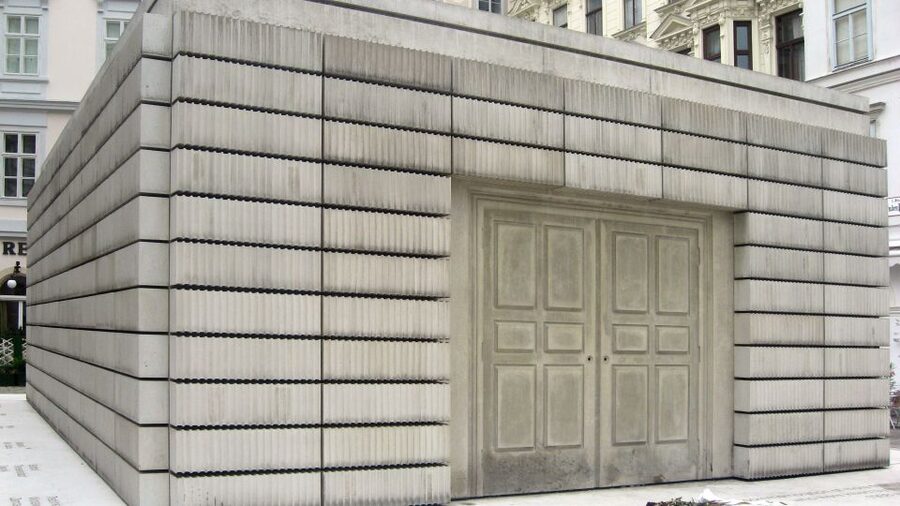
- The Holocaust memorial at Judenplatz
- Bombing, destruction, and the physical scars of war
- Vienna divided among four Allied powers
- A well-paced 150 minutes on city streets
- What you get for $31
- Who should book this walk?
- Should you book the Vienna World War II Historical Walking Tour?
- FAQ
- How long is the Vienna World War II Historical Walking Tour?
- Where does the tour meet?
- What language is the tour offered in?
- Does the tour enter the attractions?
- How much walking is involved?
- Can I cancel or pay later?
Key points at a glance
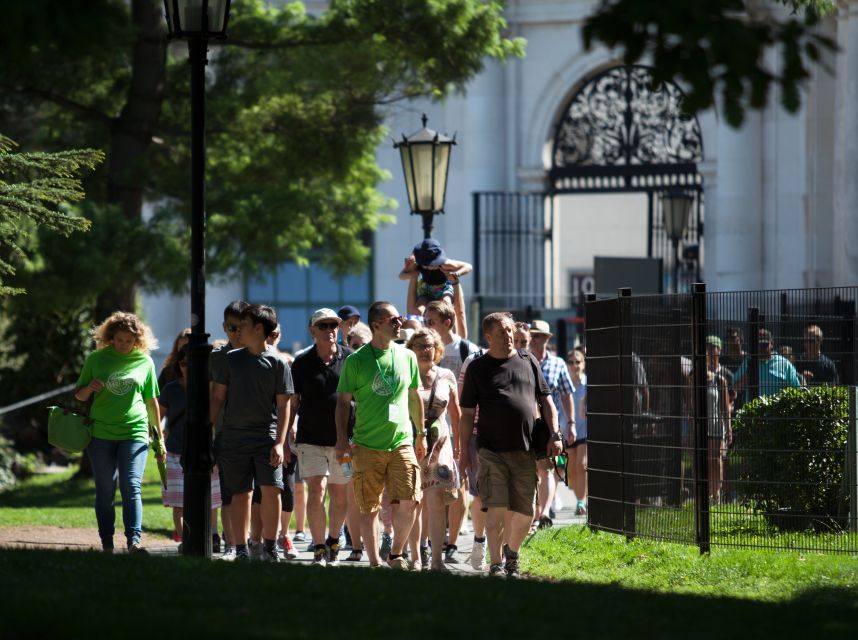
- Begin beside Vienna’s Opera House: Meet under the green umbrella by Albrechtsbrunnen, downstairs at the Albertina Museum.
- Trace Hitler’s Vienna years: Learn how his time as a young art student fit into the city’s wider political and social climate.
- See Vienna’s surviving synagogue: Visit the only synagogue in the city said to have survived the Nazi regime.
- Pause at the Holocaust memorial: The stop offers a quiet place to consider what happened to Vienna’s Jewish community.
- Follow the city through war and occupation: Hear about more than 100,000 bombs, liberation, and Vienna’s division among the Allied powers.
- Use an audio headset on the walk: You can keep up with the guide without crowding close to the person speaking.
Why this Vienna history walk matters
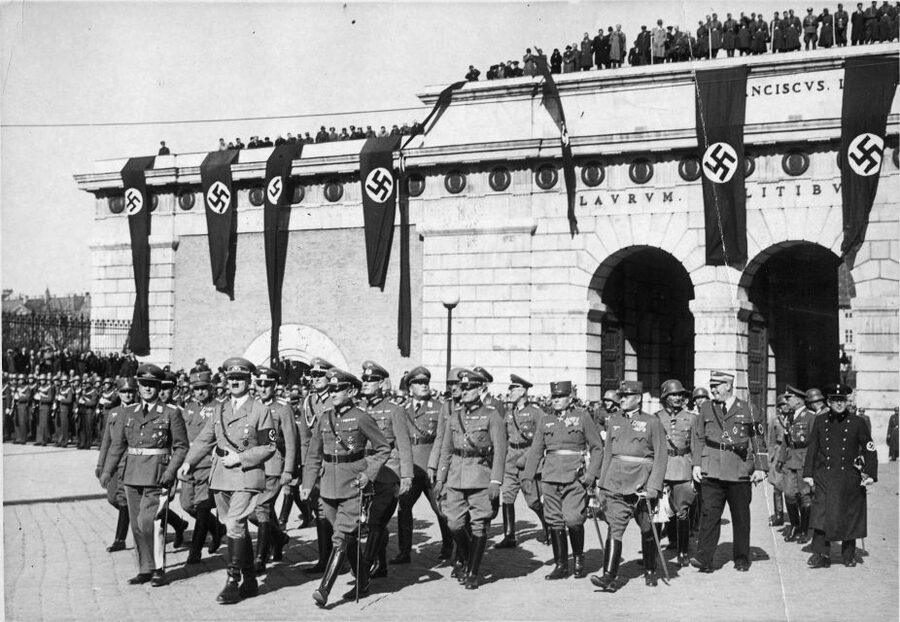
Many Vienna tours focus on imperial palaces, classical music, and elegant streets. Those subjects are worthwhile, but this walk shows you the city’s far less comfortable modern past. It asks how Vienna’s political climate helped shape public attitudes before and during the Nazi era, then follows the consequences through bombing, persecution, defeat, and occupation.
I appreciate that the tour does not treat Hitler’s life as a simple story of one dangerous man appearing from nowhere. The guide places his early years in Vienna alongside the city’s ethnic rivalry, fear, political divisions, and antisemitism. That context does not excuse his crimes. It helps you understand how ideas can gain power when a society is already tense and divided.
The subject is serious, and the best guides handle it with care. Dieter, Stefan, Michael, Wolfgang, Siggi, Charles, and Florian have led tours in the recent schedule. Their approaches differ, but the strongest part of the experience is the combination of clear explanation, local perspective, personal stories, and time for questions.
This is not a museum visit with objects behind glass. It is a moving lesson in the streets of central Vienna. You will see beautiful buildings while thinking about what happened there, which can make familiar sights feel very different.
More walking tours in Vienna:
- Vienna: Guided Walking Tour of City Center Highlights
★ 4.7 · 4,989 reviews - Vienna: Vienna Central Cemetery Guided Walking Tour
★ 4.8 · 3,307 reviews - Vienna: Guided Walking Tour of City Highlights & Hidden Gems
★ 4.9 · 2,180 reviews
Starting beside the Albertina and the Opera House
The meeting point is easy to find if you know what to look for. Go to the green umbrella in front of Albrechtsbrunnen, the fountain downstairs at the Albertina Museum, beside the Vienna State Opera. Karlsplatz and the Oper subway stop serve this area.
That setting gives the guide a useful opening. You are not starting in an isolated historical quarter. You are standing beside one of Vienna’s most famous cultural landmarks, in the middle of a city center often associated with refinement and tradition.
From here, the tour begins with Hitler’s early years and his ideology. You learn about his time in Vienna as an art student and the influences that shaped his political outlook. The point is not to turn the opening into a biography lecture. It is to show how his personal path crossed with the tensions of the city around him.
You should expect interpretation rather than a rapid list of dates. Guides such as Wolfgang and Dieter have been praised for putting facts into context, explaining why individual events mattered instead of simply reciting them. That makes the walk useful even if you already know the broad outline of World War II.
Hitler’s Vienna years and the road to annexation
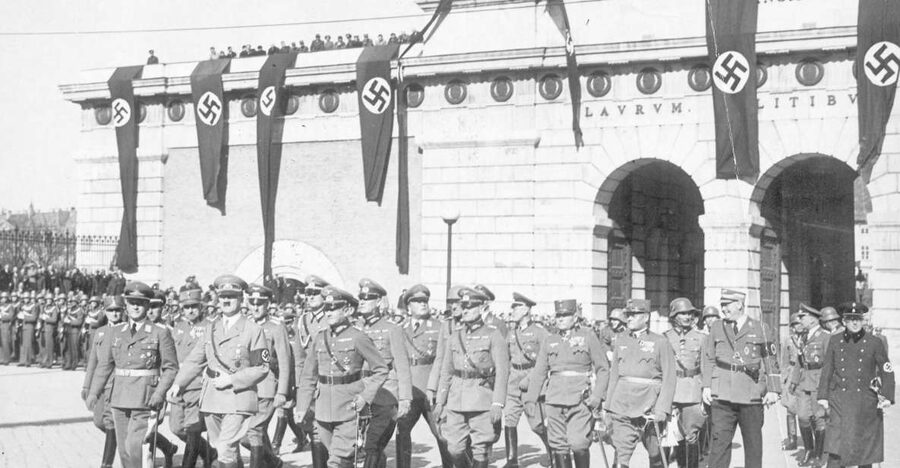
The section on Hitler’s Vienna years is one of the tour’s most distinctive features. Many World War II walks begin in 1939, but this one goes further back to ask what Vienna meant in his development.
You will hear about the young man who hoped to become an artist and about the political ideas he encountered. The guide connects those early years to the later annexation of Austria and explains the relationship between Hitler, Austria, and Vienna.
This is a complicated subject because Austria’s role cannot be reduced to a single convenient label. The walk presents the city’s involvement with some balance, including the way ethnic rivalry and fear affected public life. That Austrian perspective is one of the main reasons to choose this tour instead of a general World War II overview.
A good guide can make this part feel like a conversation rather than a classroom. Questions are welcome, and several guides have a teaching background or a strong presentation style. Printed photographs may also be used to show how locations looked during the period, which helps you compare past and present.
Vienna’s Jewish community and the surviving synagogue
The tour then turns toward Vienna’s Jewish history, one of its most painful subjects. Before the Nazi period, Vienna had a large Jewish community that contributed greatly to the city’s cultural and civic life. The tour explains what happened when persecution, political extremism, and fear took hold.
The visit to the only synagogue that survived the Nazi regime gives this part a physical focus. You should not expect a long indoor museum visit, and entrance fees are not included. The value comes from seeing the site and understanding why its survival matters.
This stop also corrects the easy habit of treating wartime destruction as something that happened only elsewhere. Vienna was not merely a distant setting for Nazi policy. The city’s Jewish residents faced humiliation, dispossession, deportation, and murder. Hearing that story in Vienna itself makes the subject immediate.
The guide’s tone matters here. Charles has been noted for handling difficult material with sensitivity and clear analysis, while Siggi has used historical photographs to make events easier to follow. If you want a light sightseeing walk, this section may feel heavy. If you want an honest account of Vienna during the Nazi era, it is essential.
More history walks in Vienna:
- Vienna: Time Travel and Magic Vienna History Tour
★ 4.6 · 3,879 reviews - Vienna Historic Center Small Group Walking Tour
★ 5.0 · 1,746 reviews - Time Travel-Magic Vienna History Tour Ticket
★ 4.5 · 1,099 reviews - Skip-the-Line Schonbrunn Palace Guided Tour and Vienna Historical City Tour
★ 3.5 · 940 reviews
The Holocaust memorial at Judenplatz
The Holocaust memorial is the tour’s quietest and most sobering stop. Here, the guide gives you time to look, listen, and consider the scale of the loss.
The memorial is not presented as a decorative city landmark. It represents Vienna’s murdered Jewish community and gives the tour a moment of pause after the earlier political discussion. The change in mood is deliberate. You move from explaining how persecution developed to confronting its human cost.
I find this kind of stop more useful when the guide does not rush. The strongest versions of the walk leave room for questions while keeping the focus on the people affected. The memorial also helps connect the city’s present-day streets with the absence created by the Holocaust.
Because this is a walking tour, the stop may be brief compared with a museum visit. You will not receive the same amount of detailed documentation that you would get at a dedicated Holocaust museum. Still, seeing the memorial as part of a wider route gives you a better sense of how the Jewish story fits into Vienna’s geography.
Bombing, destruction, and the physical scars of war
More than 100,000 bombs affected Vienna during World War II, and the tour points out reminders of what that meant for the city. Some wartime evidence is obvious, while other traces are easy to miss beneath Vienna’s restored facades and orderly streets.
This part works because the guide relates destruction to the places around you. Instead of seeing the war as a series of distant battles, you learn how air raids changed the city, damaged buildings, and affected ordinary life.
The experience does not promise a preserved ruin at every stop. Vienna has rebuilt and repaired much of its center. That can make the evidence subtle, so a guide’s photographs and explanations add real value. A historical image held beside a current view can show how much has changed.
You will also hear about the final stages of the war, the liberation of Vienna, and what followed. The tour does not stop at the defeat of Nazi Germany. It continues into the postwar years, when the city’s political status made it unlike any other city occupied by the Allied powers.
Vienna divided among four Allied powers
After World War II, Vienna was divided into zones controlled by the United States, Britain, France, and the Soviet Union. What made Vienna unusual was that the four Allied powers also managed a shared zone together.
That arrangement gives the final part of the tour a strong local angle. You learn how a city famous for imperial unity and cultural prestige became a place shaped by occupation and competing powers. The story adds another layer to the city you see today.
The postwar section is especially helpful if your knowledge of Vienna jumps from the Habsburg era straight to modern Austria. It fills in the decades between those two subjects and shows how war continued to shape daily life after the fighting ended.
The route does not return to the Albertina Museum. A subway stop is close to the finish, so this is not a serious problem, but you should plan your next stop from the end point rather than assuming you will finish where you began.
A well-paced 150 minutes on city streets
Two and a half hours is long enough to cover serious material without turning the tour into an all-day commitment. The walking pace is generally manageable, with stops to listen, discuss, and take in the setting.
The route covers about 4 kilometers according to one detailed account, though your experience depends on the exact route and group. Several pauses are built in, including chances to sit, use a restroom, or take a snack break. Those breaks matter because historical walking tours can become tiring when every explanation is delivered standing up.
Headsets are one of the most useful practical features. In a large group, you can hear the guide while crossing streets or standing several steps away. You do not need to cluster around the speaker, and you are less likely to miss a key detail because a tram, bus, or passing crowd gets noisy.
Weather still matters. The tour runs outdoors, and winter cold or rain can affect your comfort. Guides have adjusted pauses and used indoor shelter when possible, but you should wear comfortable shoes and suitable clothing. The walking is not described as extreme, and one participant with mobility issues found the roughly 4-kilometer route manageable, but anyone who needs frequent rest should mention it to the guide.
What you get for $31
At $31 per person, this tour offers good value if you want a guided historical framework rather than simply a list of sights. Your fee covers the live English-speaking guide and the walking tour. It does not cover attraction entrances or transport.
The price makes sense because the subject requires explanation. You can walk through central Vienna for free, but you are unlikely to understand the link between Hitler’s Vienna years, the synagogue, the Holocaust memorial, wartime bombing, and the Allied occupation without help.
The value is strongest for visitors who would otherwise need to piece together several topics from guidebooks or separate museum visits. You receive a clear sequence in one outing, along with a chance to ask questions. It can also help you decide which museums or memorial sites deserve more of your time later.
The limitation is that this is not an entrance-based tour. If you want extended time inside a synagogue, museum, or archive, you will need another activity and may have to pay separate admission. Think of this walk as a guided introduction to Vienna’s wartime past, not a complete substitute for specialist museums.
Who should book this walk?
I would choose this tour if you have a serious interest in World War II, the Holocaust, modern Austrian history, or the political forces behind fascism. It suits adults, students, teachers, and anyone who wants more than picturesque streets and palace interiors.
It is also a smart choice early in your Vienna stay. The route gives you historical bearings and may help you understand other places you visit afterward. If you already have a strong background in the period, the Austrian viewpoint, local sites, photographs, and guide-led discussion can still add something new.
You may want to skip it if your time in Vienna is very short and you prefer art, music, or imperial history. The subject is emotionally difficult, and the walk asks you to stay focused for 150 minutes. It is not a casual stroll.
The guides appear to be the biggest part of the experience. Dieter is often praised for linking events together, answering questions, and pacing the route carefully. Stefan is noted for strong storytelling, while Siggi brings photographs and adapts explanations to the group. Michael, Wolfgang, Charles, and Florian have also led engaging versions of the walk.
Should you book the Vienna World War II Historical Walking Tour?
Book it if you want to understand Vienna’s 20th-century past through the places where it unfolded. The surviving synagogue, Holocaust memorial, bomb damage, and postwar Allied zones give the tour a clear structure, while the discussion of Hitler’s early years adds context before the war itself.
At $31, the tour is a fair buy for two and a half hours of guided interpretation, especially with headsets, regular pauses, and a route that covers about 4 kilometers. Bring good shoes, dress for the weather, and remember that you finish near a subway stop rather than back at the Albertina.
For a thoughtful, serious look at Vienna beyond its imperial image, I would book it.
FAQ
How long is the Vienna World War II Historical Walking Tour?
The tour lasts 150 minutes, or two and a half hours.
Where does the tour meet?
Meet under the green umbrella in front of Albrechtsbrunnen, the fountain downstairs at the Albertina Museum beside the Opera House. The nearest subway area is Karlsplatz and Oper.
What language is the tour offered in?
The live guided tour is offered in English.
Does the tour enter the attractions?
Entrance fees are not included. The experience is a guided walking tour with stops at historical sites, including a surviving synagogue and Vienna’s Holocaust memorial.
How much walking is involved?
The route covers roughly 4 kilometers according to detailed tour information, with regular pauses and opportunities to sit. Comfortable shoes are a good idea.
Can I cancel or pay later?
You can cancel up to 24 hours before the tour for a full refund. A reserve now, pay later option is available, so you do not have to pay at the time of booking.
Just added around Vienna
- Private Tour from Vienna to Melk and Dürnstein★ 4.5 · 3 reviews
- Vienna: Johann Strauss 200th birthday anniversary exhibition★ 4.7 · 3 reviews
- Vienna Private Full Day Tour – Tickets to Schönbrunn & Lunch★ 5.0 · 3 reviews
- Private Salzburg Day Trip from Vienna★ 4.0 · 3 reviews
- Vienna: Entry Ticket Belvedere 21 & Contemporary Art★ 4.3 · 3 reviews
- Full-Day Private Trip from Vienna to Budapest★ 4.5 · 3 reviews
- Vienna by Night: Private Evening Food and Drink Tour★ 5.0 · 3 reviews
- 1.5 Hour Cinematic Style Portrait Photoshoot and Tour in Vienna★ 4.5 · 3 reviews
Historical Tours, compared.
Vienna Historic Center Small Group Walking Tour
Read our review →
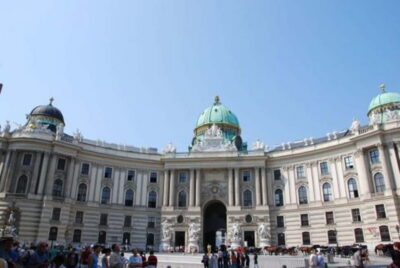
Skip-the-Line Schonbrunn Palace Guided Tour and Vienna Historical City Tour
Read our review →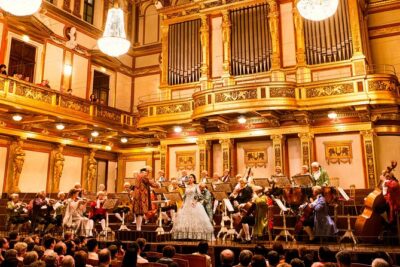
Vienna Mozart Concert in Historical Costumes at the Musikverein
Read our review →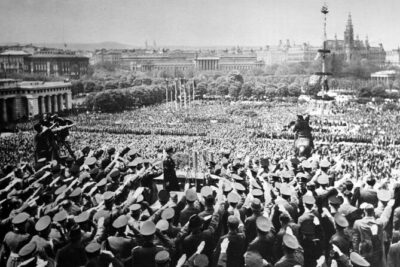
Vienna Classical Concert – Strauss in Historic 1837 Hall
Read our review →Browse the lists this tour appears in