
Reviewed · WALKING TOURS
Introducing Vienna Walking Tour: The Capital of the Habsburgs
Vienna’s imperial center packs an astonishing amount into a short walk. This two-hour tour moves from Roman and medieval remains at St. Michael’s Church through the Hofburg, Hero’s Square, Joseph’s Square, Albertina, wartime memorials, and finally St. Stephen’s Cathedral. The focus is the Habsburg story, not just a parade of pretty buildings.
I like the small maximum of 15 people, which gives you a better chance to ask questions, and I like the local touch from guides such as Herbert Stojaspal, a Viennese guide who brings old photographs, modern observations, restaurant tips, and plenty of humor. The main consideration is pace: you cover many major sights, but there is little time to stop for photographs or enter attractions.
In This Review
- Key points before you book
- Why this two-hour walk works well in Vienna
- Starting at St. Michael’s Church
- The Hofburg and the white stallions
- Hero’s Square and Austria’s government
- Imperial relics and the Holy Lance
- Joseph’s Square and Maria Theresa
- The Albertina and one of Europe’s great art collections
- Remembering war and fascism
- Opera advice and three-euro tickets
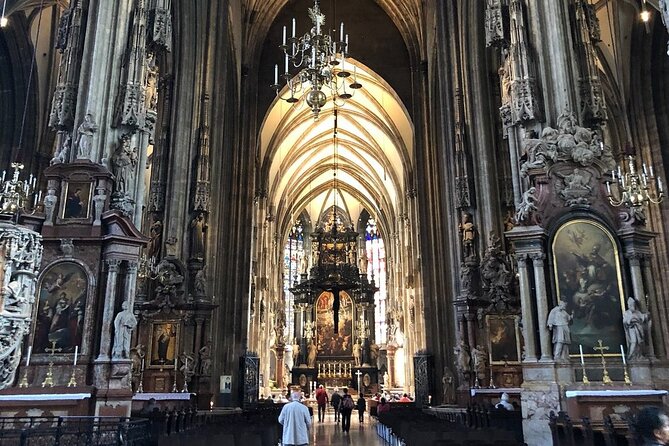
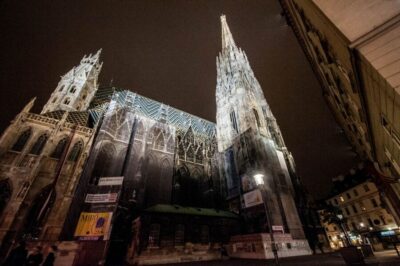
- Finishing at St. Stephen’s Cathedral
- Guide style and the small-group advantage
- Who should book this Vienna walking tour?
- Practical planning for your two hours
- Should you book it?
- FAQ
- How long does the Vienna walking tour last?
- Where does the tour begin?
- Where does the tour end?
- Is the tour offered in English?
- How many people can join the tour?
- What is included in the price?
Key points before you book
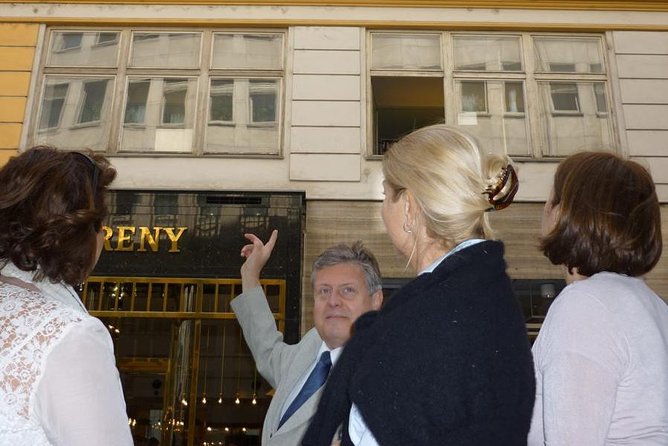
- A compact imperial route: See a large share of central Vienna on foot in about two hours.
- Local voices: Herbert Stojaspal leads many departures, while Dorothea and other certified guides may also guide the walk.
- A small group: The maximum is 15 people, a useful advantage for questions and conversation.
- History beyond palace facades: Hear about Habsburg rule, the Austrian government, Nazi-era Austria, and famous imperial relics.
- Useful first-day orientation: The route ends at St. Stephen’s Cathedral, placing you in the heart of Vienna for independent exploring.
- A sweet finish: The walk ends at the Lindt Chocolate Boutique near Stephansplatz.
Why this two-hour walk works well in Vienna
I see this as an orientation tour with a strong history lesson attached. Vienna’s center is easy to walk, but its monuments can blur together if you do not know how they connect. This route gives you a framework: church, court, empire, opera, war, and modern city life, all within a small central area.
The Habsburgs are the main thread. You will hear how the dynasty used palaces, churches, squares, ceremonies, art, and even royal horses to project power. That makes the buildings easier to read later when you return on your own.
The tour costs about $35.07 per person. For two hours with a professional certified guide, that is a fair price, especially if you use it early in your stay and let the guide’s advice shape the rest of your sightseeing. You are not paying for museum admission, food, drinks, or hotel transport. You are paying for interpretation and a well-planned route through the historic center.
The published score is 4.7 out of 5, with 93 percent of participants recommending the experience. The strongest praise centers on the guides’ storytelling, humor, local knowledge, and ability to explain a lot without making the tour feel like a lecture.
More walking tours in Vienna:
- Vienna: Guided Walking Tour of City Center Highlights
★ 4.7 · 4,989 reviews - Vienna: Vienna Central Cemetery Guided Walking Tour
★ 4.8 · 3,307 reviews - Vienna: Guided Walking Tour of City Highlights & Hidden Gems
★ 4.9 · 2,180 reviews
Starting at St. Michael’s Church
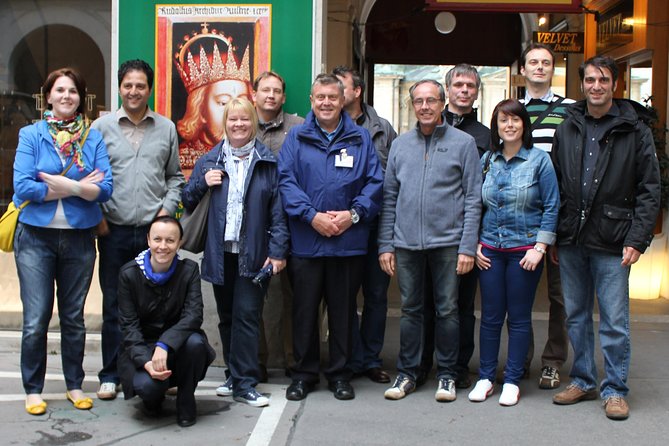
Meet at Michaelerplatz 3, beside St. Michael’s Church. This is an excellent starting point because the square places several layers of Vienna in one view. The church has Roman and medieval remains nearby, while the Hofburg begins almost immediately beyond it.
Your guide uses this opening to orient you to the city’s old center. Do not expect a long church visit or a detailed architectural survey. The value here is context: you begin with evidence that Vienna existed long before the grand imperial buildings most people associate with it.
I would arrive a few minutes early. The meeting point is central and close to public transportation, but a busy historic square can be confusing if you are rushing. The tour operates in all weather, so check the forecast and wear shoes suitable for steady walking on city streets.
The Hofburg and the white stallions
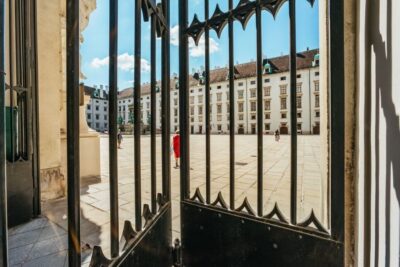
From St. Michael’s, the route turns toward the Hofburg Imperial Palace. The former Habsburg residence grew over centuries, so it is less a single palace than a vast collection of courtyards, wings, institutions, and ceremonial spaces.
The guide explains that the Hofburg served as the Habsburg residence from the 12th century. That long span matters. You are not simply looking at an old royal home. You are looking at the administrative and ceremonial center of a dynasty that ruled large parts of Europe for centuries.
One of the memorable subjects here is Vienna’s famous white stallions. The guide provides detailed information about the horses and their role in the Spanish Riding School tradition. This is especially useful if you plan to attend a performance or visit the stables later, since you will understand why the horses carry such symbolic weight in Vienna.
The route does not include a riding performance or a stable visit. Think of this stop as a well-placed introduction rather than a substitute for a dedicated Spanish Riding School experience.
Hero’s Square and Austria’s government
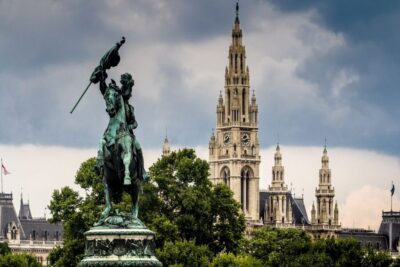
Next comes Heldenplatz, or Hero’s Square. The name invites a story, and the guide explains why the square received it. You also get a practical explanation of Austria’s government system, which helps connect the imperial buildings around you with the modern republic.
This is one of the tour’s useful contrasts. Vienna can look like a city frozen in royal ceremony, but Austria today operates under a different political system. Hearing that distinction while standing among imperial monuments makes the change easier to grasp.
The square also carries difficult 20th-century associations. The tour does not treat Vienna as only a city of elegant palaces and classical music. World War I, World War II, and the Nazi period form part of the story, and the guide brings those chapters into the route.
If you are interested in political history, this may be one of the most worthwhile portions of the walk. If you mainly want palace interiors and decorative details, you may find the discussion more serious than expected.
A different side of Vienna on the same trip:
- Vienna: Vivaldi’s Four Seasons Concert in Karlskirche
★ 4.7 · 14,951 reviews - Vienna: Spanish Riding School Training
★ 3.9 · 9,281 reviews - Vienna: Skip-the-cashier-desk-line Giant Ferris Wheel Ride
★ 4.5 · 7,859 reviews - Vienna: Schönbrunn Palace & Gardens Skip-the-Line Tour
★ 4.7 · 7,739 reviews
Imperial relics and the Holy Lance
The Habsburg world was built on ceremony, inheritance, religion, and claims to authority. The tour brings that world into focus by discussing famous objects associated with European and imperial history, including the crown of the Holy Roman Empire and the Holy Lance.
The Holy Lance is traditionally identified in legend with the spear used to pierce Jesus. The important point on this walk is not that you examine the relic directly. Instead, you learn why objects such as these mattered to rulers and how sacred associations could strengthen political power.
This is a good example of the tour’s approach. It links an object to a larger question: how did emperors present themselves as legitimate rulers? You get a story that is easier to remember than a list of dates, while still gaining a clearer sense of medieval and imperial Europe.
The tour does not include admission to a treasury or museum. If these objects catch your interest, you will need to arrange a separate visit.
Joseph’s Square and Maria Theresa
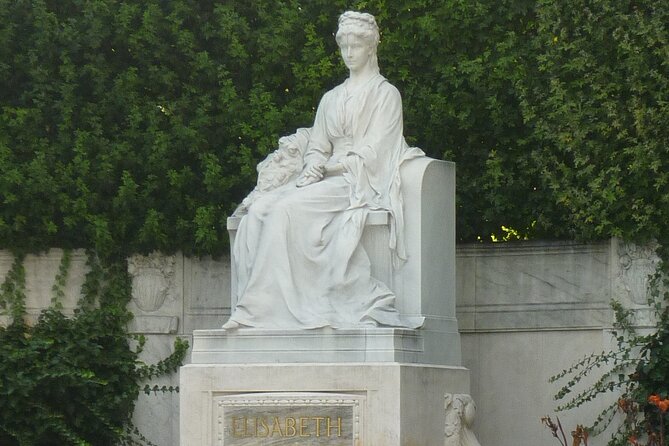
Josefsplatz offers another look at court life and Habsburg succession. Here, the guide discusses Joseph’s Square and the reign of Maria Theresa, one of the most important figures in Austrian history.
Maria Theresa ruled during a major period of change, and her reign raises questions about education, administration, family politics, and the practical work of governing a large empire. The stop gives you a way to think about her beyond the familiar image of an empress surrounded by children.
As with the rest of the walk, the emphasis is on explanation from the street rather than entry into a palace room. That keeps the tour moving and lets you see more, but you should plan a separate palace or museum visit if you want interiors, exhibitions, or a closer look at imperial collections.
The Albertina and one of Europe’s great art collections
The route continues to the former residence of Albert and Maria Christina. This building now houses the Albertina, home to one of the world’s largest drawing collections.
The guide explains the connection between the residence, its occupants, and the collection. I find this useful because it shows how Vienna’s art institutions often grow from dynastic homes and private collections. The museum is not just another grand building on the route. It is part of the same web of family, patronage, status, and collecting that shaped the Habsburg capital.
The Albertina deserves more time than the tour can provide. Use the walk to decide if it belongs on your schedule. You might return later for the collection, rather than trying to squeeze a museum visit into the group walk.
Remembering war and fascism
One of the tour’s most serious stops is the Monument Against War and Fascism. Officially named the Monument Against War and Fascism, it remembers victims of war, including those affected by Nazi rule in Austria.
This section gives the tour needed balance. Imperial Vienna is attractive and often presented through music, palaces, coffeehouses, and ceremony. The memorial reminds you that the city’s story also includes violence, dictatorship, persecution, and loss.
I appreciate having this material included in a short introductory walk. It prevents the past from becoming a glossy succession of royal anecdotes. At the same time, the guide cannot provide a full treatment of Austrian Nazi history in a few minutes. If that subject is central to your visit, plan a dedicated museum or memorial visit afterward.
Opera advice and three-euro tickets
Vienna’s State Opera enters the route with a practical bonus. The guide explains that the program changes daily and that the cheapest tickets can cost about 3 euros.
This is exactly the sort of information that can save money. You may not want to spend a large amount on a formal opera seat, but a low-cost standing or budget ticket can make attending possible for many visitors. The tour does not include opera tickets, so treat this as advice for planning your own evening.
The guide’s recommendations extend beyond monuments. Several people specifically appreciated tips about restaurants, food, places to visit, and things to do. That makes the tour more useful than a history talk alone, particularly on your first day.
Finishing at St. Stephen’s Cathedral
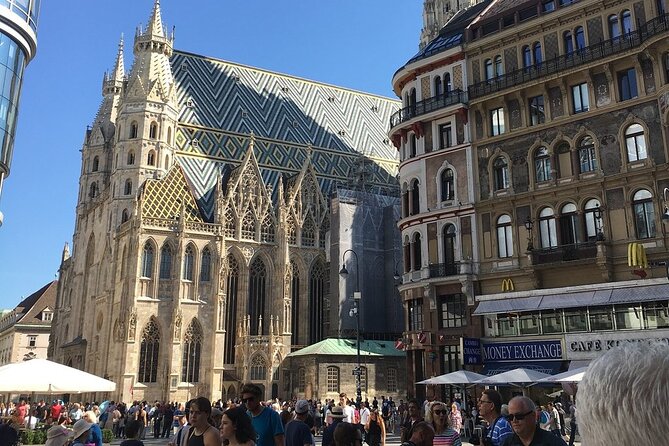
The walk ends at the Lindt Chocolate Boutique, at Stephansplatz 8A near St. Stephen’s Cathedral. The final location is practical: Stephansplatz is one of Vienna’s main central squares, served by the U1 and U4 subway lines at Stephansplatz station.
You finish close to the cathedral, so you can continue exploring immediately. You might visit the cathedral, investigate the catacombs on your own, or simply use the square as a base for the surrounding center. One useful tactic is to take notes during the walk and return afterward for photographs. The group needs to keep moving, and there may not be time to stop at every attractive angle.
The chocolate-shop finish is lighthearted after a tour that covers war and dictatorship. It also gives you an easy landmark for finding the end point. The tour itself does not include food or drinks, so any chocolate purchase is your own choice.
Guide style and the small-group advantage
Herbert Stojaspal receives the most personal praise in the supplied material. He is from Vienna and brings a strong sense of local connection to the tour. His approach combines facts, historical photographs, humor, and answers to questions.
That combination matters. A guide who simply recites dates can make Vienna’s past feel remote. Herbert’s style, as described through the experience details, is more conversational and story-driven. He has also been willing to spend extra time with engaged groups, though you should not count on every departure running beyond its advertised two hours.
Dorothea has also been praised as an excellent guide, so the exact personality and presentation can vary by departure. The common point is that the experience is led by a professional certified tourist guide and offered in English.
The maximum group size is 15. That is not a private tour, but it is small enough for questions and easier to hear than a large street group. It also means you should be ready to stay with the group. One participant appreciated that the guide waited briefly when someone got lost, but it is still wise to keep track of the guide and the people around you.
Who should book this Vienna walking tour?
I would recommend it most strongly to first-time visitors and anyone arriving in Vienna with only a few days. Several people used the tour to decide which museums, monuments, restaurants, and performances deserved more of their time.
It also suits history-minded visitors who want the Habsburgs explained in plain language. You will hear about imperial residences, dynastic power, relics, Maria Theresa, art collections, government, opera, and the difficult story of wartime Vienna.
The walk is described as easy and on flat terrain, making it suitable for most age groups. Still, it is not recommended for younger children. Two hours of historical explanation may be a lot for a child who needs frequent activity or stops.
This is less suitable if you want extensive interior visits, long photography breaks, or a specialized art, architecture, or World War II tour. You see many major sites from outside and receive a clear introduction, but you will need separate visits for detailed exploration.
Practical planning for your two hours
Book early if your dates are fixed. The experience is often reserved about 30 days ahead, and the 15-person limit keeps the group manageable but also limits last-minute space.
Choose an early departure if possible. You will have the rest of the day to revisit the places that interest you, and the guide’s suggestions can help you avoid wasting time. Wear comfortable shoes and prepare for rain, wind, or cold because the walk runs in all weather. A March morning, in particular, can feel cold and windy.
Confirm that you have selected the English departure. One serious complaint came from a person who booked a German-language tour while expecting English. The tour is offered in English, but language changes by departure, so check the booking details and ticket carefully before you arrive.
Hotel pickup and drop-off are not included. That is not much of a problem in central Vienna, since the meeting point is near public transportation. Food and drinks are also not included, though you end near plenty of central options.
Free cancellation is available if you cancel at least 24 hours before the start time. Changes or cancellations inside that window are not accepted for a refund.
Should you book it?
Book this tour if you want a well-priced first look at central Vienna, especially if the Habsburg era, local stories, and practical advice appeal to you. The route is compact, the group is limited to 15, and the finish near St. Stephen’s Cathedral makes it easy to continue sightseeing.
I would skip it only if you already know the inner city well or prefer spending two hours inside museums rather than walking between landmarks. For most first visits, though, the $35.07 fee buys useful orientation, a clear historical thread, and a better plan for the rest of your stay.
FAQ
How long does the Vienna walking tour last?
The tour lasts approximately two hours.
Where does the tour begin?
It begins at St. Michael’s Church, Michaelerplatz 3, 1010 Vienna, Austria.
Where does the tour end?
It ends at the Lindt Chocolate Boutique, Stephansplatz 8A, near St. Stephen’s Cathedral.
Is the tour offered in English?
Yes. English departures are available, but the language can change by departure, so confirm that you have booked the English tour.
How many people can join the tour?
The maximum group size is 15 participants.
What is included in the price?
The price includes a professional certified tourist guide. Hotel pickup and drop-off, food, and drinks are not included.
Just added around Vienna
- Private Tour from Vienna to Melk and Dürnstein★ 4.5 · 3 reviews
- Vienna: Johann Strauss 200th birthday anniversary exhibition★ 4.7 · 3 reviews
- Vienna Private Full Day Tour – Tickets to Schönbrunn & Lunch★ 5.0 · 3 reviews
- Private Salzburg Day Trip from Vienna★ 4.0 · 3 reviews
- Vienna: Entry Ticket Belvedere 21 & Contemporary Art★ 4.3 · 3 reviews
- Full-Day Private Trip from Vienna to Budapest★ 4.5 · 3 reviews
- Vienna by Night: Private Evening Food and Drink Tour★ 5.0 · 3 reviews
- 1.5 Hour Cinematic Style Portrait Photoshoot and Tour in Vienna★ 4.5 · 3 reviews
Walking Tours, compared.
Guided Walking Tour of City Center Highlights
Read our review →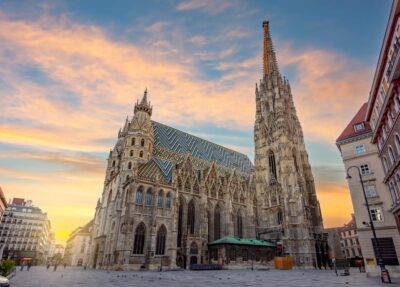
Guided Walking Tour of City Highlights & Hidden Gems
Read our review →
Vienna Historic Center Small Group Walking Tour
Read our review →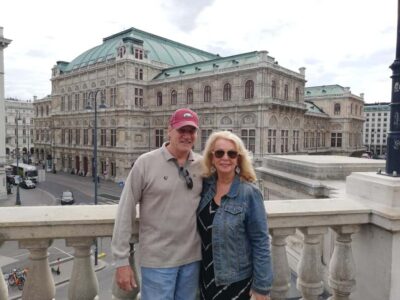
Ghosts and Legends Guided Nighttime Walking Tour
Read our review →Browse the lists this tour appears in