
Reviewed · WALKING TOURS
The Ringstrasse Project Walking Tour
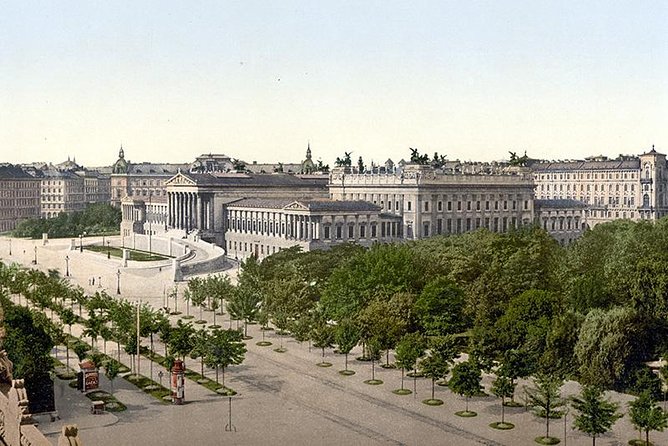
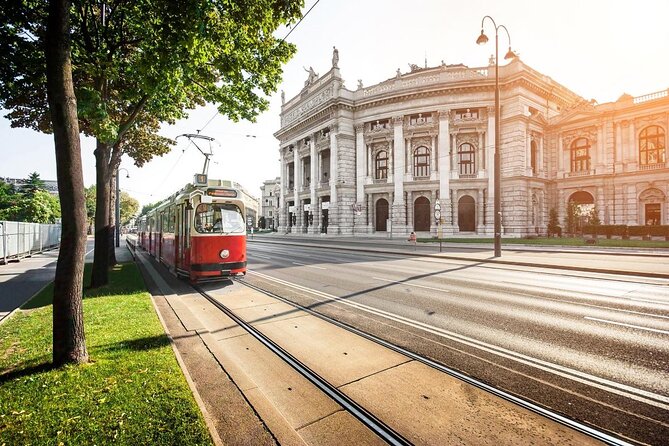
Vienna’s Ringstrasse is more than a grand boulevard. It is a walking record of the city’s 19th-century ambitions, lined with City Hall, the State Opera, palaces, museums, and Otto Wagner’s bold modern design. This tour connects those buildings with the social world that grew around them.
I like the small maximum of eight people, which gives your guide room to answer questions and adjust the pace. I also like the thoughtful finish at Café Schwarzenberg, where Vienna’s coffeehouse culture becomes part of the story rather than an afterthought.
The main drawback is the price: $177.44 per person is a serious outlay for a 2.5-hour walk, especially since food, drinks, hotel transfers, and museum admissions are not included. You are paying for a specialist-led experience, not a budget orientation stroll.
In This Review
- Key points about the Ringstrasse walk
- Why the Ringstrasse tells Vienna’s story so well
- Starting at Rathaus, Vienna’s civic showpiece
- The State Opera and Vienna’s musical identity
- Kunsthistorisches Museum, art on a grand scale
- Postsparkasse and Otto Wagner’s modern break
- Palais Todesco and the social life of the Ring
- Ending at Café Schwarzenberg
- What the small group changes
- Morning or afternoon: choosing your time
- Is $177.44 a fair price?
- The family version and younger visitors
- Who should book this walk?
- FAQ
- How long is The Ringstrasse Project Walking Tour?
- Where does the tour begin?
- Where does the tour end?
- What is the maximum group size?
- Is the tour offered in English?
- Can I choose a morning or afternoon departure?
- Are food and drinks included?
- Can I cancel for a full refund?
- Should you book The Ringstrasse Project Walking Tour?
Key points about the Ringstrasse walk
- Start at Café Landtmann: Meet at Universitätsring 4, near one of Vienna’s classic coffeehouse settings.
- Six carefully chosen stops: The route links political power, opera, art, architecture, aristocratic life, and café culture.
- Groups capped at eight: The size is suited to conversation and personal attention.
- Two departure choices: You can select a morning or afternoon start.
- A strong guide can shape the experience: Susanna and Biljana are named guides associated with especially warm and informed tours.
- Family version available: Children can focus on building symbols and everyday life around 1900.
Why the Ringstrasse tells Vienna’s story so well
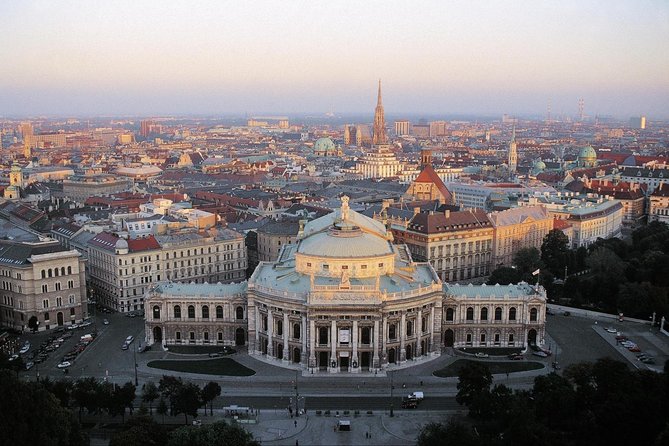
The Ringstrasse was created as a grand public face for Vienna. Along it, the city placed the institutions that mattered most: government, music, art, finance, aristocratic society, and public life.
That makes this route useful early in a Vienna visit. Instead of seeing each building as an isolated photo stop, you can connect them. City Hall tells you about civic power. The State Opera shows how central music became to Viennese identity. The museum and palace stops reveal how culture and status were displayed.
You will walk for about two and a half hours, with stops ranging from 15 to 25 minutes. That is long enough to build a clear picture, but short enough to fit into a morning or afternoon of sightseeing. Since the itinerary stays in central Vienna, you do not spend the tour losing time on buses or waiting for transport.
The route is also a good match for you if grand architecture leaves you cold when it is presented without context. A guide can point out why a building was commissioned, what its style says about the period, and how it fits into Vienna’s public life. The supplied information promises an informative, friendly, professional guide, and the named guides Susanna and Biljana are especially associated with a warm, personal approach.
More walking tours in Vienna:
- Vienna: Guided Walking Tour of City Center Highlights
★ 4.7 · 4,989 reviews - Vienna: Vienna Central Cemetery Guided Walking Tour
★ 4.8 · 3,307 reviews - Vienna: Guided Walking Tour of City Highlights & Hidden Gems
★ 4.9 · 2,180 reviews
Starting at Rathaus, Vienna’s civic showpiece
The first stop is Rathaus, Vienna’s City Hall, on Rathausplatz. Built from 1872 to 1883 in Neo-Gothic style, it houses the Mayor of Vienna, the city council, and the Vienna Landtag diet.
You get about 15 minutes here. That is enough time for an outside look and an explanation of the building’s role, but not a full exploration of the interior. The building matters because the Ringstrasse was not designed only for palaces and culture. It also gave local government a grand public address.
I would pay attention to the contrast between the building’s medieval-looking style and its relatively modern date. Neo-Gothic architecture helped give civic institutions an air of tradition and authority. Your guide can make that visual choice easier to read.
Rathausplatz also provides a useful opening to the tour. You begin with a building that still has a direct public function, not simply a monument preserved for visitors. If political architecture interests you, this may be one of the most useful stops. If you mainly want interiors, the 15-minute visit may feel brief.
The State Opera and Vienna’s musical identity
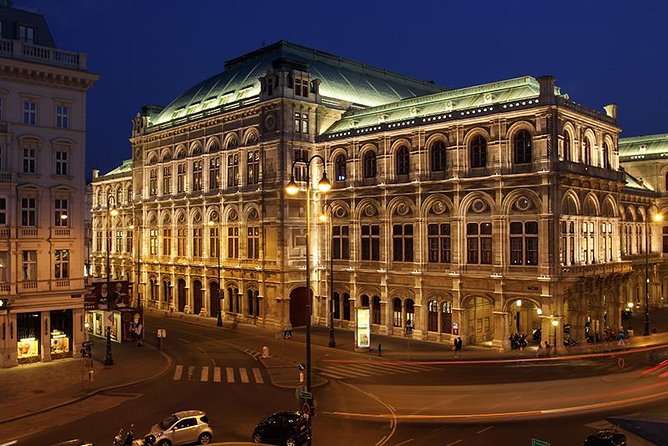
The Vienna State Opera receives about 20 minutes. With 1,709 seats, it was the first major building constructed on the Vienna Ring Road, completed between 1861 and 1869.
That early place on the Ringstrasse is important. The opera house was not a decorative extra placed among more serious institutions. Its position showed how much music and opera mattered to Viennese public life.
The building is a good point for your guide to explain how the Ringstrasse developed. Instead of a street lined with unrelated attractions, it became a carefully planned display of Vienna’s cultural and political importance.
Admission is listed as free for the stop, but this should not be confused with an opera performance or an interior tour. You are allowing 20 minutes for the guided visit, most likely focused on the building and its place in the city. If you want to see the opera from inside, you will need to arrange that separately.
This stop works well for first-time visitors because it places Vienna’s musical reputation in a physical setting. Even if you do not attend an opera, the building helps explain why music is such a strong part of the city’s public image.
Kunsthistorisches Museum, art on a grand scale
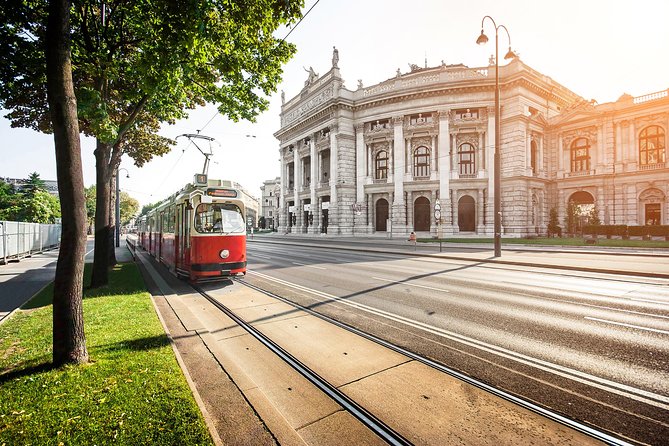
The Kunsthistorisches Museum receives another 20-minute stop. The name refers both to the institution and to its main building, which is Austria’s largest art museum and one of the world’s major museums.
The key value here is scale and purpose. The museum was not designed as a modest gallery tucked into an ordinary street. Its grand setting tells you that art collections were tied to power, wealth, and public prestige.
You should see this part of the walk as an introduction, not a museum visit. The time is too short for the collections themselves, and admission to the museum is not included in the tour. If you plan to return, make a separate visit and allow much longer.
That limitation is also a strength. A walking tour can help you decide which buildings deserve a later visit. You will hear the museum’s place in the Ringstrasse story before committing several hours to its galleries.
For art lovers, this stop may feel like a preview. For everyone else, it adds another piece to the larger picture: Vienna wanted its public boulevard to display culture at the highest level.
A different side of Vienna on the same trip:
- Vienna: Vivaldi’s Four Seasons Concert in Karlskirche
★ 4.7 · 14,951 reviews - Vienna: Spanish Riding School Training
★ 3.9 · 9,281 reviews - Vienna: Skip-the-cashier-desk-line Giant Ferris Wheel Ride
★ 4.5 · 7,859 reviews - Vienna: Schönbrunn Palace & Gardens Skip-the-Line Tour
★ 4.7 · 7,739 reviews
Postsparkasse and Otto Wagner’s modern break
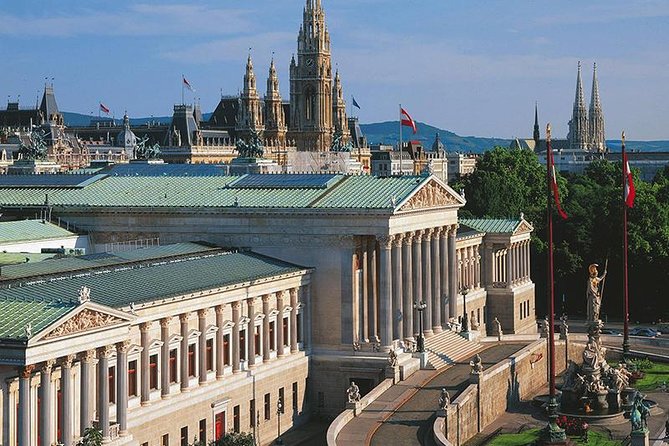
The Austrian Postal Savings Bank, or Postsparkasse, is a different kind of stop. Designed and built by Otto Wagner, it is regarded as an important work of the Vienna Secession, a branch of Art Nouveau.
After the grand Neo-Gothic City Hall and the monumental State Opera, Postsparkasse gives the route a change of tone. Wagner’s work is tied to a more modern design language, and the building shows that Vienna was not frozen in imperial styles.
You have about 20 minutes here. This is the kind of stop where a guide’s explanation makes a real difference. Without context, architectural details can blur together. With the right explanation, you can see the building as part of a shift in Viennese design.
I especially like this inclusion because it keeps the tour from becoming a parade of imperial grandeur. Vienna’s Ringstrasse story includes tradition, but it also includes people testing new ideas. If you like architecture, Postsparkasse may be one of the tour’s most rewarding stops.
The practical catch is familiar: you will not have time for an extended interior visit. Treat the stop as a focused architectural lesson and take note of the building if you want to return later.
Palais Todesco and the social life of the Ring
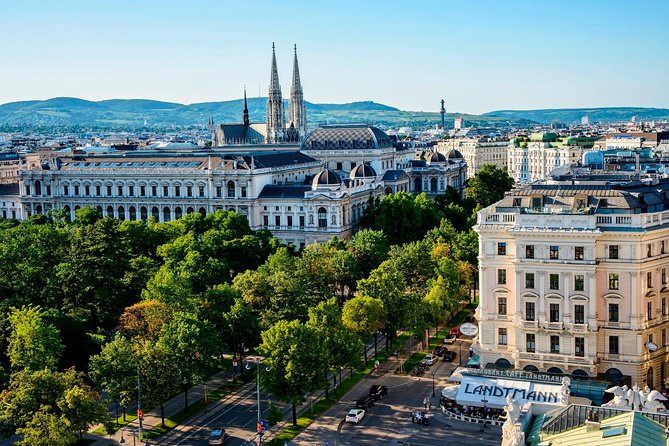
Palais Todesco was built between 1861 and 1864 for the aristocratic Todesco family. The stop lasts about 15 minutes.
The palace adds a human and social layer to the route. Public buildings tell you how the city governed itself and displayed culture. A private palace tells you how wealthy families lived and used the Ringstrasse as a stage for status.
One former resident, Baroness Sophie von Todesco, established a renowned salon for artists and intellectuals. That detail helps you picture the palace as a place of conversation and social exchange, not just a decorative façade.
This is also where the Ringstrasse begins to feel like a place for seeing and being seen. The boulevard connected important buildings, but it also created a public setting for aristocratic display and social life.
The 15-minute stop is enough for context, but it will not satisfy anyone hoping for a full palace tour. Its value comes from how it connects architecture with the people who commissioned and occupied it.
Ending at Café Schwarzenberg
The final stop is Café Schwarzenberg, on Kärntner Ring. The café opened in 1861, and its interior has remained largely unchanged since the 19th century.
This is an excellent ending because the Ringstrasse story moves from buildings to behavior. Vienna’s coffeehouses were places to sit, read, meet, and observe. By the latter half of the 19th century, the Ring had become a setting where social life played out in public.
You have about 25 minutes here. Food and drinks are not included, so budget separately if you want coffee or a pastry. The tour does not promise a meal or a reserved table, but the café provides the right setting for the guide’s final explanation of Viennese café culture.
I like that the tour does not simply end beside another monument. Café Schwarzenberg gives you a practical next step. You can stay for a drink, return later, or use the experience as a guide to Vienna’s broader café tradition.
The preserved interior is part of the appeal. Rather than hearing only about 19th-century social customs, you finish in a place connected to that era. It gives the tour a more personal close than another photograph outside a formal building.
What the small group changes
The group limit is eight people. That is small enough for you to hear clearly and ask questions without calling across a crowd. It also lets the guide respond to your interests, at least more easily than on a large coach tour.
One booking experience continued even when only one person had reserved it. That suggests the operator may keep the tour running with very low numbers, creating the possibility of highly personal attention. Still, you should not assume you will receive a private tour every time. The stated limit is eight, not one.
The guides are central to the value. Susanna is described as an excellent guide, and Biljana is praised for her knowledge of Vienna, professionalism, friendliness, and humor. Those details point to the kind of leadership this tour needs: not just reciting dates, but helping you understand how buildings relate to Viennese life.
If you prefer to wander silently and take photographs, a guided route may feel too structured. If you want the city to make sense, the small group is a meaningful advantage.
Morning or afternoon: choosing your time
You can choose a morning or afternoon departure. The best option depends on how you are arranging your day rather than on a promised difference in content.
A morning departure can give you a clear introduction to central Vienna before other sightseeing. You can use the rest of the day to return to the Kunsthistorisches Museum or explore the State Opera area on your own.
An afternoon departure works well if you prefer a slower start or have morning plans. It also leads naturally into coffee at Café Schwarzenberg, though food and drinks remain your own expense.
The tour starts at Café Landtmann, Universitätsring 4, 1010 Vienna, and ends at Café Schwarzenberg, Kärntner Ring 17, 1010 Vienna. Both points are in central Vienna and near public transportation. Hotel pickup and drop-off are not included, so you need to make your own way to the starting café.
Wear comfortable shoes. The route is a walking tour, and the 2.5-hour duration includes several stops but does not remove the need to be on your feet.
Is $177.44 a fair price?
At $177.44 per person, this is not a cheap way to see the Ringstrasse. The major stops do not include admission, and food and drinks are extra. You are paying for the guide, the small group, and the interpretation of the city rather than for tickets or transport.
The price makes more sense if you value personal service and want a clear introduction to Vienna’s architecture and culture. A large free walk may cover some of the same streets, but it may not provide the same group size or room for questions.
It makes less sense if your main goal is simply to identify the buildings and take photographs. You can see many of the sites from public streets without booking a tour, and you would then have more control over your timing.
Group discounts may improve the value for parties booking together. The family version may also justify the cost for parents who want a tour shaped around children rather than a standard adult presentation.
I would book this for a short Vienna stay when you want an informed overview without spending a full day indoors. I would skip it if your budget is tight or if you already know Vienna’s Ringstrasse well.
The family version and younger visitors
This experience can also be booked as a children’s family tour. In that format, the guide focuses on symbols on the buildings and everyday life in Vienna around 1900.
That is a useful change in emphasis. Children may not care about architectural labels or construction dates, but symbols and ordinary daily routines can give them something concrete to watch for.
The route is still about 2.5 hours, so parents should consider how well their children manage a sustained walk. The supplied information says most people can participate, but it does not provide a specific child age range or stroller policy. Ask the provider if those details matter for your family.
For adults, the family format may also be appealing if you prefer stories about daily life to formal architectural analysis.
Who should book this walk?
You should consider it if you want:
- A compact introduction to Vienna’s Ringstrasse
- A guide who can link architecture with politics, art, music, aristocratic society, and café culture
- A small group with a maximum of eight people
- Morning or afternoon flexibility
- A route that finishes at a historic coffeehouse
- A family-focused version built around symbols and life around 1900
You may want another option if you need interior access to the State Opera or Kunsthistorisches Museum. You should also compare prices carefully if your priority is low-cost sightseeing.
The cancellation terms are practical: you can receive a full refund if you cancel at least 24 hours before the local start time. Changes or cancellations inside that window are not accepted for a refund.
FAQ
How long is The Ringstrasse Project Walking Tour?
The tour lasts approximately 2 hours and 30 minutes.
Where does the tour begin?
The meeting point is Café Landtmann at Universitätsring 4, 1010 Vienna, Austria.
Where does the tour end?
The tour ends at Café Schwarzenberg at Kärntner Ring 17, 1010 Vienna, Austria.
What is the maximum group size?
The tour has a maximum of eight travelers.
Is the tour offered in English?
Yes. The experience is offered in English.
Can I choose a morning or afternoon departure?
Yes. You can choose between morning and afternoon departure options.
Are food and drinks included?
No. Food and drinks are not included in the tour price.
Can I cancel for a full refund?
Yes, if you cancel at least 24 hours before the experience start time. Cancellations made less than 24 hours before the start time are not refunded.
Should you book The Ringstrasse Project Walking Tour?
Book it if you want Vienna’s grand boulevard explained as a connected story rather than a string of façades. The route covers the major themes well, and the small group offers a better chance of personal attention than a standard city walk.
The price is high, so I would choose this tour for its guide and structure, not for included attractions. Susanna and Biljana are strong names to look for when selecting a departure, and Café Schwarzenberg gives the walk a fitting final chapter.
For a first visit, a short stay, or a family wanting a focused introduction, this can be a valuable start. For independent visitors on a tight budget, use the route as a self-guided plan and spend the money on a museum admission or coffee instead.
Just added around Vienna
- Private Tour from Vienna to Melk and Dürnstein★ 4.5 · 3 reviews
- Vienna: Johann Strauss 200th birthday anniversary exhibition★ 4.7 · 3 reviews
- Vienna Private Full Day Tour – Tickets to Schönbrunn & Lunch★ 5.0 · 3 reviews
- Private Salzburg Day Trip from Vienna★ 4.0 · 3 reviews
- Vienna: Entry Ticket Belvedere 21 & Contemporary Art★ 4.3 · 3 reviews
- Full-Day Private Trip from Vienna to Budapest★ 4.5 · 3 reviews
- Vienna by Night: Private Evening Food and Drink Tour★ 5.0 · 3 reviews
- 1.5 Hour Cinematic Style Portrait Photoshoot and Tour in Vienna★ 4.5 · 3 reviews
Walking Tours, compared.
Guided Walking Tour of City Center Highlights
Read our review →
Guided Walking Tour of City Highlights & Hidden Gems
Read our review →
Vienna Historic Center Small Group Walking Tour
Read our review →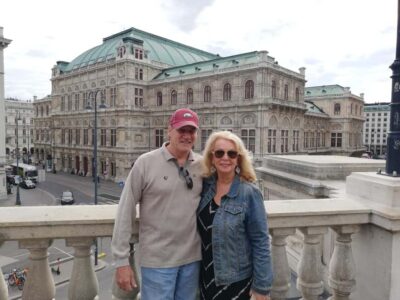
Ghosts and Legends Guided Nighttime Walking Tour
Read our review →Browse the lists this tour appears in