
Reviewed · WALKING TOURS
Vienna Art Nouveau Walking Tour
Vienna’s Art Nouveau story is best understood underground and on foot. This small-group tour links Otto Wagner’s elegant metro stations with the Secession, Klimt’s Beethoven Frieze, and apartment buildings that show how a modern city took shape around 1900. The imperial station near Schönbrunn gives the tour a fine closing scene: Art Nouveau designed for an emperor.
I like the way the tour connects art with practical city planning, especially the problem of redirecting the Wien River beside the Stadtpark station. I also like the intimate size, with no more than eight people, which gives guides such as Jan, Stefan, Suzanne, Ilse, or Angelina room to answer questions and adjust the pace. The main consideration is the price, $180.04 per person, before some entrance fees, so this makes the most sense if architecture and art are central to your Vienna plans.
In This Review
- Key points to know before you book
- Why Vienna’s Art Nouveau is easier to understand this way
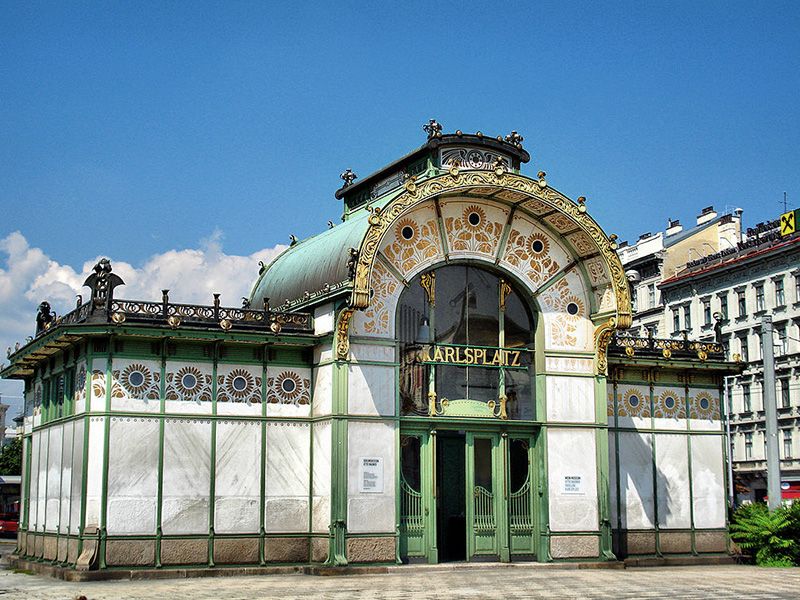
- Starting at Otto Wagner’s Karlsplatz pavilion
- Stadtpark station and the Wien River problem
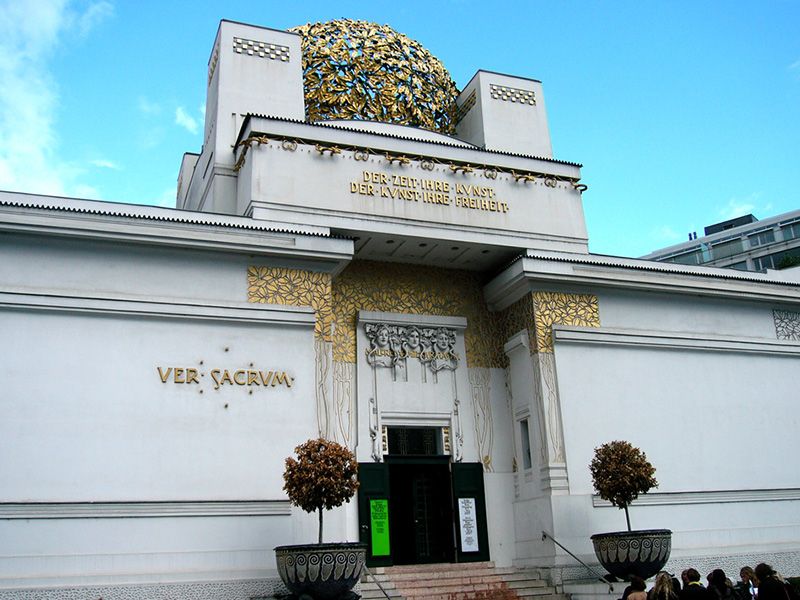
- The Secession building and Vienna’s artistic break
- Kettenbrücke station and the practical metro ride
- The Emperor’s station near Schönbrunn
- What the guide adds to the experience
- Is $180.04 per person a good value?
- Who should book this Vienna architecture walk?
- Should you book the Vienna Art Nouveau Walking Tour?
- FAQ
- How long does the Vienna Art Nouveau Walking Tour last?
- What language is the tour offered in?
- How many people can join the tour?
- Are entrance fees included?
- Does the tour include hotel pickup and drop-off?
- Can I cancel for a full refund?
Key points to know before you book
- Otto Wagner’s Karlsplatz pavilion starts the story: You begin with a small museum devoted to the architect and his work.
- The Stadtpark station shows design meeting engineering: The adjoining artificial riverbed explains how the metro changed the Wien River’s course.
- The Secession adds Klimt and artistic rebellion: You can pay extra to see the famous Beethoven Frieze when the building is open.
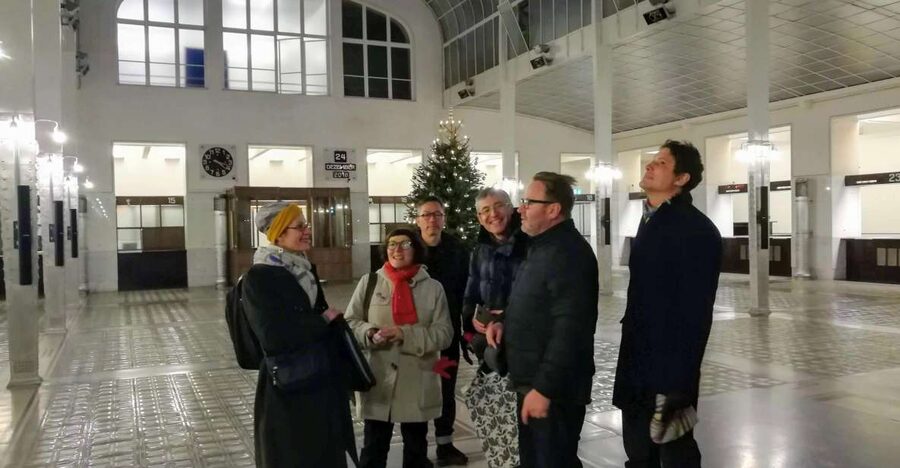
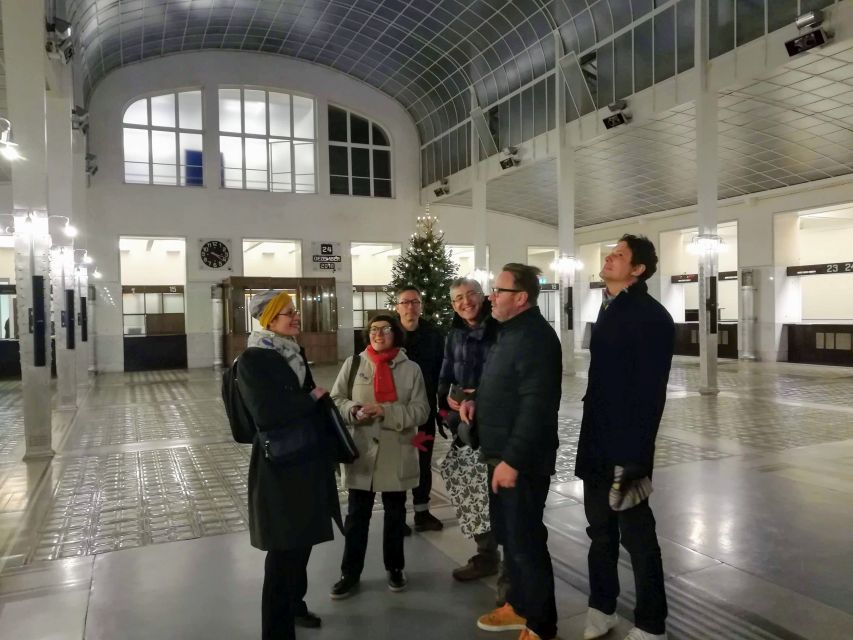
- The group stays small: A maximum of eight people makes this feel more like a private walk than a standard city tour.
- The final stop is the Emperor’s station: Wagner adapted a mainly bourgeois style for an imperial setting at Schönbrunn.
- You get a useful transit lesson: The route includes a ride on the U4 line, helping you understand Vienna’s public transport system.
Why Vienna’s Art Nouveau is easier to understand this way
Vienna’s Art Nouveau, known locally as Jugendstil, is not just a collection of pretty façades. It grew from a period when the city was changing fast, with new transport links, apartment blocks, public buildings, and artistic ideas arriving at the same time.
That is what makes this tour useful. Instead of sending you from one isolated monument to another, it shows how the style worked across public transport, private homes, exhibition halls, and imperial architecture. You see repeated materials, shapes, and symbols, then watch Otto Wagner adapt them for very different purposes.
Your guide provides the thread linking the stops. Past guides have included Jan, Stefan, Suzanne, Ilse, Angelina, and Wolfgang Augsten, among others. The strongest part of this experience is the guide’s ability to explain why a building looks the way it does, not simply point out that it is old or attractive.
The tour is offered in English and lasts about two and a half hours, though the description also presents it as a three-hour walk. I would allow three hours in your day, especially if the Secession is open and you want time for its interior.
More walking tours in Vienna:
- Vienna: Guided Walking Tour of City Center Highlights
★ 4.7 · 4,989 reviews - Vienna: Vienna Central Cemetery Guided Walking Tour
★ 4.8 · 3,307 reviews - Vienna: Guided Walking Tour of City Highlights & Hidden Gems
★ 4.9 · 2,180 reviews
Starting at Otto Wagner’s Karlsplatz pavilion
The official meeting point is Operngasse 7 in Vienna’s first district. From there, the tour begins at the Otto Wagner Pavilion on Karlsplatz, an elegant little structure that once served Vienna’s city railway system.
The pavilion is a good opening stop because it introduces Wagner before you encounter his work in several other settings. Inside, the small Wagner Museum gives you a foundation in his career and ideas. The tour description lists the pavilion visit as free, but it also notes that from April through October, when the museum is open, admission costs €5 for general admission or €4 for seniors, students, Vienna Card holders, and people with disabilities. Confirm the current arrangement when booking.
Karlsplatz is also a useful place to begin because it puts you in the center of Vienna’s grand urban core. The contrast matters. Around you are monumental buildings associated with imperial Vienna, while Wagner’s pavilion presents a cleaner, more modern design language using carefully controlled decoration.
Your guide can point out how Jugendstil artists favored new combinations of metal, glass, marble, and ceramic. The style was decorative, but it was not decoration without purpose. Wagner’s work often joined beauty to function, which becomes clearer as the tour moves from the pavilion to the metro stations.
Stadtpark station and the Wien River problem
The walk continues to Stadtpark station, described as the best-preserved original metro station still in use. This stop gives the tour one of its most interesting practical details.
When Vienna built its city railway, the route affected the Wien River. The waterway had to be redirected, and the engineers needed to fit the altered channel into the city’s design. The artificial riverbed beside the station is a reminder that grand urban projects involve plumbing, transport, engineering, and politics as much as architecture.
This is where the tour moves beyond a style lesson. You are not only looking at curved lines and decorative panels. You are seeing how a city redesigned itself around a new transport network, then used architecture to make that infrastructure feel worthy of Vienna.
The station is also a helpful place to learn how Wagner’s designs balanced repetition and detail. The metro line needed a family resemblance, but each station could respond to its setting. Your guide can explain the visual choices and the way the original city railway shaped Vienna’s later growth.
This stop may be less exciting if you want only famous paintings or grand palaces. It is especially rewarding if you like the practical side of cities: how public works alter streets, waterways, movement, and daily life.
The Secession building and Vienna’s artistic break
The next major section includes the Secession building, the best-known symbol of Viennese Jugendstil. Its unusual form and ornament make it easy to recognize, but the building matters for more than its appearance.
The Secession represented a break with established artistic institutions. Its designers wanted room for newer ideas, and the building became a bold statement about modern art in Vienna. Your guide explains the movement’s philosophy, symbols, and favored materials, giving you a way to read the building rather than simply photograph it.
Inside, the main attraction is Gustav Klimt’s Beethoven Frieze. The tour price does not include admission. If you visit Tuesday through Sunday, the stated entrance fee is €9.50 for adults and €6 for students and seniors, with your guide helping you pay. The frieze is an important addition, but it changes the timing and cost of the walk, so budget for it rather than treating it as an unexpected extra.
I would strongly consider adding the interior visit if you care about Klimt or turn-of-the-century art. It gives the exterior a clear purpose and lets you see how the Secession worked as an exhibition space. If you are mainly interested in metro design, you may prefer to focus on the outside discussion and keep the tour moving.
The walk also includes two attractive apartment buildings by Otto Wagner. These homes help explain how Jugendstil reached beyond public monuments. The style appeared in places where people lived, not just in buildings designed to impress a crowd.
That contrast is valuable. Wagner was not working with one fixed formula. He could use Art Nouveau ideas in an apartment building, a city railway station, or a pavilion, then alter the scale and mood for each setting.
A different side of Vienna on the same trip:
- Vienna: Vivaldi’s Four Seasons Concert in Karlskirche
★ 4.7 · 14,951 reviews - Vienna: Spanish Riding School Training
★ 3.9 · 9,281 reviews - Vienna: Skip-the-cashier-desk-line Giant Ferris Wheel Ride
★ 4.5 · 7,859 reviews - Vienna: Schönbrunn Palace & Gardens Skip-the-Line Tour
★ 4.7 · 7,739 reviews
Kettenbrücke station and the practical metro ride
From the Secession area, the route reaches Kettenbrücke station. This is where you board the metro for the final stop, the imperial station near Schönbrunn.
The short U4 ride is part of the appeal. You are not studying a transport system from a distance. You use the line that connects the sites, which helps turn the tour into a practical introduction to Vienna. One past guide even used the metro ride as a chance to help the group understand how to navigate the city’s public transport.
You should check whether you need a valid transit ticket for the ride, since the supplied tour details do not state that metro fare is included. If you already have a Vienna transport pass, the trip fits neatly into your sightseeing day.
Kettenbrücke also helps you see how the stations relate to the city around them. The tour does not treat them as museum objects detached from modern Vienna. They remain part of the working transport network, which gives the architecture a useful sense of purpose.
A walking tour of this length is manageable for most people, and the experience is near public transport. Still, wear shoes suited to city streets and plan for changing weather. The route is outdoors for much of the time, and one guide adapted the plan on a cold, rainy day by offering a car ride to reduce exposure to the weather. That flexibility may be possible, but it should not be treated as a standard inclusion.
The Emperor’s station near Schönbrunn
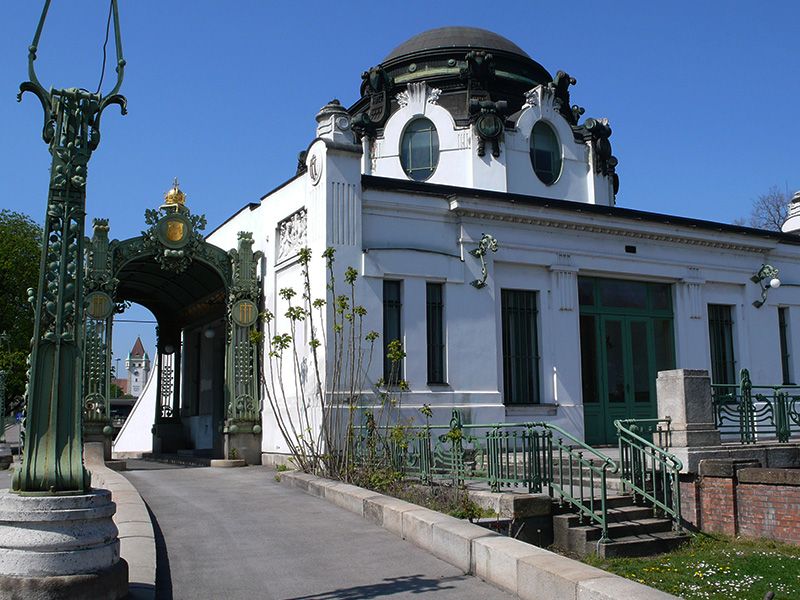
The final stop is the imperial station built outside Schönbrunn Palace for the Emperor’s use. It was not merely a convenient station. Its presence carried political meaning.
Vienna’s metro system had critics, and the Emperor’s support helped show that the new railway had official approval. The station therefore served both a practical and symbolic role. It connected modern transport with imperial authority.
Architecturally, it is the ideal final lesson. Earlier in the tour, you see Jugendstil as a modern, largely bourgeois style associated with new urban life. Here, Wagner adapts those ideas for imperial grandeur. The building remains relatively small, but its design carries more ceremony and authority.
Your guide can bring together the details seen at the earlier stops: materials, ornament, structure, repeated forms, and the effort to make modern infrastructure visually important. After seeing the pavilion, city railway stations, apartment buildings, and Secession, you can recognize the common language while also seeing how it changes from site to site.
The station’s connection with Schönbrunn gives you a useful option for the rest of your day. The tour ends in Vienna, with the listed endpoint simply given as Vienna, Austria, so ask your guide where the group finishes and how best to continue. The tour does not include hotel pickup or drop-off.
What the guide adds to the experience
The guide is the heart of this tour. Architecture from 1900 can look obvious at first glance, but the details become more meaningful when someone explains the politics, engineering, symbolism, and artistic arguments behind them.
The guides associated with this experience have different strengths. Jan is described as passionate about Vienna and art. Stefan has helped connect the architecture discussion with practical advice about public transport and places to eat or visit. Suzanne tailored the route to a small private group and used the U4 to save walking time and warm up between discussions. Ilse was praised for being entertaining and flexible, while Angelina was willing to go the extra mile to meet the group’s interests.
Those details suggest a tour that can respond well to questions. If you have already seen the major Jugendstil buildings, tell your guide. The walk can then focus on details you might have missed, lesser-known façades, or the relationship between the buildings.
The group limit of eight is important here. A large party would make it harder to discuss a station entrance or gather around a small architectural feature. With fewer people, you have a better chance to ask about Klimt, Wagner, the Secession movement, or Vienna’s transport system without losing the guide in a crowd.
Is $180.04 per person a good value?
At $180.04 per person, this is an expensive walking tour. You are paying for a small group, a professional English-speaking guide, and a focused subject rather than a broad introductory stroll through Vienna.
The value is strongest for you if art, architecture, and city planning are high on your list. A good guide can save you hours of reading while helping you see details that are easy to miss. The tour also combines several kinds of experience: a small museum, working metro stations, an exhibition building, apartment architecture, and an imperial site.
The value is weaker if you want a general Vienna orientation or a low-cost way to see famous sights. You will not get hotel transport, food, or drinks, and entrance fees may be added. The Otto Wagner Pavilion can cost €5, or €4 at the reduced rate, when its museum is open. The Secession costs €9.50 for adults and €6 for students and seniors from Tuesday through Sunday when you visit the Beethoven Frieze.
The tour is often booked well ahead, with an average booking time of 36 days in advance. That suggests you should reserve early if your dates are fixed, particularly because each booking is limited to eight people.
Who should book this Vienna architecture walk?
I would recommend it most strongly to art and architecture enthusiasts, repeat visitors to Vienna, and anyone who wants to understand the city around 1900 rather than simply collect photographs.
It also suits you if you like asking questions. The small group and guide-led format leave more room for discussion than a self-guided route. The public transport element is useful if you are still learning Vienna’s U-Bahn system.
First-time visitors can enjoy it too, but I would not use it as your only Vienna sightseeing tour. The focus is narrow, and the walk does not cover the city’s full range of palaces, museums, churches, and historic neighborhoods. Pair it with a broader city orientation on another day.
You should also consider the weather. Much of the experience takes place outdoors, and the duration can approach three hours. The guides may show flexibility, but the tour is still built around walking and public transport rather than a fully indoor program.
Free cancellation is available if you cancel at least 24 hours before the start time. Changes or cancellations made inside that window are not accepted for a refund.
Should you book the Vienna Art Nouveau Walking Tour?
Book it if you want Vienna’s Jugendstil to make sense as a movement shaped by art, engineering, politics, and daily city life. The route is carefully chosen, the group is small, and the final imperial station gives the story a satisfying finish.
I would skip it if you are looking for a cheap overview or prefer sightseeing without scheduled explanations. The price is high, and the extra admission fees raise the total. For the right audience, though, this is a focused and memorable way to see a side of Vienna that many visitors pass without understanding.
FAQ
How long does the Vienna Art Nouveau Walking Tour last?
The tour lasts approximately two and a half hours. Its description also refers to a three-hour walking tour, so you should allow about three hours in your schedule.
What language is the tour offered in?
The tour is offered in English.
How many people can join the tour?
Each booking can include a maximum of eight people, and the activity has a maximum group size of eight travelers.
Are entrance fees included?
No. When the Otto Wagner Pavilion museum is open from April through October, admission is €5 for general admission or €4 for eligible reduced-rate visitors. The Secession entrance fee is €9.50 for adults and €6 for students and seniors from Tuesday through Sunday when visiting the Beethoven Frieze.
Does the tour include hotel pickup and drop-off?
No. Hotel pickup and drop-off are not included. The meeting point is Operngasse 7, 1010 Vienna, Austria.
Can I cancel for a full refund?
Yes. You can cancel for a full refund up to 24 hours before the experience start time. Cancellations or changes made less than 24 hours before the start time are not refunded or accepted.
Just added around Vienna
- Private Tour from Vienna to Melk and Dürnstein★ 4.5 · 3 reviews
- Vienna: Johann Strauss 200th birthday anniversary exhibition★ 4.7 · 3 reviews
- Vienna Private Full Day Tour – Tickets to Schönbrunn & Lunch★ 5.0 · 3 reviews
- Private Salzburg Day Trip from Vienna★ 4.0 · 3 reviews
- Vienna: Entry Ticket Belvedere 21 & Contemporary Art★ 4.3 · 3 reviews
- Full-Day Private Trip from Vienna to Budapest★ 4.5 · 3 reviews
- Vienna by Night: Private Evening Food and Drink Tour★ 5.0 · 3 reviews
- 1.5 Hour Cinematic Style Portrait Photoshoot and Tour in Vienna★ 4.5 · 3 reviews
Walking Tours, compared.
Guided Walking Tour of City Center Highlights
Read our review →
Guided Walking Tour of City Highlights & Hidden Gems
Read our review →
Vienna Historic Center Small Group Walking Tour
Read our review →
Ghosts and Legends Guided Nighttime Walking Tour
Read our review →Browse the lists this tour appears in