
Reviewed · WALKING TOURS
Vienna Art Nouveau Walking Tour
Vienna’s old metro stations were designed as more than transport stops. Otto Wagner used them to give a modern city a clear visual identity, and this tour shows you how that worked, from the elegant Karlsplatz pavilion to the emperor’s private station at Hietzing. I especially like the link between city planning and art and the chance to see Art Nouveau in both public buildings and apartment houses. The tour also gives you a close look at Gustav Klimt’s Beethoven Frieze when Secession House is open.
The main consideration is the price, about $176 per person, plus admission to the Otto Wagner Pavilion and Secession House. Three hours also means a fair amount of walking and several stops, so this suits you best if you want a focused architecture tour rather than a relaxed general walk through central Vienna.
In This Review
- Key points about Vienna’s Art Nouveau tour
- Why Otto Wagner’s metro matters in Vienna
- Meeting at Café Museum and getting oriented
- Karlsplatz Pavilion and Wagner’s visual signature
- Stadtpark and the metro station that still works
- Secession House and Klimt’s Beethoven Frieze
- Apartment houses by Otto Wagner
- Kettenbrücke and the final metro ride
- Hietzing’s imperial station outside Schönbrunn
- What $176 per person gets you
- Who will get the most from this walk
- Practical details before you book
- Should you book the Vienna Art Nouveau Walking Tour?
- FAQ
- How long does the Vienna Art Nouveau Walking Tour last?
- What language is the tour conducted in?
- Where does the tour meet?
- Is admission to Secession House included?
- Can I see Klimt’s Beethoven Frieze?
- Is admission to the Otto Wagner Pavilion included?
- Are private and small-group tours available?
Key points about Vienna’s Art Nouveau tour
- Otto Wagner’s metro stations: See how Vienna’s first major urban rail system became part of the city’s visual language.
- Karlsplatz Pavilion: Begin at one of Wagner’s most recognizable structures and visit the small museum inside.
- Secession House and Klimt: On Tuesday through Sunday, add the €9.50 adult or €6 student and senior admission for the Beethoven Frieze.
- Imperial Hietzing station: Visit the ornate station built for Emperor Franz Joseph outside Schönbrunn.
- Small-group or private format: The guide can spend more time on your questions and interests.
- A walking tour with real distance: Bring comfortable shoes, since the route can cover several miles even though it lasts only three hours.
Why Otto Wagner’s metro matters in Vienna
The most useful idea on this tour comes before the decorative details: Vienna needed a new transport system because the city was changing fast.
During the late 19th century, Vienna’s population grew quickly. Suburbs spread beyond the old center, while the Ringstrasse became the grand public face of the imperial capital. City leaders needed rail lines that could connect outer districts with central Vienna, and they needed stations that looked like part of a modern European capital.
Otto Wagner was chosen to help shape this system. His answer was not to hide the railway infrastructure. He made the stations easy to recognize and gave them a consistent design. Art Nouveau, called Jugendstil in German-speaking Europe, offered the right language. It favored flowing lines, repeated patterns, carefully chosen materials, and a break from older historic styles.
Your guide explains the ideas behind those choices as you walk. That context matters. Without it, the stations can look like pretty metal and marble structures. With it, you begin to see how Wagner was trying to present Vienna as modern, international, and confident.
I like that this approach keeps the tour from becoming a simple hunt for attractive façades. You are looking at public architecture, but you are also asking what a city wants to say about itself. Wagner’s stations helped make the new metro feel like a civic project, not merely a technical one.
More walking tours in Vienna:
- Vienna: Guided Walking Tour of City Center Highlights
★ 4.7 · 4,989 reviews - Vienna: Vienna Central Cemetery Guided Walking Tour
★ 4.8 · 3,307 reviews - Vienna: Guided Walking Tour of City Highlights & Hidden Gems
★ 4.9 · 2,180 reviews
Meeting at Café Museum and getting oriented
The meeting point is Café Museum at Operngasse 7 in central Vienna. Depending on the selected option, the precise starting arrangement can vary, so check your booking details before setting out. The café is a sensible central reference point for a walk that combines the inner city with several Otto Wagner sites.
The listed itinerary includes a guided portion at Café Museum. Treat this as a chance to get oriented before the architecture begins. Your guide can place the Art Nouveau movement within Vienna’s larger cultural setting, then connect that background to the buildings you will see.
The guide is one of the biggest factors in the quality of this experience. The English-speaking guides include Wolfgang, Peter, and Giuseppina. Peter has handled broad questions about Austrian history and central Vienna, while Giuseppina has been praised for her friendly, attentive way of explaining Art Nouveau. Wolfgang has tailored the route closely for a very small group and kept up an energetic pace.
That range is useful to know. This is not a recorded audio route with fixed commentary. In a private or small group, you can ask about architecture, urban planning, Austrian history, or details you notice along the way. If you have a special interest, tell the guide early.
Karlsplatz Pavilion and Wagner’s visual signature
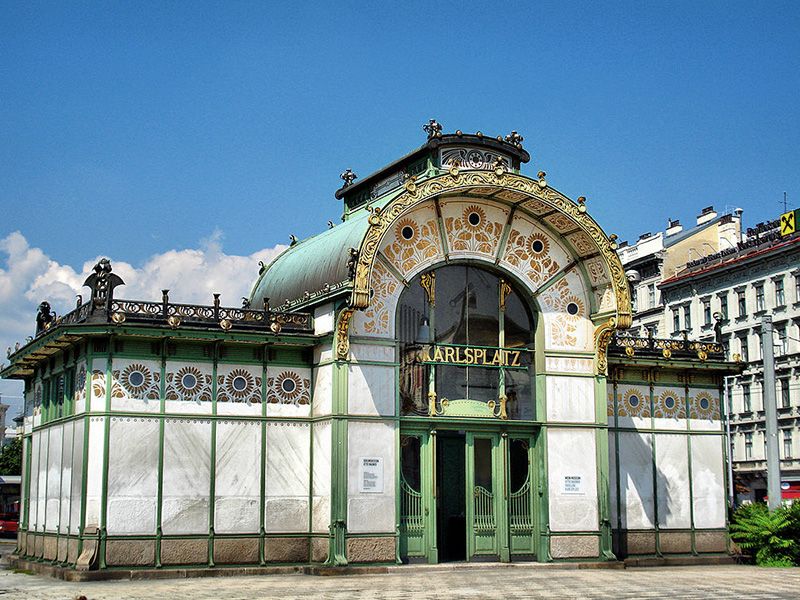
The first major architectural stop is the Wien Museum Otto Wagner Pavillon Karlsplatz. This small pavilion is one of Vienna’s best-known Art Nouveau structures, with its curved metal forms, pale panels, and floral ornament.
Wagner designed the pavilion as part of the city’s metro system. Its role was practical, but its appearance gave it a ceremonial quality. It helped turn a transport network into a recognizable part of Vienna. The station pavilion is also a good place to begin discussing how Art Nouveau balanced decoration with new construction methods.
You will visit the small Wagner Museum inside. Admission to the Otto Wagner Pavilion is not included, so allow for that extra cost. The supplied details do not give the admission price, which means you should confirm it before the tour if you are working with a strict budget.
The pavilion is compact. Do not expect a large museum with a full survey of Wagner’s career. Its value is in seeing the building itself and using it as a starting point for the guide’s explanation. I find that especially worthwhile for visitors who might otherwise walk past it, photograph the exterior, and miss why it mattered.
Stadtpark and the metro station that still works
From Karlsplatz, the route continues toward Stadtpark station, described as the best-preserved original metro station still in use. This is one of the strongest parts of the experience because you can see Wagner’s design in its original urban purpose rather than as a preserved museum object.
A working station changes how you look at the architecture. You are not standing in a quiet gallery. The structure remains part of Vienna’s transport system, which lets you consider how Art Nouveau survives when a city keeps using the buildings it inherited.
The tour focuses on design elements and the philosophy behind them. Watch for the relationship between the station’s structure and its ornament. Wagner wanted the metro to be instantly recognizable, and the repeated architectural language helped tie separate stations into one system.
This is also where the guide can explain the difference between a decorative style and an urban program. Art Nouveau was not only about curving shapes. It represented a wish to create a fresh style for a new age, rather than copying Gothic, Renaissance, or Baroque forms. Wagner’s metro gave that wish a public setting.
A different side of Vienna on the same trip:
- Vienna: Vivaldi’s Four Seasons Concert in Karlskirche
★ 4.7 · 14,951 reviews - Vienna: Spanish Riding School Training
★ 3.9 · 9,281 reviews - Vienna: Skip-the-cashier-desk-line Giant Ferris Wheel Ride
★ 4.5 · 7,859 reviews - Vienna: Schönbrunn Palace & Gardens Skip-the-Line Tour
★ 4.7 · 7,739 reviews
Secession House and Klimt’s Beethoven Frieze
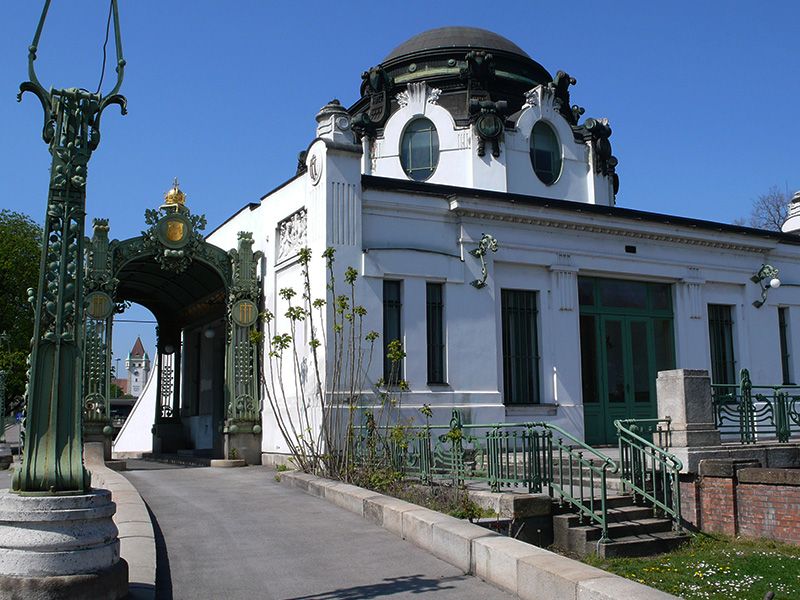
The walk then leads to the Secession Building, Vienna’s clearest symbol of local Jugendstil. Its white exterior, geometric decoration, and famous golden-leaf dome make it easy to identify. The building was created by artists who wanted more freedom from Vienna’s established art institutions, so its architecture has a cultural argument built into it.
The tour uses Secession House to discuss the ideas behind the Art Nouveau movement. Your guide can point out how the building’s forms and materials reject the heavy historic styles that dominate much of Vienna’s imperial center. It is a useful contrast with the Ringstrasse architecture, where buildings often imitate earlier European traditions.
On Tuesday through Sunday, the tour includes a visit to see Gustav Klimt’s Beethoven Frieze. Admission is extra: €9.50 for adults and €6 for students and seniors. Your guide helps you pay, which makes the added step simple, but you should still budget for it before booking.
The Beethoven Frieze is a major reason to choose this tour on an open day. It gives you more than an exterior view of Secession House and lets you connect Wagner’s architectural ideas with the period’s painting and symbolism. If your tour falls outside Tuesday through Sunday, confirm what portion of the building can be visited, since the stated Klimt visit applies to those days.
Apartment houses by Otto Wagner
Between the major stations, the route includes two apartment houses designed by Otto Wagner. These stops are easy to undervalue, but they help you see how Art Nouveau worked in everyday city life.
A metro pavilion can feel like a special civic structure. An apartment house shows how the same designer handled ordinary urban living. Look for the way ornament is placed on the façade, how repeated details create order, and how practical housing is given a distinct identity.
This part of the walk also broadens the story beyond famous landmarks. Vienna’s Art Nouveau was not confined to museums and grand public buildings. It appeared in residential architecture, where decorative choices shaped the streets people used every day.
The exact amount of time at each house can depend on the guide and the group. If you care about Wagner’s residential work, say so. A private or small group gives you a better chance of pausing for details instead of moving quickly between the headline stops.
Kettenbrücke and the final metro ride
Kettenbrücke station is another important point on the route. Here, the tour returns to the metro as both engineering project and designed environment. The station helps show how the original line connected different parts of Vienna and how Wagner’s visual system worked across several locations.
From Kettenbrücke, you ride the metro for the final section of the tour. That short journey is useful because you experience the transportation system instead of only hearing about it. You move through the city using the kind of connection that changed Vienna in the late 19th century.
The tour description refers to two remaining stations as a central part of the discussion, while the full route also includes the imperial station at Hietzing. Expect the guide to combine walking, station visits, and a metro ride rather than spend the entire three hours inside one building.
This is a good point to mention pacing. One recent participant described walking miles during the experience. Three hours is not an exhausting full-day outing, but it is more active than a short stroll between nearby sights. Wear comfortable shoes and keep your bag light.
Hietzing’s imperial station outside Schönbrunn
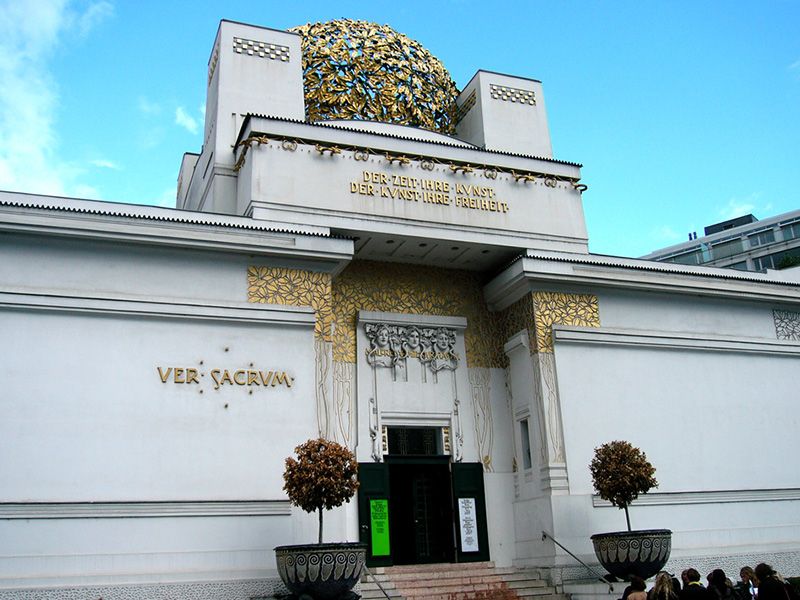
The final stop is Otto Wagner Hofpavillon Hietzing, the imperial station built outside Schönbrunn exclusively for the emperor. It is the most pointed example of Wagner adapting a generally bourgeois Art Nouveau style for imperial use.
The station had a practical purpose, but it also carried a political message. Critics of Vienna’s metro questioned the new system, and the emperor’s private station showed that the monarch supported the project. Architecture became a public statement of approval.
Look closely at the difference in mood between an ordinary station and this imperial building. Wagner kept the Art Nouveau vocabulary, but he gave it more ceremony and grandeur. The result shows how a modern style could be adjusted for the Habsburg court without simply reverting to an older historic style.
This is a particularly good ending because it brings the tour’s main ideas together. You have seen Art Nouveau used for a public transport system, a cultural building, apartment houses, and an imperial pavilion. The final station asks you to compare those uses and consider how much a building can communicate about status and politics.
The itinerary also lists Österreichische Postsparkasse as a guided stop. This is another important Otto Wagner building in Vienna and extends the tour’s architectural range beyond the metro. The precise order can depend on the selected option and guide, so check the route details when booking.
What $176 per person gets you
At about $176 per person, this is not a bargain-priced orientation walk. You are paying for a three-hour specialist tour with a historian guide, and the private or small-group format is central to its value.
I would consider the price reasonable if you already care about Art Nouveau, Otto Wagner, Klimt, or Vienna’s urban development. A good guide can turn several separate buildings into one connected story, saving you the work of researching what you are seeing and where to find it.
The value is less clear if you only want a general introduction to Vienna. The tour does not replace a broad city walk, and extra admission fees increase the final cost. The Otto Wagner Pavilion is not included, and the Secession House costs €9.50 for adults or €6 for students and seniors when that visit is part of the route.
A private format can make the expense easier to justify for couples, families, or serious architecture fans. A small group also helps if you want to ask questions. The published rating is 4.4 from 33 reviews, with strong praise for the guides’ subject knowledge, enthusiasm, and ability to respond to questions. Those qualities matter more here than a long list of stops.
Who will get the most from this walk
I would choose this tour if you enjoy looking closely at buildings and want the reasons behind their design. It is also a strong pick if you have already seen Vienna’s grand palaces and museums and want a different view of the city.
It suits:
- Art Nouveau and Jugendstil fans
- Visitors curious about Otto Wagner
- Architecture students and serious hobbyists
- People interested in how public transport shaped Vienna
- Couples or small groups who want a flexible conversation with a guide
- Anyone hoping to see Klimt’s Beethoven Frieze with context
You may want another type of tour if you dislike walking, prefer a broad overview of Vienna, or want to avoid extra entrance fees. The route is focused and information-heavy. That is its strength, but it also means you need to bring some interest in the subject.
Guides have also answered questions about Austrian history and less obvious central Vienna details, including Jewish places of worship. That suggests you can broaden the conversation, though Art Nouveau remains the main subject. If you want a tour devoted mainly to Jewish Vienna, imperial history, or museum collections, book a more targeted experience.
Practical details before you book
The tour lasts three hours, although the detailed description also refers to a 2.5-hour guided tour. Allow the full three hours, since the route includes several walking sections, guided stops, and a metro ride.
English is the listed tour language. Private and small-group options are available. The meeting point is Café Museum, Operngasse 7, A-1010 Vienna, but the selected option determines the starting arrangement, so read the confirmation carefully.
You can cancel up to 24 hours in advance for a full refund, and the reserve-now, pay-later option keeps your money free until closer to the activity. Those terms are useful if your Vienna plans are still shifting.
Plan for the Secession House admission on Tuesday through Sunday. The guide helps you pay, but the cost is separate from the tour. The Otto Wagner Pavilion admission is also separate, with no price supplied in the tour details.
Should you book the Vienna Art Nouveau Walking Tour?
Book it if you want to understand why Vienna’s metro stations, apartment houses, cultural buildings, and imperial architecture belong in the same Art Nouveau story. The route offers more than attractive façades. It explains how Otto Wagner used a modern style to present Vienna as a growing, connected, and cosmopolitan city.
The best reason to book is the guide-led format. Wolfgang, Peter, and Giuseppina have each brought strong subject knowledge and a personal approach, and the private or small-group setup gives you room to ask questions. The best practical reason is the mix of stops: Karlsplatz, Stadtpark, Kettenbrücke, Secession House, Wagner’s apartment buildings, Postsparkasse, and the imperial Hietzing station.
Skip it if $176 feels too high for a specialist walk, or if you want a gentle route with little walking. For the right audience, though, this is a rewarding way to see Vienna’s modern side and to understand why its metro architecture still deserves careful attention.
FAQ
How long does the Vienna Art Nouveau Walking Tour last?
The activity is listed as a three-hour tour. The detailed description also refers to a 2.5-hour guided tour, so you should allow three hours in your schedule.
What language is the tour conducted in?
The live tour guide speaks English.
Where does the tour meet?
The stated meeting point is Café Museum, Operngasse 7, A-1010 Vienna. The starting location can depend on the option you select, so check your booking details.
Is admission to Secession House included?
No. On tours from Tuesday through Sunday, admission costs €9.50 for adults and €6 for students and seniors. The guide helps you pay.
Can I see Klimt’s Beethoven Frieze?
Yes, the tour visits Secession House to see Gustav Klimt’s Beethoven Frieze when the tour runs Tuesday through Sunday.
Is admission to the Otto Wagner Pavilion included?
No. Admission to the Otto Wagner Pavilion is not included in the tour price.
Are private and small-group tours available?
Yes. You can choose between private and small-group options, depending on availability.
Just added around Vienna
- Private Tour from Vienna to Melk and Dürnstein★ 4.5 · 3 reviews
- Vienna: Johann Strauss 200th birthday anniversary exhibition★ 4.7 · 3 reviews
- Vienna Private Full Day Tour – Tickets to Schönbrunn & Lunch★ 5.0 · 3 reviews
- Private Salzburg Day Trip from Vienna★ 4.0 · 3 reviews
- Vienna: Entry Ticket Belvedere 21 & Contemporary Art★ 4.3 · 3 reviews
- Full-Day Private Trip from Vienna to Budapest★ 4.5 · 3 reviews
- Vienna by Night: Private Evening Food and Drink Tour★ 5.0 · 3 reviews
- 1.5 Hour Cinematic Style Portrait Photoshoot and Tour in Vienna★ 4.5 · 3 reviews
Walking Tours, compared.
Guided Walking Tour of City Center Highlights
Read our review →
Guided Walking Tour of City Highlights & Hidden Gems
Read our review →
Vienna Historic Center Small Group Walking Tour
Read our review →
Ghosts and Legends Guided Nighttime Walking Tour
Read our review →Browse the lists this tour appears in