
Reviewed · WALKING TOURS
Vienna: City of Music Private Walking Tour
Vienna’s music story becomes much clearer when you hear it in the places tied to Mozart, Beethoven, Haydn, and Vivaldi. This private three-hour walk links churches, homes, monuments, opera houses, and Habsburg power, with musical selections played on headphones along the way.
I like the private format, which lets you ask basic questions without feeling out of place, and I like the way the walk uses music itself rather than treating composers as names on plaques. The hotel pickup and flat fee for up to 10 people also make it practical for families or larger groups.
The main drawback is cost: $564.72 is a serious price for three hours, especially since admission to Mozarthaus and other paid sites is not included. This works best when several people share the bill and you want a personal, conversation-led introduction rather than a standard group tour.
In This Review
- Key points before you book
- Why this walk makes Vienna’s music easier to hear
- St. Stephen’s Cathedral: music beneath the Gothic stone
- Mozarthaus and the years of Mozart’s success
- Beethoven’s monument and a restless Viennese life
- The State Opera and Vienna’s musical present
- Mölker Bastei and Beethoven’s many addresses
- The Hofburg and Beethoven’s aristocratic connections
- The final 45 minutes: music in the Inner City
- A private guide changes the pace
- Is $564.72 a fair price?
- Who will get the most from this experience?
- Should you book the Vienna City of Music walk?
- FAQ
- How long is the Vienna City of Music Private Walking Tour?
- How many people can join the private tour?
- What language is the tour offered in?
- Can the guide pick me up at my accommodation?
- Are public transport tickets included?
- Are admission tickets included?
- Do I need to know classical music to enjoy the tour?
- What is the cancellation policy?
Key points before you book
- Music follows you through the streets: You pause to hear selections from Vienna’s great composers on headphones as the walk unfolds.
- The route covers major central sights: St. Stephen’s Cathedral, Mozarthaus, the State Opera, Mölker Bastei, the Hofburg, and Beethoven’s monument all fit into the circuit.
- Your group stays private: The fee covers up to 10 people, so the guide can adjust the pace and answer your questions directly.
- You can start near your accommodation: Pickup is offered at your hotel or holiday flat, with Café Mozart available as a central meeting point.
- It suits music beginners: The guide explains the personalities and places in plain terms, so you do not need formal classical music training.
- The schedule gives you room to plan: Morning and afternoon departures let you fit the walk around meals, museums, or an evening concert.
Why this walk makes Vienna’s music easier to hear
Vienna is full of composer names, but names alone do not tell you much. A statue of Beethoven, a plaque on an old building, or a grand concert hall can blur together after a few hours. This tour gives those pieces a route and a soundtrack.
You move through the central city while the guide explains who lived where, who supported whom, and how music fitted into church life, aristocratic society, and public performance. The headphone selections are especially useful. Instead of hearing only about a composition, you get a short chance to listen while standing near the places connected with its creation or performance.
That format is good for people who enjoy classical music, but it also works for anyone starting from zero. One strong feature of the experience is its effort to make the subject friendly to non-specialists. You do not need to know a symphony from a sonata before you arrive.
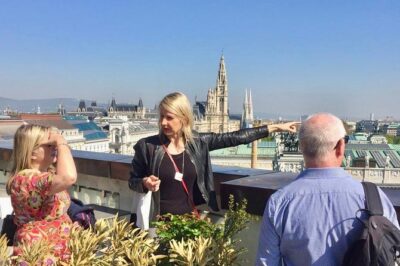
The private setting adds real value. A guide such as Annelie can respond to your questions, use personal stories, and show photographs that help put faces to the composers. If one part of the story catches your interest, you can spend a little more time there rather than being pulled along by a large group.
More walking tours in Vienna:
- Vienna: Guided Walking Tour of City Center Highlights
★ 4.7 · 4,989 reviews - Vienna: Vienna Central Cemetery Guided Walking Tour
★ 4.8 · 3,307 reviews - Vienna: Guided Walking Tour of City Highlights & Hidden Gems
★ 4.9 · 2,180 reviews
St. Stephen’s Cathedral: music beneath the Gothic stone
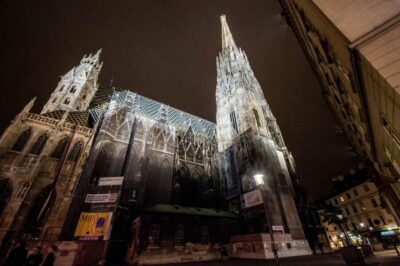
The tour begins at St. Stephen’s Cathedral, Vienna’s great Gothic landmark. You spend about 20 minutes learning how this church served as a performance setting in earlier centuries for figures including Haydn, Mozart, Salieri, and Vivaldi.
The point is not simply that famous musicians passed through. Churches were central musical institutions, and a cathedral gave composers a place where religious ceremony, skilled performers, and public attention met. That helps explain why Vienna became such a powerful center for composition and performance.
The stop is listed as free, so you are not paying an extra admission charge for this part of the visit. Your time here is fairly short, though, and the tour does not promise an extended interior visit or a concert. Think of it as a strong opening chapter rather than a full cathedral tour.
For you, the best part may be the link between the building and the sound. Hearing a musical selection while discussing the cathedral’s former role gives the setting more meaning than a quick photograph from the square.
Mozarthaus and the years of Mozart’s success
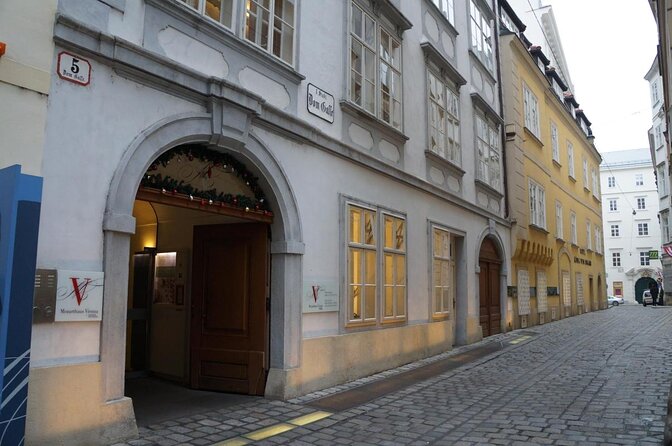
From the cathedral, the walk continues to Mozarthaus Vienna, also known as Figaro House. Mozart lived here from 1784 to 1787, a productive stretch when he wrote several of his best-known operas and instrumental works.
You spend about 20 minutes at or near the building. Admission is not included, so you should treat this as an exterior stop unless you choose to arrange entry separately. The supplied details do not state that the guide takes you inside, so do not book this walk expecting a full museum visit.
Even from outside, the address matters. Mozart’s years here show him not only as a gifted composer but as a working musician in Vienna, writing, performing, dealing with patrons, and building his career. The building gives the story a fixed point.
This is also a useful place to ask the guide about The Marriage of Figaro, since the house carries that association. If you have already visited the museum, the stop can still work as a quick reminder within the wider route. If Mozart is your main interest, you may want to add a separate interior visit before or after the walk.
Beethoven’s monument and a restless Viennese life
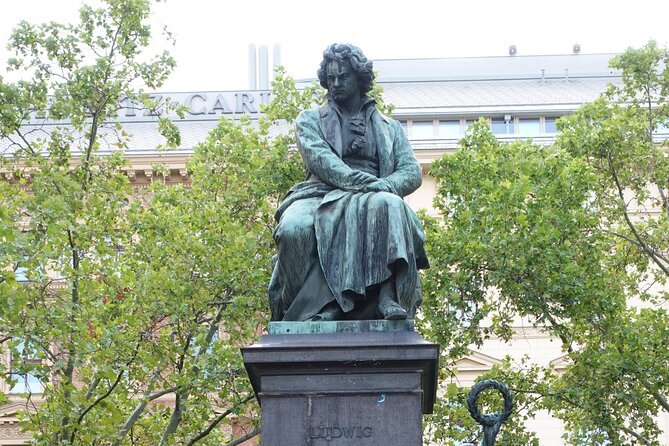
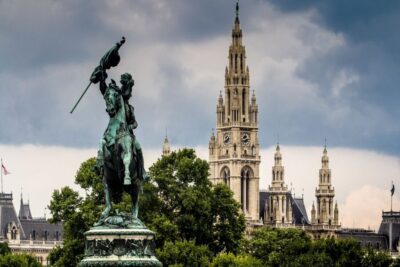
A stop at Beethoven’s statue shifts the story from Mozart’s productive home to Beethoven’s unsettled life in the city. The tour uses the monument to explain how often he moved, with roughly 60 different Vienna apartments connected to his restless years there.
That detail makes Beethoven feel less like a distant figure in a marble hall. It points to a difficult, changeable life and to a composer whose work helped carry the Classical tradition toward the Romantic era.
The monument itself is a pass-by stop with no admission charge, and the scheduled time is about 20 minutes. The value comes from the explanation around it, not from spending a long time studying the statue.
I would pay close attention here if you enjoy biographical stories. The walk does not present Beethoven as a simple heroic figure. His strained relationships, constant moves, and ties to powerful supporters all add human detail to the music.
A few more Vienna tours worth weighing up
- Vienna: Private Walking Tour with a Local Guide
★ 4.6 · 1,420 reviews - Vienna: Private Walking Tour with a Guide
★ 4.7 · 962 reviews - Vienna: Wine Tasting Experience in a Private Wine Cellar
★ 4.8 · 413 reviews - Private Day Tour Trip Salzburg Hallstatt and Melk from Vienna
★ 5.0 · 388 reviews
The State Opera and Vienna’s musical present
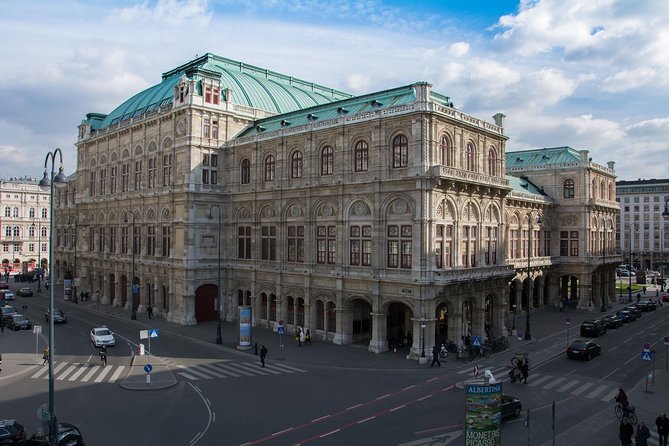
The route then reaches the Wiener Staatsoper, Vienna’s legendary State Opera House. This is where the tour connects the city’s famous past with its continuing place in musical life.
You also consider the Musikverein concert hall, home of the Vienna Philharmonic. The State Opera represents opera on a grand scale, while the Musikverein points to the concert tradition that still draws performers and audiences to Vienna.
The stop lasts about 20 minutes, and admission is not included. The tour does not promise a performance or an interior opera-house visit, so you should see this section as orientation. It can help you decide if you want to book a separate concert or opera during your stay.
That distinction matters when judging the price. You are paying for interpretation and a carefully connected walk, not for tickets to a show. If you expect to step inside every major venue, you may find the experience limited. If you want the city’s musical story explained before attending a performance, this stop is more useful.
Mölker Bastei and Beethoven’s many addresses
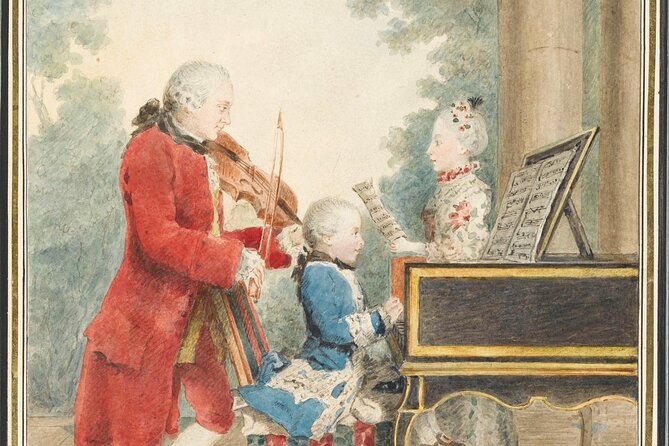
At Mölker Bastei, the walk reaches the Pasqualati House, located opposite the University of Vienna. This is another Beethoven address, and it gives the guide a chance to return to his repeated changes of residence.
The building is connected with the composer’s work and with the story of Beethoven in Vienna. His music marked the high point of the Classical period while pointing toward major changes in the Romantic era. The tour uses that transition to show why Beethoven matters beyond a handful of famous melodies.
You spend about 20 minutes here, and admission is not included. The itinerary says you pass by the house rather than promising entry, so plan on an exterior explanation.
This stop pairs well with the earlier monument. Taken together, the two places help you see Beethoven as a person moving through real streets, not just a name attached to concert programs. The repeated addresses also give the tour a bit of humor. Beethoven may have produced enduring music, but he was not especially settled.
The Hofburg and Beethoven’s aristocratic connections
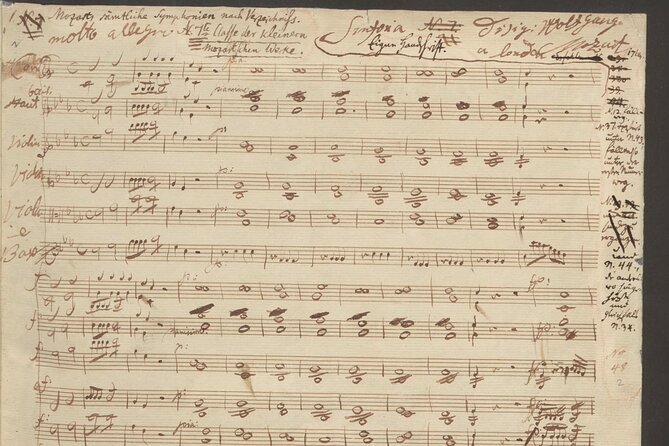
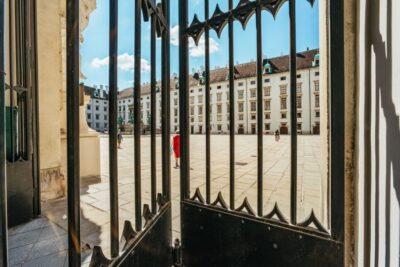
The final major stop is the Hofburg, the former Habsburg residence. Here the story turns toward Archduke Rudolph, Beethoven’s friend, pupil, supporter, and patron.
Beethoven’s relationship with high aristocracy could be strained, but Rudolph was an important exception. The archduke took piano lessons with Beethoven and supported his work. Beethoven dedicated the Missa Solemnis to him, linking one of his major compositions to the Habsburg court.
This is a valuable closing idea because it explains how music operated in 18th and 19th-century Vienna. Composers needed performers, audiences, churches, publishers, and patrons. The imperial court was not just a backdrop. It shaped careers and helped determine which music received attention.
The Hofburg stop takes about 20 minutes, with no included admission. You see the residence as part of the walking route rather than as a separate palace tour. If you want rooms, collections, or a full court history, you will need another visit.
The final 45 minutes: music in the Inner City
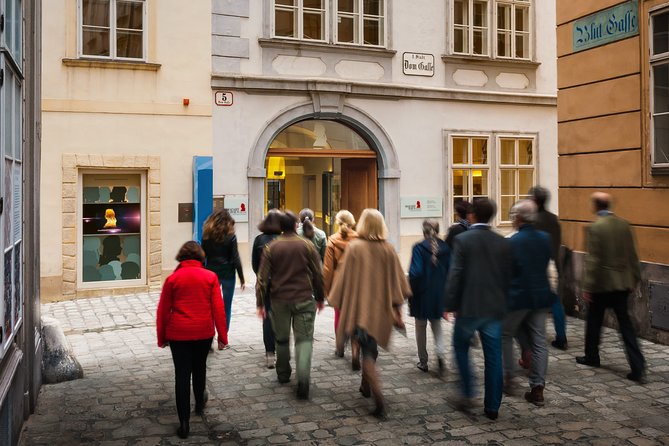
The last part of the experience gives you about 45 minutes in Vienna’s Inner City. This is where the tour’s separate people and places are brought together.
You pause to listen to selections of Vienna’s musical masterpieces through headphones while continuing to explore major sights. The listening element is not just background noise. It lets you connect a particular sound with the churches, homes, monuments, opera buildings, and court spaces discussed earlier.
This may be the most distinctive part of the walk. Many city tours explain music but never let you hear it. Here, the guide can point out a setting, explain its connection, and then give you a short musical example. That makes the lesson easier to remember.
The exact selections are not specified, so you should not book this expecting a set concert program or a particular composer on demand. The strength lies in the combination of walking, conversation, and listening.
A private guide changes the pace
The guide is the heart of this experience. You receive the guide’s photo, phone number, and biography after booking, which gives you a clear contact before the meeting. A named guide associated with the tour is Annelie, whose approach includes personal stories and photographs of the people being discussed.
That kind of material can make a real difference. A photograph of Mozart or Beethoven, paired with the place where the guide is talking about him, gives the story a human face. Personal stories also help keep the walk from turning into a string of dates and formal music terms.
The private arrangement is especially helpful if your group has mixed interests. A classical music fan can ask about composition and performance, while someone else can focus on court life, architecture, or the composers’ personalities.
You also have more control over questions and pace than you would in a large group. The tour is designed for up to 10 people, so it is still a manageable size, but the flat group price means you should think about the number in your party before booking.
Is $564.72 a fair price?
At $564.72 per group, the tour is not cheap. It becomes more reasonable when six to 10 people split the fee, since the price does not rise with each additional person up to the 10-person limit.
For two people, the cost is much harder to justify unless private guiding is a top priority. For a family, a group of friends, or a small music society, the per-person figure can compare more favorably with several separate activities.
You are paying for roughly three hours of a private historian guide, hotel or holiday-flat pickup if arranged, a route linking major music sites, and musical listening during the walk. Admissions are not included, and the supplied details do not include transport tickets if public transport is needed.
The tour is mainly outdoors and on foot. Wear comfortable shoes and plan around the weather, though the exact walking distance is not provided. Morning and afternoon departure choices make it easier to place the walk before a concert, after breakfast, or between other central Vienna plans.
Who will get the most from this experience?
I would recommend this walk to you if you want Vienna’s music explained in context rather than studied in a museum room. It is a good match for first-time visitors who recognize the names Mozart and Beethoven but want a clearer sense of their lives in the city.
It also suits classical music fans who want the city attached to the sound. The headphone pauses add something that a normal history walk cannot provide.
Families and mixed-age groups may appreciate the private setup. The guide can explain difficult ideas at a comfortable level, and people who lack formal music training can still follow the story.
I would be more cautious if your main goal is to enter every building. Mozarthaus, the State Opera, Pasqualati House, and the Hofburg are treated as stops along a walking route, and paid admissions are not included. You should also choose a different activity if you want a live concert, a full opera-house tour, or a long cathedral visit.
Cancellation is free if you cancel at least 24 hours before the start time. Changes or cancellations inside that window are not refunded, so keep the local cut-off time in mind.
Should you book the Vienna City of Music walk?
Book it if you value a private guide, want music played during the walk, and have enough people to share the $564.72 group price. The route gives you a useful first look at Vienna’s musical identity, from cathedral performances and Mozart’s home to Beethoven’s patrons and today’s opera and concert institutions.
Skip it if you mainly want admission to museums and historic interiors. In that case, spend your budget on individual sites or a concert ticket.
For most suitable groups, the best plan is to use this as an orientation. Take notes on the places that interest you, then return to Mozarthaus, the State Opera, or another venue with a separate ticket. That gives you both the personal story and the fuller indoor visit.
FAQ
How long is the Vienna City of Music Private Walking Tour?
The tour lasts approximately three hours.
How many people can join the private tour?
The flat group price covers up to 10 people.
What language is the tour offered in?
The experience is offered in English.
Can the guide pick me up at my accommodation?
Yes. The guide can meet you at your hotel or holiday flat. You can also choose Café Mozart at Albertinaplatz 2 as a central meeting point.
Are public transport tickets included?
No. If public transport is needed, tram or metro tickets are not included. The guide can help you purchase them if you do not already have a pass.
Are admission tickets included?
St. Stephen’s Cathedral, Beethoven’s monument, and the Inner City portion are listed with free admission. Admission is not included for Mozarthaus, the State Opera, Mölker Bastei, or the Hofburg.
Do I need to know classical music to enjoy the tour?
No. The experience is designed to explain Vienna’s music to people with different levels of musical background, including those with little formal classical music training.
What is the cancellation policy?
You can cancel up to 24 hours before the experience’s start time for a full refund. Cancellations or changes made less than 24 hours before the start time are not accepted for a refund.
Just added around Vienna
- Private Tour from Vienna to Melk and Dürnstein★ 4.5 · 3 reviews
- Vienna: Johann Strauss 200th birthday anniversary exhibition★ 4.7 · 3 reviews
- Vienna Private Full Day Tour – Tickets to Schönbrunn & Lunch★ 5.0 · 3 reviews
- Private Salzburg Day Trip from Vienna★ 4.0 · 3 reviews
- Vienna: Entry Ticket Belvedere 21 & Contemporary Art★ 4.3 · 3 reviews
- Full-Day Private Trip from Vienna to Budapest★ 4.5 · 3 reviews
- Vienna by Night: Private Evening Food and Drink Tour★ 5.0 · 3 reviews
- 1.5 Hour Cinematic Style Portrait Photoshoot and Tour in Vienna★ 4.5 · 3 reviews
Walking Tours, compared.
Guided Walking Tour of City Center Highlights
Read our review →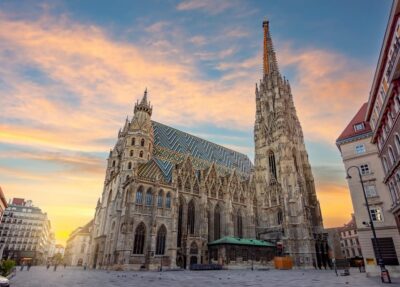
Guided Walking Tour of City Highlights & Hidden Gems
Read our review →
Vienna Historic Center Small Group Walking Tour
Read our review →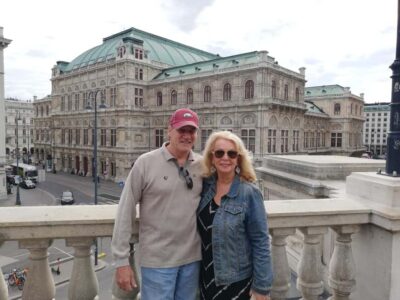
Ghosts and Legends Guided Nighttime Walking Tour
Read our review →Browse the lists this tour appears in